Sanjha Morcha

What’s New

Click the heading to open detailed news

Current Events :

web counter

Print Media Reproduced Defence Related News

Tributes paid to Sikh general Attariwala on martyrdom day

He is known for his valour in the 1846 Battle of Sobraon

AMRITSAR: Tributes were paid to legendary Sikh general Sham Singh Attariwala, known for his valour in the 1846 Battle of Sobraon against the British forces, during a state-level function held on Wednesday to mark his 170th martyrdom day.

SAMEER SEHGAL/HTFormer army chief Gen JJ Singh (retd) paying tributes at the memorial of Sikh warrior General Sham Singh Attariwala in Amritsar district on Wednesday.

Speaking on the occasion, former chief of army staff Gen JJ Singh (retd) said Attariwala had sacrificed his life for the prestige of the country, adding that his courage in the first Anglo-Sikh War had also been admired by the British.

“General Attariwala, who fought the British forces till his last breath, would always be a source of inspiration for our younger generation,” he said. Gen Singh also visited Attari, the martyr’s native village, where he took a round of the General Sham Singh Attariwala Museum.

Office-bearers of the General Sham Singh Attariwala Trust presented a memento to Gen Singh. The latter honoured Attariwala’s descendants with mementoes.

Punjab welfare minister Gulzar Singh Ranike said the state government had already spent nearly ` 1,000 crore on constructing memorials dedicated to heroes and martyrs. Ranike said Attariwala was one of the greatest warriors of India who had preferred death to serfdom.

Deputy commissioner Varun Roojam; General Officer Commanding (GOC), 15 Infantry Division, Major Gen Sanjay Thapa, who laid a wreath on behalf of Lt Gen KJ Singh, General Officer Commandingin-Chief, Western Command; and Attariwala’s descendants, including Col KS Sidhu, and Col Harinder Singh; were among the others present on the occasion.

57210


FDI limit in defence is not enough: Airbus

FDI limit in defence is not enough: Airbus
Photo courtesy: www.airbusgroup.com

Ajay Banerjee

Tribune News Service

New Delhi, March 14European aerospace and military consortium, Airbus, on Monday said the cap on foreign direct investment (FDI) in defence manufacturing in India should be higher.The Ministry of Defence and the Ministry of Finance have imposed a cap of 49 per cent holding for foreign companies involved in defence equipment manufacturing. This mean 51 per cent stake has to be held by an Indian company.Pierrre De Bausset, President and MD of Airbus Group in India, said: “At 49 per cent you cannot get quality OEM’s (original equipment manufacturer) to come with technology to India”.If foreign companies are to come with high-end technology then the control has to be with the companies, Bausset said at a press conference here to announce Airbus participation in the ‘Defexpo-2016’ scheduled for later this month. He did not specify what kind of FDI cap was suitable but added: “When we bring in technologies we have to have control… if the FDI cap is 10 per cent the risk is lower”. The FDI cap was raised from 26 per cent to 49 per cent in August 2014, months after the BJP-led NDA coalition was voted to power in May 2014.The Airbus had promised an investment of Rs 5,000 crore in India. This includes the shift of the assembly line to produce the AS3665 ‘panther’ helicopter in India subject to Indian Navy selecting the copter for its requirements.  “The investment is dependent on contracts,” Bausset said.In a way, he pointed at the fault-line in the ‘Make in India’ initiative.  In the past, officials of a US company have expressed the need to have greater FDI limits.The FDI in India’s defence sector has been very low since the policy was amended in Aug 2014. Between October 2014 and November 2015 there were only Rs 56 lakh worth of FDI proposal in defence sector.


Bodies of 8 soldiers recovered from Siachen

Bodies of 8 soldiers recovered from Siachen
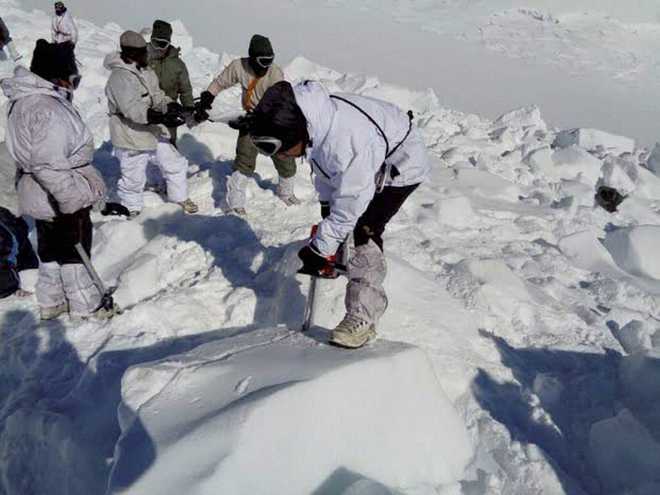
Rescuers carrying out the operations to search for the bodies of the soldiers hit by an avalanche, in Siachen on Tuesday. PTI

Jammu, February 9

Bodies of all the eight remaining soldiers were today recovered from the huge mass of ice on Siachen Glacier, seven days after they got buried under an avalanche that hit their high altitude military post.One body was recovered yesterday while one soldier was miraculously found alive.”All the remaining eight bodies of soldiers have been recovered from the avalanche site,” a senior Army officer said here today.”They were traced in the operation which were launched at Siachen to locate and retrieve the 10 soldiers buried under more than 30 feet of snow and ice after an avalanche struck their Post in the early hours of February 3,” he said.”It is to the credit and dogged determination of the rescue teams which were working under extreme conditions that they have managed to extricate Lance Naik Hanamanthappa Koppad alive from under more than 30 feet of snow,” he said.”It is with deep regret that we wish to confirm that mortal remains of nine martyrs, including a Junior Commissioned Officer, were also retrieved by the rescue teams,” he said.The mortal remains, after due formalities, will be flown to their home towns as soon as possible, officer said.The deceased soldiers have been identified as Subedar Nagesha TT of Tejur village, Hassan district, Karnataka; Havildar Elumalai M of Dukkam Parai village, Vellore district, Tamil Nadu; Lance Havildar S Kumar of Kumanan Thozhu village, Teni district, Tamil Nadu; Lance Naik Sudheesh of Monroethuruth village, Kollam district, Kerala; and Sepoy Mahesha PN of HD Kote village, Mysore district, Karnataka; Sepoy Ganesan of Chokkathevan Patti village, Madurai district, Tamil Nadu; Sepoy Rama Moorthy of Gudisatana Palli village, Krishna Giri District, Tamil Nadu; Sepoy Mustaq Ahmed of Parnapalle village, Kurnool district, Andhra Pradesh; and Sepoy Nursing Assistant Suryawanshi of Maskarwadi village, Satara district, Maharashtra. —


The Indian Ocean challenge::::: G Parthasarathy

The Indian Ocean challenge
China wants to establish a permanent presence in the Indian Ocean.

IT is a truism that in any country including India, the coastal population inevitably focuses attention on maritime security, while those far from the sea remain fixated on land borders. India’s security challenges across its land borders with Pakistan and China have only accentuated this trend. Moreover, with its focus on import substitution, rather than export promotion, India’s share in world trade fell significantly in the first four decades after Independence. With its economy collapsing in 1990, India was forced to drastically change its outlook towards domestic, regional and global economic issues. What followed has been the growing integration of India with the global economy, and its emergence as a constructive and increasingly important partner, with a growing market for trade and investment. We have since moved from an economy afflicted by what was once pejoratively described as the “Hindu rate of growth” to becoming a vibrant, emerging economy.  Foreign trade and investment have inevitably become focal points for accelerated economic growth in India. We have wisely embarked on increasingly integrating our economy, with the fastest growing economies of the world, in East and Southeast Asia. We now have Comprehensive Economic Partnerships with the 10 members of ASEAN, ranging from Myanmar to the Philippines, as also with Japan and South Korea. We are negotiating a free trade agreement with Australia and have endeavoured to undertake similar arrangements with our SAARC partners. Moreover, ASEAN-led forums like the East Asia Summit have led to an Indian strategic role across the Bay of Bengal, which traverses the Indian Ocean and western Pacific, crossing the disputed waters of the South China Sea. Progress on economic integration in South Asia has, however, been slow, primarily because of Pakistani recalcitrance. Significantly, tensions and disputes with China have not adversely affected a blossoming trade and investment relationship between India and China — the world’s two most populous countries. Despite these developments, India cannot ignore the fact that China has acted as a spoiler in every effort New Delhi has made to enhance its role in its eastern neighbourhood. Beijing vigorously opposed our participation in economic and security forums linked with ASEAN, including the ASEAN Regional Forum and the East Asia Summit. China continues to maintain links across its borders with Myanmar, with some of our northeastern separatist outfits. We are now steadily moving towards a more proactive response to counter these Chinese efforts. Our aim remains to develop viable security architecture across and beyond our eastern shores. Concerns about Chinese military bases and inroads across the Bay of Bengal will continue. But, concerted diplomatic efforts, with partners like the US and Japan have enabled us to strengthen the security of our eastern sea-lanes. China has not succeeded in its efforts to secure a predominant role in Myanmar, Bangladesh, Sri Lanka or the Maldives. This will, however, remain a continuing challenge for us.While India has fashioned policies to safeguard the security of its eastern shores, the same cannot be said for what is transpiring in our western neighbourhood, across the Arabia Sea. It is here that we cannot now overlook the implications of China’s new thrust, at not only establishing a virtually permanent presence in the Indian Ocean, but also by its doing so in collusion with Pakistan. New Delhi should carefully note Chinese moves to outflank us on our western shores, through a network of roads and ports. The Chinese strategic objectives are based on a Silk Road Economic Belt that links China with Central Asia, Pakistan Occupied Kashmir, the Persian Gulf States, Russia and the Baltic States. Beijing’s 21st century Maritime Silk Route, in turn, extends from China’s coast to Europe through the Indian Ocean. China is simultaneously building ports across the Indian Ocean, in Asia and Africa. What India cannot afford to ignore is that while the silk road envelops both its eastern and western neighbours, this road links up with the Maritime Silk Road and the Indian Ocean, in the Pakistani Port of Gwadar, located at the mouth of the Persian Gulf. Gwadar is perilously close to India’s sea-lanes, linking India to the oil-rich Persian Gulf, from where we get over 70 per cent of our oil supplies. China has now secured virtual control of the port facilities in Gwadar, after pledging $46 billion to Pakistan, to promote its ambitious silk route projects. Over a decade ago, then Pakistan President Musharraf told an audience in Islamabad, just after the visit of then Chinese Prime Minister Zhu Rongji, that in the event of a conflict with Pakistan, India would find the Chinese navy positioned in Gwadar. Given its difficulties in obtaining bases in countries like Myanmar, Sri Lanka and Bangladesh, China feels Pakistan is a crucial partner, in its quest to have base facilities, strategically positioned close to the Straits of Hormuz and astride India’s vital sea-lanes to the Persian Gulf, where around seven million Indians live. China has simultaneously commenced an effort to strengthen Pakistan’s navy, with the supply of four  frigates and eight submarines, to reinforce these efforts.China’s interest in having a military presence astride the Straits of Hormuz arises from the fact that this narrow 2-mile-wide corridor is the route for the transportation of 17 million barrels of oil per day (mbpd), with 15.2 mbpd traversing thereafter through the Straits of Malacca, which includes 80 per cent of Japan’s oil supplies. The entire Indian Ocean Region, extending to the Gulf of Aden, accounts for 40 per cent of the world’s oil production and 57 per cent of the world’s oil trade. Not surprisingly, the US has positioned its powerful 5th Fleet in Bahrain to oversee the security of these vital sea-lanes. The nature and extent of US interest in this region could well change, as the US itself is becoming a net exporter of oil and gas. Moreover, apart from the rivalries of external powers, stability in this region is being adversely affected by Iranian-Saudi rivalries, which have a sectarian dimensions.Ideally, it would be useful if the major Asian oil importers — India, China, Japan and South Korea — cooperated on developments that threaten the security of vital sea-lanes and energy corridors. But, given existing tensions and suspicions, this may be too much to expect anytime soon.



Manohar Parrikar rules out troop withdrawal from Siachen

Asked if the proposal to convert Siachen into a “peace mountain” still exists, the minister said: “The decision (on deploying troops) on Siachen is based on the security of the nation. –CAG, defence ministry, defence minister, manohar parrikar, who is defence minister, Comptroller and Auditor General, helicoptersDefence Minister Manohar Parrikar said the loss of human lives on the Siachen had come down in recent years due to improved facilities.. Express Photo

Defence Minister Manohar Parrikar Sunday ruled out any troop withdrawal from Siachen in the wake of recent avalanche that led to the death of 10 soldiers.

“Though the lives lost are much fewer now thanks to better technological solutions, (it is) absolutely painful, even personally. But, should we withdraw from there? I do not think it is a proper analysis. In this case, there are no loose ends from what I understand. It was an avalanche. Those climbing the Mt Everest calculate everything and yet incidents happen,” said Parrikar here.

 Speaking about One Rank One Pension (OROP), he added that the NDA government has fulfilled the promise by giving “15 times more” than the UPA.
Akshay, Kangana not brand ambassadors’ On the ongoing controversy over actors Kangana Ranaut and Akshay Kumar being called the ambassadors for the IFR, Parrikar said that the defence ministry has not signed any contract with the two. “They were invited. They are not ambassadors,” he said. – S

Army holds vet, medical camp

Tribune News Service

Jammu, March 7

A medical and a veterinary camp was organised by the Nimu Battalion at village Likir of the Ladakh district. The camp was held under the aegis of the Army’s 14 Corps’ Parashu Brigade.Four doctors, five nursing assistants and a veterinarian extended their services for the goodwill project.The Op Sadbhavana camp saw large participation. A public announcement system that included two speakers, one amplifier, mikes and furniture were presented by the Army for the community hall of the village.



OROP protesters to challenge Centre in SC

short by Prashanti Moktan / 03:44 pm on 06 Feb 2016,Saturday
The Indian ex-servicemen movement is set to challenge the government, in the Supreme Court, over the Defence Ministry’s budget allocation for the implementation of the ‘One Rank One Pension’ (OROP) scheme. While deciding to continue protesting at Jantar Mantar, the agitating veterans said that the government remains silent on the equalisation of pensions which is central to the OROP protests

Despite India’s opposition, US govt issues notification for sale of F-16s to Pak

Despite India's opposition, US govt issues notification for sale of F-16s to Pak
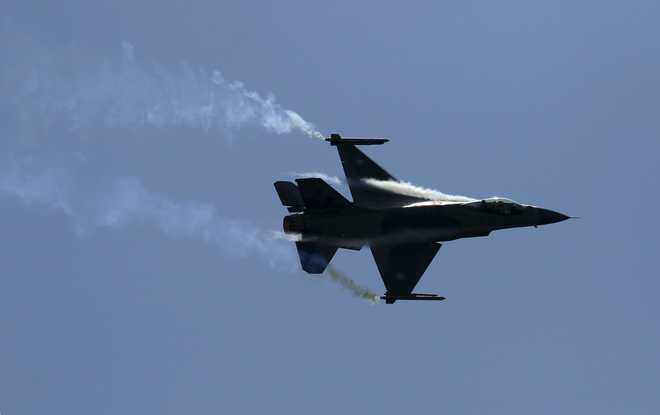
A Pakistani F-16 fighter performs during a ceremony marking Pakistan Defence Day in Islamabad on September 6, 2015. Reuters file photo

Washington, March 5

Amidst stiff opposition from India and top American lawmakers, the US government has formally published federal notification for the sale of eight F-16 fighter jets to Pakistan.“This proposed sale contributes to US foreign policy objectives and national security goals by helping to improve the security of a strategic partner in South Asia,” said the notification which was published by the federal register yesterday, along with a copy of the February 11 letter, which the Defense Security Cooperation Agency wrote to the House of Representatives Speaker Paul Ryan.The total cost of these F-16 is estimated to be nearly $700 million, said the federal notification. It added that the Government of Pakistan had requested for this sale.India has opposed the sale of F-16 to Pakistan, saying it disagree with Washington’s rationale that such arms transfers help to combat terrorism.Republican Senator Rand Paul has asked colleagues in the Senate to join him in opposing the sale of F-16s to Pakistan.Pakistan Prime Minister’s Adviser on Foreign Affairs Sartaj Aziz told Defence Writers Group this week that Pakistan had initially requested for 18 F-16s, but because of “financing problem” it is purchasing just eight.”In the last five years Pakistan air force has been saving US assistance to be able to finance these F-16. That is why, the administration has recommended that these should be sold because it is a very critical part of our counter terrorism operation,” Aziz said.These F-16, Aziz argued, are a critical tool in the war against terrorism.When asked if this is to be used only in the tribal region, he did not rule out otherwise.”This is part of our fleet. For the last two-three years they have extensively been used in tribal areas,” Aziz said. “Right now the specialised need is the counter-terrorism operation, for which we are heavily dependent of F-16.”According to notification published in the federal register, the proposed sale improves Pakistan’s capability to meet current and future security threats.“This sale will increase the number of aircraft available to the Pakistan Air Force to sustain operations, meet monthly training requirements, and support transition training for pilots new to the Block-52. Pakistan will have no difficulty absorbing these additional aircraft into its air force,” the federal register said.As per the notification, this sale involves the release of sensitive technology to Pakistan. The F-l 6C/D Block 50/52 weapon system uses the F-16 airframe and features advanced avionics and systems.It contains the Pratt and Whitney F-100-PW-229 engine, AN/APG-68V(9) radar, digital flight control system, external electronic warfare equipment, Advanced Identification Friend or Foe (AIFF), LINK-16 datalink, and software computer programs.As per federal notification, if a technologically advanced adversary were to obtain knowledge of the specific hardware or software source code in this proposed sale, the information could be used to develop countermeasures which might reduce weapon system effectiveness or be used in the development of systems with similar or advanced capabilities.The benefits to be derived from this sale in the furtherance of the US foreign policy and national security objectives outweigh the potential damage that could result if the sensitive technology were revealed to unauthorised persons, the federal notification said. — PTI


29 IS militants killed in Afghan airstrikes

short by Nihal Thondepu / 03:30 pm on 02 Feb 2016,Tuesday
US-led coalition airstrikes on Monday killed around 29 Islamic State militants and destroyed the terror group’s radio station in Afghanistan’s Nangarhar province. Several top leaders including those handling the extremist group’s internet services and running the radio station were killed in the airstrikes. IS has reportedly been using the ‘Voice of Caliphate’ radio to recruit more fighters.
U.S. airstrikes kill 29 militants, destroy IS radio in Afghanistan

JALALABAD, Afghanistan, Feb. 2 (Xinhua) — About 29 Islamic State (IS) militants were killed and a radio station belonging to the militant group was destroyed after U.S.-led coalition forces carried out airstrikes in Afghanistan’s eastern province of Nangarhar overnight Monday.

“The foreign forces conducted four air raids against IS positions in Momand Dara of Achin district Monday night, killing 29 IS militants and destroying an IS radio station,” the provincial government said in a statement on Tuesday.

Those killed included five workers of the banned group’s radio station and five people in charge of Internet service of the extremist group, the statement added.

Several high-ranking IS members were also among the killed by the airstrikes in Achin, which is regarded as an IS stronghold.

The IS militants have been using the so-called Voice of Caliphate radio since late last year to intimidate people from supporting the government and recruit new fighters.

The U.S. drones continued to be hovering over Jalalabad and Achin district Tuesday morning, according to locals.

The district bordering Pakistan has been the scene of heavy clashes between IS militants and security forces backed by pro-government local militiamen over the past couple of months.The militant group has yet to make comments.