Sanjha Morcha

What’s New

Click the heading to open detailed news

Current Events :

web counter

Print Media Reproduced Defence Related News

Chinese media tells India to keep a check on its military goals

BEIJING: Amid reports that China’s first domestically built aircraft carrier will be unveiled soon, state media on Monday took a dig at India, saying its first home-built carrier is not even operational.

HT FILEChina had no aircraft carrier till 2012, while India’s first was purchased in the late 1950s from the United Kingdom.

The Chinese media advised New Delhi to keep its military ambitions in check and instead, strengthen its economy first.

Reports in Chinese media said the People’s Liberation Army (PLA) Navy was making “final preparations” to launch its first domestically built aircraft carrier soon to mark the 68th anniversary of founding of its navy, which fell on Sunday.

State media took the opportunity to make a few points.

“Aircraft carriers are seen as symbols of a nation’s military might, but the construction of them consumes huge amounts of resources, thus requiring developing countries to learn how to keep their military ambitions in check,” China’s nationalistic tabloid Global Times wrote on Monday.

China had no aircraft carrier till 2012, while India’s first was purchased in the late 1950s from the United Kingdom; China’s pursuit of military development has then been in “sync” with its over economic development.

It said China’s first priority was developing its economy and then building “resource consuming” aircraft carriers.

“As the world’s second-largest economy, China is now capable of building a strong navy to safeguard the security of strategic maritime channels. China’s construction of its first aircraft carrier is a result of economic development,” the newspaper wrote.

“The country would have finished work on it several years ago if Beijing had simply wanted to engage in an arms race to have more influence in the Asia-Pacific and Indian Ocean regions,” it said.

Meanwhile, the Hong Kongbased South China Morning Post (SCMP) said the new aircraft carrier has a displacement of 70,000 tonnes, is 315 metres long, 75 metres wide and has a cruising speed of 31 knots.

STATE-OF-THE-ART

The new carrier features the latest equipment, including a bigger hangar to carry more J-15 fighters and more space on deck for helicopters and other aircraft,” it said.

State media reported earlier that China will eventually have six aircraft carriers; the second one to be built domestically, 002, is coming up in Shanghai.


PUNJAB NEWS :::22 APR 2017

Sushma: Blacklist pruning on; passport office for SBS Nagar
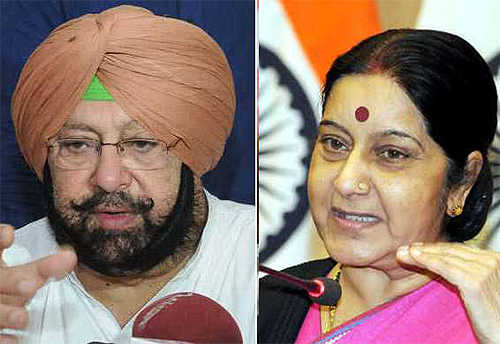
Capt Amarinder Singh and MEA Sushma Swaraj. File photo

Ravi S Singh

Tribune News Service

New Delhi, April 21

External Affairs Minister Sushma Swaraj today informed Punjab Chief Minister Capt Amarinder Singh that the Home Ministry was in the process of gradually pruning the government’s blacklist of Sikh youths named in it for alleged involvement in subversive and anti-India activities.At a meeting with Capt Amarinder, who called on her to inquire about her health, she acceded to the request to open a passport office at Shaheed Bhagat  Singh Nagar (Nawanshahr) to facilitate NRIs and their families in the Doaba region. A Punjab Government spokesperson said the proposed passport office would be in addition to the recently sanctioned office at Patiala, which would be inaugurated shortly.(Follow The Tribune on Facebook; and Twitter @thetribunechd)Capt Amarinder reportedly expressed concern over the delay in removing names of Sikh youths from the blacklist. As a result, they have been barred from visiting India. Assuring to take up the issue with the Home Ministry, Swaraj  said the government was in the process of pruning the list. The list relates to the days of militancy.Capt Amarinder also urged Swaraj to take up the issue of racist attacks on Punjabis and Sikhs settled abroad at the international level. He also sought protection of victims in such cases. Swaraj responded by saying her ministry was cognisant of the matter and she was personally pursuing the matter to ensure safety of the Sikhs and Punjabis settled overseas.The CM also broached the issue of setting up Punjab-Israel working groups to boost cooperation in areas of security, agriculture and trade. The possibility of floating such groups was earlier discussed between him and the Israeli ambassador in India today.

Sidhu finds anomalies, suspends SDO

Pays surprise visit to Dera Baba Nanak sewage treatment plant
Sidhu finds anomalies, suspends SDO
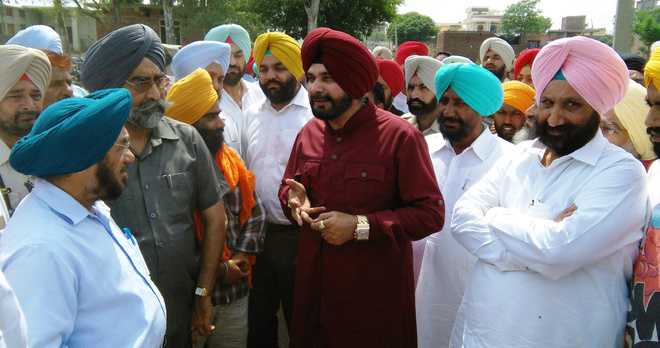
Cabinet Minister Navjot Singh Sidhu with officials of the Water Supply and Sewerage Board at Dera Baba Nanak STP in Gurdaspur on Friday. A Tribune photograph

Ravi Dhaliwal

Tribune News Service

Gurdaspur, April 21

Local Bodies Minister Navjot Singh Sidhu paid a surprise visit to Dera Baba Nanak Sewage Treatment Plant (STP) and suspended an SDO of the Water Supply and Sewerage Board after finding anomalies in the working of the plant.Sidhu was on a private visit to the town on an invitation of the Dera Baba Nanak sitting Congress MLA Sukhjinder Singh Randhawa. During their conversation, the issue of the virtually defunct STP, constructed at a cost of several crores in 2013, cropped up. Randhawa told him that the plant was dysfunctional ever since it was set up.Sidhu decided to visit the plant. On the way, he stopped at a couple of places and requested residents to reach the site. Once there, he inspected the facilities and came across many shortcomings. He asked residents if they had benefited from the plant or not. Sidhu got livid when almost all residents who had reached there replied in negative. He then placed SDO (maintenance) Jugal Kishore, who was present, under suspension despite the fact that officials tried to defend him.Randhawa discussed nearly half a dozen more civic amenity projects with the minister and told him that almost all had inadequacies, due to which people were suffering. The minister assured the MLA that action will be taken. Sources said the STP worked in fits and starts and that the pipes were so narrow that they could not carry sewage.The minister said he had asked officials of the Department of Local Bodies to draw up a list of all such STPs in Punjab that were not working to their optimum capacity.Wants public audit to probe SAD-BJP ‘scams’Phagwara: Local Bodies Minister Navjot Singh Sidhu on Friday advocated a public audit to inquire into the alleged scams committed during the decade-long term of the previous SAD-BJP government. Talking to mediapersons here, Sidhu said public audit system was introduced during the late Chief Minister Partap Singh Kairon’s rule for a transparent administration. When apprised of alleged corruption in the local Municipal Corporation while awarding ownership rights of 198 rented shops and laying of sewerage lines in the town at the cost of Rs 61 crore, Sidhu asked MC Commissioner Davinder Singh to submit a report within 21 days. He set up a four-member advisory committee comprising former minister Joginder Singh Maan, PPCC general secretary Harjit Singh Parmar, block Congress committee chief Sanjeev Bugga and Congress leader Satbir Singh Walia to monitor the working of the Phagwara civic body. OC

Ready for conversation with Capt on investment: Sajjan
Ready for conversation with Capt on investment: Sajjan
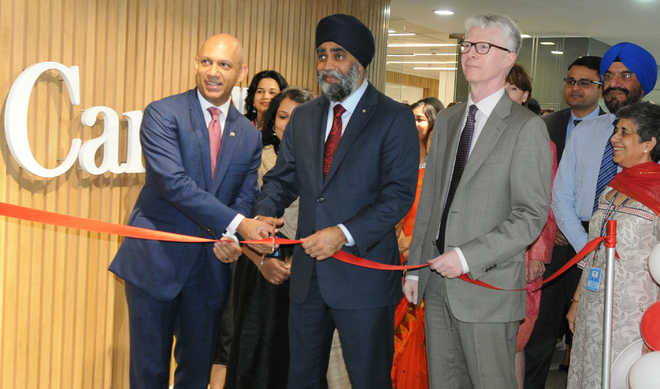
Canadian Defence Minister Harjit Singh Sajjan inaugurates the Consulate General’s office at Elante Mall in Chandigarh on Friday. Tribune photo

Sandeep Dikshit

Tribune News Service

Chandigarh, April 21

Canadian Defence Minister Harjit Singh Sajjan wound up his Punjab visit today by regretting the lack of conversation with Chief Minister Capt Amarinder Singh for investment opportunities. Both former military officers did not have a face-to-face meeting as the Punjab Chief Minister termed the Canadian a Khalistani sympathiser.The pitch was queered on the eve of his departure to India after a Canadian provincial assembly passed a resolution that termed the 1984 killings of Sikhs as genocide.In a conversation squeezed between the inauguration of the Canadian Consulate General’s office and departure to Mumbai to interact with industrialists, Sajjan said his Government was “ready for a conversation with the Punjab CM regarding investment opportunities”.Having been hounded for reactions to Capt Amarinder’s rather unusual boycott of a son-of-the-soil from a country that has hit the economic sweet-spot and, therefore, well placed to provide investments Punjab sorely needs, Sajjan added a caveat: “We don’t get involved in the politics of other nations. Neither do we like others getting involved in our affairs.”Sajjan, one of the few Sikhs to make it to the political high table of another nation, sought to rid the notion that his was a personality-driven trip although it had some personal moments such as the obeisance at the Golden Temple or a visit to a Jalandhar charity. “It’s no secret that Prime Minister Justin Trudeau wants to reach out to India. That is why several ministers have visited India to introduce ourselves for greater dialogue.”He felt the time had come for overseas Punjabis to have a bigger vision for investment rather than pouring money into building palatial mansions in their home villages. “This is tremendous but a lost opportunity as well. There is very little concrete investment [by them] in Punjab,” he commented. In fact, the trend is the other way round, he noted. There are over 1,000 Indian companies that have invested about $15 billion in Canada but there is very little Canadian investment coming to Punjab.Canada, the world’s sixth largest exporter of military hardware, was keen to get a bite of the lucrative Indian defence sector but indicated that these were early days. But civil nuclear energy, a scaffolding for strategic ties with India, was performing well. Uranium shipments have started arriving in India and the conversation has expanded to reactor technology. 


Canadian minister slept on cot in village Bambeli (Hoshiarpur): Many residents of Bambeli, the ancestral village of Canadian Defence Minister Harjit Singh Sajjan, finally got to meet him on Thursday night. Earlier, security personnel had not allowed him to enter the pandal where villagers had made arrangements to welcome him. Sajjan had dal-roti and kheer for dinner and slept on a cot on the rooftop of his ancestral house. He met his relatives and members of the panchayat. Sajjan expressed satisfaction over the development works carried out in the village. Sarpanch Paramjit Singh said Sajjan went down memory lane, fondly recalling his childhood days. Early on Friday morning, he had paranthas with curd and pickle before leaving for Chandigarh. –Sanjiv Kumar Bakshi

Tie-up with Israel for police training
Tie-up with Israel for police training
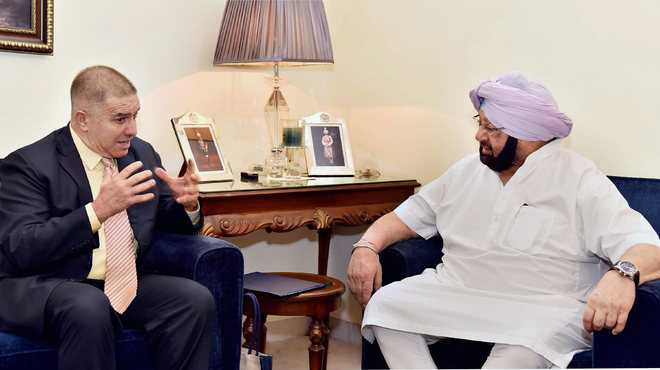
Chief Minister Capt Amarinder Singh with Israeli Ambassador Daniel Carmon in New Delhi on Friday. PTI
  • The Punjab Government and Israel on Friday discussed cooperation in police and security training, and decided to explore the possibility of setting up the Punjab Special Operation Group
  • Chief Minister Capt Amarinder Singh and Israel’s Ambassador to India Daniel Carmon met in New Delhi
  • The Ambassador proposed that the training could be arranged either in Punjab or his country
  • A government spokesperson said the exchange of technology, agriculture and irrigation and dairy farming were other matters on which Israel evinced interest in strengthening cooperation with Punjab
  • The two sides decided to explore the possibility of setting up Punjab-Israel ‘Working Group’ for dialogue on matters of mutual interest

CM prunes own security cover

Tribune News Service

Chandigarh, April 21

The state government today announced the withdrawal of about 2,000 police personnel on security duty, including those attached with the Chief Minister and his family.As many as 376 personnel have been withdrawn from the CM’s security (down from 1,392 to 1,016).Around 1,500 security personnel have been withdrawn in other categories of constitutional and government functionaries, according to an official spokesperson.The orders were issued during a review meeting chaired by the Chief Minister and attended by Chief Principal Secretary Suresh Kumar, DGP Suresh Arora and ADGP (Intelligence) Dinkar Gupta in New Delhi today.The spokesperson said the CM’s security was likely to be cut down further after the next round of review, based on fresh reports on threat perceptions.

Govt cuts down VIP security

AMARINDER TRIMMED HIS OWN SECURITY FROM 1,392 TO 1,016 MEN AND ALSO ORDERED WITHDRAWAL OF 1,500 MORE COPS FROM OTHER CATEGORIES

Punjab government on Friday cut down on VIP security, including that of the chief minister Captain Amarinder Singh, by 2,000 personnel and decided to deploy them to ensure better policing and improve the law-and-order situation in the state.

The CM cut down his own security from 1,392 to 1,016 men and also ordered withdrawal of 1,500 more cops from other categories.

The decision was taken by the CM during a security review meeting held in the presence of principal chief secretary Suresh Kumar, director general of police (DGP) Suresh Arora and ADGP (intelligence) Dinkar Gupta.

An official spokesperson said the move was aimed at creating infrastructure for better policing by diverting precious resources to the more important and essential task of ensuring law and order in the state. The CM has made it clear that he does not want any security beyond bare necessity.

With a view to check the unbridled proliferation of arms in the hands of criminals and gangsters, the CM has also directed the police to review the arms and ammunition licences issued in the state.

Expressing concern at the threat posed to internal security as a result of the arms proliferation, which has led to several incidents of violation of law and order in Punjab recently, the CM also directed the district magistrates and police commissionerates to conduct a propriety audit of the arms licences issued after the notification of the Arms Rules, 2016, wef July 15, 2016, to date.

The spokesperson said the move, aimed at ensuring strict compliance under the provisions of the Arms Act, 1959 and the Arms Rules, 2016, will help control the lawlessness prevailing in the state as a result of the armed gangs who had a free run under the erstwhile SAD-BJP regime.

Police to review arms licences

Ravi S Singh

Tribune News Service

New Delhi, April 21

Punjab Chief Minister Capt Amarinder Singh convened a security review meeting here today, directing the police authorities to conduct audit of arms and ammunition licences.He expressed concern at the threat posed to internal security as a result of arms proliferation, which he said accounted for increasing incidents of breach of law in the recent past.Chief Principal Secretary Suresh Kumar, DGP Suresh Arora and ADGP (Intelligence) Dinkar Gupta were present in the meeting.Capt Amarinder directed review of arms licences issued after the notification of the Arms Rules, 2016, with effect from July 15, 2016, to date. The antecedent verification of the licencees, where needed, would also be done as per new norms, a government spokesperson said.“The move, aimed at ensuring compliance with the Arms Act, 1959, and the Arms Rules, 2016, will help control lawlessness in the state. During the previous SAD-BJP rule, armed gangs became active and took centre stage,” the spokesperson said.“The DGP has said that 57 gangs are active in the state. Several incidents of gang wars, jailbreaks and killings have been reported in recent months, causing concern to the Capt Amarinder government,” the spokesperson added.The CM also directed the police to frame a policy for disposal and destruction of confiscated, captured, seized, recovered or surrendered arms and ammunition.CM meets Uma BhartiCapt Amarinder met Union Water Resources Minister Uma Bharti on Friday, a day after her ministry met Chief Secretaries of Punjab and Haryana to find a solution to the SYL canal imbroglio. The water-related matter figured during the discussion, though it not on the agenda.

Engg colleges to conduct third-party audit of works

Ruchika M Khanna

Tribune News Service

Chandigarh, April 21

Top engineering colleges in Punjab will be conducting the third-party audit (TPA) of 60,666 works ordered by the previous Akali BJP government in villages across the state.Thapar Engineering College, Patiala; Lovely Professional University, Phagwara; and Maharaja Ranjit Singh Technical University, Bathinda; will check whether the material used for laying roads, water supply, sewerage, sewage treatment plants were according to the technical specifications specified under the Rural Urban Mission.Rural Development Minister Tript Rajinder Singh Bajwa said the TPA would be ordered next week, adding that the engineering colleges would be asked to check the quality of works.Sources told The Tribune that the previous government had ordered 60,666 works in 13,050 villages. After the change of guard, works where the project had been awarded but the contracts had not been approved were stopped. Many of the ongoing projects under the Urban Rural Mission had been put on hold.A review of such projects has revealed that 33,929 works have already been completed, while 22,000 works are under process. Only 4,000 works were yet to be started. The cost of the projects awarded by the Akali-BJP government was Rs2,355 crore and Rs2,129 crore have already been spent/disbursed to the Panchayati Raj Institutions (PRI) or the executing agencies.The funding for the Rural Mission was done by the Punjab Infrastructure Development Board, though some funds received by the state under the 14th Finance Commission were also used.Sources said while the entire funds released by PIDB had been spent, the money was yet to be released by the Finance Commission.

Projects on hold

  • The SAD-BJP government had ordered 60,666 works in 13,050 villages. After the change of guard, works where the project had been awarded but the contracts had not been approved were stopped. Many of the ongoing projects under the Urban Rural Mission has been put on hold.

Minister faces students’ ire
Minister faces students’ ire
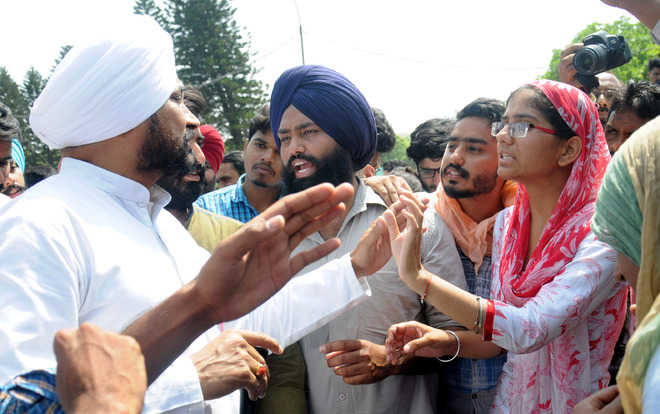
SFS activists argue with Punjab Cabinet Minister Charanjit Singh Channi during a protest at the PU in Chandigarh on Friday. Tribune photo: Pradeep Tewari

Charu Chhibber

Tribune News Service

Chandigarh, April 21

Punjab Technical Education Minister Charanjit Singh Channi today visited Panjab University amid anti-Punjab government slogans by the Joint Students’ Action Committee (JSAC). He was accompanied by Dhuri MLA Dalvir Singh Khangura (Goldy), who is also a former president of the Panjab University Campus Students’ Council (PUCSC).After a brief meeting with supporters of the NSUI, Channi went to meet supporters of the committee outside the VC’s office where they had been protesting against the fee hike. Taking over the microphone, Channi attempted to address the students but was cut short before he could even say a word as the protesters started raising anti-Punjab government slogans.The minister then moved to meet VC Arun Kumar Grover. However, in the absence of the VC, he met the officiating DUI along with other officials of the university. After a meeting that lasted about 15 minutes, Channi informed the students that a meeting has been scheduled between officials of the PU and the Punjab Government for April 25 at 6 pm , wherein Punjab Finance Minister Manpreet Singh Badal will also be present.“Panjab University offers high quality education to all and is amongst India’s top universities. The kind of problem that the university is facing is really unfortunate and the Punjab Government will try to do its best to resolve the issue,” said the minister. Channi then went to meet supporters of the JSAC. “I am here as a student. I have no political agenda. I just want that the tension between students and the PU authorities ease out,” he remarked.The protesters then asked him to join their protest. Channi agreed and sat down on the road, along with the sprotesters. However, when he got up to say something on the issue with folded hands,  the protesters started raising anti-government slogans, thinking that he might leave. This evoked sharp criticism from the protesters, who said it was the common student who can bear the scorching summer sun and fight for their rights, “leaders don’t sit on the road,” they said. The minister then left in a hurry. 


Another student seeks anticipatory bailAnother student protester, Prabhjit, filed an anticipatory bail plea in a local court on Friday. The court has already served issued a notice to the UT Police to file a reply in regard with anticipatory bail plea of 10 PU students in the fee hike protest case. The notice has been issued for April 24. The bail application stated the police had lodged a false and frivolous complaint. A total of 66 students were booked and 53 arrested during the protest.

Capt’s power @₹5/unit promise to give ₹3,200-cr shocker to exchequer

CHANDIGARH: Chief minister Captain Amarinder Singh’s populist announcement of providing electricity at ₹5 per unit to all consumers (domestic, commercial and industry) in Punjab will put an additional burden of ₹3,200 crore on the state exchequer.

Though a final word from the state government on the revised power tariff is awaited, the Punjab State Electricity Regulatory Commission (PSERC) has worked out a rough estimate of the burden it will put on the state finances.

Waiting for the government’s nod, the PSERC has so far not released the tariff plan for 2017-18, which should be have been out on March 31. Sources say it has been deferred till May. “We need at least one more month to finalise the tariff after clarity on the subsidy,” said a PSERC functionary.

“I would fulfil the promise made by the CM and soon announce a roadmap and mechanism to be adopted for cheap electricity,” power minister Rana Gurjit Singh told HT.

In the 2016-17 fiscal, the Punjab government paid a subsidy of ₹5,200 crore for providing free electricity to farmers for tubewells. “If the government decides to charge ₹5 per unit from all consumers, it will put addition burden of at least ₹3,200 on state exchequer, bringing it close to the ₹10,000-crore mark,” said a PSERC official. In the last financial year, the government also paid a subsidy of ₹1,100 crore for providing power to the Scheduled Caste and below poverty line consumers.

PSERC figures reveal that all categories of consumers, except pumpsets used for agricultural purpose, consume about 32,000 million units in a year. The average landing cost of power to the consumer in Punjab is ₹6 per unit, so the additional ₹1 per unit had to be compensated by the state government.

Things are not simple as they look. Punjab State Power Corporation Limited (PSPCL) has sought a power hike of 20%. The hike, if allowed, will also be added to the power subsidy bill. Also, the state government has a bad track record of paying the farm sector subsidy amount to the PSPCL. The government failed to pay ₹1,235 crore of 2015-16 which was carried forward in 2016-17. The cash-strapped state government might face an uphill task to clear the subsidy amount, say experts.

TARIFF REBATE TO HAVE CASCADING EFFECT, SAYS MANPREET

Talking to HT, Punjab finance minister Manpreet Singh Badal said rebate on power tariff to all consumers would have a cascading effect on the state’s development. “This is a gamble, but we are ready for it. We are ready to give subsidised power to all consumers,” he said, adding that the state government don’t want to lose the existing industry (in the state) and subsidised power would be a big booster for it. Industry consumes about 70% of the total power in the state.

“In the 1960s, we were able to do build Punjab because of cheap and surplus power from the Bhakra Dam. We are trying to repeat that phenomenon by giving cheap power,” said Manpreet, adding that the government would make budgetary provisions for the power subsidy.

Punjab authorities forget Chappar Chiri memorial

Opened with much fanfare in 2011 to commemorate Banda Singh Bahadur’s historic win over Mughal governor, the country’s tallest victory tower, other structures cry for attention

We keep carrying out maintenance works at the memorial from time to time. The lights will be repaired soon. SUNIL KANSAL, chief engineer, GMADA

From page 01 SASNAGAR: Even as Haryana chief minister Manohar Lal Khattar visited Fateh Burj at Chappar Chiri in SAS Nagar to take inspiration for a memorial at Lohgarh, capital of the first Sikh state under Banda Singh Bahadur, in Yamunanagar district, the Punjab government seems to be struggling to maintain the tallest victory tower in the country.

RAVI KUMAR/HTAn uncarpeted road leading to the war memorial at Chappar Chiri in SAS Nagar. Its condition is as bad as it was in 2012, when the previous Akali government organised its oath­taking ceremony at the memorial.

Fateh Burj, which commemorates the victory of Banda Singh Bahadur over Mughal governor Wazir Khan, was inaugurated with much fanfare by former Punjab chief minister Parkash Singh Badal in 2011. The 328-foot tower, dedicated to the Sikh warrior, is part of a memorial spread over 20 acres in Chappar Chiri. Set up at an estimated cost of ₹35 crore, the memorial made it to the heritage map of India.

Even though the memorial receives 2.2 lakh visitors annually, the Greater Mohali Area Development Authority (GMADA), responsible for its upkeep, has failed to perform its duty or attract more visitors.

POOR PLANNING HITS MAIN ATTRACTION

The main attraction of the memorial was the Fateh Burj illumination in the evening, which changed colours at regular intervals. The special lights, which cost ₹1 crore, have not been functioning for the past three months. Reason: Poor planning. The lights were installed before carrying out flooring on the premises. Later, when flooring was taken up, the lights were damaged. The staff present at the memorial said it was also not easy to clean the lights. They said the Akali government inaugurated the memorial in a hurry ahead of the 2012 assembly elections, even as its construction was not yet complete.

The memorial, in fact, is spruced up for political events, and later, the authorities hardly care to maintain it. The Punjab government even purchased a lift worth ₹80 lakh to be installed in the tower. It is lying in the basement for the past two years.

NOT A SINGLE SHOW AT THEATRE

A theatre, with a seating capacity of 100, was set up at the memorial to provide the visitors an immersive experience of the historic war that took place at Chappar Chiri in 1710. It’s been more than five years, but not a single show has been screened on the theatre so far.

BUMPY RIDE TO MEMORIAL

The drive to the memorial can give the visitors a fair idea of what lies ahead. The potholed road to the memorial has not been repaired for years. Its condition is as bad as it was in 2012, when the previous Akali government organised its oath-taking ceremony at the memorial.

EMPLOYEES SAY SALARIES NOT PAID

The employees at the memorial say they have not been paid their salaries for the past three months. There are 14 security guards deployed at the memorial besides 12 gardeners and labourers. The security guards are registered with a private company. A guard, on the condition of anonymity, said: “We have been performing our duties with sincerity, but our salaries have not being paid.”

‘REPAIRS UNDERWAY’

GMADA chief engineer Sunil Kansal said: “We keep carrying out maintenance works at the memorial from time to time. We are in touch with firms for maintenance of lights. They would be repaired soon.” An official present at the memorial said the flooring has been completed, while gates are being constructed to install the lift.

Punjab government to review policy regulating marriage palaces: Secy

SAS NAGAR: Department of housing and urban development, Punjab, will review the policy regulating the marriage palaces of the state, informed additional secretary of department to the members of the Association of Marriage Palace Owners in a meeting held on Friday .

HT FILEOut of 1,180 marriage palaces outside the municipal limits in the state, 1,093 had applied for regularisation under the existing policy.

The subjects that will be taken up for consideration includes simplification of procedure for conditional no objection certificate (NoC), compounding of parking area up to 5%, rationalisation of regularisation charges, review of parking norms, payment of compounding charges and extension in the validity of existing policy.

The secretary said that whatever relief is possible within the policy framework will be provided to the palace owners.

The association will also take up the matter with Amarinder Singh, chief minister, Punjab, who is also minister heading the department of housing and urban development.

Members of the association claimed that the department is planning to provide better infrastructure and facilities to the public using these palaces.

The association during the meeting with the additional chief secretary demanded that change of land use (CLU) charges and other charges paid by the marriage palace owners should be at par with charges paid by the hotel industry.

They also asked him to scrap these charges from the palaces built before the year 2007 as there was no policy available at that time and cut-off date announced by the department was NovemThe ber 6, 2012.

The regularisation policy, notified on August 16, 2016 mandates the government to claim CLU on specified rates for regularisation of existing marriage palaces.

The members informed the department that more than 1,500 marriage palaces running in the state are unauthorised and list containing information about these palaces will be shared with the department.

Out of 1,180 marriage palaces outside municipal limits in the state, 1,093 had applied for the regularisation under the existing policy.

committee constituted for the purpose has declared 107 marriage palaces as regular and 364 have been granted change of land use (CLU) and demand notices have been issued to 340 applicants and 147 building plans have been approved.

Remaining applications are being processed for regularisation. Combining various components of the compounding fees, the department has received ₹38.84 crore. Regularisation of marriage palaces located within municipal limits has been undertaken by the department of local government, under this policy.

PRTC tightens noose around bus timetable inspectors

DISCOURAGING MONOPOLY Transport union says move will curb corruption in lower rungs; shifting back authority to transport head office will improve revenue generation

From page 01 LUDHIANA: A long-awaited demand of the bus transport union members bore fruit on Thursday as in its bid to curb corruption with regard to time slot allocations to private/public transport buses, the Pepsu Road Transport Corporation (PRTC) management has tightened its noose around timetable inspectors who were leveraging private players to ply on profitable routes during peak hours.

HT FILECorruption was rampant in lower rungs of the corporation as a number of timetable inspectors allocated profitable time slots to some private players in the state, says PRTC managing director.

The time slot adjustment is crucial when it comes to revenue generation. We had been seeking intervention of the authorities to rein in the nexus between private players and officials for long but our demands always fell on deaf ears. SURESH SOOD, general secretary, Indian National Trade Union Congress

Lauding the move, the transport union members said that the ill-practice was on for years without any check despite being in public glare, but shifting back the authority for time slot allocation to the state transport head office will improve revenue generation.

Pepsu Road Transport Corporation managing director Manjit Narang said, “The corruption was rampant in the lower rungs of the corporation as a number of timetable inspectors calling the shots in allocating profitable time slots to some private players in the state who greased their palms.”

He added, “The ill-practice had gotten to the PRTC and was causing substantial revenue losses in convenient way. I have issued instructions to respective general managers of all 11 depots in the state to not let the timetable inspectors to issue certificate for time allocation at their behest. Revocation of their powers to issue no objection certificate (NOCs) was much needed as there was hardly any intervention at the RTA’s end once time slots changes recommended by timetable inspectors.”

Narang added, “Until now the private players in the state were eating a larger share of PRTC fleet by plying on profitable routes during peak hours but now time slot allocation as well as alteration has to be sought from the head office.”

Suresh Sood, general secretary, Indian National Trade Union Congress (INTUC), said, “The ‘time slot adjustment’ is crucial when it comes to revenue generation. And we had been seeking intervention of the authorities to rein-in private players and officials nexus for long but our demand always fell on deaf ears and often passed off as a practice on for years. But a stringent stance of PRTC management against arbitrary time slot allocations will bode well for the corporation in the longer run.”

Sood added, “Besides being a step towards curbing corruption, the recent move by PRTC will discourage the monopoly of influential private bus companies in the state.”




Pak arrests 3 ‘spies’, Delhi cancels talks

Pak arrests 3 ‘spies’, Delhi cancels talks
Sources in the Indian government were, however, dismissive of the Pakistan’s claims. File photo

Simran Sodhi

Tribune News Service

New Delhi, April 15

India-Pakistan ties today took a nosedive with both sides taking steps that are likely to raise tension. Pakistani media claimed three RAW agents were arrested from near Pakistan-occupied Kashmir (PoK) who had been allegedly assigned to disrupt activity on the China-Pakistan Economic Corridor project (CPEC).India, in a retaliatory measure, cancelled the maritime security dialogue with Pakistan scheduled to be held here on April 17. The delegation from Pakistan was due to arrive in the capital tomorrow. This would have been the second such talks after the Indus Water Commission meet in Pakistan recently.Indications from the government here are also that there will be a major cutting down of visas being granted to Pakistani visitors. Over the last one year,  tensions have in a way ensured that the passage of artists, actors and musicians from across the border was cut down. These measures are a direct fallout of the standoff over the death sentence Pakistan has awarded to Kulbhushan Jadhav. It remains firm that he is a spy, while India maintains he is innocent, though confirming his identity as a former Indian naval officer.Officially, India today maintained silence on Pakistan’s claim about the arrest of three RAW agents. Sources in the government were, however, dismissive of the claims.“We have arrested three terrorists — Khalil, Imtiaz and Rashid. All were paid agents of RAW,” Rawalkot DIG Sajjad Hussain said. 


J&K FOCUS Evolving External Influence in Jammu and Kashmir (Part I) Lt Gen (Retd) Syed Ata Hasnain

Over the past month, the situation in Jammu and Kashmir (J&K) took a familiar turn, usually witnessed around the end of winter. Terrorist activity increased and there has been much worry about energised mobs attempting to come to the rescue of trapped terrorists at encounter sites. In one such case, three civilians were killed when the security forces (SF) did not get cowed down by the intimidation of the vigilantes. It is highly unlikely that the SF will be pressurised; and in all probability, they will develop new techniques and acquire better equipment to overcome the challenge.
Thus far there is not much that the establishment has done to halt the march of vigilantism which has taken over mosques, triggered stone pelting and targeted the general lives of people in rural areas in particular. The drift will have an effect on the degree of control that anti-social elements have in the Valley, as was evident during the first by-poll. However, more worrisome is the level of external influence on the situation. The control of the security establishment over this is usually far less than what it does over the internal domain. External factors include Pakistan’s sponsorship, pro-activeness and role; China’s new found interest; and the ideology and the influence of radical Islamic groups. Even as the by-polls are underway over the next six to seven weeks, the governments in New Delhi and Srinagar should focus on internal stabilisation in the Valley but eyes cannot be taken away from the scanner that looks at external influence.
Radical Islamic Ideology
The degree of influence exercised by radical Islamic ideology on the turbulence in J&K has been the subject of much debate. Some analysts argue that the ideological content of the movement is negligible and that the movement essentially remains political. The actual influence may yet be remaining marginal but the larger Islamic identity is being profusely employed to garner unity and support of the local people.
Through the mayhem of 2016, the mosque did emerge as the rallying point. The mosque can also exercise influence of the local ideology but most people agree that faith resonates and radical faith resonates even more. That over 800 mosques have been taken over by the Ahle Hadith sect is enough to prove the direction in which ideological influence has been moving, right under our eyes. The influence of Daesh, which is attempted to be projected through one-off hoisting of its flags, is still marginal.
Faith is being used for the purpose of securing international support from Islamic nations. Religious vigilantism is evident in some areas and the notion of Islam as the binder against India is rife. Worldwide, there appears little evidence of reduction in the influence of Islamism. Daesh, under pressure in Iraq and Syria, has pulled back just a little in its proactive campaign. The real Islamist influence, however, comes from Pakistan, where Islamist activism remains live.
With social media (Whatsapp in particular) becoming the primary medium to motivate flash mobs in the Valley, Islamist influence through this medium is also likely to increase.
Pakistan’s Potential Strategy
If Pakistan desires that India once again join in a peace process, it will attempt to keep the quantum and nature of violence just below the threshold, ensuring no high profile acts take place; also contingent upon the degree of influence General Qamar Bajwa exercises over the deep state. However, it may appear to the Pakistani establishment that the success it achieved in enflaming the Valley in 2016 must move to the next step lest the movement, which is usually more active in summer, loses momentum. The international and regional environment may also appear to give it a perception that the situation favours it. Pakistan was quick to respond positively to the US’ proposal for mediation. Thereafter, however, commentaries have harped on the usual line of responding to India’s stand on terror by stating that it would wish to include India’s alleged sponsorship of terror activities in Pakistan. The required degree of seriousness is obviously missing and a perception that it must continue to hurt India in J&K persists.
It is evident that Pakistan is unlikely to put its sponsorship of turbulence in J&K on hold. The strategic environment gives it the perception that it should seek advantage through actively pursuing the route of violence. Indian security agencies and all institutions of civil governance must be prepared for the worst through the impending summer.
 
This column is the first of the two-part series on the evolving nature of external influence impacting security and stability in Jammu and Kashmir, India.

National Film Awards: Akshay Kumar gets best actor for ‘Rustom’

National Film Awards: Akshay Kumar gets best actor for ‘Rustom’
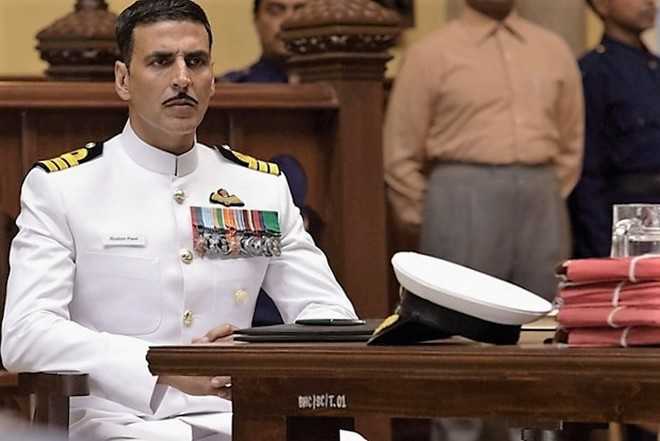
Akshay Kumar in a still from ‘Rustom’.

New Delhi, April 7

Bollywood star Akshay Kumar was named the best actor for his portrayal of a patriotic naval officer in “Rustom” at the 64th National Film Awards, where Marathi movie “Kasaav” led the regional cinema dominance bagging the best feature film honour.The awards, which were spread out in Tamil, Telugu, Bengali and Marathi languages, saw Bollywood movies like “Pink”, “Neerja” and “Dangal” score in key categories.“Rustom”, a court room drama directed by Tinu Suresh Desai, is loosely based on the 1959 Nanavati murder case. (Follow The Tribune on Facebook; and Twitter @thetribunechd)Akshay, 49, took to Twitter to express his gratitude over his surprise win.“Thank you is a very small word right now but I don’t know how else to express how I am feeling right now… ‘Rustom’ was a very special role to play. Being able to wear the uniform of Indian Navy itself is a huge honour, even if it’s just for a role,” Akshay said in a video message to his fans.The actor said Sonam Kapoor, who received a special mention for her role in “Neerja”, was shooting with him and it was a double celebration for them on the sets of “Padman”.“Neerja”, directed by Ram Madhvani, was named the best Hindi film. It is based on the 1986 hijacking incident during which flight attendant Neerja Bhanot was killed by terrorists while saving passengers.“This is huge. Here is to Neerja Bhanot and her family,” Madhvani told PTI.Amitabh Bachchan-starrer “Pink”, a female-centric court room drama, won the award for best film on social issues.Producer Shoojit Sircar dedicated the award to his team and Bachchan, saying it would not have been possible to make the female-centric drama without the actor’s support.Kashmiri actress Zaira Wasim was chosen as the best supporting actress for her role in the Aamir Khan-starrer “Dangal”, while Nagesh Kukunoor’s “Dhanak” was named the best children’s film.Ajay Devgn’s “Shivaay” won the best special effects.The 11-member jury, headed by Akshay’s frequent collaborator, filmmaker Priyadarshan, named Surabhi C M as the best actress for her role in Malayalam film “Minnaminungu-The Firefly”.“I never expected this award. I expected only a jury mention. I am extremely happy and stunned,” Surabhi, who is away in Muscat as part of a programme, said.“Kasaav”, this year’s best feature film winner by Sunil Sukhtankar and Sumitra Bhave, revolves around the issue of depression and environment conservation.The film’s team is hopeful that the win will give the movie a much-deserved boost ahead of its release.“’Kasaav’ got the best film award which is a great thing but another point of happiness is that the film deals with the theme of depression. The award definitely gives a boost to Marathi cinema. It is a proud moment for us,” co-director Sunil Sukthankar told PTI.Besides “Kasaav”, Rajesh Mapuskar won the best director award for his film “Ventilator”. The movie, produced by actress Priyanka Chopra and her mother Madhu, won three awards.“Ventilator” also won the best editing and the best final mixed track award.The National Film Awards will be handed out to the winners by President Pranab Mukherjee in a ceremony on May 3. — PTI

  • Best Feature Film: “Kasaav” (Marathi)
  • Best Direction: Rajesh Mapuskar for “Ventilator”(Marathi)
  • Best Actor: Akshay Kumar for “Rustom” (Hindi)
  • Best Actress: Surabhi C.M for “Minnaminungu – the Firefly” (Malayalam)
  • Best Supporting Actor: Manoj Joshi for Dashakriya (Marathi)
  • Best Supporting Actress: Zaira Wasim for “Dangal” (Hindi)
  • Best Child Artist: Adish Praveen for “Kunju Daivam” (Malayalam); Nur Islam and Samiul Alam for “Sahaj Pather Gappo” (Bengali) Manohara. K for “Railway Children” (Kannada)
  • Best Male Playback Singer: Sundharayyar for song Jasmie E from film “Joker” (Tamil)
  • Best Female Playback Singer: Iman Chakraborty for song Tumi Jaake Bhalo Basho from film “Praktan” (Bengali)
  • Best Cinematography: S. Thirunavukarasu for “24” (Tamil)
  • Best Screenplay: Screenplay writer (original): Syam Pushkaran for “Maheshinte Prathikooram” (Malayalam); Screenplay Writer (Adapted): Sanjay Krishnaji Patil for “Dashakriya” (Marathi); Dialogues: Tarun Bhascker for “Peli Chuplu” (Telugu)
  • Best Audiography: Sound Designer: Jayadevan Chakka Dath for “Kaadu Pookkunna” Neram (Malayalam); Re-recordist of the final mixed track: Alok De for “Ventilator” (Marathi)
  • Best Editing: Rameshwar for “Ventilator” (Marathi)
  • Best Production Design: Subrata Chakraborthy, Shreyas Khedekar and Amit Ray for “24” (Tamil)
  • Best Costume Designer: Sachin Lovalekar for “Cycle” (Marathi)
  • Best Make-up Artist: NK Ramakrishna for “Allama” (Kannada)
  • Best Music Direction (Songs /Background Score): Bapu Padmanabha for “Allama” (Kannada)
  • Best Lyrics: Vairamuthu for song Entha Pakkam from film “Dharma Durai” (Tamil) and Anupam Roy for Tumi Jaake Bhalo Basho from “Praktan”(Bengali)
  • Special Jury Award: Mohan Lal
  • Best Choreography: Raju Sundaram for “Janatha Garrage”(Telugu)
  • Best Special Effect: Naveen Paul for “Shivaay” (Hindi)
  • Best Animation: “Mahayodha Rama” (Hindi)
  • Best Children’s Film: “Dhanak”
  • Best Film Social Issues: “Pink”
  • Nargis Dutt Award For Best Feature Film on National Integration: “Dikchow Banat Palaax”
  • Best Popular Film Providing Wholesome Entertainment: “Sathamanam Bhavathi” (Telugu)
  • Indira Gandhi Award For Best Debut Film of Director: Deep Choudhury for “Alifa” (Bengali)
  • Best Action Direction: Peter Hein for “Pulimurugam”(Malayalam) Best Film On Environment Conservation/ Preservation: “Loktak Laire”

SPECIAL MENTION: Sonam Kapoor for “Neerja” (Hindi); Adil Hussain for “Mukti Bhawan” (Hindi) and Maj Rati Keteki (Assamese); Producer Red Carper Moving Pictures and director Shubhashish Bhutiani for “Mukti Bhawan” (Hindi); Producer Eleeanora Images Private Ltd and director Nila Madhab Panda for “Kadvi Hawa” (Hindi)

  • Best Feature Film in each of the language specified in the Schedule VIII of the Constitution
  • Best Assamese Film: “Maj Rati Keteki”
  • Best Bengali Film: “Bisorjon”
  • Best Hindi Film: “Neerja”
  • Best Kannada Film: “Reservation”
  • Best Konkani Film: “K Sera Sera –Ghodpachen Ghoddtelem” Best Malayalam Film: “Maheshinte Prathikaaram” Best Marathi Film: “Dashakriya”
  • Best Telegu Film: “Peli Chuplu”
  • Best Gujarati Film: “Wrong Side Raju”
  • Best Tamil Film: “Joker”
  • Best Feature Film in each of the languages other than those specified in Schedule VIII of the Constitution
  • Best Moran Film: “Haanduk”
  • Best Tulu Film: “Madipu”

China says if India plays dirty, it’ll ‘answer blows with blows’

China says if India plays dirty, it’ll ‘answer blows with blows’
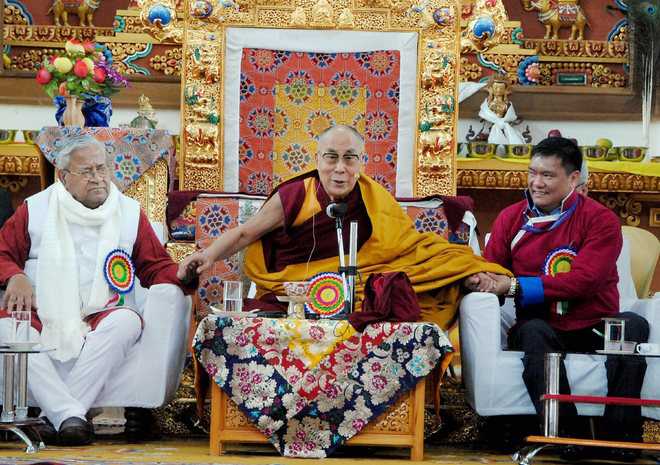
The Dalai Lama at Dirang monastery in Arunachal Pradesh on Thursday. Governor PB Acharya (L) and CM Pema Khandu are also seen. PTI

Simran Sodhi

Tribune News Service

New Delhi, April 6

China today upped the ante on its strong disapproval of the visit of the Dalai Lama to Arunachal Pradesh.Using the state-run media to attack India, China also picked on Junior Home Minister Kiren Rijiju for taking the stand that Arunachal Pradesh was an integral part of India and also for accompanying the Tibetan spiritual leader on his visit. “If New Delhi chooses to play dirty, however, Beijing should not hesitate to answer blows with blows,” said an edit in The China Daily.India has always rejected China’s claims that Arunachal Pradesh is “south Tibet” and India’s decision to give its nod to the Dalai Lama for his visit to Tawang has enraged China.Yesterday, China summoned Vijay Gokhlae, India’s Ambassador to China, to protest India’s decision. This is only the second time in the past eight years that China has summoned the Indian envoy; underlining how “upset” China was with India.In a veiled reference to Kashmir, the state-run Global Times (GT) ran an aggressive line asking India to see sense in its leverage with China.Most newspapers in China pointed out that India was using the Dalai Lama as a “spiritual tool” to gain leverage. China has accused the spiritual leader of having a separatist agenda, a charge that has been denied by the Dalai Lama and India.

Rijiju visits border post

New Delhi: Kiren Rijiju, Union Minister of State for Home Affairs, on Wednesday visited Saluicegate Border Outpost of Sashastra Seema Bal in West Kameng district of Arunachal Pradesh to interact with the security personnel there in the wake of China threats following Tibetan spiritual leader the Dalai Lama’s visit to the north-eastern state. Rijiju is learnt to have stayed at the post for half an hour and appreciated the staff for their dedication. TNS

Takes on Rijiju

“Rijiju might think himself cute in borrowing a line from Beijing’s diplomatic representations, but he has ignored the fundamental distinction here: Like Taiwan and any other part of China, Tibet is a part of the Chinese territory no matter whether New Delhi agrees or not” Edit in state-run The China Daily


5 soldiers trapped in avalanches in Ladakh’s Batalik sector, 2 rescued

5 soldiers trapped in avalanches in Ladakh's Batalik sector, 2 rescued
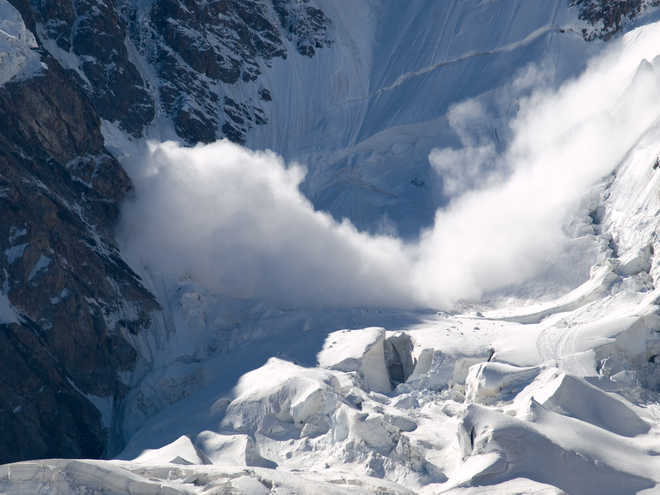
Photo for representational purpose. — Thinkstock

Srinagar, April 6

Five soldiers were trapped at an Army post after multiple avalanches hit Batalik sector in Ladakh region of Jammu and Kashmir on Thursday, an Army official said.

(Follow The Tribune on Facebook; and Twitter @thetribunechd)

“Unprecedented snowfall triggered multiple avalanches in Batalik Sector in which a post was buried. Five soldiers were trapped under the snow,” an army official said.Two of them have been rescued, while efforts are on to save the other three, he said.“Rescue operation for the remaining three soldiers is in progress. Specially-trained Avalanche Rescue Teams have been deployed,” the official said.According to MeT department officials, Srinagar received 83.9 mm rain and snowfall since yesterday while Kokernag in south Kashmir received 69.9 mm of rains in that period.Pahalgam, also in south Kashmir, recorded rainfall of 64.2 mm of rains since yesterday.As many as 20 Army personnel, including a major and a Junior Commissioned Officer, lost their lives in three separate incidents of avalanches in Sonamarg area of Ganderbal, Gurez in Bandipora and Machhil in Kupwara districts in January this year. — PTI


US cracks down on Indian IT firms; lists steps to detect fraud

US cracks down on Indian IT firms; lists steps to detect fraud
The application process for this year’s H-1B visas opens in US.

Washington, April 4

The US on Tuesday announced multiple measures to “deter and detect” what it described as “fraud and abuse” of H-1B work visas, the most sought after by Indian IT firms and professionals.

The announcement by the US Citizenship and Immigration Services (USCIS) comes on a day on which the federal agency started accepting applications for H-1B visas for the fiscal year beginning October 1, 2017.

(Follow The Tribune on Facebook; and Twitter @thetribunechd)

The USCIS announcement indicated that the US government is going to be tough and stringent in approval of H-1B visas this year.

The USCIS has a Congressional mandate to issue 65,000 H-1B visas in general category and another 20,000 for those applicants having higher education, masters and above, from US universities in the field of science, technology, engineering and mathematics.

Asserting that its multiple measures announced today will further “deter and detect H-1B visa fraud and abuse”, the USCIS said the H-1B visa programme should help US companies recruit highly-skilled foreign nationals when there is a shortage of qualified workers in the country.

“Yet, too many American workers who are as qualified, willing and deserving to work in these fields have been ignored or unfairly disadvantaged. Protecting American workers by combating fraud in our employment-based immigration programs is a priority for the USCIS,” a statement said.

The USCIS also announced the launch of an email helpline against abuse and fraud of H-1B visas. The USCIS will now onwards take a more targeted approach when making site visits across the country to H-1B petitioners and the work sites of H-1B employees.

The USCIS will focus on cases where it cannot validate the employer’s basic business information through commercially available data; H-1B-dependent employers (those who have a high ratio of H-1B workers as compared to US workers, as defined by statute); and employers petitioning for H-1B workers who work off-site at another company or organisation’s location.

Targeted site visits will allow USCIS to focus resources where fraud and abuse of the H-1B programme may be more likely to occur, and determine whether H-1B dependent employers are evading their obligation to make a good faith effort to recruit US workers, a media release said.

Noting that it will continue random and unannounced visits nationwide, USCIS said these site visits are not meant to target non-immigrant employees for any kind of criminal or administrative action but rather to identify employers who are abusing the system.

“Employers who abuse the H-1B visa programme negatively affect US workers, decreasing wages and job opportunities as they import more foreign workers,” it said.

“To further deter and detect abuse, USCIS has established an email address, which will allow individuals (including both American workers and H-1B workers who suspect they or others may be the victim of H-1B fraud or abuse) to submit tips, alleged violations and other relevant information about potential H-1B fraud or abuse,” it said.

The H-1B visa is a non-immigrant visa that allows American firms to employ foreign workers in occupations that require theoretical or technical expertise. The technology companies depend on it to hire tens of thousands of employees each year.

During his election campaign, President Donald Trump had promised to increase oversight of our H-1B and L-1 visa programmes.

The White House also warned against abuse and fraud of H-1B visas by companies.

“The Trump Administration will be enforcing laws protecting American workers from discriminating hiring practices,” White House Press Secretary Sean Spicer told reporters at his daily news conference.

Today opens the application process for this year’s H-1B visas, he said.

“The President has spoken about the H-1B visa programme in the past,” he added.

“The White House acknowledges that there are issues with the programme as it currently stands. However, there are several laws that are on the books that went unenforced in the previous administration,” Spicer said. —PTI


India, Saudi Arabia to explore joint production in defence

India, Saudi Arabia to explore joint production in defence
A Saudi well-wisher kisses the hand of King Salman bin Abdul Aziz (C) in a symbolic pledge of allegiance during a ritual ceremony in Riyadh. AFP file photo

KV Prasad

Tribune News Service

New Delhi, March 12

Taking forward the growing engagement between India and Saudi Arabia, both countries are in talks for joint production in various fields, including petroleum, new technology and defence industry.As India prepares itself for the visit of King Salman bin Abdulaziz Al-Saud later this year, Secretary (Economic Relations) Amar Sinha, at an event today, said India-Saudi Arabia relations were growing rapidly beyond the field of energy with both countries in talks to explore joint production. Prime Minister Narendra Modi visited the Kingdom last year in April and New Delhi is working out dates with Riyadh for the King’s visit.(Follow The Tribune on Facebook; and Twitter @thetribunechd)“Saudi–Indian relationships can be furthered by more successful partnerships between companies which understand each other’s cultures and society deeply,” Secretary Sinha said gracing a function by SABIC, a Saudi-based global leader in diversified chemicals, that is undertaking social work in India.On his part, Saudi Ambassador Saud bin Mohammed Al-Sati touched upon the strategic partnership between the two countries in areas of research, including with the Council of Scientific and Industrial Research in Chemicals and Plastics.He said with Saudi Arabia embarking upon an economic restructuring programme under its “Vision 2030” diversifying the country’s dependence on oil to sustain the economy, the country sees India as a major partner in the Make in India initiative.As India and Saudi Arabia depend on imports to cater to is growing defence needs, both countries see a great potential in joint production in the defence industry. Saudi Arabia is India’s fourth largest trade partner and the country imports around 19 per cent of its crude oil requirement from Saudi. During 2015-16, the value of bilateral trade stood at $ 26.71 billion, a 32 per cent fall from $32.97 billion the previous year due to lower prices of petroleum.Saudi Arabia is the eighth largest market in the world for Indian exports and is destination to more than 2.4 per cent of India’s global exports while Saudi Arabia is the source of 5.34 per cent of India’s global imports.As part of its corporate social responsibility, SABIC recently achieved a milestone of scanning 1 lakh government schoolchildren in Delhi and Gurgaon providing eye care, including spectacles, besides undertaking other works in Bengaluru, Vadodora and Mumbai, SABIC vice-president Janardhana Ramanujalu said.


Dalai in Tawang: Test of India’s will Syed Ata Hasnain

Should India expect a Chinese response other than political and diplomatic?

Tibetan spiritual leader the Dalai Lama (Photo: AP)

 Tibetan spiritual leader the Dalai Lama (Photo: AP)

The current standoff between India and China over the Dalai Lama’s visit to Tawang from April 4 is a lot more than just his emotive longing to visit the great monastery which he had last graced in 2009. It’s a political, military and diplomatic game which China, more than India, has been indulging in for the past many years. India has usually been the responder. During the last two decades of the 20th century China followed the principle of stable borders and decided not to disturb the status quo lest it hinder the process of its modernisation. Only the standoff with India at Sumdorongchhu in May 1987 after the Indian Army’s Exercise Chequerboard, caused short-term disturbance of this policy. From 1993, when the Peace and Tranquility Agreement was signed, there was relative peace at the borders. However, one can recall how progressively over time India perceived that eventually it would have to be the Chinese threat it would have to militarily contend with in the long term. George Fernandes as defence minister was one of the few who had the courage to openly say this in 1998.

For some years now, China has been testing India’s will and capability through “walk-in actions” at the Line of Actual Control (LAC),  signifying its readiness to reactivate its borders after achieving a degree of higher confidence after the PLA’s modernisation. However, with the coming of Prime Minister Narendra Modi in 2014 and his proactive outreach and intent of taking economic relations well beyond, it appeared that the relationship would finally shed past perceptions. Once the relationship improved, the two nations would be ready for serious negotiations on the border issue. In fact, trade and economics were meant to make the border issue much less significant. A couple of things have disturbed the emerging bonhomie and rare chemistry that was on display between Prime Minister Modi and President Xi Jingping in 2014, that promised a much more cordial relationship.

First, even before Mr Modi took office, China’s broad strategic policy did not ever look towards India as an equal within Asia. Although economic cooperation had continued at a high pitch, the political relationship was always hamstrung by this Chinese perception. It is a natural phenomenon relating to two large neighbours wary of each other’s intent and the border dispute was only a factor for exploitation.

In recent years, China has firmed up its view that India is ever willing to enter into partnerships that primarily target it. India’s legitimate concerns on China’s aggressive stance at the border and in its relationship with Pakistan doesn’t appear to have ever been taken into account; trust was obviously in great deficit ever since 1962. Earlier, in partnership with Russia (formerly the Soviet Union) and now with the United States and Japan, extending even to Vietnam, India’s emerging relationships appear to have made China wary. Mr Modi’s special effort to build trust and a personal relationship with the Chinese leadership scored spectacular success, but his special relationships with both former US President Barack Obama and Japanese PM Shinzo Abe perhaps became a fear factor for China. It only underscores the degree of difficulty in maintaining equal and mutually beneficial partnerships with multiple nations without one or the other being suspicious of the other. Second, the coming of the high-profile China-Pakistan Economic Corridor (CPEC), particularly with the alignment passing through Gilgit-Baltistan, there has been considerable fallout on the region’s strategic environment. Whatever be China’s military and economic compulsions, the execution of a major strategic initiative through disputed territory claimed totally by India impinges on its sensitivity in no small way. It even enhances the scope for strategic collusion between Pakistan and China.

Third, the diplomatic signals have not been encouraging at all. China’s refusal in the UN Security Council to have Masood Azhar classified as a terrorist or placing obstacles in the way of India’s bid to become a member of the Nuclear Supplies Group (NSG) have obviously only created more negative sentiment in India. India sensed that these actions were designed to send home subtle messages about China’s concerns on the emerging India-US Strategic Partnership and India’s efforts to reach out to Japan and Vietnam. For China, anything contributing towards its stronger relationship with Pakistan works against India. Fourth, the recent very visible actions undertaken by China within South Asia appear to be a drawing of the erstwhile “string of pearls” into a tighter noose; strategic messaging packaged smartly. The changing status of ownership of Hambantota port in Sri Lanka in China’s favour and the visit of a PLA Navy submarine to it were ominous signals. The purchase of Feydoo Island in the Maldives by a Chinese company also raises concerns. The ongoing deal of China’s state-run Zhenhua Oil to  buy Chevron’s gas fields in northeastern Bangladesh bordering Indian states also firms up India’s suspicions, more so as Zhenhua is a subsidiary of China’s Norinco defence industry conglomerate. To cap it all, the Chinese defence minister has paid a well-publicised visit to Sri Lanka and Nepal with some attractive offers of defence equipment. The visit was probably timed for the period just before the Dalai Lama began his intended tour.

There is much concern in strategic circles about India’s defiant attitude and expression of strategic independence in taking the decision in October 2016 to clear the Dalai Lama’s visit. He has been invited for a cultural festival by the BJP government of Arunachal Pradesh; even the 10-day period of the visit is longer than usual. China has employed its usual media blitz the way it always does but also got its official spokesperson to express concern over the future course of Sino-Indian relations. India’s stance appears fairly well calibrated. The cumulative effect of CPEC, the Masood Azhar affair and NSG issue had put it firmly on the defensive. It can’t be seen to be remaining at that position in a fast-moving world where comprehensive national power, punching within one’s weight and strategic independence are all seen as rolled into one.

Should India expect a Chinese response other than political and diplomatic? Prudence demands readiness for all contingencies, and nothing which exacerbates the situation. Military calibration by China is always a possibility, but it must take into account the implications and end results; a strategy without an aim achieves nothing. Does it have the will to launch military operations, and to what purpose? India’s national pride and its international standing is a factor that it cannot ignore. For all their deficient capabilities, the Indian armed forces are no pushover. A localised border action to embarrass India can’t be guaranteed to carry any assurance of success, and will always bear the potential for a larger conflagration. China is known for its strategic pragmatism. It must realise that the Dalai Lama’s visit to Tawang was not designed to embarrass China but more as a message to the people of Arunachal Pradesh. It is a matter of perception even as unnecessary symbolism needs to be reduced in the relationship. Many across the world will be observing these developments, chiefly in East and Southeast Asia, and in Pakistan eyes will be peeled to see if India wilts under pressure. The decision to continue with the visit will give the Indian government much more confidence in handling its northern neighbour.