Category Archives: Uncategorized

Pall of gloom descends on deceased jawan’s native village in Kurukshetra

Pall of gloom descends on deceased jawan’s native village in Kurukshetra

Rifleman Mandeep Singh’s widow Prerna mourns at her residence at Anteri village of Kurukshetra on Saturday. Tribune photo: Ravi Kumar
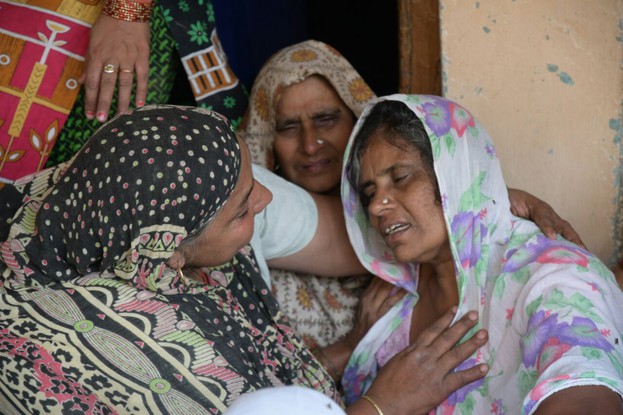
Rifleman Mandeep Singh’s mother Nirmala Devi(Right) mourns his death at Anteri village of Kurukshetra on Saturday. Tribune photo: Ravi Kumar

Parveen Arora

Tribune News Service

Kurukshetra, October 29
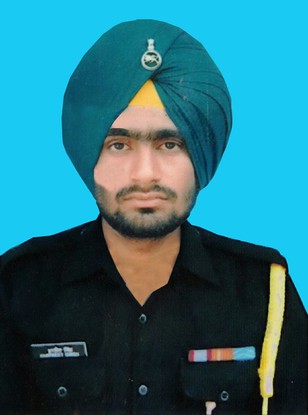
A pall of gloom descended on the native village of army jawan Mandeep Singh, who was killed by terrorists in Machil sector in Jammu and Kashmir on Friday.The family members of the 30-year-old were inconsolable.Several women from Aantehri village here reached the jawan’s house on Saturday and tried to console Mandeep’s widow. The couple had got married two years ago, the family said.

(Follow The Tribune on Facebook; and Twitter @thetribunechd)

Deputy Commissioner Sumedha Kataria also visited the jawan’s home and offered her condolences.The martyr’s neighbours described him as a “go-getter” who always had a smile on his face.Subhash, husband of the sarpanch of the village, said Mandeep was a helpful person who always offered help to anyone who approached him in need.Mandeep’s widow Prerna is a head constable with Haryana Police and is posted at Shahbad Markanda here.Mandeep joined 17 Sikh Regiment as a sepoy in 2008 and got married in 2014His father Phool Singh, a truck driver, said the government should give a free hand to the army to tackle the menace from Pakistan. He said Mandeep had called him around 10 days ago and promised to him to come home on Diwali.His brother Sandeep Singh said, “Give me a chance to join the army. I would avenge his death.”His cousin Jagbir Singh, an ex-serviceman, said it was an act of cowardice and urged the government to take revenge.The mortal remains of Mandeep will reach the village by 5pm and would be consigned to the flames later.Mandeep’s sacrifice came within a week after Sushil Kumar (47), a BSF constable was martyred in Jammu district. He also hailed from Kurukshetra district and belonged to Pehowa town. With PTI

Human rights of Army soldiers are supreme: Jitendra

Rajpura (Kathua), October 29Union Minister Jitendra Singh said on Saturday that an Indian soldier’s rights should take precedence over those of terrorists.He said a militant forfeits his entitlement to human rights the day he engages in terrorism, the “biggest violation of human rights”.”Human rights of an Army soldier are supreme…The human rights of Indian soldiers should take precedence over the rights of terrorists,” he said.Singh, who arrived in Jammu this morning, drove straight to International Border, saying he would like to begin his visit by meeting the security personnel posted at the border and greeting them on Diwali eve.He addressed a public meeting organised by Seema Jan Kalyan Samiti, comprising ex-servicemen, their families and local residents.He said people find Army a convenient, soft target as it was trained to exercise restraint but they did not have the courage “to call a terrorist a terrorist” or to condemn the atrocious act of mutilating a soldier’s body.Singh said was time to rise and call the bluff of the “so-called human rights protagonists and the pseudo-intellectuals” who sought to promote their politics at the cost of army jawans. He said when you asked whether Burhan Wani was a terrorist, instead of saying ‘yes’ or ‘no’, they come out with long platitudes, philosophies and postulations.“Those who lack the courage of conviction to call a spade a spade, have no right to point a finger at an armed forces jawan because of whom they are in a position to conveniently sit in their drawing rooms and issue lofty statements,” he said.Stressing that this year’s Diwali was dedicated to the army and paramilitary forces, Singh said we are able to celebrate the festival in the country, because of the young soldiers who are guarding the border day and night and spending sleepless nights.”It is a sin to say or do anything that would directly or indirectly compromise the morale of armed forces,” he added. — PTI

clip

clip

clip

clip

clip


ARMY PAINED BY GOVT ACTIONS: RAHUL TO MODI

I am saddened that in the last few weeks, actions taken by the government, far from reassuring the soldiers, have indeed caused them pain and hurt. RAHUL GANDHI, Congress vice-president

NEW DELHI: Congress vice-president Rahul Gandhi has written a letter to Prime Minister Narendra Modi expressing concern over reports suggesting that his government has decided to downgrade the status of military officers compared to their civilian counterparts.

Raising the issues of reduction of disability pension and the “anomalies” in the one rank-one pension rolled out by the BJP-led NDA government, he said these developments have “adversely affected” the morale of the armed forces soon after they conducted surgical strikes against terror launch pads across the LoC.

“I am saddened that in the last few weeks actions taken by the government, far from reassuring the soldiers, have indeed caused them pain and hurt,” Gandhi said in the October 28 letter to the PM.

“Just days after our soldiers conducted the surgical strikes, the disability pension system was converted to a new slab system, that in many instances drastically reduces the pension received by these brave men in case of a disability,” he said. NEW DELHI: Congress vice-president Rahul Gandhi has written a letter to Prime Minister Narendra Modi, expressing concern over reports suggesting that his government has decided to downgrade the status of military officers compared to their civilian counterparts.

Raising the issues of reduction of disability pension and the “anomalies” in the one rank one pension rolled out by the BJP-led NDA government, he said these developments had “adversely affected” the morale of the armed forces soon after they conducted surgical strikes against terror launch pads across the Line of Control (LoC).

I am saddened that in the last few weeks, actions taken by the government, far from reassuring the soldiers, have indeed caused them pain and hurt,” Gandhi said in the October 28 letter to the PM. “Just days after our soldiers conducted the surgical strikes, the disability pension system was converted to a new slab system, that in many instances drastically reduces the pension received by these brave men in case of a disability,” he said.

The defence ministry had earlier this month referred the representation of the armed forces for a percentage-based system rather than a slab-based one for determining disability pension to the Anomaly Committee of the 7th Central Pay Commission. The decision followed widespread criticism over a move that introduced a slabbased by the 7th Pay Commission, for determining the disability pension for forces.

The Congress vice-president claimed that the roll out of the 7th Pay Commission continues to keep the defence forces at “disadvantage and further exacerbates” the disparity between them and civil employees. “To add to that we learnt through the media that the government has downgraded the status of our military officers visà-vis their civilian counterparts in a letter dated 18 October 2016,” Gandhi wrote.

The rank parity controversy erupted after hindustantimes. com broke the story on October 24. On Friday, the government took a U-turn and decided to form a panel to look into the row.

IMG-20161029-WA0110 IMG-20161029-WA0109


clip

Rahul writes to Modi on raw deal for defence officers

I am saddened that in the last few weeks, actions taken by the government, far from reassuring the soldiers, have indeed caused them pain and hurt. RAHUL GANDHI, Congress vice-president

From page 01 NEW DELHI: Congress vice-president Rahul Gandhi has written a letter to Prime Minister Narendra Modi, expressing concern over reports suggesting that his government has decided to downgrade the status of military officers compared to their civilian counterparts.

Raising the issues of reduction of disability pension and the “anomalies” in the one rank one pension rolled out by the BJP-led NDA government, he said these developments had “adversely affected” the morale of the armed forces soon after they conducted surgical strikes against terror launch pads across the Line of Control (LoC).

“I am saddened that in the last few weeks, actions taken by the government, far from reassuring the soldiers, have indeed caused them pain and hurt,” Gandhi said in the October 28 letter to the PM. “Just days after our soldiers conducted the surgical strikes, the disability pension system was converted to a new slab system, that in many instances drastically reduces the pension received by these brave men in case of a disability,” he said.

The defence ministry had earlier this month referred the representation of the armed forces for a percentage-based system rather than a slab-based one for determining disability pension to the Anomaly Committee of the 7th Central Pay Commission. The decision followed widespread criticism over a move that introduced a slabbased by the 7th Pay Commission, for determining the disability pension for forces.

The Congress vice-president claimed that the roll out of the 7th Pay Commission continues to keep the defence forces at “disadvantage and further exacerbates” the disparity between them and civil employees. “To add to that we learnt through the media that the government has downgraded the status of our military officers visà-vis their civilian counterparts in a letter dated 18 October 2016,” Gandhi wrote.

The rank parity controversy erupted after hindustantimes. com broke the story on October 24. On Friday, the government took a U-turn and decided to form a panel to look into the row.


250 attend ex-servicemen rally in Beas

Tribune News Service

Amritsar, October 27

Following ongoing drive to address grievances of ex-servicemen a Veterans’ Rally was organised at Beas Military Station today. The rally was attended by as many as 250 ex-service personnel and Veer Naris.During his address, Brigadier Sandeep Singh, Station Commander, Beas Military Station, highlighted benefits of online registration of complaints with regard to pension and other assistance to ex-servicemen without having to visit any office. Giving information about various welfare measures being taken by the Army, the Station Commander added that special emphasis would be laid on self-reliance and as such employment opportunities had been created for veterans, Veer Naris and their dependents.Presently, 70 ex-servicemen, Veer Naris and dependents are employed by the Beas Military Station on various civilian posts in the Ex Servicemen Contributory Health Scheme (ECHS), canteen, schools and polyclinic, he added.Representatives from different departments, including banks, Department of Defence Service Welfare Office (DDSWO) and Defence Pension Disbursing Office (DPDO), were present at the rally to resolve grievances and apprise veterans about various schemes and facilities offered by them.Meanwhile, medical specialists examined several veterans and Veer Naris in a separate camp held concurrently with the rally.Later, Station Commander and Soni Singh, chairperson, Family Welfare Organisation, Double Victory Brigade, interacted with veterans and Veer Naris and reiterated commitment of the Army towards ex-servicemen.

TA cycle rally spreads awareness on social issues

Tribune News Service

Chandigarh, October 27

A cycle expedition organised by the 152 Infantry Battalion (Sikh) of the Territorial Army (TA) to spread social awareness on drug addiction and saving the girl child culminated at the TA Group Headquarters here today.Covering a distance of 152 km, the 11-member expedition was flagged off from Ludhiana on October 24 and was flagged in by Maj Gen AK Sanyal from the Western Command Headquarters.The expedition halted en-route at different villages where the troops interacted with school children and local residents to spread awareness on the above causes.Local ex-servicemen supported the troops’ endeavour.

36869


Let’s tell China where to get off

As a serial infiltrator into disputed territories, Beijing has no grounds to complain about who goes where on Indian soil

T hat China has professed displeasure over a recent visit to Arunachal Pradesh by Richard Verma, the US ambassador to India, is both unsurprising and irrelevant. Beijing is merely effecting to be hopping mad, when it has no leg to stand on. Resorting to classic 1950s Communist Party vernacular, Chinese foreign ministry spokesman Lu Kang pronounced that Beijing was “firmly opposed” to Verma’s visit to Tawang — how does one oppose something that has already happened? — on the highly dubious grounds that it might “damage the hard-earned peace and tranquillity of the China-India border region.” Lu told a press briefing in Beijing that “any responsible third party should respect efforts by China and India to seek peaceful and stable reconciliation, and not the opposite.” He went on: “We urge the United States to stop getting involved in the China-India territorial dispute.”

PTI(Left to right): US ambassador to India Richard Verma, chief minister of Assam Sarbananda Sonowal and chief minister of Arunachal Pradesh Pema Khandu at Tawang, Arunachal Pradesh, October 21

One imagines he wagged an admonishing finger as he spoke.

For all the faux umbrage, Lu’s argument is bunkum. The travel plans of a foreign envoy, even one from the US, represent no material threat to relations between India and China. Nor does Verma’s visit to Tawang in any way compromise his government’s “respect” for India-China peace. Lu knows this, and it’s not the point: Although the scolding was notionally directed at Verma, the message was meant for the Modi government. Beijing knows the ambassador would not have made the trip without New Delhi’s knowledge and blessing.

What China is reminding India, with all the subtlety of a giant dam across the Yangtze, is that it will not renounce its claims to the swath of Arunachal Pradesh it calls “South Tibet”. If India thinks allowing ambassadors to visit might change the status quo, then it is sorely mistaken.

But there’s nothing to suggest this was India’s calculation — New Delhi views the status quo in Arunachal Pradesh quite differently. Its reaction to Lu’s pouty posturing was as bland as it was blunt: “The US Ambassador visited Arunachal Pradesh, a state which is an integral part of the country to which he is accredited. There is nothing unusual in it,” said Vikas Swarup, spokesperson of the ministry of external affairs.

Swarup is an accomplished novelist (he wrote the book that became the movie “Slumdog Millionaire”) and it can’t have been easy to restrain himself from using much more colourful language — and from exercising an entirely different finger gesture.

Were he not shackled by diplomatic considerations, he might have mentioned that if the “hard-earned peace and tranquillity” along the India-China border is being damaged, it is not by the scheduled and advertised visit of the American envoy, but by the clandestine infiltration along the frontier by Chinese troops. There were 350 such transgressions last year alone. India’s restraint in this matter has been remarkable.

Swarup might also have pointed out that China is a fine one to preach about the need to tread carefully on disputed territory, when its soldiers have been spotted in border posts in Pakistan-occupied Kashmir: Earlier this year, Chinese officers were seen in the Nowgam sector, close to the Line of Control. Imagine the hyperventilating in Beijing if Verma had been accompanied by a handful uniformed US army officers!

Other soldiers from the People’s Liberation Army have made their presence felt near the Tangdhar sector. The ostensible reason is the construction of a hydel project there by a Chinese company, but that’s not much of an excuse: Either Beijing doesn’t trust its ally, the Pakistani military, or the soldiers are there for another reason.

There will be many more excuses for a growing Chinese troop presence in PoK in the months ahead. Beijing is literally bulldozing a highway, known as the China-Pakistan Economic Corridor, through areas India regards as its own. CPEC, a $46 billion project that seeks to connect the Chinese province of Xinjiang to the Pakistani port of Gwadar, will pass through Gilgit-Baltistan. Prime Minister Narendra Modi and external affairs minister Sushma Swaraj have expressed New Delhi’s reservations about this to Beijing, with little effect.

Nor has Beijing been especially accommodating of the claims of other nations in the South China Sea littoral, where international arbitrators have ruled against its spurious proclamations of ownership. China has opposed India-Vietnamese oil exploration in the area, and maintains, without explanation, that there are no parallels between its presence in PoK and India’s commercial pursuits in the South China Sea. What’s more, operating on the principle that possession is nine-tenths of the law, China is building islands in disputed waters with the sole purpose of turning its claims into a fait accompli.

Two can play that game. Having dispensed with Beijing’s blather over the American envoy’s North-Eastern trip, the MEA should now consider building metaphorical islands in Arunachal Pradesh. The area is ripe for tourism, especially of the environmental kind favoured by many Westerners and a growing number of Indians. An economic corridor in Arunachal Pradesh would be welcomed by locals for the jobs and opportunities it would bring.

In the meantime, the Modi government should encourage more foreign diplomats to visit Tawang — individually, and in groups. After all, as Verma tweeted after his trip, it is a place of “stunning mountains and wonderful people.”

Better yet, why not hold an international event there, inviting ALL foreign envoys currently in New Delhi? Yes, China’s too.


3-fold salary hike plan for President, Vice-Prez

New Delhi, October 25

The salary of the President and the Vice-President may go up three times as the Union Home Ministry has prepared a proposal for raising emoluments of the country’s top two functionaries.The move comes following the implementation of the Seventh Pay Commission’s recommendations that has created an anomalous situation in which the salary of the President is Rs 1 lakh less than that of the country’s top-most bureaucrat, the Cabinet Secretary. (Follow The Tribune on Facebook; and Twitter @thetribunechd)The proposal is expected to be placed before the Union Cabinet for approval soon.At present, the President gets Rs 1.5 lakh per month, the Vice-President Rs 1.25 lakh and the Governor of a state Rs 1.1 lakh. As per the latest proposal, the President’s salary may go up to Rs 5 lakh and the Vice-President’s up to Rs 3.5 lakh.After the implementation of the Pay Commission’s awards, the Cabinet Secretary, the top-most bureaucrat in the country, gets Rs 2.5 lakh per month and a Secretary in the Union Government gets Rs 2.25 lakh per month.After the Cabinet nod, the Bills will be tabled in Parliament, possibly in the coming winter session.The salaries of the President, Vice-President and Governors were last hiked in 2008 when Parliament approved a three-fold increase. — PTI


Navy says goodbye to INS Viraat, world’s oldest aircraft carrier

Navy says goodbye to INS Viraat, world's oldest aircraft carrier
INS Viraat is expected to be decommissioned by end of this year. Photo: Twitter handle @indiannavy

Kochi, October 23

INS Viraat, the world’s oldest aircraft carrier, was accorded a grand send-off from the port city here on Sunday, after over five decades of its service to the Navy.The ship, which underwent a decommissioning refit, is being towed back by three tugs to Mumbai for the decommissioning ceremony, a Navy official said here.

(Follow The Tribune on Facebook; and Twitter @thetribunechd)

The final journey of the carrier began with Navy officials led by the Chief of Staff, Southern Naval Command, Rear Admiral Nadkarni bidding farewell to the carrier at Ernakulam Wharf of Cochin Port Trust this morning.Viraat is expected to be decommissioned by end of this year, after 55 years of service, including 27 years with the Royal Navy (British Navy).The Navy has agreed to hand over INS Viraat to Andhra Pradesh government after its decommissioning.The AP government had shown a keen interest in getting INS Viraat, the oldest aircraft carrier operated by Indian Navy, to berth in Vizag for promotion of tourism after its decommissioning. — PTI

India has started process to liberate PoJK: BJP MP

Vikram Sharma

Tribune News Service

Jammu, October 22

BJP Member of Parliament Shamsher Singh has said that Pakistan-occupied Jammu and Kashmir (PoJK) and Gilgit and Baltistan were our homes and India had initiated the process to liberate them from the illegal occupation of Pakistan.He said the surgical strikes in PoJK to eliminate terrorists from the area were the first step by the Central government in this direction and soon the areas would be liberated. He, however, reserved his comments on the next move by the Central government to liberate the occupied areas by Pakistan, saying, “These are internal matters of the government which cannot be made public.”The Rajya Sabha member said the Centre was considering the issue seriously.On the opening of fire by Pakistan on both international border and Line of Control, Shamsher Singh said: “Frustrated by India’s action through surgical strikes, Pakistan has taken to its oft-repeated retaliation on borders. This is momentary and will die down soon. There is nothing much to worry about it.”The BJP MP was speaking at the sidelines of a seminar.

India, Pak not at brink of war: Omar

QUOTE: “I am not one of those who sees imminent war looming in the subcontinent. I’d like to believe that both governments in New Delhi and Islamabad are a lot more careful about the prospect of war than perhaps some of our TV channels would like them to be,” Omar Abdullah, former CM

New York, October 22

Former Chief Minister Omar Abdullah does not see an imminent war looming between India and Pakistan despite heightened tensions along the Line of Control (LoC). He believes the two countries are a “lot more careful” about the prospect of war than some of the news channels would like them to be.“I don’t believe we are,” Omar said when asked whether India and Pakistan were at the brink of war.“I am not one of those who sees imminent war looming in the subcontinent. I’d like to believe that both governments in New Delhi and Islamabad are a lot more careful about the prospect of war than perhaps some of our TV channels would like them to be,” he said at a conference titled ‘India and Pakistan: A Subcontinental Affair’, organised by the students of New York University on Friday.Pakistan’s former President Pervez Musharraf was also scheduled to speak at the conference but cancelled his appearance at the last minute, citing “security concerns”.There were several moments of animated discussions, some heated arguments and loud cheers during Omar’s nearly hour-long discussion with the gathering, that included students from both India and Pakistan, on Kashmir, surgical strikes by India, killing of Hizbul commander Burhan Wani, tension with Pakistan, plight of Kashmiri Pandits and Article 370.Omar said while there was tension along the LoC and ceasefire was “under a bit more pressure” than it was at the same time last year, India and Pakistan were not at the brink of war.He noted that the Government of India had been careful “in moderating how it has sold” to the rest of the world the surgical strikes conducted across the Line of Control.“The Government of India has been careful in explaining what they have done post the Uri militant attack. They have told the world this (surgical strikes) was an anti-terror operation conducted in the vicinity of the LoC,” he said, adding that the government has not gone into details of how far they had gone inside the LoC or how many people were killed in the strikes.“What that has allowed is for an opportunity for a sort of a more nuanced response on the part of Pakistan,” he said, adding that there will have been “enormous pressure” on Pakistan Prime Minister Nawaz Sharif to retaliate had the Indian government spoken of how far they had gone across the LoC or how many people were killed in the strikes.The former CM said the heightened tensions between India and Pakistan added to the “mood of gloom” in the Valley because “no state more than Jammu and Kashmir suffers on account of a downturn in relations between India and Pakistan”. — PTI


Carving electoral capital out of surgical strikes

Achieving a strategic shift in Islamabad should be the goal, which is in danger because of premature celebrations

In Uttar Pradesh, the recent retaliatory commando raids across the LoC have taken on a new meaning. On Dussehra, Prime Minister Narendra Modi appeared at a Ram Lila in Lucknow, holding a faux sudarshan chakra. Across the state, posters featuring Modi, defence minister Manohar Parrikar, Union home minister Rajnath Singh and assorted BJP leaders have been plastered, along with silhouettes of soldiers, hailing the triumph of the “avengers of Uri”.

PTIPrime Minister Narendra Modi has now signalled a zero tolerance for jihadi activity so he is now committed to respond each time an incident occurs. But we are still a long way from cracking the tough Pakistani nut

In the recent narrative, India seems to have had three military victories: The unambiguous triumph that led to the creation of Bangladesh in 1971, the somewhat ambiguous Kargil victory of 1999, and now, the “surgical strikes” of September 29, 2016, which have been declared to be a great victory, even though it has not quite achieved its goal — getting Pakistan to dismantle its terrorist infrastructure.

The war of 1971 lasted two weeks, with the loss of more than 3,800 officers and jawans. The Kargil operation lasted roughly two months with the loss of some 470. In the surgical strike, which lasted several hours, fortuitously no one was killed.

The reason why the government is furiously making all kinds of claims, including that the Indian Army is now as good as the one of Israel in counter-terrorism, has to do with electoral politics. The use of military achievements to win elections is not new. But conflating a limited border operation to a military triumph certainly is, especially as it is aided by sections of an over-the-top media that seems to have lost its balance. The army itself has been low-key and the DGMO’s statement announcing the attacks was factual and made none of the claims subsequently adduced on their behalf.

Elections have played a role in all three victories. In March 1971, Indira Gandhi called for general elections and crushed the Opposition, in the main the dissident Congress and Jana Sangh. Strengthened enormously, she began the military-diplomatic moves that led to the surrender of the Pakistani army and the break-up of the country. Months after the war, in March 1972, she called for elections to 16 assemblies and the Congress swept them all.

In 1999, having been voted out of power in the midst of the Kargil crisis, Atal Bihari Vajpayee went to the polls with the “Kargil victory” as a slogan, accompanied by the same kind of media hype we see today. It didn’t wash, the BJP managed to win 182 seats, the exact number it had in the outgoing Lok Sabha. But it formed the government because the Congress did particularly badly.

The assembly elections in UP are due in a few months. At this juncture, we can only guess on the outcome, but one thing that is clear is that the BJP is going all out to make the maximum political use of what it says is a famous “victory”.

The surgical strikes are witnessing some of the repeat of the Kargil scenario, when the ruling party raised the din of the victory so high that the failure to detect intruding Pakistanis for several months was papered over. TV studios have constructed their own war room sets complete with anchors in war correspondent’s gear. As for politicians, they are truly over the top.

What would Indira Gandhi have said of Parrikar’s claim that “Like Hanuman, Army didn’t know its power, I made our armed forces realise their power”? Just how a supposedly cultural organisation like the RSS inspires a tactical military strike is another unfathomable mystery.

Parrikar insists that the strikes have been the most outstanding achievements of the army in the past 30 years. In claiming this, he does grave disservice to the brave personnel who have conducted such operations since 1993, sometimes going deeper into Pakistan-occupied Kashmir than the soldiers did this time. His job is higher management of the defence portfolio and he needs to be seen as a responsible member of the National Nuclear Command Authority and the Cabinet Committee on Security

In democracies, using military achievements for elections are not unusual. But it’s worth looking at the outcomes of our listed “victories”. Indira Gandhi squandered her mandate, and in three years declared the Emergency. Vajpayee wisely consolidated the NDA and ordered the Kargil inquiry, which led to the first systematic reform in India’s defence system since the mid-1960s.

It is one thing to declare that our army is the best in the world, it’s quite another thing to be taken in by one’s own rhetoric. There are lots of gaps in the army’s organisation, equipment, doctrine and professional education. As defence minister, Parrikar’s first job is to address these issues, not win elections.

Modi has now signalled a zero tolerance for jihadi activity so he is now committed to respond each time an incident occurs. But we are still a long way from cracking the tough Pakistani nut and getting it to abandon support to terrorism. The strikes have been a great tactical success, but the real triumph will be in achieving a strategic shift in Islamabad. The strikes are only one element in what could be a sophisticated strategy of compellence; however, that strategy is already in danger of getting derailed by the premature celebrations of victory


War widows reject govt’s Rs 50-lakh grant-in-aid

War widows reject govt’s Rs 50-lakh grant-in-aid
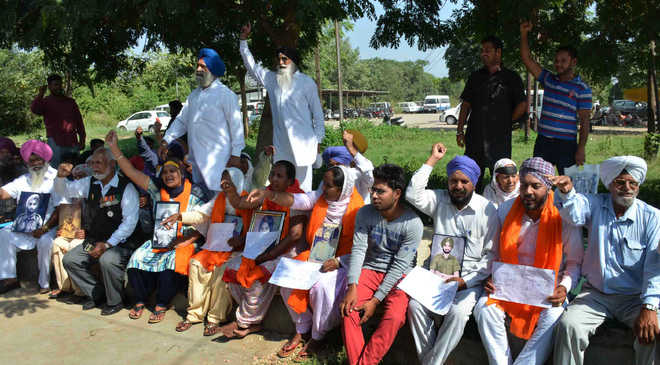
Family members of martyrs on dharna outside the CM’s residence in Chandigarh on Friday. Tribune Photo: Pradeep Tewari

Chandigarh, October 14

Widows and other family members of martyrs of the 1962, 1965 and 1971 wars today rejected the Rs 50-lakh grant-in-aid announced by the Punjab Government, while refusing to call off their protest outside the Chief Minister’s residence.“We want the compensation which we have been demanding for the past several months,” said Gurmeet Singh, son of 1971 war widow Shinder Kaur. “We will continue with our protest till our demands are met,” said Gurmeet, who was speaking on behalf of protesting families and war widows.Several war widows and their family members have been staging a protest in front of Parkash Singh Badal’s residence here since September 27.

They have been demanding financial compensation in lieu of 10-acre land announced in 1975.“Is this the way to treat the families of martyrs?” asked Baljinder Kaur of Chamba Kalan (Tarn Taran), whose father, Sepoy Balwinder Singh, died in the 1971 war.Meanwhile,

2016_7$largeimg29_Friday_2016_220710756

PPCC chief Capt Amarinder Singh assured to take up their issue with the Union Defence Minister.“It is very embarrassing. The government should either give 10 acres or pay the money,” said Amarinder, who was joined by party leaders Sunil Jakhar and Ravneet Bittu.Earlier, a spokesperson for the CM’s office stated that under the 1975 policy, over 1,500 war widows, who had applied in time, were allotted up to 10 acres of agricultural land or equivalent cash.However, there were nearly 100 cases in which the applicants failed to apply within the stipulated period. About 100 such cases had applied till the extended cut-off date of January 4, 2010.The spokesperson added that the residual agricultural land available for allotment was either locked up in litigation or in unauthorised possession, which rendered it practically impossible for the war widow allottees to take over possession of the land.Therefore, keeping in view the demands of war widows, the state government decided to honour the deserving cases of war widows with the cash grant. — TNS & PTI