All posts by webadmin

South’s first BrahMos armed Sukhoi squad to guard strategic Indian Ocean Region

South’s first BrahMos armed Sukhoi squad to guard strategic Indian Ocean Region

AFs Tejas aircraft flying at the induction ceremony of the first Sukhoi-30MKI fighter aircraft squadron at the Thanjavur airbase on Monday. PTI photo

Thanjavur, January 20

Adding teeth to India’s air and maritime dominance in the Indian Ocean Region, a squadron of fourth generation fighter jets Sukhoi-30 MKI equipped with the BrahMos missile was inducted on Monday at the airforce station here, the first such base in South India.

The ‘Tigersharks’ 222 squadron of Sukhoi 30 MKI jets, formally inducted by Chief of Defence Staff Gen.Bipin Rawat, will be tasked with the air dominance and maritime role and equipped with the air variant of the BrahMos.

The squadron based in this ancient Chola capital, about 340 km from Chennai, is seen as a gamechanger in guarding the strategically important Indian Ocean Region (IOR) that has seen growing Chinese presence.

Expected to set right the military balance in the IOR, the Su-30 MKI is a state-of-the-art all weather multi-role fighter aircraft capable of undertaking varied air defence, ground attack and maritime missions.

BrahMos, an Indo-Russian joint venture weapon, is a medium-range ramjet supersonic cruise missile capable of being launched from submarines, warships, fighter jets or land. The 2.5-tonne missile has a strike range of nearly 300 km.

The BrahMos cruise missile travels at a speed of Mach 2.8, nearly three times that of sound.

Air Chief Marshal Rakesh Kumar Singh Bhadauria and senior defence officials were among those present on the occasion of the induction ceremony with the former describing it as a historic day for the Indian Air Force.

“So the role it will undertake is the Air Defence of Southern Peninsula and more importantly with this special maritime capability in combination of Brahmos it will be in for maritime role in support of nation,” Bhadauria said.

A defence release said with the operationalisation of the squadron, the air defence capablilites of IAF, particularly in the Southern Air Command area will be strengthened.

“This would also provide protection to our island territories and sea lines of communication in the Indian Ocean Region. The IOR is increasingly gaining importance and the presence of a fighter squadron will provide security cover to all our strategic and vital assets in the region,” it added.

The Sukhois have a combat radius of almost 1,500 km without midair refuelling.

“There has been a gradual to an accelerated expansion of varied maritime forces in the region which could afffect the existing military balance. Therefore, there is a need to protect our military and economic interests in the IOR,” the release said in an apparent reference to the Chinese presence in the IOR and the need to respond to it.

China already has a military base at the strategically located Djibouti at the horn of Africa, its first in a foreign nation, and it is also looking at expanding its presence.

Enhancement of the IAF’s capability with the induction of the squad was in response to both conventional and non conventional threats in the IOR and to ensure security and stability in the region, the release said.

General Rawat, in his address said the “Tigersharks” underscored “integration,” which is the future of the Indian Armed Forces. The Su-30 MKI aircraft, along with the BrahMos will be a game-changer and extensively enhance the security of the maritime domain, he noted.

The squadron will be operating closely with the army and navy to get the ball rolling and thus harmonizing with the armed forces, he said.

While the fighter jets got a water salute, the induction ceremony culminated with a flying display by light combat aircraft, Sarang helicopter display team and Surya Kiran aerobatic team.

Bhadauria, in his address, said it was a historic day for the Indian Air Force. On the decision to choose Thanjavur as the base for the SU 30 MKI squadron, he said it was because of its strategic location.

He complimented the Southern Air Command and all personnel of air force station here for their efforts in advancing the induction by almost a year.

Apart from that the station would also handle all other roles that Air Force would assign in terms of offensive or defensive as part of any other missions, he said.

The 222 squadron was raised at Ambala in 1969 with Sukhoi Su-7 aircraft.  In July 1971, it was moved to Halwara and was engaged in combat with the Pakistan Air Force in the 1971 war.

In 1985, the Tigersharks became the first Indian squadron to be equipped with the Mig-27 aircraft and it is now being “resurrected,” with the Su-30 MKI at Thanjavur.

With the induction, integrated flying training is also set to commence along with the indigenous Tejas aircraft which is already present in Coimbatore.

According to the IAF, latest radars will be deployed in the region to further strengthen its integrated surveillance system.

During the IAF exercise Gagan Shakti-2018, the capabilities of this aircraft were amply demonstrated. Also, it showcased an extended air operational range with the help of air to air refuelling by the IL-78 aircraft.

The Indian Ocean Region, faced numerous challenges such as drug trafficking, piracy and maritime terrorism and the busiest trans oceanic trade route.

The IOR is so important that more than 80 per cent of India’s energy supply was routed through it and it is likely to grow to 95 per cent by 2025. PTI
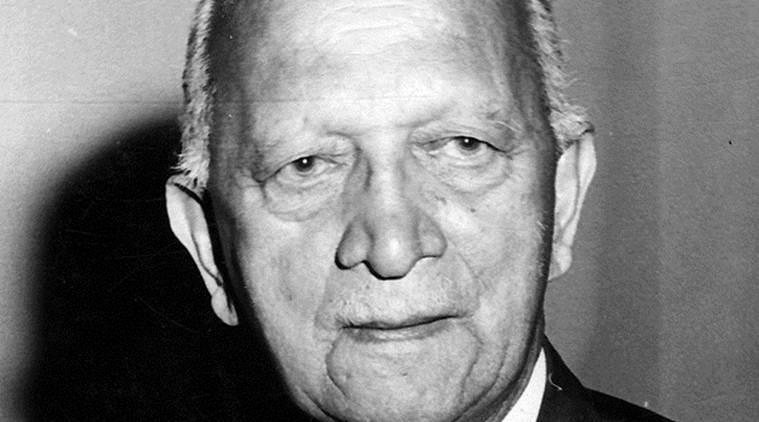


General Cariappa in 1971: Scrap Constitution, need military rule

Signed note by Army’s first Indian chief found in archives: Military rule temporary measure, scrap political parties

General Cariappa in 1971: Scrap Constitution, need military rule

WEEKS AFTER Indira Gandhi won a landslide victory in the Lok Sabha elections of 1971, the first Indian to head the Indian Army, General K M Cariappa, who was later made Field Marshal, underlined in a clarificatory note that he was in favour of “a military rule, only as a temporary measure to put things right in the country”.

Exhorting Indians to “wake up” and “SPEAK”, he asserted that 90 per cent would “vote for a President’s cum Military Rule to save Democracy”.

The signed note of April 7, 1971 was recently discovered in Karnataka’s state archives. It was written as a clarification for the public after Cariappa had met the then Prime Minister, Home Minister and the Speaker of Lok Sabha following a Parliamentary debate about his comments advocating these measures while informally speaking to the press in Dhanbad in March 1970.

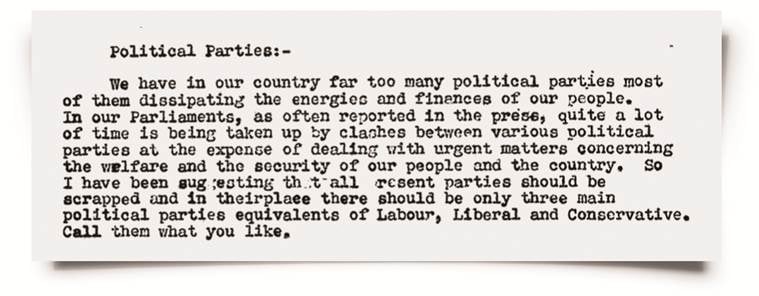
General Cariappa in 1971: Scrap Constitution, need military rule Image grab of the note.

Cariappa was heavily criticised for those remarks, including in Parliament. It was then reported that he had met these leaders to apologise for his remarks, which he denied, asserting that he had “not gone back one inch”.

In the four-page typed note, Cariappa also advocated scrapping the Constitution, all political parties and linguistic states, and restricting adult franchise on the basis of “literacy”. He wanted only three political parties, on the lines of Labour, Liberal and Conservative in the UK, and a new Constitution to be framed after a general election is held when military rule had restored law and order and “things are going on well in the country”.

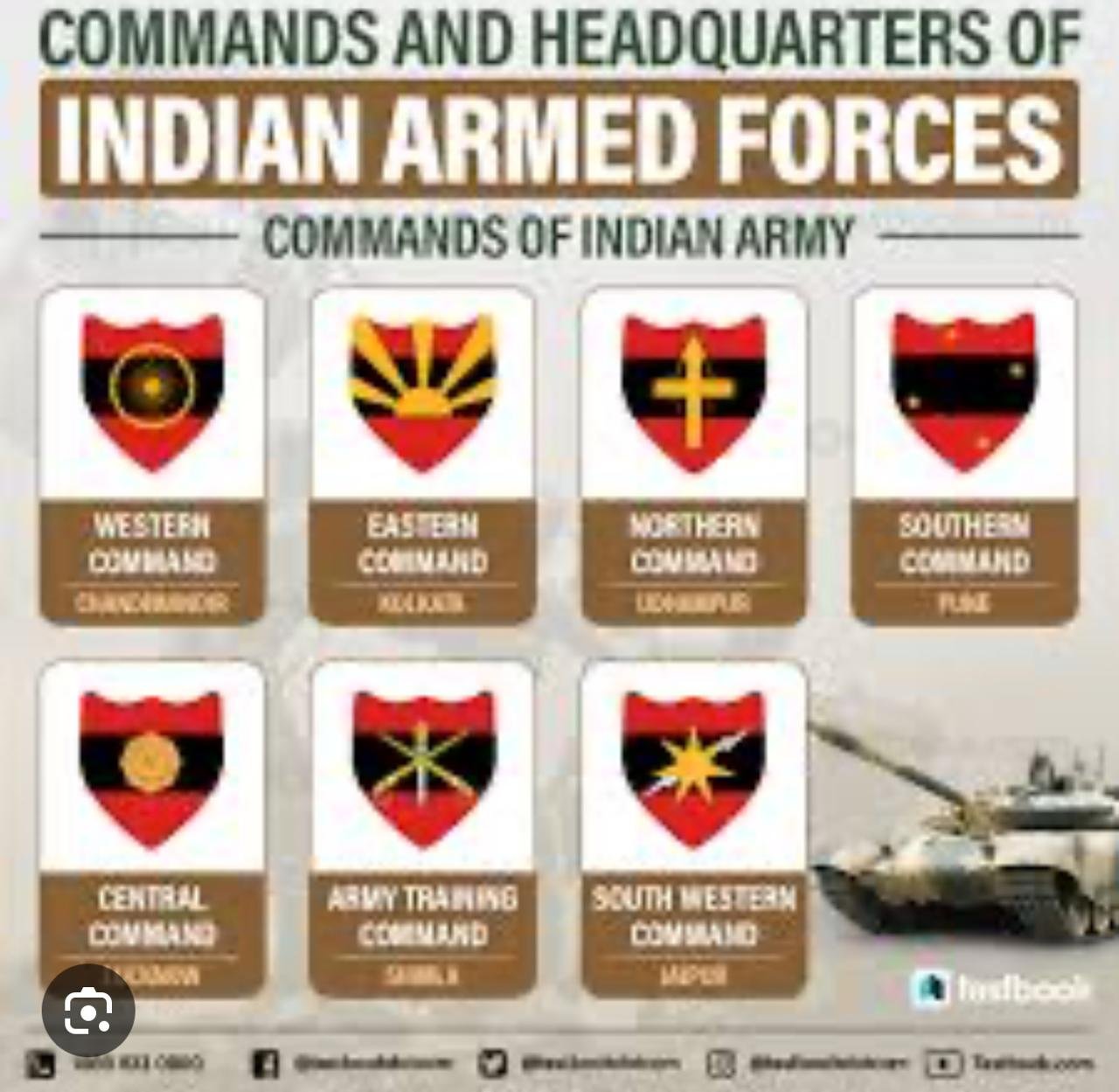
After a new Constitution is framed, he believed, “the President’s cum Military Rule would end and Democracy would re-enter in its pure form”. Blaming linguistic states for sounding “the death-knell for the unity of the country,” he proposed dividing “India into zones for administrative and economic convenience on the lines of the Army, such as Army Commands, Army Areas, Army Sub-areas and so on”.

General Cariappa was a highly respected and renowned military officer, whose ascension as the first Indian to the post of Commander-in-Chief is celebrated as Army Day on January 15, and had retired from active service in 1953. He had contested two Lok Sabha elections after his retirement, losing in both his attempts, and was made a Field Marshal by the Rajiv Gandhi government in 1986. He died in 1993 at the age of 94.

In the note, he asserts that his proposal of “President’s cum Military rule is not to be a permanent thing. It is to be only temporary until normalcy returns”. He writes that if the common man “feels that a spell of President’s cum Military Rule will give him security, give him better administration, a better life and so on, he has the right to demand it”.

However, he makes clear that he had “never been in favour of military coups”. He adds in the same vein that “there can never be, nor will there ever be, a Military Coup in India”.

The three reasons he ruled out a military coup were: vastness of the country; the three services are separate and have their own chiefs; and, the “heterogeneity of the Communities in the service would not be conducive to provide for a homogenous outlook in this respect.”

He then goes on to explain that military rule can thus come only either “if the politicians willingly hand over the country to the Army as was done in a neighbouring country” or “if the people demand such a rule”. He clearly seemed to be batting for the second in the note.

The note was discovered by author and journalist, Sugata Srinivasaraju, who told The Indian Express: “The state archives is so disorganised that this note is wrongly attributed to 1948. I don’t know how it landed up there. It is put under the ‘private collection’ category. I don’t even know whose private collection it is.”

Cariappa’s statements about politics and democracy had triggered debate even in the early years after his retirement. It is believed that he was posted as the Indian High Commissioner to Australia and New Zealand from 1953 to 1956 by the government, to keep him away from the domestic scene.


India successfully tests its 3,500km-range K-4 missile

India successfully tests its 3,500km-range K-4 missileIndia successfully tests its 3,500km-range K-4 missile

Shishir Gupta

shishir.gupta@hindustantimes.com

New Delhi : The Indian strategic forces got a major boost on Sunday after the Defence Research and Development Organisation (DRDO) tested a 3,500-kilometre range submarine-launched K-4 ballistic missile off the Vizag coast, with the nuclear weapon meeting all its target objectives, officials with direct knowledge of the matter said.

The three-metre-tall missile carries a nuclear warhead of over one tonne with a circular error probability (CEP) far lower than that of Chinese ballistic missiles. Only the US, Russia and China have submarine-launched ballistic missiles of 3,500-kilometre range. The INS Arihant is already equipped with a 700-kilometre range B-02 nuclear missile, with the second nuclear submarine INS Arighat on way to becoming operational.

Top government officials told Hindustan Times that with this test India has moved one more step towards the induction of this ballistic missile on the INS Arihant class of nuclear submarines. The missile was fired off a pontoon between 12 noon and 1pm off the Vizag coast in Andhra Pradesh and the delivery platform was tracked over 1,500 kilometres before it shifted to ship-based radars.

“The full results of the missile test will be known in the days to come after the tracking ships return to base. It is only on that basis that we will decide whether to conduct more tests before making the missile operational. Even in the case of the Agni-5 ballistic missile, the nuclear weapon was made operational after conducting two tests,” said a top official.

While the K-4 was to be tested last November, the test was delayed due to Cyclone Bulbul that made the weather conditions in the Bay of Bengal not conducive to the launch and tracking of the missile. DRDO missile scientists led by Satheesh Reddy were waiting for a window to open for the test.

DRDO scientists were happy with how the K-4 test went as the CEP of the Indian strategic missile is less than 100 metres as compared to the 1-2 kilometre range of the Chinese equivalent. The submarine-launched ballistic missile is the most important part of the air, land and sea nuclear triad and is at the front of India’s second-strike capability.


Weapons, equipment on display at Army grounds

Weapons,  equipment on display at Army grounds

Students of Punjabi University Model Senior Secondary School at the Army grounds on Patiala-Sangrur road. Rajesh Sachar

Patiala, January 18

Rocket launchers, tanks and machine guns were displayed during a day-long presentation of artillery and military equipment organised by Airawat Division at the Army grounds on Patiala-Sangrur road here.

City residents and school students visited the exhibition and tried their hands at military weapons. Major General Vivek Kashyapm, General Officer Commanding, said through the presentation, youngsters will be motivated to join the Army. — TNS


India’s new citizenship law unnecessary: Bangladesh PM Sheikh Hasina

India’s new citizenship law unnecessary: Bangladesh PM Sheikh Hasina

Bangladesh Prime Minister Sheikh Hasina. AFP file

Dubai, January 19

Bangladesh Prime Minister Sheikh Hasina has termed the Citizenship Amendment Act (CAA) and the National Register of Citizens (NRC) “internal matters” of India, but at the same time said the Act was “not necessary”.

According to the CAA, members of Hindu, Sikh, Buddhist, Jain, Parsi and Christian communities who have come from Pakistan, Bangladesh and Afghanistan till December 31, 2014, following religious persecution there will get Indian citizenship. Protests are being held across India against the controversial law.

“We don’t understand why (the Indian government) did it. It was not necessary,” Hasina told the Gulf News in an interview, referring to India’s new citizenship law.

Her comments came weeks after Bangladesh Foreign Minister A K Abdul Momen said that the CAA and the NRC are India’s “internal issues”, but voiced concern that any “uncertainty” in the country is likely to affect its neighbours.


Also read: Committed to NRC, will send back 1 cr illegal Bangladeshis: Bengal BJP chief


Bangladesh, where 10.7 per cent of the 161 million population is Hindu and 0.6 per cent Buddhist, has denied any migration to India because of religious persecution, the paper said.

Hasina, who is in the UAE capital of Abu Dhabi, also said that there has been no recorded reverse migration from India.

“No, there is no reverse migration from India. But within India, people are facing many problems,” she said.

“(Still), it is an internal affair,” Hasina said.

“Bangladesh has always maintained that the CAA and NRC are internal matters of India,” Hasina said. “The Government of India, on their part, has also repeatedly maintained that the NRC is an internal exercise of India and Prime Minister (Narendra) Modi has in person assured me of the same during my visit to New Delhi in October 2019.”

She said the relationship between Bangladesh and India is currently at its best, with cooperation in a “wide spectrum of areas”.

The NRC has been prepared to identify genuine Indian citizens living in Assam since March 24, 1971, or before, and identify illegal Bangladeshi migrants in the state.

Out of 3.3 crore applicants, over 19 lakh people were excluded from the final NRC published on August 30. PTI


Col SS Rajan creats history by getting the ‘last post ” played at the funeral of an Ex-servicemen (Brig RR Murthy) by two Ex-servicemen Buglers

I have managed to get hold of two Ex-servicemen Buglers. Purchased two Bugles; and, thanks to the Comdt, MEG & Centre, put them through a refresher cadre. And on 11 Jan, for the first time in the Country, at the funeral of an Ex-servicemen (Brig RR Murthy) was accorded a grand farewell with the two Ex-servicemen Buglers playing the ‘last post’.

Regards, Col Rajan–

PHOTO-2020-01-18-13-31-57

A wreath was laid with the caption, ‘Col Comdt the Bombay Sappers & all ranks and Veterans’. The Comdt MEG & Centre was gracious to send a JCO with a wreath from the E-in-C and an NCO with a wreath from the Col Comdt Madras Sappers & all Ranks. I had arranged for Buglers; and, for the first time, two Ex-servicemen Buglers sounded the last post at the cremation of an Ex-servicemen. Regards, Col Rajan-

Col S S Rajan: Walking to reconnect with India

Col S S Rajan remembers the date: June 23, 1989. He happened to be reading the life of Adi Shankara. It is a well known fact about the great man, but it struck Col. Rajan anew that the philosopher had criss-crossed the country by foot in the 5th century, left his imprint everywhere, all in a short worldly life of 32 years. The Colonel was travelling by car from Bareilly to Lucknow on duty when he read this. He felt a strange disconnection with the land. Were not many of our ills due to the fact that modern transportation had divided the society and its people into several unconnected layers. On that day his mission was settled: he would walk the length and breadth of India and preach the unity of the land.

It is a mission he feels he has only partly fulfilled, but many would be in awe of what he has already done. By the time he had retired in 1996 from service, the demolition of Babri Masjid on Dec 6, 1992 had already happened. India was even more divided than before. But Col. Rajan was even more determined.

He began with a modest trial in Aug 2000, with a walk from Bangalore to Tirupati. He was joined by Cols. K N Munuswamy and N Visvanathan. It was but 270 km and they did it in 10 days. Rajan then began to plan a grand walk to Delhi straight through India. He spent a while planning the mission and working out the logistics.

There was to be a van with audio visual gear fitted out, driven by volunteers. The van was to drive ahead and stop at a randomly selected village or town and begin playing an audio visual [AV] extolling the greatness of India and how it can be regained if only people sank their differences and became selfless as they once were. The Colonel would come marching in even as the show was on and address the gathered. This was the format of his mission. He readily found two ex -servicemen volunteer as drivers– Subedar T Jambulingham and Subedar T Sahadevan . Young Mohan, son of his domestic help was to take care of the camp at nightfall everyday. Chief of the National Cadet Corps [NCC], Lt. Gen. B K Bopanna—an old mate—promised that NCC would manage billeting all along the route. The rub was funds.

The prosperity that attends corporate India barely touches its men in uniform. Rajan had served the army for 33 years. His father Major M D Sambasivam had served even longer in the Garhwal Rifles. Both had seen action. But Rajan’s finances at retirement, were barely enough to keep his family going. He needed money to outfit his Maruti Omni van with AV equipment and a generator. The AV show had to be professionally produced. Leaflets had to be printed.  He needed more for fuel and food for four men. When he went looking for funds, people generally thought he was an odd ball. But families that serve India’s armed forces don’t give up easily. His generous sister and brother-in-law in the USA urged him to do it: they would fund him in full.

So on Nov 28, 2001 the team was off , with Bangalore’s Police Commissioner H T Sangliana flagging them off. For close to two months they were on road. Each morning would begin with the van going ahead and the Colonel stepping out alone, flagged off by a prominent local official. Alerted by the van people would rush to the roadside to see this man who was asking for neither votes nor business. ‘The love for the land that the ordinary folk have is incredible. It seemed to give them a greater context to see a man walk from one part to another,’ he says. They would wave and smile or simply follow him a kilometer or so. At the village AV shows there would be an outpouring of love for India. Each nightfall saw the NCC ready with a clean bed and a bath.

Col Rajan remembers this as the most revealing event: ‘It began as a normal day,’ he says. ‘We were in Andhra Pradesh. The van went ahead and I could discern I was in an area where the majority of people were Muslim. Soon I sensed a menacing mood. I was unclear as to the reason. I marched on and approached the village where the van was already showing the AV show. The crowds were unusually large and almost entirely Muslim. They were angry and hissing with rage. Then I knew. The Indian Parliament had been attacked that day. It was Dec 13, 2001. The crowd saw me march in and roared: “Blow them out, Sir. Enough is enough”. I knew my India then. Democracy is greater than religion.’

The four man troupe wended through 5 states and 2500 km. They entered Delhi just two days before the Republic Day Parade, 2002 to a rousing reception. Over the next week they were feted by the army brass, officials, media and people of Delhi.

Col Rajan is curiously dissatisfied. ‘It wasn’t quite a 100% march,’ he says. ‘Because of the practicality of night halts I often had to ride the van. I want to do a pure foot march from north to south and east to west. I would need a larger van with a bed and some camping gear. I have trudged to many corporate doors but have been unable to convince them to part with the money. But I am hopeful sponsors will be found someday.’

He is not keeping still though. During July- August 2002 he volunteered to be a crew member of a road expedition that covered the route from Kanyakumari to Leh with a similar purpose.

Col Rajan is an uncomplaining soldier though much of India is becoming mercantile with nary a thought for the armed forces except at times of war. He takes pride in little gestures that ennoble lives given to the defense of the country. ‘I wrote to Lt Gen A S Jhamwal AVSM, VSM that any servicemen who dies should be entitled to have have an army bugler attending the funeral to blow a few notes in his honour. This is now the practice in the four southern states,’ he says with great satisfaction.

But before a bugler keeps his date with him, Col. Rajan wants to find a sponsor who will enable him to tread every inch of India, as it were. Among the few things that a man in uniform gets in India when he retires is, faith in and love for his land.

_________

Col S S Rajan
77 Shankar Mutt Road
Shankara Park
Basavanagudi
Bangalore – 560004
Tel: 91 – 080 – 56975010; 9448024377[Mobile]
email: colonelrajan@rediffmail.com


What happened under Hitler is happening in India, says Capt Amarinder Singh

What happened under Hitler is happening in India, says Capt Amarinder Singh

Punjab Chief Minister Capt Amarinder Singh speaks in the Punjab Assembly in Chandigarh on Friday. Tribune Photo: Manoj Mahajan

Chandigarh, January 17

Terming the divisive Citizenship Amendment Act as a tragedy, Punjab Chief Minister Capt Amarinder Singh on Friday said that “what happened in Germany under Hitler in 1930 is happening in India now.”

Addressing the Punjab Assembly, he said: “Germans did not speak then, and they regretted it, but we have to speak now, so that we don’t regret later.” He urged the Opposition, particularly the Akalis, to read Adolf Hitler’s ‘Mein Kampf’ to understand the dangers of the CAA.


Also read


He said he would get the book translated and distributed so that all could read and grasp the historical mistakes that Hitler made.

“What is happening in India is not good for the country,” said Capt Amarinder, adding that people could see and understand, and were protesting spontaneously without any instigation.

Making an impassioned plea to the Akalis to rise above politics and think about their own country before deciding on their vote, he said he had never imagined such a tragedy could happen in a secular nation like India, which had more Muslims than Pakistan.

Capt.Amarinder Singh


@capt_amarinder

 
 I have sworn on the Constitution & I will continue to fulfill my duty as a loyal soldier. Sri Guru Nanak Dev Ji had said “Na koi Hindu, Na Mussalman” & it is in this spirit, Punjab Vidhan Sabha passed the resolution to appeal to Central Govt to repeal for India’s interest.

View image on Twitter

“Where will all those people, who you brand as non-citizens, go? Where will the 18 lakh people declared illegal in Assam go if other countries refuse to take them? Has anyone thought about it? Has the Home Minister even thought about what has to be done with the so-called illegal people? Where will the poor people get their birth certificates from?” asked the Chief Minister, declaring that “we all have to live together as citizens of secular India in our own interest.”

People of all faiths have lived harmoniously together in this country all these years, and Muslims have given their lives for this country, said the Chief Minister, citing the example of Indian Army soldier Abdul Hamid, who received the Param Vir Chakra posthumously for his actions during the Indo-Pak war of 1965, just like many others.

The Cellular Jail in Andamans was full of Muslim names, he pointed out.

“Why have Muslims been excluded? And why have they (Centre) not included Jews in the CAA?” asked Capt Amarinder, pointing out that India had a Jew Governor, General Jacob, who also fought for the nation in the 1971 war.

Those responsible for this situation should be ashamed of themselves, said the Chief Minister, even as he lashed out at the Akalis for supporting the legislation in Parliament and then speaking on it in different voices to promote their political agenda.

Pointing out that Punjab had just celebrated the 550th Prakash Purb of Guru Nanak Dev, who taught that “koyi Hindu nahin, koyi Mussalman nahin, sab rab key bandey,” Capt Amarinder asked the Akalis if they had forgotten the Guru’s teachings.

“You should be ashamed, and you will repent this one day,” he said, adding that he felt bad about speaking in such language but circumstances had made it necessary. — IANS


Fiscal woes no damper on Pak military build-up

Pakistan is currently under mounting economic pressure. The Imran Khan government is struggling with a high debt burden, broadening fiscal deficit, grey listing at the Financial Action Task Force and the stringent International Monetary Fund conditionalities. However, economic challenges do not seem to impact Pakistan’s defence modernisation plans.

Fiscal woes no damper on Pak military build-up

All-weather friend: China is the largest exporter of defence equipment to Pakistan.

Shalini Chawla
Distinguished Fellow, Centre for Air Power Studies

THE Pakistan Aeronautical Complex (PAC), Kamra, completed the production of the first eight dual-seat JF-17 fighter aircraft in a short period of five months. The Sino-Pakistani JF-17/FC-1 Block III fighter aircraft is a further development of the Block II variant. The aircraft was rolled out on December 27, 2019. According to a Jane’s report, published on January 2, the aircraft is armed with two PL-5EII short-range air-to-air missiles (AAMs) and has additional features similar to the Chinese fifth generation J-20 fighter aircraft and J-10C fighter. Reportedly, significant changes in Block III include new active electronically scanned array (AESA) radar, new wide-angle holographic head-up display and an imaging infrared (IIR)-based missile approach warning system.

In an interview with Jane’s Defence Weekly in 2019, the Chief of the Pakistan Air Force (PAF), Air Chief Marshal Mujahid Anwar Khan talked about the PAF’s procurement plans. The production of the new Block III JF-17s is likely to start by the year-end and the PAF “will make a decision on one of the two new Chinese AESA (Airborne Electronically Scanned-Array) radars” for these aircraft. The PAF plans to push for the development of a Fifth Generation Fighter Aircraft (FGFA) capability. Before the FGFA capability comes online, the PAF is evaluating a “new trainer and the Leonardo M-346, Hongdu L-15 and KAIT-50.”

Pakistan is currently under mounting economic pressure. The Imran Khan government is struggling with a high debt burden, broadening fiscal deficit, grey listing at the Financial Action Task Force and the stringent International Monetary Fund conditionalities. The GDP growth rate for 2018-19 was recorded at 3.29 per cent against the target of 6.2 per cent. It is interesting to note that economic challenges do not seem to impact Pakistan’s defence modernisation plans. The military build-up despite continued economic woes in Pakistan’s case can be attributed to three factors. One, Chinese equipment comes at ‘friendly prices’ and the sales to Pakistan are facilitated by an ‘easy procurement process’ and low interest rates. Two, the US military sales to Pakistan after 9/11 were facilitated by US aid and military assistance. Three, being a non-NATO ally, Pakistan became a recipient of the Excess Defence Articles (EDAs) from the US. The non-NATO ally status allowed the sale of used US weapons well below their depreciated value.

The details of Pakistan’s defence budget, which is controlled by the Army, remain undisclosed. The procurement of major defence equipment is supported by extra-budgetary sources.

After the Kargil War in 1999, there has been a change in the Pakistani thinking which has since then been inclined towards prioritising the build-up of the air force and aerial maritime strike capabilities of the navy. Details of its arms acquisitions indicate that Pakistan has focused on rapid modernisation of its air force since the Kargil War. This has to be viewed in the context of the reality that the army, which has ruled Pakistan for most of its existence, calls the shots in military priorities and modernisation. The US stood as Pakistan’s major arms supplier post 9/11, for about 10 years, when Pakistan again became its ‘frontline state’. However, Pakistan has made aggressive efforts to diversify the sources of weapons supply in the past decade. China and Pakistan have entered into joint defence projects, adding to the import and production of the PAF and the navy. While the main suppliers to Pakistan have been the US and China, PAF also received equipment from France, Turkey, Russia, Sweden and Ukraine.

The initial US supplies to Pakistan (after 2001) consisted of items like the UH Huey-II utility helicopters, Very High Frequency/Ultra High Frequency (VHF/UHF) aircraft radios, air traffic control radars, night vision equipment and other equipment and support systems, including intelligence-gathering devices. High-technology weapons and equipment from Washington included the much-desired F-16s and P-3C Orion Maritime Patrol Aircraft. Other US exports to Pakistan include AIM-120C AMRAAM Beyond Visual Range Air-to-Air Missile (2010-14), Scan Eagle Unmanned Aerial Vehicles (UAVs) (2015), Cessna-U206 Light Utility aircraft (2017) and Bell-412 helicopters (2010). Pakistan signed the deal for the acquisition of 12 AH-1Z Viper combat helicopters in 2015, but the delivery has been delayed after the US suspended military aid to Pakistan in 2018.

The US sanctions on Pakistan in the 1960s and in the 1990s and the growing mutual interests and stakes of China and Pakistan in strengthening the strategic alliance not only gave space for Chinese defence equipment in the Pakistani market but also Pakistan-made concerted efforts towards defence production which has provided an exposure to the Pakistan defence industry in the international market. The Chinese K-8 has been under production at the Pakistan Aeronautical Complex and the JF-17 is being jointly produced. Pakistan has acquired four ZDK-03 Chinese AWA&C aircraft.

Pakistan’s overall defence modernisation process focuses primarily on the build-up of the air force and maritime strike capabilities of the navy. The PAF is engaged in a massive modernisation (boosted after 9/11), both qualitatively and quantitatively. Islamabad is making significant efforts to add force multipliers to the PAF inventory. As China is the largest exporter of defence equipment to Pakistan, we need to understand that the economic crisis in Pakistan will not have a severe impact on defence procurements. China has been offering sops to Pakistan in terms of relaxed modes of payment, easy instalments and long-term loans.

Russian imports have started to find space in Pakistan’s arms imports. The sales from Moscow include Mi-8MT Transport Helicopter (2016) and Mi-35M Combat Helicopter (2018). Such sales from Russia will further assist Pakistan’s military build-up.


Prospect of a thaw Onus on India, Pak to bridge trust deficit

Prospect of a thaw

INDIA-PAKISTAN relations have witnessed a series of lows since the January 2016 Pathankot terror attack, which had happened barely a week after PM Narendra Modi made a surprise stopover in Lahore to extend birthday wishes to then premier Nawaz Sharif. The ties deteriorated so sharply last year after the Pulwama terror attack and the Balakot airstrikes that India did not even invite Pakistan Prime Minister Imran Khan to Modi’s swearing-in, even as Sharif had attended the ceremony when the NDA-I government took charge in 2014. The abrogation of Article 370 and the enactment of the Citizenship Amendment Act have further riled the neighbour.

Amid the prolonged chill, the prospect of a thaw has emerged, with India deciding to invite Imran Khan for the annual meeting of the council of heads of government of the China-dominated Shanghai Cooperation Organisation (SCO) later this year. While the SCO charter stipulates that the host can’t leave out any member country, India has the opportunity to use the international platform to re-engage with Pakistan. Once the invitation is extended, the onus will be on Imran to be present himself to reciprocate the diplomatic overture or send one of his ministers.

This semblance of a breakthrough has coincided with Imran’s reaffirmation of Pakistan’s ‘unshakeable’ political, diplomatic and moral support to the Kashmiri people. Pakistan’s continued meddling in India’s internal affairs, besides its failure to effectively crack down on terror groups operating from its soil, has widened the trust deficit. Despite the acrimony over the K-issue, India has repeatedly held out the olive branch, only to get a rude shock in the form of one terror attack or the other. With the spectre of blacklisting by the Financial Action Task Force (FATF) looming large, Pakistan can afford to be preoccupied with Kashmir only at its own peril. On its part, the Indian government can’t take the moral high ground as long as the J&K leaders remain detained. It’s in the interests of both countries to look at the big picture and defuse tensions so as to facilitate trade, tourism, sports contests, cultural exchange and, in general, people-to-people contact.


Soldier ‘met’ smugglers via Pak handlers Probe suggests Army man smuggled drugs during leave

Soldier ‘met’ smugglers via Pak handlers

PK Jaiswar
Tribune News Service
Amritsar, January 16

The police probe into the narco-terror module has revealed that the Indian Army soldier, arrested along with two others with drones last week, was introduced to the smugglers at the International Border by their Pakistan-based handlers.

Active since July, paused after arms haul

  • Naik Rahul Chohan contacted Dharminder Singh, a resident of border village Dhanoe Khurd, through Pak smugglers
  • In July 2019, the two allegedly started smuggling drugs using drones. They made several sorties in July and August
  • After terror module bust in October, they stopped their activity for a month and resumed sorties in December

Naik Rahul Chohan used to visit the border area while on leave and “smuggle” heroin using drones, the investigation suggests.

An Ambala resident, Chohan is currently posted at Bareilly. “As he was never posted in the border belt, it was a mystery for the probe agencies as to how he got in touch with the border smugglers,” said sources in the rural police, adding names of certain Pakistan smugglers had cropped up during his interrogation. These included Waqar and Choudhary, who used to send the contraband from the other side.

Through Pakistan smugglers, Chohan contacted smuggler Dharminder Singh, a resident of Dhanoe Khurd village, located barely a kilometre inside the barbed border fencing. The two allegedly started smuggling contraband through drones in July 2019. He along with Dharminder made several sorties in July and August to sneak in contraband. However, after a terror module, involved in smuggling of weapons, was busted in October, they stopped their activity for a month. In December, he made fresh attempts to smuggle in contraband.


Chohan procured the drones from an online e-commerce company and made payments through the account of his brother, Rohit, who lives in Karnal. Rohit allegedly helped them conceal a drone that was recovered by the police later.

Drone sighted, search op at border village

  • Amritsar: A search operation was launched at Dujjowal village, near the border in Ramdass area, after sound of a drone was heard around 12.30 am on Thursday. BSF jawans opened fire in a bid to shoot down the drone. “Nothing was found in the search,” said a police officer.

Dharminder along with accomplice Balkar Singh was nabbed for possessing heroin five years ago. The two were released on bail in 2019, but Balkar was rearrested by the Tarn Taran police for possessing drugs.

SSP (Amritsar Rural) Vikram Jeet Duggal said the police had been working on the case for the past one month when reports of sounds of drones near the border cropped up.

“It was learnt that sorties were made from the Indian side. We zeroed in on two Doake and Mode border villages and recovered a drone at Mode, which is located adjoining to Dhanoe Khurd village,” he said.

The rural police had booked Chohan, Dharminder, Balkar and Ajaypal Singh on January 7 for smuggling drugs. Following interrogation, the police arrested Lakhwinder Singh and Sarvan Singh from the Amritsar central jail. According to the police, more names had cropped up during investigation and raids were on to nab them, including Ajaypal.