All posts by webadmin

Army flags ‘negligible’ contribution by Punjab in defence industry

Amidst a push for indigenisation and self-reliance, the Army on Thursday flagged the negligible contribution of Punjab in the country’s defence industry and urged the state government to facilitate an eco-system to encourage industries to venture into the defence domain.

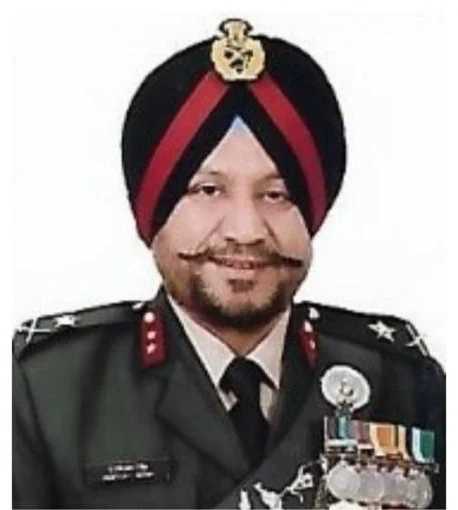
Pointing out that out of the thousands of industries listed in the Army’s database, only 18 are in Punjab, the Additional Director-General, Army Design Bureau, Maj Gen CS Mann, said that the state’s share was barely 0.01 per cent in the military industry.

“A compendium of problem definition statements released by the Army contained in total about 152 problem statements. And we have received 1,327 responses to this from across the country out of which only seven came from Punjab. This includes four government institutes and one student,” he said in a virtual address at ‘Defence Dialouge: How Can North India Contribute to the Growing Military Industrial Complex in India’, organised by the Gyan Setu Think Tank in collaboration with the Confederation of Indian Industry in Chandigarh on Thursday.

He said that in the past two years, about 116 contracts worth about Rs 1,08,000 crore have been signed by the Indian Army, out of which there is only one contract from Punjab. The ongoing research and development projects being handled by the Army Design Bureau are worth Rs 2,10,000 crore, in which Punjab has just one project valued at less than Rs 1 crore.

Stressing upon the need to move out from traditional domains and comfort zones, Maj Gen Mann said that the defence industry will procure what is required by them and not just what the industry has to offer the armed forces. “So, therefore, there may be a need to modify whatever is being done by the industry, customise it for the defence applications,” he said.

On the changing nature of warfare and the required platforms, he said that today the armed forces were looking at advanced materials along with autonomous and AI-enabled systems with multiple sensors and the ability to fuse their data for decision making and precision targeting.

Maj Gen Mann said that the industry in Punjab needs to venture out into these technology domains of these emerging technologies, which can very well be done by established industries by diversifying their existing domains.

There is also a lot of scope for startups that can also play an important role and the government has adequate funding schemes for them to venture into the defence domain. Academic institutes in Punjab need to focus on these technologies, which are dual-use technologies.

He also suggested that the Punjab Government can provide grants and financial assistance to startups, special incentives to the industry like loans, some patents, subsidised land and subsidised electricity rates.

Col RS Bhatia (retd), president of the Society of Indian Defence Manufacturers said that Indian industry has the competence and capability to design and develop indigenous weapon systems and the government should provide accelerators and the requisite infrastructure for its expansion. He pointed out that the average growth of the military-industrial complex in India is 18 percent, which is expected to continue.

Former Deputy Chief of the Army Staff, Lt Gen JP Singh (retd) stressed on greater focus and budgetary allocation for research and development and said that government policies must favour indigenisaion and procedures should be fast tracked.
Punjab, HAL look at manufacturing aircraft components in state

The Punjab Government and state-owned defence sector undertaking Hindustan Aeronautics Limited (HAL) are looking at manufacturing aircraft components in the state.

A three-member HAL team, including two Deputy General Managers from Bengaluru, is scheduled to arrive in Chandigarh on Friday for discussing the modalities of this venture. A prospective list of products that the HAL wants to manufacture in Punjab has been drawn up.

Besides, representatives of BrahMos, the firm that produces the supersonic precision cruise missile, are also expected to hold talks with the state government to examine the feasibility of producing weapon components in Punjab.

This was brought out at a seminar, ‘Defence dialogue: How can North India contribute to the growing military industrial complex in India’, organised by the Gyan Setu Think Tank in collaboration with the Confederation of Indian Industry here on Thursday.

The Punjab Government is establishing a 1,200-acre industrial park in Rajpura in partnership with the Centre, which will provide 85 per cent funding for the project. About 200-250 acres in the park will be earmarked for the defence industry.

As part of its sectoral thrust on the aerospace and defence sector, Punjab is also developing drone testing infrastructure at the flying club in Patiala and establishing a Remote Pilot Training Organisation for drone operators.

Though Punjab has introduced several sops for defence manufacturers as part of its industrial development policy of 2022, the contribution of the state towards the military-industrial complex is “negligible”, as was highlighted by the Additional Director General, Army Design Bureau, Maj Gen CS Mann in his virtual address at the seminar.

He said out of the thousands of industries listed in the Army’s database, only 18 were in Punjab accounting for barely 0.01 per cent in the military industrial complex. He added that of the 1,327 responses received to the Army’s compendium of problem definition statements issued this year, only seven came from Punjab, which included four government institutes and one student.

He said in the past two years, about 116 contracts worth about Rs 1,08,000 crore have been signed by the Army, out of which only one was from Punjab. The ongoing research and development projects being handled by the Army Design Bureau are worth Rs 2,10,000 crore, in which Punjab has just one project valued at less than Rs 1 crore.

He added the industry in Punjab needs to move out of traditional domains and comfort zones and venture into emerging fields of advanced materials and autonomous and AI-enabled systems, which also require adequate support from the state government.

Col RS Bhatia (retd), president of the Society of Indian Defence Manufacturers, said the Indian industry had the competence and capability to design and develop indigenous weapon systems and the government should provide accelerators and the requisite infrastructure for its expansion. He pointed out that the average growth of the military-industrial complex in India is 18 per cent, which is expected to continue.

Former Deputy Chief of the Army Staff Lt Gen JP Singh (retd) stressed on greater focus and budgetary allocation for research and development and said government policies must favour indigenisation and procedures should be fast-tracked.

Army Chief highlights self-reliance among 4 transformation targets

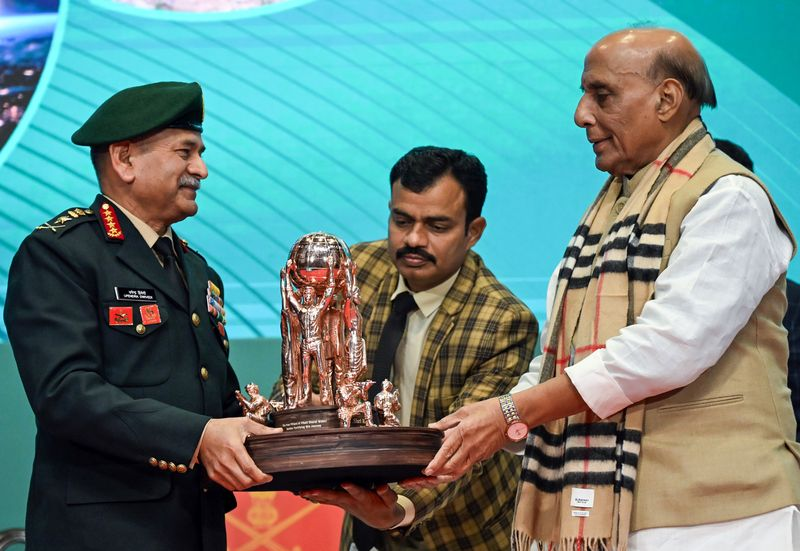
Army Chief General Upendra Dwivedi on Thursday listed four distinct targets to transform the force and make it future-ready, while the Chief of Defence Staff General Anil Chauhan said technology would define outcome of future wars.

The two were speaking at separate sessions at the inaugural day of the two-day Chanakya Defence Dialogue in New Delhi.

General Dwivedi termed the four targets for transformation as ‘springboards’ that will drive the Indian Army’s change in the upcoming years. These four targets will be a part of the three-phased graded plan to transform till 2047.

He said the first target was self-reliance, empowerment through indigenisation. He said, “It remains our first springboard. Its results are visible in the field of defence manufacturing, space achievements and rapid absorption of military technology. Yet much more remains to be done as we deepen our self-reliant capability base.”

According to General Dwivedi, having accelerated innovations is the second ‘springboard’. “We must move on from experimentation to enterprise-scale impact at a much faster pace in the fields of AI, cyber, quantum, autonomous systems, space and advanced materials,” he said.

The third ‘springboard’ is adaptation, reforming the ecosystem. General Dwivedi said the fourth and last ‘springboard’ is the military-civil fusion. The development of warfighting capabilities is a multi-agency, multi-modal endeavour wherein the troika of academia, industry and the military must achieve deep cross-domain synergy, he added.

Talking about a three-phase plan to transform the Army, he said, “The Army has envisioned Phase-1 till 2032. It includes comprehensive framework under the decade of transformation or accelerated transition. The phase-2, which will be undertaken between 2032 and 2037, will focus on consolidated gains from phase 1. During the phase -3 from 2037 to 2047, we will graduate to the next level of integrated and future-ready force design.”

The Army Chief said ‘5-S approach — Sammaan, Samvaad, Saiyog, Samridhi and Sulaksha (respect, dialogue, cooperation, prosperity and security)’ would drive the Army’s progress.

At the same event, the Chief of Defence Staff said military affairs were witnessing a second revolution, which is about net-centric warfare. He said technology was making geography a bit irrelevant. “Technology is going to be one of the most defining factors of future war,” the CDS said.

“Besides, a number of technologies are converging together to define a war winning strategy. Integrated networks, automation, robotics and cognitive tools now shape the tempo and outcomes of combat,” the CDS said, adding how unprecedented advances in stealth, precision and long-range missiles are shaping battles.

The battlefield is now transparent as sensors read electro-optical, infrared, magnetic, seismic, acoustic and chemical signatures.


Carrier INS Vikrant on maiden overseas deployment

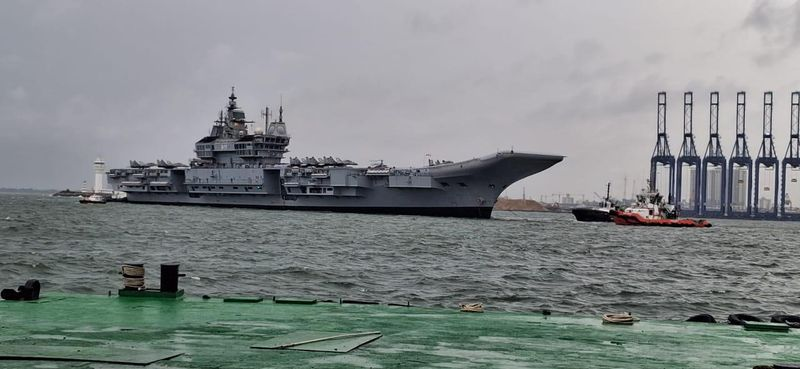
India’s first indigenous aircraft carrier INS Vikrant is on its maiden overseas deployment to Sri Lanka.

The carrier has onboard fighter jets, the MiG 29K and helicopters. The INS Vikrant, along with indigenous stealth frigate INS Udaygiri, is representing the Indian Navy at the International Fleet Review (IFR) 2025 being hosted by the Sri Lanka Navy in Colombo from November 27 to 29.

At 47,000 tonnes, the INS Vikrant is the biggest warship to be made in India. It was commissioned in September 2022.

The IFR is part of the Sri Lanka Navy’s 75th anniversary celebrations and features participation from naval ships, delegations and observers from several countries.

The carrier and both the ships and underscore India’s commitment to strengthening regional maritime cooperation. The maiden participation of INS Vikrant for an International Fleet Review highlights India’s continued engagement with partner navies in the Indian Ocean Region (IOR) and reflects India’s emphasis on promoting peace, stability and security through collaboration and interoperability.

During their stay in Colombo, the ships will participate in key IFR events including the ceremonial fleet review, city parade, community outreach activities, and professional naval interactions.

As part of public outreach initiatives, the ships were opened to visitors during IFR 2025. A number of school children and Sri Lankan authorities were shown the carrier.


Hideout linked to JeM busted in Pulwama, terrorist aide held

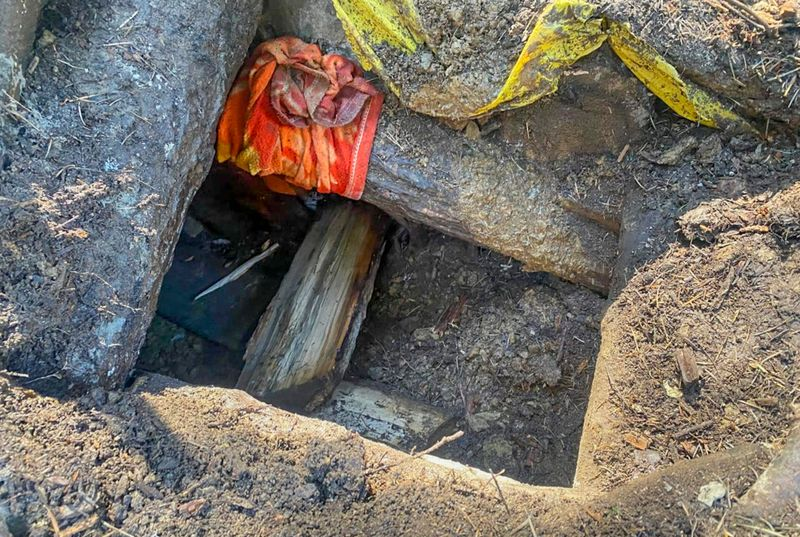
Security forces recover two hand grenades, a detonator, and explosive-like material

Security forces on Friday busted a hideout linked to the Jaish-e-Mohammad (JeM) outfit in Pulwama district, and arrested a terrorist associate involved in supporting terrorists, police said.

In a major success against the terror network, Police in Awantipora, along with security forces, busted the hideout and arrested a terrorist associate, a police spokesman said.

The arrested terrorist associate has been actively involved in providing logistic support and facilitating transportation of arms and ammunition to JeM terrorists operating in the Tral and Awantipora areas, he said.

He further informed that, acting on a credible input regarding the presence of terrorists in the Naner Midoora area of the south Kashmir district, security forces launched a cordon and search operation there.

During the search, a terrorist associate identified as Nazir Ahmed Ganai, a resident of Ganai Mohalla Nanar, affiliated with JeM, was arrested, the spokesman said.

During sustained questioning, and on his disclosure, a terrorist hideout located in the orchards belonging to the accused was uncovered and subsequently busted, he said.

From the hideout, security forces recovered two hand grenades, a detonator, and explosive-like material, all of which were seized for further analysis. The hideout was destroyed on the spot, the spokesman added.

A case has been registered, and further investigation has been initiated, he added.


Believe in peace but won’t compromise on sovereignty: Defence Minister Rajnath Singh

The Chanakya Defence Dialogue 2025, organised by the Army in collaboration with the Centre for Land Warfare Studies, brought together military leaders, global strategic experts, diplomats, industry leaders and young scholars to examine India’s security challenges and technological frontiers in an increasingly contested global landscape

Defence Minister Rajnath Singh said India believes in peace and dialogue, but when it comes to the nation’s sovereignty and the security of its people, “we do not compromise”.

“Our armed forces are a driving force that enables India to address neighbourhood challenges while contributing to regional stability,” the minister said while speaking at the two-day Chanakya Defence Dialogue, which concluded today.

India, he said, has emerged as a voice of balance and responsibility in the current global environment. “India’s economic growth, technological capabilities and principled foreign policy have made it a voice of balance and responsibility in the changing global scenario, with countries across the Indo-Pacific and the Global South viewing us as a reliable partner,” he added.

Reforms, Singh said, have become a strategic necessity rather than a choice. “We are strengthening border and maritime infrastructure to support security and connectivity,” he added.

The armed forces were being equipped with new platforms, technologies and structures, he noted. Procurement processes were being revamped to ensure speed, transparency and accountability.

“We are investing in startups, deep-tech capabilities and R&D that will shape the battlefields of the future,” he said.

The Chanakya Defence Dialogue 2025, organised by the Army in collaboration with the Centre for Land Warfare Studies, brought together military leaders, global strategic experts, diplomats, industry leaders and young scholars to examine India’s security challenges and technological frontiers in an increasingly contested global landscape. The two-day event aimed to create a comprehensive platform for strategic deliberation on India’s future security architecture.


This village kid from Punjab’: US Army Major ‘Simmer’ Singh promoted to Lieutenant Colonel

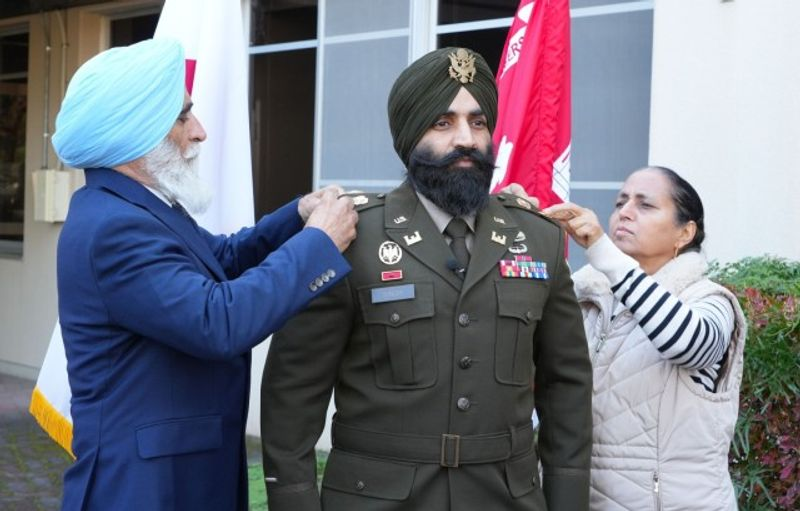
Major Simratpal “Simmer” Singh, deputy commander of the US Army Corps of Engineers – Japan Engineer District (JED), was promoted to lieutenant colonel during a ceremony November 26 at District headquarters on Camp Zama.

Col Patrick Biggs, JED commander, presided over the event and administered a reaffirmation of the oath of office, reports army.mil.

Singh’s parents, Sukhbir Singh and Jasvir Kaur, pinned on their son’s new rank in front of family, friends and colleagues.

Singh reflected on his journey during remarks at the ceremony, crediting mentors, friends and Army leaders for their support throughout his career. “The Army and this Nation have given this village kid from Punjab far more than he deserves, and my hope is to be able to give even a tenth of it back,” he said.

“Good leaders throughout my career have lifted me up and helped remove barriers. This is what I hope to emulate.”

As deputy commander, Singh helps oversee a diverse portfolio of engineering missions that support the U.S.–Japan Alliance and contribute to regional stability across the Indo-Pacific. His promotion represents a significant endorsement of his leadership and ability to manage complex operations on behalf of the United States.

Over the course of more than 15 years in uniform, Singh has built a career as a combat engineer and leader in key command and staff roles. He began his service with the 2nd Stryker Brigade Combat Team, 2nd Infantry Division, where he served as an assistant brigade engineer and platoon leader. He deployed to Kandahar, Afghanistan, in support of Operation Enduring Freedom, leading more than 180 combat patrols to clear routes, strengthen base defenses, and support the establishment of the first medical facility in Shah Wali Kot Province.

After returning from deployment, Singh served as brigade finance officer, preparing annual budget estimates and helping allocate $15 million for a National Training Center rotation while overseeing financial support to more than 20 enabling units.

Following the Engineer Captain’s Career Course, he joined the 249th Engineer Battalion at Fort Belvoir, Virginia. There, he helped plan and execute 23 critical national-defence power-generation missions supporting strategic facilities worldwide. He also contributed to real-world hurricane response efforts—including during Hurricanes Matthew, Harvey and Maria—and coordinated major disaster-response exercises with FEMA, USACE Headquarters and multiple state emergency agencies.

Singh later commanded the battalion’s Headquarters and Headquarters Company, managing the Army’s only industrial-scale generators deployed globally. He subsequently served as an instructor and assistant professor of economics and finance at the US Military Academy at West Point, teaching future Army officers and contributing to academic research.

A native of Kent, Washington, Singh is a 2010 graduate of the US Military Academy with a Bachelor of Science in electrical engineering. He also holds a Master of Science in engineering management from Missouri University of Science and Technology, a Master of Business Administration from the University of Maryland, and a Master of Operational Studies from the US Army Command and General Staff College.

His military awards and decorations include the Bronze Star Medal, Meritorious Service Medal with oak leaf cluster, Army Commendation Medal with oak leaf cluster, Army Achievement Medal, Afghanistan Campaign Medal, NATO Service Medal, German Armed Forces Proficiency Badge, Combat Action Badge, Air Assault Badge and Ranger Tab.


Himachal’s martyr families continue to wait for govt’s commitment

Projects announced in memory of martyrs in Himachal Pradesh have seen slow progress. Despite being one of the states with the highest representation in the armed forces, Himachal continues to lose soldiers in militancy operations in Jammu & Kashmir, Ladakh and the North East. During Operations Parakram, Rakshak and Vijay, the state lost 85, 54 and 174 personnel respectively.

Six years after Sepoy Tilak Raj of Dhewa village in Jawali subdivision, Kangra district, was martyred in the Pulwama attack, several commitments made to his family remain pending. The government had announced the construction of a memorial gate, naming the road to his home and improving access to the cremation ground, along with renaming the village school. While his widow, Savitri Devi, received a government job and the school was renamed, the remaining assurances have not been fulfilled. The family eventually installed a statue of the martyr using their own resources.

A similar situation exists in the case of Kargil martyr Havildar Surinder Kumar of Dann village in Nurpur. His widow, Veena Devi, says that apart from renaming the local ITI in Jawali after him, other assurances made during his cremation on July 20, 1999, including an LPG agency and a memorial gate, were never realised. “When my husband laid down his life, my sons were just 11 and 8. We were promised support, but many commitments remain unaddressed,” she said.

In earlier years, under former Chief Minister Virbhadra Singh, the government often reached out to bereaved families with financial assistance and jobs for widows. This practice, families say, has gradually declined and even the presence of elected representatives at funerals has become less frequent.

As the nation observes Kargil Vijay Diwas with pride, many martyr families in Himachal continue to wait for the honours and support they were promised, feeling that much of it remains limited to paperwork.


HEADLINES : till 24 NOV 2025

1971 INDO PAK WAR (THE LIBERATION WAR)BATTLE OF HILLI BOGRA: 23 NOV – 18 DEC1971, A HARD NUT TO CRACK by Maj Gen Harvijay Singh

Kangra bids tearful farewell to Wing Commander Namansh Syal

Dedicated fighter pilot, served nation with unwavering commitment: IAF pays tribute to Wg Cdr Namansh Syal

Afsaan, wife of Wing Commander Namansh Syal

Captain Chandra Narain (MVC): A saga of immortal bravery

Remembering Major Ramaswamy Parameswaran, the sole Param Vir Chakra recipient of Sri Lanka operations

Western Command validates operational preparedness of new Ashni specialist drone platoons

Borders can change, Sindh may return to India again: Rajnath

ADG STRAT COMN PRINT EDITION UPDATE: NOV 2025

IAF’s leased mid-air refueller lands in Agra

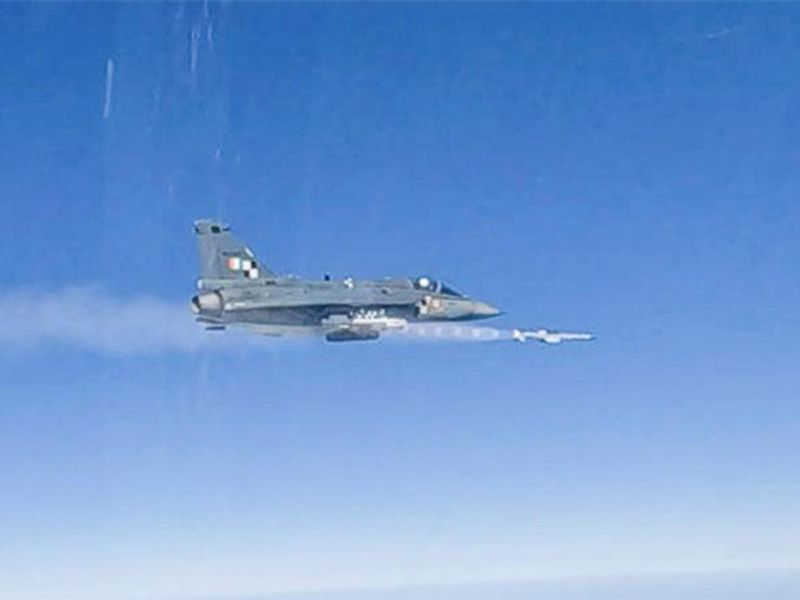
Watch: Wing Commander Namansh Syal’s final video just hours before fatal Tejas crash

Army conducts integrated exercise Ram Prahar to hone skills in multi-domain warfare

Day after, IAF says no plan to ground Tejas  

India-US navies to scale up drills, eye new-age domains

Anandpur Sahib glows with devotion

Wing Commander Namansh Syal’s mortal remains to reach Kangra this afternoon


1971 INDO PAK WAR (THE LIBERATION WAR)BATTLE OF HILLI BOGRA: 23 NOV – 18 DEC1971, A HARD NUT TO CRACK by Maj Gen Harvijay Singh

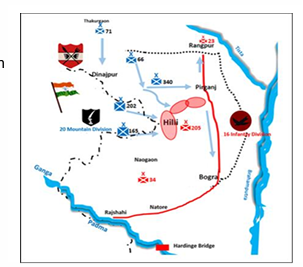
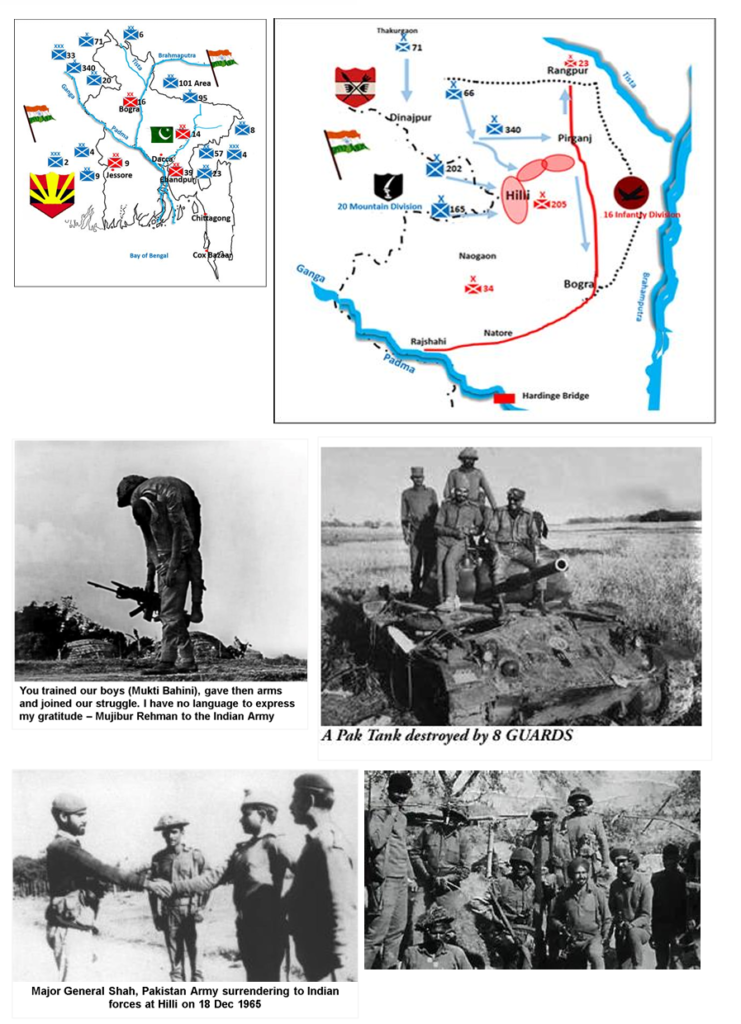
To defend East Pakistan, Lt Gen A A K Niazi, C-in-C East Pakistan, occupied important communication centres in strength. Theatre fortresses were created at towns of Jessore, Jhendia, Bogra, Rangpur, Jamalpur, Mymensingh, Sylhet, Bhairab Bazar, Comilla and Chittagong. Initially the Indian Army hammered head on into the fortresses but soon changed its strategy, and, despite its very small numerical superiority of 1.5 : 1 for the Attack Ops of War manoeuvred past the Pak defences. Numerous tactical battles were fought in the riverine terrain of Bangladesh. The toughest was perhaps the battle of Hilli in the Northwestern Sector from 23 Nov to 11 Dec although the final (formal) surrender took place on 18 Dec.

It involved great personal valour from the warring sides. • Maj J B S Yadava and Maj Abjeet Mamik, company commanders 5/11 Gorkha Rifles awarded Vir Chakra. • Maj Quazi Nuruzzaman awarded with Bir Uttom, 2nd highest award for individual gallantry in Bangladesh. • Maj Muhammad Akram Shaheed of Pakistan won Nishan-e-Haider, highest military honour of the country. • Brigadier Tajammal Hussain Malik commander of Hilli fought resolutely. Once Hilli was bypassed he withdrew to Bogra and even after the formal surrender on 16 Dec, refused to surrender till finally captured by Mukti Bahini and seriously injured. Malik on return to Pakistan was the only Brigadier from East Pakistan promoted to Maj Gen. In 1980 he was arrested by Gen Zia Ul Haq and court martialled on a charge of trying to overthrow Gen Zia. Terrain in the NW Sector was dry and suitable for armour. It was linked by rail and road to the Jessore-Jhenida in the South.

The only major river within the sector was the Tista, which flowed North-West to South-East and joined the Brahmaputra at Chilmari. Pakistan’s 16 Infantry Division with its headquarters at Bogra defended this sector with; • one brigade deployed in North, with HQ at Rangpur, • second held the centre with HQ at Bogra, • third was in the South at Nator. • an ad hoc brigade held Rajshahi. • The only regiment of armour with the enemy in East Pakistan was located in this sector, its four squadrons distributed among the regular brigades of 16 Division and other ad hoc formations.

The main offensive of 33 Corps was launched by 20 Mountain Division consisting of 66, 165, 202 and 340 Infantry Brigades, 3 Armoured Brigade, 471 Engineer Brigade and two artillery brigades augmented by 33 Corps Artillery. It was tasked to capture Hilli, cut off the railway line isolating Pakistani defences in the north. The frontal assault on Hilli turned out to be slogging match against its well prepared defences, held by up to a brigade strength leading to heavy casualties on both sides. Despite repeated attacks, the defenders held resolutely on. The Indian Army soon learnt its lesson and the futility of attacking Pakistani Fortresses. 340 Mountain Brigade, the corps reserve, was tasked to move north of (i.e Bypass) Hilli and threaten Pirganj, thereby forcing the thinning of Hilli to cater for this new threat to its rear. The advance of 340 Brigade was a classic manoeuvre: skilful use of tanks and tank-mounted infantry. The increased mobility enabled bypassing of enemy frontal defences, beating them to new defensive lines they had intended to occupy and attacking them from flanks and rear.

This bold strategy resulted in the rapid fall of Pak Army strongholds, and its forces were divided and pushed back towards the two extreme ends of the sector. (Rangpur and Bogra) Mukti Bahini a highly motivated lot, thirsting for revenge against the Pak soldiers provided effective intelligence of the locations of the Pak troops, which went a long way in helping the Indian Army to get through the gaps and achieve speed and surprise in their march towards Dacca. The battle was not without its lighter moments. “You may be right, Sir. But I swear the buffaloes have 100-mm guns fitted on them and they are picking off our bunkers one by one”. Paki Post Commander at Charkai, 11 Kms N of Hilli responding to HQ’s retort that he must be seeing buffaloes because tanks cannot come through marshes and nalas. 340 Infantry Brigade entered Bogra on 16 Dec, followed by rest of the corps, effectively ending the fighting in this sector. However, five Pakistani fortified positions continued to hold out, incl Rangpur, astride Indian lines of supply, which might have posed logistic problems, had the war dragged on.

A total of 371 soldiers were killed and 961 wounded on the Indian side, most in the battle of Hilli. Fighting in Bogra was stiff, tanks found it difficult to manoeuvre in built-up area. By midday on 14 Dec a large portion of the town was taken. Fighting continued on the following day with Pakistanis sticking to a small perimeter. In the early hours of 16 Dec small groups began to surrender and later during the day came the orders to cease-fire. Hilli became a symbol of heroic Pakistani resistance but also a lesson in the limits of static defence. Fortresses can delay but cannot halt a broader operational collapse if the attacker chooses to outflank it.