All posts by webadmin

DC asks IAF to complete pending work on international airport soon

As the work on the upcoming international airport in Ludhiana is still going on, the Deputy Commissioner, Jitendra Jorwal, has asked the Indian Air Force (IAF) to complete the pending work at the earliest. The development assumes significance as the…
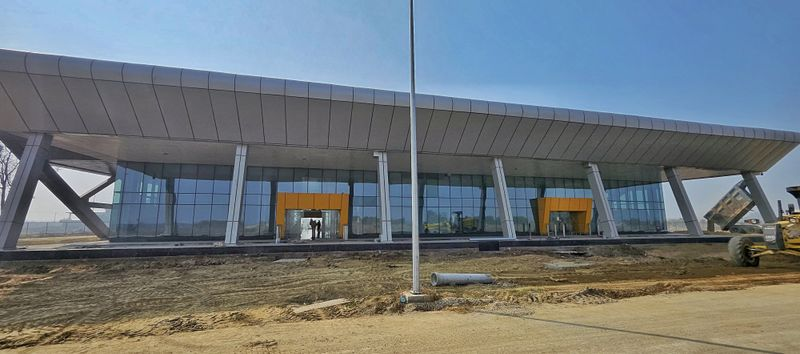
As the work on the upcoming international airport in Ludhiana is still going on, the Deputy Commissioner, Jitendra Jorwal, has asked the Indian Air Force (IAF) to complete the pending work at the earliest.

The development assumes significance as the new international airport coming up at Halwara air base had been granted the airport code, which is mandatory before launching the operations. It has been named Halwara airport by the Centre last month till the time any formal decision to give any specific name to the facility is taken.

At a meeting with the senior officials of the IAF and the Airports Authority of India (AAI) here, the DC reviewed the ongoing works at the Air Force Station and the civil terminal.

Taking stock of the progress of the runaway relaying, casting works, signages, besides other pending issues, Jorwal urged the PWD officials and private companies undertaking the ongoing work to expedite the completion of the pending tasks. He emphasised the need for effective coordination between the departments concerned and their officials, instructing them to address important issues promptly.

The Deputy Commissioner asked the officials to devise a detailed solid waste management plan to remove all debris and waste around the airport area within the next few days as garbage and waste could attract birds, which could disturb the flight operations.

Recently, the Centre had asked the Punjab Government to hand over the physical possession of the civil airport terminal complete in all respects to launch the operations.

With this, the bidding process for the operations of the airlines was also set to be launched shortly, which will take a couple of months before the commercial flights begin operations from here.

Air India has already announced plans to launch flights from Ludhiana once the airport becomes operational. Except the overlaying of runway, which is also progressing fast, the airport is ready for operations with the IAF and the state government completing almost all pending works inside their respective areas of operations.

“The ICAO code for IAF station Halwara is “VIHX”. Regarding the IATA code, as the information pertains mainly to IAF station, Halwara, Ludhiana, the request has been forwarded to the IAF. We are awaiting their response and will inform the airlines as soon as the details are received,” AAI Chairman Vipin Kumar had recently said. He further said that the operational date would be finalised once the terminal building was completed and officially handed over to the AAI by the Punjab Government.

While the overlaying of Taxi-A, Taxi-D and New Link Taxi inside the IAF premises is almost complete, March 31 is the deadline for completing the ongoing overlaying of the runway from where the flights will operate. This Rs 50-crore much-awaited and much-delayed big ticket project took over three years and missed at least 14 deadlines to see the light of the day.

Ludhiana, which is Punjab’s industrial and business capital with a population of almost 4 million, is presently serviced by a small airport at Sahnewal. Located at the geographical centre of Punjab, the new international airport will serve the entire state as well as neighbouring areas.



India And Bangladesh Lock Horns Over Border Fencing, Security, And Minority Safety

Tensions between India and Bangladesh have escalated over issues related to border fencing, security, and the safety of minorities. Recent developments highlight the complexities of their relationship, particularly concerning the ongoing construction of barbed wire fencing along their shared border.


Border Fencing Disputes

India’s Border Security Force (BSF) has resumed fencing work along the 4,096.7 km India-Bangladesh border, which has been a contentious issue since its inception in 1986. Bangladesh has raised concerns about these activities, claiming they violate the 1975 Joint India-Bangladesh Guidelines that prohibit any permanent structures within 150 yards of the international border. The Bangladeshi government summoned India’s high commissioner to express its “deep concern” over what it views as unauthorized fencing attempts by the BSF.

In a recent high-level meeting, the Border Guard Bangladesh (BGB) formally objected to the BSF’s construction of a single-row fence within this restricted area and requested a joint inspection of disputed points along the border. However, the BSF has maintained that it is adhering to previously established agreements and has declined to renegotiate terms.

Security Concerns And Minority Safety

Both nations have also discussed broader security issues, including human trafficking and cross-border crime. India has expressed worries about attacks on its personnel and smuggling activities, while Bangladesh has called for stronger measures against illegal crossings.

Additionally, there are rising concerns regarding the safety of minorities in Bangladesh. Reports indicate a significant increase in attacks on Hindu communities since a regime change in August 2024. The Indian Ministry of External Affairs reported multiple incidents of violence against Hindus, which has led to heightened scrutiny from India regarding minority safety in Bangladesh. In contrast, Bangladeshi officials have downplayed these incidents, arguing that media reports exaggerate the situation.

Future Negotiations

The two countries have agreed to enhance coordination through intelligence sharing and joint inspections to address these border-related issues more effectively. The next round of discussions is scheduled for July in Dhaka, where unresolved concerns will be revisited. This ongoing dialogue reflects both nations’ efforts to manage their complex relationship amid rising tensions over border security and minority rights.


Global Firepower Index 2025: India’s Military Strength Solidified Its Rank As 4th Largest Defence Spender

lobal defence spending has reached unprecedented levels in 2025, driven by escalating geopolitical tensions and security concerns. The total military expenditure worldwide is estimated to be around $2.46 trillion, marking a significant increase from previous years. This surge reflects a collective prioritization of military strength among nations.

India has recently solidified its position as the fourth-largest defence spender globally, with a military budget of $75 billion for 2025. This significant investment underscores the country’s commitment to military modernisation, strategic preparedness, and self-reliance in defence production.

The current landscape of global defence spending reflects a marked increase in military budgets across various nations due to rising security concerns and geopolitical tensions. The top ten countries with the largest military budgets in 2025 are as follows:

Top 10 Military Powers In 2025

1. United States: Leading the pack, the U.S. has allocated a staggering $895 billion for defence, which constitutes approximately 62.3% of the combined military budgets of the top five spenders.

2. China: Following the U.S., China has committed $266.85 billion to its military, focusing on modernisation and regional security initiatives, particularly in the South China Sea.

3. Russia: With a defence budget of $126 billion, Russia continues to invest heavily in military capabilities amid ongoing conflicts and strategic ambitions in Eastern Europe.

4. India: India ranks fourth globally with a defence budget of $75 billion, emphasizing military modernisation and self-reliance in defence production as it addresses regional threats.

5. Saudi Arabia: Allocating $74.76 billion, Saudi Arabia remains a key player in Middle Eastern defence spending, reflecting its ongoing security partnerships.

6. United Kingdom: The UK has set aside $71.5 billion, focusing on maintaining its military capabilities in a changing global landscape.

7. Japan: Japan’s defence budget stands at $57 billion, aimed at enhancing its self-defence forces amid regional tensions.

8. Australia: With a commitment of $55.7 billion, Australia is investing in advanced military technologies and capabilities.

9. France: France’s defence budget is approximately $55 billion, supporting its strategic military operations and commitments.

10. Ukraine: Ukraine rounds out the top ten with a budget of $53.7 billion, reflecting its ongoing conflict and need for enhanced military support.

Comparative Summary

RankCountryDefence Budget (USD)
1United States$895 billion
2China$266.85 billion
3Russia$126 billion
4India$75 billion
5Saudi Arabia$74.76 billion
6United Kingdom$71.5 billion
7Japan$57 billion
8Australia$55.7 billion
9France$55 billion
10Ukraine$53.7 billion

Key Factors Contributing To India’s Ranking

Manpower: India leads in the number of individuals reaching military age annually and ranks second in available manpower.

Resources: The nation possesses significant natural resources that enhance its military capabilities.

Geography: India’s strategic location plays a crucial role in its defence strategy.

Despite these strengths, India faces challenges such as low rankings in specific military capabilities like helicopter carrier strength and mine warfare at sea.

India’s position as a top military power underscores its ongoing efforts to modernize its forces and enhance strategic preparedness amidst global geopolitical uncertainties.

Agencies


Pakistan promises peace along LoC during flag meeting

Amid a surge in unprovoked firing from across the Line of Control (LoC) in Poonch and other areas of the Jammu region in the recent past, the Indian Army on Friday held a flag meeting with its Pakistani counterparts at…

article_Author
Arjun Sharma Our Correspondent

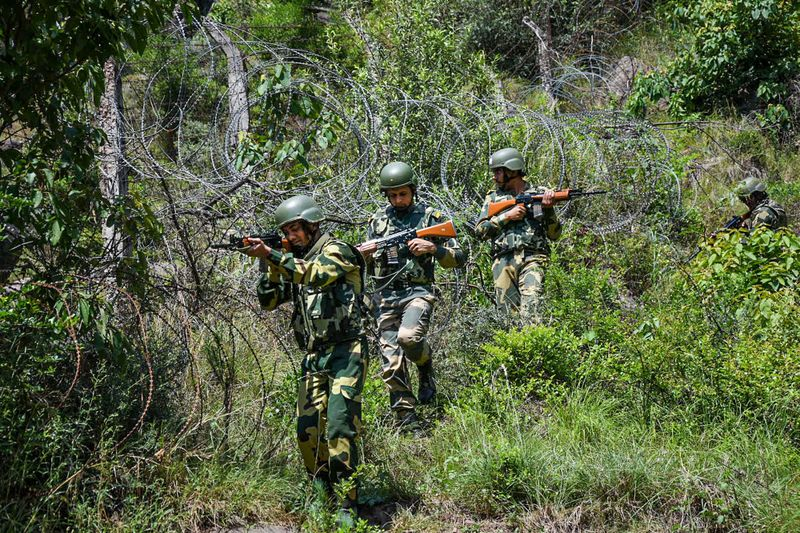
Amid a surge in unprovoked firing from across the Line of Control (LoC) in Poonch and other areas of the Jammu region in the recent past, the Indian Army on Friday held a flag meeting with its Pakistani counterparts at Chakkan-da-Bagh crossing in Poonch sector.

The brigade commander-level meeting was held after India had escalated the matter with Pakistan regarding the increased firing, including sniper shots, on the Indian soldiers manning the LoC in areas that are infested with thick vegetation. 

While it is not clear whether terrorists or Pakistan army personnel were behind the recent incidents of firing from across the LoC, the Indian Army during the flag meeting asked the Pakistani side to keep a check on such elements “who have the potential to disrupt peace on the borders”.

Recent attacks on Armymen

Two Army personnel, including a Captain and a Naik, were killed and another injured in an IED explosion carried out by suspected terrorists in the Akhnoor sector of Jammu on February 11

Two Armymen  were injured in firing from across the LoC in Rajouri and Poonch on February 10 and 14. Two more personnel were injured in landmine blasts close to LoC in Poonch last week

While there was no official statement by the Army issued on the flag meeting till evening, sources informed that the meeting continued for over an hour during which both the sides agreed to respect the ceasefire signed between India and Pakistan. Talks to de-escalate the fresh tensions on the LoC were also held wherein Pakistani officials assured the Indian side that they would take steps to ensure peace.

After a spate of cross-border firing,the Indian Army had issued a statement in which it had said the ceasefire was intact and minor incidents were not unprecedented along LoC. 

India and Pakistan signed a ceasefire agreement in 2003 for peace along LoC and other borders in J&K. However, multiple incidents of cross-border firing took place in following years. In 2021, the countries renewed the ceasefire agreement of 2003 after which the incidents dropped drastically.


India raises issues of unprovoked firing, terror activities at flag meeting with Pakistan

The brigade commander-level flag meeting took place in Chakkan-Da-Bagh crossing point area in Jammu and Kashmir’s Poonc

India and Pakistan held a flag meeting along the Line of Control (LoC) in Jammu and Kashmir’s Poonch district on Friday, in an effort to de-escalate tension after several recent incidents of cross-border firing and an IED attack, official sources said.

The brigade commander-level flag meeting took place in the Chakkan-Da-Bagh crossing point area, with both sides highlighting the need to maintain peace along the border, the sources said.

However, no official statement was issued by the Indian Army on the 75-minute-long meeting that started at around 11 am.

The sources said the Indian military delegation lodged a strong protest over the recent unprovoked cross-border firing incidents, infiltration attempts by terrorists and smuggling of narcotics and weapons.

The meeting took place in a congenial atmosphere and both sides agreed to honour the ceasefire agreement in the larger interest of peace on the border, the sources said.

Ceasefire violations along the border of Jammu and Kashmir have been rare since the two neighbouring countries renewed an agreement on February 25, 2021.

Two Indian Army personnel, including a captain, were killed and another was injured in an improvised explosive device (IED) attack carried out by suspected terrorists in the Akhnoor sector of the Jammu region on February 11.

Two Army personnel were injured in separate incidents of small-arms firing from across the LoC in Rajouri and Poonch districts on February 10 and February 14, while two more Army personnel were injured in separate land-mine explosions in Poonch over the last week.

The extent of damage on the Pakistani side in the retaliatory action was not known immediately but officials had said the enemy forces also suffered “heavy casualties”.

Meanwhile, the sources said an explosion took place on the zero line in the Nakerkote area of the Digwar sector in Poonch at 9:20 am but there was no casualty.

The cause of the blast was not known immediately, they added.


Minister visits war museum, says welfare of ex-servicemen priority for state govt

Punjab’s Freedom Fighters and Defence Services Welfare Minister, Mohinder Bhagat, said the welfare of freedom fighters, ex-servicemen, widows, and their dependents was the state government’s priority. During his visit to the Maharaja Ranjit Singh War Museum and the Defence Services…

Punjab’s Freedom Fighters and Defence Services Welfare Minister, Mohinder Bhagat, said the welfare of freedom fighters, ex-servicemen, widows, and their dependents was the state government’s priority.

During his visit to the Maharaja Ranjit Singh War Museum and the Defence Services Welfare office here, the minister lent an ear to the concerns of ex-servicemen and their dependents and expressed his department’s commitment to addressing their issues. He emphasised that the nation would always be indebted to these brave individuals, whose sacrifices secured the country’s Independence.

He disclosed that 13 per cent vacancies had been reserved for the ESM in the Group A, B, C and D posts in Punjab. Bhagat highlighted the importance of providing efficient and transparent services to them and asked the officials concerned to address all their concerns promptly.

He stressed the need to raise awareness about the war museum, stating that it was an excellent place to learn about the history of the martyrs of the country and the wars that took place after Independence.

The minister also honoured the parents of Agniveer Ajay Kumar, who lost his life in a landmine explosion at the Kalal Sector in Jammu and Kashmir during operational duty on January 18, 2024. Chief Minister Bhagwant Mann had already provided Ajay Kumar’s family with a cheque of Rs 1 crore last year.

Besides, the minister presented a cheque of Rs 1 lakh from the Flag Day Fund to Sukhveer Kaur, the widow of Naik Ranjit Singh, who served in the 112 Engineer Regiment and died on duty on November 10, 2024. He also distributed cheques of financial assistance amounting to Rs 5,000 each to 12 non-pensioner ex-servicemen and widows from the Flag Day Fund.

Earlier, the Cabinet Minister was accorded a guard of honour at the museum by the district administration during his maiden visit to Ludhiana after assuming office. He took a salute from a Punjab Police contingent and laid a wreath at the memorial.

Deputy Commissioner Jitendra Jorwal welcomed the Cabinet Minister to the museum. Bhagat also held a brief meeting with the DC and other officials to review on-going schemes.

Director of Defence Services Welfare Brigadier Bhupinder Singh Dhillon (retd), and District Defence Services Welfare Officer Group Captain Davinder Singh Dhillon (retd) were also present on the occasion


China building 90 villages along Arunachal border

Reinforcing Tibet-Nepal frontier with major infra

Two recent developments in Tibet are being closely monitored by security experts. First, China is establishing 90 new village settlements along its side of the Line of Actual Control (LAC). In a separate move, Beijing is significantly enhancing infrastructure at the historic border crossing between Tibet and Mustang in Nepal, a route frequently used by Tibetan refugees attempting to escape the Chinese communist regime.

Sources have informed The Tribune that the 90 new settlements are part of China’s expansion of what it calls “prosperous villages” or “Xiaokang” along the LAC, including areas opposite Arunachal Pradesh. These villages not only bolster China’s territorial claims but also strengthen its military preparedness along the LAC, a border that remains undemarcated on the ground.

To date, China has established a total of 628 such villages, with the current 90 villages forming part of its latest expansion. The sources also note that China is seeking to create a legal defence under the Border Defence Cooperation Agreement (2005) with India, which addresses border settlements and local populations residing along the border. According to Article VII of the agreement, “The two sides shall safeguard the due interests of their settled populations in the border areas.” So, as and when a situation arises to demarcate the LAC, these villages do not get disturbed in any such exercise.

India too has its own border village initiative, which includes upgrading existing villages in Arunachal Pradesh under the ongoing Vibrant Villages Programme. This initiative was inaugurated on April 13, 2023, at Kibithoo in far-east Arunachal Pradesh, and aims to upgrade a total of 2,963 villages over the next 10 years.

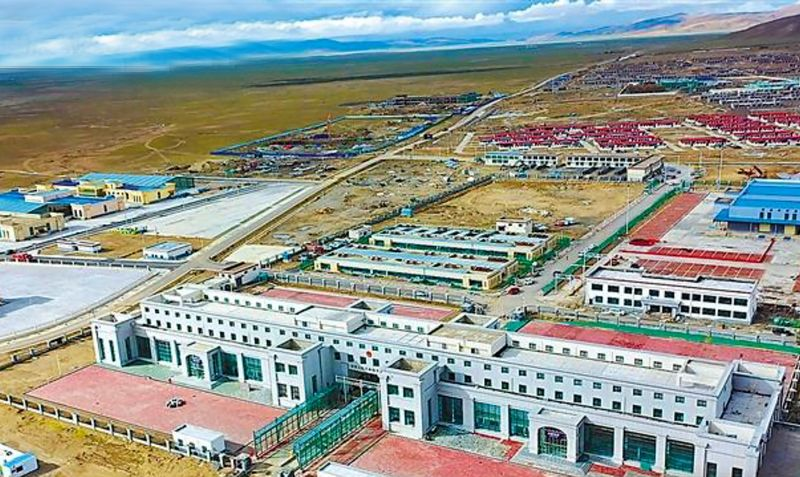
The second development concerns China’s transformation of operations at the Korala border crossing between Tibet and Mustang in Nepal. This border, historically a passage for Tibetan refugees, has seen the construction of massive infrastructure, including buildings and accommodations on the Chinese side.

Mustang, a Buddhist-majority region in Nepal, holds historical importance, as it was a key site during the 1959 Tibetan uprising against Chinese rule. The Korala border crossing, located at an altitude of 15,250 ft, has long been a route for Tibetan refugees fleeing Chinese oppression. In 1960, Mustang became the central base for the CIA-supported Tibetan resistance movement known as the Chushi Gandrung Army, or the Khampa Rebellion, which lasted until 1972. Although the rebellion ended, Mustang has remained a geopolitically sensitive area.


Return of illegal immigrants: Not 1st time, 21 deportee flights landed in Amritsar since 2020

US govt norms mandate shackles for flight safety, say Central officials

article_Author
Aditi Tandon Tribune News Service

At a time of intense backlash in Punjab over US deportation flights landing in Amritsar instead of other locations in the country, government sources on Wednesday said this was not the first time deportation flights had landed in Amritsar.

Sharing details, official sources said between May 19, 2020 and October 25, 2024, as many as 18 flights carrying illegal Indian immigrants had landed in Punjab’s Amritsar.

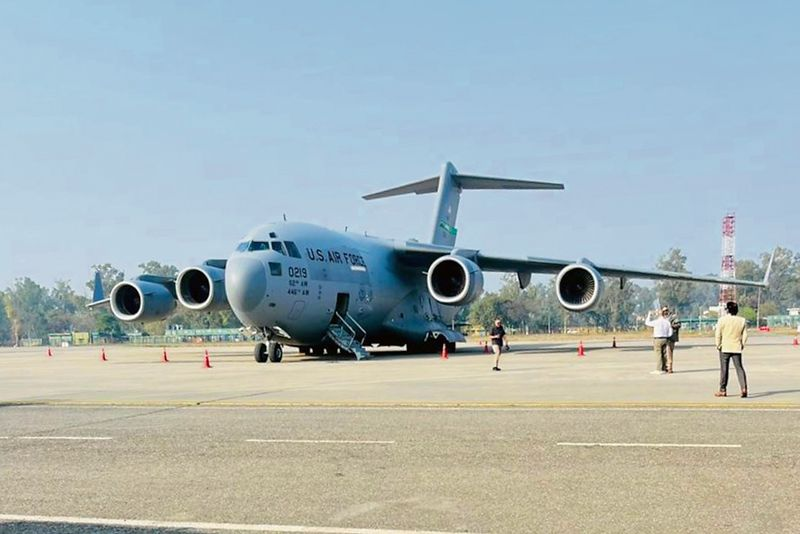
The latest three US flights that brought Indians back home — on February 5, 15 and 16 — take that number to 21. On a The Tribune query about why deportees continue to be sent home in shackles despite India vowing to take up the issue with the US, government sources pointed to the US Immigration and Customs Enforcement’s Air Operations Handbook, which mandates transport of illegal immigrants in handcuffs ensure no passenger poses a threat to himself or to flight safety.

The US Customs handbook under the section “Restraint Requirements” reads, “In accordance with the Use of Restraints policy, effective November 19, 2012, detainees transported by ICE Air aircraft will be fully restrained by the use of handcuffs, waist chains and leg irons during CONUS and OCONUs fights.”CONUS and OCONUS refer to US military flights that travel between the “Continental United States” (CONUS) – meaning the 48 contiguous states and Washington DC — and locations “Outside the Continental United States” (OCONUS), which includes Alaska, Hawaii, and any overseas military bases or destinations.

Incidentally, amid the raging controversy over inhuman treatment of Indian immigrants on the US flights, the White House today posted a clip on X, showing deportees being chained and shackled. The clip, marked “ASMR: Illegal Alien Deportation Flight”, shows deportees chained around legs and waist by US cops before being sent on flights to their respective nations. One deportee is seen in the video boarding the flight with chains on legs.

Asked why US deportation flights are landing in Amritsar — an issue repeatedly flagged by Punjab CM Bhagwant Mann who has accused BJP-ruled Centre of defaming Punjab by sending deportation flights to the state — government sources said, “The reason is higher number of deportees from Punjab. The three US flights that landed in Amritsar between February 5 and 16, brought back 333 Indian immigrants. Of these, 126 are from Punjab. That happens to be the highest,” said an official source.

The government’s break-up list of Indian returnees from the US, shared today, shows 126 of the 333 deportees (37.8%) are from Punjab; 110 (33%) from Haryana; 74 (22.2%) from Gujarat; 8 (2.4%) from UP; five from Maharashtra (1.5%); two each from Himachal Pradesh, Goa and Chandigarh and one each from J&K and Uttarakhand. The break-up further shows that so far 262 men, 42 women, 29 children (18 boys; 11 girls) have returned from the US with their families.

BJP general secretary Tarun Chugh, who hails from Amritsar, said the AAP government in the state must stop politicising the issue and apprehend traffickers who played with the lives of lakhs of innocent youth. “Bhagwant Mann needs to answer who has been sending the innocent youth of Punjab illegally to the US and why are they not being caught. Why are there no jobs in Punjab? Which traffickers spoiled their lives and forced them to sell lands and houses. What did Mann do against these traffickers?” he said.

‘Chose Punjab landing as max from state’

An official source said the Amritsar airport was chosen for the landing of the flights as the maximum 126 deportees belonged to Punjab. The three US flights that landed in Amritsar between February 5 and 16 brought back 333 Indian immigrants from that country


Third Edition of India-Egypt Joint Special Forces Exercise Cyclone-III Underway In Rajasthan

The third edition of the India-Egypt Joint Special Forces exercise, CYCLONE-III, is currently taking place at the Mahajan Field Firing Range in Rajasthan. This 14-day military drill began on February 10, 2025, and is scheduled to conclude on February 23, 2025.

Key Features of CYCLONE-III

Joint Training Focus: The exercise emphasises various critical skills, including:

Close Quarter Battle (CQB) drills

Survival techniques

Demolition training

Combat medical skills

These high-intensity drills aim to enhance the soldiers’ effectiveness in responding to complex operational scenarios, particularly in desert and semi-desert environments.

The training sessions are designed to improve agility, endurance, and precision among troops from both nations, fostering seamless cooperation during real-world combat situations. The exercise culminates in a rigorous 48-hour validation phase, where participants will conduct simulated Counter-Terrorism operations.

CYCLONE-III serves as a platform for showcasing India’s indigenous defense capabilities while enhancing diplomatic and military ties between India and Egypt. This collaboration not only strengthens tactical capabilities but also reinforces the strategic partnership focused on counter-terrorism and regional security.

The ongoing exercise highlights the commitment of both nations to operational excellence and their readiness for joint missions in challenging environments.

ANI


Concerned Over Pakistan Army, ISI Presence In Bangladesh’: Army Chief General Upendra Dwivedi

Army Chief General Upendra Dwivedi has expressed concerns regarding the presence of the Pakistan Army and the Inter-Services Intelligence (ISI) in Bangladesh. Dwivedi mentioned that India is closely monitoring the situation and will take appropriate actions when required.

Reports indicate that the ISI is seeking to re-establish its presence in strategic areas of Bangladesh, potentially threatening India’s security. These areas, including Cox’s Bazar, Ukhia, Teknaf, Moulvibazar, Habiganj, and Sherpur, were part of East Pakistan before Bangladesh’s formation in 1971. Before 1971, the Pakistan army had a presence in these strategic areas and supported insurgent groups active in northeastern states like Nagaland and Mizoram, creating challenges for India.

In an interview with ANI, Chief of Army Staff General Upendra Dwivedi referred to Pakistan as the “epicentre of terrorism,” emphasising India’s concern that Pakistan should not be able to use its territory to send terrorists into India. He stated, “I had used the word epicentre of terrorism for a particular country (Pakistan). Now those countrymen, if they go to any other place and they happen to be our neighbour, as far as I am concerned, I should be concerned about it. That they should not be able to use that soil to send terrorists to India. That is as far as that is concerned”

The ISI’s efforts involve collaborating with pro-Islamist and pro-Jamaat factions within the Bangladesh Army. This has raised concerns about potential infiltration and the use of these bases as training grounds for insurgent groups targeting India.

General Dwivedi told ANI that Pakistan’s agenda extends beyond Kashmir and is focused on fuelling an anti-India stance. He stated that “the idea of India is their major criticality” and that an anti-India stance is the common agenda that unifies Pakistan. Dwivedi added that Pakistan will continue to emphasize Kashmir to maintain this agenda.

Dwivedi’s statements came in response to a question about whether Pakistan has accepted Kashmir as part of India. He used an analogy from the movie ‘Guide’ to illustrate Pakistan’s position, saying they are stuck in their stance like a madman who refused to eat until it rained. Dwivedi also referenced Robert Kaplan’s book ‘Revenge of Geography,’ questioning whether both sides of the Indus could ever be one.

ANI