All posts by webadmin

PM chairs 2nd CCS meet; security board revamped

Prime Minister Narendra Modi on Wednesday chaired the second meeting of the Cabinet Committee on Security (CCS) at his residence, even as the government approved the reconstitution of the National Security Advisory Board. The two-hour CCS meeting is learnt to…
PM chairs 2nd CCS meet; security board revamped

Prime Minister Narendra Modi on Wednesday chaired the second meeting of the Cabinet Committee on Security (CCS) at his residence, even as the government approved the reconstitution of the National Security Advisory Board. The two-hour CCS meeting is learnt to…

article_Author
Tribune News Service

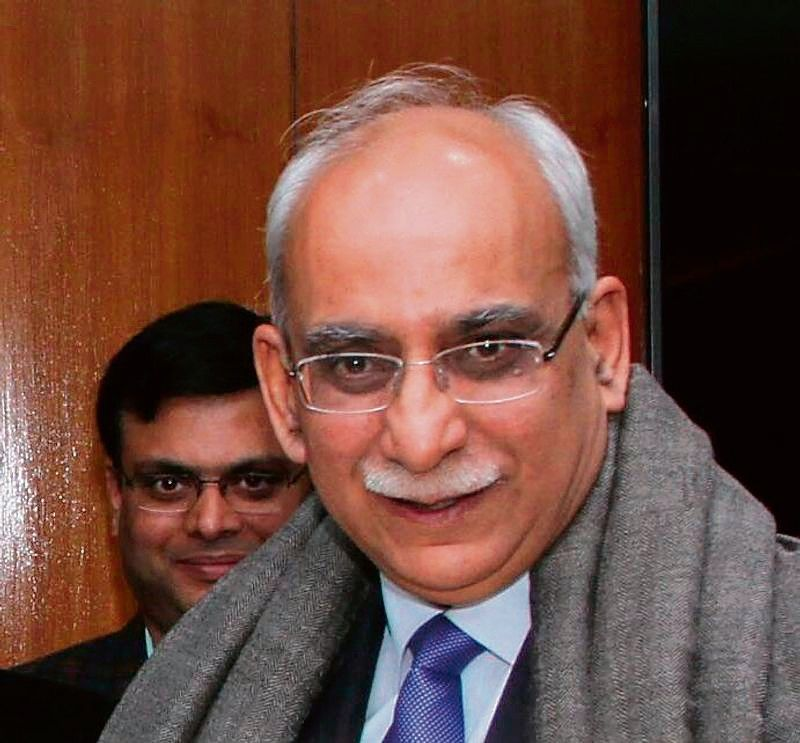
Ex-R&AW chief Alok Joshi to head National Security Advisory Board

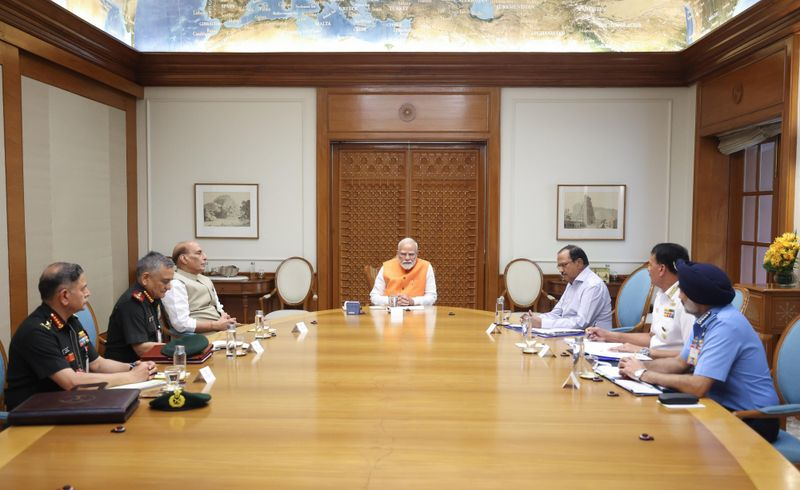
Prime Minister Narendra Modi on Wednesday chaired the second meeting of the Cabinet Committee on Security (CCS) at his residence, even as the government approved the reconstitution of the National Security Advisory Board.

The two-hour CCS meeting is learnt to have formally put its seal of approval on the full operational autonomy which the PM granted to the Indian military to calibrate and decide on the national response to the Pakistan-sponsored attack that killed 26 persons in Pahalgam on April 22.

Key changes in military top brass

  • Lt Gen Pratik Sharma will take over as General Officer Commanding-in-Chief of the Northern Command
  • Air Marshal Narmdeshwar Tiwari has been appointed as IAF Vice Chief, succeeding Air Marshal SP Dharkar
  • Air Marshal Ashutosh Dixit will be the new Chief of Integrated Defence Staff to the Chairman Chiefs of Staff Committee

The CCS meeting was attended by Defence Minister Rajnath Singh, Home Minister Amit Shah, External Affairs Minister S Jaishankar and Finance Minister Nirmala Sitharaman. Also present were National Security Adviser Ajit Doval and principal secretaries to PM PK Mishra and Shanktikanta Das.

After the CCS meeting, the government also approved the reconstitution of the National Security Advisory Board appointing former R&AW chief Alok Joshi as Chairman.

Ex-Western Air Commander Air Marshal PM Sinha, former Southern Army Commander Lt Gen AK Singh and Rear Admiral Monty Khanna of the reconstituted panel are retired officers. Former cops Rajiv Ranjan Verma and Manmohan Singh and former IFS officers DB Venkatesh Varma and Pankaj Saran are also on the panel, which further features AB Mathur, Prof V Kamakoti of IIT Madras, BS Murthy, Air Marshal Pankaj Sinha (retd), Devendra Sharma, Bimal Patel, R Radhakrishnan and Vice Admiral PS Cheema (retd) as members.

The principal function of the board, a group of 15 government and private experts, is to undertake long-term analysis and to provide perspectives on the national security issues to the National Security Council and to recommend measures and solutions and policy options on the issues referred to it by the National Security Council. The board advises the NSA.

Earlier, the CCS is learnt to have reviewed the progress made on retaliatory measures announced so far against Pakistan, including revocation of visas to Pakistani nationals and suspension of the Indus Waters Treaty. It was also briefed on the status of NIA investigations into the attack with the role of former Pakistan Army para commander Hashim Musa clearly established, linking Pakistan with the dastardly attack and the role of several locals emerging.


Pak’s national carrier cancels all flights to and from Gilgit, Skardu

Pakistan’s national carrier on Wednesday cancelled all flights to and from Gilgit, Skardu and other northern areas in Pakistan-occupied Kashmir due to security reasons, local media reports said, amid rising tensions with India following the Pahalgam terror attack. Citing the…

Pakistan’s national carrier on Wednesday cancelled all flights to and from Gilgit, Skardu and other northern areas in Pakistan-occupied Kashmir due to security reasons, local media reports said, amid rising tensions with India following the Pahalgam terror attack.

Citing the flight schedule, Urdu daily Jang reported that the Pakistan International Airlines (PIA) cancelled two flights each from Karachi and Lahore to Skardu.

Two flights from Islamabad to Skardu and four flights from Islamabad to Gilgit have also been cancelled, the paper said, quoting aviation sources.

Pakistan has intensified monitoring of its airspace amid heightened security concerns over tensions with India, the Express Tribune reported.

“For security reasons, all commercial flights scheduled to operate to and from Gilgit and Skardu on Wednesday have been cancelled,” the paper reported.

Officials said the measures are precautionary and aimed at ensuring national airspace security during the regional tension.

Pakistani authorities have also placed all airports under high alert, significantly ramping up security and surveillance protocols, the paper added.


Panicked’ Pak fears military strike in 24-36 hours

Islamabad says it has received “credible intelligence” regarding New Delhi’s plans to carry out a military strike

article_Author
Ubeer Naqushbandi Tribune News Service

Pakistan information minister Attaullah Tarar on Wednesday said Islamabad had received “credible intelligence” regarding India’s plans to carry out a military strike within the next 24 to 36 hours.

Tarar’s reaction comes a day after Prime Minister Narendra Modi granted the security forces “complete operational freedom” to respond to the Pahalgam terror attack, which left 26 persons dead and at least 20 injured.

Tarar’s statement on X said any act of aggression would be met with a decisive response. “Pakistan has credible intelligence that India intends to launch a military strike within the next 24 to 36 hours using the Pahalgam incident as a false pretext,” Tarar said, adding that India would be fully responsible for any serious consequences in the region.

He said, “Pakistan has been a victim of terrorism itself…we have always condemned it in all its forms and manifestations, anywhere in the world.”

Tarar stressed Pakistan had “open-heartedly offered a credible, transparent, and independent investigation by a neutral commission of experts to ascertain the truth”. He also urged the international community to recognise the severity of the situation, stressing that “the onus of an escalatory spiral and its ensuing consequences shall squarely lie with India”.

“The nation reiterates its resolve to defend the sovereignty and territorial integrity of Pakistan at all costs,” he said.

Tensions between India and Pakistan heightened after the Pahalgam terror attack. India has already downgraded diplomatic ties with Pakistan and suspended the Indus Waters Treaty, closed the Attari-Wagah border, expelled all Pakistani military attaches, while Pakistan responded with tit-for-tat measures and paused the 1972 Simla Agreement following the terror attack.


Military brass set for key changes

Lt Gen Pratik Sharma to head Northern Command, Air Marshal Narmdeshwar Tiwari appointed as Vice Chief

The Indian military is set for key leadership changes over the next two days, with new appointments at the Northern Command of the Army, the Indian Air Force (IAF) and the tri-services coordination setup under the Chief of Defence Staff (CDS).

Lieutenant General Pratik Sharma will take over as General Officer Commanding-in-Chief of the strategically crucial Northern Command tomorrow, following the retirement of Lieutenant General MV Suchindra Kumar.

Headquartered at Udhampur, Jammu and Kashmir, the Northern Command is tasked with operational responsibilities along both Pakistan and China borders, as well as counter-terrorism operations.

Lt Gen Sharma, commissioned into the 2nd Battalion of the Madras Regiment, previously served as Deputy Chief of Army Staff (Strategy). He has also commanded the Ambala-based 2 Corps and served as Director General of Military Operations.

Amid speculation around his predecessor, the Ministry of Information and Broadcasting issued a fact check on Wednesday, dismissing social media claims — allegedly circulated by ISI-linked proxies — that a formal Court of Inquiry had been ordered against Lt Gen Kumar.

In the Indian Air Force, Air Marshal Narmdeshwar Tiwari has been appointed as Vice Chief, succeeding Air Marshal SP Dharkar, who superannuated.

A Mirage fighter pilot and former chief test pilot for the Tejas programme, Air Marshal Tiwari currently heads the South Western Air Command in Gandhinagar. The officer will assume charge on May 2.

The third top-level change is in the tri-services structure. Air Marshal Ashutosh Dixit, currently heading the Central Air Command, will be the new Chief of Integrated Defence Staff to the Chairman Chiefs of Staff Committee (CISC). He replaces Lt Gen JP Mathew, who retired today after laying a wreath at the National War Memorial in New Delhi.

The Ministry of Defence lauded Lieutenant General Mathew’s contributions in strengthening India’s cyber and space defence capabilities through the expansion of the Defence Cyber Agency and Defence Space Agency.


Despite HC order, J&K cop among 9 siblings shifted to Punjab for deportation

Despite a High Court order granting temporary relief, a Jammu and Kashmir police personnel and his eight siblings were shifted to Punjab on Wednesday for deportation to Pakistan. The family, including five sisters aged between 42 and 56, were among…

Our Correspondent

Despite a High Court order granting temporary relief, a Jammu and Kashmir police personnel and his eight siblings were shifted to Punjab on Wednesday for deportation to Pakistan.

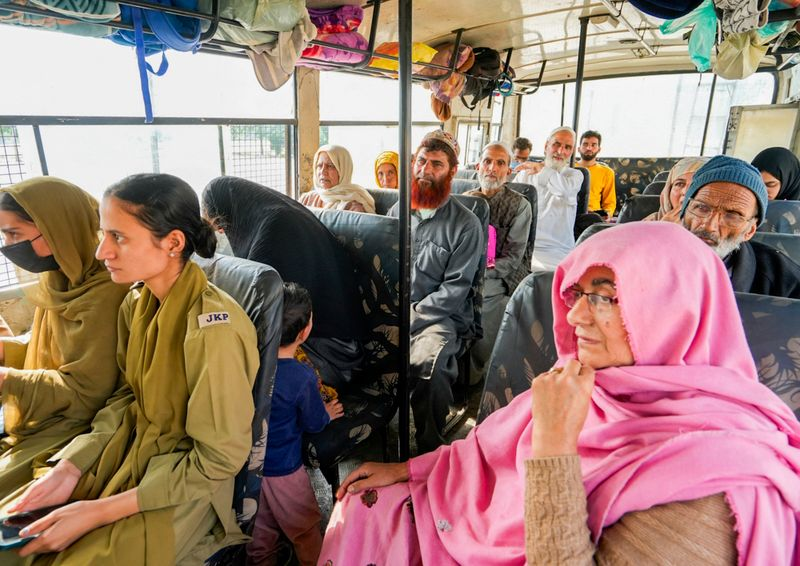
The family, including five sisters aged between 42 and 56, were among over two dozen individuals—mostly from Pakistan-occupied Kashmir (PoK)—served deportation notices in Jammu, Poonch, and Rajouri districts. Their removal comes in the wake of the April 22 Pahalgam terror attack that killed 26 people, prompting the Centre to suspend the Indus Waters Treaty, downgrade diplomatic ties with Islamabad, and order all Pakistanis on short-term visas to leave by April 27.

Ifthkar Ali (45), posted at the Vaishno Devi base camp in Katra, has served in the J&K Police for 27 years. He and his siblings, residents of Salwah village in Poonch, had filed a petition asserting they are Indian nationals with ancestral land and official records to prove their residency.

The Jammu and Kashmir and Ladakh High Court admitted their petition and directed authorities not to force them to leave the Union Territory, pending objections. The court sought a report from the government and an affidavit from the Poonch Deputy Commissioner regarding the family’s property holdings. The next hearing is scheduled for May 20.

However, the nine family members were taken from Kathua to Punjab on Tuesday night for deportation through the Attari border.

Activist Safeer Choudhary, who led a protest with Ali’s family outside the Press Club, accused officials of ignoring the court’s directive. “They have 175 kanals of land, are listed in revenue records, and Ali has served the police force with distinction,” he said.

Emotional scenes were witnessed at their house in Mendhar, with their spouses and children making passionate appeals to the government to stop their deportation. Ali’s wife said her husband was born in Mendhar and it is grave injustice to him and his children if their father is deported to a country that he does not belong to.

“What will my children do without their father?” she asked, adding, “We regret the loss of innocent lives in terror attacks but do not take revenge on us as we have done no wrong. In fact, my husband is part of the police force that is fighting against terrorism.” (With PTI inputs)


Pakistan resorts to unprovoked firing along LoC, IB in four J&K districts; Army retaliates

Pakistani troops initiated unprovoked firing along the Line of Control (LoC) and the International Border (IB) in multiple sectors across four border districts of Jammu and Kashmir, officials reported on Wednesday. Indian forces responded effectively to the firing. This incident…

article_Author
Adil Akhzer Our Correspondent

Pakistani troops initiated unprovoked firing along the Line of Control (LoC) and the International Border (IB) in multiple sectors across four border districts of Jammu and Kashmir, officials reported on Wednesday. Indian forces responded effectively to the firing.

This incident marks the sixth consecutive night of ceasefire violations by Pakistan along the LoC following the recent terror attack in Pahalgam on April 22.

The firing, which began with small arms, was reported from the Pargwal sector along the IB in Jammu district, as well as the Sunderbani and Naushera sectors in Rajouri district.

“On the night of April 29-30, Pakistan Army posts initiated unprovoked small-arms fire across the Line of Control opposite the Naushera, Sunderbani and Akhnoor sectors in the Union Territory of Jammu & Kashmir,” stated a defence spokesperson.

The Indian Army troops responded swiftly and proportionately, the spokesperson added.

Similar incidents of unprovoked small-arms fire were also reported from Pakistani posts across the LoC in Baramulla and Kupwara districts in the Kashmir Valley, and across the IB in the Pargwal sector.

The firing initially commenced in Kupwara and Baramulla districts before spreading to the Poonch and Akhnoor sectors. It further escalated to the Sunderbani and Naushera sectors in Rajouri district, followed by firing along the IB in Jammu’s Pargwal sector.

This marks the first instance of an exchange of fire at the International Border since last week. Previous incidents had largely been confined to the LoC sectors in both the Jammu and Kashmir regions.

Locals in the Pargwal sector reported that the firing occurred late on Tuesday night and ceased after some time. They noted that the area has witnessed an exchange of fire after several years.

Since the night of April 24, shortly after India reportedly suspended the Indus Water Treaty in response to the killing of 26 people in the Pahalgam terror attack, Pakistani troops have engaged in unprovoked firing at various locations along the LoC in Jammu and Kashmir, starting from the Kashmir Valley.

In the Kashmir Valley, officials stated that an alert has been issued in the border areas, and security has been heightened in the towns. They added that checkpoints have been established, and frisking has been intensified in the border towns in response to the ongoing border tensions.

India and Pakistan had agreed to a renewed ceasefire in February 2021 when the Directors General of Military Operations (DGMOs) of both countries reaffirmed their commitment to the 2003 ceasefire agreement.


China’s calculated neutrality on Pahalgam

China prefers the status quo — continuing tensions between India and Pakistan short of war, which would gradually drain both countries.

article_Author
Jabin T Jacob

CHINA has issued a series of statements in the wake of the terrorist attack in Pahalgam. How do we interpret these and what do they tell us about how it views India and Pakistan?

The first report of the attack by Chinese state-run Xinhua on April 22 did not refer to it as a terrorist attack but as “tourists killed”, and an “ambush” in “Indian-controlled Kashmir.” The report was largely matter-of-fact even if both Indian Prime Minister Narendra Modi and “the region’s incumbent Chief Minister” Omar Abdullah were quoted as condemning it. It concludes noting: “A guerilla war has been going on between militants and Indian troops stationed in the region since 1989.”

It is only subsequently that the headlines and text change, with “UN Security Council condemns terror attack in Indian-controlled Kashmir” in the headline, “terrorist attack in Kashmir”, and “terrorism and extremism.” But even so, these are not the same thing as saying that China holds Pakistan responsible. In fact, China consistently attempts to portray a picture of neutrality, saying it “hopes India and Pakistan will exercise restraint, work in the same direction, handle relevant differences properly through dialogue and consultation, and jointly uphold peace and stability in the region.”

This ‘neutrality’, however, does two things with respect to India.

One, it hyphenates India and Pakistan in status as the Chinese — and Pakistanis — have always wished the rest of the world would. China does not see India as its equal or a competing power while Pakistan sees itself as India’s equal. New Delhi’s own difference in responses to provocations by China and Pakistan, in fact, tends to reinforce this perception. India had a rather weak-kneed military response following the Galwan incident in 2020. By contrast, it has been relatively more ready for kinetic responses to go with its rhetoric when Pakistan has been the aggressor.

China has also used foreign interlocutors to highlight this hyphenation, referring, for example, to the Egyptian Foreign Minister calling for “calm and self-restraint” in phone calls with his Indian and Pakistani counterparts.

Two, Beijing is also shifting responsibility to India by urging “restraint” and asking both countries to “jointly uphold peace and stability in the region.” By calling for an “impartial investigation”, China is making clear that it does not buy India’s version of events. And nor can it, given that its rivalry with India is structural.

Once again, Indian rhetoric and domestic politics involving Pakistan offer opportunities to China to exploit the India-Pakistan divide and to keep India off balance.

There is a third effect that Chinese neutrality has, but this time with respect to Pakistan. While it is easy enough to conclude that India is the target, Beijing is also conveying a message to Pakistan by not wholeheartedly supporting the latter either.

For long now, Chinese support to Pakistan on political and foreign policy issues has been largely rhetorical. While Beijing has blocked Indian attempts to get Pakistan-based terrorists sanctioned at the UN, it has also used such support to put pressure on Islamabad and Rawalpindi to address China’s own concerns on what it perceives to be terrorism by Uyghurs from its Xinjiang region as well as attacks against Chinese workers in Pakistan.

In other words, Chinese support for Pakistan is increasingly part of a transactional approach. This should not be surprising. American support to Pakistan has dwindled following the Afghanistan drawdown. While the economic relationship has grown with the China-Pakistan Economic Corridor (CPEC), China’s exposure is also not as great as it is often portrayed — most figures for Chinese investments in Pakistan as part of the corridor are wildly exaggerated.


In a Xinhua article published just a few hours before its report on the Pahalgam attack, the CPEC was called “a transformative initiative” but the figures were more telling — it had only “created over 75,000 jobs in Pakistan and attracted more than 26 billion U.S. dollars in investment.” These are poor figures for a country of over 250 million people and after 10 years of the project.

China might not want a full-blown India-Pakistan conflict for several reasons, including the possible return of the US to the region in some form or fashion and this time, most likely on the Indian side. This would mean that China would have to take sides with the Pakistanis. Apart from the lack of any real political or economic gain from such backing, the Chinese probably also do not want to complicate ties with either the US or India at this moment.

Despite its retaliatory measures against the US in the trade war and the aggressive rhetoric, Beijing is also concerned about longer-term implications for its economy and has kept the door open for negotiations with the Americans. The current Chinese thaw with the Indians has at least partly to do with concerns with the Donald Trump administration in the US and is too recent for the Chinese to want to complicate with anything more than the sort of signals outlined above.

No wonder then that Chinese Foreign Minister Wang Yi’s phone call with his Pakistani counterpart ended by saying that “conflict does not serve the fundamental interests of either India or Pakistan.”

At the same time, if eliminating terrorism from Pakistan requires the weakening of the Pakistani military and if such weakening were to lead to an improvement of India-Pakistan ties or a strengthening of western-style democracy, then China will be opposed to this too. China’s ruling communists view democratic consolidation anywhere as threatening their own regime stability.

In short, China prefers the status quo — continuing tensions between India and Pakistan short of war, which would gradually drain both countries, distracting India from preparing for the China challenge and keeping Pakistan dependent on China’s largesse.

Jabin T Jacob is Associate Professor, Shiv Nadar University.


Most dangerous nation: Govt dossier exposes Pak’s global terror network

Lists its extremist acts in Kashmir, Afghanistan & Russia, training camps in PoK

article_Author
Aditi Tandon Tribune News Service

The government on Wednesday unveiled a dossier detailing Pakistan’s global terror trail, spanning from Kashmir and Afghanistan to Russia, the UK, and Bangladesh, labelling it as one of the most dangerous forces in the world. The document lists terror training camps hosted by Pakistan across Punjab, Khyber Pakhtunkhwa, Waziristan and Pakistan-occupied Kashmir.

These camps, operated by groups such as Lashkar-e-Toiba (LeT), Jaish-e-Mohammed (JeM), Hizbul Mujahideen (HM) and transnational outfits like ISIS-Khorasan, serve as hubs for radicalisation, weapons training and suicide mission preparation. Former Pakistani Army personnel often assist in training, lending military expertise to enhance operational lethality, it says.

The move comes a day after India, citing Pakistan Defence Minister Khwaja Asif’s admission on financing terror networks, stated at the UN that his confession exposed Pakistan as a rogue state fuelling global terrorism and destabilising the region. This also coincides with growing calls to designate Pakistan as a state sponsor of terrorism. “India must pursue diplomatic channels to achieve this,” said former ambassador to Bangladesh Veena Sikri.

Top sources on Wednesday reinforced the assertion that “Pakistan is a rogue state” highlighting its record in sponsoring, sheltering and exporting terrorism as one of the most dangerous and destabilising forces globally. “For decades, Pakistani soil has been used as a launchpad for cross-border terrorism, insurgency and extremist ideology,” the sources said, citing instances listed in the document where terror attacks were traced back to Pakistan.

They flagged statements of top Pakistani leaders, including former PM Nawaz Sharif’s 2018 suggestion that Pakistan-based LeT played a role in the Mumbai terror attacks and former President Pervez Musharraf’s remarks that Pakistani forces trained militant groups to fight India in J&K.

The dossier prominently features Asif’s admission that Pakistan supported terrorist groups for over three decades. It also tracks evidence of Pakistan-sponsored terrorism across multiple countries, portraying Pakistan as a global terror exporter. In Afghanistan, Pakistan’s Inter-Services Intelligence (ISI) has backed the Afghan Taliban and the Haqqani network, responsible for numerous deadly attacks, including the 2008 Indian Embassy bombing in Kabul and the 2011 attack on the US Embassy.

In Russia, the sources mention how Pakistan’s link was found in the 2024 Moscow concert hall attack, with reports suggesting the attackers may have had logistical or ideological support from Pakistani networks. The dossier also states Pakistan-based Sunni extremist group Jaish ul-Adl has repeatedly targeted Iranian security forces in Sistan and Baluchestan province, prompting Iran’s accusations that Pakistan harbours militants staging cross-border attacks.

The document references the 2005 London bombings, where the perpetrators had ties to training and indoctrination in Pakistan. Most notably, it recalls the US raid in Abbottabad that killed Al Qaeda leader Osama bin Laden, exposing systemic failures in Pakistan’s counterterrorism efforts and raising suspicions of ISI collusion, given his proximity to Pakistan’s Military Academy.

Further, the dossier details Pakistan’s ISI training and funding Jamaat-ul-Mujahideen Bangladesh (JMB), the banned group behind the 2016 Gulshan café attack in Dhaka, which killed 20 hostages. In 2015, Bangladeshi authorities expelled Pakistani diplomats for funnelling funds to JMB operatives. A 2020 intelligence report revealed ISI’s involvement in training 40 Rohingya refugees in Bangladesh’s Cox’s Bazar camps through JMB, aiming to infiltrate them into India. JMB’s network, funded via Gulf-based NGOs and Pakistani intermediaries, extends to Bangladesh and India, with sleeper cells identified in West Bengal and Kerala.

Officials assert that there is substantial evidence of Pakistan’s role as a rogue state fuelling global terrorism, a stance India reiterated at the UN regarding its neighbour.

US pushes for de-escalation as tension rises

New Delhi: Amid the rising military tensions between India and Pakistan, the US has said it is reaching out to both the nations asking them not to escalate the matter.

US State Department spokesperson Tammy Bruce, at a media briefing in Washington DC on Tuesday, said: “We are reaching out to both parties and telling them not to escalate the situation.” Earlier, a US State Department statement said the US was in touch with Pakistan and India leadership.

As part of its efforts, US Secretary of State Marco Rubio called up Pakistan PM Shehbaz Sharif on Wednesday evening. Rubio is likely to speak to External Affairs Minister S Jaishankar. Meanwhile, Saudi Arabia and Qatar have expressed concern over the escalating tensions and urged both nations to exercise restraint. — TNS


HEADLINES : 29 APRIL 2025

PM meets Rajnath, top military brass ahead of Wednesday’s security panel meeting

Let us stay in Kashmir or send us in body bags: Pak wives of ex-militants

Armed forces have complete operational freedom on India’s response to Pahalgam attack: PM

Drones are changing war and India must catch up

Pahalgam attack fallout: 48 tourist spots closed across Kashmir for security reasons

Confession surprises no one’: India rebukes Pakistan at UN over Pahalgam attack

Canada elections: Record 22 Punjabis elected

Pakistan Defence Minister’s ‘X’ account withheld in India


PM meets Rajnath, top military brass ahead of Wednesday’s security panel meeting

The meeting signals that India is seriously contemplating military action following the terror attack.

article_Author
Aditi Tandon Tribune News Service

Ahead of the crucial meeting of the Cabinet Committee on Security (CCS) on Wednesday, Prime Minister Narendra Modi on Tuesday chaired a high-level meeting with the military and security establishment to decide the next course of action against Pakistan following the Pahalgam terror attack.

The meeting, under way at the PM’s 7 Lok Kalyan Marg residence, is being attended by Defence Minister Rajnath Singh, National Security Adviser Ajit Doval, Chief of Defence Staff Gen Anil Chauhan and the three service chiefs.

The meeting signals that India is seriously contemplating military action following the terror attack.

Earlier in the day, PM Modi said, “We have very little time and very big goals.”

Wednesday’s meeting will be the second meeting of the CCS, the highest decision-making body of the country with respect to security, defence and strategic matters, within a week.

The meeting will be attended by Defence Minister Rajnath Singh, External Affairs Minister S Jaishankar, Union Finance Minister Nirmala Sitharaman, Union Home Minister Amit Shah, National Security Adviser Ajit Doval, Principal Secretaries to the PM, the Cabinet Secretary, and other top officials.

A decision on whether to close Indian airspace to Pakistani planes is likely to be taken.