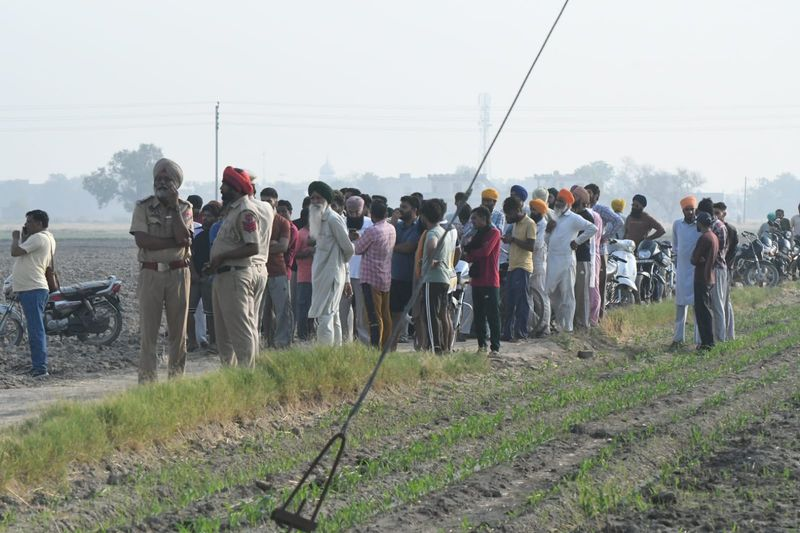
A civilian was killed and nine others injured when an unidentified aircraft crashed and caught fire in Aklian Kalan village of Bathinda district in the early hours of Wednesday.
The deceased has been identified as Govind, a farm labourer from Charkhi Dadri in Haryana. The crash occurred around 2 am in harvested wheat fields, approximately 500 meters from the nearest residential area.
According to eyewitnesses, several farm labourers were at the local grain market late Tuesday night when they noticed an aircraft flying unusually low.
Moments later, it crashed into the fields.As some people approached the burning wreckage, an explosion took place, killing Govind on the spot and injuring nine others.
There is no official information yet regarding the pilot or the origin of the aircraft.Authorities have cordoned off the area, and an investigation is underway to determine the cause of the crash and the identity of the aircraft.
o strengthen disaster preparedness and enhance the coordination among emergency response agencies, the UT Administration will conduct a full-scale mock drill and a blackout for 10 minutes at 7.30 pm tomorrow. Amid escalation with Pakistan after the Pahalgam terror attack, the Central Government has decided to conduct mock drills at various places across the country.
Deputy Commissioner Nishant Kumar Yadav today convened a comprehensive review meeting with key stakeholders. The meeting was attended by SSP Kanwardeep Kaur, senior officers of the UT Administration, representatives of residents’ welfare associations and market welfare associations, and other associations.
The meeting focused on the execution plan and logistical preparedness for a full-scale mock drill for building collapse and fire incident at two locations in Chandigarh at 4 pm. “As part of the drill, air raid warning sirens will be activated across the city, in response of which complete blackout is to be voluntarily implemented by all residents of the city from 7.30 pm to 7.40 pm tomorrow,” said the DC.
During the blackout, citizens have been asked to stay home and turn off all indoor and outdoor lights. Those driving can park their vehicles on the roadside and turn off the lights. After 7.40 pm, normal/routine activities may be carried out by citizens. The blackout will be conducted in a controlled and supervised manner to assess the response and adaptability of emergency services.
The DC said the exercise would not apply to medical establishments. However, they should remain informed and alert.
Yadav said the exercise was a part of the Administration’s continued efforts to evaluate and enhance the efficacy of emergency response mechanisms in real-time situations. It would involve coordinated participation of multiple agencies, including the Fire and Emergency Services, the police, Health Department, the MC and the disaster management authorities. In addition, trained volunteers from the Civil Defence, National Service Scheme (NSS), and National Cadet Corps (NCC) will play an active role in the mock scenarios.
The DC asked public to extend their full cooperation during the mock drill. He requested the citizens to stay calm, avoid panic, and not believe or circulate any rumours regarding the mock drill activities. “The drill is purely a preparedness exercise and does not pose any real threat. Such mock drills shall be carried out in the coming days,” he said.
PUBLIC ADVISORY
Before the drill
Charge your phone and power bank the night before
Keep battery/solar powered flashlight/torch, valid ID card handy
Prepare a family emergency kit: water, dry food, basic medicines
Be aware of alerts
Learn siren signals (e.g. long continuous — alert, short — all-clear)
Stay tuned to radio/TV for official updates
Identify a secure interior room or basement as shelter
Practice family drills — switch of lights, gather in safe zone within 1-2 minutes
Note Emergency numbers (Police 112, Fire 101, Ambulance 120)
During the drill
Do not panic on hearing air raid sirens or announcements
Obey instructions from police, school authorities, or any government authority
Gather in the safe zone immediately
During blackout
Stay indoors and away from windows
If driving, park your vehicle on the roadside and turn off its lights
Turn off all indoor and outdoor lights during alerts
Switch off electrical appliancesEnsured children, elderly people and pets are supervised all the time
Avoid use of phones or LED devices near windows
Use thick curtains or cover windows with cardboard
Don’t spread unverified information on WhatsApp or social media
OPSINDOOR:INDIASTRIKESPAK,MISSILES DESTROY TERROR BASES Pak military bases spared, India says response measured, huge blast in Srinagar
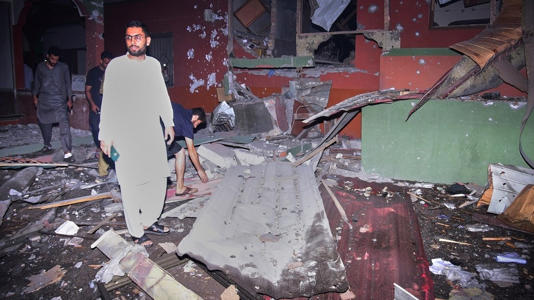
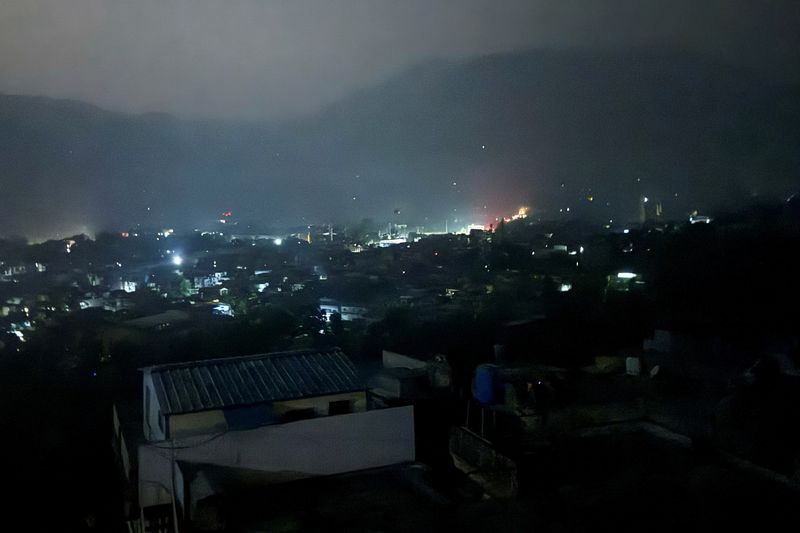
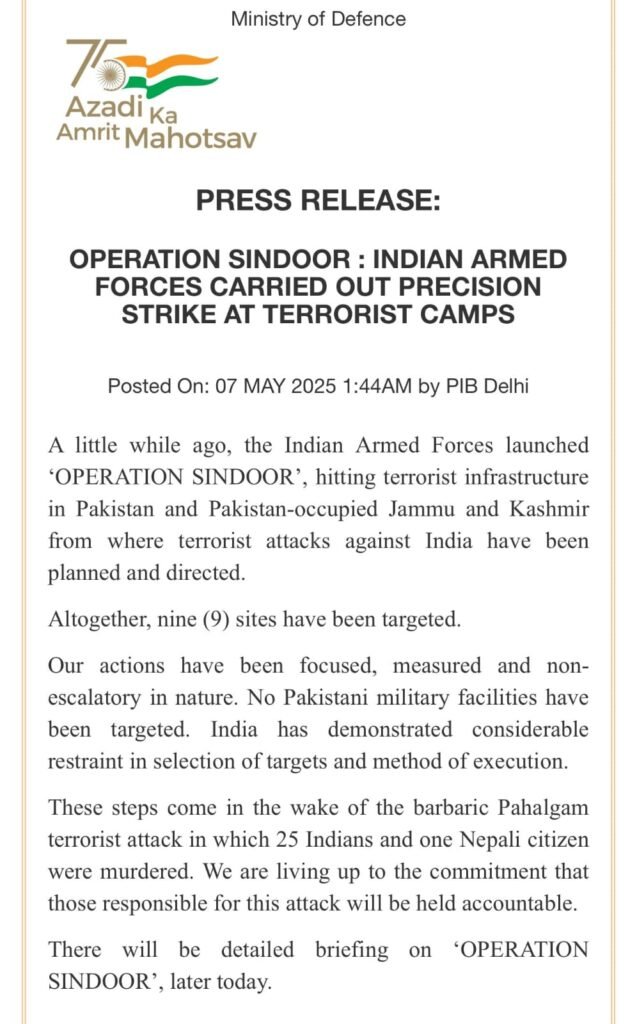
India said on early Wednesday that it has car ried out Operation Sindoor hitting terrorist infra structure in Pakistan and Pakistan-occupied Jammu and Kashmir. India targeted the terror infrastructure from where terrorist attacks have been planned and directed, the Army said. As this paper went to print at 2.45 am, reports spoke of a huge explosion in Srinagar. Its sources could not be confirmed. Altogether, nine sites have been targeted, it said. ”Our actions have been focused, measured and non-escalatory in nature. No Pakistani military facilities have been target ed. India has demonstrated considerable restraint in selection of targets and method of execution,” the Indian Army said. ”These steps come in the wake of the barbaric Pahalgam terrorist attack in which 25 Indians and one Nepali citizen were murdered. We are living up to the commitment that those responsible for this attack will be held accountable,” it said. In a high-level meeting with the top defence brass, Prime Minister Modi on April 29 gave the armed forces “complete opera tional freedom” to decide on the mode, targets and timing of the response to the Pahalgam terror attack. Modi also empha sised the national resolve to deal a “crushing blow to terrorism”. In Islamabad, the Pakistan Army claimed that India had launched air strikes against the country in early Wednesday, vowing to respond to the attack. A Reuters report said multiple loud explosions were heard in several places in Pakistan and Pakistani Kashmir on Wednesday. After the explosions, power was blacked out in Muzaffarabad, the capital of Pakistani Kashmir, wit nesses said. It was not immediately clear what the explosions were. Pakistan Army spokesman Lt Gen Ahmed Sharif Chaudhry said that missile strikes were fired by India at Kotli and Muzaffarabad in Pakistan occupied Kashmir and Bahawalpur in Punjab. “Some time ago, India launched air strikes on Subhanullah mosque in Bahwalpur’s Ahmed East area, Kotli and Muzaffarabad at three places from the air,” he told ARY News channel. “All of our air force jets are airborne. This coward ly and shameful attack was carried out from within India’s airspace. They were never allowed to come and intrude into the space of Pakistan, he said. “Let me say it unequivo cally: Pakistan will respond to this at a time and place of its own choos ing. This heinous provoca tion will not go unan swered,” he added. He said that damage assessments are ongoing and that he would provide more information later. This “temporary happi ness” that India has achieved with this attack will be replaced with enduring grief, he added. Earlier in the day. United Nations Security Council member nations told Islamabad to sort out the Kashmir dispute bilateral ly, thwarting Pakistan’s attempt to internationalise the situation in Kashmir in the wake of the Pahalgam terror attack. At a closed-door consul tation, the UNSC called for de-escalation and dialogue between New Delhi and Islamabad as several mem ber nations came down heavily on Pakistan and posed tough questions over the terror group Lashkar-e-Tayyaba (LeT) operating from its soil, according to a news agency report. The UNSC members nations pointed out to Islamabad that tourists were gunned down after segregation based on reli gion, and condemned the Pahalgam terror attack in the Kashmir Valley that took place April 22, in which 26 people lost their lives. Islamabad was told that its nuclear rhetoric and missile tests were escalating tension with India. Also, Pakistan’s “false flag” narrative accusing India was soundly reject ed, the reports suggested
Operation Sindoor LIVE: India avenges Pahalgam attack; strikes 9 terror targets in Pakistan, PoK
ndia launched a precision strike operation in the early hours of Wednesday, targeting terrorist infrastructure deep inside Pakistan and Pakistan-occupied Jammu & Kashmir (PoK) in a significant and restrained response to the deadly Pahalgam massacre.
According to the Ministry of Defence, focused strikes were carried out on nine terrorist infrastructure sites targeting the roots of cross-border terror planning.
“Importantly, no Pakistani military facilities were hit, reflecting India’s calibrated and non-escalatory approach. This operation underscores India’s resolve to hold perpetrators accountable while avoiding unnecessary provocation,” the Ministry of Defence said.
The military action, dubbed ‘Operation Sindoor’, comes just days after the brutal Pahalgam terrorist attack, which claimed the lives of 25 Indian citizens and one Nepali national.
Official sources indicate that the operation was planned to minimize collateral damage and ensure zero civilian casualties.The government reiterated its commitment to ensuring accountability for the Pahalgam attack, calling the strikes a “message of justice and resolve”.Further details regarding Operation Sindoor and its operational specifics are expected during a comprehensive briefing later on Wednesday.The situation is being closely monitored by both domestic and international observers, amid concerns over potential retaliation or escalation in the region.
Meanwhile, soon after the air strikes, Pakistan violated the ceasefire in Bhimber Gali in Poonch-Rajouri area by firing artillery gun. “Indian Army is responding appropriately in a calibrated manner,” a Defence Ministry official said.Reportedly, Pakistan’s Inter-Services Public Relations (ISPR) Director General Lt Gen Ahmed Sharif Chaudhry said that they are assessing damage and vowed retaliation.
Decoding Operation Sindoor: What made these 9 terror camps a priority?
Headquarters of terror groups JeM, LeT, Hizbul Mujahideen hit in IAF strikes: Sources. PTI
Among the targets hit in a precise operation were Markaz Subhan Allah at Bahawalpur, Sarjal at Tehra Kalan, Markaz Abbas in Kotli and Syedna Bilal camp in Muzaffarabad (all of the banned Jaish-e-Mohammed terror group). Markaz Taiba at Murdike, Markaz Ahle Hadith at Barnala and Shwawai Nalla camp at Muzaffarabad (all of banned Lashkar-e-Taiba) and Makaz Raheel Shahid in Kotli and Mehmoona Joya in Sialkot (camps and training centres of banned Hizbul Mujahideen were targeted. Out of the nine targets chosen by India, four were in Pakistan and the remaining five were in Pakistan-occupied-Kashmir.
Woman killed in Pakistani mortar shelling along the LoC in Jammu and Kashmir’s Poonch district: Officials. PTI
3 civilians killed in indiscriminate firing by Pakistan army across LoC in J&K
May 7, 2025 6:56 am
Three civilians were killed and several houses damaged as Pakistan resorted to heavy shelling, including the use of artillery fire, along the Line of Control (LoC) in Jammu and Kashmir, officials said on Wednesday. “Three innocent civilians lost their lives in indiscriminate firing/shelling,” the Army said, adding that the Indian Army is responding in a proportionate manner.
Many airports in North shut, flights cancelled
India avenges Pahalgam attack
UN Secretary-General Antonio Guterres calls for maximum military restraint from India and Pakistan. PTI
NSA Ajit Doval speaks with US NSA and Secretary of State
Shortly after Indian strikes on Pakistan, NSA Ajit Doval speaks with US NSA and Secretary of State Marco Rubio: Indian Embassy. PTI
Decoding Operation Sindoor: What made these 9 terror camps a priority?
India launches precision airstrikes against terror camps in Pakistan
In a bold and calculated move, India launched Operation Sindoor, a series of precision airstrikes targeting nine terror camps across Pakistan and Pakistan-occupied Kashmir (PoK), in response to escalating cross-border terrorism and the recent Pahalgam Terror Attack in which 26 civilians were killed.
According to official sources, the most significant strike hit the Jaish-e-Mohammed (JeM) headquarters in Bahawalpur, a deeply symbolic target situated roughly 100 kilometers from the international border. This site was reportedly a hub for planning large-scale attacks against Indian soil.
Another major hit was delivered to the Lashkar-e-Taiba (LeT) training camp in Muridke, just 30 kilometers across the border opposite Samba. Infamously associated with the training of the terrorists who carried out the 26/11 Mumbai attacks, this camp was a grim reminder of the enduring threat posed by cross-border terrorism.
In the rugged terrain near the LoC, the Gulpur camp in the Poonch-Rajauri sector was struck. This location was believed to be the launchpad for the deadly ambush in Poonch on April 20, 2023, as well as the attack on a bus carrying pilgrims in June 2024. “Intelligence had linked it to a consistent pattern of infiltration and violence,” sources said.
Further north, deep inside the Tangdhar sector of PoK, Indian jets hit the LeT-run Sawai camp, which intelligence sources connected to a series of high-profile attacks: Sonmarg on October 20, 2024, Gulmarg on October 24, and Pahalgam on April 22, 2025.
“The camp’s remote location made it a favored site for training and mobilising militants for assaults across Kashmir,” said the source.
The Bilal Camp, another JeM launchpad, was also brought under fire. It was known as a key staging area for terrorists prior to infiltration attempts, serving as a final transit point before they crossed over into Indian territory.
The Kotli camp — an LeT installation opposite Rajauri — was believed to house nearly 50 operatives at a time and functioned as a dedicated suicide bomber training center.
Alongside it, the Barnala camp, just 10 kilometers from the LoC, was also destroyed. It served as a logistical and regrouping hub for militants navigating routes into Jammu and Rajauri.
Closer to the international border, the Sarjal camp — a JeM facility roughly 8 kilometers from Samba-Kathua — was targeted for its role in short-range incursions and rapid-attack missions.
And finally, Indian aircraft struck the Mehmoona camp near Sialkot, a Hizbul Mujahideen training ground just 15 kilometers from the border, dealing a blow to one of the oldest insurgent outfits operating in the Kashmir Valley.
Pak resorts to heavy shelling along LoC in Jammu region, civilian areas targeted
Pakistan has been violating the ceasefire in Rajouri and Poonch for the past 12 nights and this was the thirteenth night of the violations in a row.Soon after India launched strikes under ‘Operation Sindoor’ inside Pakistan, heavy artillery firing by Pakistan was reported along Line of Control (LoC) in Rajouri and Poonch district of Jammu division.
Sources informed that Pakistan also used 120-mm calibre shells to target the Indian posts and local villages on this side of the border. There were reports that some of the homes of the locals were also hit by these shells, however these were not confirmed.Army in an official statement said, “Pakistan again violates the ceasefire agreement by firing artillery in Bhimber Gali in Poonch- Rajouri area. Indian Army is responding appropriately in a calibrated manner”.
Pakistan has been violating the ceasefire in Rajouri and Poonch for the past 12 nights and this was the thirteenth night of the violations in a row. The LoC runs through deep forest areas in Rajouri and Poonch and the posts of both the countries are mostly located on hills facing each other.
The Indian Army has also deployed heavy weaponry in the region to deal with any Pakistani aggression. The ceasefire violation started after 1 am and continued till the filing of this report (4.10 am).Locals in Rajouri town informed that the sound of shelling from both the sides could be heard in the area that is far away from the LoC. The security at the LoC has already been strengthened and soldiers from the Army have been deployed in appropriate numbers.
Why Pakistan’s Bahawalpur stands out among 9 places targeted by India
Other targets reportedly include Muridke, near Lahore, Muzaffarabad, Kotli, Gulpur, Bhimber, Bagh, Chak Amru, and Sialkot.
Among the nine places in Pakistan that were hit during the intervening night of May 6-7 in retaliation to the terrorist attack of April 22 that killed 26 persons at Pahalgam, Bahawalpur stands out for more than one reason.
As part of Operation Sindoor, other targets reportedly include Muridke, near Lahore, Muzaffarabad, Kotli, Gulpur, Bhimber, Bagh, Chak Amru, and Sialkot. A formal briefing is scheduled later this morning where exact details, including targets and the mode of strikes, are expected to be revealed.
“A little while ago, the Indian Armed Forces launched ‘Operation Sindoor’, hitting terrorist infrastructure in Pakistan and Pakistan-occupied Jammu and Kashmir from where terrorist attacks against India have been planned and directed,” a late-night statement issued by the Ministry of Defence read.
“Altogether, nine sites have been targeted. Our actions have been focused, measured, and non-escalatory in nature. No Pakistani military facilities have been targeted. India has demonstrated considerable restraint in the selection of targets and method of execution. These steps come in the wake of the barbaric Pahalgam terrorist attack in which 25 Indians and one Nepali citizen were murdered. We are living up to the commitment that those responsible for this attack will be held accountable,” the statement added.
Located in central Pakistan, it is outside Pakistan Occupied Kashmir (POK). The surgical strikes of 2016 across the Line of Control in response to a terrorist attack on an Army camp in Uri that killed 18 soldiers and the airstrikes of terrorist camps at Balakot in response to a suicide attack that killed 40 CRPF personnel at Pulwama in 2019, were directed at targets within POK.
Bahawalpur is the headquarters of Jaish-e-Mohammed (JeM), a Pakistan-based terrorist group active in Kashmir and believed to be responsible for the Pahalgam massacre. It is also said to have been involved in numerous other terror-related incidents, including the attack on Parliament in 2001, the attack on Pathankot airbase in 2016, and the Pulwama incident.
JeM was created in 2000 by Pakistan’s Inter-Services Intelligence (ISI) with the intention to carry out terrorist activities against India as part of its state policy. Maulana Masood Azhar, imprisoned in India on terror-related charges and released along with two others in exchange for passengers of an Indian Airlines aircraft hijacked to Afghanistan in 1999, was made its head.
Originally operating from training camps in Afghanistan with the other terrorist groups, it relocated to Balakot after the fall of the Taliban and then moved to Peshawar and Muzaffarabad in POK.
By 2009, it formed a new headquarters in Bahawalpur in Pakistan’s Punjab province, called Jamia Masjid Subhan Allah complex and also referred to as the Usman-o-Ali campus. According to reports, it is spread over 18 acres and includes a mosque, a madrassa, and a walled complex that serves as a recruitment and training facility for its cadres.
Bahawalpur was also said to be a center for rest and recuperation for those fighting in Afghanistan during the US military presence in that country as it was away from areas targeted by America with drones and missiles. It is also close to the bases of several other terrorist groups with which JeM is believed to have a close association. The Lashkar-e-Toiba, another major terrorist group operating in Kashmir also has a strong presence in Bahawalpur, though its headquarters are reported to be in Muridke.
The complex belonging to JeM is believed to have been hit by India. Videos of the strike emerging on social media show a large blast and a resultant fireball in an urban area during night.
From the strategic point of view, Bahawalpur, which is about 130 kms from the Indo-Pak border, is also an important military center because it houses the headquarters of Pakistan’s 31 Corps along with several other major formations.
The Corps is responsible for defensive operations in Pakistan’s southern Punjab and northern Sind areas, opposite the Jaisalmer — Fazilka axis. On its reported Order of Battle (ORBAT) are the Bahawalpur-based 26 Mechanized Division, which gives it offensive capability, 35 Infantry Division, also at Bahawalpur, 14 Infantry Division at Okara to the north and independent infantry, armored, artillery, and engineer brigades.
Analysis of commercial satellite photos by defense experts have also suggested that Bahawalpur is among several bases that may house secret facilities for Pakistan’s nuclear weapons.
They identified features that suggest that at least five bases might serve a role in Pakistan’s emerging nuclear posture. This includes army garrisons at Akro (Petaro), Gujranwala, Khuzdar, Pano Aqil, and Sargodha. A sixth base at Bahawalpur (29.2829, 71.7955) may be under construction
The 12th largest city in Pakistan that was founded in 1748, it is also associated with the Second Sikh War of 1848, and the two World Wars for providing forces and resources to the British. It also has a rich cultural heritage and presently has an economy largely based on agriculture and handicrafts.
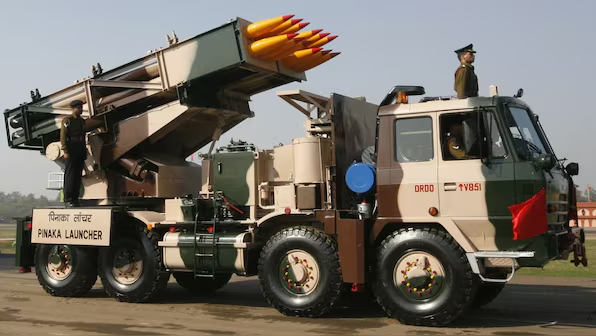
Amid rising tensions Pinaka range to be doubled from existing 90 km
The Indian Army is developing an extended-range version of the Pinaka rocket system, aiming to double its current range from 38 km to 75 km. Further development is also underway to achieve ranges of 120 km and eventually 300 km. This initiative is part of broader efforts to modernize the Indian Army’s rocket artillery capabilities, enhancing its firepower and effectiveness.
Here’s a more detailed look:
Current Pinaka Range:The standard Pinaka Mk1 has a range of 38 km.
Extended Range Efforts:The Defence Research and Development Organisation (DRDO) is working to increase the range of the Pinaka rocket system.
Doubling the Range:Trials for guided, extended-range Pinaka rockets are nearing completion, aiming for a range of 75 km, which is double the current range of 38 km.
Future Development:The DRDO also plans to develop further extended-range variants, including a 120 km range and potentially even a 300 km range.
Purpose of Enhancement:This modernization effort is expected to provide the Indian Army with greater firepower and effectiveness, particularly in the context of enhanced operational readiness.
Pinaka as a Key Weapon System:The Pinaka is considered one of the best rocket systems in the world and is being actively developed and modernized by the Indian Army.
UN chief Antonio Guterres calls for ‘maximum military restraint’ from India and Pakistan
“The Secretary-General is very concerned about the Indian military operations across the Line of Control and international border.
UN Secretary-General Antonio Guterres on Wednesday called for “maximum military restraint” from India and Pakistan, saying the world cannot afford a military confrontation between the two countries.
“The Secretary-General is very concerned about the Indian military operations across the Line of Control and international border. He calls for maximum military restraint from both countries. The world cannot afford a military confrontation between India and Pakistan,” the secretary-general’s spokesman, Stéphane Dujarric, said.
His remarks came hours after the Indian Armed Forces launched ‘Operation Sindoor’, hitting terrorist infrastructure in Pakistan and Pakistan-occupied Kashmir, from where terrorist attacks against India have been planned and directed. Altogether, nine sites have been targeted.
These steps come in the wake of the barbaric Pahalgam terrorist attack in which 25 Indians and one Nepali citizen were murdered, the Ministry of Defence said.
State Stalwarts
DEFENCE MINISTER
Minister Rajnath Singh
ALL HUMANS ARE ONE CREATED BY GOD
HINDUS,MUSLIMS,SIKHS.ISAI SAB HAI BHAI BHAI
CHIEF PATRON ALL INDIA SANJHA MORCHA
LT GEN JASBIR SINGH DHALIWAL, DOGRA
SENIOR PATRON ALL INDIA SANJHA MORCHA
MAJOR GEN HARVIJAY SINGH, SENA MEDAL ,corps of signals
.
.
PATRON ALL INDIA SANJHA MORCHA
MAJ GEN RAMINDER GURAYA ,MADRAS REGIMENT
sanjhamorcha303@gmail.com
PRESIDENT SOUTH ALL INDIA SANJHA MORCHA
COL SS RAJAN BOMBAY SAPPERS,
PRESIDENT UTTARAKHAND ALL INDIA SANJHA MORCHA
COL B M THAPA ,BENGAL SAPPERSS
PRESIDENT HARAYANA STATE CUM COORDINATOR ESM
BRIG DALJIT THUKRAL ,BENGAL SAPPERS
PRESIDENT TRICITY
COL B S BRAR (BHUPI BRAR)
PRESIDENT CHANDIGARH ZONE
COL SHANJIT SINGH BHULLAR
.
.
PRESIDENT PANCHKULA ZONE AND ZIRAKPUR
COL SWARAN SINGH
INDIAN DEFENCE FORCES
DEFENCE FORCES INTEGRATED LOGO
INDIAN AIR FORCE
Air Officer C-in-C WESTERN AIR COMMAND
AIR MSHL S PRABHAKARAN AVSM VM
AOC-IN-C, EASTERN AIR COMMAND
Air Marshal Inderpal Singh Walia
AOC-in-C SOUTH WESTERN AIR COMMAND
Air Marshal Vikram Singh
AOC-IN-C, SOUTHERN AIR COMMAND
Air Marshal J.Chalapati
AOC-IN-C TRAINING COMMAND
AIR MARSHAL SK GHOTIA VSM
AOC-IN-C MAINTENANCE COMMAND
Air Marshal Jagdish Chandra
Flag Officer Commanding in Chief, Western Naval Command
ice Admiral R Hari Kumar, PVSM, AVSM, VSM
Flag Officer Commanding in Chief, Eastern Naval Command
Vice Admiral Sanjay Bhalla, AVSM, NM
Flag Officer Commanding in Chief, Southern Naval Command