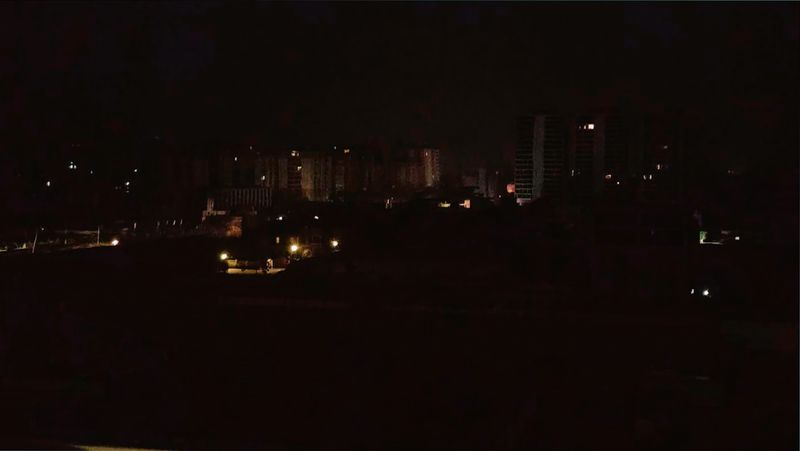
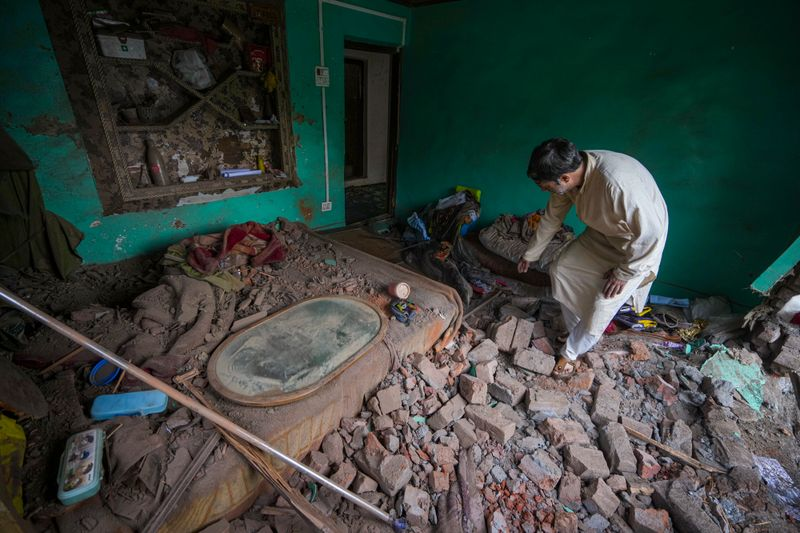
The May 7-8 was a somewhat difficult night for the local administration following alerts from the defence forces that there could be some targeted attacks from the Pakistani side on some vital locations in the city.
The administration came into action mode. An alert was immediately sounded to all departments regarding activating emergency services. A blackout was ordered for 45 minutes between 1:45 am to 2:30 pm. Sirens were also blared at some locations. However, the night passed out peacefully. Unlike Amritsar where debris of missiles were found this morning at some locations, no such remnants were reported from any place in Jalandhar.
Not just the administration, even some residents remained awake in panic. Hostellers of a private university in Jalandhar also reportedly made a video of a lit-up flying object in the night which got viral on social media. The students of the varsity said they got so scared after capturing the video that they could barely study for their examination or sleep in the night.
The PIB release issued this afternoon confirmed that Jalandhar, Adampur (which has Indian Air Force base) and Kapurthala were the military targets by Pakistan drones and missiles. It also mentioned that these were neutralised by the air defence systems and the debris of the same were being recovered from some locations proving the attacks. Meanwhile, an object that fell on the rooftop of a house at Ghagwal village of Hajipur between May 6-7 night is learnt to be a part of a Chinese drone.
Deputy Commissioner Himanshu Aggarwal did not share any details. He, however, confirmed that a blackout was imposed in the night for less than an hour.
Drones spotted in Chheharta, Airport Road area in Amritsar
However, majority of these are neutralised by the Indian air defence system
As the Pakistani army continued with drone attacks in the border belt, multiple drones were spotted in the Chheharta and Airport Road area here on Friday night.
However, majority of these were neutralised by the Indian air defence system.
No loss of life or property has been reported.A senior police official confirmed the drone attacks, adding that these were being neutralised by the Army’s air defence system.
The incident has triggered panic in the border district.
Vijay Kumar, a resident of Chheharta, said the drones were spotted at around 8.45 pm, which was followed by loud explosions.
“Red-coloured flying objects, apparently drones, could be seen coming one after another which led to tension among the locals,” he said.
Police Commissioner Gurpreet Singh Bhullar said there was no need to panic and people were advised to stay at home and adhere to the instructions given by the district administration to be followed during blackout.
Residents of the Khasa area here claimed to have seen several drones being neutralised mid-air by the air defence system on Friday morning. The area is located around 16 km away from the International Border. Local residents said they heard…
Residents of the Khasa area here claimed to have seen several drones being neutralised mid-air by the air defence system on Friday morning.
The area is located around 16 km away from the International Border. Local residents said they heard explosions around 5 am. Rajinder Singh of Khasa said, “They saw red streaks in the sky that burst in the air with explosions.”
Soon thereafter, the district administration advised people to stay indoors. Officials, however, remained tight-lipped over the development. Similar, explosions were also heard in the nearby Chheharata area.
Punjab Police strengthen second line of defence in border districtss
Amidst India-Pakistan conflict, the Punjab Police have deployed specialised Ghatak teams, accompanied by 14 additional companies of the force, to enhance surveillance and maintain a robust second line of defence along the border. The initiative spans across seven police districts,…
Amidst India-Pakistan conflict, the Punjab Police have deployed specialised Ghatak teams, accompanied by 14 additional companies of the force, to enhance surveillance and maintain a robust second line of defence along the border.
The initiative spans across seven police districts, including Pathankot, Gurdaspur, Batala, Amritsar Rural, Tarn Taran, Ferozepur and Fazilka.
Coordinated efforts are being made in collaboration with the Border Security Force (BSF) and Army authorities to ensure effective presence along the border.
The Punjab Police have deployed specialised forces, including SOG Hits, SSG and Ghatak teams. They will have bulletproof vehicles. In conjunction with the BSF, 73 well-equipped nakas have been established at strategic points, enhancing the second line of defence.
Additionally, village defence committees (VDCs), having both youth and experienced members, have been formed throughout the border areas to supplement local security measures.
The Punjab Chief Secretary held a meeting with senior Army officials of the Western Command at Chandimandir. The discussions focused on meeting all requirements of the Army in the region.
Safe movement of Army vehicles and security for cantonments and other establishments are being prioritised, with Punjab Police providing bulletproof vehicles to BSF officers at forward locations.
To enhance rear area security and safeguard Army installations, 14 additional armed companies of the Punjab Police have been deployed in border districts. A state-level control room, along with district-level control rooms, has been established to ensure seamless communication and coordination among all security forces.
Mock drills involving civil-defence workers are being conducted across all districts to prepare for potential security challenges, underscoring the commitment of Punjab Police and other agencies to maintain peace and security in the region.
Invoke emergency powers for seamless essential services, Centre directs states
Food Minister says there’s no shortage of goods, asks citizens to stay calm
The Ministry of Home Affairs (MHA) on Friday directed all states and union territories to invoke emergency powers under the Civil Defence Rules, 1968. These powers enable civil defence authorities to make urgent procurements in case of an emergency.
In a related development, the Food and Public Distribution Ministry emphasised that there was no shortage of essential commodities in the country. Sources said the Centre’s measures aimed at allaying public fears regarding shortages while empowering civil defence authorities to ensure the availability of vital services in the event of a hostile attack.
The directives followed reports from various regions, particularly border towns and cities, of people engaging in panic buying of essential food items and fuel, leading to long queues at petrol stations.
In a communication to all chief secretaries, Vivek Srivastava, Director General of Fire Services, Civil Defence and Home Guards, said preparedness against hostile attacks came under the Civil Defence Act and Rules, 1968. He cited Section 11 of the rules that empowered states to take necessary measures to protect people and property as well as maintain essential services during an attack.
The communique said the states and UTs could invoke Section 11 to grant emergency procurement powers to their respective Civil Defence Directors for swift implementation of precautionary measures. In a communication to the chief secretaries of all states and Union territories, Director General of Fire Services, Civil Defence and Home Guards Vivek Srivastava said preparing the civil administration and adopting precautionary measures against hostile attacks in the states and Union territories are governed by the Civil Defence Act and Rules, 1968.
This comes as India remains on high alert along its western borders following Pakistan’s attempted retaliation to India’s Operation Sindoor. The Civil Defence Rules, 1968, framed under the Civil Defence Act, were designed to prepare India’s civilian population and infrastructure for hostile attacks. The rules grant sweeping powers to the Centre and state governments to take preventive, protective and control measures before, during, and after such events.
Meanwhile, Union Food and Public Distribution Minister Pralhad Joshi assured in a social media post that there are adequate supplies of essential commodities like edible oils, pulses, and sugar. He warned against propaganda about food shortages, stating, “Don’t believe in propaganda messages regarding food stocks in the country. We have ample food stocks, far exceeding required norms. Don’t pay heed to such messages.” He also cautioned traders against hoarding, warning of legal action under the Essential Commodities Act.
The current rice stock stands at 356.42 lakh metric tonnes (LMT) against a buffer norm of 135 LMT. Similarly, wheat stock is at 383.32 LMT against a buffer norm of 276 LMT. These figures indicate that there is a strong surplus over the required buffer norms, ensuring nationwide food security.
BSF kills seven terrorists after foiling major infiltration bid in Samba, damages Pak post
The Border Security Force killed at least seven terrorists after foiling a major infiltration attempt along the International Border in the Samba sector of Jammu. “On the intervening night of May 8-9, an infiltration attempt by a large group of…
The Border Security Force killed at least seven terrorists after foiling a major infiltration attempt along the International Border in the Samba sector of Jammu.
“On the intervening night of May 8-9, an infiltration attempt by a large group of terrorists was detected by the surveillance grid in the Samba sector,” a BSF spokesperson said. The total number of terrorists trying to infiltrate was not known.
“The infiltration bid was supported by fire from the Dhandhar post of Pakistan Rangers,” the BSF said. It also released a video showing the terrorists being eliminated in pitch dark. The group was heavily armed and would have been detrimental to the security in the region, it said.
Union Minister Jitendra Singh, an MP from Udhampur in J&K, said in a post on X that the Dhandhar post suffered extensive damage as Indian retaliated.
The attempt to push in terrorists coincided with the drone and missile attacks by the Pakistani side on military and other vital installations in Jammu and other regions.
The Samba sector, south of Jammu, has been witnessing heavy cross-border firing since India announced retribution for the Pahalgam terror attack that killed 26 persons on April 22 as well as drone incursions over the past days. Several terrorist camps in Pakistan and Pakistan-occupied-Kashmir were hit by India under Operation Sindoor.
Located close to the international border, Samba is opposite to Pakistan’s Sialkot sector. Two terrorist camps, Sarjal of Jaish-e-Mohammed and Mehmoona Joya of Hizbul, which were struck during Operation Sindoor, are located in this sector.
The national highway from Pathankot to Jammu and onwards to Srinagar passes through Samba. There have been earlier instances of infiltration as well as ceasefire violation in the area. The riverine terrain of the area makes it vulnerable to infiltration and terrorists involved in some major incidents in Jammu region had reportedly crossed over into India from this sector.
2 civilians killed, five injured in heavy shelling by Pak
Two persons were killed in shelling by Pakistan in the forward areas of J&K, prompting Army troops to retaliate. One person was killed and three others, including his wife, injured in Poonch. A woman was killed and two of her family members injured near the LoC in the Uri sector of north Kashmir.
Col Sofiya Qureshi: who briefed media on ‘Operation Sindoor’
During the briefing, the two women officers — Col Sofiya and Wing Commander Vyomika — flanked the foreign secretary on the dais
Col Sofiya Qureshi, who briefed the media on Wednesday alongside Foreign Secretary Vikram Misri and Wing Commander Vyomika Singh on India’s ‘Operation Sindoor’, is a multi-generation officer in the Army who imbibed the spirit of serving the nation from an early age.
During the briefing, the two women officers — Col Sofiya and Wing Commander Vyomika — flanked the foreign secretary on the dais, who delivered the opening statement from the government, hours after the Indian armed forces carried out missile strikes on nine terror targets in Pakistan and PoK, including the Jaish-e-Mohammad stronghold of Bahawalpur and Lashkar-e-Taiba’s base Muridke.
Qureshi and Singh shared the names and details of the sites targeted from 1 am to 1.30 am on the intervening night of May 6-7.Qureshi, an officer from the Corps of Signals, spoke in Hindi while IAF helicopter pilot Singh shared the details in English, complementing each other.
The military strikes were carried out under ‘Operation Sindoor’ two weeks after the massacre of 26 civilians in Jammu and Kashmir’s Pahalgam.
In a panel discussion hosted in 2017, Qureshi shared about her journey into the armed forces, and what inspired her to don the olive-green uniform.
“Being a ‘fauji’ kid, I was exposed to the army environment. My mother wanted either of us two sisters to join the Army. I applied for it and got it. My grandfather was also in the Army, and he used to say ‘it is our responsibility, of every citizen, to be alert and stand up for our country and defend the nation’. It is a dignified and an honourable job,” she had recalled.
She also said that when she “joined the academy, the Kargil war was going on”.
The officer also led an army training contingent at a multinational field training exercise in 2016.
“1st woman officer to lead an Army training contingent at Force18 – #ASEAN Plus multinational field training exercise in 2016. She was the only Woman Officers Contingent Commander among all #ASEAN Plus contingents. #WomensDay #IWD2020 #EachforEqual #SheInspiresUs,” the Ministry of Defence had said in a Woman’s Day post on X, sharing a photograph of Qureshi.
Chief of Staff given powers to mobilise Territorial Army
In view of the rising hostilities with Pakistan, the Army Chief has been empowered to muster the Territorial Army, a reserve force, while Defence Minister Rajnath Singh today chaired a high-level meeting with the top brass of the military to…
In view of the rising hostilities with Pakistan, the Army Chief has been empowered to muster the Territorial Army, a reserve force, while Defence Minister Rajnath Singh today chaired a high-level meeting with the top brass of the military to review the security situation along the western border and the operational preparedness of the armed forces.
The minister’s review meeting comes in the backdrop of the layered Indian air defence mechanism having stalled Pakistan’s barrage of missiles and drones. Last night, Pakistan launched these all across the western front, threatening the Indian military and civilian infrastructure.
The Chief of Defence Staff, Gen Anil Chauhan, the Army Chief, Gen Upendra Dwivedi, the Navy Chief, Admiral Dinesh K Tripathi, the IAF Chief, Air Chief Marshal AP Singh, and the Defence Secretary, Rajesh Kumar Singh, were present at the meeting.
The Defence Ministry, exercising powers under the Territorial Army Rule, 1948, issued a notification saying the Army Chief can “call out every officer and every enrolled person of the Territorial Army to provide for essential guard or to be embodied for the purpose of supporting or supplementing the regular Army”.
Of the existing 32 Infantry Battalions of the Territorial Army, the Army Chief has been empowered to embody 14 Infantry Battalions. These will be deployed in areas of the Southern Command, Eastern Command, Western Command, Central Command, Northern Command, South Western Command, Andaman and Nicobar Command and the Army Training Command.
For the Territorial Army units embodied at the behest of other ministries, the cost will be debited from the respective ministries and will not be included in the budget allocation of the Defence Ministry, the notification stated.
This order shall remain in force for three years with effect till February 2028. The Territorial Army is under the administrative control of the Department of Military Affairs, chaired by the Chief of Defence Staff.
The Territorial Army is like reserve force. People enrolled in it can hold regular jobs outside the force and be called in case of an exigency. The Territorial Army can get officers from the regular Army too.
The Territorial Army is headed by a Lieutenant General rank officer.
“If we strike, Pakistan will cease to exist” Listen to Lt Gen Dhillon (Retd) on nuclear threats
Hours after India announced that Pakistan had launched nearly 400 Turkish drones at 36 locations across northwest India, and fired artillery guns, resulting in the death of “some” soldiers over the past 24 hours, a fresh wave of UAV attacks was reported from several places across the region, including J&K and Punjab, leaving at least three injured.
The Army said drones were sighted at 26 locations — from Baramulla in the North to Bhuj in the West — along the Line of Control as well as the International Border on Friday evening.
The areas targeted included Jammu, Samba, Pathankot, Udhampur, Nagrota, Baramulla, Srinagar, Awantipora, Amritsar, Ferozepur, Fazilka, Jaisalmer, Lalgarh Jattan, Jaisalmer, Barmer, Bhuj, Kuar Bet and Lakki Nala. Explosions were also heard in some parts of Kashmir and Pokhran in Rajasthan, a desert region where India had conducted nuclear tests. Drone attacks on the Srinagar airport and south Kashmir’s Awantipora airbase were thwarted, officials said.
The Army said the forces were maintaining a high alert, and all such aerial threats were being tracked and engaged using counter-drone systems.
Along the Line of Control, several ceasefire violations by the Pakistan army were reported. The Army said these threats were being responded to effectively.
Residents in these places reported seeing several drones hovering overhead and in some cases hearing the sound of explosions as well as anti-aircraft guns. Blackouts were enforced in many districts in north-west India as a precautionary measure and air raid warning sirens sounded at several places during the day.
In Amritsar, multiple drones were spotted in the Chheharta area and the road leading to the airport. In Ferozepur, where several drones were sighted, three persons were injured in a blast that hit their house at Khai Pheme Ke, the cause of which is not clear. They were admitted to a local hospital.
Earlier, Foreign Secretary Vikram Misri, at a briefing in New Delhi on the ongoing Operation Sindoor, said the armed forces responded “proportionately and adequately” to the aggression last night. He slammed Pakistan for “using civilian planes as shields” to fly close to the International Border and assailed it for attacking places of worship and its “preposterous” attempts to put the blame on the armed forces.
Wing Commander Vyomika Singh, speaking at the briefing, said India retaliated by launching armed drones at four air defence (AD) sites in Pakistan and “one of these destroyed an AD radar”.
Pakistan also carried out firing across the Line of Control (LoC) using large-calibre artillery guns and armed drones directed at Tangdhar, Uri, Poonch, Mendhar, Rajouri, Akhnoor and Udhampur in Jammu and Kashmir, resulting in some losses and injuries to Army personnel. The Pakistan army suffered major losses in retaliatory fire,” she said.
The officer said that a possible purpose of the large-scale aerial intrusions drones by Pakistan, using Turkish Songar drones, many of which were shot down, was to test the AD systems, gather intelligence and also to target military infrastructure.
Col Sofiya Qureshi flagged Islamabad’s “irresponsible” behaviour for using civil airlines as shields, knowing fully well that any attack on India would elicit a swift AD response. “This is not safe for the unsuspecting civil airliners, including international flights, which were flying near borders between India and Pakistan,” she said. The IAF demonstrated “considerable restraint” in its response, thus ensuring the safety of international civil carrier, she added.
State Stalwarts
DEFENCE MINISTER
Minister Rajnath Singh
ALL HUMANS ARE ONE CREATED BY GOD
HINDUS,MUSLIMS,SIKHS.ISAI SAB HAI BHAI BHAI
CHIEF PATRON ALL INDIA SANJHA MORCHA
LT GEN JASBIR SINGH DHALIWAL, DOGRA
SENIOR PATRON ALL INDIA SANJHA MORCHA
MAJOR GEN HARVIJAY SINGH, SENA MEDAL ,corps of signals
.
.
PATRON ALL INDIA SANJHA MORCHA
MAJ GEN RAMINDER GURAYA ,MADRAS REGIMENT
sanjhamorcha303@gmail.com
PRESIDENT SOUTH ALL INDIA SANJHA MORCHA
COL SS RAJAN BOMBAY SAPPERS,
PRESIDENT UTTARAKHAND ALL INDIA SANJHA MORCHA
COL B M THAPA ,BENGAL SAPPERSS
PRESIDENT HARAYANA STATE CUM COORDINATOR ESM
BRIG DALJIT THUKRAL ,BENGAL SAPPERS
PRESIDENT TRICITY
COL B S BRAR (BHUPI BRAR)
PRESIDENT CHANDIGARH ZONE
COL SHANJIT SINGH BHULLAR
.
.
PRESIDENT PANCHKULA ZONE AND ZIRAKPUR
COL SWARAN SINGH
INDIAN DEFENCE FORCES
DEFENCE FORCES INTEGRATED LOGO
INDIAN AIR FORCE
Air Officer C-in-C WESTERN AIR COMMAND
AIR MSHL S PRABHAKARAN AVSM VM
AOC-IN-C, EASTERN AIR COMMAND
Air Marshal Inderpal Singh Walia
AOC-in-C SOUTH WESTERN AIR COMMAND
Air Marshal Vikram Singh
AOC-IN-C, SOUTHERN AIR COMMAND
Air Marshal J.Chalapati
AOC-IN-C TRAINING COMMAND
AIR MARSHAL SK GHOTIA VSM
AOC-IN-C MAINTENANCE COMMAND
Air Marshal Jagdish Chandra
Flag Officer Commanding in Chief, Western Naval Command
ice Admiral R Hari Kumar, PVSM, AVSM, VSM
Flag Officer Commanding in Chief, Eastern Naval Command
Vice Admiral Sanjay Bhalla, AVSM, NM
Flag Officer Commanding in Chief, Southern Naval Command