The team included CIA in-charge Bisman Singh Mahi, ASI Nirmal Kumar, ASI Jaswinder Singh, and Constable Jagroop Singh.
The police have arrested the entire CIA team of Phagwara, including the CIA in-charge Bisman Singh Mahi, ASI Nirmal Kumar, ASI Jaswinder Singh, and Constable Jagroop Singh.
They were caught taking a bribe of Rs 2.5 lakh to let a smuggler named Hani go free.
The arrest happened early this morning.
DIG Naveen Singla, who is in charge of the Jalandhar Range, confirmed the arrests.
He said that corruption would not be allowed in the police department.The arrested accused would be medically examined and will produce before judicial magistrate Phagwara. A case under the Prevention of Corruption Act has been registered at the Sadar Police Station in Phagwara.
Talks to resolve border issue with India and Bhutan “continue to advance”, a new white paper on China’s national security has said, identifying a host of internal and external threats faced by the country and its one-party political system.
The 23-page security paper released recently in Mandarin has outlined a host of threats and challenges faced by China.
China has settled boundary issues with 12 of its 14 land neighbours and the negotiations with India and Bhutan continue to advance to resolve the border disputes, said the white paper titled ‘China’s National Security in the New Era’.
Beijing has completed the demarcation of the Beibu Gulf waters between China and Vietnam, signed border defence cooperation agreements with nine neighbouring countries, established border defence talks and meetings mechanisms with 12 countries, and regularly carried out friendly visits, working talks, joint patrols, and joint cross-border crime drills, the paper said.
While China’s border disputes with India and Bhutan remain to be resolved, the country has a maritime dispute with several countries, including Japan in the East China Sea, and the Philippines, Vietnam, Malaysia, Brunei and Taiwan in the South China Sea.
India and China have held 23 rounds of Special Representatives-level talks to resolve the border disputes spanning 3,488 km along the Line of Actual Control (LAC).
China and Bhutan held 25 rounds of talks to resolve about 400 km of the boundary issue.
EXCLUSIVE: How Op Sindoor exposed Pakistan terror links & called nuke bluff, says Gen Manoj Katiyar
#TheTribuneInterview #OpSindoor #GenManojKatiyar In this exclusive interview with Lt Gen Manoj Katiyar, army commander of India’s Western Command, speaks to The Tribune’s editor-in-chief Jyoti Malhotra about the aims, objectives and achievements of Op Sindoor against Pakistan in the wake…
450 benefit from Army medical camp in Uri villages
The Army successfully organised a comprehensive medical camp for the border villages of Uri in north Kashmir Baramulla district following the recent ceasefire agreement. A defence spokesperson in a statement said the medical camp, which was set up under the…
The Army successfully organised a comprehensive medical camp for the border villages of Uri in north Kashmir Baramulla district following the recent ceasefire agreement.
A defence spokesperson in a statement said the medical camp, which was set up under the aegis of the Chinar Corps Kalapahar Brigade/ Kathi Battalion, was conducted on Tuesday and offered free medical consultation, diagnostic services and distribution of medicines to residents of the border villages.
The initiative comes in the wake of the renewed peace and ceasefire agreement, aimed at ensuring stability and promoting the welfare of the local population, who have faced a challenging and uncertain environment due to the volatility along the border, the spokesperson said.
The Army said the medical camp saw the participation of numerous military doctors, paramedics and health professionals who provided essential healthcare services to over 450 people from the border villages.“A variety of medical conditions were treated ranging from routine health check-ups, immunisation for children and specialised treatments for chronic ailments to emergency medical care for those in need,” the spokesperson said.
Officials said the medical camp also focused on spreading awareness about preventative healthcare, hygiene and the importance of regular health check-ups.
“Additionally, the Indian Army made arrangements to provide essential medicines for common ailments and chronic conditions such as hypertension, diabetes, and respiratory issues to ensure continuity of care for the villagers,” the Army statement said.It added that the medical camp is part of a “broader initiative by the Indian Army to engage with local communities and foster stronger bonds of trust and cooperation, particularly after the restoration of peace along the border.”
EXCLUSIVE @ 6 pm : How Op Sindoor called Pak nuclear bluff : Gen Manoj Katiyar
In this exclusive interview with Lt Gen Manoj Katiyar, army commander of India’s Western Command, The Tribune’s editor-in-chief Jyoti Malhotra asked him about the aims, objectives and achievements of Op Sindoor over Pakistan Watch. #TheTribuneInterview. Exclusive. Only on The…
The Tribune’s editor-in-chief Jyoti Malhotra asked him about the aims, objectives and achievements of Op Sindoor over Pakistan Watch.
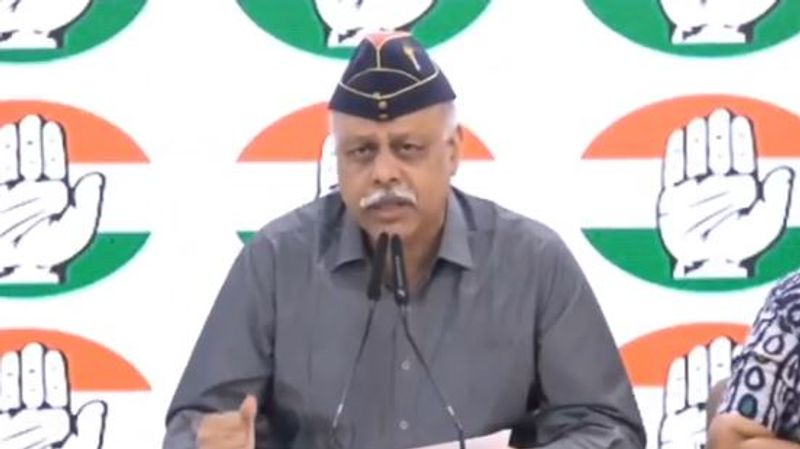
PM Modi ‘failed’ to build political narrative after armed forces ‘excellent job’: Congress
The Congress on Wednesday alleged that Prime Minister Narendra Modi failed to build a political narrative globally after the country’s armed forces’ ‘excellent job’ of dismantling terror infrastructure inside Pakistan through ‘Operation Sindoor’.
हम जीत रहे थे, हमारी फौज पाकिस्तान के ड्रोन-मिसाइल और बाकी सभी तरह के हमलों को नाकाम कर रही थी…
लड़ाई का चौथा दिन था, लेकिन तभी शाम होते-होते अचानक सीजफायर की घोषणा कर दी गई।
सीजफायर की घोषणा अमेरिका की धरती से की गई, जो हमारे लिए शर्म की बात है। इस पूरे हालात में देश एकजुट… pic.twitter.com/RxCUPoqqv2
— COL Rohit Chaudhry (@ColRohitChaudry) May 21, 2025
The Congress has also announced ‘Jaihind Sabhas’ in the last week of May to highlight the government’s failures post Pahalgam terror attack.
The party said the ‘sabhas’ will be held across 16 places in the country, and will put 11 questions before PM Modi concerning the events following the sudden ceasefire on May 10.
Congress leader Colonel Rohit Choudhary, who also heads the party’s wing of retired ex-servicemen, said, “Our security forces delivered an excellent result by launching ‘Operation Sindoor’. However, PM Modi failed to translate this military success into a political message globally. Additionally, the Navy capabilities were not fully utilised – the responsibility for this lies with the Prime Minister.”
Choudhary also raised questions about the ‘surprising’ ceasefire on May 10, announced by US President Donald Trump.
“We were in an advantageous position on May 10. Why was the ceasefire accepted, and that too announced by another country’s president (Donald Trump)? He was not rebutted by PM Modi which is a silent way of endorsing it. Where is your spine, Modi ji? Why allow third party mediation and thereby violate the Simla Pact?” he asked.
“President Trump mentioned trade talks five-six times. You have done deal with ‘sindoor’ (vermillion) of this country. Show courage like Indira Gandhiji did,” he said.
On Pahalgam terror attack, the Congress leader termed it an “intelligence failure” for which Home Minister Amit Shah is responsible.“Between April 6 to 7, the Home Minister held security review. On April 17, the Prime Minister’s visit to Jammu and Kashmir was cancelled. It is a failure of intelligence agencies and government,” he said.
Whole of Pakistan within our range…they will have to find deep hole: Top Army Air Defence officer on Pak Army’s plans to relocate headquarters
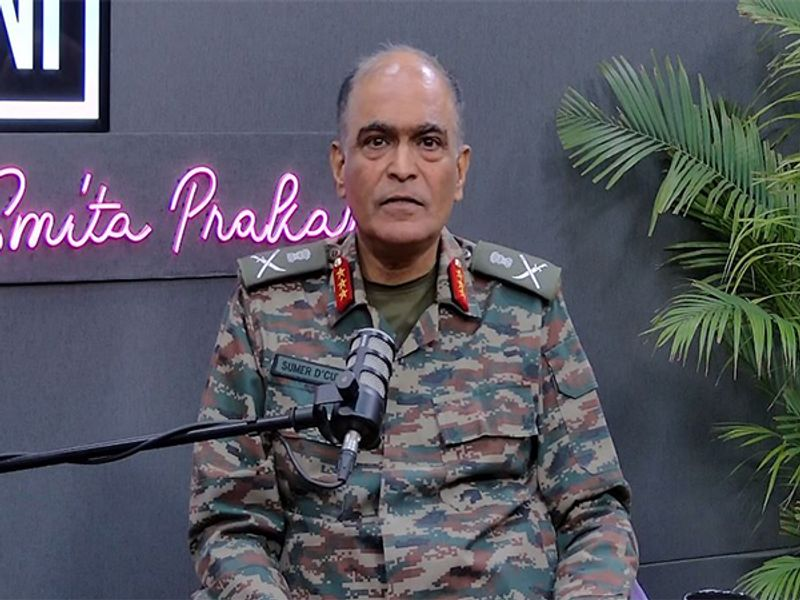
Lt Gen Sumer Ivan D’Cunha, Director General of Army Air Defence, on Monday highlighted the country’s military capabilities and stated that India possesses the arsenal capability of striking targets across the full depth of Pakistan in the backdrop of Operation Sindoor.
New Delhi [India], May 19 (ANI): Lt Gen Sumer Ivan D’Cunha, Director General of Army Air Defence, on Monday highlighted the country’s military capabilities and stated that India possesses the arsenal capability of striking targets across the full depth of Pakistan in the backdrop of Operation Sindoor.
In an interview with ANI, Lt Gen D’Cunha said, “The whole of Pakistan is within range.” He stated that even if they relocate the Pakistan Army’s General Headquarters (GHQ) from Rawalpindi to regions like Khyber Pakhtunkhwa (KPK), they will have to “find a deep hole.”
India’s offensive strikes during Operation Sindoor targeted key Pakistani airbases with precision, utilising loitering munitions to destroy high-value targets.
Lt Gen D’Cunha said, “I just like to say that India has an adequate arsenal of weapons to take on Pakistan right across its depth. So, from its broadest to its narrowest, wherever it is, the whole of Pakistan is within range. We are absolutely capable, from our borders or even in depth, where we can take on the entire Pakistan. And the GHQ can move from Rawalpindi to KPK or wherever they want to move, but they are all within range, so they will have to really find a deep hole.”
Modern indigenous technology, including long-range drones and guided munitions, played a crucial role in the operation’s success.
Lt Gen D’Cunha further underscored that the armed forces’ primary duty is protecting the nation’s sovereignty and its people.
“Our job is to protect our sovereignty, our people… So, I think that the very fact that we have been able to protect our motherland from this onslaught, which was aimed at causing a lot of problems in population centers and in our cantonments, the very fact that we have given this reassurance to our people, not only to our civil population… a lot of our own jawans, officers, wives were staying in cantonments. And they were also equally concerned about these drone attacks. And the very fact that we ensured that this did not manifest in any casualties, I am sure it not only made the soldier feel proud, it made the families feel proud. And finally, the population of India feel proud. I think that’s the takeaway.”
India’s Operation Sindoor showcased its preparedness in modern warfare, particularly in neutralising drones and other advanced technologies.
The operation highlighted India’s integrated command structures, enabling seamless coordination between different military branches.
Operation Sindoor reflected India’s “Shishupala Doctrine,” which involves exercising patience until a predefined threshold of provocation is crossed, followed by decisive action.
The operation shifted from reactive defence to proactive security doctrine, showcasing India’s willingness to take bold action against terrorism. (ANI)
(The story has come from a syndicated feed and has not been edited by the Tribune Staff.)
Addresses first public rally in Rajasthan after Operation Sindoor
Prime Minister Narendra Modi on Thursday asserted that the country’s enemies have learnt what happens when ‘sindoor’ becomes ‘barood’ (gunpowder) and lauded India’s armed forces for creating such a trap that Pakistan was forced to go down on its knees.
In his first public address in Rajasthan after Operation Sindoor that was launched in the aftermath of the Pahalgam attack, the Prime Minister slammed Pakistan, and said in response to the attack on April 22, “we destroyed nine biggest terror hideouts in 22 minutes”.
“The world and the enemies of the country have seen what happens when sindoor turns into ‘barood’ (gunpowder),” he said.Before his address, the Prime Minister inaugurated and laid the foundation stone for multiple development projects worth Rs 26,000 crore.
Referring to the April 22 attack, PM Modi stated that while the bullets were fired in Pahalgam, they pierced the hearts of 140 crore Indians, uniting the entire nation in its resolve to fight terrorism.
He also highlighted a significant coincidence — five years ago, following the Balakot air strike, his first public rally was held in Rajasthan. Similarly, after the recent Operation Sindoor, his first rally is once again in Rajasthan, this time in Bikaner, reaffirming the state’s deep-rooted legacy of valor and patriotism.
In an apparent reference to Pakistan, the Prime Minister stated that those who assumed India would remain silent are now in hiding, while those who once boasted about their weapons now lie buried beneath the rubble.”Those who sought to erase the sacred sindoor have been reduced to dust, and those who shed India’s blood have now paid the ultimate price,” he said.
Modi stated that Operation Sindoor was not an act of revenge, but a new form of justice. He remarked that it was not merely an expression of outrage, but a powerful demonstration of India’s unwavering strength and determination.
He asserted that the nation has adopted a bold approach, striking the enemy directly and decisively. “Crushing terrorism is not just a strategy but a principle. This is India, this is the new India,” the Prime Minister said.
Outlining the three key principles established through Operation Sindoor in India’s fight against terrorism, PM Modi stated the first principle: any terrorist attack on India would be met with a decisive response, with the timing, method, and terms determined solely by India’s Armed Forces.
Second, he asserted that India would not be intimidated by nuclear threats. Third, he emphasised that India would no longer differentiate between terrorist masterminds and the governments that support them, rejecting Pakistan’s distinction between state and non-state actors.
Highlighting ongoing global efforts to expose Pakistan’s role in fostering terrorism, the Prime Minister added that seven distinct groups, comprising leaders from various political parties and foreign policy experts, are actively working to present Pakistan’s true face to the world.
PM Modi asserted that Pakistan can never win a direct confrontation with India.
“Pakistan has long used terrorism as a weapon against India, resorting to violence and creating an atmosphere of fear. Any terrorist attack on India will result in severe consequences, with Pakistan paying a heavy price—felt in its military and its economy,” the Prime Minister said.
India carried out precision strikes under Operation Sindoor on terror infrastructure early on May 7 in response to the April 22 Pahalgam terror attack that killed 26 people.
Following the Indian action, Pakistan attempted to attack Indian military bases on May 8, 9 and 10. The Indian forces launched a fierce counter-attack on several Pakistani military installations.
India and Pakistan reached an understanding on May 10 to end the military confrontation after four days of intense cross-border drone and missile strikes.
Month after Pahalgam: Difficult terrain, change in militant strategy hamper hunt for attackers
A month has passed since the Pahalgam terror attack, yet security forces have not been able to eliminate the terrorists responsible for killing 25 tourists and a local ‘ponywala’. Following the incident, massive combing operations were launched in the forests…
A month has passed since the Pahalgam terror attack, yet security forces have not been able to eliminate the terrorists responsible for killing 25 tourists and a local ‘ponywala’.
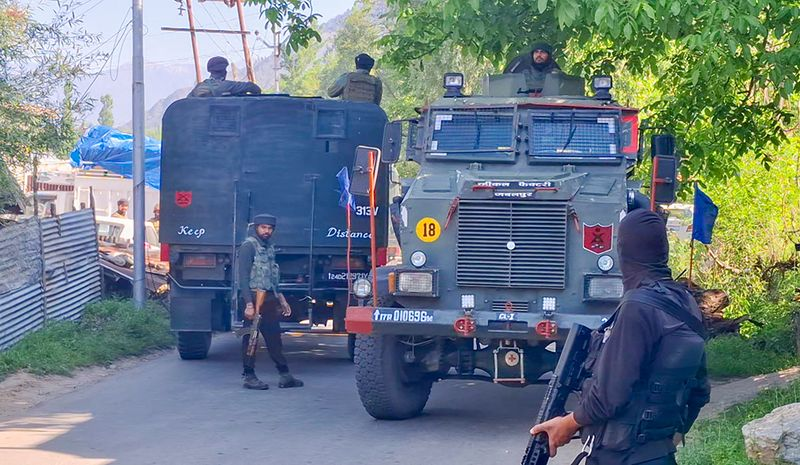
Following the incident, massive combing operations were launched in the forests of south Kashmir to track down the perpetrators of the Baisaran attack. However, the efforts have yielded little success so far.
The current outcome stands in contrast to the aftermath of the 2019 Pulwama suicide bombing, when security forces neutralized Kamran alias Ghazi Rasheed — believed to be the mastermind behind the attack — within 100 hours.
Security sources say that while efforts to hunt down the Pahalgam attackers are ongoing, changes in militant strategy over recent years — particularly a shift toward jungle warfare — have contributed to the delay in locating and eliminating the terrorists.
Counter-insurgency officials in the Valley cite multiple factors that differentiate the current situation from the Pulwama attack, in which 40 CRPF personnel lost their lives. Officials point out that the forest cover in parts of south Kashmir, along with the mountainous terrain connecting it to the Jammu region, is so dense that visibility in some areas drops to less than five meters.
“The forest is so thick that it’s difficult to see beyond a few meters,” a police officer said. “There are places where even sunlight doesn’t penetrate the tree cover.”
Sources added that the dense vegetation also hampers the effectiveness of surveillance tools like drones, which struggle to navigate the terrain — giving the militants a strategic advantage.
Unlike the Pulwama operation, which was carried out in urban areas, the Pahalgam attackers retreated into dense forests that offer natural shelter and make tracking more difficult. Additionally, officers note that modern militants are leaving no digital footprints and are using discreet communication methods that are extremely hard to intercept.
“They are making minimal or no use of traditional communication devices. Even if we manage to break into their communication channels, we are often unable to pinpoint their exact location,” an officer said.
Despite the challenges, security forces say efforts are ongoing. According to officials, the attackers include two Pakistani nationals and a local militant affiliated with the Lashkar-e-Taiba outfit. They have been identified as Adil Hussain Thokar of Anantnag district, and Ali Bahi alias Talha Bahi, and Hashim Musa alias Suleman — both from Pakistan.
In addition to large-scale combing operations, over two thousand individuals have been detained in a sweeping crackdown. These efforts are beginning to show results. Last week, security forces killed six terrorists from two different outfits in separate anti-terror operations. One of these encounters took place in the forests of Shopian.
“Troops on the ground are doing everything possible to hunt down the terrorists. Multiple agencies are working together, and we remain hopeful of neutralising the attackers soon,” said a senior officer based in south Kashmir.
State Stalwarts
DEFENCE MINISTER
Minister Rajnath Singh
ALL HUMANS ARE ONE CREATED BY GOD
HINDUS,MUSLIMS,SIKHS.ISAI SAB HAI BHAI BHAI
CHIEF PATRON ALL INDIA SANJHA MORCHA
LT GEN JASBIR SINGH DHALIWAL, DOGRA
SENIOR PATRON ALL INDIA SANJHA MORCHA
MAJOR GEN HARVIJAY SINGH, SENA MEDAL ,corps of signals
.
.
PATRON ALL INDIA SANJHA MORCHA
MAJ GEN RAMINDER GURAYA ,MADRAS REGIMENT
sanjhamorcha303@gmail.com
PRESIDENT SOUTH ALL INDIA SANJHA MORCHA
COL SS RAJAN BOMBAY SAPPERS,
PRESIDENT UTTARAKHAND ALL INDIA SANJHA MORCHA
COL B M THAPA ,BENGAL SAPPERSS
PRESIDENT HARAYANA STATE CUM COORDINATOR ESM
BRIG DALJIT THUKRAL ,BENGAL SAPPERS
PRESIDENT TRICITY
COL B S BRAR (BHUPI BRAR)
PRESIDENT CHANDIGARH ZONE
COL SHANJIT SINGH BHULLAR
.
.
PRESIDENT PANCHKULA ZONE AND ZIRAKPUR
COL SWARAN SINGH
INDIAN DEFENCE FORCES
DEFENCE FORCES INTEGRATED LOGO
INDIAN AIR FORCE
Air Officer C-in-C WESTERN AIR COMMAND
AIR MSHL S PRABHAKARAN AVSM VM
AOC-IN-C, EASTERN AIR COMMAND
Air Marshal Inderpal Singh Walia
AOC-in-C SOUTH WESTERN AIR COMMAND
Air Marshal Vikram Singh
AOC-IN-C, SOUTHERN AIR COMMAND
Air Marshal J.Chalapati
AOC-IN-C TRAINING COMMAND
AIR MARSHAL SK GHOTIA VSM
AOC-IN-C MAINTENANCE COMMAND
Air Marshal Jagdish Chandra
Flag Officer Commanding in Chief, Western Naval Command
ice Admiral R Hari Kumar, PVSM, AVSM, VSM
Flag Officer Commanding in Chief, Eastern Naval Command
Vice Admiral Sanjay Bhalla, AVSM, NM
Flag Officer Commanding in Chief, Southern Naval Command