India has said Operation Sindoor had only been paused and not ended and that the future of the ongoing pause on hostilities with the western neighbour would depend on the latter’s conduct
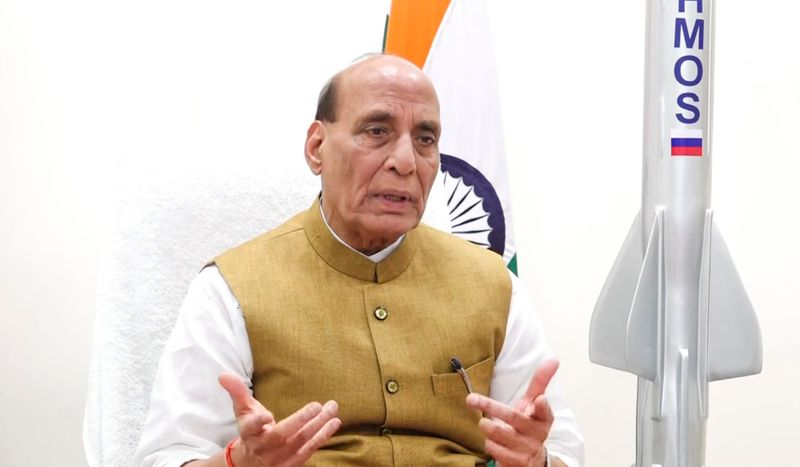
Top government sources on Friday said India’s strategic requirements will never be left wanting and every arrangement will be made to ensure the armed forces have what they need to defend national sovereignty.
Speaking in the aftermath of the April 22 Pahalgam terror attack in Jammu and Kashmir and the national response in the shape of Operation Sindoor, a senior official source said the military precision strike on nine terror hubs inside Pakistan and PoK and the four-day conflict between India and Pakistan would have “no impact on the Indian economy”.
India has said Operation Sindoor had only been paused and not ended and that the future of the ongoing pause on hostilities with the western neighbour would depend on the latter’s conduct.
The top source today said Defence Minister Rajnath Singh had already authorised the three Service chiefs with emergency procurement powers under the defence contingency fund.
“Those mechanisms are already in place, those resources are also already in place as a matter of routine. We do not see a very big additional demand at this moment, but whatever be it, strategic requirements will not be left wanting,” said the source.fter the Pahalgam terror attack and consequent tensions with India, credit rating agency Moody’s had said sustained escalation in tensions with India would likely weigh on Pakistan’s growth and hamper the government’s ongoing physical consolidation, setting back Pakistan’s progress in achieving macroeconomic stability.
“Pakistan macroeconomic conditions have been improving with growth, gradually rising, inflation declining and foreign exchange reserves increasing amid continued progress in the IMF programme. A persistent increase in tensions could also impair Pakistan’s access to external financing and pressure its foreign exchange reserves which remain well below what is required to meet its external debt payment needs for the next few years,” said Moody’s.
It added that comparatively the microeconomic conditions in India would be stable, bolstered by moderate, but still high levels of growth amid strong public investment and healthy private consumption.
India’s top defence scientist is confident that the success of the indigenously-developed ‘Akashteer’ air defence system during Operation Sindoor will draw interest from other countries. ‘Akashteer’, the fully automated air defence control and reporting system, emerged as the invisible force…
India’s top defence scientist is confident that the success of the indigenously-developed ‘Akashteer’ air defence system during Operation Sindoor will draw interest from other countries.
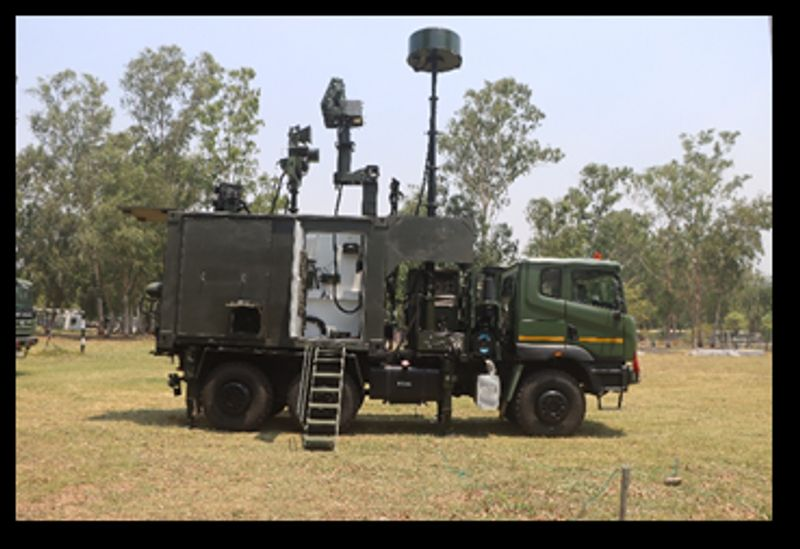
‘Akashteer’, the fully automated air defence control and reporting system, emerged as the invisible force of new war capabilities during Operation Sindoor.
“Definitely, our air defence system has performed exceedingly well, and I am sure there will be interest from other countries,” Defence Research and Development Organisation (DRDO) chief Samir V Kamat said on Thursday evening.
The DRDO chairman spoke about India’s march for ‘Atmanirbhar’ (self-reliance) in the defence sector, saying that while substantial advancements had been made, more work was necessary to become completely self-reliant.
“I think we have achieved a very significant level, but we still have some work to do. And I am sure in the coming years, we will become totally Atmanirbhar,” he said.
Kamat expressed optimism regarding the future of India’s defence technology during a visit to Nagpur, where he toured facilities focused on manufacturing drones, missiles and rockets.
The ‘Akashteer’ system enables detection, tracking, and engagement of enemy aircraft, drones and missiles by integrating various radar systems, sensors and communication technologies into a single, mobile, vehicle-based framework, making it easier to handle in hostile environments.
Replying to a question whether conventional weapons would take a back seat in future conflicts as warfare shifts to domains where drones and signal jamming take centre stage, Kamat said future warfare would blend traditional equipment with emerging technologies, such as drones and electronic warfare.
Congress leader Rahul Gandhi on Friday enquired about the health of former Jammu and Kashmir Governor Satya Pal Malik, who is currently undergoing treatment at Ram Manohar Lohia Hospital in New Delhi. Congress sources told The Tribune that Gandhi went…
Congress leader Rahul Gandhi on Friday enquired about the health of former Jammu and Kashmir Governor Satya Pal Malik, who is currently undergoing treatment at Ram Manohar Lohia Hospital in New Delhi.
Congress sources told The Tribune that Gandhi went to the hospital around 6 pm this evening. “It is after four days, he (Malik) came to his senses today. He is admitted to the ICU, where Rahul had a 4-5 minute conversation with Malik,” the sources added.
On May 22, the CBI filed a chargesheet against the former J&K Governor and five others over alleged irregularities in the Rs 2,200-crore civil works contract for the Kiru hydropower project.
On Thursday, Malik’s post on ‘X’ read that he had been admitted to hospital and was not in a position to speak.”I’m getting calls from many well-wishers which I can’t answer right now,” Malik’s post read with a picture of him seemingly unconscious at a hospital bed.
Malik, who served as the J&K Governor from August 2018 to October 2019, had earlier claimed that he was offered a bribe of Rs 300 crore to approve two files, one of which was related to this project.
After the CBI searched his home premises last year in February, Malik dismissed the allegations saying that the probe should have focused on the people he had flagged for corruption.
“They won’t find anything at my place except four to five kurtas and pyjamas. The dictator is trying to frighten me by misusing government agencies. I am a farmer’s son, I won’t be scared or bow down,” he had posted online.
20,000 Indians killed in terror attacks: India rebukes Pakistan at UN
‘Pakistan violated spirit of Indus Waters Treaty by inflicting three wars, thousands of terror attacks on India’, says Ambassador P Harish
India ripped through Pakistan’s “disinformation” at the UN on the Indus Waters Treaty, asserting that Islamabad violated its spirit by inflicting three wars and thousands of terror attacks on India that seek to hold hostage lives of civilians, religious harmony and economic prosperity.
“We are constrained to respond to the disinformation being carried out by the delegation of Pakistan with regard to the Indus Waters Treaty. India has always acted in a responsible manner as an upper riparian state,” India’s Permanent Representative to UN Ambassador Parvathaneni Harish said on Friday.
Harish was addressing the UN Security Council Arria Formula meeting organised by the Permanent Mission of Slovenia on ‘Protecting Water in Armed Conflict – Protecting Civilian Lives.’
Harish highlighted four aspects to expose the “disinformation” by Pakistan, which spoke about India’s decision to suspend the Indus Waters Treaty.
In the wake of the horrific April 22 Pahalgam attack in Jammu and Kashmir in which 26 civilians were killed, India had decided that the Indus Waters Treaty of 1960 would be held in abeyance with immediate effect until Pakistan credibly and irrevocably abjures its support for cross-border terrorism.
Harish told the UN meeting that India had entered into the Indus Waters Treaty 65 years ago in good faith.
Noting that the Preamble of the Treaty describes that it was concluded ‘in a spirit of good will and friendship’, Harish said throughout these six and a half decades, “Pakistan has violated the spirit of the treaty by inflicting three wars and thousands of terror attacks on India.”
The Indian envoy underlined that in the last four decades, more than 20,000 Indian lives have been lost in terror attacks, the most recent of which was the dastardly targeted terror attack on tourists in Pahalgam.
Even as India has shown extraordinary patience and magnanimity throughout this period, Harish said Pakistan’s “state-sponsored cross-border terrorism in India seeks to hold hostage the lives of civilians, religious harmony and economic prosperity.”
Harish pointed out that India has formally asked Pakistan to discuss the modifications of the Treaty on several occasions in the past two years but Islamabad continues to reject these.
“Pakistan’s obstructionist approach continues to prevent the exercise of full utilisation of legitimate rights by India,” he said.
Further, Harish said that in the past 65 years, far-reaching fundamental changes have taken place not only in terms of escalating security concerns through cross-border terror attacks but also growing requirements for producing clean energy, climate change and demographic change.
“Technology for dam infrastructure has transformed to ensure the safety and efficiency of operations and water use. Some of the old dams are facing serious safety concerns,” he said adding that Pakistan has continued to “consistently block” any changes to this infrastructure, and any modifications of the provisions, which is permissible under the Treaty.
He noted that in 2012, terrorists even attacked the Tulbul Navigation Project in Jammu and Kashmir.
“These cynical acts continue to endanger the safety of our projects and the lives of civilians.
“It is against this backdrop that India has finally announced that the treaty will be in abeyance until Pakistan, which is a global epicentre of terror, credibly and irrevocably ends its support for cross-border terrorism. It is clear that it is Pakistan which remains in violation of the Indus Waters Treaty.”
Earlier in the day, Harish delivered a strong response to Pakistan at a UNSC open debate on ‘Protection of Civilians in Armed Conflict’, calling out Pakistan’s “grossly hypocritical” behaviour and asserting that a nation that makes no distinction between terrorists and civilians has no credentials to speak about protecting civilians.
After Pakistan’s Ambassador at the UN Asim Iftikhar Ahmad raked the Kashmir issue and spoke about the recent conflict between the two nuclear-armed countries, Harish slammed Pakistan’s baseless allegations and said India experienced decades of Pakistani-sponsored terrorist attacks across its borders.
“This has ranged from the horrific 26/11 attack on the city of Mumbai to the barbaric mass murder of innocent tourists in Pahalgam in April 2025. The victims of Pakistani terrorism have been predominantly civilians since its objective has been to attack our prosperity, progress and morale. For such a nation to even participate in a discussion on the protection of civilians is an affront to the international community,” Harish said.
Tensions between India and Pakistan escalated after the Pahalgam attack, which claimed 26 lives. India launched ‘Operation Sindoor’ under which it carried out precision strikes on terror infrastructure in Pakistan and Pakistan-occupied Kashmir in the early hours of May 7, following which Pakistan attempted to attack Indian military bases on May 8, 9 and 10.
The Indian side responded strongly to the Pakistani actions. The on-ground hostilities ended with an understanding on stopping the military actions following talks between the directors’ general of military operations of both sides on May 10.
Harish told the UN Security Council that Pakistan has repeatedly used civilian cover to advance the cause of terrorism.
Man posing as army Captain dupes couple of Rs17 lakh, held
Posing as an army Captain, a man duped a couple of Rs 17 lakh on the pretext of helping him secure a home loan.
The police’s Economic Offences Wing (EOW) arrested the accused, who has been identified as Sagar Guleria, from near Suraj Theatre in Sector 1.
According to the complaint filed by Manpreet Kaur, wife of Satpal Singh (serving as a Naik in West Bengal), she and her husband had opened a joint account in Punjab back in 2010.
During Satpal Singh’s posting at Chandimandir in 2024, he required a home loan. At the time, a colleague named Surmukh Singh introduced him to Sagar, who claimed to be serving as a Captain in the army.
Sagar assured the couple that he had previously helped several army personnel secure personal loans. Gaining their trust, he took the necessary documents from Satpal and successfully got a home loan of Rs 17.5 lakh sanctioned on May 8, 2024. Under the pretense of arranging a subsidy on the loan, Sagar had the entire amount transferred to his own account.
As per the complainant, Sagar kept delaying the return of the funds after receiving them. During the investigation, it was revealed that Sagar was not an Army Captain, nor was he affiliated with the military in any way. In fact, he had already been declared an absconder.
Under the leadership of EOW in-charge Kamaljeet Singh, the police arrested the accused, who is a resident of Ujala Nagar, Jalandha.
A case has been registered against him at the Chandimandir Police Station under Sections 406 (criminal breach of trust), 420 (cheating), 467 (forgery of valuable security), 468 (forgery for purpose of cheating), and 471 (using a forged document as genuine) of the Indian Penal Code.
The accused was presented in court today and remanded to seven days of police custody.
AS the short conflict on the Western Front came to an abrupt end a couple of weeks ago, thousands of kilometres away, in Mizoram, bordering Myanmar, churches as well as Hindu temples and mosques held prayers for peace and the safety of Indian soldiers and its citizens. The Sunday services figured in local media the next day, even if they did not in the larger metro media elsewhere in the country.
A Mizoram government official said all congregants of the churches and devotees in temples and mosques throughout Mizoram offered prayers on Sunday and wished the armed forces success and all-around welfare. There were prayers in churches also on Saturday evening. Mizo Christians take both their faith and church-going religiously and seriously, with a large number attending as many as three or four services every week.
I was in Mizoram through the four-day war and it was like being in a different space: apart from the brief blackout as announced by the Centre for the country, there was calm everywhere, the war was barely discussed, though people did follow the news on TV and mobiles.
On May 10, the day when the ceasefire was announced in quick succession by the US, Pakistan and India after days of escalation, some of the state’s tiny newspapers front-paged news with a lead story about the state’s school toppers being honoured by the Chief Minister. The off lead was a report about an improvement in child mortality rates, which put Mizoram at the top of India, along with Sikkim and Manipur.
Newslink, a four-page English paper published from Aizawl and priced at Rs 5 per copy, headlined a major outbreak of African swine fever (ASF), saying that it had taken a heavy toll of pigs in the state and the fatality level “climbs past 3,800.” Pork is the meat of choice in Mizoram. The conflict was placed on Page Three with an unattributed article with a London dateline, which spoke of “the first drone war” between the two countries. There are articles on the state government’s decision to amend the prohibition Act — which the powerful church has adamantly opposed — to allow locally manufactured fruit beer and fruit wine but keep the ban on the IMFL.A top economist says that since prohibition was reintroduced in 2018, after the defeat of the Congress party here, the state has been losing about Rs 60-70 crore annually in excise tax. This may be a tiny figure compared to other states, but it is significant for a state at the very end of India, which has few resources of its own, barring GST collections, and depends on doles from the Centre and bank loans and market borrowings to survive.
A metro newspaper here interviewed a Mizo mother identified as Rohlupuii who spoke about her worries about her son who was posted in an artillery unit. She was quoted as saying that her prayers were that “god will guide him and ensure his safety.”
A separate news report spoke of the death of Deepak Chingakham, a Manipuri constable in the Border Security Force, in a drone attack in the Jammu sector. The return of his body to Imphal triggered emotional scenes, with hundreds turning up to pay homage in a state that has been racked by internal strife between the Meiteis and Kukis for over two years.
Aizawl did not have TV war rooms, or screaming anchors, or battle scenarios or games played out, or live coverage repeated ad infinitum. The news was presented in a matter-of-fact manner with the latest developments on private Mizo language channels, to which most Mizos tune in. The local Doordarshan station held a studio discussion with retired military officials.
Prof Vanlal Chhawna, who has taught economics at Mizoram Central University, said that “local issues dominate here unless there is a state or regional or national issue which strikes a chord with the people.”
In addition, there are a significant number of serving and retired military personnel from Mizoram, which is striking in itself, for the state was convulsed for 20 years by a powerful insurgency pitted against India before a peace accord ended the violence in 1986.
In the first example of its kind, insurgent leader Laldenga of the Mizo National Front took office. His deputy was Lalthanhawla, who, till the accord, had been Congress chief minister. That Laldenga later fell from power due to internal dissension as his party split and Lalthanhawla returned robustly to helm the state for several terms is a different story, but it gives an idea of the resilience of the Mizos. The peace has held for 39 years.
The Mizos suffered extensively during the insurgency, including air attacks, internal displacement, loss of livelihoods and bloodshed. Prime Minister Narendra Modi had made a stinging reference to it in Parliament in August 2023: “On 5th March 1966, Congress had its Air Force attack the helpless citizens in Mizoram. Congress should answer if it was the Air Force of any other country. Were the people of Mizoram not the citizens of my country? Was their security not the responsibility of the Government of India?”
The challenges in the north-west, of the union territories of Jammu and Kashmir, resonate here. Lalvanruata Ralte, a prominent entrepreneur, said that this was undergirded by “Mizoram’s own experiences with conflict, displacement and the humanitarian challenges posed by cross-border issues.”
Ruatliana Sailo, a former government spokesman and prominent photographer, said that the process of prayers had “brought the Mizos closer to the rest of the country.”
A young academic, David Lalrinchhana, said that whenever India faced a conflict, “we Mizos proudly support our country and believe in its strength and values.” He added that it was important to “stand for harmony, peace and inclusion over hatred, exclusion and conflict.”
Such incidents may be a fading memory as the generation that fought, suffered and witnessed that conflict is also fading away. Yet, even in its gentle vanishing, those memories are powerful enough to inspire novels, histories, political legacies and films (including an episode in ‘Sam‘, the film on the iconic Field Marshal Sam Manekshaw). They have inspired a genre of writing in Mizo called Rambuia literature or literature about the Times of Trouble.
Although Mizoram is popularly called the country’s most peaceful state, it does have a very challenging border with Myanmar — a country where civil war rules and a rag tag bag of powerful rebel armies are fighting each other as well as the military junta for power.
The sharp reality of that unrest spills over in refugee flows fleeing the violence and is also seen in major illicit trade in weapons, wildlife and narcotics that flow over a porous border. A visible impact is a soaring drug user population.
Sanjoy Hazarika is an independent columnist.
AF guided IndiGo flight as Pak rejected plea to use airspace
Passengers on board the Delhi-Srinagar Indigo flight on May 21 encountered a grave threat of their lives as the sequence of events pointed to a series of miscalculations by the pilots, including the decision to fly into a hailstorm.
The beleaguered flight, with several of its instruments malfunctioning, landed at Srinagar after Indian Air Force (IAF) controllers on ground gave the pilots critical data on the plane’s altitude and speed using radars that can track aerial threats.
Flight 6E-2142 was cruising north of Pathankot over Punjab when the pilots radioed the IAF’s Northern Area Control at Udhampur, Jammu and Kashmir, seeking “permission” for diversion 180 km west into Pakistan. The pilots proposed to “skirt around” the approaching storm.
The IAF team refused permission to enter another country, saying that the authority rested with the New Delhi air traffic controller (ATC). The Indigo crew was advised about the notice to airmen (NOTAM) issued by Pakistan last month barring Indian-owned airliners from using their airspace.
Sources said a diversion of 180 km west meant flying deep into Pakistan and then returning back to reach Srinagar.
The flight’s crew was assisted in coordinating the route diversion by contacting the Delhi ATC and passing requisite contact frequencies of the Lahore ATC for an overflight weather diversion request, the sources said. The Lahore ATC refused overflight clearance, and the aircraft proceeded towards Srinagar.
The aircraft — Airbus 321 Neo — had a built-in Doppler weather radar, but the decision of the pilots, after having been denied permission to head westwards, to fly into the hailstorm and not turn back to Amritsar or Pathankot is part of the probe ordered by the Directorate General of Civil Aviation (DGCA).
The pilots fought a potentially life threatening situation as the aircraft flew into an intense hailstorm, encountering severe turbulence. This resulted in huge variations in air speed — the plane at one point descended at 8,500 feet per minute, exceeding the usual 1,500-2,000 feet per minute for a standard approach.The onboard sensors that indicate speed and altitude — crucial for landing — were not functional, possibly damaged by hail or ice. The IAF ground controllers at Srinagar provided the Indigo pilots with crucial readings using a hi-tech radar that can track the speed and altitude of enemy planes and assisted it in landing.While the passengers escaped unharmed, the aircraft’s “nose radome” suffered a significant damage.
Both nations extend airspace closure
India on Friday extended the closure of its airspace for flights operated by Pakistan airlines by another month till June 23. Similarly, Pakistan extended its airspace closure for Indian operators until 4.59 am on June 24, 2025. Fresh notices to airmen were issued by the authorities of both countries on Friday.
[Despatched by Email on 21.05.2025 at 1000-hrs] BY SPEED POST Dated: 21.5.2025
To, The President of India
[Supreme Commander of India’s Defence Forces]
Rashtrapati Bhavan New Delhi
CITIZENS’ APPEAL TO SAFEGUARD THE HONOUR AND SELF RESPECT OF INDIA’S DEFENCE FORCES
Dear and Respected Madam,
We feel distressed and anguished at the derogatory statements made by Deputy Chief Minister Jagdish Devda and Minister Vijay Shah against the Defence Forces, in the context of the recent India-Pakistan conflict following the horrific Pahalgam terrorist attack on innocent tourists.
First, Madhya Pradesh Minister Vijay Shah made a public statement referring to Colonel Sofiya Qureshi, the official spokesperson for the Defence Forces, as the “(terrorists) wiped the sindoor of our sisters and daughters (in the context of the recent Pahalgam attack by terrorists), and we sent their own sister to give it back to them in kind”.
[] In this, he publicly betrayed his gender-insensitive, non-secular, divisive state of mind, deprecating women in general, tending to incite communal fissures, and insulting India’s Defence Forces.
Second, Deputy CM Jagdish Devda, speaking at a training session for civil defence volunteers in Jabalpur, told the audience, “Pradhanmantri ji ko bhi dhanyawad dena chahenge, aur pura desh, desh ki wo sena, wo sainik, unke charno mein natmastak hain. Unke charno mein pura desh natmastak hai. Unhone jo jawab diya hai
प्रधानमंत्री जी को भी धन्यवाद देना चाहेंगे, और पूरा देश, देश की वो सेना, वो सैनिक, उनके चरणों में नतमस्तक हैं। उनके चरणों में पूरा देश नतमस्तक है। अनहोने जो जवाब दिया हा
(We would also like to thank the Prime Minister; the entire country, the country’s Army, its soldiers are bowing at his feet. The entire country is bowing at his feet, for the retaliatory response).” [. This link was available earlier, but appears to have been removed at present]. It may be recalled that earlier,
Chief Minister of Uttar Pradesh, Shri Yogi Adityanath, made a similar derogatory statement against the Defence Forces by calling it “modiji ki sena”,
मोदीजी की सेना”
in April 2019. [. This link was available earlier, but appears to have been removed at present].
It is unfortunate that Government chose to remain silent on the matter. Shri Adityanath’s earlier statement and Shri Jagdish Devda’s recent statement showed their disrespect for the letter and spirit of Article 53 of the Constitution of India, which defines executive power of the Union as follows: “Executive power of the Union. –
(1) The executive power of the Union shall be vested in the President and shall be exercised by him either directly or through officers subordinate to him in accordance with this Constitution.
(2) Without prejudice to the generality of the foregoing provision, the supreme command of the Defence Forces of the Union shall be vested in the President and the exercise thereof shall be regulated by law.
(3) Nothing in this article shall— (a) be deemed to transfer to the President any functions conferred by any existing law on the Government of any State or other authority;”
We need hardly emphasise that, under Article 53(2) of the Constitution, the supreme command of the Defence Forces of the Union shall vest in the President of India, and in no other authority. It is unfortunate that the remarks of Shri Jagdish Devda are actually being defended, as this link indicates [
]. Shri Jagdish Devda’s statement displays his disrespect for the authority of the President of India. Reportedly, the Madhya Pradesh High Court has suo moto ordered the police to file a case against Shri Vijay Shah []. While expressing solidarity with Colonel Sofiya Qureshi and the Defence Forces in general, for their unwavering commitment to safeguarding national security, we unequivocally condemn the statements made by the two Ministers named above.
We feel that the derogatory statements made by the two Ministers can adversely affect the morale of the serving personnel of our Defence Forces, resulting in weakening of national security and territorial integrity. Because of the stringent laws and rules governing discipline in the Defence Forces, its serving personnel are debarred from responding to these derogatory, humiliating statements.
We therefore respectfully request you, to issue directions for appropriate action to be taken by Government to prevent recurrence of such regrettable incidents, in the interest of national unity and security. Jai Hind!
Yours faithfully,
Admiral Vishnu Bhagwat, PVSM, AVSM (Retd)
Lt Gen Vijay Oberoi, PVSM, AVSM, VSM (Retd)
Lt Gen Ashok Vasudeva (Retd)
Maj Gen Rajendra Prakash, VSM (Retd) Maj Gen M.P.S.Kandal (Retd) Maj Gen S.G.Vombatkere, VSM (Retd) Maj Gen Inderjit Singh Dhillon (Retd) Maj Gen Brajesh Kumar, AVSM, VSM (Retd) Maj Gen M.Amin Naik, SM (Retd) Maj Gen A.J.S.Sandhu (Retd) Rear Admiral Alan O’Leary (Retd) Rear Admiral B.K.Ray, UYSM (Retd) Brig Vijay Atray (Retd) Cmde Lokesh Batra (Retd) Col Vivek Bopiah (Retd) Col Pavan Nair, VSM (Retd) Col Alok Asthana (Retd) Capt Aziz Lone, IN (Retd) Cdr David Isaacs (Retd) Cdr A. Sridharan (Retd) Cdr Raj Kumar (Retd) Ms. Lalita Ramdas, Secunderabad Shri. Vappala Balachandran, IPS (Retd) Ms. Meena Gupta, IAS (Retd) Shri. G. Balagopal, IAS (Retd) Shri. Ranjan Kashyap, IAS (Retd) Shri. Ravi Joshi, Mysuru Prof. Jagdeep Chhokar, Former Dean IIM, Ahmedabad Dr. S.Chatterjee, Retired Scientist, Bengaluru Dr. Vinod Vyasulu, Economist, Bengaluru Prof. Shalini Urs, Mysuru Dr. Swarnamala Sirsi, Mysuru Ms. Preethi Maroli, Mysuru Prof. N.S.Rangaraju, Mysuru Ms. Rashmi Oberoi, Chandigarh Ms. E.Roopa Rao, Mysuru Dr. Rati Rao, E., Retired Scientist, National President AIPWA Shri. C.P.Viswanatha Guptha, Mysuru Shri. Chhotebhai, Convenor Indian Catholic Forum, Kanpur Shri. Badri Narayan Krishnan, Mysuru Shri. Mansoor Ahmed, Mysuru Shri. D.T.Devare, Bengaluru Shri. M.F.Kaleem, Mysuru Ms. Rosamma Thomas, Pala Shri. P.A.Kumar, Mysuru
LINKS mentioned in above letter
Operation Sindoor: BJP defends MP deputy CM as a row erupts over his remarks