All posts by webadmin

3 Lashkar militants gunned down in Srinagar encounter

Azhar Qadri

Tribune News Service

Srinagar, May 5

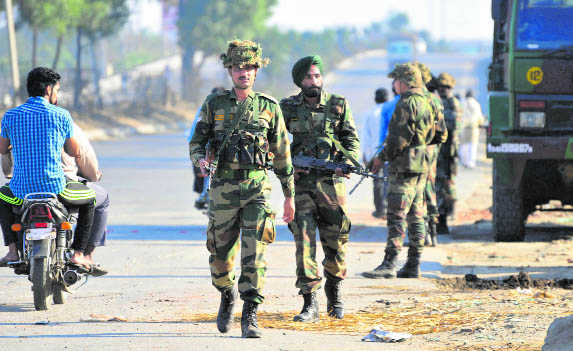
Jammu and Kashmir Police and CRPF personnel foiled a possible terror strike on Saturday killing three Lashkar-e-Toiba militants in the outskirts of the city after a five-hour operation, officials said.Four security personnel were injured in the gunfight but all of them are stated to be stable.The militants, according to the police, were planning to carry out the strike ahead May 7, when state government offices were to reopen in Srinagar after shifting from Jammu, the winter capital of the state.Protesters clashed with security forces to disrupt the counter-insurgency operation.The gunfight was triggered by a cordon and search operation launched by security forces at dawn in the city’s Chattabal locality.Locals said they heard intense exchange of gunfire in the morning as a large number of security forces rushed to the scene and sealed off the locality.The firefight continued for nearly five hours and ended with the killing of three militants. Immediately after the gunfight erupted, mobile internet services were shut down and restrictions imposed in volatile pockets of the city.The operation was swift and over in four hours with no collateral damage, Inspector General of Police (Kashmir Range) Swayam Prakash Pani said here after the operation.”On the basis of the materials recovered from the site, it was found that the terrorists belonged to the outlawed Lashkar-e-Toiba,” he added.One of the three militants was identified as Fayyaz Ahmed Hammal, who has been active for past one year.Officials said he is an illiterate, about 30 years of age and a resident of Khanka-e-Mohalla in downtown of the city. He was involved in some cases related to weapon snatching and terrorising people.Police officials believe that Hammal, who was earlier working at a printing press and an active stone-pelter, had been tasked to bring the two other militants, believed to be Pakistanis, to the city for carrying out an attack.The other two, according to doctors, were suffering from gangrene, a disease which is a result of frosbite that militants get while infiltrating from across the region in extreme cold conditions.Besides three AK rifles, a huge quantity of ammunition, including five magazines each, and a medical kit were recovered from the militants, police said.As the gunfight raged with intermittent pauses in Chattabal, a densely populated neighbourhood on edge of the city, clashes erupted between locals and security forces. The protesters tried to disrupt the counter-insurgency operation and pelted police and paramilitary forces with stones. A civilian identified as Adil Ahmad Yadoo, who was wounded in unclear circumstances at Noorbagh near the site of gunfight, was rushed to hospital where doctors declared him brought dead, the police said. The police said the youth died “due to a crush injury in a road accident”. The protesters, however, alleged that the youth was run over by a vehicle of security forces during clashes at Noorbagh.


Civilian injured in ceasefire violation in Keran sector of J&K

Civilian injured in ceasefire violation in Keran sector of J&K

The exchange of firing continued for nearly 45 minutes. PTI file

Keran (J&K), May 4A civilian was injured in ceasefire violation by Pakistan late on Thursday night in Jammu and Kashmir’s Keran sector.India retaliated to Pakistan’s firing from across the Line of Control (LoC).The exchange of firing continued for nearly 45 minutes.This comes a week after Indian Director General of Military Operations (DGMO) Lieutenant General Anil Chauhan and his Pakistani counterpart held an unscheduled hotline interaction on ceasefire violation.During the DGMO-level talk, India stood its ground regarding Pakistan-sponsored terrorism in the Kashmir Valley while the Pakistani DGMO accused Indian security forces of resorting to unprovoked firing along the LoC.In response, General Chauhan emphatically stated that retaliatory firing by Indian troops are carried out only in response to unabated support given by Pakistan Army to armed terrorists, who infiltrate across the border and target Indian Army posts with heavy calibre weapons. ANI


New defence panel holds first meet

Announces time-bound action plan

Tribune News Service

New Delhi, May 3

The newly constituted Defence Planning Council (DPC), at its first meeting on Thursday, announced a time-bound action plan for national security and long-term military planning.Headed by National Security Adviser Ajit Doval, the DPC has the mandate to come up with five drafts on various issues. It “deliberated on geo-strategic landscape,” a statement of the Ministry of Defence said. Sources said besides emerging scenarios in Asia and elsewhere, the recent development on ties with China was also discussed.The DPC, which was formed on April 18, is a permanent body. It has been tasked with preparing five drafts — national security strategic defence review and doctrines, international defence engagement strategy, roadmap to build defence and manufacturing eco system, strategy to boost defence exports, and prioritise capability development plans for the armed forces over different time-frames. It will submit its reports to the Defence Minister.As per its mandate, the DPC will operate through four sub-committees: policy and strategy, plans and capability development, defence diplomacy and defence manufacturing ecosystem. The membership and the terms of reference of the sub-committees will be finalised separately.Besides Doval, the three Service Chiefs, Defence Secretary Sanjay Mitra, Expenditure Secretary Ajay Narayan Jha, Foreign Secretary Vijay Gokhale are its members. Integrated Defence Staff Chief Lt General Satish Dua is the member-secretary.


Major who lost leg, eye in 1966 gets war injury pension benefits

Vijay Mohan

Tribune News Service

Chandigarh, May 1

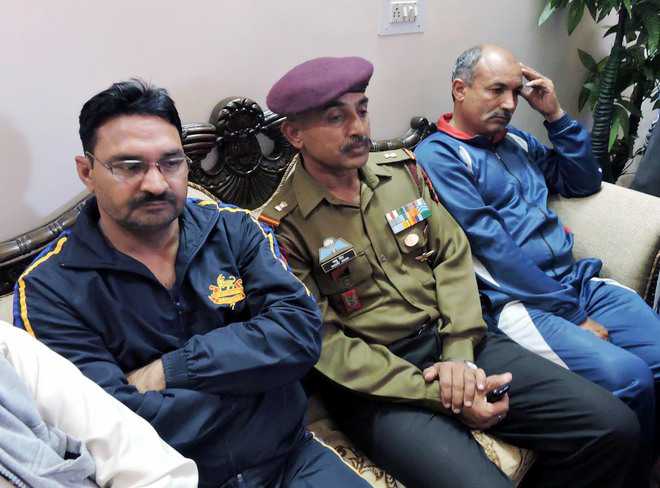
For a decorated Army Major who lost a leg and an arm in demining operations along the India-China border over half a century ago, it has been a long and torturous battle spanning decades to get his rightful pensionary benefits.Badly wounded while clearing mines in the Sikkim Sector in July 1966, for which he was awarded the Sena Medal for gallantry and declared a battle casualty, Maj Jasbeer Singh was discharged from the Army in September 1978 after aggravation of his injuries made it impossible for serving further. However, he was granted disability pension instead of the higher war injury pension.After concerted efforts, the government sanctioned him war injury pension in August 2016, but implemented it with effect from July 2013, the date of one of his representations rather than from the date of his invalidation. Aggrieved over denial of arrears, the officer, now in his mid-70s, again represented before the government, but to no avail.Holding that he was entitled to arrears of war injury pension along with interest from the date of his discharge till the time it was finally sanctioned, the Chandigarh Bench of the Armed Forces Tribunal last week ruled that not only have the dues been wrongfully withheld, but it was also improper on the government’s part to plead against the claim of the soldier who would have better died than survive with 100 per cent disability.The bench, comprising Justice MS Chauhan and Lt Gen Munish Sibal, termed the government’s attitude as “stone-hearted” and “headstrong”, saying the officer had undoubtedly suffered a lot.Drawing support from a 2016 Supreme Court judgment, the bench observed that restriction of arrears to three years, as sought by the government, has been disapproved by the apex court in somewhat similar circumstances. While also awarding him costs of Rs 30,000 for unnecessary and avoidable litigation forced upon him, the bench said it was a sad commentary on how a valiant soldier had been made to run from pillar to post.AFT rues ‘complete lack of empathy’We note with regret, dismay that the authorities responsible for implementing such policies exhibit complete lack of empathy. AFT’s Chandigarh Bench 


Is new defence strategy old wine in new bottle? by PK Vasudeva

Is new defence strategy  old wine in new bottle?

NSA Ajit Doval

PK Vasudeva

Former Professor, ICFAI University, Hyderabad. The Modi government eyes a new national security strategy called the Defence Planning Committee (DPC) under the chairmanship of National Security Adviser (NSA) Ajit Doval. The DPC would define national defence and security policy by undertaking security risk assessment. The institutional set-up will also spell out the national military strategy, defence reviews, and an overall national security plan. The body that will envisage a draft national security strategy and will also formulate an international defence engagement strategy. The new strategic think tank will also oversee foreign acquisitions and sales, making defence preparedness much more than an acquisition-centric exercise.

Members of DPC

The Chairman of the Chiefs of Staff Committee (COSC), three Service Chiefs, Defence Secretary, Foreign Secretary and Secretary of Expenditure in the Finance Ministry will be the members of the committee. The Chief of Integrated Defence Staff (CIDS) to the Chairman of Chiefs of Staff Committee (COSC) will be the member secretary of the committee and the HQ of the CIDS will be the secretariat of the DPC.It will have four sub-committees. One will look at policy and strategy; the second will work on plans and capability development; third on defence diplomacy and the fourth one on defence manufacturing ecosystem and boosting of exports of indigenously produced defence products.  All reports will be submitted to the Defence Minister to ensure that they meet their desired end. The DPC will work across ministries and obtain approval from the Cabinet Committee on Security. 

Goals of DPC

The DPC has been tasked with ambitious goals. It has been established to assess the external security threat, envisage a strong defence strategy and prioritise issues based on their threat level. With the growing security threats, fueled by both direct and asymmetric means, the DPC has a huge responsibility of bridging the gap between the existing bureaucratic bodies. It is imperative for this new institutional set-up to create a mechanism wherein parties from the ministries, defence services as well as intelligence bodies work in coherence to face threats of all kinds.The last time the Government of India tried to establish a defence planning body was in 1977. However, the committee established then had not achieved the desired results. To overcome the seizures created due to the absence of a national security doctrine and lack of funds for the defence expenditure, the Group of Ministers under the NDA in 2001 had recommended that a position of Chief of Defence Staff (CDS) be created to bring in greater results in the national security matters, but it had failed to take off till today due to bureaucratic hurdles.There is need to align long-term goals with procurement and doctrines by a mandate to take up “capability development planning” and place it before the Cabinet Committee for Security for approval. Importantly, the panel will “evaluate foreign policy imperatives” and chalk out a strategy for international engagement that includes boosting ‘Make in India’ exports and foreign assistance programmes.While India does have a defence planning architecture in place, this is the first time it is creating a body that will factor in everything: from foreign policy imperatives to operational directives and long-term defence equipment acquisition and infrastructure development plans to technological developments in other parts of the world while coming up with a plan.The DPC will prepare military doctrines and, in turn, define Indian military objectives for the future. The doctrines will reflect India’s no-first-use nuclear policy as well as take into account the possibility of a two-pronged offensive from the adversaries. It will justify the Navy’s demand of two aircraft carriers and the role of Indian Air Force in the era of long-range standoff weapons and missile theatre defence.

Flaws in DCP work

There are a few serious flaws in the functioning of DPC. Most of what it is meant to achieve is a repetition of what numerous previous mechanisms were supposed to achieve and have obviously failed to do so. Will this too also meet the same fate as it is only old wine in new bottle?When there are full-fledged and well-structured professionally run ministries of external affairs, defence and finance with a full Secretary to the Government of India looking after these ministries, it needs to examined why things are not working. Setting them right is needed to be done rather than creating new structures which will override some of their functions.It is not clear whether this is an advisory or executive body. Can it override the existing procedures or direct the ministries to take actions without the concurrence of their respective ministers – can it change the rules of business of the MoD as the MoD bureaucrat will still call the shots, being superior in administration. Shouldn’t the National Security Adviser be overseeing national security – isn’t that his primary function? As the PM’s premier representative on issues of national security, he should be ensuring the collective coordinated functioning of the ministries. A glaring omission in this construct is internal security, which is the greatest security challenge at the moment. Isn’t internal security integral to national security? Can internal security be de-linked from external security – isn’t Kashmir and Northeast a common issue (external and internal)?What happens to existing organisations like the National Security Council (NSC), the National Security Advisory Board (NSAB) and the multitude of intelligence agencies — don’t they have a role in national security? The government should make all-out efforts to improve higher defence management rather than creating a new untried committee under a person who is not an expert on defence strategies.The three Service Chiefs as members of this committee do not fit in the committee as they are senior to all secretaries of the government and are equivalent to the Cabinet Secretary. In principle, the Chiefs should not be subordinated to the NSA, being heads of their services. They can be members of a committee under PMO/Raksha Mantri.In 2001, after the Kargil battle, the Subramaniam Task Force recommended the appointment of a CDS — in existence in all large democracies of the world — to do the same job as is being entrusted to the DPC under the NSA. Later, a Group of Ministers in 2002 also recommended the appointment of CDS. In 2011 again a high-powered committee under Naresh Chandra recommended a `Permanent’ Chairman of Chiefs of Staff (similar to CDS) to carry out a similar job as the new DPC. Appointing the Chief of Integrated Defence Staff (CIDS) as the member secretary further highlights the issue of avoiding appointment of a CDS. The CIDS has been unable to perform its assigned task because of non-appointment of a CDS, thus compelling all services to process their cases directly with the MoD. Placing the Chairman COSC in the DPC enables the NSA to function as a super CDS. Thus, control of the armed forces shifts from the Defence Minister to the PMO, with the NSA officiating as the CDS which is non-functionable.


All chapters intact, just realigned syllabus: CM Trashes charges of deleting Sikh history from books

All chapters intact, just realigned syllabus: CM

Capt Amarinder Singh, CM

Tribune News Service

Chandigarh, April 30

Reacting to the outburst of the Opposition regarding the alleged deletion of references to the Sikh history in the PSEB syllabus for Classes XI and XII, Chief Minister Capt Amarinder Singh on Monday underlined that “not a single piece of information on the Sikh history or the Sikh Gurus has been dropped in the process of realignment of the syllabus”.The CM pointed out that the decision to realign the courses with the NCERT syllabus was taken during the SAD-BJP regime in 2014. The SGPC was party to all discussions on the issue since the government took over in March last year.Capt Amarinder minced no words in lambasting SAD president Sukhbir Badal for his “baseless statements on the issue, which have the potential to disturb the peace and harmony of the state”. He also condemned AAP for joining the vilification campaign against the government without verifying the facts.Capt Amarinder said: “I had personally sought a detailed mapping of the old syllabus of Class XI in the new syllabus for Class XII and also of the old syllabus of Class XII in the new syllabus for Class XI. Both clearly showed that not a single piece of information on the Sikh history or the Sikh Gurus had been dropped in the process.” He said: “Only the chapters and material on Sikh history have been organised in a more cohesive format for ease of learning. The entire period from Guru Nanak Dev to Guru Gobind Singh and martyrdom of the four Sahibzadas, will now be taught in Class XI.”He said soon after taking over the state’s reins, his government had written to the SGPC for a discussion on the issue of the history course realignment, given the sensitive nature of the subject. The SGPC had deputed Prof Paramveer Singh of Punjabi University, who had attended all meetings on the matter.The CM said the Class XI history book, the Opposition was citing in support of its allegations, had not even been printed yet. “To ensure there is no mutilation of the Sikh history and culture, the government has handed over the task of printing of these books to the PSEB.”


The decision to realign the courses with the NCERT syllabus was taken during the SAD-BJP regime in 2014. The SGPC is party to all discussions on the issue since the Congress government took over in March last year— Capt Amarinder Singh, CM


Army athletes dominate skiing contest

Srinagar, March 10

Fifteen teams representing different states and organisations participated at the National Winter Nordic X-Country and National Biathlon Championship which was held at Gulmarg in Baramulla district from March 3-7.The championship was inaugurated by Tangmarg MLA Mohammad Abbas Wani and Maj Gen Atul Kaushik, Commandant, High Altitude Warfare School.Srinagar-based defence spokesman Col Rajesh Kalia said the championship was divided into many events.“A total of 95 athletes (75 men and 20 women) from 15 teams representing different states like Jammu and Kashmir, Himachal Pradesh, Uttarakhand, Punjab and Haryana participated in the championship. The results were declared on the final day and medals and certificates were awarded to various position-holders by the chief guest,” the spokesman said. Army athletes dominated most of the events, he added.During the closing ceremony, the chief guest appreciated the spirit and zest among the participants and complimented all the athletes for giving their best and participating in the highest spirit of sportsmanship. — TNS


LAC may see new set of rules Wuhan meet: Coordinated patrol, sticking to mandated protocol likely

LAC may see new set of rules

Ajay Banerjee

Tribune News Service

New Delhi, April 30

The meeting between Prime Minister Narendra Modi and Chinese President Xi Jinping at Wuhan on April 27-28 could result in “coordinated patrolling” and “sticking to mandated protocol” along the Line of Actual Control (LAC) by troops of either side.Aimed at reducing tension along the LAC, these two steps along with the setting up of a telephonic hotline at the level of Director-General Military Operations (DGMO) could form the new set of rules for troops on either side of the LAC, the de facto boundary along the Himalayan ridgeline.An Indian statement from Wuhan said the two leaders asked the militaries to build “trust” and have a mechanism to “prevent” incidents in the border regions. It further spoke of enhancing predictability and effectiveness in the management of border affairs.A coordinated patrol would mean giving advance information to one another when patrol parties enter disputed areas along the LAC.The LAC is not marked on the ground and troops of either country patrol up to a point which they perceive as the alignment of the LAC. Perceptions vary by a few kilometres in eastern Ladakh and Arunachal Pradesh.The other step could be “sticking to protocol” along the LAC. As of now, whenever either side perceives that a transgression  (entry of troops into a disputed area) has been made, soldiers show a banner to one another citing the 2005 agreement and says there is a need to back off from the present positions of patrolling.The “banner drill” is framed under the “protocol on modalities for implementation of CBMs in the military field along the LAC in the India-China border areas”. It is part of a protocol agreed upon to de-escalate momentary transgressions.The matter of setting up a DGMO-level hotline was revived at a meeting of the Working Mechanism for Consultation and Coordination on India-China Border Affairs in Beijing in November last year. The two sides have coordinated on how to have a Mandarin-to-English translator in India and the reverse of it in China.


Women from region bag top honours at OTA

Lt Preeti Chowdhary receives the sword from Lt Gen DR Soni, GOC-in-C, Southern Command. Tribune photo & PTI

Chandigarh cadet first from the city to get Sword of Honour, Haryana’s gets silver medal

Vijay Mohan

Tribune News Service

Chandigarh, March 10

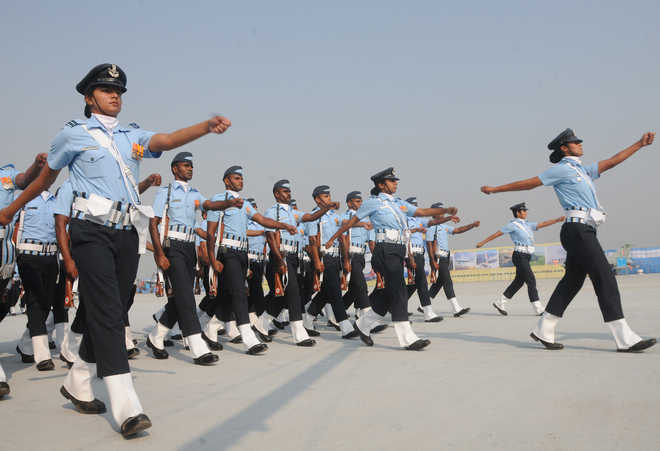
Lt Preeti Choudhary, an NCC cadet from Chandigarh has created a record of sorts by becoming the first woman officer from the city and third in the Officers Training Academy (OTA) since women were inducted in 1992 to be awarded the coveted Sword of Honour for being the best all-round cadet of her course at the academy in Chennai. Another cadet from Haryana, Senior Under Officer Vreeti, was awarded the silver medal. A B.Tech in mechanical engineering, Vreeti quit a highly paid job in Japan as a design engineer before joining OTA as Lady Cadet. Both the cadets scored over more than 200 Gentlemen Cadets to bag the top two honours.(Follow The Tribune on Facebook; and Twitter @thetribunechd)Lt Preeti Choudhary received the sword from Lt Gen DR Soni, General Officer Commanding-in-Chief, Southern Command, who was the reviewing officer of the passing-out parade today. She was among 37 Lady Cadets and 196 Gentlemen Cadets who were commissioned as Lieutenants.She is from the 19th Short Service Commission (Women) Course and she has opted for the Army Air Defence (AAD) corps. As of January 2018, the total strength of women officers in the Army (excluding the medical stream) was 1,561 out of which 63 were in the AAD.Preeti is from the second generation in her family to join the armed forces. Her father, Honorary Captain Inder Singh, served in the Army Medical Corps. Though a native of Haryana, she studied in Chandigarh and graduated from the Government College for Girls, Sector 11. She was also an active NCC air wing cadet.Wg Cdr MR Pandeya, Commanding Officer No. 1 Chandigarh NCC Air Squadron, said Preeti had represented the Punjab, Haryana, Himachal Pradesh and Chandigarh NCC Directorate at the national level and was adjudged as the Second Best Air Wing Girl Cadet across the country in 2016. She trained with the NCC for three years, after which she applied for NCC special entry and cleared the Service Selection Board interview in the first attempt, he added.