All posts by webadmin

India’s Operation Sindoor: How It Exposes Vulnerabilities In US Defence Dominance; A Wake-Up Call For US Defence Reform

India’s Operation Sindoor, executed in May 2025, has sent shock waves through the global defence community, exposing critical vulnerabilities in the US defence establishment and highlighting the urgent need for reform. The operation’s success, driven by rapid innovation, cost-effective systems, and decisive execution, stands in sharp contrast to the slow, monopolistic, and expensive defence practices that dominate the United States.

Operation Sindoor: Precision, Speed, And Impact

Operation Sindoor was launched in response to a deadly terrorist attack in Pahalgam, Kashmir, killing 26 civilians. India’s military response was swift and surgical: over a four-day campaign, Indian forces targeted terrorist camps and, when Pakistan retaliated, escalated to precision strikes on Pakistani air bases and command centres.

The operation crippled Pakistan’s radar and air defence networks, dismantled command and control, and exposed the weaknesses of Chinese and Turkish-supplied systems. Within hours, Pakistan was forced to seek a ceasefire, underscoring the effectiveness and deterrent value of India’s approach.

Cost-Effective Innovation Vs US Defence Monopolies

India’s military achievements are not just about battlefield success—they are rooted in a philosophy of affordable, scalable, and rapidly deployable systems. The Pinaka rocket, for example, costs less than $56,000, compared to the US GMLRS missile at $148,000. The Akashteer missile defence system was developed and fielded at a fraction of the cost of US-made Patriot or NASAMS platforms. This stands in stark contrast to the US, where a handful of defence giants—Lockheed Martin, Boeing, Northrop Grumman, Raytheon, and General Dynamics—dominate the landscape, stifling competition and innovation.

The US defence industry, once a symbol of strength, now resembles a cartel. The number of prime contractors has shrunk from 51 to fewer than 10, making it difficult for the Pentagon to negotiate or drive innovation. Cost-plus contracting further insulates these firms from risk, encouraging cost overruns and the development of over-engineered, expensive platforms—exemplified by the F-35 fighter jet’s $1.7 trillion lifetime cost and persistent performance issues.

Structural Challenges In The US Defence Industry

The United States defence industry faces significant structural challenges that limit its ability to compete effectively with emerging alternatives like India’s cost-effective manufacturing model. The industry’s concentration among a small number of prime contractors has created what analysts describe as a cartelized system with limited genuine competition. According to Department of Defence studies, the number of prime defence contractors has declined dramatically from 51 to fewer than 10, fundamentally altering the competitive landscape and reducing incentives for innovation and cost reduction. This consolidation has occurred despite soaring defence budgets expected to approach $1 trillion by 2025, indicating that increased spending has not translated into improved competition or efficiency.

The monopolistic concentration of the US defence industry manifests in several problematic ways that directly impact military readiness and fiscal responsibility. Major contractors like Lockheed Martin, Boeing, Northrop Grumman, Raytheon Technologies, and General Dynamics dominate the global arms market, with nine of the world’s top 20 defence firms by revenue being American companies. While this concentration once represented strength through specialization and scale, it has evolved into a system where contractors have little incentive to drive innovation, reduce costs, or adapt quickly to changing requirements. The lack of genuine market competition has created an environment where cost-plus contracting shields firms from the consequences of budget overruns and delays.

A 2024 study by the Center for Strategic and International Studies revealed that 61% of major defence contracts now go to companies with no commercial business, rising to 86% when firms like Boeing with limited commercial operations are included. This isolation from broader market pressures has created a defence industry that operates according to different economic principles than the competitive commercial sector. The resulting system prioritizes technical specifications over cost-effectiveness and favours complex, expensive platforms over simpler, more affordable alternatives that might prove more suitable for contemporary warfare requirements.

Acquisition Process Inefficiencies

The US defence acquisition process has become notoriously slow and bureaucratic, often requiring years or even decades to field new equipment. This timeline mismatch with the pace of modern warfare has been starkly exposed by conflicts like the war in Ukraine, where rapid adaptation and production scaling proved crucial to military effectiveness. While American weapons systems like Javelins and HIMARS demonstrated their technical superiority, production systems struggled to keep pace with demand, forcing the Pentagon to rely on ageing factories and slow supply chains to meet urgent requirements.

The acquisition system’s fundamental structure creates perverse incentives that prioritize compliance with bureaucratic processes over operational effectiveness and speed. Many battlefield innovations since 9/11, including counter-IED kits and unmanned systems, were introduced through emergency procurement channels that bypassed formal acquisition processes. While these stopgap measures enabled rapid deployment of critical capabilities, they highlighted the systematic failures of the standard procurement system to respond to urgent operational needs. The reliance on emergency measures for innovation demonstrates that the formal acquisition process has become an obstacle to rather than an enabler of military effectiveness.

Cost-plus contracting models further exacerbate these systemic problems by removing financial risk from contractors and creating incentives for program complexity and duration rather than efficiency and speed. The F-35 fighter jet program exemplifies these challenges, with a lifetime cost estimated at $1.7 trillion and a development process characterized by delays and performance shortfalls. Air Force Secretary Frank Kendall’s acknowledgment that the F-35 represented “a serious mistake” and his warning about creating “perpetual monopolies” reflects growing recognition within the defence establishment that fundamental reform is necessary to maintain American military competitiveness.

Systemic Weaknesses And The Need For Reform

The US acquisition system is notoriously slow, with new equipment often taking years or decades to reach the field. The war in Ukraine exposed the inability of the US industrial base to surge production or adapt quickly, forcing reliance on outdated factories and slow supply lines. Many battlefield innovations since 9/11 were only fielded through emergency channels, bypassing normal procurement—highlighting systemic delays that remain unaddressed.

A further problem is the increasing isolation of US defence firms from commercial markets. Over 60% of major contracts now go to companies with no commercial business, rising to 86% when including firms like Boeing with limited commercial work. This insularity, a legacy of post-Cold War consolidation, has led to a defence sector resistant to market pressures and innovation.

Lessons From India: Agility, Affordability, And Scalability

India’s approach offers a compelling alternative. Its defence industry emphasises rapid development, integration of advanced technology, and cost-effective production. Systems like BrahMos and Akashteer are not boutique prototypes but proven, battle-ready platforms. India’s integrated air defence network, which seamlessly links air force and ground forces, is described by experts as “unique”—even surpassing current US capabilities in some respects.

This model demonstrates that lethality, affordability, and scalability can coexist. India’s ability to deploy, test, and validate new systems in actual combat provides a blueprint for the US to follow, especially as global threats evolve and the pace of conflict accelerates.

Urgent Path Forward For The US

Experts warn that the time for incremental change is over. The US must:

Reform its acquisition process for speed, iteration, and frontline feedback

Break up monopolies or foster genuine competition and alternative suppliers

Treat allies like India and Israel as co-equal production partners, not just buyers

Establish permanent learning teams embedded in conflict zones to feed real-time lessons into system design

A recent White House executive order has acknowledged these issues, directing the Secretary of Defence to deliver a reform plan. But experts caution that true change requires a full-scale overhaul of both procurement and organisational culture.

Facing The China Challenge

China’s massive military and population advantage mean future conflicts will be won not by size, but by the ability to innovate, produce economically, and adapt at speed. As India’s Operation Sindoor has shown, wars of the future will be decided by those who can “think faster, build faster, and fight smarter”.

Conclusion

Operation Sindoor is more than a military victory for India—it is a clarion call for the US to reform its defence establishment. Without urgent action to break monopolies, speed up innovation, and build adaptable, scalable systems, the US risks losing its military edge. The clock is ticking, and the lessons from India are too clear to ignore.

Based On ET News Report


India’s CATS Warrior Program: Advancing Indigenous Unmanned Combat Systems For Fifth-Generation Aerial Warfare And Save Pilots’ Lives

India’s defence establishment has achieved significant milestones in developing autonomous combat capabilities through the Combat Air Teaming System (CATS) Warrior program, marking a transformative shift toward indigenous unmanned combat aerial vehicles. This comprehensive initiative represents a strategic convergence of cutting-edge technologies, including stealth design principles, artificial intelligence integration, and advanced propulsion systems.

The CATS Warrior, developed by Hindustan Aeronautics Limited (HAL) in partnership with NewSpace Research and Technologies, embodies India’s commitment to reducing dependency on foreign defence imports while establishing technological sovereignty in unmanned warfare systems. Simultaneously, the ongoing trials of the indigenous Kaveri engine in Russia signal renewed prospects for self-reliant propulsion technologies that could power future unmanned platforms, creating a synergistic ecosystem of indigenous defence capabilities.

Development And Strategic Context of The CATS Warrior Program

The CATS Warrior represents a paradigmatic shift in India’s approach to aerial combat, emerging from the Aircraft Research and Design Centre under HAL as part of a comprehensive Combat Air Teaming System program. This initiative fundamentally reimagines the traditional pilot-aircraft relationship by introducing autonomous wingman capabilities that can operate in coordination with manned fighter jets, particularly the LCA TEJAS, Advanced Medium Combat Aircraft (AMCA), Twin Engine Deck Based Fighter (TEDBF), Su-30MKI, and Jaguar platforms. The program’s genesis can be traced to India’s recognition of evolving global warfare dynamics, where unmanned systems increasingly serve as force multipliers that enhance operational effectiveness while minimising human risk exposure.

The strategic imperative driving the CATS Warrior development stems from the need to counter sophisticated enemy air defence systems that pose significant threats to manned aircraft and pilots. Modern integrated air defence systems can detect, track, and engage aircraft from considerable distances, making penetration missions extremely hazardous for human pilots operating expensive fighter platforms.

The CATS Warrior addresses this challenge by serving as an expendable yet highly capable asset that can undertake high-risk missions, including Suppression of Enemy Air Defences (SEAD) operations, reconnaissance, and precision strikes against critical targets. This approach aligns with global trends in unmanned warfare, where leading military powers increasingly rely on autonomous systems to maintain operational superiority while preserving human resources and costly platforms.

The program received substantial institutional support with HAL management approving internal funding of ₹390 crore (equivalent to ₹438 crore or US$52 million in 2023) for development as of February 2021. This investment reflects the organisation’s confidence in the project’s strategic value and technological feasibility. The development timeline indicates ambitious goals, with integration with the CATS MAX mothership expected to take 1-2 years and first flights scheduled for 2024-25, demonstrating India’s commitment to rapid technological advancement in critical defence sectors.

Technical Design And Stealth Capabilities

The CATS Warrior’s design philosophy prioritises low observability while maintaining operational versatility, incorporating advanced stealth features that enable effective penetration of contested airspace. The aircraft employs a composite structure with hybrid design elements, drawing inspiration from proven platforms such as the MQ-28 Ghost Bat wingman in its front section and the XQ-58 Valkyrie in its mid-fuselage to tail configuration. This design synthesis represents a strategic approach to leveraging successful international concepts while adapting them to Indian operational requirements and manufacturing capabilities.

The stealth characteristics of the CATS Warrior are achieved through multiple design elements that collectively reduce its radar cross-section and enhance survivability in hostile environments. The aircraft features an internal weapons bay that maintains a clean external profile during operations, eliminating the radar signature penalties associated with external weapon carriage. The composite construction materials and carefully sculpted airframe geometry work in concert to scatter and absorb electromagnetic radiation, significantly reducing detectability by enemy radar systems. Additionally, the single serpentine air intake positioned on the top of the fuselage leads to twin engines while minimising radar reflections from the engine compressor faces, a critical design consideration for maintaining stealth characteristics.

Advanced Avionics And Mission Systems Integration

The CATS Warrior incorporates sophisticated avionics systems that enable autonomous operation while maintaining compatibility with manned aircraft platforms. The core avionics suite includes an electro-optic/infrared payload system that provides real-time visual and thermal imaging capabilities for target identification and battlefield surveillance. An Active Electronically Scanned Array (AESA) radar system delivers advanced target detection and tracking capabilities while maintaining low probability of intercept characteristics that enhance stealth performance. The integration of an inertial navigational unit ensures precise navigation and positioning even in GPS-denied environments, critical for operations in contested airspace where electronic warfare may disrupt satellite-based navigation systems.

The electronic warfare capabilities of the CATS Warrior extend beyond passive stealth measures to include active jamming systems designed to disrupt enemy radar and communication systems. These capabilities enable the platform to serve multiple roles within a single mission profile, transitioning seamlessly between reconnaissance, electronic attack, and kinetic strike operations as tactical situations evolve. The prototype utilises an indigenous Mission Computer developed by the Systems for Landing and Reconnaissance Development Centre (SLRDC), demonstrating India’s growing capability in critical avionics technologies that were previously dependent on foreign suppliers.

The autonomous capability framework incorporates dynamic mission scheduling systems that optimise aircraft deployment for real-time combat scenarios. This advanced artificial intelligence integration enables the CATS Warrior to adapt mission parameters based on evolving battlefield conditions, threat assessments, and target prioritisation without requiring constant human intervention.

Propulsion System And Performance Characteristics

The CATS Warrior employs a twin-engine configuration utilising modified PTAE-7 engines developed by the Aero Engine Research and Development Centre, designated as PTAE-W variants specifically optimised for the unmanned platform. These engines represent a significant advancement over the original PTAE-7 engines used on the DRDO Lakshya target drone, incorporating enhanced performance characteristics and improved reliability features. Each PTAE-W engine measures 1.27 meters in length, 330 millimetres in diameter, and weighs 65 kilograms, providing a compact yet powerful propulsion solution that contributes to the aircraft’s overall stealth profile.

The exhaust system design incorporates chevron nozzle technology similar to that employed on the F-35 Lightning II, serving dual purposes of reducing jet blast noise signatures and minimising radar emissions. This design feature contributes to the aircraft’s overall stealth characteristics while improving acoustic signature management, particularly important for covert operations and reduced detection probability. The performance envelope includes a maximum speed of Mach 0.9, cruise speed of 790 km/h (Mach 0.6), and a service ceiling of 9,000 meters, providing substantial operational flexibility across diverse mission profiles. The combat range of 350 kilometres enables effective operations within the tactical radius of manned aircraft, while the maximum range of 700 kilometres extends operational possibilities for long-range autonomous missions.

Weapon Systems And Combat Capabilities

The CATS Warrior’s armament configuration reflects a sophisticated approach to multi-role combat operations, incorporating both internal and external weapon carriage options that optimise stealth performance while maximising firepower. The internal weapons bay accommodates two DRDO Smart Anti-Airfield Weapons (SAAW), each weighing up to 155 kilograms, providing substantial precision strike capability against hardened targets and critical infrastructure. The external hard-points can carry two short-range or beyond-visual-range air-to-air missiles, with each external station capable of supporting up to 170 kilograms of ordnance. This configuration enables the platform to engage both air and ground targets within a single mission profile, maximising operational efficiency and mission success probability.

The total weapon load capacity of 650 kilograms provides substantial firepower for a platform of the CATS Warrior’s size class, enabling engagement of multiple targets or employment of specialised munitions for specific mission requirements. The modular weapon system design accommodates future integration of advanced munitions, including the CATS ALFA-S precision-guided munitions, with capacity for up to 24 units of these smaller weapons systems. This flexibility ensures the platform can adapt to evolving threat environments and mission requirements without requiring fundamental design modifications.

The integration of precision-guided munitions capability transforms the CATS Warrior from a simple target drone into a sophisticated combat platform capable of conducting complex strike missions. The combination of internal storage for larger weapons and external carriage options for air-to-air missiles enables the aircraft to serve as both a loyal wingman providing defensive capabilities and an offensive strike platform capable of independent target engagement. The autonomous target engagement capability, combined with real-time data sharing with manned aircraft, creates a synergistic combat system that multiplies the effectiveness of traditional fighter aircraft operations.

Conclusion

The HAL CATS Warrior program represents a transformative milestone in India’s defence technology development, demonstrating the nation’s capability to conceive, develop, and produce cutting-edge unmanned combat systems that address critical operational requirements while reducing dependency on foreign suppliers.

The comprehensive integration of stealth technology, artificial intelligence, autonomous operation capabilities, and indigenous propulsion systems creates a platform that significantly enhances India’s aerial warfare capabilities. The program’s emphasis on manned-unmanned teaming operations positions Indian Air Force capabilities at the forefront of global military aviation trends while providing unique operational advantages in contested environments.

The successful development and deployment of the CATS Warrior, combined with the maturation of the indigenous Kaveri engine program, establishes India as a significant player in the global unmanned systems market while creating strategic advantages that extend beyond immediate military applications. 

IDN (With Inputs From ET News)


Doors of Hemkund Sahib Gurdwara open for devotees

With snow still covering area around the gurdwara, a path has been cleared for pilgrims

The doors of Hemkund Sahib Gurdwara, a famous Sikh pilgrimage site in the upper Garhwal Himalayan region in Uttarakhand’s Chamoli district, opened for devotees on Sunday.

After the arrival of ‘Panj Pyare’ in the morning, the doors were opened for the devotees amidst ‘ardas’, Shabad Kirtan and Gurbani.

With this, the pilgrimage to the Hemkund Sahib has commenced.

The gurdwara, situated at an altitude of 15,000 feet, was decorated with flowers and colorful flags. President of Hemkund Gurdwara Trust Narendrajit Singh Bindra and other officials were also present.

With snow still covering the area around the gurdwara, a path has been cleared for devotees.

On Saturday, the first batch of Sikh devotees led by ‘Panj Pyare’ from Govindghat Gurdwara left for Hemkund Sahib with the holy ‘Nishan Sahib’. The group stayed the night at Ghangaria Gurdwara. In the morning, the group left for Hemkund Sahib amid chants of ‘Bole So Nihal, Sat Sri Akal’.

The pilgrimage to Hemkund Sahib begins in May every year and continues till October. During this, lakhs of devotees from across the country and abroad reach there to pay obeisance.

Arrangements have been made by the police to ensure the safety and smooth journey of the devotees. Teams of State Disaster Response Force have also been deployed at the main stops of pilgrimage route


Neha lone woman BSF officer to command border outpost during Operation Sindoor

Commanding a border outpost within eyeball-to-eyeball contact of a Pakistani post along the International Border, Assistant Commandant Neha Bhandari led her troops to silence three forward hostile posts across the zero line (area closest to enemy territory) by giving a…

Commanding a border outpost within eyeball-to-eyeball contact of a Pakistani post along the International Border, Assistant Commandant Neha Bhandari led her troops to silence three forward hostile posts across the zero line (area closest to enemy territory) by giving a befitting reply.

Apart from Neha, six women constables held a gun position on a forward border post, with their ‘josh’ rising with every bullet they fired at enemy positions across the IB in Samba-RS Pura-Akhnoor sectors.

Neha, a third-generation officer from her family in Uttarakhand, takes pride in being part of the BSF and commanding a border outpost in the Pargwal forward area of the Akhnoor sector in the Jammu district during Operation Sindoor.

“I feel proud to be manning a post along the International Border with my troops. It is approximately 150 meters away from the Pakistani post in the Akhnoor-Pargwal area,” Neha said.

Her feelings are vivid as she confidently says that commanding the post during Operation Sindoor was an honour for her. “It was an honour to serve at the forward post and give a befitting reply with all available weapons from my post to enemy posts,” she added.

Giving details of how she silenced three hostile posts resorting to unprovoked firing on her position during Operation Sindoor, she said, “I had three posts falling in my area. I pinned down the people at all three hostile locations. We hit them with every weapon we had. They were forced to flee their posts.” The posts were decimated to ensure they were silenced, she said, adding that her troops performed their best during retaliation.

Expressing the high morale among the troops manning the post, she said, “The ‘josh’ was quite high. Everyone among us gave their best, because everything we did was for the country and its honour.” Neha’s grandfather served in the Army, and her parents are from the Central Reserve Police Force (CRPF), making her a third-generation officer in the family. “My grandfather served in the Army. My father was in the CRPF. My mother is in the CRPF. I am a third-generation officer in the force,” she said.

She maintained that women did not lag behind, as they stood shoulder-to-shoulder with their male counterparts to give Pakistan a befitting reply during the three-day-long skirmishes.

“I had 18 to 19 women border guards with me. To be precise, six women were engaged in direct firing at observation post locations. We are proud of them,” said Neha, who was the lone BSF woman officer to command a forward post along the IB in Jammu frontier during the operation.

Praising the role of women in combat at forward posts and their engagement in firing on Pakistani posts, Inspector General of BSF Shashank Anand said, “BSF women personnel played an outstanding role in this operation. Although they had the option to move to the battalion headquarters, they chose to stay at forward posts with their male counterparts and responded strongly to Pakistan.”

Anand said that BSF women personnel, including Assistant Commandant Neha Bhandari, had shown exemplary courage by manning forward posts and engaging enemy positions near the IB. “Women BSF soldiers played a crucial role in this operation and stood at the front lines to protect the country’s sovereignty and borders,” he said.

Constable Shankari Das, who too manned a gun position on a forward post, said, “We have our duties. Just as we are deployed at the border, we carry out our tasks as usual. Our senior commanders briefed us on the situation and warned that firing might take place. We were instructed to respond to fire with fire. So, as soon as firing started, we responded with fire,” she said.

Similarly, constables Swapna Rath, Anita, Sumi, Milkeet Kour, and Manjeet Kour were manning gun positions at various posts, like their male counterparts, and giving a befitting reply to Pakistani troops. “We feel proud to man gun positions and retaliate. It was an honour for us,” Manjeet Kour said.

The BSF has hit back at 76 Pakistani border outposts and 42 forward defence locations (FDLs), and destroyed three terrorist launch pads among several other posts, in a strong retaliation to unprovoked firing and shelling by Pakistani Rangers along the IB in the Jammu frontier under Operation Sindoor. They damaged 70 forward Pakistani posts.

The BSF action came after Pakistan launched heavy shelling on 60 Indian posts and 49 forward positions, providing cover for an attempted infiltration by 40–50 terrorists, officials said.


Remarks on Col Qureshi: SC closes proceedings before MP high court against minister Vijay Shah

A Bench led by Justice Surya Kant said its May 19 interim order staying Shah’s arrest and asking the minister to join the probe shall continue

article_Author
Satya Prakash Tribune News Service

The Supreme Court on Wednesday closed the proceedings against Madhya Pradesh Tribal Affairs Minister Kunwar Vijay Shah before the state high court over his controversial remarks against Col Sofia Qureshi – the face of India’s press briefings on ‘Operation Sindoor’.

“Let the High Court close the proceedings in view of the case here (Supreme Court. Let there shall be no parallel proceedings,” a Bench led by Justice Surya Kant said.

Giving more time to the SIT set up on its orders, the top court posted the matter for further hearing after the summer vacation when it will consider another status report to be filed by the SIT.

The Bench ordered that the interim order staying Shah’s arrest and asking the minister to join the probe shall continue till further orders.

Rejecting Shah’s apology the Supreme Court had on May 19 ordered the Madhya Pradesh Director General of Police to constitute an SIT led by an IGP and comprising two other IPS officers to probe his controversial remarks against Col. Sofia Qureshi.

On Wednesday, Solicitor General Tushar Mehta told the Bench on behalf of the Madhya Pradesh Government that the SIT has been constituted and it has already started the probe and has seized the mobile phone of the accused along with a script of his speech. Statements of some witnesses have also been recorded, he said. However, noting that the probe was at an initial stage, Mehta sought more time.

Shah – a Madhya Pradesh BJP leader — sparked a major controversy with his objectionable comments against Col Qureshi, whom he tried to project as a “sister of terrorists” while addressing a gathering in Ramkunda village near Indore on Monday, prompting the Congress to demand his resignation.

After he came under fire for his remarks, Shah said if anyone was hurt by his statement, he was ready to apologise 10 times and that he respected Col. Qureshi more than his sister.

In an embarrassment to the BJP, the Madhya Pradesh High Court had on May 14 ordered registration of an FIR against Vijay Shah for passing “dangerous” and “scurrilous” remarks using “language of the gutters” against Col Sofia Qureshi, saying his remarks had the propensity to cause disharmony, feelings of enmity, hatred or ill-will between members of different religions.

“You (Shah) are a public figure… a seasoned politician. You should weigh your words when you speak. Should we display your video here?…Media people are not going into depth of your video…you were at a stage where you were going to use abusive language, very filthy language…but something prevailed on you and you stopped. This is an important issue for the Armed Forces. We need to be very responsible,” the top court had said on May 19, rejecting his apology.


Army outlines its operational philosophy for deploying counter-drone systems

Equipped with advanced sensors and mitigation technology, a ground-based Counter-Unmanned Aerial System enhances battlefield survivability and operational security

Vijay Mohan Tribune News Service

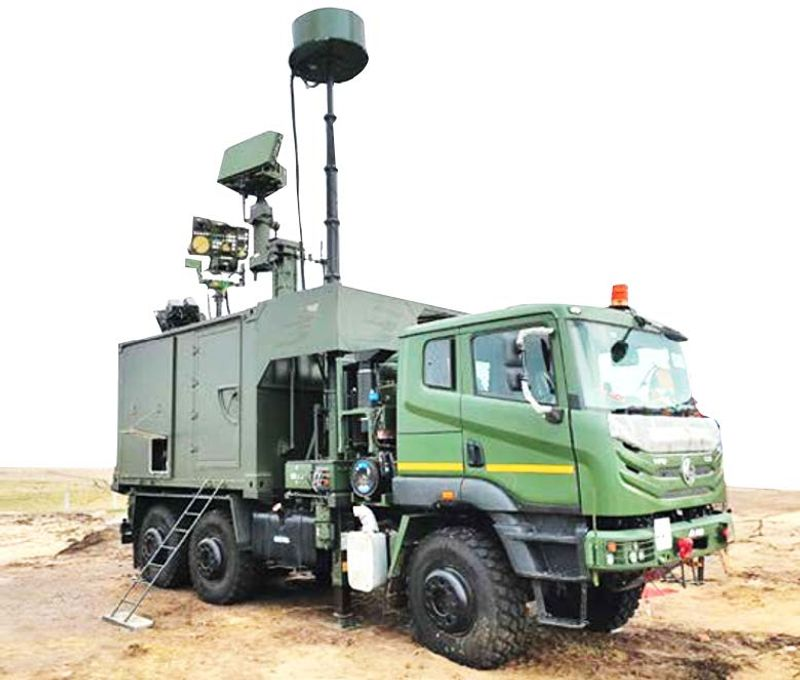
About a fortnight after Indian air defence networks played a crucial role in neutralising Pakistani drones and missiles during ‘Operation Sindoor’, the Army has outlined its operational philosophy for the deployment of ground-based Counter-Unmanned Aerial Systems (C-UAS) to deal with such threats.

“A ground-based C-UAS is designed to detect, track and neutralise hostile drones in real time and it ensures protection against aerial threats during tactical operations and critical infrastructure defence. Equipped with advanced sensors and mitigation technology, this system enhances battlefield survivability and operational security,” a request for information (RFI) issued by the Ministry of Defence on Wednesday for procurement of such equipment states.

Elaborating upon the operational philosophy, the RFI states that a ground-based C-UAS is an advanced, integrated defence solution designed to detect, track, identify and neutralise hostile drones operating within a designated airspace.

Utilising a combination of radar, radio-frequency detection, electro-optical and infrared sensors and artificial intelligence, the system can classify targets as friendly, adversary or unidentified while displaying them on a handheld operator screen with distinct colour codes.

Once a non-friendly drone is identified, the C-UAS can engage through soft-kill, that is radio frequency jamming or spoofing up to 3 km, or a hard-kill measures, that is the use of remote-controlled weapons, lasers, projectiles or swarm drones which physically destroy the platform, up to 5 kilometres.

The remote-controlled weapons ensure precise target elimination, while autonomous swarm drones can conduct high-speed interceptions carrying removable explosive payloads.

A threat library stores up to 1,000 drone profiles allowing continuous software upgrades for evolving threats. Fully operable by a single user from a ground control station, the system supports simultaneous engagement of multiple targets with an intuitive manual override function for operational flexibility, the RFI states.

The Army wants U-CAS that are able to detect radio frequencies in the bandwidth of 100-8,000 megahertz, with the ability to detect micro, mini and small drones at a distance of at least 3 km, 5 km and 8 km, respectively, by using radar and radio frequency, and at a distance of 1,200 metres to 3,000 metres using electro-optical and infrared sensors. These systems should be able to track 25 targets simultaneously.


Student held for post on Indo-Pak conflict released from Pune jail  

The 19-year-old student of engineering walked out of jail on Tuesday night after having spent over a fortnight behind bars for her social media post

It was an emotional reunion for a teen student with her family as she walked out of jail on Tuesday night after having spent over a fortnight behind bars for her social media post criticising the Indian government amid the Indo-Pak conflict.

The 19-year-old student of engineering was granted bail by the Bombay High Court which had made scathing remarks against the Maharashtra government for “being bent upon ruining her life” and turning her into a “hardcore criminal”.

The court had also pulled up the girl’s college — Sinhgad Academy of Engineering — for issuing a rustication order against the girl “hurriedly” without giving her an opportunity to explain herself.

The high court suspended the rustication order and directed the authorities at the Yerwada central jail, where the girl was lodged, to release her forthwith on Tuesday itself.

Pursuant to the order, the student, originally from Jammu and Kashmir, was released from the jail around 9.30 PM on Tuesday after all formalities were completed, her lawyer Farhana Shah said.

Her family members were present outside the jail for the emotional reunion and wished to stay away from the media glare and made only general statement that they had faith in the Constitution and the legal system of the country.

The controversy began on May 7 when the student, pursuing a Bachelor of Engineering (Information Technology) degree, shared a post on Instagram from an account named ‘Reformistan.’  However, realising her mistake, she deleted the post and also apologised for reposting it.

Despite her deleting the post swiftly, the Kondhwa police in Pune registered an FIR against her on May 9 and arrested her.

She was later sent to judicial custody at Yerwada prison. The college also rusticated her immediately.

Challenging her rustication and seeking quashing of the FIR, the student approached the Bombay High Court.

On Tuesday, the High Court strongly condemned the government’s response, labeling it “absolutely shocking” and “radical.”  The court ordered her immediate release to allow her to appear for her ongoing semester examinations and directed the Sinhgad Academy of Engineering to provide her with a hall ticket and, if necessary, arrange security and a separate classroom for her exams.

The police were also instructed to ensure adequate protection for the student when she attends college, addressing her expressed fears.

Kishor Patil, principal of the engineering college, said the institute has issued the girl the admit card. “The college has issued the admit card to the student on Wednesday. She will be appearing for the exam tomorrow,” he said.

The principal, however, refused to elaborate on whether any special classroom or arrangements have been made for the girl during the exams.

She had missed two papers due to her arrest and sought permission from the High Court to take them as a special case but the college said that the decision rested with the Pune-based university, prompting the court to permit her to file an application with the university for this purpose.

The High Court questioned the college’s “hurried” approach, saying that its role should be to reform, not punish, the student.

The court stressed that she should not have been arrested in the first place especially given her prompt deletion of the post and expressing remorse, and apology.

The college’s May 9 rustication letter cited “disrepute to the institution,” “anti-national sentiments,” and a “risk to the campus community and society” as reasons for its decision.

While cautioning the student to act responsibly in the future, the High Court reserved its sternest remarks for the state’s handling of the sensitive situation.


Rules notified to empower military theatre commanders with disciplinary powers

At present, a tri-service commander has no role in administration of justice against any of his subordinates.

The Ministry of Defence (MoD) on Wednesday notified rules empowering Commanders, heading tri-services organisations such as theatre commands, with disciplinary powers over their subordinates.“Rules formulated under the Inter-Services Organisations (Command, Control and Discipline) Act-2023 have been notified through a gazette notification and will come into effect from May 27, 2025,” the Ministry of Defence said on Wednesday.

These rules aim to bolster effective command, control and efficient functioning of inter-services organisations (ISOs), thereby strengthening integration among the armed forces, the MoD said in a statement.

Official sources said this was a long-awaited reform, especially after the appointment of the Chief of Defence Staff. Last Year in August, the Lok Sabha and Rajya Sabha had passed the Bill that received Presidential assent.

The Act empowers Commanders-in-Chief and Officers-in-Command of tri-service organisations to exercise control over service personnel, serving under them, for effective maintenance of discipline and administration, without disturbing the unique service conditions of each individual service.

The move comes 24 years after India created its first tri-service command — the Andaman and Nicobar Command.

At present, personnel of the Indian Air Force, Army and the Navy are, respectively, governed under the Air Force Act, 1950, the Army Act, 1950, and the Navy Act, 1957.

Besides, a tri-service commander had no role in administration of justice against any of his subordinates. Officers and men posted to tri-services organisations while facing disciplinary proceedings, if any, were reverted to their parent service.

Service personnel when serving in a tri-services organisation will continue to be governed by their respective service Acts. However, these rules and the new Act will empower heads of tri-services organisations to exercise all the disciplinary and administrative powers as per the existing Acts of the three services.

Theatre commands are also expected to be announced soon and entail having a single commander leading the men and officers from the three armed forces.

The tri-service organisations currently include the Andaman and Nicobar Command, the Strategic Forces Command and the Department of Military Affairs – led by the CDS.


Triumph on high seas: 2 women officers on sailboat complete an arduous circle around the globe

The crew encountered winds with speeds up to 95 kmph coupled with extremely cold temperatures during the journey

Vijay Mohan Tribune News Service

Eight months alone on the high seas for a duo on board a small sail boat circumnavigating the globe is not just a challenging adventure but an ultimate test of human grit, determination, endurance and seamanship. And this is where two women Indian Navy officers, Lt Cdr Roopa A and Lt Cdr Dilna K, undertaking the Navika Sagar Parikrama–II expedition have been triumphant.

On May 29, the two officers, referred to as ‘DilRoo’, will dock in home waters in Goa, from where they had embarked on October 2, 2024, after completing a voyage of about 50,000 km across four continents, three oceans and three Great Capes, braving the vagaries of nature and relying only on sails and wind power.

What is Navika Sagar Parikrama?

Navika Sagar Parikrama is the name of expedition for circumnavigation the globe Indian Navy’s women officers on board the Indian Naval Sailing Vessel (INSV) ‘Tarini’, a single mast sail boat. There have been two editions of this expedition so far.

The first edition lasted 254 days from September 10, 2017, to May 21, 2018, and comprised six officers led by Lt Cdr Vartika Joshi. The other crew members were Lt Cdr Pratibha Jamwal, Lt Cdr Swati P, Lt Aishwarya Boddapati, Lt Vijaya Devi and Lt Payal Gupta. All six had trained for about a year under Captain Dilip Donde, the first Indian to successfully carry out solo-circumnavigation of the globe in 2009-10.

En route, they also collected and updated meteorological, ocean and wave data on a regular basis for assisting weather forecasts by the National Centre for Medium Range Weather Forecasting and the Indian Meteorological Department, and reported marine pollution on the high seas. They had made five port calls at Fremantle in Australia; Lyttelton in New Zealand; Port Stanley in Falklands, Cape Town in South Africa and finally at Mauritius.


About the sail boat

The INSV Tarini is classified as a ‘sloop’, that is a small sea going sail boat with a single mast. It is the Indian’s Navy’s second sailboat of this category, the other being INSV ‘Mhadei’. The Tarini was constructed at the Aquarius Shipyard in Goa and was commissioned by the Indian Navy in February 2017 after extensive sea trials and some modifications.

The INSV is 56 feet long. In comparison, the INS Vikramaditya, the Indian Navy’s largest warship is 932 feet long. Its keel was laid by then Defence Minister Manohar Parrikar in March 2016 and was named after the Tara Tarini temple located in Odisha.

Its hull is built of wood-core and fibreglass sandwich and is designed to sail in extreme conditions at sea and the boat is equipped with advanced features such as satellite communications, Raymarine navigation suite and a Monitor windvane equipped for emergency steering.

The second expedition

Setting from the Naval Ocean Sailing Node, Goa, the DilRoo team commenced their circumnavigation with port calls at Fremantle, Lyttleton, Port Stanley and Cape Town, similar to the course adopted by their predecessors.


The officers engaged in numerous diplomatic and outreach engagements, interacting with parliamentarians, Indian diaspora, schoolchildren, naval cadets and university faculty across the globe.

In a rare gesture, they were honoured as special invitees at the Western Australian Parliament in Canberra in November 2024 as a recognition of their achievements. Their accomplishments received accolades from local communities, international sailing bodies and foreign parliaments serving as a beacon of women empowerment, maritime excellence and national pride.

The crew encountered winds with speeds up to 95 kmph coupled with extremely cold temperatures during the journey. Though each leg of the expedition had its own challenges, the third leg of the journey from Lyttleton to Port Stanley was the most arduous, where they encountered three cyclones.

“In persistent rains, Sea State 5 (the roughest category), winds of about 75 kmph and waves more than five metres tall, Lt Cdr Dilna K and Lt Cdr Roopa A, recorded their names in the annals of history by successfully crossing the Cape Horn located at the southern tip of South America,” the Indian Navy had then said on its official X handle.

This passage takes the sailors through the Drake Passage, a treacherous waterway known for its extreme winds, towering waves and unpredictable weather. The conditions in this region test even the most experienced mariners, making their successful passage a significant achievement.

“Having braved these formidable waters, the officers have now earned themselves the esteemed title of being the “Cape Horners”, a designation traditionally given to the elite group of seafarers who have successfully navigated Cape Horn under sail,” the Navy had said.

Cape Horn is situated just over 800 kilometers from Antarctica, making it one of the closest land points to the icy continent. The journey through this region not only requires exceptional navigational expertise but also resilience to the harsh conditions characteristic of the Southern Ocean.

During the voyage, the crew had the opportunity to interact with Defence Minister Rajnath Singh on the eve of International Women’s Day. He congratulated the crew for their remarkable milestone and acknowledged the invaluable role of women in bolstering national security and reaffirmed India’s commitment to expanding opportunities for women in the defence sector.

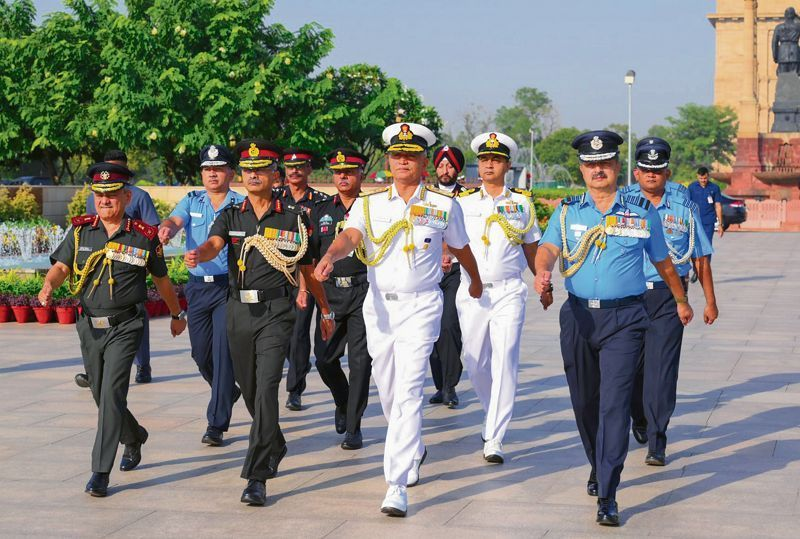
Chief of the Naval Staff Admiral Dinesh K Tripathi also interacted with the crew on various occasions and commended their exemplary skills, professionalism, camaraderie and teamwork during expedition that has been a defining chapter in India’s maritime history, a showcase of its professionalism and seafaring skills and an impetus to women empowerment.


Indian Army realigns troops in Ladakh along LAC

Sets process in motion for 72 Infantry Division

article_Author
Ajay Banerjee Tribune News Service

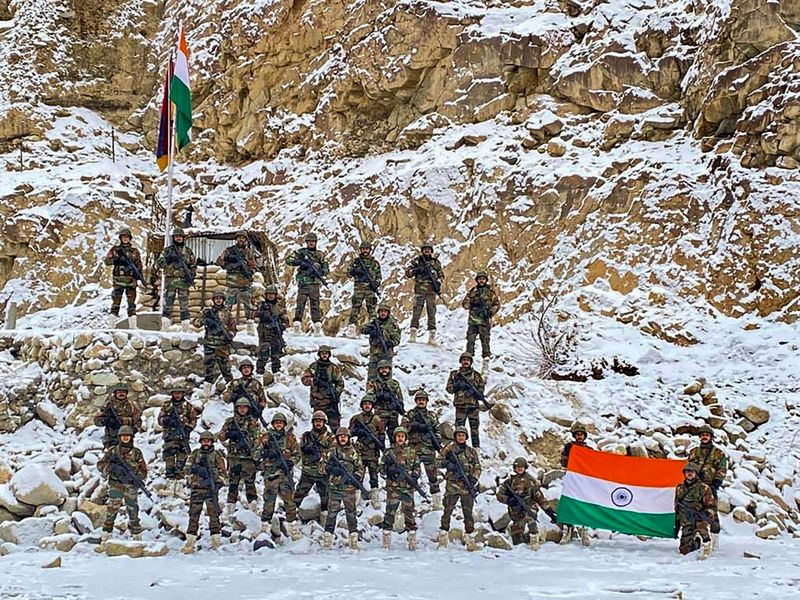
The Army is realigning its numbers in eastern Ladakh, facing China. The raising of a new division, which was okayed by the government earlier, has now been given the final shape.

The war-fighting elements of the new division have been finalised. Raising the new division — the 72 Infantry Division — will not entail adding any manpower. It will only be about re-tasking existing Brigades in eastern Ladakh, sources said.

Following the military stand-off with China in April 2020, the Army had moved around several of its units to Ladakh. This included the 6 Mountain Brigade from Bareilly and some resources of the Mathura-based 1 Strike Corps, the sources said. These resources include armoured formations and infantry combat vehicles, besides troops.

The 72 Infantry Division is expected to subsume some of these elements to consolidate troop numbers.

A division of Army has about 15,000 men, besides equipment. It is headed by a Major General-rank officer and has three or four brigades, each headed by a Brigadier.

The 72 Infantry Division will be part of the Leh-based 14 Corps, deployed on both fronts — China and Pakistan. Its area of responsibility is the 832 km of the Line of Actual Control (LAC) with China; the Line of Control with Pakistan in the Drass-Kargil-Batalik sector; and the Siachen Glacier. The 14 Corps has two divisions — the 8th Mountain Division, tasked to the LoC, and the 3rd Infantry Division, tasked to the LAC in eastern Ladakh.

Okayed by the government in 2017, the 72 Infantry Division was to be part of the 17 Mountain Strike Corps with its headquarters in Pathankot. Under the re-alignment, it will be based in eastern Ladakh, said the sources, adding that the headquarters of the division were being raised and officers and men had been assigned.

This is the second re-jig the Army has effected since the stand-off with China. In October 2021, the entire 545 km of LAC in Himachal Pradesh and Uttarakhand was brought under the control of Central Command headquartered at Lucknow.

The Bareilly-based ‘Uttar-Bharat’ area was made responsible for the security at the LAC in these two hill states and an important strike division of the Western Command was assigned to Central Command. Earlier, the LAC in Himachal was the domain of the Western Command, Chandimandir.

The Western Command and its three Corps — the 2 Strike Corps Ambala, 11 Corps at Jalandhar and the 9 Corps at Yol (near Palampur, HP) — were tasked to only “look westwards”.