All posts by webadmin

A fighter who displayed camaraderie of highest order Capt Shankla awarded Ashok Chakra for single-handedly killing nine militants

A fighter who displayed camaraderie of highest order

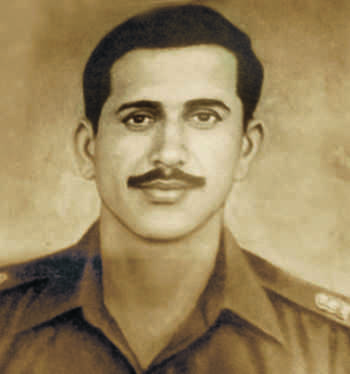
Captain Sandeep Shankla

Col Dilbag Dabas (Retd)

Affectionately called ‘Shanky’ by friends, Capt Sandeep Shankla, son of Colonel JS Kanwar, was born on January 3, 1964, in Hamirpur district.

An alumnus of the prestigious Indian Military Academy, Dehradun, Shanky was commissioned into the 18th Battalion of the Dogra Infantry Regiment.

Militancy started in late 1990/ early 1991 in Kashmir Valley and before the Indian state could realise, it had engulfed the entire Valley and Kashmir was no more a paradise! Pakistan-trained militants made it hell by resulting in mass exodus of Kashmiri pandits and a sizable number of Hindu trading community from the Valley. Tourism, one of the major sources of the regional economy and livelihood for many, was badly hit since the Valley was perceived as a dangerous place to live in. Kupwara district in Jammu and Kashmir was and still is a hot bed of militancy in the Valley. It was at that time that the 18th Dogra Battalion was inducted into the Valley for anti-militancy operations.

After a detailed study of the terrain, the modus operandi of militants and expected support from the local population, the 18th Dogra Battalion got on to the job it was sent for — to cordon, search, apprehend or eliminate terrorists from its area of responsibility. During its anti-militancy operations in the Valley, the battalion did a commendable job, though at unavoidable cost. During one such operation, Captain Sandeep Shankla, the leader of the Quick Reaction Team, single-handedly killed nine militants and under his inspirational leadership, the team apprehended 22 hardcore terrorists.

For his inspirational leadership and unparalleled act of bravery, Captain Sandeep Shankla was awarded the Ashok Chakra posthumously. 

His act of bravery recorded in the War Diary of 18th Dogra battalion reads: Captain Sandeep Shankla was the leader of the Quick Reaction Team (QRT) of the 18th Dogra Battalion deployed in counter-militancy operations in Jammu and Kashmir. On August 8, 1991, he learnt about the presence of a large number of militants at Zafarkhani village in Kupwara district in north Kashmir. The intelligence input was authentic and needed urgent action before the terrorists could move out to some other hideout. Leading from the front, Captain Sandeep Shankla approached the village and immediately cordoned off the area and told the militants to surrender. Finding themselves trapped, the militants opened indiscriminate firing and lobbed hand grenades. The Quick Reaction Team also retaliated and in the encounter, Captain Sandeep Shankla suffered bullet injuries. However, without caring for himself, he continued the operation and single-handedly killed nine militants. Before fleeing from the scene, a terrorist shot Captain Shankla on the abdomen and also hurled two hand grenades. Grievously wounded for the second time, Shanky, though in acute pain, threw back one of the two hand grenades hurled at him and rescued his colleague, who had sustained injuries during the cross fire. However, due to excessive loss of blood, the brave officer succumbed to his injuries.”

Captain Shankla lived and died fearlessly. For his inspirational leadership, unmatched gallantry and camaraderie of the highest order in the face of the enemy, he was awarded the Ashok Chakra, the highest peace-time military decoration, equivalent to the Param Vir Chakra awarded during war time.

Himachal Pradesh, a very small state, with a population just about 1.6 per cent of the Indian total, has given to the Indian Army 14 Maha Virs (MVC), 66 Virs (Vr C) and a large number of brave-hearts, who have won Sena Medals and other gallantry awards. Among the 77 bravest of the braves (winners of Param Vir Chakra and Ashok Chakra), seven of them have been nurtured by Himachali soil. Undoubtedly, Himachal is a nursery that produces and nurtures the future brave-hearts.

Ashok Chakra, the highest peace time military decoration, equivalent to Param Vir Chakra during war time, is awarded for the most conspicuous act of bravery or some act of daring or pre-eminent valour or self-sacrifice other than in the face of the enemy on land, at sea or in the air.

Act of bravery in 18th Dogra battalion War Diary reads…

Captain Sandeep Shankla was the leader of the Quick Reaction Team (QRT) of the 18th Dogra Battalion deployed in counter-militancy operations in Jammu and Kashmir. On August 8, 1991, he learnt about the presence of a large number of militants at Zafarkhani village in Kupwara district in north Kashmir. The intelligence input was authentic and needed urgent action before the terrorists could move out to some other hideout. Leading from the front, Captain Sandeep Shankla approached the village and immediately cordoned off the area and told the militants to surrender. Finding themselves trapped, the militants opened indiscriminate firing and lobbed hand grenades. The Quick Reaction Team also retaliated and in the encounter, Captain Sandeep Shankla suffered bullet injuries. However, without caring for himself, he continued the operation and single-handedly killed nine militants. Before fleeing from the scene, a terrorist shot Captain Shankla on the abdomen and also hurled two hand grenades. Grievously wounded for the second time, Shanky, though in acute pain, threw back one of the two hand grenades hurled at him and rescued his colleague, who had sustained injuries during the cross fire. However, due to excessive loss of blood, the brave officer succumbed to his injuries

(The writer is a veteran Gunner, 6 Field Regiment)


Air force, navy stare at fund crunch next fiscal

HARD-PRESSED Money allocated in interim budget not enough to meet liabilities

NEW DELHI: The Indian Navy and the Indian Air Force will not have funds to pay for platforms and equipment they have agreed to buy (or have actually bought) in the past years in the coming financial year 2019-2020, unless the government allocates more money to them.

The Indian Army is better off, but in general the forces face a cash crunch, a senior defence ministry official, who did not want to be named, said.

The official’s assessment, corroborated by analysts and other experts HT spoke to, is based on the capital expenditure allocated to the forces in the interim budget 2019-2020, and their so-called committed liabilities towards capital purchases.

Defence minister Nirmala Sitharaman has already been briefed about this and has taken it up with the finance ministry, this person added.

A defence ministry spokesperson did not respond to a query seeking comment.

All told, the interim budget allocates ~1.03 lakh crore towards the capital expenditure of the three forces.

Of this, the Indian Navy has been allotted ~23,156.43 crore. The committed liabilities for capital acquisition of the Indian Navy is ~25,461 crore, a second senior official dealing with the budget allocation in the ministry of defence said on the condition

of anonymity. Committed liabilities are instalments paid annually for ongoing capital projects such as building warships, aircraft, missile systems, etc.

“Either we are allocated more funds later in the year, or we need to cut down on expenditure elsewhere if we have to meet all liabilities that we have agreed on,” a senior naval officer said on the condition of anonymity.

The other option is to roll over the liability, a third defence ministry official said, asking not to be identified. According to Amit Cowshish, the former chief financial adviser to the ministry of defence, “rolling over committed liabilities happens, but is not a healthy practice. Importantly,

it reflects poorly on the country.”

The situation isn’t very different for the Indian Air Force which has been allocated ~39,302.64 crore for capital expenditure, but which has committed to paying ~47,413 crore this year, a fourth senior defence ministry official, who did not want to be named, said. Among the big-ticket items IAF is paying for are the Rafale fighters from France.

The army is relatively better off. It has been allocated ~29,447.28 crore. It has a committed liability of ~21,600 crore.

The Indian Army is racing against time to stock up arms and ammunition to be prepared to fight an intense 10-day war. The process received a boost after the terror attack at the army encampment in Uri in 2016.

India is among the largest weapons importer in the world, according to think-tank Stockholm International Peace Research Institute (SIPIRI). Between 2013 -17, the country accounted for nearly 12% of all global imports of arms, SIPRI said in its report released last year. The falling rupee has only added to the difficulties imposed by the funds crunch.

Since April 1 last year, the rupee depreciated 9.4% against the US dollar.

Cowshish claimed that this may be the first time in recent years that this is happening.

“It is a very difficult position to be in. Not providing for committed liabilities didn’t happen in the past,” he said. HT couldn’t independently verify this.

“Importantly, allocation of extra funds is unlikely to go up later in the year,” he added.

Interestingly, the Indian Army is yet to get ~1,487 crore that was sanctioned for strengthening perimeter security of encampments and installations, such as the one in Uri, in Jammu and Kashmir and the north-east. This amount was promised after terrorists stormed the Sunjuwan camp, the base of the 36 Brigade, last February. As many as 11 soldiers and one civilian died in the attack apart from four terrorists who stormed the camp.


Defence Ministry reacts on reports of Army’s TA/DA being put on hold, says no shortage of funds

Defence Ministry reacts on reports of Army's TA/DA being put on hold, says no shortage of funds

NEW DELHI: Reacting to some media reports that the Army will no longer process travelling and dearness allowance (TA/DA) and advances and claims of the officers, Defence Ministry has issued a clarification stressing that adequate funds stands allocated under all heads, including the heads for temporary and permanent duty.

The Defence Ministry also said that the shortfalls, if any, are not permanent and additional money will be provided if need arises. The Army pays temporary allowances to officers when they travel for purposes such as tours and training.

“At times, however, the allocated funds to specific head, which is based on predicted/ envisaged expenditure, may fall short of the actual expenditure. These shortfalls are only temporary and are resolved through routine reappropriation. Additional funds will be provided if necessity arises,” the Defence Ministry said in a press release.

A Defence Ministry spokesman told PTI that the news is completely baseless and the hype created around it is unnecessary.

Some news articles were published on February 4 on the notification by Principal Controller of Defence Accounts (PCDA), Pune, that due to insufficient funds available under temporary and permanent duty heads of Army officers, no TA/DA advances and claims of the officers can be processed till receipt of sufficient funds under the relevant heads.


Last copter from Afghanistan by Lt Gen Syed Ata Husnain

Helicopter

In the last few years the term ‘last helicopter’ has been synonymous with US withdrawal of its remaining rump military and civil elements from any expeditionary deployment abroad.

It originated with the final stages of the US pullout from Saigon, reportedly from atop the US embassy building by helicopter, at the end of the Vietnam War.

That is why when reports poured in last week of a possible US-Taliban deal over a full US pullout from Afghanistan, the first thoughts reflected on the potential of the last helicopter flying away from Kabul and ending the 17-year US involvement in that country.

The question is whether such an eventuality is anywhere near fructification.

The US, Taliban, Saudi Arabia, UAE and Pakistan (the last three being the only ones, which recognised the once existent Taliban government) have over the last few months been negotiating a possible deal, which will allow a full US pullout from its involvement in Afghanistan.

“Meetings here were more productive than they have been in the past. We made significant progress on vital issues,” Zalmay Khalilzad, the US special representative for Afghan reconciliation, tweeted after six days of talks with the Taliban in Qatar in which Saudi Arabia and UAE were not present. Presence of some Pakistani representation remains unconfirmed.

The Afghan National Unity Government (NUG) led by President Ashraf Ghani is marked by its absence at the supposed conflict termination talks, primarily because of Taliban objections. It is too early to make any big deductions from the leaked and stated results, which appear at best tentative.

But the fact that some progress has been made in the six days of negotiations at Qatar is obvious because, at the end of it, Zalmay Khalilzad headed to Kabul for discussions with President Ashraf Ghani.

There are several issues that remain sticking points. It starts with the absence of the NUG itself, as the Taliban refuses to talk with its representatives, possibly out of fear of revealing weaknesses and legitimising an entity it opposes tooth and nail.

Ashraf Ghani has made genuine and sincere efforts to be a part of the negotiations. The Taliban also knows that the NUG’s absence will force the US to remain uncertain.

The Taliban is deeply suspicious of US intent. As a non-state entity, it is difficult to negotiate with, as it is not bound by conventions and rules; there can be no certainty that the Taliban will honour an accord in total.

The presence of Pakistan, Saudi Arabia and UAE is the guarantee that the US seeks for implementation of a negotiated settlement.

It appears that the two sides may have agreed to a framework deal, which may then lead to a more committed intra-Afghan dialogue. The relative seriousness of the Taliban commitment to talks is reflected by the presence of Baradar Akhund, now considered as the virtual deputy in the Taliban hierarchy.

What probably will hold back the talks from progressing to a breakthrough level is the Taliban strategy of continuing to fight while negotiating. The US, hamstrung by a 17-year-old costly war, is unable to urge the Taliban to enter a ceasefire before talks.

It does remind one of a similar situation existing in the Indo-Pak environment, where the Indian government has steadfastly refused to talk with Pakistan that backs proxy terror against it.

The Taliban possibly appreciates that the greater its domination of the security environment, the more it can squeeze from the US. In fact, there could be expectations of a renewed annual spring offensive in 2019, which usually results in a large number of casualties to the Afghan security forces that have been on an average losing 7,000-8,000 men annually in the last few years.

Conceptually, US strategy has harped on operations being fought and led by Afghans themselves, but it has consistently refused to adequately arm them with weapons considered appropriate to stem the Taliban’s frequent offensives.

A full US withdrawal without adequate safeguards of a better armed and equipped Afghan security forces, is the surest opening to civil war with only one anticipated end.

The other issue on which the talks would be focused on is the duration for a complete withdrawal. A progressive drawdown will give President Donald Trump the political leverage he seeks and yet continue the support to the Afghan National Army (ANA) and the NUG.

The US can make a quick exit without an agreement and leave behind a mess, which will only aid in advancing the interests of organisations such as ISIS that remains perched somewhere observing the situation and ready to exploit the slightest opportunity. It could then be a repeat of the conflict termination witnessed in Iraq with resultant chaos and emergence of the ISIS.

Daniel Coats, US Director of National Intelligence, has expressed his apprehensions about the situation in South Asia due to the upcoming Indian and Afghanistan elections and in particular, has reflected on the relative insecurity of nuclear resources within Pakistan.

The duration till May 2019 and a little beyond is being considered by the international community as a period of uncertainty.

With the state of Pakistan’s economy and its reluctance to rein in all extremist elements, the underlying message in Coats’reflections also points to the possibility of turbulence within Pakistan.

This, in the light of intended US withdrawal, is likely to be viewed as advantage Taliban.

India finds itself out of the mainstream parleys and Pakistan has thrived in driving uncertainty by first calling for Indian involvement (recall Pakistan Foreign Minister Shah Mahmud Qureshi’s earlier statement about the need for India to be a part of the negotiations) and then working against the same.

In the light of this, should India open some form of engagement with the Taliban to develop options for a post-US Afghanistan? Prudence does point towards following such a course, but given the current strong position the Taliban finds itself in, it is uncertain whether it will wish to upset the cards, all of which seems to be falling in its favour.


Lt Gen Ranbir visits Ladakh

Tribune News Service

Jammu, February 3

Lt Gen Ranbir Singh, Northern Command chief, visited forward locations in western Ladakh on Sunday.

He was briefed on the operational readiness being maintained in the sector.

He met and interacted with troops deployed in some of the most hostile terrain and adverse weather conditions in the world. He appreciated and complimented the troops for their dedication and tenacity even in these challenging circumstances and urged them to uphold the highest standards of professionalism of the Army.

The Northern Command chief was accompanied by the General Officer Commanding, Fire and Fury Corps, and General Officer Commanding, Forever in Operations Division.


Lt Gen Ranbir in Valley, briefed on state security

Lt Gen Ranbir in Valley, briefed on state security

Lt Gen Ranbir Singh.

ibune News Service

Srinagar, January 30

Northern Command chief Lt Gen Ranbir Singh arrived in Srinagar on Wednesday to review the prevailing security situation in the region, a spokesman for the Srinagar-based 15 Corps of the Army said.

The Northern Command chief was briefed by Chinar Corps (15 Corps) Commander Lt Gen AK Bhatt at the Badami Bagh Cantonment on the major operational, informational, logistical and administrative aspects pertaining to the Corps and about the current situation, including the recent counter-terrorist operations, the spokesman said.

Lt General Ranbir lauded the exemplary synergy among all security forces and complimented the troops for their relentless efforts and selfless service in bringing peace and tranquillity in the Valley, the spokesman said.


Army Chief meets Parrikar, enquires about his health

Army Chief meets Parrikar, enquires about his health

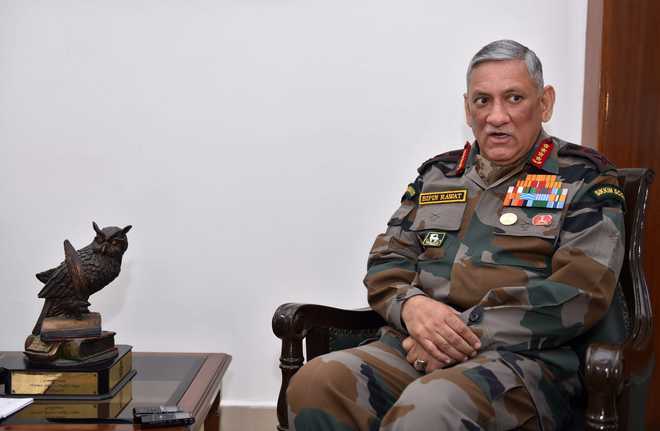
Gen Rawat described it as a courtesy visit. PTI file

Panaji, January 31

Army Chief General Bipin Rawat on Thursday met Goa Chief Minister Manohar Parrikar at the state Assembly complex here and enquired about his health.

Rawat described it as a courtesy visit.

“I have come here to enquire about the health of Parrikar. It was just a courtesy visit,” Rawat said after meeting the chief minister, who is also a former defence minister.

Parrikar, 63, has been suffering from a pancreatic ailment. He has been attending the ongoing budget session of the state Assembly.

The Chief Minister presented the state Budget in the House on Wednesday and said, “I am presenting the Budget in ‘josh’. The ‘josh’ that is too high, very high, and fully in ‘hosh’”.

Congress president Rahul Gandhi had also met Parrikar in the Assembly complex on Tuesday and enquired about his health.

Last week, veteran BJP leader L K Advani had also met the ailing Chief Minister. PTI


86-year-old ex-serviceman prepares youngsters for R-Day function

86-year-old ex-serviceman prepares youngsters for R-Day function

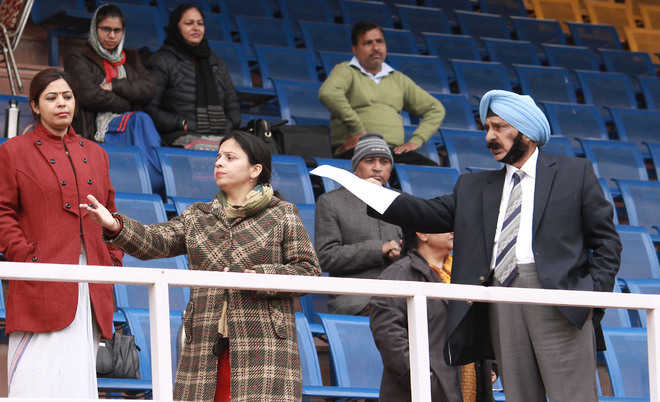
Lt Col Manmohan Singh (retd) supervises a rehearsal for the R-Day parade at Guru Gobind Singh Stadium in Jalandhar. Malkiat Singh

Deepkamal Kaur

Tribune News Service

Jalandhar, January 22

An 86-year-old ex-serviceman Lt Col Manmohan Singh (retd) can be spotted standing for four to five hours at Guru Gobind Singh Stadium daily as he handles about 2,600 youth rehearsing for the forthcoming Republic Day function.

Even when it was raining heavily this morning, the tough taskmaster ensured that at least some part of rehearsal could be conducted.

“I cannot just spare even a single day of practice at this stage. So, I ensured that all 1,500 students who are a part of the parade came and practised in the sheds,” he said.

His job just did not end there. Lt Col Manmohan Singh kept calling all school and college heads asking them to send children for the practice of cultural events under sheds at stadium.

As most tried to avoid sending children giving excuse that it was raining and attendance was less than 50 per cent, he still managed to persuade some and get some cultural performances practised in covered area even today.

The level of commitment of the officer can be seen from the fact that it is for the past consecutive 26 years that he has been supervising rehearsals for R-Day and the Independence Day at the stadium. Owing to his leadership, training skills and insistence of maintaining perfection in all programmes, the administration also entrusts him with organising Armed Forces Flag Day function.

He ensures that all children coming for the parade get two bananas and a kinoo as refreshment daily before they leave.

“After I make them practice their items again and again. But with me there for 10 days, I am sure that they also learn lessons on ethics of life and discipline. The rehearsal sessions with youth rejuvenates me too for the rest of the year,” he added.

Having opted for voluntary retirement in 1986-87, he was picked by the then local administration for the post of Deputy Director Local Bodies. Here too, he worked for 26 years till 2012 wherein he had imparted training to 55,000 youth at various camps, organised for free for entry into police, defence and paramilitary forces.

“While several hundred youth, who took training under me got jobs, 31 boys got entry into NDA and 11 girls got admission at Officers’ Training Academy. I can proudly recall that the Sainik Welfare teams from 17 states came to my office in those days to see the work I was engaged in,” he said.


Maj Gen Satbir SIngh Jumps into active Politics for political gains under United India::Hidden Ambition exposed

Left-backed ‘Unite India’ announces 9-day anti-BJP protest

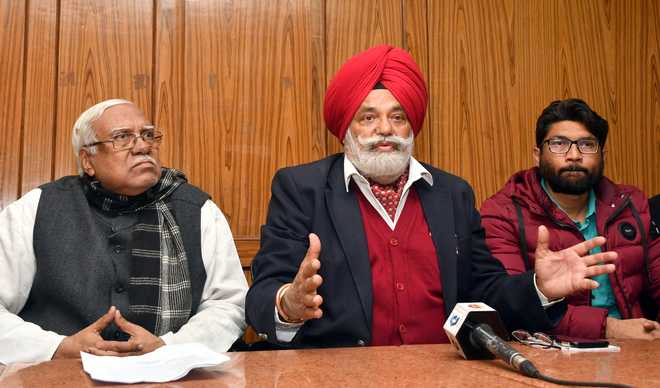
Dalit leader Jignesh Mevani (R), Major Gen (retd) Satbir Singh (C), and All India Kisan Sabha general secretary Hannan Mollah(L) addressing a press conference in New Delhi on Thursday. Tribune photo: Manas Ranjan Bhui

Ravi S. Singh
Tribune News Service
New Delhi, January 24

The Left has announced an nine-day sit in protest that will unite various farm organisations and civil right groups to protest against the Bharatiya Janata Party (BJP) months before the country holds general elections.

Organised under the banned ‘Unite India’, the left-led protest has identified 15 core issues that it will demand are included in the anti-BJP front for the upcoming election. The protest is scheduled to begin on January 30, and will overlap the last Budget Session under the current regime.

Budget session for a vote-on-account begins January 31. This will be an interim budget until the new government gets voted in.

General elections are due for April-May this year.

“All political parties except BJP has been invited to attend the agitation on its concluding day to express their views on the issues,” Hannan Molla, a seven-time MP and member of the Communist Party of India (Marxist)’s farmer wing All India Kisan Sabha(AIKS), said on Thursday.

Independent MLA from Gujarat Jignesh Mevani, and Satbir Singh, member of Indian Ex-Servicemen Movement for OROP Major General (retired)—which will also be part of the protest—said the incumbent Union government has disappointed youth and ex-servicemen.

“The government is promoting atrocities against the dalits and minorities,” Mevani said.

Unite India is an umbrella body powered by the AIKS and other Left-wing organisations. It was floated in July 2018 to launch a grassroots movement.

“As we approach the 2019  General Elections, citizens are stepping up to support an agenda focusing on critical issues in order to collectivity create an uplifting narrative that offers hope for better priorities and direction for the country,” Molla, a key leader of ‘Unite India’ said.

Issues of focus include matters affecting serving armed forces, ex-servicemen, war widows and disabled soldiers, dalits and Advisis, agrarian and rural distress, and hate crimes.


CSIO develops pilot display unit for IAF’s Hawk

CSIO develops pilot display unit for IAF’s Hawk

Vijay Mohan

Tribune News Service

Chandigarh, January 13

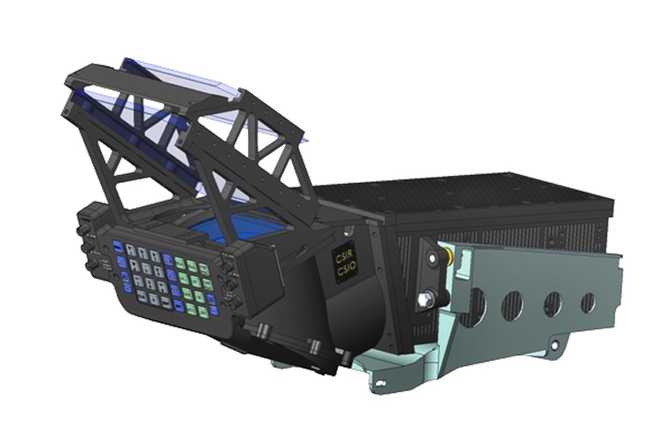
An indigenous pilot display unit (PDU) has been developed for the IAF’s indigenously upgraded Hawk-i advanced jet trainer by the Central Scientific Instruments Organisation (CSIO) here. The instrument, akin to a head-up display unit, is installed above the cockpit’s instrument panel with its screen at the pilot’s eye level and superimposes vital flight and mission parameters on the pilot’s line of vision of the outside world.

The Mission Combat Systems Research and Design Centre of Hindustan Aeronautics Limited (HAL), Bangalore, had awarded this project to CSIO and the first prototype has been fabricated. It is expected to take to the skies in a few weeks.

The British Hawk entered IAF service in 2008, with 24 aircraft received in fly-away condition and 42 being assembled by HAL. Another 57 Hawks, with some going to the Navy, were to be licence-produced by HAL along with upgrade of the fleet and incorporation of some Indian made components and sub-systems. The upgraded aircraft have been christened as Hawk-i.

The PDU provides a comprehensive flight-symbology display along with ambient vision under all-weather conditions. It displays navigation inputs like altitude, airspeed, angle of attack and artificial horizon, take off and landing data as well as weapon aiming and delivery cues. Since the pilot does not have to change his line of sight or visual accommodation by peering repeatedly at his instrument panel inside the cockpit, the PDU reduces his workload and reaction time, while enabling him to take split-second decisions and enhancing his weapon aiming capability.

It is smaller and lighter than earlier head-up displays developed by CSIO for the light combat aircraft, HAL trainer aircraft and Jaguar. All modern combat aircraft as well as some transport aircraft are equipped with head-up displays.

“The PDU can be operated in different modes that can be selected from a multifunction up-front control panel. In the ‘raster’ mode it displays the real time infrared camera video to the pilot for target seeking, while in the mixed mode, raster video is combined with other information for weapon aiming and target locking along with other flight critical information to the pilot,” Vipan Kumar, principal scientist overseeing the project, said.

“In the eventuality of mission computer failure, PDU has dedicated information which can be displayed to the pilot in stand-by-sight mode,” he said.