Sanjha Morcha

All posts by webadmin

Amritsar’s identical twins set to serve different army units

DEHRADUN: For a major part of the last 22 years of their lives, identical twins Abhinav Pathak and Parinav Pathak have been inseparable. Born a few minutes apart, they studied in the same school in Amritsar, went their separate ways to study engineering in colleges in Ludhiana and Jalandhar and then reunited to pursue their dreams of serving in the army at the Indian Military Academy, Dehradun. Now, the brothers will once again be apart as they would be posted in separate army units after graduating from the prestigious institute together, along with 459 other cadets, on Saturday.

VINAY SANTOSH KUMAR/HT■ Abhinav and Parinav at the IMA, Dehradun.

THEY STUDIED IN SAME SCHOOL IN AMRITSAR, WENT TO SEPARATE COLLEGES AND THEN REUNITED IN IMA

At the IMA’s passing-out ceremony, the brothers had several tales to share about how their similar features would lead to confusing, and sometimes, comical situations.

“Many a times, the drill instructor would call me instead of Parinav and viceversa. Also, the instructor would pass on training instructions meant for my brother to me,” said Abhinav, the older of the two.

He also recalled how the mess butler would confuse him for his brother, asking him to have his meal right after he had finished with one.

“Sometimes, I would have just come out after eating my food but the butler, taking me for Parinav, would ask me: ‘Are saab khana to kha lijiye?’ (have you had your meal?). This would make me laugh.”

Parinav, too, has his mess stories to share, like how he would often sneak into his brother’s less-crowded mess without the fear of being identified. “At times, when I would see my company’s mess table crowded, I would go to my brother’s mess which had fewer cadets having food. Nobody was able to identify me,” he added with a hearty laugh. They were in different companies in the academy and had different mess.

“The only time anyone was able to tell us apart was when we would wear our (PT) uniform or through our respective company batches on the collar,” shares Abhinav, the more talkative of the two.

Abhinav will join Army Air Defence Corps and Parinav, Army Aviation Corps. “We have achieved whatever we have, together. This makes us extremely proud,” Parinav said


Punjab soldier dies under mysterious circumstances in Kashmir

Punjab soldier dies under mysterious circumstances in Kashmir

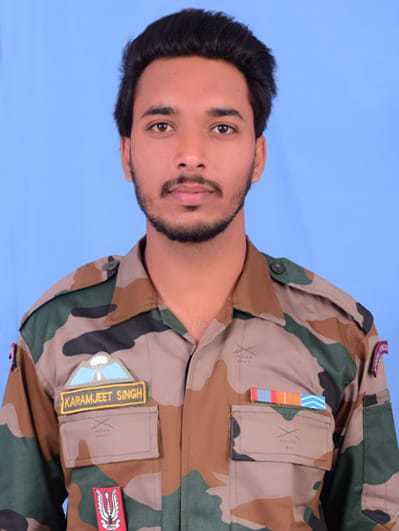
Karamjeet Singh. Tribune photo

Tribune News Service
Srinagar, June 7

A paratrooper of the 23 Para regiment, posted at Muchpora in Kellar area of south Kashmir’s Shopian district, allegedly committed suicide using his service rifle while he was on duty on Friday.

The slain solider has been identified as Karamjeet Singh from Hafizabad village near Chamkaur Sahib.

A police official from Shopian district confirmed that Singh was killed.

“We have registered a case and investigation in this regard has been taken up,” the police official said.

An Army officer in Srinagar, however, said the paratrooper died in an accidental fire when his services rifle went off.


18 officers decline key Army course

It has been independently learnt that of the 18 Colonels, two belong to the Army Air Defence (AD) while two belong to The Corps of Electronics and Mechanical Engineers.

Hyderabad: As many as 18 military officers at the ‘Colonel’ rank have refused to undergo the prestigious Higher Command Course (HC) and the Higher Defence Management Course (HMDC) despite being selected on the basis of their performance as commanders and their 18 years’ service in the Indian Army.

The coveted HDMC is held in Secunderabad, while the HC is conducted in Mhow (Dr Ambedkar Nagar, Indore). These courses are undertaken by Colonels prior to being promoted to the Brigadier rank but do not guarantee the promotion. So far, 18 officers have expressed their unwillingness to participate in the courses, which means that they don’t desire to be promoted. Alarmingly, the number of officers opting out of the programmes this year happens to be the highest in over a decade.It has been independently learnt that of the 18 Colonels, two belong to the Army Air Defence (AD) while two belong to The Corps of Electronics and Mechanical Engineers.

The HC and HDMC are both 11-month-long courses during which, officers are exposed to warfare simulation, the latest technology, and more. However, after the completion of the course, officers have to sign a 5-year bond with the Indian Army, thereby committing to serving the forces until the completion of the bond period.

Additionally, after completion of the course, officers are posted in the forward lines, otherwise known as ‘high-pressure appointments’, which demand tremendous amounts of time and dedication. Several officers have been reported to be suffering from health issues following these appointments.

“The reason for this could be the elimination of the ‘structured marking system’ in 2017. As per the policy, the HC and HMDC assessments involved the addition of certain points for the promotion of officials to the Brigadier rank. However, the system was scrapped in 2017. And 178 officers apply for the 150 vacant Brigadier positions every year, which implies that promotion isn’t guaranteed,” said an officer on the condition of anonymity.

A highly placed source told the Deccan Chronicle, “Why should one want to put their effort and achievements to waste when the Armed Forces are constantly being demeaned by the ever conspiring ‘babus’ of the Ministry of Defence? It wouldn’t be very surprising if the mid-level officers chose a well-paying corporate job instead.”

It may be further noted that a high number of Colonels seek retirement after 20-21 years of service. “Most such officers are between 43 and 47 years of age and while some choose to stay, a large number retires. Promotion from the rank of a Major to the Lt Colonel rank is rather rapid, so pretty much everyone makes it to the Lt Colonel rank. However, promotions upward of the Lt Colonel rank are a challenging affair. Many miss out on the promotion board. Some choose to retire and seek opportunities in the outside world. With the high growth in the economy and the rising demand for highly qualified officers, many opt to take up corporate jobs.

In addition to the above, there could be several other personal reasons for officers seeking premature release after the completion of 20 years of service.


China’s course correction by Manoj Joshi

China’s course correction

Half-truth: The notion that BRI encourages ‘debt traps’ is somewhat over-the-top.

Manoj Joshi
Distinguished Fellow, Observer Research Foundation

The Chinese Belt and Road Initiative (BRI) was announced by President Xi Jinping at a function in Kazakhstan in 2013. It began as a Chinese national project, funded with Chinese money to serve Chinese national goals. Six years down the line, it is mutating and imposing a Chinese-designed layer on to the existing pattern of globalisation.

It has taken aboard criticism that its projects were creating debt traps to make countries vulnerable to Chinese geopolitical designs. Last week the second Belt and Road Forum (BRF) for International Cooperation was held in Beijing, providing us an outpouring of speeches, opinion pieces and research. It  was as much a stock-taking exercise as the platform to announce the new directions to what is now a set Chinese policy that  will impact the world in the coming decades.

These new directions have been shaped by the criticism of the BRI in India and other western countries, as well as the issues raised in the ongoing trade and technology war, where the US has charged Beijing with denying western companies market access, subsidising the activities of its state-owned enterprises abroad, compelling companies to make forced technology transfers and using opaque policies in issuing tenders and so on.

In his speech inaugurating the BRI Forum, President Xi signalled that China was willing to adjust its policies and shape a BRI which would emphasise international collaboration, transparency, high-quality products, procedures and processes, enhance market access, and promote imports of goods from developed and developing countries.

It must be noted, to start with, that the criticism of BRI has been somewhat over-the-top. Take for example the notion of that it encourages ‘debt traps’. For India this has been a major issue because of the manner in which the Sri Lankan port of Hambantota slid into the hands of a Chinese company under a 99-year lease. In an article in the New York Times last week, Deborah Brautigam of Johns Hopkins University noted that specialists studying the subject have found ‘scant evidence’ that Chinese banks were lending to projects that had little prospect of profit for the sake of gaining strategic advantage for China. Looking at the data of two major US institutions studying the subject, she concluded that ‘the risks of BRI are often overstated or mischaracterised’. In both Latin America and Africa, fears that China ‘was deliberately preying on countries in need are unfounded’.

Even so, Beijing has moved to address these issues relating to the

$440 billion worth of loans it has so far provided for BRI projects. At a meeting of finance professionals at the second BRF, Yi Gang, China’s Central Bank Governor, acknowledged the need for China to address the issue of the countries to service their borrowings at the time they were given the loans. At the same meeting, Li Kun, finance minister of China, said his country would develop a ‘debt sustainability analysis framework’ which will use World Bank and IMF methodology as well to ensure that risks from debts did not go out of control. Both these measures have won praise from Christine Lagarde, IMF Managing Director, who was present at the meeting.

The new financing criteria are also designed to attract foreign investment partners in the BRI financing. Western firms have always sensed the opportunities that the BRI would present. Their problem was that they were more or less frozen out of the action by the Chinese who tilted the playing field against them. However, and this is to the credit of President Trump, those walls are now crumbling and the Chinese are understanding that it may actually be advantageous for them to have others share risks as well as the gains.

Another major development in the BRI has been the evolution of the ‘third party’ cooperation model aimed at promoting shared development and spreading China’s risks. The origin of this model lies in the political decision of Japan to cooperate with BRI in practice, if not in name. As part of this, the two countries agreed in 2018 to jointly execute 50 infrastructural projects across Asia. This would combine China’s financial support and production capacity, with Japan’s rich overseas experience, advanced technology and risk management mechanisms. The UK has also expressed interest in getting involved in such projects. Both London and Tokyo figure that BRI is going to be around for a while and to oppose it is to deny their own companies the opportunity for profit. In the coming period, as the Chinese make their policy more open and market- friendly, other private players are also likely to jump in.

Chinese-led globalisation is a fact of life. BRI has already created facts on ground—rail lines, highways, ports and pipelines—which cannot be denied, leave alone reversed. Now, facing economic and political headwinds from the US and Europe, China is readjusting its policy. A great deal depends on the sincerity with which it can implement the changes it has spoken about.

Notwithstanding everything, BRI remains a Chinese-led project aimed at securing Chinese goals. They are not in it for altruistic purposes, but to enhance their own economic and political standing in the world. That is what all countries would do if they were in China’s position.

But where BRI v1.0 provided a vision of a stark approach aimed at maximising China’s advantage, v 2.0 indicates that Beijing has understood that it cannot be a zero-sum game and that if it wants its boat to rise in the harbour, it has to ensure that the other boats, too, do the same.

The writer was recently in Beijing to atten



A salute to the Jallianwala Bagh martyrs Region comes together as The Tribune pays tribute to the heroes who impacted history

A salute to the Jallianwala Bagh martyrs

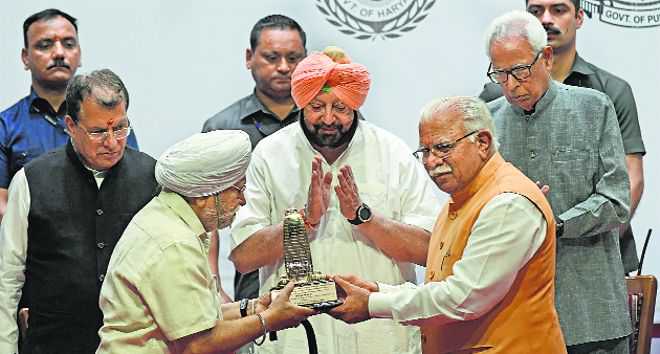
Haryana Chief Minister Manohar Lal Khattar presents a memento to Surinder Singh, nephew of Sunder Singh, who was martyred at the age of 17 at the Jallianwala Bagh, during a function organised by The Tribune Trust to commemorate the centenary of the massacre at Bhargava Auditorium, PGI, Chandigarh, on Saturday. Former J&K Governor and The Tribune Trust President NN Vohra, Punjab Chief Minister Capt Amarinder Singh and Himachal Pradesh Education Minister Suresh Bhardwaj are also seen. tribune phot


We need to raise a memorial to hundreds of freedom fighters who went unrecognised in the annals of history, Punjab Chief Minister Capt Amarinder Singh said here today, addressing the centenary commemoration of the Jallianwala Bagh massacre organised by The Tribune Trust.The Tribune played a historical role in awakening the people across North India, before and after the massacre. It faced the wrath of the British Raj for speaking out the truth and reporting extensively on the episode.

 Capt Amarinder exhorted researchers to make correction in aberrations. He cited the example of the casualty figure of 379 given by the British after the April 13, 1919, carnage. “The actual number is much higher,” he said. “When on an official tour of the Andaman and Nicobar Islands, we found there was no record on the hundreds of Punjabis who suffered torture there. I hope Vice Chancellors and researchers help us correct the narrative of our history.”Haryana Chief Minister ML Khattar said the danger to the freedom India had earned after incalculable suffering today came from terrorism, communalism and casteism. “The only tribute that the Indians can pay to the martyrs of Jallianwala Bagh firing is to rise above divisive lines of religion, region and caste to build a united India.”He said The Tribune was the result of a growing awakening after the 1857 revolt. “Sardar Dyal Singh Majithia, a social reformer, established The Tribune Trust in 1881 in Lahore to contribute his bit to the struggle.”

The function began with a one-minute silence in memory of the Jallianwala martyrs.

Himachal Pradesh Education Minister Suresh Bhardwaj said: “Inspired by The Tribune initiative, Himachal Pradesh will contribute to raising a memorial to freedom fighters at Amritsar. We expect Punjab and Haryana to join in.”

President of The Tribune Trust NN Vohra said the Jallianwala tragedy kindled the fire for freedom that was never extinguished till the country became free. Mentioning martyrs Bhagat Singh, Rajguru, Sukhdev and Udham Singh, he said an inspirational environment was set into motion by the Amritsar tragedy.

The national events that followed saw the emergence of Mahatma Gandhi, who took charge of the situation. He said today’s event was an occasion to remind ourselves about the role of the media which at that point of time were essentially newspapers.

The Tribune Editor Rajesh Ramachandran, in his welcome address, said: “Jallianwala Bagh was an epochal event that changed the course of Indian history. It made Gandhi a Mahatma. Today is also an occasion to remember The Tribune’s scholarly contribution during the freedom struggle. The resolve of the newspaper was best shown by Editor Kalinath Ray, who dared to show the real face of the British rule.”

Union Minister of State for Social Justice and Empowerment Vijay Sampla and Member of Parliament Kirron Kher, Speakers of the Punjab and Haryana Vidhan Sabhas Rana KP Singh and Kanwar Pal Gujjar, Punjab Health Minister Brahm Mohindra, Finance Minister Manpreet Badal, Housing Minister Tript Rajinder Singh Bajwa, Animal Husbandry Minister Balbir Singh Sidhu, PWD Minister Vijay Inder Singla, Sports Minister Rana Gurmeet Sodhi and Haryana’s Health Minister Anil Vij also attended the function.

A book “Martyrdom to Freedom: 100 years of Jallianwala Bagh” edited by The Tribune Editor Rajesh Ramachandran, with a foreword by The Tribune Trust President NN Vohra, was released on the occasion.

Four descendants of the Jallianwala martyrs were honoured — Sunil Kapoor, great grandson of Wasoo Mal; Surinder Singh, nephew of martyr Sunder Singh; Rajender Sharma, great grandson of martyr Amin Chand, and Mahesh Behal, grandson of Hari Ram Behal.

Managing Director of Rupa Publications Kapish Mehra was felicitated on the occasion. Senior television news anchor Rini Khanna conducted the stage.

The Punjab and Haryana governments were participants with The Tribune in the centenary commemoration.


Pakistan to release 360 Indian prisoners as ‘goodwill gesture’

Pakistan to release 360 Indian prisoners as ‘goodwill gesture’

Photo for representational purpose only.

Islamabad, April 5

Pakistan on Friday announced that it will release 360 Indian prisoners, mostly fishermen, this month in four phases, as a “goodwill gesture” amidst tensions between the two countries after the Pulwama terror attack

Foreign Office spokesperson Mohammad Faisal said the process of releasing the Indian fishermen will start on April 8 when 100 prisoners will be released. In the second phase on April 5, another 100 will be released. In the third phase on April 22, another 100 will be released and in the fourth and last phase on April 29, the remaining 60 prisoners will be released.

“We are doing it as goodwill gesture and hope that India will reciprocate it,” Faisal said while addressing his weekly briefing to the media in Islamabad.

The spokesperson said currently there are 347 Pakistani prisoners in India and 537 Indian prisoners in Pakistan.

“Pakistan will release 360 Indian prisoners, of which 355 are fishermen and 5 are civilians,” he said.

The fishermen will be taken from Karachi to Lahore and handed over to Indian officials at the Wagah border.

Anwar Kazmi, a spokesman of Edhi welfare organisation, which helps the released fishermen with clothes and food, told PTI from Karachi that the process of releasing the fishermen will start from Sunday.

“First a group of 100 fishermen will be taken from Karachi to Lahore on Allama Iqbal Express on Sunday,” he said.

They are likely to be handed over to India on Monday at Wagah. They spent months and sometimes years before repatriated.

Pakistan and India frequently arrest fishermen as there is no clear demarcation of the maritime border in the Arabian Sea and these fishermen do not have boats equipped with the technology to know their precise location.

Owing to lengthy and slow bureaucratic and legal procedures, the fishermen usually remain in jail for several months and sometimes years.

Pakistan’s announcement to release the fishermen came amidst escalating tensions between India and Pakistan after a suicide bomber of Pakistan-based Jaish-e-Mohammed (JeM) terror group killed 40 CRPF personnel in Jammu and Kashmir’s Pulwama district on February 14.

India launched a counter-terror operation against a JeM training camp in Balakot in Pakistan’s Khyber Pakhtunkhwa province. PTI


Can’t have different medical standards for Generals: AFT

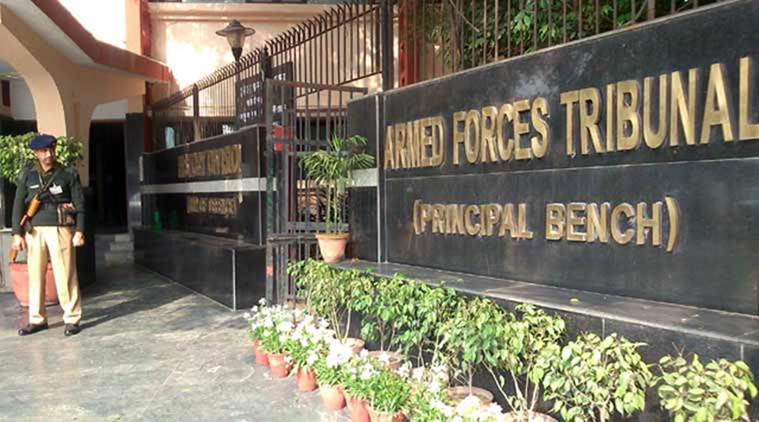
The Principal Bench of the AFT made these comments in its judgment in the case of a Brigadier of the Army Education Corps (AEC) who had not been promoted to the rank of Major General despite being approved by a promotion board because he was medically unfit.

punjab, indian army, armed forces, armed forces tribunal, indian express news

The bench comprising Justice Virender Singh and Lt Gen Sanjiv Chachra (retd) has said that medical fitness for promotion to higher ranks is an important facet of military services considering the nature of duties performed. (Source: File)

The Armed Forces Tribunal (AFT) has ruled that there cannot be different set of medical standards for promotion for Combat Arms and Services in the Army in any rank, and in particular senior ranks of Major General and above, where they are to “lead from the front” and set examples for others in the organisation to follow.

The Principal Bench of the AFT made these comments in its judgment in the case of a Brigadier of the Army Education Corps (AEC) who had not been promoted to the rank of Major General despite being approved by a promotion board because he was medically unfit. The Brigadier had contended that since the only post, which he was to hold as a Major General was located in New Delhi he could be posted there in his low medical category too.

The bench comprising Justice Virender Singh and Lt Gen Sanjiv Chachra (retd) has said that medical fitness for promotion to higher ranks is an important facet of military services considering the nature of duties performed.

“There is no dispute that the requirement of medical fitness is applied uniformly to Combat Arms, Combat Support Arms and Services, including minor corps. An officer, right from his joining the service till he leaves, is subjected to same medical standards applicable for all officers,” the bench said.

It added that to question the validity of application of similar medical standards for all officers in the Army, irrespective of their Arm, Service or their rank, “is to question the organisation, structure and ethos of the Army,” which is not in the realm of the court. “By allowing discretion and liberal application of medical status for promotion or employment to some Arms or Services or specifically to some officers would make the entire policy discriminatory and biased, which shall be detrimental for a disciplined organisation like the Army,” the order read.

The bench said that all officers, at the time of joining the Army, follow the same medical standards and eligibility criteria, irrespective of the Arms or Service that they subsequently serve. Consequently, they take oath to serve at land, sea or air, whenever the situation so demands.

“Medical fitness continues to remain a hallmark of their growth in the Army and their consequent employment as they rise in ranks. Tinkering with this sacred yardstick or questioning the validity of this would shake the very edifice, on which the foundation of the Indian Army is built on. We, thus, have no hesitation to state unequivocally that there cannot and should not be different set of medical standards for promotion for Combat Arms and Service in any rank and in particular senior ranks of Major General and above, where they are to lead from the front and set examples for others in the organisation to follow,” the bench said.

However, the bench has also said that there is a need for the government to re-visit the guidelines set for the classification of officers suffering from hypertension so as to void any ambiguity in future.

The AFT order deals with the new health care system in the Army introduced in 2011, which laid down the policy and medical classification of officers. Under this policy a COPE Coding System was put in place to guide the employability of Army Officers under: (a) C – Climate and terrain restrictions (b) O – Degree of medical observation required (c) P – Physical capability limitation (d) E – Exclusive limitations as per disease. In that, with each alphabet depicting a different level and type of restriction/limitation on the serving officers of the Army.


IAF is grossly under-equipped by Air Vice Marshal Manmohan Bahadur (retd)

Air Vice Marshal Manmohan Bahadur (retd)

Lack of empathy and understanding of an operational requirement due to bureaucratic procedures and attitudes is a cause for concern. In any other country, where the political and bureaucratic climate is cognisant of military urgencies, many heads would have rolled.

IAF is grossly under-equipped

Imperative: Hard power, in quality as well as quantity, is the key to building deterrence to avert future Pulwamas.

Air Vice Marshal Manmohan Bahadur (retd)
Addl Director General, Centre for Air Power Studies, New Delhi

THE Pulwama and Balakot incidents have pushed into the background the report of the Comptroller and Auditor General (CAG) on the Indian Air Force (IAF) acquisitions, of which the Rafale deal hogged the limelight. Despite the favourable Pulwama end state being achieved, albeit temporary, there is an imperative that needs urgent government attention. Tucked away in the CAG report is a cry beseeching a look into what one may call ‘defence distress’, paraphrasing the term from the agrarian and farmers’ distress that every politician is talking about. The last two are vote banks which no politician can be reticent about, as they are leveraged through morchas, hartals and strikes. Unfortunately, when defence distress strikes, it is deadly, and often ‘fatal’ in a way. The Balakot incident demonstrated resoundingly that India has had enough of Pakistan’s support to terrorism; however, it should not divert our attention from the fact that defence pangs are a reality and the tell-tale signs should be recognised and acted upon. There are three pointers that need elaboration; though IAF examples are discussed, the issues are valid for other defence forces too.

Critiquing sub-optimal defence procurement procedures, CAG has commented that the non-conclusion of a usage contract precluded the use of the flight simulator for the C-130 Hercules aircraft till 2016, despite it being ready four years earlier. In the interim, India lost five air warriors and a multi-million-dollar aircraft in 2014, attributed to a training issue. This is the first pointer — lack of empathy and understanding of an operational requirement  due to bureaucratic procedures and attitudes (remember, the simulator was fully ready). In any other country, where the political and bureaucratic climate is cognisant of military urgencies, many heads would have rolled.

The second pointer is of an intangible kind, which, if neglected, shows up with deadly results later. The HAL-built HPT-32 trainer was grounded in 2009 after many accidents, 13 of which were fatal. Many red flags had been raised about the stone-like gliding quality of the HPT after an engine failure (a frequent occurrence). The IAF had pulled along till the proverbial straw fell on the camel’s back and we lost two flying instructors at the Air Force Academy (AFA). The HPT was grounded, throwing the training profiles of rookie pilots into bedlam, and for the next few years a sub-optimal training pattern on the HJT-16 Kiran was followed. The emergency purchase of the Pilatus aircraft revolutionised training; AFA’s flight line was chock-a-block with the gleaming new trainers till 2017 or so when, due to non-finalisation of maintenance contracts, a severe lack of spares ensued. This is the situation even now, as per media reports. However, training has to continue to ensure a regular pilot feed for frontline squadrons and one is sure that cannibalisation (shifting) of spares among aircraft is being done and extension given to parts whose life is expiring. The situation must be similar for some other fleets, too, as many acquisition and upgrade programmes have been inordinately delayed, a fact stated by the Air Chief last month. This unacceptable situation is the second indicator of a serious problem, where lack of funds could be pushing reliability of war- fighting equipment towards an unsafe zone, which may translate into tragic results later.


The third warning is where op-preparedness starts getting affected. Under-equipping of the Indian Army was one of the major causes of the 1962 China debacle. At a recent conference, tears welled up in a retired Lt General’s eyes while narrating the humiliation the armed forces had felt then. “Thank God for the subsequent 1965 Indo-Pak war that brought back some self-respect,” remarked the General. After 1962, the government funded an accelerated re-equipping plan and the victory in the 1971 war bears witness to that effort. However, as per recent media reports, we are on the downslide again with a shortage of fighter squadrons and many critical items; soldiers’ rifles are having to be imported by the fast-track route, ammunition is in short supply, and sniper rifles, Naval helicopters and MiG-29 fighters for the IAF are planned to be imported too. But will these just remain plans, as this year’s defence acquisition budget is insufficient even for previously concluded contracts? Answers to these pointers have a bearing on what happens hereafter.

Will the post-Pulwama happenings deter Pakistan? The answer is an emphatic no. It is time to remember Bernard Brodie, the doyen of strategic thought, who said, “Avoidance of blackmail can be achieved only by demonstrating that our readiness to accept risks need not be and is not less than the blackmailer’s.” 

History shows that adversaries cannot be reformed as per one’s wish but have to be coped with through management strategies in which hard power is vital to prevent blackmail. Addressing defence concerns (though not a vote catcher) is an imperative first step to ‘manage’ Pakistan and simultaneously weigh against China. While short-term responses after the Pulwama attack will be implemented, long-term solutions require tons of money and decades of time spread over many governments. Of the three attributes that determine deterrence to prevent blackmail — resolve, capability and capacity — the Balakot incident demonstrated the first two; the third, dependent on an indigenous arms base, is in short supply. Politicians of all hues need to put their shoulders to the wheel and address defence preparedness in a bi-partisan manner — indigenous defence R&D and manufacture must be kickstarted. Hard power, in quality and quantity, is the key to building deterrence to avert future Pulwamas. Can every political party elaborate, in its election manifesto, what it would do to address defence preparedness? That would indeed be welcome.

Views are personal


IAF flooded with requests by veterans to ‘fight’

Surge in mails after Balakot strike, most willing to quit jobs for Air Force stint again

IAF flooded with requests by veterans to ‘fight’

Ajay Banerjee
Tribune News Service
New Delhi, March 20

The Indian Air Force (IAF) is lately dealing with a new surge of emotions, from its own retired personnel who wish to fight for the nation.

The IAF mailbox — email and normal mail — is flooded with requests from retired officers and airmen offering their services to the IAF, fearing the country may face some “exigency”.

Sources say retired fighter pilots, helicopter pilots, engineers and airmen (IAF nomenclature for jawans and JCOs) have sent in mails detailing their expertise along with rank, name and number held during service. All of them have offered to leave their existing jobs and enterprises and work for the Indian Air Force.

The mails have been trickling in since the air strike at Jaish-e-Mohammed’s Balakot terror camp in Khyber Pakhtunkhwa on February 26 and subsequent air battle over Nowshera/Rajouri in Jammu and Kashmir on February 27 when Wing Commander Abhinandan Varthaman ejected in Pakistan-occupied Kashmir.

While the IAF has not accepted any such request, retired personnel are all in, apparently feeling that the Air Force may need manpower to monitor ground stations, radars, sensors and warplanes would need to be “hot-serviced” for a quick turnaround. All of them are trained men.

Normally, if an exigency arises, the duties would entail ground operations, managing logistics and back-end administration.

Old-timers recollect a similar surge in emotions during the Kargil conflict of 1999.

The IAF, on its part, has war-gamed its manpower needs in case of an emergency and conducted a pan-India exercise “Gagan Shakti-2018” from April 8-22, 2018, to validate it. The exercise was real-time coordination, deployment and employment of air power in a short and intense battle scenario.

During the exercise, more than 11,000 sorties were flown.

Rules for ‘reserves’

  • Under the IAF Act, 1950, those who retire from the IAF are deemed to be on ‘reserve’ for a period of two years after retirement
  • This means, if a war breaks out and the IAF suffers losses, medically-fit ‘reserves’ can be called back to duty
  • The clause of ‘reserves’ does not apply to higher ranks where officers retire at 60 years of age

Let’s not forget IAF’s triumph

Wing Commander Abhinandan Varthaman, who was captured by Pakistan and returned, downed a Pakistani F16 fighter jet, from his MIG 21 BISON, a rare feat.

Let’s not forget IAF’s triumph, Indian Air Force, Pakistan, HAL, Rafale, Pulwama

The precision strike launched by the Indian Air Force on Pakistan based terrorist camps is an indicator of perfection, professionalism and training. The force had been facing flak in recent times over crashes of aircraft and loss of valuable pilots. Alongside it there have been accusations against governments, past and present, for their inability to provide modern aircraft. Simultaneously, HAL had been accused of poor quality, delays in production and development of indigenous aircraft.

While the political battle on Rafale would continue, the Air Force is now the darling of the country. It has given India the retribution its public demanded for the Pulwama terrorist attack. The nation demanded blood and was unwilling to accept India’s diplomatic and economic measures taken against Pakistan after Pulwama.

In addition, its pilot, Wing Commander Abhinandan Varthaman, who was captured by Pakistan and returned, downed a Pakistani F16 fighter jet, from his MIG 21 BISON, a rare feat. This act compromised the invincibility of the F 16. The aircraft used in the strike mission were the Mirage, maintained by HAL and they performed to perfection.

Presently, political parties are battling over the numbers killed in the strike. While the BJP quotes figures between 250 to 300, the opposition questions them. The Air Chief staying away from the controversy stated that the Air Force considers destruction of targets, not the numbers eliminated. He was clear, the Air Force was tasked to conduct a mission, it did so and gave the nation the results. The mission was clean and there was no collateral damage.

The Air Force also provided the government with satellite evidence of the success of the strike. The evidence gave details of the target struck, not casualties caused. In the Air Chief’s opinion, figures do not count. He is right as the strike was intended to send the right message, which has been delivered. It caused ripples within the Pakistani military-politico establishment. Further, his comment that ‘had the aircraft hit only trees, Pakistan would not have reacted’, is a fact.

The reality which is ignored is that for Pakistan to admit a terrorist camp had been struck would be disastrous internationally. India had repeatedly projected the location of this camp to Pakistan, which it continued to deny. The camp was on the radar of multiple nations as those trained there were sent to both Kashmir and Afghanistan. Since there were no civilian and military casualties, they could cover up the strike. The site has yet to be opened to the international media, proving the Indian claim.

The target was on a hilltop. Taking press personnel to the area on another hilltop in jungle terrain is easy. Journalists never possessed exact locations of the camp which was struck. If the journalists had been shown a functioning camp, then questions on the efficacy of the strike could be questioned. Since Indian security agencies had been monitoring the camp for over a decade, evidently earlier governments would also have been aware of the figures present, which they now tend to discard.

In this din of political oneupmanship, the credit which the Air Force deserves is being missed. While nations have reacted to terrorist strikes with air power or even adopted punitive actions against erring neighbours, none has faced the challenge India did in conducting this strike.

Israel is the most quoted nation. Its air force has pounded Hamas targets, but Indians tend to forget that Hamas has neither an air force nor an air defence system. It is an open target with no response mechanism, hence Israel can attack at will. India employed Israeli ammunition, which is designed to penetrate and destroy, reducing collateral damage, which is what Israel does.

Israel has also attacked Iranian targets in Syria, which once again were unsupported by Iranian or Syrian air force. The US has attacked militant and terrorist targets employing air power in Afghanistan, Syria and parts of Africa. In all these cases, the targets lacked credible air defence capability.

The US has targeted terrorist leaders in Pakistan always with a drone strike. The operation to eliminate Osama Bin Laden was a major success and an exception. However, it knew that Pakistan could not hit back at it militarily as the distance was daunting. Neither could its air power strike the US in Afghanistan as it would be termed as a terrorist nation. This worked to their advantage.

For India, Pakistan is a nuclear adversary, which has continuously been playing the nuclear card. In no case would Pakistan permit India to consider itself as powerful as the US. Being a sworn adversary, it would have to respond. Its air power and air defence are fairly powerful, backed by the availability of US F16 aircraft in its inventory. Its air defence system is Chinese manufactured and generally reliable.

For the Indian Air Force to penetrate the system, strike even before the Pakistani air force could be airborne, is a feat which few nations could emulate. The accuracy of the strike shook the Pakistani establishment as there was no collateral damage at all. Hence, Pakistan avoided granting India the honour of admitting its losses. The repulsing of the Pakistani counter-strike and the downing of an F 16, by an aircraft of a lower calibre, was another display of excellence.

This indicated that despite all its losses in training, lack of latest generation of aircraft and pilot trainer jets as also quality issues of the HAL, the training, capability and expertise of Indian pilots is unmatched. It proves the professionalism of the force, which should be respected by the nation.

Somewhere in the battle for number of terrorists eliminated, Rafale and votes, appreciation for the professionalism of the Air Force, which performed to perfection against a nuclear-powered adversary has been overlooked. In days ahead this operation will be studied in military institutions for its masterful planning, deception and execution. Few nations can ever replicate this performance. Kudos to the Indian Air Force.

(The writer is a retired Major-General of the Indian Army)