Considered the eyes and ears of the security forces in J&K, efforts are on to build bridges afresh with Gujjars and Bakerwals to undo a sense of alienation that may have set in
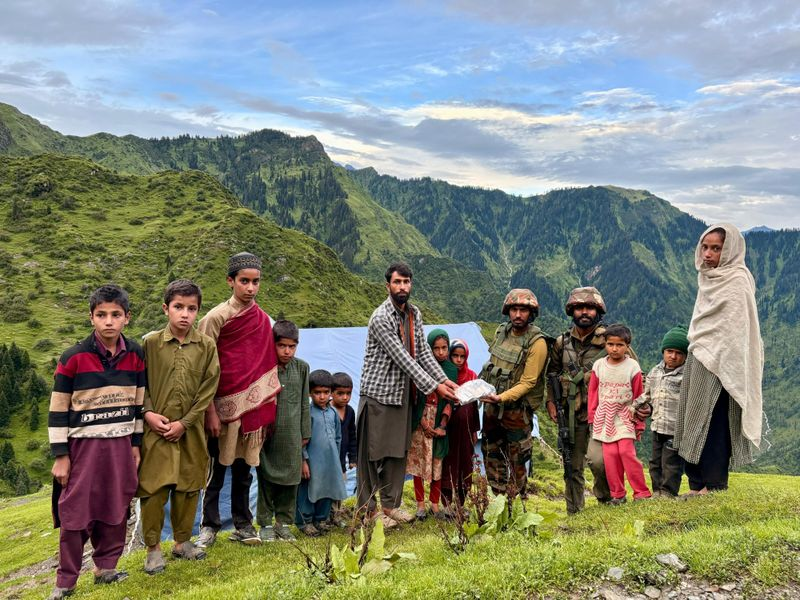

Considered the eyes and ears of the security forces in J&K, efforts are on to build bridges afresh with Gujjars and Bakerwals to undo a sense of alienation that may have set in
Anti-diabetes, psychiatric medicines to cost less

n a move to boost affordability, the government on Saturday fixed retail prices of a range of essential drugs.
The Ministry of Chemicals and Fertilisers notified the move through a detailed order covering 35 medicines marketed by top pharmaceutical companies.
The notification aims to ensure affordable access to essential medicines through price regulation by the National Pharmaceutical Pricing Authority (NPPA).
The pricing decision was made under the provisions of the Drugs (Prices Control) Order (DPCO), 2013, specifically exercising powers under paragraphs 5, 11 and 15 in conjunction with government orders dated May 30, 2013, and November 11, 2022.
The formulations which will now cost less span a wide range of therapeutic categories including anti-inflammatory, cardiovascular, antibiotic, anti-diabetic and psychiatric drugs.
Among the key formulations covered by the price control order are fixed-dose combinations of Aceclofenac, Paracetamol and Trypsin Chymotrypsin, Amoxycillin and Potassium Clavulanate, Atorvastatin combinations and newer oral anti-diabetic combinations like Empagliflozin, Sitagliptin and Metformin.
The price of one Aceclofenac-Paracetamol-Trypsin Chymotrypsin tablet manufactured by Akums Drugs & Pharmaceuticals and marketed by Dr Reddy’s Laboratories has now been fixed at Rs 13, while the same formulation marketed by Cadila Pharmaceuticals is now priced at Rs 15.01.
Similarly, a tablet containing Atorvastatin 40 mg and Clopidogrel 75 mg, widely used for cardiovascular conditions, is priced at Rs 25.61.
Oral suspensions for pediatric use —Cefixime and Paracetamol combinations —have also been included, along with critical medications like Cholecalciferol drops for Vitamin D supplementation and Diclofenac Injection, which has been priced at Rs 31.77 per ml.
The NPPA clarified that the prices fixed were exclusive of Goods and Services Tax (GST), which may be added if applicable. Manufacturers are required to comply with all statutory requirements, issue updated price lists in Form–V through the Integrated Pharmaceutical Database Management System (IPDMS) and submit the same to the NPPA and state drug controllers.
The government order said retailers and dealers must display these updated price lists prominently in their premises as per paragraph 24 of the DPCO, 2013.
The authority also noted that failure to comply with the notified prices may attract penal provisions under the DPCO, 2013, and the Essential Commodities Act, 1955, including recovery of overcharged amounts with interest.
Any prior price orders issued for the specified formulations and manufacturers stand superseded by this latest notification. The pricing order is expected to bring greater transparency and affordability in drug pricing for consumers across India, officials said.
Aceclofenac, Paracetamol & Trypsin Chymotrypsin tablets (Made by M/s Akums Drugs & Pharmaceuticals and marketed by Dr Reddy’s Laboratories) — 1 tablet to cost Rs 13; Cadilla version to cost Rs 15
Amoxycillin & Potassium Clavulanate oral suspension used to treat bacterial infections (Zydus Healthcare) — One ml priced at Rs 3.32
Atorvastatin & Clopidogrel tablets to prevent heart attacks and strokes — 1 tablet for Rs 25.61
Atorvastatin & Ezetimibe tablets used together to treat high cholesterol and triglycerides — 10 mg to 40 mg (Pure and Cure Healthcare) priced from Rs 19.86 to Rs 30.47
Atorvastatin, Clopidogrel and Aspirin Capsules prevention of heart attack (Synoken Pharma) — 1 capsule for Rs 5.88
Bilastine & Montelukast tablet — 1 pill to cost Rs 22.78
Empagliflozin, Sitagliptin & Metformin Hydrochloride tablets (Exemed Pharmaceuticals) — 1 tablet for Rs 16.50
Lt Gen Sadhna S Nair, DGMS (Army) and Senior Colonel Commandant, visited Military Hospital Secunderabad and reviewed healthcare capabilities. She also assessed operational readiness at field hospitals and commended AMC personnel for their professionalism and focus on patient-centric care
Published Date – 31 July 2025, 11:47 PM

Hyderabad: Lt Gen Sadhna S Nair, Director General Medical Services (Army) and Senior Colonel Commandant of the Army Medical Corps (AMC), visited Military Hospital Secunderabad and conducted a comprehensive review of key departments to assess infrastructure, medical capabilities, and recent advancements in healthcare delivery.
The General Officer was received by Brigadier Vishal Vir Sharma, Commandant, and was briefed on the hospital’s clinical care facilities, operational preparedness, functional challenges, and its crucial role as one of the busiest healthcare facilities in the Dakshin Bharat Area.
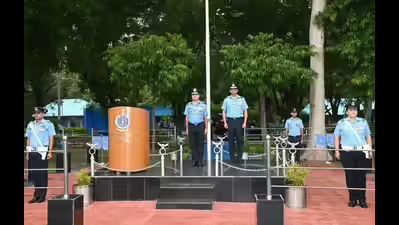
Prayagraj: Air Commodore Chandra Kumar Rasyara assumed command of Air Force Station, Manauri as the Air Officer Commanding on Friday.He took over the charge as AOC of the station from Air Commodore Angshuk Pal.The depot, a premier supply chain establishment of the IAF, boasts a rich history dating back to the 1870s.Air Commodore Rasyara was commissioned in the logistics branch of the IAF in Dec 1991. He holds a postgraduate diploma in financial management and a master of science in defence and strategic studies.In his distinguished career spanning 33 years, he held several key appointments at Air Headquarters and various Command Headquarters. He led a supply chain echelon in the eastern sector and served in operational units and Base Repair Depots across the south-western and central sectors.An avid reader and poet, Air Commodore Rasyara brings with him a wealth of experience and leadership. On this occasion, his wife, Chandrakala Rasyara, assumed the role of president of Air Force Families Welfare Association (Local), taking over from Roma Sinha Pal.
NEW DELHI: The Army will examine the trial court judgment in the Malegaon blast case that acquitted Lt Colonel Prasad Shrikant Purohit – commissioned into the Maratha Light Infantry in 1994 and later part of military intelligence – before deciding on its course of action.”Army will need to examine the judgment before any decision in the case of Lt Col Purohit, who is currently attached to Army’s Maharashtra, Gujarat and Goa (MG&G) Area,” an Army officer said on Thursday.Purohit, the first serving military officer accused in a terror case, is slated to retire next year at 54, the retirement age for Lt Colonels & Colonels. While a superseded Lt Col can become a time-scale Colonel after 26 years of service, Purohit was under a DV (discipline and vigilance) ban following his arrest in the blasts case. Under the initial DV ban, he wasn’t eligible for promotion or service courses. After securing bail in 2017, the DV ban was lifted and he was reinstated.”He can technically be promoted to Colonel rank but lacks requisite ACRs for several years,” another officer said.
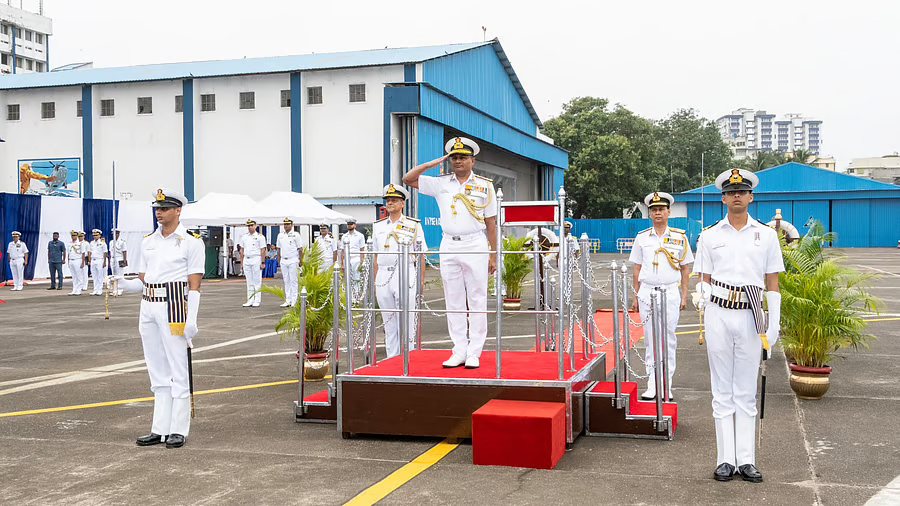
He succeeds Vice Admiral Sanjay J Singh, who retired after four decades of distinguished service in the Indian Navy.
Mumbai: Communication and Electronic Warfare specialist Vice Admiral Krishna Swaminathan on Thursday took over as the Flag Officer Commanding-in-Chief of the Mumbai-headquartered Western Naval Command.
Read more at: https://www.deccanherald.com/india/maharashtra/vice-admiral-krishna-swaminathan-takes-over-as-wnc-chief-3659715
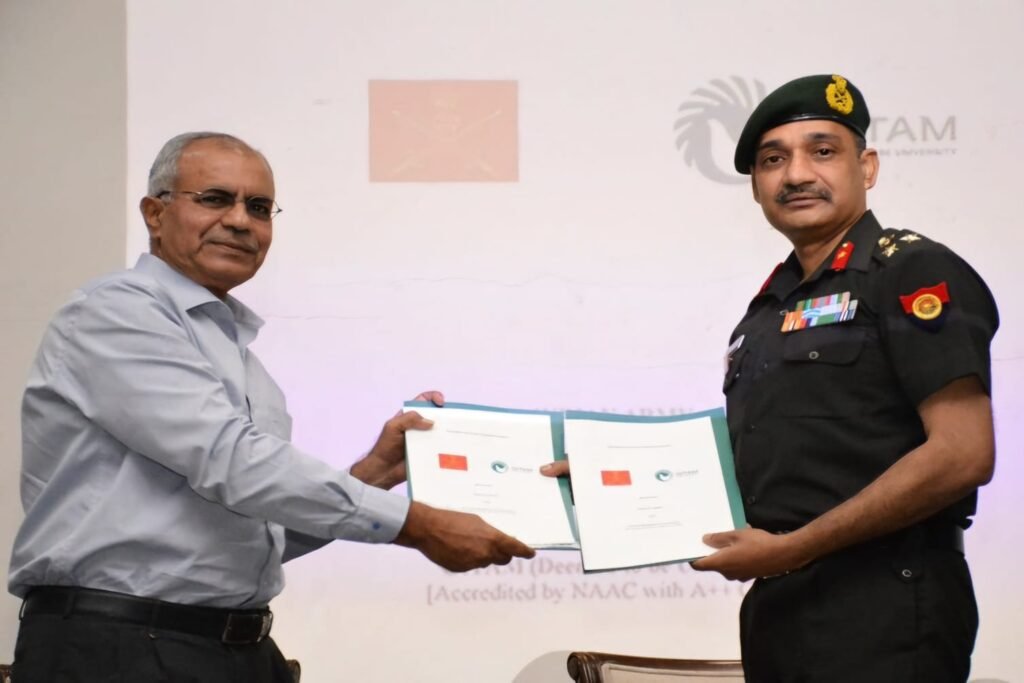
• 1 MBBS seat with ₹10L tuition fee concession (via NEET-UG).
• 4 fully funded B.Tech seats (Civil, Electrical, CSE, Mech).
• 8 merit-based B.Tech seats with up to 50% fee concession.
• 20 additional B.Tech seats at regular fee.
5 soldiers had laid down their lives in an IPKF op led by Lt Gen Singh in Lanka in 1989

Before stepping into his new role as Vice-Chief of the Army on Friday, Lieutenant General Pushpendra Singh made a personal detour. In a solemn ceremony at the National War Memorial here, he paid tribute to five soldiers who had once fought by his side — and laid down their lives in an operation he led as part of the Indian Peace Keeping Force (IPKF) in Sri Lanka in 1989. He was seriously injured in the same mission.
What made the moment poignant was the presence of the families of the fallen. The widows and relatives of the five soldiers stood alongside Lt Gen Singh as he offered a floral tribute at the Tyag Chakra, where the names of the five bravehearts have been etched.He also paid homage at the eternal flame of the National War Memorial.
Lt Gen Singh was a young Second Lieutenant with the 4th Battalion of the Parachute Regiment, Special Forces (4 PARA SF) when the incident occurred on July 22, 1989.He was leading a 13-member quick reaction team moving from Iranamadu to Kilinochchi in northern Sri Lanka as part of the Indian Peace Keeping Force. The convoy was ambushed en route, triggering a fierce counter-assault in which four LTTE militants were neutralised and several others injured. Five Indian soldiers made the supreme sacrifice, while Singh and two others sustained serious injuries.
The 4 PARA SF had been inducted into Sri Lanka in October 1987 and played a critical role in several operations, first in Jaffna and later in Kilinochchi.
Lt Gen Singh was commissioned into the Army in December 1987 after graduating from La Martiniere College, Lucknow, Lucknow University, and the Indian Military Academy, Dehradu

In a significant transition within the Indian Army’s top leadership, Lieutenant General Pushpendra Singh officially assumed the prestigious role of Vice Chief of Army Staff (VCOAS) on Friday, succeeding Lieutenant General N.S. Raja Subramani. The appointment marks a milestone in Lt. Gen. Singh’s illustrious career, which spans over 38 years of dedicated service to the nation.
A ceremonial event at South Block in the national capital marked the occasion, underscoring the importance of this high-ranking position in shaping India’s military strategy and operational readiness.

Lieutenant General Pushpendra Singh, an officer of the Indian Army’s elite Parachute Regiment, brings a wealth of operational experience and strategic acumen to his new role. Commissioned into the 4th Battalion of The Parachute Regiment (Special Forces) in December 1987, Lt. Gen. Singh is an alumnus of the prestigious Indian Military Academy (IMA) in Dehradun, as well as La Martiniere College and Lucknow University. His educational background has been instrumental in shaping his leadership skills and strategic thinking, which have been honed through decades of service in some of the most challenging environments.
Lt. Gen. Singh’s career is distinguished by his participation in several high-profile operations, including:
In addition to his domestic contributions, Lt. Gen. Singh has significant international exposure, having served in United Nations Peacekeeping Missions in Lebanon and Sri Lanka. These assignments enriched his understanding of multinational military coordination and humanitarian operations, adding a global perspective to his leadership profile.

Prior to his appointment as VCOAS, Lt. Gen. Singh held several key command and staff positions that underscored his strategic and operational expertise. Most recently, he served as the Director General of Operational Logistics & Strategic Movement at Army Headquarters, a role that involved overseeing critical logistical support and strategic planning for the Indian Army. His tenure as General Officer Commanding (GOC) of the Rising Star Corps (IX Corps) since April 2022 was particularly notable. Based in Yol cantonment in Himachal Pradesh’s Kangra Valley, the corps is responsible for securing the Jammu region along India’s international border, a strategically vital area.
Lt. Gen. Singh’s earlier roles included commanding a Special Forces unit in the Kashmir Valley and on the Line of Control, as well as leading an Infantry Brigade and a Mountain Division during Operation Snow Leopard along the Line of Actual Control (LAC). His experience at the Infantry School in Mhow and the Strategic Forces Command further reflects his versatility in training and strategic domains.
His distinguished service has been recognized with prestigious awards, including the Ati Vishisht Seva Medal (AVSM), conferred by President Droupadi Murmu on June 4, 2025, at the Defence Investiture Ceremony at Rashtrapati Bhavan, and the Sena Medal for gallantry, awarded twice for his exemplary courage and leadership.

As the Vice Chief of Army Staff, Lt. Gen. Pushpendra Singh will serve as the second-highest-ranking officer in the Indian Army, acting as the deputy to the Chief of Army Staff. His responsibilities include advising the Defence Minister, assisting the Chief of Army Staff in operational and administrative matters, and playing a pivotal role in strategy formulation, coordination across commands, and national security planning. The role is particularly critical at a time when India faces evolving security challenges, including border tensions, emerging threats in cybersecurity, and the need for technological modernization in defense.
Lt. Gen. Singh’s extensive experience in special forces, counter-insurgency operations, high-altitude warfare, and international missions positions him as a highly capable leader to guide the Indian Army through these challenges. His appointment is seen as a strategic move to leverage his battle-hardened expertise and forward-thinking approach to enhance the Army’s operational readiness and modernization efforts.
Lt. Gen. Singh succeeds Lt. Gen. N.S. Raja Subramani, who assumed the role of VCOAS on July 1, 2024, and superannuated on July 31, 2025, after 39 years of distinguished service. Lt. Gen. Subramani’s tenure was marked by significant contributions to the Army’s operational excellence and leadership training. On his final day, he laid a wreath at the National War Memorial in New Delhi to honor the sacrifices of fallen soldiers and reviewed a Guard of Honour at South Block. The Indian Army expressed deep gratitude for his exemplary leadership and extended best wishes for his future endeavors.
The transition to Lt. Gen. Singh’s leadership ensures continuity in the Army’s strategic focus, particularly in strengthening counter-insurgency preparedness, border security, and modernization initiatives. His appointment is part of a broader reshuffle in India’s military leadership, with concurrent changes in the Indian Navy, including Vice Admiral Krishna Swaminathan’s transition to Flag Officer Commanding-in-Chief of the Western Naval Command and Vice Admiral Sanjay Vatsayan’s appointment as Vice Chief of the Naval Staff.
Lt. Gen. Pushpendra Singh’s elevation to Vice Chief of Army Staff reflects the Indian Army’s trust in his ability to lead during a transformative period. As the Army embraces integrated, technology-driven operations and joint strategies with other armed forces, officers like Lt. Gen. Singh, with both field combat experience and strategic foresight, are essential to driving this evolution. His Special Forces background, combined with his command of operationally critical formations and tenure in nuclear command structures, makes him one of the most versatile leaders in uniform today.
The Indian Army, under Lt. Gen. Singh’s leadership as VCOAS, is poised to continue its tradition of excellence, ensuring the nation’s security while adapting to the demands of modern warfare. His appointment has been widely welcomed by military analysts and personnel alike, who view it as a testament to his exceptional leadership and unwavering commitment to the nation.
As Lt. Gen. Pushpendra Singh steps into this pivotal role, his journey from the rugged training grounds of 4 Para (Special Forces) to the apex of military leadership serves as an inspiration to countless young officers and soldiers across India’s defense forces. The nation looks forward to his contributions in shaping a stronger, more resilient Indian Army.






























