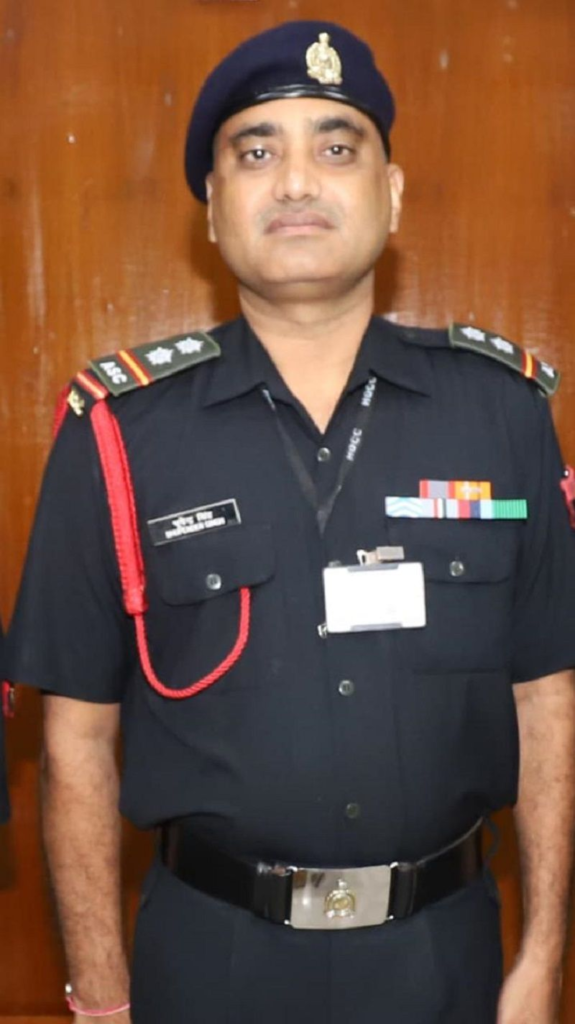
बलिदानी सूबेदार भूपेंद्र सिंह चौहान को जनरल मुकेश चड्डा उल्लेखनीय सेवाओं के चलते तीन बार सम्मानित कर चुके है।
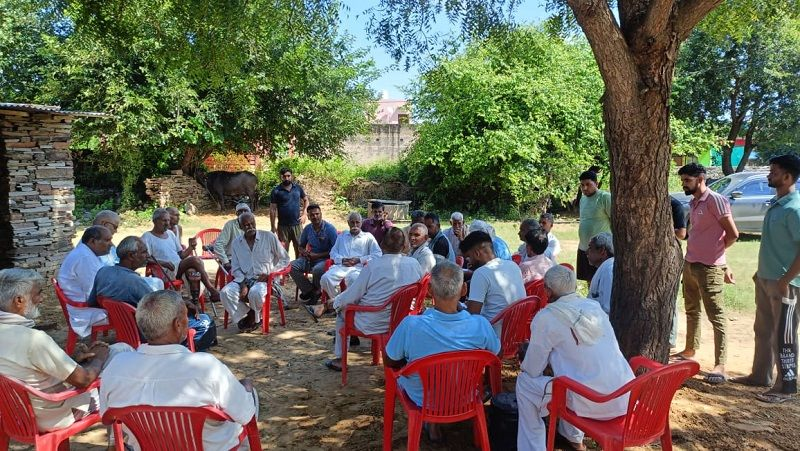
Bhupendra Singh Chauhan Martyr : कस्बे से राजस्थान के सटे गांव विजय नगर निवासी सूबेदार भूपेंद्र सिंह चौहान जम्मू-कश्मीर में बलिदान हो गये। 45 वर्षीय सूबेदार का पार्थिव शरीर कल मंगलवार को पैतृक गांव में पहुंचेगा। जवान के बलिदान की सूचना के बाद गांव में गमगीन माहौल बना हुआ है तथा लोगों सूचना पा कर शोक संतप्त परिवार को सांत्वना दे रहे है।
बलिदानी के पिता रामनिवास सिंह भी आर्मी मेें सूबेदार मेजर के पद से सेवानिवृत्त हुए थे उनका भाई महेेंद्र सिंह, भतीजा कैप्टन रामसिंह भी आर्मी में अपनी सेवा दे रहा है। बलिदानी को जनरल मुकेश चड्ढा उनकी उल्लेखनीय सेवाओं के चलते तीन बार सम्मानित भी कर चुके है।
अटेली कस्बे में रहने वाले बलिदानी के चाचा मनोज सिंह ने बताया कि उसका भतीजा भारतीय सेना में एएससी की 525 बटालियन में जम्मू-कश्मीर में तैनात था। जम्मू-कश्मीर के राजौरी-पुंछ में ड्यूटी के दौरान 7 सितंबर को बलिदान हो गये। वह अपने पीछे एक लड़का, एक लड़की,पत्नी,माता-पिता समेत भरा परिवार छोड़ गये है। उनके दादा दिवंगत ओमकवार सिंह गांव के नंबरदार रहे है।
बलिदानी का पार्थिव शरीर कल 9 सितंबर मंगलवार को सुबह 10 बजे पहुुंचेगा तथा सैनिक सम्मान के साथ अंतिम संस्कार होगा। सैनिक परिवार से ताल्लुक रखने वाला जवान बेंगलुरु में 2000 में भर्ती हुए थे तथा उनका विवाह 2003 में हुआ था। उनका बड़ा लड़का 11 वी में तथा छोटी लडक़ी पायल 11 वी में पढ़ती है। उनकी पत्नी भी सुशिक्षित एमए बीएड पास है।
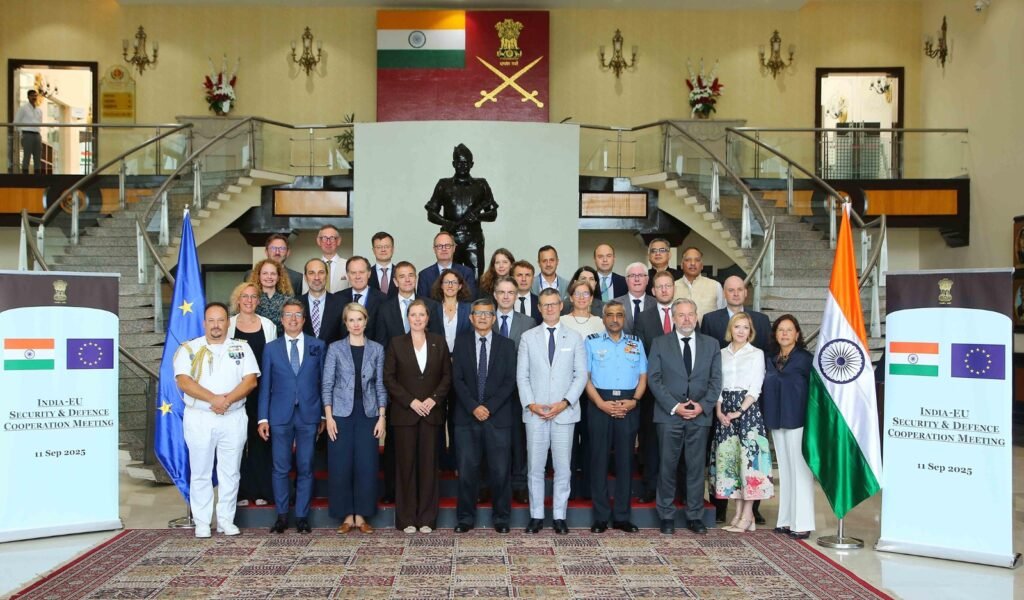
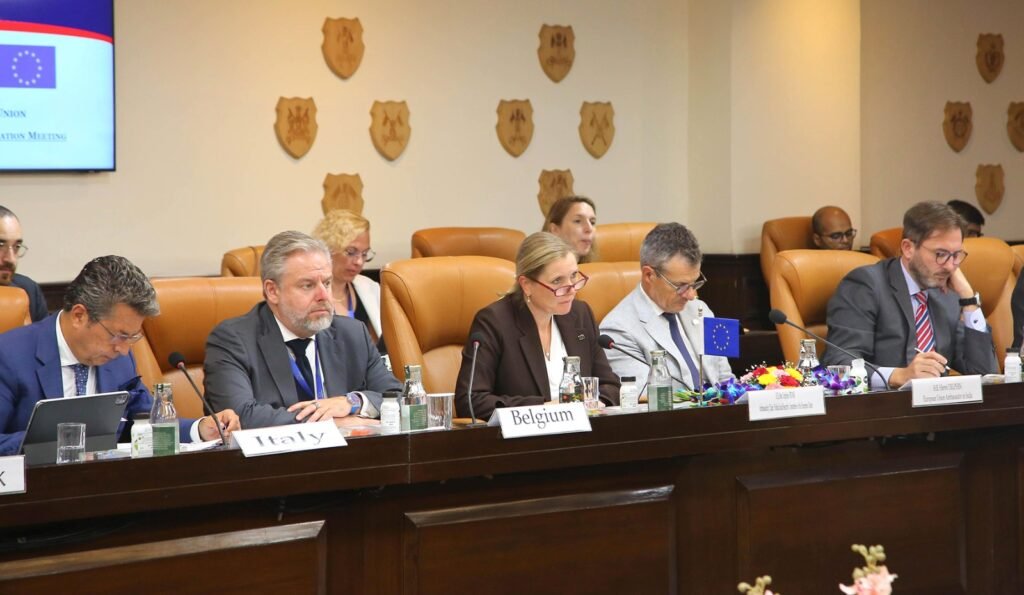
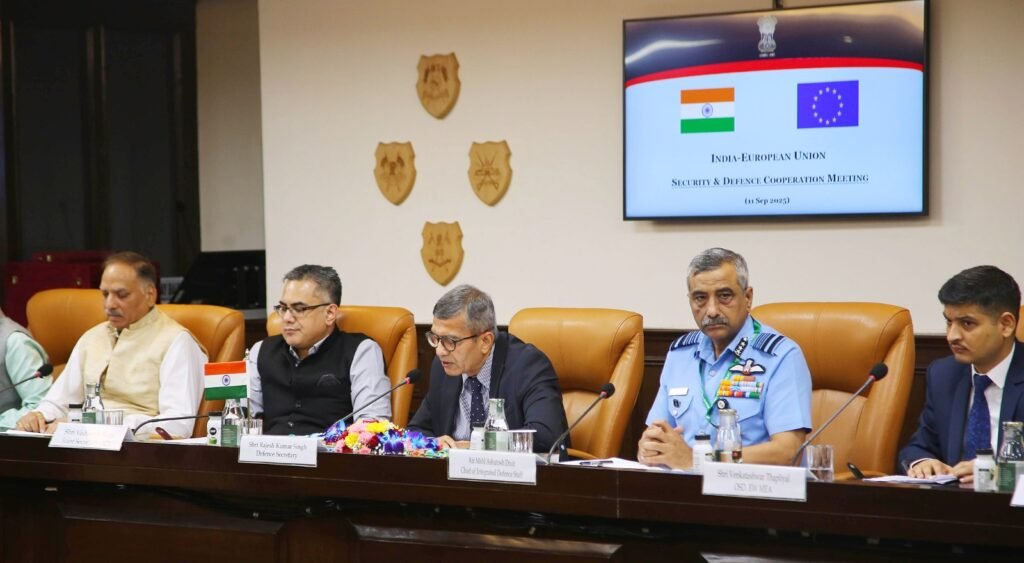
India-European Union (EU) Security and Defence Cooperation meeting took place in New Delhi
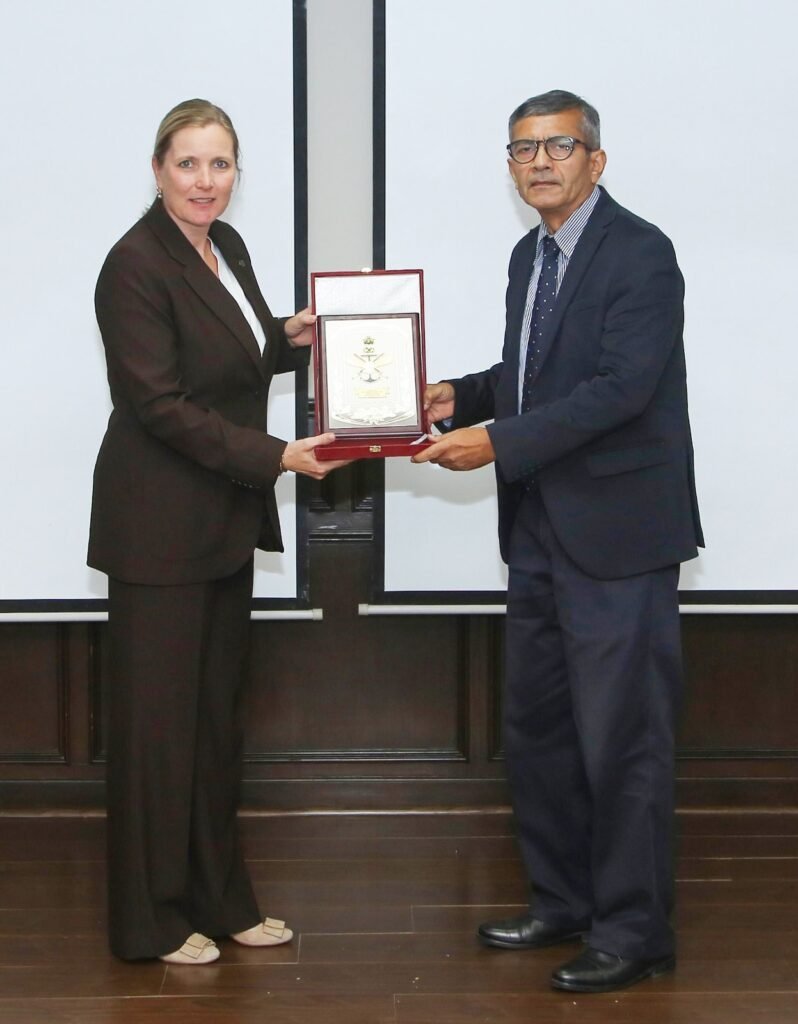
India-European Union (EU) Security and Defence Cooperation meeting took place in New Delhi today. Co-chaired by Defence Secretary Shri Rajesh Kumar Singh and Chair of Political & Security Committee of EU Mrs Delphine Pronk, the meeting focused on capacity building, capability enhancement and emerging challenges.
The delegation, which is on its maiden visit to India, was also briefed on Information Fusion Centre-Indian Ocean Region. 🇮🇳
SINGLE WINDOW SYSTEM AT AMC FOR BENEFIT OF VETERANS
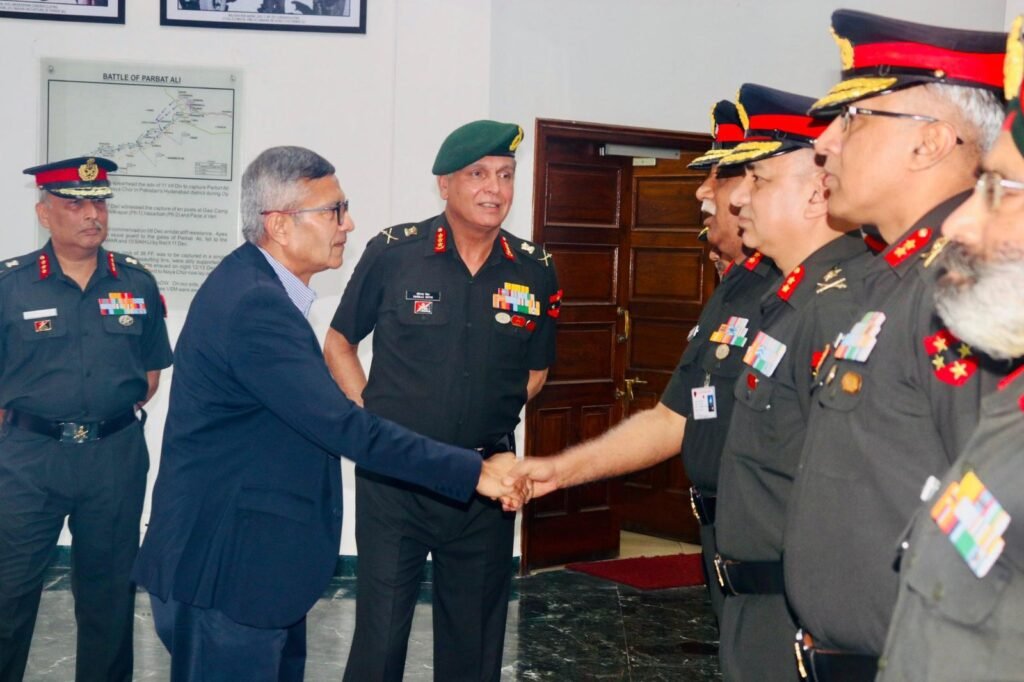
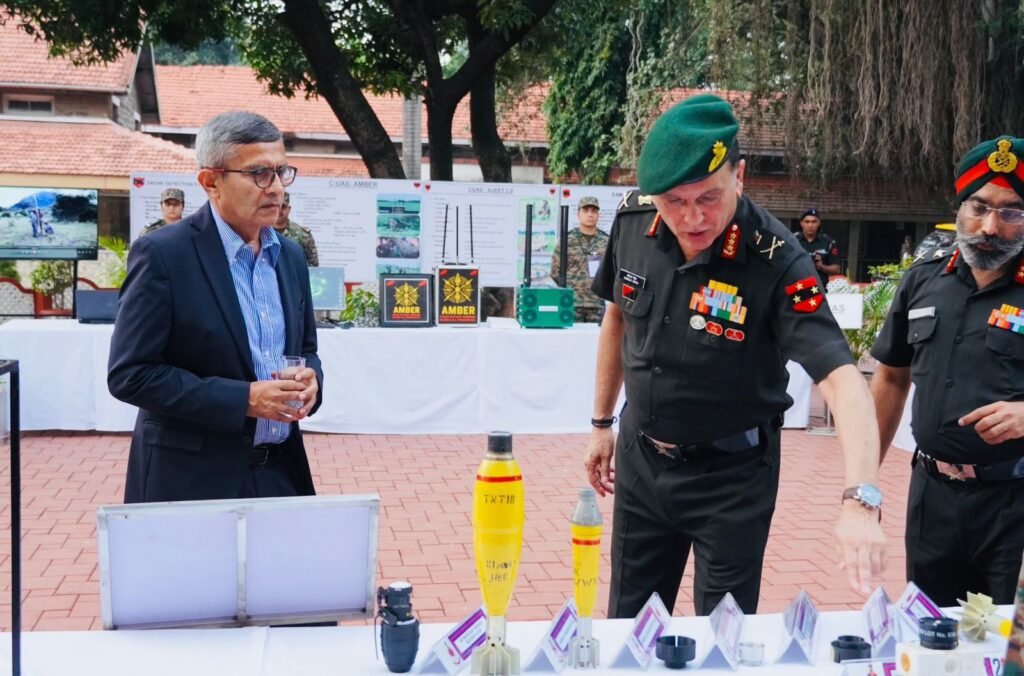
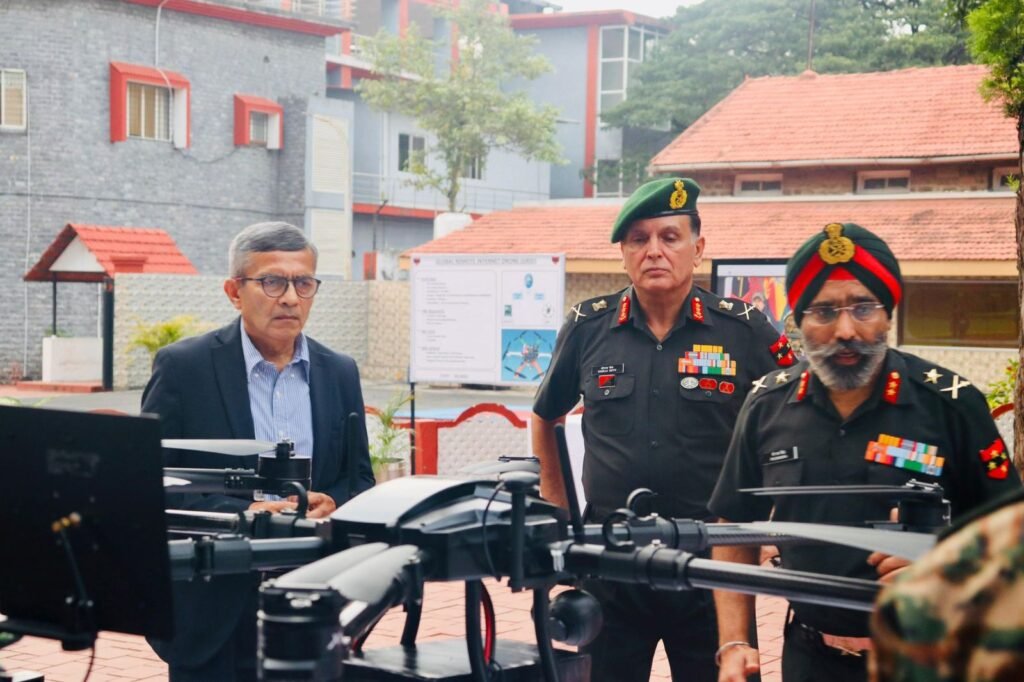
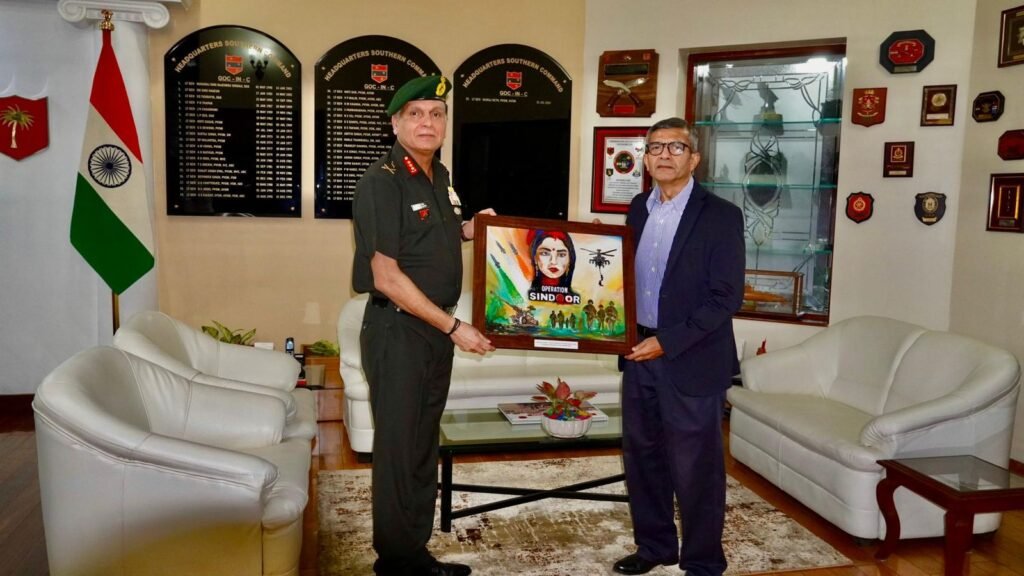
Defence Secretary Shri Rajesh Kumar Singh visited Southern Command HQs in Pune and interacted with General Officer Commanding-in-Chief Lt Gen Dhiraj Seth. The discussions focused on operational preparedness, logistics, capability development and future challenges.
The Defence Secretary appreciated the innovation drive and tech infusion efforts of the Command aligned with Raksha Mantri Shri Rajnath Singh’s vision of a future ready and tech-enabled force. 🇮🇳
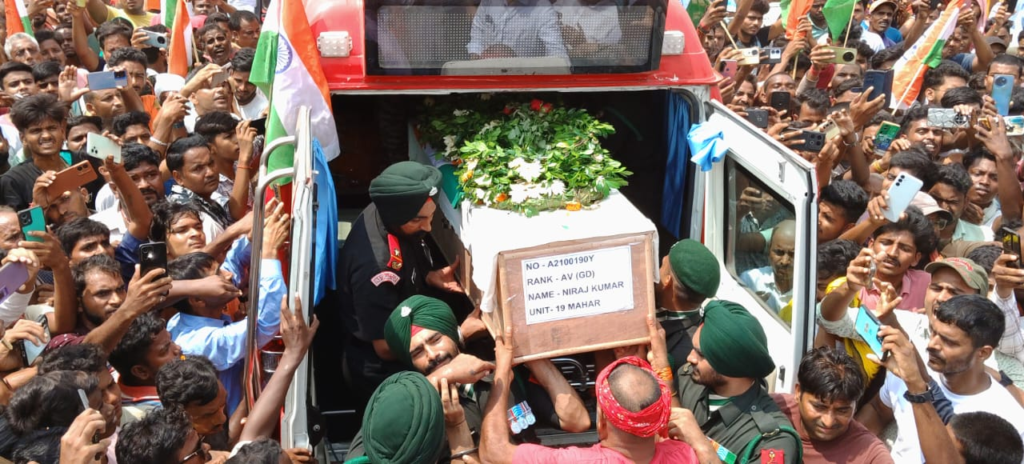
Niraj Kumar Chaudhary Agniveer of the 19th Mahar Regiment. with Military Ceremony
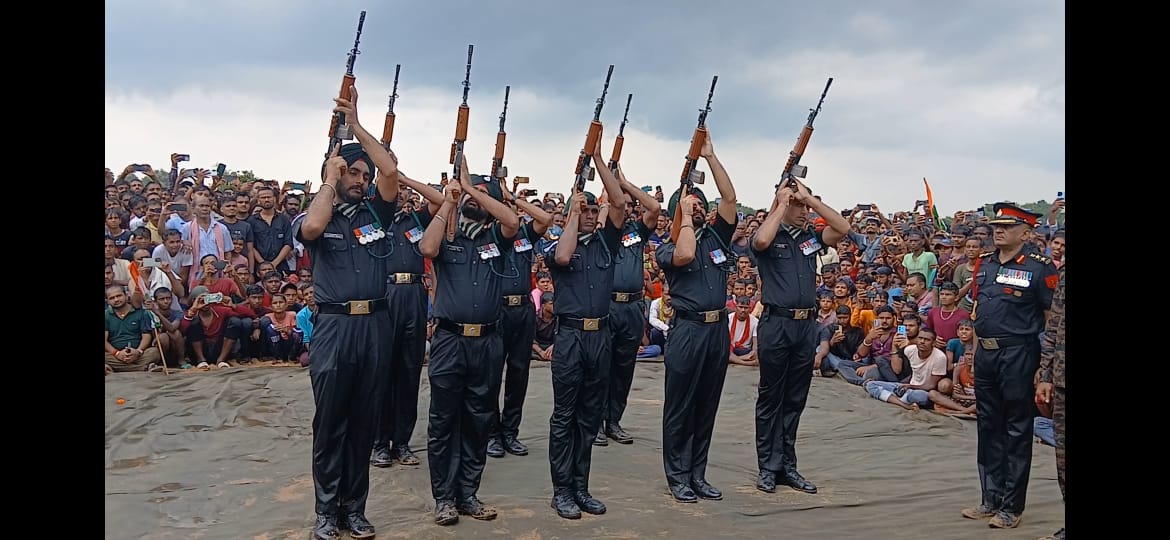
A tribute ceremony with full military honors was held in Village Kajra, Deoghar district, to honor Agniveer Niraj Kumar Chaudhary of the 19th Mahar Regiment. The young soldier, who demonstrated remarkable grit and dedication in his service, lost his life on September 9, 2025, due to an avalanche in the harsh environment of the Siachen Glacier.
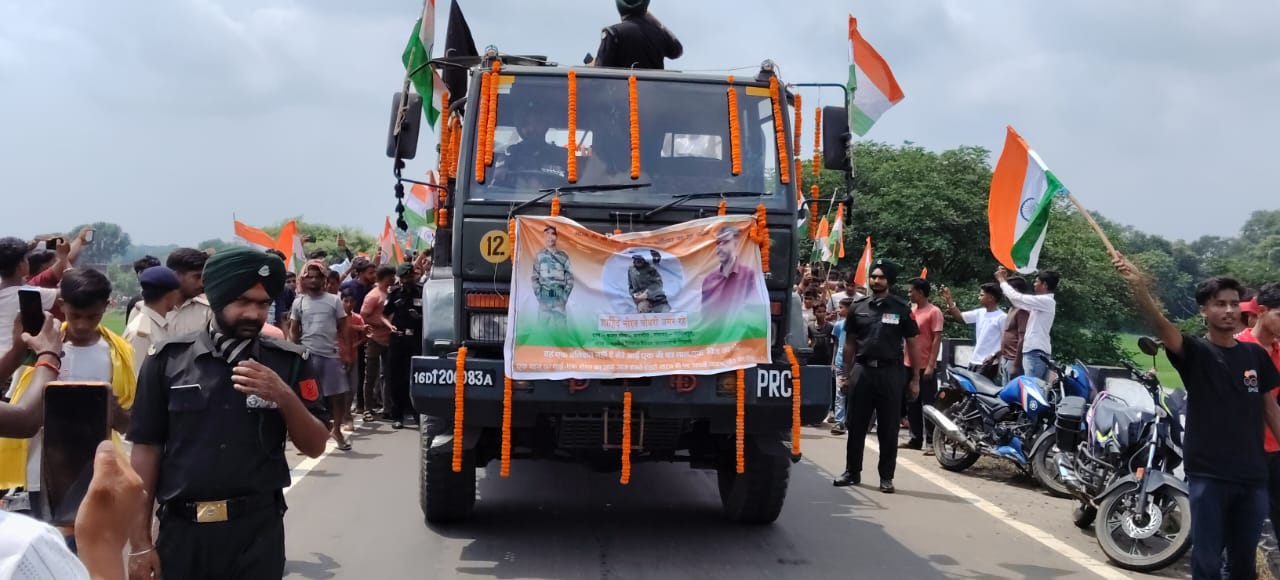
The remains of Agniveer Niraj, draped in the national tricolor, were brought back to his village in a solemn procession. Emotional scenes unfolded as soldiers carried his flower-adorned coffin, while a large crowd of locals, holding Indian flags, paid their respects.
The gathering, which included villagers and military personnel, united to honor the heroism and sacrifice of the fallen soldier.
Two-and-a-half years ago, Agniveer Niraj joined the Indian Army under the Agnipath scheme. He served in one of the world’s most challenging terrains, showcasing unwavering duty commitment.
Niraj, coming from a modest farming family in Kajra village, was described by his father, Anil Chaudhary, as the family’s backbone. Although devastated by his loss, the family expressed immense pride in his national service.
During the tribute ceremony, honors included a guard of honor by his comrades, a rifle salute to show respect, and the presentation of the tricolor flag to his family as a symbol of the nation’s gratitude.
Military officials and local leaders praised him as an embodiment of duty, honor, and valor, stating that his sacrifice would inspire future generations.
The Siachen Glacier, referred to as the “world’s highest battlefield,” continues to test the endurance of India’s soldiers. Since 1984, 869 Army personnel have lost their lives there, mostly due to extreme weather and environmental conditions rather than combat.
Agniveer Niraj’s sacrifice highlights the ongoing challenges faced by soldiers defending India’s borders in some of the world’s harshest conditions.
Earlier in the week, his remains were received at Birsa Munda Airport in Ranchi, where the Governor and Chief Minister of Jharkhand paid their last respects. They described his martyrdom as “heart-wrenching” and lauded his courage as emblematic of India’s indomitable spirit.
As Village Kajra bid farewell to its brave son, the entire nation mourned with them. Agniveer Niraj Kumar Chaudhary’s name is etched among India’s martyrs, symbolizing the bravery and dedication required to protect the nation’s borders.
His story is one of not only loss but enduring pride—a legacy that will continue to inspire future generations of warriors.
Upholds tribunal order granting 50% war injury pension to Army man
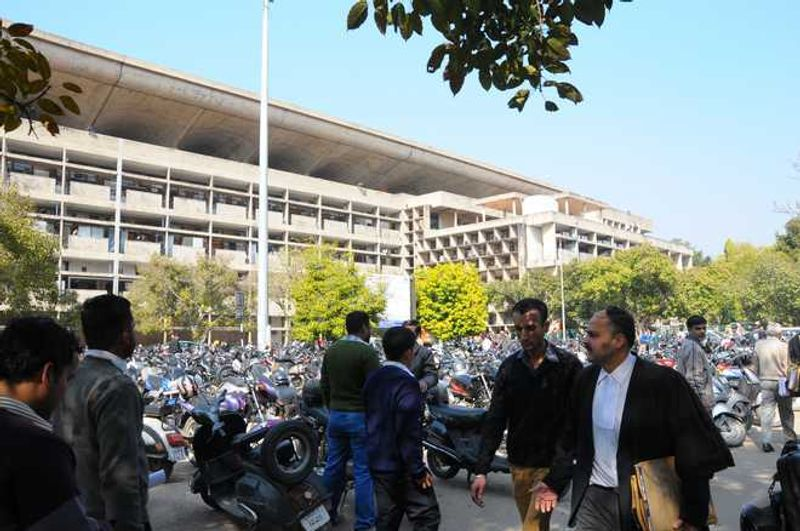
The Punjab and Haryana High Court has ruled that the Union of India cannot draw a distinction between injury and disease when both are suffered by Army personnel posted in an operational area. The assertion came as a Division Bench held that war injury pension could not be denied once a soldier was invalidated out of service due to disability attributable to military service.
Dismissing a writ petition filed by the Union of India against an order of the Armed Forces Tribunal, the Bench of Justice Harsimran Singh Sethi and Justice Vikas Suri made it clear that the very nature of posting in a counter-insurgency zone carried inherent risks, and any disability contracted therein must be treated as a war injury.
“Once, the disease/injury suffered by an officer invalidates him/her out of service, the differentiation being created by the petitioner-Union of India between a disease suffered or the injury incurred to deny the benefit of war injury pension cannot be allowed,” the Bench held.
The Court asserted that “Category E(i) of the Government of India letter dated January 31, 2001” made it clear that any operation specially notified by the Government from time to time must be treated as an “operational area”. Jammu and Kashmir, where the respondent was posted under Operation Rakshak, fell squarely within this category.
“It is a conceded position that respondent army man was posted under ‘Operation Rakshak’ in Jammu and Kashmir. Once, the eye disability had been suffered during performance of the duties in the said operational area, the benefit of war injury pension cannot be declined,” the Bench declared.
Upholding the order of the Armed Forces Tribunal granting 50 per cent war injury pension, the High Court asserted: “Once it has been conceded by the petitioners that the disease due to which respondent has been invalidated out of service is attributable to the military service as the same disease was suffered while being posted in the operational area, the benefit of war injury pension has rightly been granted.”
The Court found no perversity in the Tribunal’s order, either on facts or in law, and dismissed the writ petition. “No ground is made out to interfere in the order passed by the Tribunal and the present writ petition is dismissed accordingly,” the Bench concluded.
Union of India’s stand rejected
The Centre had argued that the respondent was posted in a counter-insurgency area, but the disability suffered Interstitial Keratitis –– a condition affecting the eyes —could not be equated to an “injury” sustained while conducting operations.
Rejecting the stand, the Court asserted that the counsel for the Union conceded that “any injury suffered by army personnel while he/she is posted in the operational area is to be treated as war injury.” The real issue, the Bench observed, was whether a disease contracted during such posting could be excluded from the definition of war injury.
“The question which surfaces is whether any disease also suffered during the operation which leads to the
invalidation of army personnel is to be treated as an injury suffered or not,” the Bench observed.
The Bench added the nature of invalidation —whether due to an “injury” or a “disease” — was irrelevant if the posting was in an operational area.
Tribunal’s order upheld
Upholding the order of the Armed Forces Tribunal granting 50 per cent war injury pension, the High Court asserted: “Once it has been conceded by the petitioners that the disease due to which respondent has been invalidated out of service is attributable to the military service as the same disease was suffered while being posted in the operational area, the benefit of war injury pension has rightly been granted to respondent by the Tribunal.”
The Court found no perversity in the Tribunal’s order, either on facts or in law, and dismissed the writ petition. “No ground is made out to interfere in the order passed by the Tribunal and the present writ petition is dismissed accordingly,” the Bench concluded.
Why the ruling matters
The ruling shuts the door on the Union’s attempt to deny war injury pension by drawing a distinction between “injury” and “disease”. By holding that “any disability suffered in an operational area amounts to war injury”, the High Court has expanded protection for soldiers and reinforced that the “risk of invalidation in such zones is inseparable from service itself”.
HC raps Union for opposing war-injury pension to 1971 soldier injured in bomb blast
The Bench asserted that a soldier injured in combat could not be deprived of benefits merely on technical objections
he Punjab and Haryana High Court rapped the Union of India for opposing war-injury pension to a soldier who lost his eyesight during the 1971 Indo-Pak war and was not treating his injuries attributable to military service.
“The disability suffered Sham Singh was not being treated to be attributable to military service. Such an action on the part of the Union of India and other petitioners cannot be appreciated especially when, it relates to a solider, who fought for the country and had suffered disability and that too in war between two countries,” the Bench of Justice Harsimran Singh Sethi and Justice Vikas Suri asserted, adding that the authorities should, rather, have come forward to grant the benefit of war injury pension rather than raising an “objection qua delay”.
The court observed Sham Singh suffered a grievous injury in December 1971 when “a bomb which came from the Pakistan side exploded near him and due to splinters and heavy smoke and dust, he lost his eyesight, which forced his invalidation from military service.”
The matter was placed before the Bench after the Union of India challenged impugned order dated August 23, 2023, passed by Armed Forces Tribunal’s Regional Bench at Chandigarh vide which Sham Singh was granted benefit of war injury pension from the date of his discharge in January 1973 to January 1975 and after that service pension till the day he died in May 2021. Thereafter, the benefit of liberalised pension was ordered in favour of his wife Karnail Kaur.
The Centre’s stand in the matter was that the claim was raised by Sham Singh at a belated stage – after the lapse of 44 years from the date of rejection of initial claim, “which clearly is barred by limitation hence, the same should not have been allowed”.R
The Bench asserted that a soldier injured in combat could not be deprived of benefits merely on technical objections: “It may be noticed that a solider, who fought for the country in Indo-Pak 1971 war and had suffered the injuries during the bomb explosion, cannot be excluded from the grant of entitled benefit especially, when nothing evident has come on record to show that such solider was in knowledge that he is entitled for the benefit of war injury pension due to the disability suffered by him in Indo-Pak 1971 war.”
The petitioners, on the other hand, “very well knew” that the solider suffered an injury in war and was entitled to the benefit of war injury pension. But the Union ignored the fact and did not grant the benefit he was entitled to.
Rejecting the ground of delay raised by the Union, the Bench held: “Keeping in view the facts and circumstances of the present case, the ground taken by the petitioners qua the delay to deny the benefit of war injury pension to Sham Singh cannot be accepted and the present petition is accordingly dismissed.”
Soldier’s death due to high fever during casual leave attributable to service: Punjab and Haryana High Court
The ruling comes as a Division Bench court dismisses a writ petition filed by the Union of India
A soldier on casual leave remains on duty for all intents and purposes, making his death due to high fever during such period attributable to military service, the Punjab and Haryana High Court ruled.
The ruling came as a Division Bench court dismissed a writ petition filed by the Union of India, while affirming the Armed Forces Tribunal’s order granting special family pension to the widow of a soldier who died of high fever while on 20 days’ leave.
Referring to the Disability Pension in Defence Service Rules, the Bench of Justice Harsimran Sethi and Justice Vikas Suri asserted that its provisions clearly stated that casual leave was to be treated as duty period.
The Bench, during the course of hearing, was told that the soldier was sanctioned leave from June 13, 2002 to July 2, 2002. He developed a high fever during the period before being admitted to hospital. The authorities denied the widow’s claim on the grounds that he was on casual leave at the time of his death.
The Tribunal considered all the relevant facts and the rules governing the service, which – among other things – said any officer on casual leave was to be treated on duty for all intents and purposes.
Rejecting the Union of India’s plea, the court observed: “Once the late husband of the respondent is to be treated as on duty during the time he availed casual leave and he suffered from high fever during the said period he availed the casual leave, the same has to be attributed to the military service keeping in view the exigencies of the service. It is not a case that the death of the employee is due to any negligence on his part or for any act which cannot be related even to the military service.”
The Bench also referred to the principle of law settled by the Supreme Court that “even when the officer is on leave, the facts are to be noticed whether the cause of death can be attributed to the military service or not”.
The Bench found no infirmity in the Tribunal’s decision. “Keeping in view the totality of the circumstances, the findings which have been recorded by the Tribunal to grant respondent No. 1 the benefit of special family pension by treating that the death of her husband was attributable to the military service while he was on duty, are correct.”
Finding no ground for any interference by the court, the Bench asserted that perversity was not pointed out in the impugned order “either on the basis of the facts or the settled principle of law”. As such, the writ petition was dismissed.
27 years on, AFT rules soldier’s death from mental disorder attributable to service; widow gets benefits
The soldier was enrolled in the Army in October 1984 and passed away in August 1998 during active service due to “corrosive acid poisoning and perforation of stomach” after he had consumed some
Twenty-seven years after a soldier died while in service, the Armed Forces Tribunal has held that his death, resulting from a psychiatric disorder, is attributable to military service, and his widow is entitled to higher pensionary benefits. The soldier was enrolled in the Army in October 1984 and passed away in August 1998 during active service due to “corrosive acid poisoning and perforation of stomach” after he had consumed some poisonous substance. A medical board had found him to be suffering from “paranoid state” (delusional disorder) and “bronchial asthma”, for which he had been admitted to various military hospitals for treatment.
In his remarks on the court of inquiry held to inquire into the circumstances of his death, the Brigade Commander had stated that the soldier was not in a correct frame of mind and took acid without knowing the after-effects of the poison. Hence, being a psychiatric case, his death should be attributable to military service in a peace station. The pension authorities, however, rejected the widow’s claim for a special family pension, which is higher than an ordinary family pension, on the grounds that the cause of death was neither attributable to nor aggravated by military service. Several appeals against the rejection order were also rejected.
The tribunal’s Chandigarh bench, comprising Justice Umesh Chandra Sharma and Air Marshal Manavendra Singh, held that from perusal of the Defence Services Regulations for the Army, it was clear that the opinion of the administrative authority — that is, the Brigade Commander, Commanding Officer, or court of inquiry — is relevant. From the record, it is established that as per the opinion of the court of inquiry recommended by the Brigade Commander, the disease due to which the soldier had died was attributable to military service. Therefore, the widow of the deceased is entitled to a special family pension by virtue of Regulation 213 of the Pension Regulations for the Army, 1961.
Advertisement
Observing that the Brigade Commander had also agreed with the said opinion of the court of inquiry, the Bench said that relevant sections of the Entitlement Rules for Casualty Pensionary Awards, 1982, mention “psychosis and psychoneurosis” affected by “stress and strain” under the classification of disease, and the case of the widow is also covered under the said category.
State Stalwarts
DEFENCE MINISTER
Minister Rajnath Singh
ALL HUMANS ARE ONE CREATED BY GOD
HINDUS,MUSLIMS,SIKHS.ISAI SAB HAI BHAI BHAI
CHIEF PATRON ALL INDIA SANJHA MORCHA
LT GEN JASBIR SINGH DHALIWAL, DOGRA
SENIOR PATRON ALL INDIA SANJHA MORCHA
MAJOR GEN HARVIJAY SINGH, SENA MEDAL ,corps of signals
.
.
PATRON ALL INDIA SANJHA MORCHA
MAJ GEN RAMINDER GURAYA ,MADRAS REGIMENT
sanjhamorcha303@gmail.com
PRESIDENT SOUTH ALL INDIA SANJHA MORCHA
COL SS RAJAN BOMBAY SAPPERS,
PRESIDENT UTTARAKHAND ALL INDIA SANJHA MORCHA
COL B M THAPA ,BENGAL SAPPERSS
PRESIDENT HARAYANA STATE CUM COORDINATOR ESM
BRIG DALJIT THUKRAL ,BENGAL SAPPERS
PRESIDENT TRICITY
COL B S BRAR (BHUPI BRAR)
PRESIDENT CHANDIGARH ZONE
COL SHANJIT SINGH BHULLAR
.
.
PRESIDENT PANCHKULA ZONE AND ZIRAKPUR
COL SWARAN SINGH
INDIAN DEFENCE FORCES
DEFENCE FORCES INTEGRATED LOGO
INDIAN AIR FORCE
Air Officer C-in-C WESTERN AIR COMMAND
AIR MSHL S PRABHAKARAN AVSM VM
AOC-IN-C, EASTERN AIR COMMAND
Air Marshal Inderpal Singh Walia
AOC-in-C SOUTH WESTERN AIR COMMAND
Air Marshal Vikram Singh
AOC-IN-C, SOUTHERN AIR COMMAND
Air Marshal J.Chalapati
AOC-IN-C TRAINING COMMAND
AIR MARSHAL SK GHOTIA VSM
AOC-IN-C MAINTENANCE COMMAND
Air Marshal Jagdish Chandra
Flag Officer Commanding in Chief, Western Naval Command
ice Admiral R Hari Kumar, PVSM, AVSM, VSM
Flag Officer Commanding in Chief, Eastern Naval Command
Vice Admiral Sanjay Bhalla, AVSM, NM
Flag Officer Commanding in Chief, Southern Naval Command