All posts by webadmin

Army Institute of Law celebrates annual day

Chandigarh, April 29

The Army Institute of Law (AIL), Mohali, celebrated its annual day here today. Various scholarships and cash prizes were awarded to meritorious students on the the occasion. Two industrial scholarships worth Rs 80,000, three alumni scholarships worth Rs 1.40 lakh and eight Tata Merit Scholarships for toppers in academics worth Rs 1.40 lakh were awarded to the students.—TNS


More mohalla get-togethers required for connecting people: Gen Malik

More mohalla get-togethers required for connecting people: Gen Malik
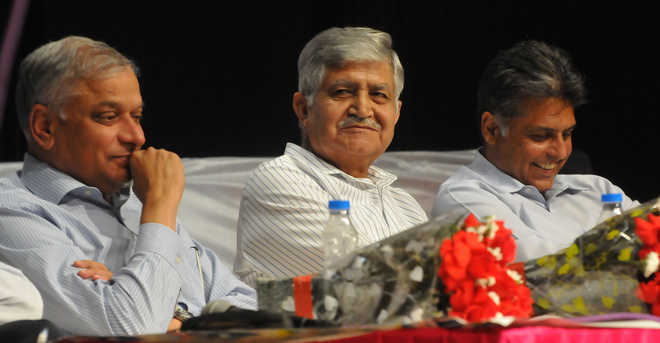
Former Prime Minister Manmohan Singh’s media adviser Pankaj Pachauri, former Army Chief General VP Malik and former Union Minister Manish Tewari during a function at the Punjab Kala Bhawan auditorium in Sector 16, Chandigarh, on Wednesday. Tribune photo: Vicky Gharu

Chandigarh, April 5

Former Army Chief General VP Malik said more mohalla get-togethers are required so that people can interact with each other. Gen Malik was speaking at a function organised by the People’s First Society on the topic Towards Togetherness (Apasdari and Shehardari) at Punjab Kala Bhawan, Sector 16 today.The focus of the programme was to increase people-to-people connection by holding small sabhas and get-togethers. Former Union Minister and Congress spokesperson Manish Tewari said: “The concept of “Know Your Neighbour” is a unique concept and we need to take this concept and idea first in Chandigarh and then to Mohali and Panchkula”.On this occasion, Pankaj Pachauri, veteran journalist and former Prime Minister Manmohan Singh’s media adviser, shared his experience and said there was Nana Nani Park in Maharashtra specially designed for the old-age people where they come and interact with each other.Former councillor Chander Mukhi Sharma said: “Connecting people on the social media is far easier than face-to-face meetings. So our focus is more on face-to-face interaction among the people of Chandigarh as it decreases the stress among neighbours and creates togetherness”. — TNS


Will chop off your heads, Hizbul warns Hurriyat leaders

Will chop off your heads, Hizbul warns Hurriyat leaders
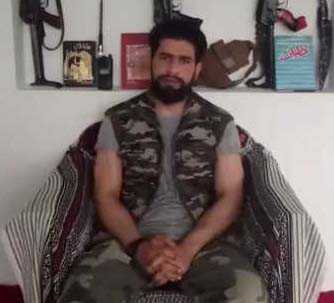
Zakir, alias Musa

Srinagar, May 12

Hizbul Mujahideen leader Zakir, alias Musa, has warned Hurriyat leaders that their heads will be chopped off and hung in the Lal Chowk here for interfering in the militant group’s “struggle for Islam”.

(Follow The Tribune on Facebook; and Twitter @thetribunechd)

In an audio, which has gone viral on social media, Zakir is heard saying: “I am warning all those hypocrite Hurriyat leaders. They must not interfere in our Islamic struggle. If they do, we will cut their heads and hang them in Lal Chowk”.

The militant leader asserted that his outfit was clear in its motives of “fighting to impose a Shariat in Kashmir and not resolving the Kashmir issue by calling it a political struggle”.

“Those leaders should know that the struggle is for Islam, for Shariat,” he was heard saying in the over five-minute audio clip. IANS could not confirm the authenticity of the audio clip.

Urging the people of Kashmir to unite against the Hurriyat’s “hycocrisy”, Zakir says: “We should all love our religion and we should realise that we are fighting for Islam. If the Hurriyat leaders think it is not so, then why have we been hearing the slogan ‘Azaadi ka matlab kya — La ilaha il Allah’, why have they (Hurriyat groups) been using mosques in their politics?” The Hizbul Mujahideen has been waging a silent battle to upstage the Hurriyat Conference since the 2016 uprising. Last week, the militant outfit also released a statement asking women protesters to not come on the roads to protest.

Militants from the group are also believed to be behind the killing of Kashmiri Army officer Ummer Fayaz earlier this week. — IANS


PUNJAB NEWS :::19 APR 20017

Punjab begins exercise to break cable cartel

Sarbjit Dhaliwal

Tribune News Service

Chandigarh, April 18

Eager to break the television cable network monopoly in the state, the Punjab Government has started the exercise to enact a law in this regard.Sources said the government has approached experts and others who have worked in the cable network field for suggestions before setting up a Cable Network Authority with legal backing for the purpose of implementing the rules and regulations to be framed to operate the network in the state.(Follow The Tribune on Facebook; and Twitter @thetribunechd)“The cable network cartel has been working in the state for long. It has been using muscle power to stop others from entering this business. We want to end that by opening it for all interested in running the cable network,” said Finance Minister Manpreet Singh Badal. The Cable Network Authority Act would be passed in the Budget session, he added.The objective is to provide a level-playing field to all those interested in running the cable network in various cities, towns and other parts of the state. Depending on the viability, there could be four, five or even more players to provide the cable network, he added.“Customers would  have a choice to get connection from any cable operator working in that city. Obviously, customers would opt for the best service provider,” said an official.Cable network operators had been censoring channels at their own level in the state. The private cartel would decide what news people should see and what channel should not be allowed to be seen.“There would be no control on the delivery of information via news channels. During the previous SAD-BJP government, only one particular Punjabi news channel was having a free run in the state. Others were either not delivered through the network or made to follow the government line,” said a state government official.

Harjit Sajjan refuses AAP invite

Deepkamal Kaur

Tribune News Service

Jalandhar, April 18

Dubbed a “Khalistani sympathiser” by Punjab Chief Minister Capt Amarinder Singh, Canadian Defence Minister Harjit Singh Sajjan has refused an invite by the Aam Aadmi Party (AAP).Leader of the Opposition HS Phoolka had invited Sajjan for coffee with the party MLAs at Chandigarh during his visit to the state capital on April 21.Phoolka said, “My office had sent an invitation to him via the Canadian High Commission. We have been told that his schedule is already very hectic and such a meet will not be possible.”Party insiders said the refusal indicated that Sajjan didn’t want to be drawn into a controversy, considering some AAP leaders’ alleged links with Sikh hardliners.Meanwhile, AAP Chief Whip Sukhpal Singh Khaira said here today that Capt Amarinder had snubbed Sajjan in order to appease his bosses in Delhi following the Ontario Assembly’s motion declaring the 1984 riots as genocide.Addressing mediapersons, Khaira said the Ontario motion seemed unacceptable to the Congress high command.“I urge the CM to reconsider his unjustified statement borne out of petty considerations and welcome Sajjan to Punjab as a state guest,” he added.

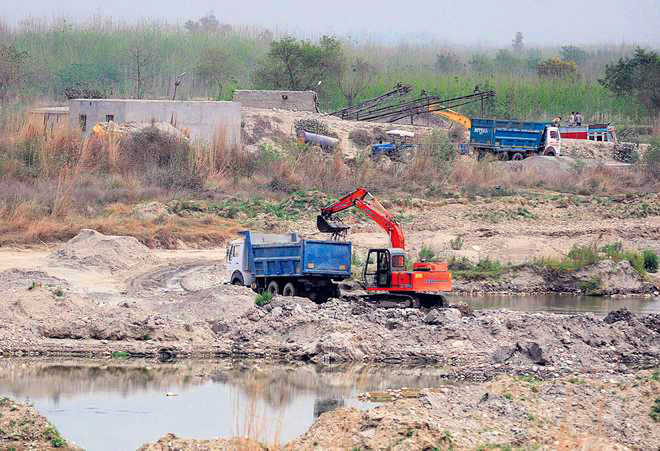
New sand quarries:Govt to opt for progressive bidding

New sand quarries:Govt to opt for progressive bidding
The new draft mining policy will come up for consideration at the Cabinet meeting tomorrow. Tribune file

Ruchika M Khanna

Tribune News Service

Chandigarh, April 18

The state government is all set to do away with reverse bidding for the auction of 58 new sand quarries, whose environmental clearance is expected soon, and opt for progressive bidding.The new draft mining policy will come up for consideration at the Cabinet meeting tomorrow. However, reverse bidding will be adopted for the 59 old quarries to be re-auctioned on April 24.In progressive bidding, buyers compete to obtain goods or service by offering increasingly higher prices. In a reverse auction or bidding, the sellers compete to obtain business from the buyers and prices typically decrease as the sellers undercut each other.The then Akali-BJP government had drawn flak over the cartelisation of the mining business and escalating prices of minor minerals extracted from sand quarries. After a below-par show in the 2014 Lok Sabha polls, the government had adopted reverse bidding.Mining contractors opine that progressive bidding would lead to higher bids, thus hiking manifold the cost of extracting sand and aggregate (sand and gravel).In the past month, the supply of sand has dropped and its price has gone up from Rs 15,000 to Rs 19,000 for 800 cubic ft (one truckload). The price of aggregate (bajri) has gone up from Rs 15,000 to Rs 20,000 for 800 cubic ft.Official sources said checks and balances had been incorporated in the draft policy to control prices of sand and gravel. The policy, it is learnt, will have provision for a helpline on which complaints about illegal mining or overcharging can be made.

Students to be taught about Saragarhi battle: Badungar
Students to be taught about Saragarhi battle: Badungar
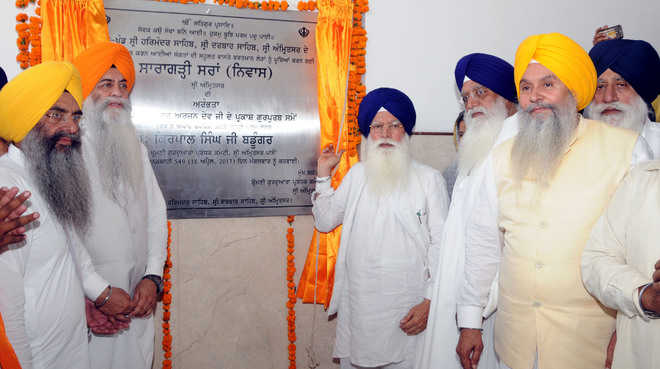
SGPC chief Kirpal Singh Badungar (second from right) inaugurates Saragarhi Niwas in Amritsar on Tuesday. tribune photo: vishal kumar

Amritsar, April 18

The Battle of Saragarhi, one of the greatest stand-offs in the Indian history, is now going to be part of the curriculum of the SGPC-run educational institutes.This was disclosed by SGPC chief Kirpal Singh Badungar while inaugurating the state-of-the-art inn dedicated to the 21 Sikhs, who chose to fight to death while facing 10,000 Afghan attackers, in the Battle of Saragarhi on September 12, 1897. It occurred in North-West Frontier Province, which was part of British India at that time. It is now named Khyber-Pakhtunkhwa and is part of Pakistan.Badungar said even as the story is part of school curriculum in countries such as France, Italy, Japan and the UK, the Centre had never spared a thought for it.“We have decided to include the history of Saragarhi battle in the curriculum of our 38 colleges, 80 schools, medical college, Guru Granth Sahib University, polytechnic and other institutions. We are putting up a resolution in our upcoming executive body meeting to seek nod for it,” he said. — TNS

Top educationist to be VC of PTU

Rajmeet Singh

Tribune News Service

Chandigarh, April 18

The Punjab Government today decided to appoint a reputed educationist as Vice-Chancellor of the government-run IK Gujral Punjab Technical University (PTU), Jalandhar.While clearing the appointment, the CM has directed the Department of Technical Education to invite fresh applications through public notice and get them scrutinised by a search committee headed by the Chief Secretary (CS).The previous Technical Education Minister, Madan Mohan Mittal, and the then CS Sarvesh Kaushal had locked horns on the selection of the Vice-Chancellor. The government has decided to consider 28 applications that were received during the term of the previous government.Due to the cold war between Mittal and Kaushal, the Vice-Chancellor’s post had been lying vacant since January 2015 even as a 12-member Board of Governors (BOG) had recommended a three-member panel to select the Vice-Chancellor.Mittal, who had even gone public in blaming the CS for “violating rules” while forwarding the panel had reportedly been lobbying for a candidate with a saffron background.The then panel comprised Dr MP Poonia, director, National Institute of Technical Teachers Training and Research (NITTTR), Chandigarh; Dr VK Rattan (professor in Panjab University) and Dr Sanjay Marwaha, a professor of Sant Longowal Institute of Engineering and Technology, Sangrur.

Printing woes: Schools to have book banks

Chandigarh, April 18

Struggling to provide textbooks to students in time, the Education Department today announced “book banks” in all schools to save time and money of the students.Students will be asked to submit their old books, which in turn would be provided free of cost to others in need.The department is also mulling to incentivise such students. However, the department has not finalised the criteria and method on how to do so.The decision comes when Punjab School Education Board (PSEB), which publishes books on behalf of the department, is facing a severe shortage of paper.“The constitution of the book bank is purely voluntary and is not binding on any student. Those contributing towards the book bank must be incentivised, which is being deliberated upon, Education Minister Aruna Chaudhary said. — TNS

Punjab CM writes to VC, promises help

Tribune News Service

Chandigarh, April 18

A day after Punjab Finance Minister Manpreet Badal offered help, Chief Minister Capt Amarinder Singh wrote to the Panjab University Vice-Chancellor, reiterating the same.Arun Kumar Grover, Vice-Chancellor, Panjab University, said, “We received a letter from the Chief Minister today. he asked us to consult with the state Finance Minister in this regard.”The Vice-Chancellor, however, said he had written to the Finance Minister, seeking a meeting, to which he is yet to responsd.Notably, on Monday, the Congress government had assured to help the university and accused the previous SAD-BJP dispensation of not providing adequate funds to it.Earlier, Grover had written to the government seeking a meeting to apprise it of the financial situation.



Four steps to correct squinted view of Kashmir by Arun Joshi

India has to first and foremost put in place a realistic narrative as a way out of the Kashmir imbroglio that has become more intractable. More than ever before, instead of a military solution, there is the dire need for “quiet diplomacy and politic

IT is very difficult to describe the current Kashmir situation in a balanced manner. There are so many prejudices that suppress the existing reality from coming to the real-time attention. The whole scenario is subjugated by an all-pervasive narrative  of  oppression of the people by the ” brute forces” . It  has been peddled so effectively on the social media and the news channels that the US  representative  at the United Nations,  Nikki Haley, dropped clear hints that President Donald Trump may speak to India and Pakistan to resolve their issues. The unspoken reference is to Kashmir, which evokes fears of a “nuclear flash point in the region” for the international community. India, for all good reasons, rejects the talk of third-party intervention and asserts that it can resolve its issues. But the the damage is done. Pakistan has succeeded in reviving the world’s fears vis-à-vis Kashmir and its eastern neighbour, India. Now, the question may be asked who has isolated whom  at the world stage. 

Worsening situation

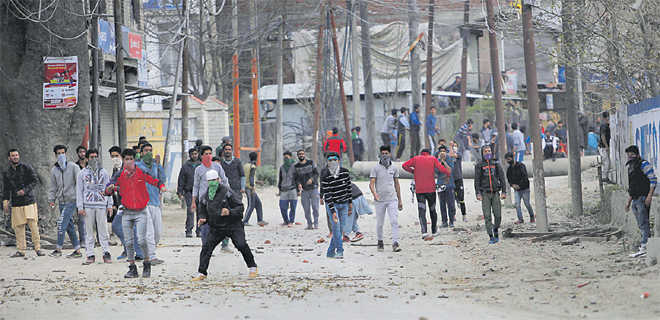
Never before was the Kashmir situation as bad as it is today.  It is a grave mistake to read the situation in terms of decline in terrorist violence  and drastic reduction in casualties from hundreds in the 1990s to less than 100 in terrorism-related incidents in the Valley. The real issue is that the Kashmiri psyche is ingrained with the idea of resistance — not just with guns and stones but also with the hate and anger that they harbour against India. What happened  in Chadoora on March 28 — three  protestors were killed  in security forces’ firing for they were being harassed by the hostile and the stone- throwing  mobs to  dismantle their anti-militancy operation launched to neutralise one militant. These killings, read with the  home-grown  psychology of ‘hate India’ —soldiers are seen as  face of India — reveal an uncomfortable truth. The crowds had rushed to the encounter site, willing to risk their lives to save the  trapped militant. This doesn’t end here. The youth at the encounter sites with  all-too-visible stones in their hands showcase the widening of the conflict. Pakistan, of course, is delighted by all this. It helps its Deep State to work to cause unrest in the Valley and to demonise India through its envoys and hired propaganda machinery within  Kashmir and abroad. That is where the international attention gets riveted to Kashmir trouble. In short,  the  conflict is widening  at an amazing pace in the minds of Kashmiris.  Prime  Minister Narendra Modi, who brought a choice of terrorism and tourism for the stone-throwers, was looking only through the prism of  economic prosperity of the place. That terrorism and tourism don’t go together is a universally accepted phrase. He was 100 per cent right in making the people aware of how terrorism in Kashmir had brought decades of bloodshed to the Valley, ruined their progress and made them hostage to deprivation. So much so, the benefits of the advance of the 21st century have been denied to the people.  Thus economics matters in Kashmir as it does elsewhere in the world. But they have demonstrated an undiminished  love for the militants and stone-throwers. All the earlier talk of “azadi,” and Pakistan  as their future nation has been subdued by the  romance of the Islamic rule. India faces four different challenges to transform the narrative if it really wishes to do something  in Kashmir. First, it has to discard the notion that a military approach alone can help to regain the lost paradise. It has not worked. Local militancy is a greater threat than the one coming from across the border. It is true, as the Prime Minister said, that if Pakistan is unable to stabilise itself, can it be a choice  for the people of Jammu and Kashmir? The fact is that the Pakistan-sponsored narrative has more acceptability here. Secondly, Pakistan needs to be dealt with sophisticated diplomacy. The snub-Islamabad policy for all its audaciousness is not the answer. Mature nations look at  long-term victory and not short-term nationalist passion-satisfying diplomacy.  Third, it is more important  for India to set its own house in Kashmir in order  before embarking on the journey of diplomatic victories. The country’s soft power is nearly absent. Hard power has not been able to tame militancy. The people are important. It is a good sight to see (from the Indian perspective) thousands lining up for jobs at the Army recruitment rally. That, too, needs to be analysed. Why were these people there? Were they in search of jobs or for their love for the nation? The narrative should be moulded in such a way that even those who don’t find jobs love the nation. Unfortunately, that is not the reality. Fourth, it should be borne in mind  that Kashmiris by and large are peace-loving  people but they have been pushed into the cauldron of violence. They are in search of  trustworthy peace not by the overwhelming and intrusive presence  of the forces but as an evolution that  finds its way through “quiet diplomacy and politics.” This is the phrase used by the former Home Minister, P Chidamaram, but it is more relevant today than ever before. Delhi should also stop funding and  encouraging political parties and their leaders who  seek escape routes in being pro-Pakistan and  manufacture narrative  about the Kashmir scene. They are more deadly than separatists. That distinction needs to be made right away to bring a breath of fresh air, with the help of a realistic narrative which will help in curing the squinted  view of Kashmir. 

ajoshi57@gmail.com


Finally, a return to old tactics BY Lt Gen Syed Ata Hasnain (retd)

In Kashmir, armed forces & social media warriors are in a hybrid war situation. The fastest-finger-first urge has to be restrained by both. Intent to dominate the information domain & physical space in south Kashmir is thwarted by the lack of Vajpayee-Mufti political initiatives.

Operation Clean Up resumes after 17 years to breach the quadrilateral of unrest

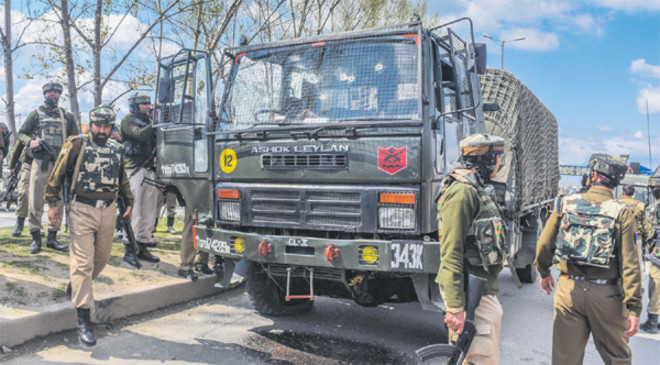
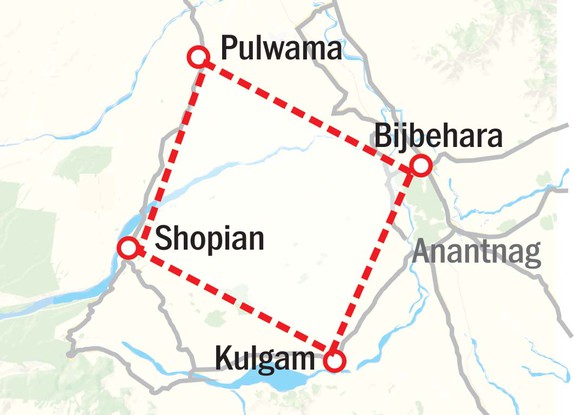
IT is not often that you will find analyses of individual operations of the security forces in the media. However, when you witness a revisit to tactics of the past, those done away 17 years ago, perhaps such a review may be pertinent. Technology has enabled the spread of diverse information in the intervening period that the degree of interest in the public on such issues has multiplied manifold. In the backdrop of the heinous act by the Pak Army-terrorist combine in Poonch on April 30, 2017 military operations on the LoC also occupy greater space.When the Army moved two brigades from Udhampur into Kashmir in August-September 2016 in the wake of large-scale disturbances which had paralysed governance, one knew it was a dire requirement. No military institution ever teaches how such large forces are to be employed in classic hybrid situations to restore order. All that was needed with these forces was the occupation of the space in South Kashmir which had been vacated over time to plug infiltration at the LoC. It was important to back up the JK Police to reoccupy the vacated police stations, bolster the confidence of the force which had been targeted in a much focused way and regain/re-establish the “moral ascendancy” of the Army which may have diluted. The Army did it that way, ensuring it sent a “strong message” of its presence and that it would not resort to any wrong means to control the situation, even in the face of serious provocation which was underway.Those brigades have probably withdrawn and the situation in South Kashmir has worsened in many ways in 2017. In my years with Victor Force of the Rashtriya Rifles (RR), I always considered the quadrilateral formed by Bijbehara, Kulgam, Shopian and Pulwama (see map) as the citadel which needed to be breached. That is the very area causing much concern today although Central Kashmir has also witnessed the same. The recent incidents of bank robberies and the ambush on the cash van of the J&K Bank, leading to the killing of five JK policemen (all from Kashmir) and two local bank security men cannot be glossed over. The message is there is no remorse in the killing of locals if they stand in the way. No doubt, Kashmiris have lost their lives at the altar of local terrorist actions in the past and even targeted killings have taken place but a lack of condemnation and an expression of happiness by locals is disturbing. This is a reversal of much that had been gained. It signifies the stronger entry of Pakistani terror groups and influences without which such a trend would seldom be witnessed. In the past, Pakistani terror groups have announced their domination through some heinous acts such as minority killings and massacres of innocents. It is something the security set-up in Kashmir should be wary of. Thus Operation Clean Up launched on 4 May hasn’t come anytime too soon. It’s a joint operation of the Army’s RR, CRPF and the JK Police. In purely military operational terms, it is aimed at regaining control that may be perceived to be in contention, not necessarily lost. The last time large formation sized search and destroy operations (SADO) or cordon-and-search operations (CASO) were conducted was in 1999-2000. In the Hafruda forest belt jungle searches have been a norm even in recent years. The Army’s strategic reserve was in the Valley as a follow-up to Kargil and was employed both for “jungle bashing” and search of semi-urban areas. It had its effect, sending home the resolve of the state. While many recoveries of logistics material of terror groups were made, the ensuing effect was the killing of terrorists who did not have the sustenance to survive in their hideouts. More importantly, the psychological message was sent that the Army would always resort to any type of operations to ensure its operational and tactical domination. Since then the Army has calibrated its concept of operations restricting these to intelligence-based ones or small CASOs so as not to cause unnecessary inconvenience to the public. This was progressive revision of concepts. Conflict progression moved towards conflict stabilisation and was in sync with the political initiatives of Prime Minister Atal Behari Vajpayee and Chief Minister Mufti Mohammad Sayeed. Hybrid war situations like all military situations are always dynamic; no use of bemoaning lost opportunities. They will always return and perhaps one may be better prepared for them then. What should be expected from Operation Clean Up? Is the return to tactics of yore worth it, especially since not much seems to have been achieved in terms of apprehensions, neutralised terrorists or recovery of warlike stores?General Bipin Rawat, the Army Chief has invested a lot in the current operation, having personally visited HQ 15 Corps to take stock of plans and give last-minute directions. These operations usually commence late at night, with cordons being established. The population is asked to vacate houses early morning and then search is carried out. The difference from the “crackdowns” of the 1990s is the large-scale presence of the media in all these villages and townships. Clearly, the operation was not pushed to limits as stone-throwing emanated and the security forces did not use coercive power, their intent being focused on the terrorist element.The operation appears only a demonstration of intent and not more.There will be difference of opinion on whether more coercion should have been used against stone-throwers and their leaders. Obviously, this is being carefully calibrated. Two things are important if the messaging has to be correct. The information domain needs as much domination as the physical space of South Kashmir. The negativism against India at the recent UN Human Rights Review Meet proves how far we are from effectively projecting India’s stance. Second, return to old tactics in a calibrated way for a necessary reason is fully justifiable as street and terrorist violence was spiralling out of control. What must accompany this is an engagement not of separatists or their cohorts but a set of people who believe in India. As stabilisation of the security situation begins, the India supporters can be strengthened. It must also be continuously demonstrated that Kashmir has distinct advantages by being part of India. Soft power can never be divorced from hard power in workable strategies; only one has to know where and in what quantum soft power must be applied. Demonstration of intent must be as focused as much as the hinterland. The best psychological message at the LoC is always evident when commanders on the ground have the freedom to act. Under the circumstances there should be complete empowerment, subject to fitment into overall strategy. The writer, a former GOC of the Srinagar-based 15 Corps, is now associated with the Vivekanand International Foundation.



Major called for questioning over recovery of grenades

Majid Jahangir

Tribune News Service

Srinagar, April 4

The J&K Police have called a Major named by the soldier, who was detained on Monday after the recovery of two grenades from his luggage, and is also looking for two persons for questioning.Police sources said Bhupal Mukhia of 17 JAK Rifles, who was arrested from Srinagar airport told the investigators that the packet in which the grenades were concealed was given to him by a soldier at a transit camp at Badamibagh.“A jawan handed over the well-concealed packet to me saying that ‘Major Sahib’ from his unit had directed him to hand it over and deliver it in Delhi,” the sources said.“After the disclosure, we have also called the Major for questioning. We are also looking for the sepoy who handed over the packet and another person who called Bhupal over phone to inquire about the packet (grenades) which were to be delivered in Delhi,” they said, adding that they were cross-checking all claims made by the jawan.“For now, it looks that the Army jawan from whom the grenades were recovered was not aware what was concealed inside,” they said.The Major, who is currently in Jammu will be joining the police investigation in a day or two, the sources said.The police are also trying to find how and from where the grenades were procured.Bhupal serves near the Line of Control in the Uri sector of Kashmir and was to board a Delhi- bound flight before the anti-hijacking wing at the airport detained him after the recovery of the two grenades concealed in the luggage.The Army had initially told the investigators that the grenades were “drill items”.The Army, which has assured action as per the law, has also ruled out that there was any hijacking angle.“After preliminary investigation, it is clarified that it is a case of carriage of grenade and there is no hijacking angle to the incident,” Srinagar-based defence spokesman Col Rajesh Kalia said on Monday


Ex-Maj Gen Jha completes 42k minutes of cycling

Ex-Maj Gen Jha completes 42k minutes of cycling
Maj-Gen Somnath Jha (retd) who completed his cycling campaign in Dehradun on Thursday. A Tribune Photograph

Tribune News Service

Dehradun, April 13

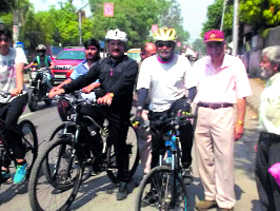
He is not like other Army veterans, who would have loved playing golf after retirement. But Maj-Gen Somnath Jha (retd) had something else in his mind when he hung up his boots in September 2016.Pushing 60, Maj-Gen Somnath Jha decided to go for 42,000 minutes of cycling as a tribute to 21,000 martyrs of the country. He resolved that for these 21,000 martyrs, he would cycle for two minutes for each one of them, the total of which would come to 42,000 minutes of cycling. Jha today reached Dehradun finally completing 42,000 minutes of cycling and covering all the 29 states of the country which he did in seven months.Talking to The Tribune in Dehradun, Maj-Gen Somnath Jha said he received a standing ovation from commoners wherever he went during his cycling campaign. “I met ordinary people, who lauded my pledge for cycling for the fallen heroes of the country. I even met family members of many martyrs, who appreciated my gesture,” he said. He said a large number of veterans, NCC groups and even serving personnel came forward to greet me at various places.“I had pledged to do this task as a tribute to the fallen soldiers of the country and I have completed it today. Rain, heat, etc on the way were no excuse,” Maj Gen Somnath Jha said.



Investiture ceremony at IMA

Investiture ceremony at IMA
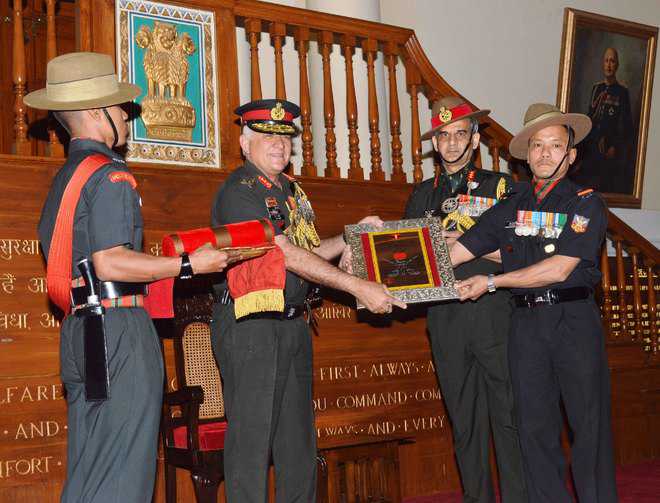
Lt Gen DR Soni, General Officer Commanding-in-Chief, Army Training Command (ARTRAC), gives away the citation to IMA Commandant Lt Gen SK Upadhaya in a function held at the IMA in Dehradun on Thursday. Tribune photo

Tribune News Service

Dehradun, March 30

Lt Gen DR Soni, General Officer Commanding-in-Chief, Army Training Command (ARTRAC), gave away prestigious citations for outstanding contribution in the field of training during the investiture ceremony held at Chetwode Hall in the Indian Military Academy (IMA) here today.The proud recipients of this year’s “GOC-in-C ARTRAC Unit citation” were the IMA; Remount Veterinary Corps Centre and College, Meerut; College of Materials Management, Jabalpur; Institute of National Integration, Pune; 126 Infantry Battalion (Territorial Army), Jammu and Kashmir Rifles; 707 Target Support Unit and the 136 Field Regiment.On the behalf of the IMA, IMA Commandant Lt Gen SK Upadhyay, received the citation conferred for distinguished service and professionalism in imparting quality training during 2016. All winning academies and units have made exceptional contribution in enhancing training activities of the Indian Army. Officers heading their respective institutions/units along with their subedar majors received the citations from the Army Commander.


South Asia Satellite, ‘India’s gift’ to neighbours, launched

South Asia Satellite, 'India's gift' to neighbours, launched
GSLV-F09 carrying South Asia Communication Satellite lifts off from Sriharikota spaceport on Friday. — AFP

Chennai, May 5

An Indian rocket with the over 2-tonne South Asian Satellite blasted off from the Sriharikota spaceport on Friday evening.Precisely at 4.57 pm, the Geosynchronous Satellite Launch Vehicle (GSLV-F09) rose into sky from the second launch pad at Satish Dhawan Space Centre at the spaceport in Andhra Pradesh.  (Follow The Tribune on Facebook; and Twitter @thetribunechd)The 49 metre-tall, 415-tonne rocket will sling into orbit, the 2,230-kg South Asia Satellite is intended as an ‘India’s Gift’ for use by its fellow South Asian Association for Regional Cooperation (Saarc) nations save Pakistan, which had opted out, stating “it has its own space programme”.Read more: South Asia Satellite: Heralding regional cooperation through space diplomacyIn his message, Prime Minister Narendra Modi said, “Successful launch of South Asian Satellite is a historic moment. It opens up new horizons of engagement.” I congratulate the team of scientists who worked hard for the successful launch of South Asia Satellite. We are very proud of them,” he said.Read: Pak blames India for exclusion from ‘SAARC Satellite’ projectIn 2014, Modi had tasked the Indian Space Research Organisation (ISRO) to develop a satellite for use by the Saarc countries.Costing around Rs 235 crore, the satellite was initially known as the Saarc satellite but with Pakistan deciding to keep out, it is now called the South Asia Satellite. Its life span is over 12 years.In his most recent monthly radio address ‘Mann Ki Baat’, Modi said the South Asia Satellite will go a long way in addressing the region’s economic and developmental priorities.“Natural resources mapping, telemedicine, the field of education, deeper IT connectivity or fostering people-to-people contact, this satellite will prove to be a boon in the progress of the entire region.”It is an important step by India to enhance cooperation with the entire South Asia…It is an invaluable gift. This is an appropriate example of our commitment towards South Asia. I welcome all the South Asian countries who have joined us on this momentous endeavour,” he had said.According to an official, the ISRO on an experimental basis decided to have electric power for the satellite.”We have not reduced the volume of the traditional on-board fuel because of the electric power. We have added electric power facility to check its performance for use in future satellites,” the official told IANS.He said the next satellite with electric power will be the GSAT-20 slated for launch in 2018.The GSLV is a three-stage/engine rocket. The core of the first stage is fired with solid fuel while the four strap-on motors by liquid fuel. The second is the liquid fuel and the third is the cryogenic engine. — IANS

clip