All posts by webadmin

Nirmala opens TN Defence Corridor

Nirmala opens TN Defence Corridor

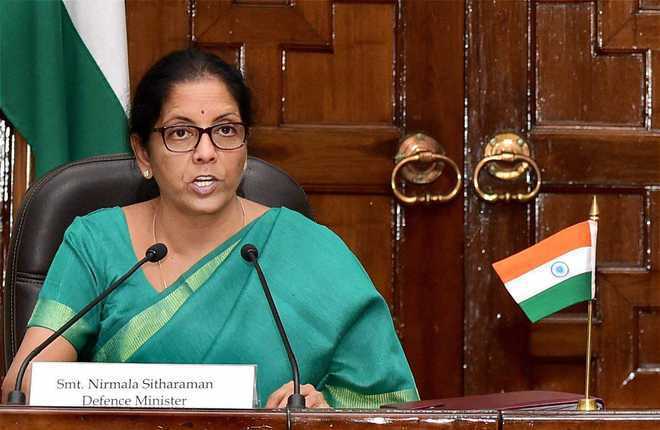
Defence Minister Nirmala Sitharaman, File photo.

Tiruchirappalli, January 20

To accelerate indigenous production of defence systems, Defence Minister Nirmala Sitharaman today inaugurated Tamil Nadu Defence Industrial Corridor that is expected to attract Rs 3,123.50 crore worth of investment.

Inaugurating the corridor, Sitharaman said the Centre had decided on two corridors — in Uttar Pradesh and Tamil Nadu — despite demands from states like Karnataka and Maharashtra.

She also spoke about the Defence Ministry’s initiatives to ensure that the Indian industry engages with the country’s armed forces to co-create best defence technologies. Sitharaman said the development of these specialised corridors will facilitate a well-planned and efficient industrial base.

Several public and private sector organisations announced investment projects worth about Rs 3,100 crore, said the Defence Ministry. Major players like Lockheed Martin, LMW and others announced their plans to set up units in the corridor.

The Ordinance Factory Board announced its plans to invest about Rs 2,305 crore. Among the investors are BEL (Rs 140.50 crore), BEML (Rs 40 crore), BDL (Rs 150 crore), MDL (Rs 15 crore), TVS (Rs 30 crore) and Data Patterns (Rs 75 crore). — IANS

Rs 3K-cr investment  

  • Nirmala Sitharaman said UP too would have a defence corridor
  • The aim, she said, was to facilitate well-planned and efficient industrial base
  • TN corridor has attracted an investment of Rs 3,123.50 cr


Pak continues to use Afghan Taliban as hedge against India: US

Pak continues to use Afghan Taliban as hedge against India: US

Marine Corps Lt General Kenneth McKenzie’s remarks came days after US President Donald Trump sought Pakistan Prime Minister Imran Khan’s help in the Afghan peace process.

Washington, December 5

Pakistan continues to use Afghan Taliban as a hedge against India, a top American commander has told lawmakers, as he expressed the US frustration over Islamabad’s failure to take concrete steps to deny safe havens to terrorist groups.

Marine Corps Lt General Kenneth McKenzie’s remarks came days after US President Donald Trump sought Pakistan Prime Minister Imran Khan’s help in the Afghan peace process.

The Trump administration, in the recent months, has intensified its efforts to seek a negotiated settlement of America’s longest war in Afghanistan where the US has lost over 2,400 soldiers since late 2001, when it invaded the country after the 9/11 terror attacks.

The Taliban are fighting to flush out US-led international forces and re-establish their regime in Afghanistan after their ouster in 2001.

“Pakistan is an essential element in long-term stability in Afghanistan,” McKenzie told members of the Senate Armed Services Committee on Tuesday during his confirmation hearing for commander of the US Central Command (CENTCOM).

Pakistan could play a key role in facilitating talks between the Taliban and government of Afghanistan, he said.

“Pakistan does not appear to be using the full extent of its influence to encourage the Taliban to come to the table,” he said.

“We continue to see the Taliban being utilised as a hedge against India rather than as part of a stable, reconciled Afghanistan,” McKenzie said.

His answers to the Senate Armed Services Committee came after it became public that Trump had written a letter to Imran Khan, seeking his help in the Afghan peace process.

“President Trump sent a letter to Prime Minister Khan, requesting Pakistan’s full support to the US-led Afghan peace process and Special Representative for Afghanistan Reconciliation Ambassador Zalmay Khalilzad’s upcoming trip to the region,” a spokesperson of the National Security Council, White House, told PTI.

“In the letter, the President recognises that Pakistan has the ability to deny the Taliban sanctuary on its territory,” the spokesperson said.

“The letter also makes it clear that Pakistan’s assistance with the Afghan peace process is fundamental to building an enduring US-Pakistan partnership,” the spokesperson said.

McKenzie told lawmakers that he did not see much of a change in Pakistan’s behaviour towards Afghanistan or its stand against terrorist groups.

Despite Pakistan’s positive rhetoric in support of the US’ South Asia Strategy, violent extremist organisations (VEOs) operated along its border with Afghanistan, he said.

“While Pakistan has conducted some operations against VEOs in the country, they must continue to expand these operations and remain aggressively engaged,” McKenzie said.

“Taking concrete steps that deny VEO safe havens in Pakistan and VEO freedom of movement from Pakistan to Afghanistan remain an important task that Pakistan needs to fulfil. Pakistan must leverage their influence over the Taliban leadership to help compel them to come to the table for reconciliation negotiations,” he added.

McKenzie said the US CENTCOM would continue to support the State Department as it worked towards a diplomatic solution to the conflict in Afghanistan, which included ensuring that Islamabad’s equities are acknowledged in any future agreement.

“Pakistan’s action or inaction, as it relates to stability in Afghanistan, has often led to US’s frustration,” he said, adding that stability in the South Asia region remained the most important mutual strategic interest for both the US and Pakistan.

“We must continue to engage with the Pakistani leadership to realise how we can achieve this mutual interest,” McKenzie said.

“I do believe that any solution in Afghanistan is going to require the assistance of Pakistan. It has to be a regional solution, not just a solution centred in Afghanistan,” he said.

It is in Pakistan’s long-term interest to have a government in Afghanistan that is stable, and that they can do business with, he said.

“So I think Pakistan has not shown indications, by and large over the last few years, of being a serious partner in this regard,” McKenzie said.

US Special Representative for Afghanistan Zalmay Khalilzad on Tuesday met Pakistan Foreign Minister Shah Mahmood Qureshi in Islamabad. McKenzie said the meeting was to see if the US could find some way forward.

“Probably Pakistan knows very clearly that their assistance will be required to reach an end-state in Afghanistan. I think the task that we have is to make it attractive to them so that they see that it is in their best interest to do that,” McKenzie said. PTI


Honey-trapped’, jawan shares Arjun tank info

Posted with armoured unit, was lured on FB, now in police remand

‘Honey-trapped’, jawan shares Arjun tank info

Somveer Singh

Yash Goyal

Jaipur, January 13

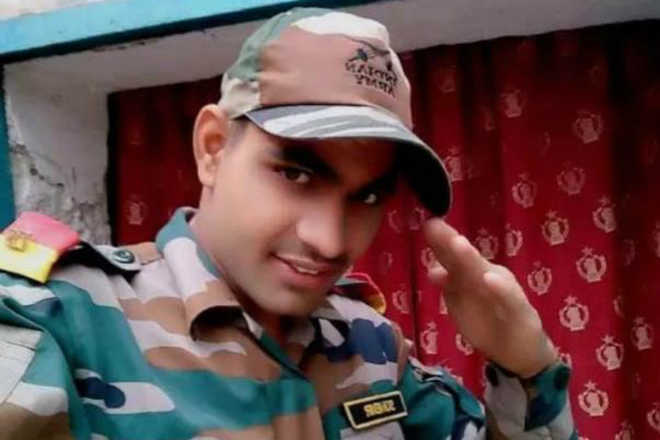
An Army jawan, posted with an armoured unit in Rajasthan’s Jaisalmer district, has been arrested for allegedly sharing sensitive information with a Pakistan agent after being honey-trapped. A special court has remanded him in police custody for seven days.

The jawan, Somveer Singh, hailing from Haryana and posted with 75 Armoured Regiment, was allegedly honey-trapped by the agent by posing as “Anika Chopra”, “Captain” in the Military Nursing Corps, on the Facebook. Somveer Singh was arrested under various sections of the Official Secrets Act, 1923, by the Intelligence Wing of the Rajasthan Police and produced before the Special Criminal Court on Saturday, said a senior official of the state police today.

The accused, who allegedly received Rs 5,000 for spying, was currently lodged at the Central Police Station here and was being interrogated, he said. A unit of Military Intelligence had found the jawan allegedly sending pictures, locations of exercises and sensitive information, including that on Arjun tank, to the Pakistan agent. In a joint surveillance, the Military Intelligence and state police’s Intelligence Wing headed by DG-Intelligence arrested Somveer.

Gadgets, including a smart phone, were seized from his possession. His call details were being examined to ascertain the kind of information sent across the border. “The accused has confessed to having shared crucial information with the Pakistan agent,” the official said. Asked about the possibility of other Army personnel being honey-trapped by the Pakistan operative on the Facebook, the official said: “The matter is being investigated.”

“It is not just a case of honeytrap, but that of spying too as this jawan was paid Rs 5,000 through another account to avoid suspicion. He transferred the money into his account, probably an e-wallet,” the official said.

“Eight months ago, the operative posing as ‘Anika Chopra’ befriended him on the social networking platform by sending lewd messages. During online chats, intimate pictures and videos, besides sensitive information, were shared on the smartphone,” he said. “The fake account originating in Karachi, Pakistan, was closed after the Military Intelligence spotted Somveer sharing sensitive information,” the official said.


Navy’s salvo against IAF The rocky path to achieving military jointness

Navy’s salvo against IAF

THE Indian military has held its own in all military ventures since Independence, barring the 1962 conflict with China. After Kargil found the Indian military stretched, deep introspection about the archaic system of organising the forces gave way to a nearly two-decade endeavour to achieve tri-service integration. The Fusion Doctrine, as it is known the world-over, involves drawing together all military capabilities in which the might of the three services is brought to bear on the enemy in an integrated manner. The efficacy of the CDS system has been proved in five dozen countries, but in India, serious and sincere efforts to remodel the present higher defence organisation have run into political and inter-services opposition.

The Navy Chief’s disclosure that his Air Force counterpart has raised the red flag over joint theatre commands indicates the tough road ahead in taking all stakeholders on board for an eventual reorganisation of the Indian military. The appeal of sole ownership over existing military assets and the possibility of restructuring shaking up present channels of promotion have contributed to foot-dragging by one service or the other. But there is no escape from restructuring — a single Chinese theatre command faces India’s six commands of the Air Force and the Army. The snafus in coordination during hostilities can be easily visualised.

That jointness imparts speed and optimum concentration of military assets is known. Restructuring will also help an emerging, but resource-strapped power like India to eliminate commonality and overlap in many tri-service arenas, including equipment, training and utilisation of surveillance assets. The Vajpayee and the Manmohan Singh governments hung back from pushing the envelope for fear of a backlash from the services. The Indian armed forces have risen to national emergencies without fail. But corrective measures too are long overdue. The government must lose no time in setting up joint theatre commands. With a budget of just 3 per cent of GDP, the armed forces need to pool their manpower and firepower to play a more cost-effective and active role in guarding and building the nation.


A Liability Called Rafale | Point of View

A fully loaded Rafale is only as capable as the Su-30, MiG-29 and Mirage 2000. The talk of Su-30/Rafale for distant nuclear delivery against China is a joke.

Illustration by Tanmoy Chakraborty

Illustration by Tanmoy Chakraborty

The French Rafale combat aircraft is a political embarrassment and a military liability. It’s an inappropriate, cost-ineffective buy that adds no real operational value to the Indian Air Force (IAF) in terms of enhancing its reach, clout and mission versatility, but adversely impacts the air order-of-battle.

Per current plans, by 2025 and with the induction of the 36 Rafales bought in flyaway condition, the IAF will have between 272 and 312 Su-30MKIs or 17-20 squadrons upgraded to the ‘Super Sukhoi’ configuration, more than 90 Jaguars or five squadrons, more than 60 MiG-29s or four squadrons, and over 50 Mirage 2000s or three squadrons-totalling 34 squadrons of 4.5 generation aircraft. Seven squadrons of the indigenous Tejas Mk-1A and Mark-2-also 4.5 generation-replacing MiG-21 for short-range air defence means an IAF force profile of 41 squadrons (by mid-2030s).

So, what’s wrong with this force structure? Other than Jaguar for low-level strike and Tejas, the Rafale has, with full ordnance loading, the same operational range and capability as the Su-30, MiG-29 and Mirage 2000. These are all medium multi-role combat aircraft (MMRCA) which, given range constraints, can be optimally fielded against Pakistan alone and in border affrays against China, but have zero strategic reach and worth. So, the talk of Su-30/ Rafale for distant nuclear delivery against China is a joke. This fits in with the IAF’s thinking and conduct as a tactical adjunct in the region of superior extra-territorial air forces (Royal Air Force in colonial times and the US Air Force in the immediate post-1962 war period and, perhaps, in the future). Whence the service’s emphasis solely on short- to medium-legged aircraft with no interest whatsoever in acquiring long-range strategic bombers, such as the Tu-22 ‘Backfire’ (first offered in August 1971) or the more lethal Tu-160 ‘Blackjack’, either of which could long ago have been purchased or leased from Russia. It would have enlarged the IAF’s operational/ mission envelope and firmed up the manned, recallable vector for nuclear as well as conventional deterrence of China. The IAF has had no bomber after the phasing out of the medium-range Canberra.

Until the April 2015 Rafale announcement by Prime Minister Narendra Modi, the erst­while defence minister, Manohar Parrikar, correctly favoured the option of quickly and economically augmenting the fleet of Su-30s-rated the best fighter aircraft in the world. It had several merits. For the price of one Rafale, the country would have had two Su-30s and Hindustan Aeronautics Ltd, Nashik, which assembles this aircraft, would have had a contract to produce more of them. The ‘Super Sukhoi’ version of the Su-30, more­over, meets the Rafale level of on-board data fusion capability. The upgrade of the Su-30 is, therefore, a critical need, except it is now imperilled by the Rs 59,000 crore down pay­ment for the Rafale, which leaves little funding for anything else.

The Rafale’s only other attribute is the exorbitantly priced Meteor air-to-air (A2A) missile, whose effectiveness is exaggerated. Even the most advanced A2A missiles have limited ‘kill zones’. The certainty of tracking, identifying, targeting and hitting enemy aircraft diminishes markedly beyond 50-80 miles. Worse, with so few Rafales and such high investment, the IAF will be loath to deploy them in war because every Rafale lost would mean over Rs 1,600 crore down the drain and, proportionately, a seriously attrited force.

Besotted by Western-origin aircraft, the IAF had hoped to use the initial order of 36 Rafales as a wedge to procure 90 more. That ruse being blown, it has indented for 114 new type single-engine MMRCA. With Donald Trump turning up the pressure, the 1960s vintage, museum-ready F-16 is likely to be the gap filler. It will pose no danger to the Pakistan Air Force that has been operating this plane for 30-odd years, but will fritter away resources and exacerbate an already hellish logistics problem for the IAF, created by the unmanageable diversity of aircraft in its inventory, each requiring its own expensive maintenance infrastructure.

The writer is author of Staggering Forward: Narendra Modi and India’s Global Ambiti.

Making Pakistan ‘secular’ Army Chief ventures into unchartered waters again

Making Pakistan ‘secular’

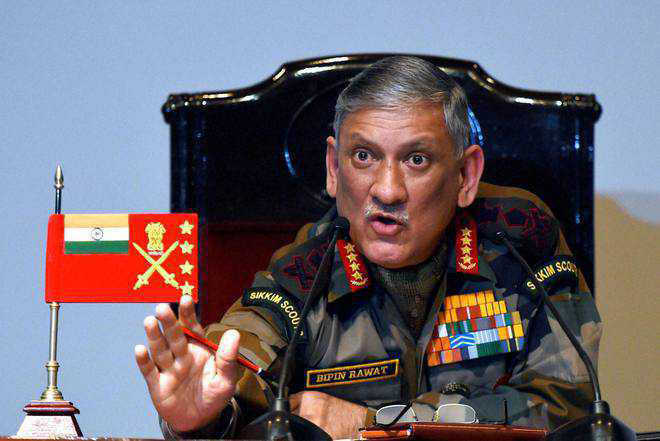
Army Chief Gen Bipin Rawat’s homily to Pakistan asking it to turn into a secular state from an Islamic nation if it has to stay together with India would have ruffled several feathers in the Foreign Office. It has been India’s consistent policy, bar a few aberrations, not to be prescriptive about the political arrangement in other countries. This stance is on display in the ongoing G-20 summit in Buenos Aires. Mohammad bin Salman of Saudi Arabia may be in the West’s doghouse for the murder of journalist Adnan Khashoggi and is an Islamic country to boot. That didn’t prevent PM Modi from discussing urgent matters of state with him.

Similarly, it is of little concern to India that China is a one-party state. As long as it does not imperil its national interests, India is happy to go along with China regardless of its political structure and sense of destiny. That also presumably is the political line the Army Chief is compelled to adhere to. The Army is the last line of defence and the Chief has to keep the morale of his men high and inspire them into combat. His exposition on the need for Pakistan to change its identity hardly promotes any of those prerequisites.

General Rawat superseded two senior officers on the way to becoming the Chief. The reason for the supersession, a rare happening in the Indian Army, was his vast experience on the Line of Control and in the Northeast. The Army has risen to the occasion in both sectors, but General Rawat betrays a lack of sensitivity and propriety when he weighs in on issues outside his domain. In this case, he also displays a naivety, if that is the case, about the fragility of the circumstances. The Kartarpur corridor has provided an extraordinary opening for India and Pakistan to get out of a diplomatic cul de sac. The situation requires India to display a unity of purpose among different actors for the tough bargaining that is inevitable. It could do without creating the impression of dissonance.


Counter-insurgency expert likely to take charge of 15 Corps

Counter-insurgency expert likely to take charge of 15 Corps

Majid Jahangir

Tribune News Service

Srinagar, January 6

A counter-insurgency expert with varied experience in tackling Kashmir militancy is likely to don the mantle of the highly sensitive 15 Corps of the Army.

Lt Gen KJS Dhillon is likely to take charge of the Army’s Srinagar-based sensitive and strategic 15 Corps in February, defence sources in Delhi said.

Lt General Dhillon is at present the Director General of Perspective Planning of the Army. He has previously served in various capacities in the conflict-hit Kashmir.

He will be replacing Lt Gen AK Bhatt, who had taken over as the General Officer Commanding of the 15 Corps, also called the Chinar Corps, on January 31, 2017.

“The new Corps Commander is assuming office in February,” a senior defence official said.

Lt General Bhatt is proceeding to New Delhi to assume charge of the Military Secretary, the defence official added.

Lt General Dhillon, a Rajputana Rifles officer, had earlier served in the Valley and commanded a counter-insurgency brigade — 7 Sector of the Rashtriya Rifles — at Handwara in frontier Kupwara district in 2011.

As the Brigade Commander, he was instrumental in planning a large number of anti-militancy operations in Handwara. Later, he also served as the Brigadier General Staff of the 15 Corps.

Lt General Dhillon also commanded the 36 Infantry Division, also called RAPID in the Southern Command.

The new Corps Commander would assume office at a time when J&K is gearing up for the parliamentary and Assembly elections. During the tenure of Lt General Bhatt, the security forces stepped up anti-militancy operations in Kashmir. Over 240 militants were killed in Kashmir during his tenure.


Defence ministry nod to ₹3,000-cr weapon purchase


NEWDELHI: The Defence Acquisition Council on Saturday approved military procurement worth Rs 3,000 crore, including Brahmos supersonic cruise missiles for Navy’s two stealth frigates and armoured recovery vehicles for the Army’s Arjun main battle tanks, a senior official said.

HT FILE■ India is procuring two stealth frigates, which will be equipped with indigenously developed BrahMos missiles.

THE APPROVALS INCLUDE SUPERSONIC CRUISE MISSILES FOR STEALTH FRIGATES AND ARMOURED RECOVERY VEHICLES FOR THE ARMY’S MAIN BATTLE TANK, ARJUN

India is procuring two stealth frigates at a cost of $1 billion and both the ships will be equipped with indigenously developed BrahMos missiles.

The DAC also approved the procurement of Armoured Recovery Vehicles (ARVs) for the Indian Army’s main battle tank, Arjun. The ARVs are designed and developed by the DRDO and would be manufactured by defence public sector undertaking BEML, the official said. The Defence Acquisition Council (DAC) is the ministry’s highest decision-making body on procurement.

Recently, India and Russia inked a $500 million contract to build two stealth frigates in Goa. Th ships are expected to be delivered by 2027.

Russia’s state-run arms exporter Rosoboronexport and India’s Goa Shipyard Limited (GSL) signed the contract in New Delhi to build the Grigorovichclass ‘Project 1135.6’ frigates with technology transfer from Russia, which is India’s top arms supplier.

“The indigenously designed Brahmos missile is a tested and proven supersonic cruise missile and will form the primary weapon on-board these ships,” said an official.

The frigate deal comes close on the heels of a Rs 39,000-crore deal with Russia for the supply of Russian S-400 Triumf air defence missile systems to India. The deal was signed despite appeals from the US that the air defence systems are a “focus area” of secondary sanctions under the Countering America’s Adversaries Through Sanctions Act (CAATSA), which is aimed at punishing Russia for annexing Crimea and interfering in the 2016 US elections.

The agreement was inked during Russian President Vladimir Putin’s one-day visit to India early in October.

“Our relations go beyond military hardware and military exchanges. We paid attention to humanitarian response mechanisms,” Putin had said, while addressing a press conference.

Both the S-400 and the frigate deal are likely to be affected by the US sanctions legislation if India is unable to secure a waiver.


clip


CM: More than 10% Army intake our aim

CM: More than 10% Army intake our aim

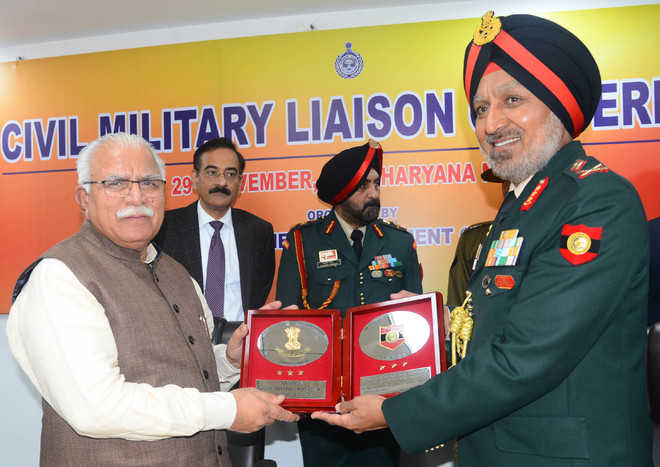
Lt Gen Surinder Singh, General Officer Commanding-in-Chief, Western Command, presents Manohar Khattar Lal, Chief Minister, with a memento in Chandigarh on Thursday. Tribune photo

ibune News Service

Chandigarh November 29

Chief Minister Manohar Lal Khattar said though there has been a sizeable intake of officers into the armed forces from Haryana, efforts are being made to increase it beyond the 10 per cent mark.

Khattar was addressing the Civil Military Liaison Conference here today. General Officer Commanding-in-Chief, Western Command, Lt General Surinder Singh, other senior government officials and Army officers also attended the conference.

While describing Haryana as the state of ‘jawan and kisan’, the CM said at present, the intake of officers into the armed forces from the state is over nine per cent, but we want to take it to over 10 per cent. Recently, the Khanda village panchayat in Sonepat district has given 50 acres for the setting up of an armed forces preparatory institute, he said.

Khattar said the state government has so far provided jobs to 252 dependents of the martyrs. It is the first time that dependents of martyrs of the 1962 and 1971 wars are also being provided government jobs.

It was informed that a General Degree College of Army would come up at village Bataur village, Barwala, Panchkula, for which the government had allotted 10 acres to the Western Command headquarters


*BATTLE OF LONGEWALA* As Stated by Brig Z A Khan in an Interview in Jan 2002

Please tell us in detail about the Longewala Operation of 1971?
While I was busy raising 38 Cavalry in Hyderabad I was called to Khairpur on October 16, where the 18 Division Headquarters were located. There the GOC Major General B. M. Mustafa explained his concept of forthcoming operations to Lieutenant Colonel Akram Hussain Syed and me, with his Colonel Staff Colonel Wajid Ali Shah present.
The general planned to defensively hold the  front south of Rahimyar Khan and outflanking the Indian left flank  seize Ramgarh and Jaisalmir; 38 Cavalry was to seize Ramgarh and 22 Cavalry was to neutralise the airfield at Jaisalmir; the GOC asked for our comments about the practicability of the plan from the armour point of view.
Lieutenant Colonel Akram Syed and I said that the plan would succeed if we made an approach march to the border on one night and undertook the cross border operations the next night and air cover was made available on the first day from dawn to dusk till Ramgarh and Jaisalmir had been secured. The general said he would make arrangements for the air cover, he cautioned that the plan was ‘top secret’ and was not to be discussed with anyone.
In the first week of November, 38 Cavalry, less ‘A’ Squadron detached to 55 Brigade at Chor, concentrated at Manthar, about 25 miles on the road Sadiqabad-Rahimyar Khan. A few days after the regiment concentrated, the COAS and Air Marshal Rahim, the PAF chief came to Rahimyar Khan where the 18 Division plan was discussed and the PAF chief assured the required air support.
A few days after the Rahimyar Khan meeting, the GOC inter-changed the roles of 22 Cavalry and 38 Cavalry because he anticipated a tank battle in the Ramgarh area for which 22 Cavalry was better suited. I considered the operation, Jaisalmir was 120 miles from the rail head at Reti, I expected an engine breakdown every 15 miles and requested that 12 spare engines be provided with an EME team and a breakdown with a crane to change engines, the GOC agreed to make the necessary arrangements.
The officers of 38 Cavalry carried out reconnaissance for counter penetration covering the approaches to Rahimyar Khan and Lieutenant Colonel Akram Syed and I took our officers along the route that we were to take to the border, Reti-Khenju-Gabbar-Masitwari Bhit-border without telling them that that was the route that we were to follow in the forthcoming  operations.
About the middle of November the news indicated that the attack on East Pakistan had begun and Indian aircraft started flying reconnaissance missions over Rahimyar Khan and Sadiqabad.
With war imminent I decided to let my officers and the Risaldar Major know that the mission of 38 Cavalry with an infantry battalion and mortar battery was to capture Jaisalmir and neutralise the airfield. I explained how the mission was to be conducted and that each tank was to carry 200 gallons of petrol in drums. At the division headquarters there was no preparations for the very imminent operations, on 1 December Colonel Saeed Qadir came to investigate the seizing of tank engines and ordered the removal of tank engines and cleaning of oil sumps and filters.
On 2nd December I received orders to report to the division headquarters and there the GOC told me that operations would begin that evening, that 38 Cavalry, 1 Punjab and a mortar battery would follow 51 Brigade upto Loganewala and proceed to Jaisalmir to neutralise the airfield. The GOC told me that I was not to attend the division orders but  to organise my force.
I telephoned my regiment to stop the work of taking down tank engines and prepare for moving out, I next went to the AA&QMG and told him that I required 16,800 gallons of octane 80 petrol, the AA&QMG told me that he knew nothing about the requirement and had no petrol available, after a discussion with the colonel staff the AA&QMG told me that the required petrol would be made available at Masitwari Bhit, 5 miles short of the border. It was obvious that the logistics of the operation had not been planned.
When the 18 Division ‘O’ group assembled, the PAF liaison officer, a wing commander informed the ‘O’ Group that the PAF would not be able to support the operation because the Jacobabad  airfield had not been activated. This announcement led the brigade commanders to ask the GOC to  cancel or postpone the operation, the GOC then telephoned the CGS and discussed the lack of air, after the discussion he  informed the ‘O’ Group that his orders were to conduct the operation without air support in the ‘national interest’. The brigade commanders then suggested that the GOC refuse to conduct the operation because it was very likely to fail. The GOC told the ‘O’ Group that he would conduct the operation because if did not he would be labelled as a general who had lost his nerve.
The plan made by Major General B. M. Mustafa required an approach  march of about sixty mile to the border, then a forty miles advance to Ramgarh by 51 Brigade of two battalions (the third battalion was a East Bengal battalion and had to be left out of the operations)  and 22 Cavalry, by passing Loganewala, to position itself to counter any reaction from the Indian 12 Division which was expected to be deployed facing Rahimyar Khan. I was to command the 38 Cavalry task force consisting 38 Cavalry less squadron, 1 Punjab ex-206 Brigade and a mortar battery,  and was to follow 51 Brigade till the metal road to Jaisalmir, 20 miles inside India was reached and then continue to Jaisalmir. 206 Brigade leaving one battalion on the Rahimyar Khan front (this front was held by Hur battalions) was to follow my force and secure Loganewala to form a firm base.
After these orders were issued the 206 Brigade commander objected to 38 Cavalry being sent to Jaisalmir with mechanically unsound tanks, the GOC changed the plan and ordered 28 Baluch the divisional Reconnaissance and Support Battalion less company and a mortar battery to neutralise the airfield and placed 38 Cavalry under command 51 Brigade. I was informed about the change in the plan on the afternoon of 2 December.
The orders received from GHQ differed from the plan that had been suggested, instead of making the approach march of 60 miles to border in one night and going across the border the next night, the GHQ order stated that the approach march was to start at 1530 hours on 3 December and the border had to be crossed at  2130 hours and the advance was to continue to Ramgarh and Jaisalmir, a total march of 120 miles in one night.
On the evening of 2 December I went to  the 51 Brigade Headquarters, Lieutenant Colonel Akram Syed was already there, he told me that the brigade commander was shaken and had lost his nerve, a little later the brigade commander came to the tent where the ‘O’ Group had assembled, he appeared shaken. The GSO 3 laid out the maps of the operational area, the maps covered our territory, Indian territory was blank squares, the brigade had not collected the maps of the operational area from the division headquarters. I placed my maps, which showed the terrain features on both sides of the border, on the table.
From the ensuing discussion it became apparent that the brigade commander’s mind had stopped working. Nothing was known about the Indian deployment, even the number of the Indian division was incorrectly said to be 11 whereas it was 12. As the brigade commander hesitated I told him that my guess was that an infantry battalion and a tank squadron would be protecting the Indian flank at Loganewala, that 51 Brigade with 22 Cavalry with an infantry battalion on tanks to move on the track Masitwari Bhit-Loganewal and by passing Loganewala continue to Ramgarh. 38 Cavalry with an infantry battalion to follow and secure Loganewala or wait the arrival of 206 Brigade; no one objected and the brigade commander accepted the plan.
When the ‘O’ Group dispersed the artillery regiment commander asked me for my map saying that his maps were also without terrain features across the border.
On 3 December at 38 Cavalry tanks were to move on tracks for 25 miles and entrain at Sadiqabad and  arrived at Reti  railway station about, 30 miles from Sadiqabad at 1800 hours.  I went to Reti railway station at about 1730 hours and asked the station master at what time the tank train was to arrive, he surprised me by saying that he had no intimation of any tank train, I realised that the AA&QMG had not informed the railway about the movement. I then spoke to the railway movement controller at Sukkur and after a lot of shouting and threatening the controller agreed to move the train to Reti. At the Reti railway station a goods train was standing at the tank unloading line, there was no ‘power’ available at Reti, we were arguing about this when the station master started going through the procedure of allowing a train to pass through, I made him stop the train and use its locomotive to move the goods train. At about nine o’clock the tank train with 14 tanks whose engines had been hurriedly refitted without cleaning the filters arrived and were unloaded.
We were running well behind the divisional planned schedule, from Reti the tanks drove to Khenju along a canal bank, at Khenju my second in command Major Zia Uddin Javed was waiting  with petrol and the tanks were refuelled. From Khenju the desert track started and the tanks in low gear ground their way to Gabbar 19 miles from the border, thirteen out of fourteen tanks arriving at 0100 hours on 4 December. At Gabbar I was surprised to find 22 Cavalry and the GOC who told me that 22 and 38 Cavalry were the only troops which had arrived. At 0400 hours the GOC called off the operation for that day and both regiments dispersed. On the 4 December the Indian Air Force did not show up.
On checking up I found that the  lorries carrying the petrol promised by the AA&QMG  were stuck in the sand near Dharki, I sent a message to Risaldar Major Mazhar Ali Khan and he commandeered the EME battalion 6×6 vehicles and we refuelled. I looked for the tank that had broken down, it was a few miles from Khenju, the Tatra crane was bellied near Khenju, that put an end to my engine replacement plan.
During the day, on the advice of the brigade commanders the attack on the Jaisalmir airfield was abandoned and 1 Punjab reverted to 206 Brigade. Just before last light a battery of 130 mm guns passed through Gabbar and 38 Baluch joined 22 Cavalry  mounted their tanks moved off towards the border.
At about 2100 hours six tanks and the reconnaissance troop of 38 Cavalry reached Masitwari Bhit, 22 Cavalry was refuelling; Lieutenant Colonel Akram Syed told me that Brigadier Tariq Mir was behaving very badly and had stated that he had no intention of going beyond Loganewala, I met Brigadier Tariq Mir and he told me that he intended not to go beyond Loganewal. At about 2300 hours 51 Brigade moved off leaving the elements of 38 Cavalry, a platoon of a Punjab battalion of 206 Brigade, one lost FOO at Masitwari Bhit and Brigadier Jahanzeb Arbab joined us.
The operation so far was a movement of fiasco, civilian requisitioned  4×2 trucks could not negotiate the loose sand, 20 FF, a battalion of 206 Brigade, marched across the desert ‘to the sound of the guns’ when their vehicles failed to negotiate the desert.
At about 0200 hours on 5 December, Brigadier Jahanzeb Arbab and I decided that no one else was likely to join us and we decided to follow 51 Brigade. I ordered 2nd Lieutenant Javed Iqbal with the reconnaissance troop to lead followed by the RHQ 38 Cavalry and six tanks under Major Javed Hussain.  About two miles after crossing the border I found 2nd Lieutenant Javed Iqbal coming back, when I asked him where he was going he told me that all the vehicles of the reconnaissance troop had disappeared, I realised that the NCOs had hidden their vehicles (I court martialled them after the ceasefire). Major Javed Hussain now took the lead and went 18 miles and four tanks broke down leaving two runners and we had to halt, two miles short of Loganewala, luckily on the highest ridge in the area.
At about 0730 hours, explosions were heard from the direction of Loganewala and columns of smoke started rising, I and my adjutant drove towards the smoke columns in my rover and from a ridge overlooking the Loganwala-Jaisalmir metal road we saw five tanks of 22 Cavalry and Indian tank burning, four Hawker Hunters of the IAF were circling and after firing all their rockets etc they flew away. A little later a helicopter took off, later I learnt that the GOC had come to  51 Brigade as it  was out of communications with the division headquarters and ordered Lieutenant Colonel Akram Syed to capture Loganewala.
I and my adjutant drove to the 51 Brigade headquarters, I asked the brigade commander what the situation was and he said he did not know, I then  drove to the base of the hill on which Loganwala was located, two companies of 38 Baluch and a squadron of 22 Cavalry were formed up to attack.
22 Cavalry reached the rear of the Indian Loganewala defences at about 0200 hours, in the absence of the brigade commander 22 Cavalry and 38 Baluch decided to attack and clear Loganewala before advancing to Ramgarh. At 0700 hours a squadron and two companies of infantry attacked and were engaged by anti-tank guns, machine guns and AMX tanks, one AMX was knocked out then 6 Hawker Hunters appeared, knocked out 5 tanks of 22 Cavalry and the Baluchis went to the ground due to straffing. Half an hour later 22 Cavalry formed up again to attack and the IAF knocked out six tanks, at about 0900 hours 22 Cavalry formed up again but after a vehement and abusive argument the brigade commander overruled the attack. 22 Cavalry had cut off the roads Loganewal-Ramgarh, Loganewala-Tanot and the road to Jaisalmir. The brigade commander ordered the concentration of the regiment around the brigade headquarters re-opening the Indian communications to Loganewala. In subsequent air attacks 22 Cavalry lost six more tanks bringing the day’s losses to 17 tanks, 10 killed and 17 wounded.
Four Hawker Hunters of the Indian Air Force circled Loganewala  from 0700 hours to sunset and prevented any ground movement. 22 Cavalry fired all their 12.7 mm anti-aircraft ammunition and also tried their 100 mm in the anti-aircraft role but could not hit any aircraft that were releasing rockets and firing their guns from about five thousand metres.
After witnessing the pull back by 22 Cavalry I returned to where my tanks were, there I found Brigadier Jahanzeb Arbab, I told him of the affairs at Loganelwala and he asked me to accompany him to Loganewala. We found 51 Brigade deployed astride the Loganewala-Jaisalmir  road out of contact with the Indian troops. The 51 Brigade commander told us that an Indian brigade had linked up with Loganewala.
While we were at the 51 Brigade headquarters a helicopter, flown by Captain ‘Mac’ Maqbool of 12 Cavalry, later lieutenant general, landed with orders from the GOC ordering 51 Brigade to capture Loganewal and Ghotaru, a place about ten miles on the road to Jaisalmir; on receiving  the orders Brig Tariq  Mir announced that he would not comply with the orders as the Indians were too strong for brigade to attack.
While we were witnessing the brigade commander’s refusal to obey the division commander’s orders,  Indian aircraft again attacked and we all went into trenches, Brigadier Jahanzeb and I went to the same trench, there we discussed what we had seen and I told Brigadier Jahanzeb that it would be a shame to withdraw after coming 20 miles and convinced him to assume command as the senior brigadier; he hesitated  and said I was creating trouble, but he agreed to assume control.
After the Indian aircraft departed Brigadier Jahanzeb informed Brigadier Tariq Mir that 206 Brigade would attack Loganwala and he ordered Lieutenant Colonel Shah, the CO 28 Baluch, the Reconnaissance and Support Battalion, to advance along the road Loganewala-Jaisalmir and capture Ghotaru. The CO 28 Baluch disappeared and explained after the ceasefire that he understood that he was to make a wide outflanking movement to Ghotaru by withdrawing to the Sadiqabad-Sukkur road.
Brigadier Jahanzeb returned to the point where my tanks had stopped, his brigade had concentrated there; he made an attack plan setting the H-hour at 0300 hrs 6 December, he gave out his orders and told me to go and explain the plan to Brigadier Tariq Mir and ask him to mark the “FUP” and provide a squadron of 22 Cavalry to support the attack. I reached the 51 Brigade area at about 1800 hours, I met Lieutenant Colonel Akram Syed and explained the plan, he told me that Brigadier Tariq Mir had decided to withdraw across the border. I then went to 51 Brigade headquarter and gave the requirements of 206 Brigade to the brigade commander who said that he was withdrawing across the border and remained adamant about it; at about 1900 hours the brigade started moving back.
The withdrawing 51 Brigade and advancing 206 Brigade crossed each other on Kharo Tar a high ridge line slightly ahead of where my tanks had stopped, Brigadier Jahanzeb decided to take up a defensive position on the ridge, at about 1130 hours the next day the Indians made contact with tanks and infantry. The GOC came and ordered 206 Brigade to regain the Loganewala-Jaisalmir road and 51 Brigade to prepare a depth position.
Later  the GOC ordered a general withdrawal across the border and all ranks to fire small arms at the enemy aircraft. When I heard about this order, I drove to the division headquarters at Gabbar and met the GOC who confirmed his order, I told him that if there was a general withdrawal troops would not stop east of the Indus and if the order to fire small arms at the aircraft was not cancelled the troops would fire all their ammunition and run away. I asked the GOC to cancel both orders and order a fighting withdrawal with the two brigades withdrawing through each other, the GOC cancelled both his previous orders and adopted my suggestion. My motive in making the suggestion was to recover my broken down tanks lying between Kharo Tar and Gabbar and asked the GOC for recovery assistance, he arranged for WAPDA tractors which towed back most of the tanks.
While driving to the divisional headquarters I found the divisional Supply and Transport Battalion vehicles abandoned on the track on which the division had advanced, I ordered my driver to check the state of a vehicle and found that radiators had been drained and when my driver got into the driving compartment the driver of the vehicle came running, he was hiding in a bush.
By the morning of 7 December 206 Brigade was firmly established on Kharo Tar, my Quartermaster, Captain Bhatti, kept us supplied with food “meethi roti” and water from Sadiqabad and when a cry went up that 206 Brigade units were running out of ammunition, I made my Dodge Power Wagons available and ammunition was brought from Sadiqabad.
38 Cavalry squadron left at Manthar because their engines could not be refitted when the division started its movement, moved into counter-penetration positions on the approaches to Rahimyar Khan.
The GOC had complained that he was having a communication problem with 51 Brigade since the beginning of the operation, I told him I would see what the problem was. I sent my command vehicle with my adjutant to 51 Brigade Headquarters to establish communications between the brigade and the division and when my command vehicle would move the communication would break; my signal JCO could not  find the reason;  after the ceasefire an NCO disclosed that the brigade had kept its wireless set meant to communicate with division headquarters, switched off.
On the night 8/9 December 206 Brigade withdrew from Kharo Tar through the position prepared by 51 Brigade, 38 Cavalry after firing all the HE ammunition destroyed its two broken down tanks and moved to Masitwari Bhit. On 9 December after taking over the front, Brigadier Tariq Mir reported that two enemy tank regiments were turning his flanks to cut off the brigade, 22 Cavalry was moved from Gabbar and were attacked by the IAF and lost another tank; the two Indian tank regiments were a figment of the brigade commander’s imagination.
A little distance from my regimental headquarters the divisional gun area was located, the IAF attacked gun area and my headquarters, a cannon shot made a hole in my leather jacket and a rocket hit the open cupola flap of my tank and broke the hinge. The gun area was defended with training guns of the Anti-Aircraft School which fired single shots but kept the IAF away.
On the night 11/12 December the remnants of 38 Cavalry withdrew to Gabbar, on the morning of 12 December when I with my second in command went to find out where the ‘forward defended localities’ were, I found Major General B. M. Mustafa standing there, someone whispered that the general had been sacked and Major General Abdul Hamid Khan was in command of 18 Division.
I met the general and asked his GSO 2 (Intelligence) where the FDLs were, the general heard me and indicating the GSO 2 and himself he said that they were the FDLs and there was nothing forward of them. Major General Abdul Hamid Khan, the new GOC, on assuming command the previous day ordered a ‘general withdrawal’, both brigades took off in the ‘Gabbar Gallop’ and some men were rounded up and brought back from the Punjab Regimental Centre at Mardan.
On the night 12/13 December I established my headquarters at Khenju and collected all my broken down tanks and started engine replacement. On 16 December ‘Tiger’ Niazi surrendered, two days later, to everyone’s surprise, we ceased fire.
After the operation ‘Labbaik’ ended in fiasco everyone claimed that they were not privy to the operation though 206 Brigade commander was removed from command for objecting to the operation.  The mission assigned to 18 Division was “Defend the area of  responsibility in order to ensure the security of the main line of communications Karachi-Multan and be prepared to carry out the war into the enemy territory under favourable conditions.” This implied the guarding of 600 miles road and rail communications close to the border, 18 Division successfully carried out its mission. It was a classical spoiling attack which put the Indians off balance, the division’s mission was achieved.
If your allegations about the Gabbar gallop are true, why is it that no officer was taken to task?
Because the GOC  Major General Abdul Hamid Khan did not allow the general withdrawal  to be disclosed to the Awan  Committee.