All posts by webadmin

HEADLINES —09-04-2017

breakl line

CAPT’S BOOK LAUNCH: WHEN HEROES OF SARAGARHI WERE BROUGHT TO LIFE :HEROES OF SARAGARHI

SYRIA STRIKES: MORE CLUTTER THAN CLARITY ACHIEVED BY LT GEN ATA HUSNAIN

SONS OF SARDAR: BATTLE OF SARAGARHI | RANDEEP HOODA’S FIRST LOOK OUT :VEDIOS

INDIA-PAKISTAN HOSTILITY: AMERICA’S GOOD INTENTIONS MAY NOT REFLECT GROUND REALITIES BY LT GEN ATA HUSNAIN

GUARDIANS OF GOVERNANCE EX-SERVICEMEN ENTHUSED TO BE PART OF CHIEF MINISTER’S TEAM

CAPT DEDICATES SARAGARHI BOOK TO UNKNOWN 22ND MAN

HARYANA BRACKETS PARAMILITARY WITH ARMY

PARTIES MUST BE HELD ACCOUNTABLE FOR POLL PROMISES: CJI

LOANS, CARD PAYMENTS ABOVE RS 2 L IN CASH TO BE SHOWN IN ITR FORM

INDIA, CHINA WARSHIPS THWART PIRATE ATTACK OFF ADEN COAST

6 DEAD AS STONE-PELTING MOB STORMS POLLING STATION IN BUDGAM

breakl line


Stuck in snow, soldiers’ boots to send distress signal

Stuck in snow, soldiers’ boots to send distress signal

Vijay Mohan

Tribune News Service

Chandigarh, April 7

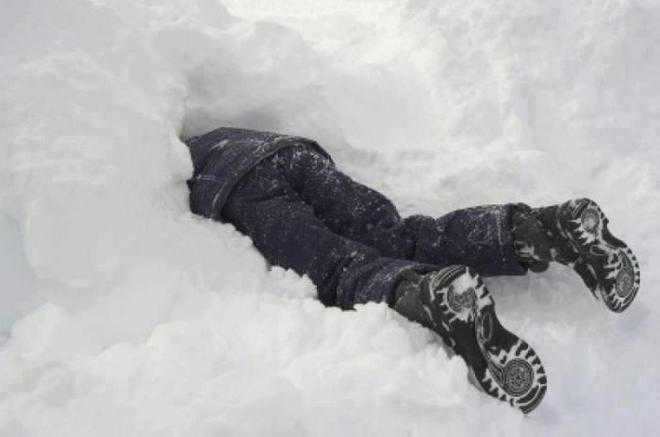
As soldiers battle the danger posed by increasing number of avalanches along the Himalayan frontier because of changing climatic pattern, a novel device integrated into their boots would enable them to send out distress signals at times when battery-powered gadgets become non-functional due to intense cold.The Defence Research and Development Organisation (DRDO) is developing a boot containing a miniature electronic signal emitter that can be charged from an electric current generated by moving or tapping the feet.“The technology to generate electric current capable to charge small devices like a transmitter or a mobile phone from the pressure applied on soles of shoes while walking has already been developed by DRDO. This would now be adapted to develop rescue devices,” a scientist said.The project would be taken up by the Defence Bio-engineering and Electro-medical Laboratory, which is associated with protective and life support equipment, biomedical devices and systems specific to service combatants.DRDO scientists said in extreme cold climate, conventional batteries go dead very quickly, leaving vital equipment without a power source. “By simply tapping his foot or using his hands, a trapped soldier can continue sending out distress signals to pinpoint his location in situations where battery would otherwise have discharged. The presence or absence of a signal can also provide a clue about the physical state of the individual,” the scientist said.Climatic changes and variation in precipitation and temperatures have also led the Army to take a relook at its static locations and operating procedures in snowbound areas. Many areas earlier considered safe are now prone to avalanches because late setting and shorter winters have led to temperature variations that do not allow snow to harden and stabilise.


Temperature variation

  • Areas earlier termed safe are now prone to avalanches
  • Shorter winters have led to temp variations, which don’t allow snow to harden. Data shows there’s been 20% rise in avalanches over past 5 years
  • Temperature variations have been as high as 13°C

Charge it by tapping feet 

  • The DRDO is developing a boot containing a miniature electronic signal emitter that can be charged with current generated by moving or tapping the feet
  • Scientists said in extreme cold climate, conventional batteries go dead quickly, leaving vital equipment without a power source


HEADLINES —07 APR 2017

breakl line

SANJHA MORCHA TEAM COORDINATES VIST OF LOCAL MLA TO MAHARAJA RANJIT SINGH INSTITUTE

5 SOLDIERS TRAPPED IN AVALANCHES IN LADAKH’S BATALIK SECTOR, 2 RESCUED

AVALANCHE KILLS 3 JAWANS, VALLEY REELS UNDER RAIN, SNOW

SHAURYA CHAKRA AWARDED TO HEROES OF SURGICAL STRIKE

RUSSIA NOD TO KAMOV JV COPTERS TO BE BUILT UNDER ‘MAKE IN INDIA’ INITIATIVE


DON’T SHADOW ME, MEET PEOPLE, CAPT TELLS OSDS

COLLECTOR RATES REDUCED IN MOHALI

CHINA SAYS IF INDIA PLAYS DIRTY, IT’LL ‘ANSWER BLOWS WITH BLOWS’

NO LESSONS LEARNT HISTORY SET TO REPEAT ITSELF IN PUNJAB

KASHMIR’S TRAVAILS: TOURISM VS TERRORISM BY HUGH & COLLEEN GANTZER

THE ROAD TO 2019 BY LT GEN BHOPINDER SINGH (RETD)

PUNJAB GOVERNMENT DECLARES HOLIDAY ON GURU NABHA DAS’S BIRTHDAY ON APRIL 8

breakl line


The road to 2019 by Lt Gen Bhopinder Singh (Retd)

The road to 2019
ON TEST: Which political philosophy will capture the popular imagination?

BY all surveys, anecdotal accounts and electoral results, PM Modi currently leads the popularity stakes, even as he nears the third anniversary of the 16th Lok Sabha. The recent state Assembly results, including the billing to the proverbial ‘semi-final’ to the general election in 2019, in the state of UP, has seen the incumbent Central government tide over the impact of demonetisation. Former CM of J&K, Omar Abdullah, went as far as to tweet, ‘In a nutshell, there is no leader today with a pan-India acceptability who can take on Modi & the BJP in 2019’. But, behind the ostensible success rate of anointing governments in four out of the five states that went to elections, lurks some pointers that posit an alternative enquiry — Is the approval rating for the ruling dispensation infallible or unsurmountable? Not necessarily. Besides the statistical reality of the Congress overcoming the incumbency factor by still retaining most number of seats in Manipur (after 15 years of continuous rule), snatching defeat from the jaws of victory in Goa with more lawmakers than the ultimately successful BJP in Panaji, and romping home in Punjab — the undisputable ‘tsunami’ in UP has to be contextualised with the flicker of contrarian statistics in three other states. True, the ‘Captain’s knock’ and the ‘Openers’ sheet-anchor role in Punjab offered credible faces in popular imagination, unlike in UP, where the Congress displayed a night watchman’s batting inelegance in offering a credible alternative. Ultimately, winning 419 out of the 690 seats at the electoral sweepstakes was the most decisive indicator of the prevailing Modi-BJP wave, three-fifth into their tenure. Gallup poll indicates that it typically takes over two years in the US to reach ‘majority disapproval’ — it took Bill Clinton 573 days, Ronald Reagan 727 days, Barack Obama 936 days, and surprisingly, George W Bush 1,205 days (presumably on account of his ‘fight back’ against terror, post 9/11). Incidentally, Donald Trump smashed the record by reaching ‘majority disapproval’ within eight days of assuming presidency! Constituents give the governments the initial benefit of the doubt and the more strident and ‘nationalistic’ the fervour (think George W Bush’s uber-Texan drawl invoking, ‘you are either with us or against us’), the more long-lasting the honeymoon. The second half of the governmental tenure normally sees a more nuanced assessment, factual debate and the onset of dispassionate conversations that are bereft of the initial hype. Hard numbers validating economic prudence and the upswing in most social indicators explained the emotional call for a ‘third term’ for both Clinton and Obama (despite the ‘disruptive’ narrative of personal misdemeanour in the case of the former, and the perennial angularity of minority race, for the latter). Invariably, the last leg gets more real and stripped of the seductive jingoism — George W Bush ultimately slid away from public memory as the hard reality and implications of his muscular approach sunk in.India, in 2019, will similarly do a more rigorous assessment of the various political alternatives for the next five years. The ability to window-dress figures and repeat fantastic promises are usually at their lowest towards the end of tenures — undeniably, other factors like individual personality ‘brands’ and perception of national leadership impact the voting preferences, yet the political agenda and philosophy of any ruling party gets thoroughly re-tested after a patient time frame of five years and a hard evaluation of delivery against promises. It is here, a clear governance test between UP and Punjab could emerge as an important lodestar for the national narrative. Both states have the scale and profile to postulate the two divergent and principal political alternatives (individually, or even collectively as UPA or NDA). Both have won a clear political mandate to posture as the ‘political pilots’ for the rest of the country — neither of the states is constrained with any coalition issues. From a raja to a yogi, the personality contest is also as colourful as it gets — in Punjab, the victor was ‘to the manor born’, but earned his literal stripes as ‘Captain’, whereas in UP , the ‘outsider’ was born a commoner, but earned his right to political divinity as ‘yogi’. Beyond these cheeky monikers, the acid test of displayed governance would have earned its two years of invaluable and uncontestable report card that ought to be the critical deciding factor between the two principal political alternatives, more than the initial flashy moves which are designed to please the core cadres. Both states are in dire straits of economic and social deprivation — if it is about the drugs menace in one, it is about social disintegration in the other. Opening moves from both state leaders was expectedly cavalier, yet the long road to 2019 will be peppered with the litmus test of managing the ‘palace intrigues’ in both Lucknow and Chandigarh, where a lot of enemies would be within their own ranks, as indeed from outside to disrupt  the ‘political pilots’. Leaders in both states are decisive and firm, and not necessarily known to kowtow to the ‘high commands’, but herein, could emerge the true test of political philosophies and their ultimate deliverables in a diverse country like India with its myriad socio-economic challenges.Interim state elections in 2018 (Gujarat, Nagaland, Karnataka,  Meghalaya, Tripura and Himachal) would be reflective of the topical sentiment then. However, the time assigned to these new state governments would be too short to make cases for political preferences in the 17th Lok Sabha elections in 2019. Political eyes are already fixated on UP and Punjab, as a truly vibrant and prosperous Punjab or the peaceful and progressive UP, as promised by the respective state leaders, would go longer than any chest-thumping, sloganeering and bravado that is typically deployed before and after each state win or defeat by all parties. The land of the five rivers, and the fertile Gangetic plains will narrate their own unaided and true narratives of political deliverables emanating from two opposite political philosophies that could hold the key to capture national imagination and decide the political choices for 2019.The writer is a former Lt Governor of Andaman & Nicobar Islands & Puducherry


Back to the Valley by G Parthasarathy

Back to the Valley
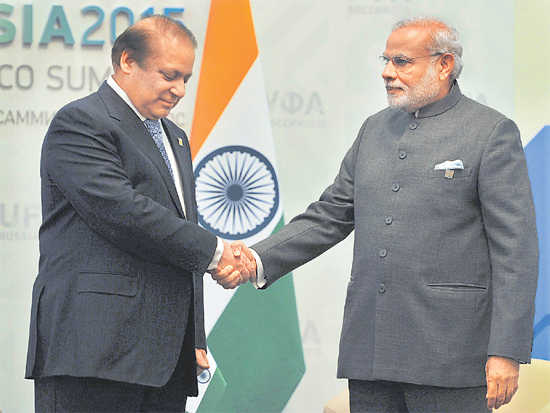
Mean business: India should insist on the agreement reached at the Ufa Summit.

THE year 2016 was tumultuous in the Kashmir valley. The gunning down of Burhan Wani, a terrorist who built his image by imaginative use of social media, was accompanied by an unprecedented, but imaginatively crafted agitation, using stone-pelting youths to confront the security forces. The winter snows restricted such enthusiastic and carefully financed and planned pelting. The planners, sitting in comfortable surroundings in the PoK and Pakistan, did, however, achieve their objective of getting wide media publicity, even if it involved disrupting and sacrificing the lives of young Kashmiris. Not surprisingly, the Hurriyat Conference, receiving instructions from ISI handlers, did its bit in inflaming public sentiment.With the Himalayan snow set to melt in the coming weeks, India will have to prepare for yet another summer of disruption and stone-throwing. The ISI will ensure that those Kashmiri youngsters, who crossed the LoC, will be joined by new jihadis from the LeT and JeM to serve as cannon fodder for fulfilling ISI ambitions. Enough funds will be provided to get unemployed youth to resort to  pelting and getting killed or injured in the return fire by the security forces. Social media will be used for incendiary messaging, crafted to stoke passions. In the meantime, a propaganda blitz will be launched by Pakistan calling on the world to intervene and compel India to resume the sterile ‘composite dialogue process’. Why does Pakistan place so much emphasis on this so-called ‘composite dialogue process’? The answer lies in the fact that this dialogue process, initiated in 1997, was the outcome of one of the worst blunders in Indian diplomacy, matched only by our diplomatic ineptitude during the Sharm-el-Sheikh fiasco. In this process, primary importance is given to what Pakistan wishes to discuss, including J&K, Siachen, Sir Creek, and hydel/ river water projects in J&K, which Pakistan likes to block. Shockingly, ‘terrorism’ features only towards the very bottom of this list. Terrorism was rendered even more marginal by coupling it with ‘drug smuggling’. This is a format that suited Pakistan as it could unleash terrorism across India and then insist that terrorism could be discussed peripherally, alongside issues like cultural ties and visas!The strike by our Special Forces on terrorist staging areas across the LoC on September 29 had more than mere symbolic importance. It signalled a readiness by India to strike across the established borders, if and when needed, at a time and manner of its choosing. The likes of Hafiz Saeed and Dawood Ibrahim should not ever be allowed to feel secure from such Indian retribution. To achieve this, the entire ‘composite dialogue process’ should be discarded. There is no need for a ‘structured’ dialogue process with Pakistan. We merely need to convey our readiness to discuss all issues when the time is appropriate.To start with, India should insist that in accordance with the agreement reached between Prime Ministers Modi and Nawaz Sharif at the Ufa Summit, the DGMOs of both countries should discuss specific measures to seal the borders and end infiltration and terrorism. The levels of such meetings could be raised to meetings between the Indian Army’s Vice-Chief and Pakistan’s Chief of General Staff. There could even be meetings between the two army chiefs. While one cannot expect significant change in the strategic aims of the Pakistan army, its present army chief, Gen Qamar Javed Bajwa, does not appear to be afflicted by megalomania, like his predecessor.The entire dialogue should be exclusively security-oriented and also involve meetings between chiefs of the BSF and Pakistan Rangers. Meetings could be considered between the chiefs of R&AW and the ISI. Meetings between foreign secretaries, and at political level, should commence only if our concerns on terrorism are seen as being addressed in an irreversible manner. India should continue to back moves by Bangladesh and Afghanistan to keep SAARC in coldstorage, while promoting links with our eastern neighbours through forums like BBIN and BIMSTEC.Given its domestic situation, Pakistan does not appear able to deliver meaningfully on issues of terrorism. Sharif is under siege domestically, because of a Supreme Court inquiry into his properties and wealth abroad. Pakistan is being torn apart by sectarian Shia-Sunni and Wahhabi-Sufi rivalries and violence. The army is now deployed virtually across the country, fighting insurgencies in Balochistan and the Pashtun tribal areas bordering Afghanistan. Islamabad is being repaid in kind by the Afghans across the disputed Durand Line, both in Balochistan and the Pashtun tribal areas. Sectarian violence has reached Punjab and Sindh. India needs to ensure that it extends unstinted moral, material and diplomatic support to Afghan efforts to deal with ISI-sponsored terrorism.While the security and diplomatic efforts to deal with terrorism continue, New Delhi will also have to consider measures internally to signal that it means business in dealing with those encouraging, supporting and inciting youths to take to stone pelting.  South Block has for too long looked rather benignly on the Hurriyat Conference and its role in inciting and supporting violence. There is evidence against many Hurriyat leaders of money laundering and other charges. People like Syed Ali Shah Geelani, who take the lead in inciting violence, based on instructions from across the LoC, need to be charged, moved out of the Valley and tried. Even Mirwaiz Umar Farooq, who is said to receive benign treatment, is given to inciting crowds regularly, especially after prayers he leads. Those inciting and distributing money to youngsters should be immediately put behind bars.The state government and its police, including the Special Operations Group, should be activated to take the lead in restoring normalcy, with the Army’s backing. Terrorists have been emboldened to threaten the lives of family members of police officials. The Punjab Police reacted very strongly when their families were similarly threatened. There is no reason why the J&K Police cannot be similarly motivated. Moreover, far more proactive measures are needed to curtail and even disable facilities for the use of social media in the Valley. Most importantly, the ruling coalition partners should set aside differences, with the Mehbooba Mufti-led government taking the lead in ensuring that the education of children is not held hostage to the diktats of separatist leaders and their patrons across the LoC.


Palampur girl joins Army as doctor

Palampur girl joins Army as doctor

Tribune News Service

Dharamsala, April 1

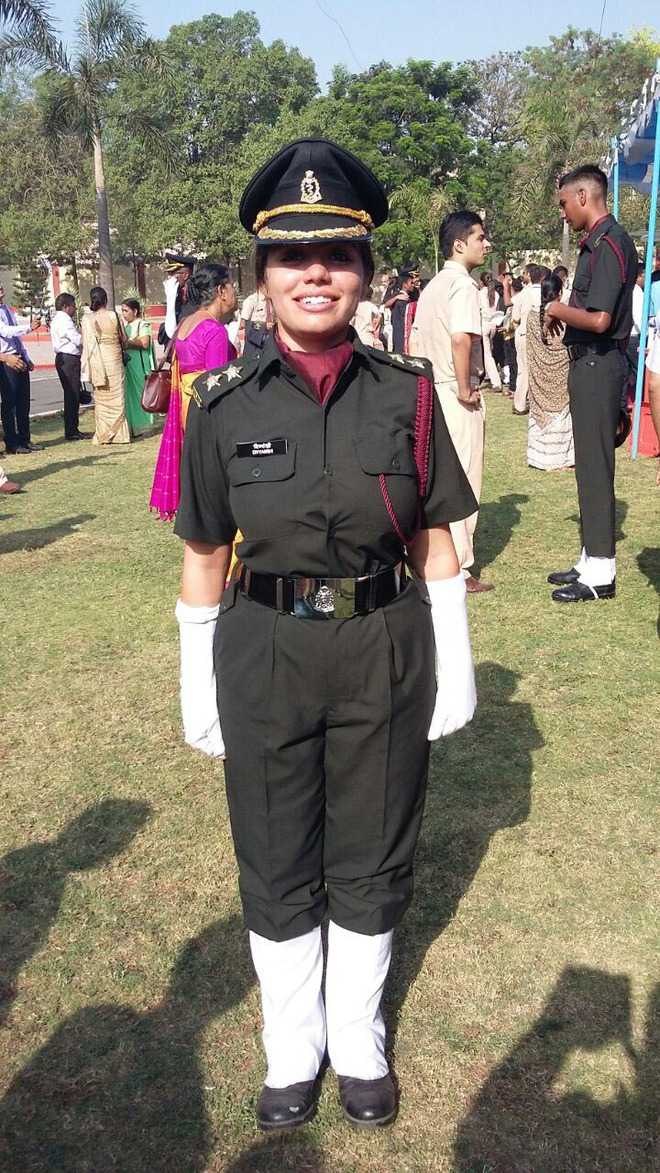
Divyanshi (in pic) of Palampur has been commissioned as a medical officer in the Army.She is the first girl from the region to join as a medical officer in the Army.Her first posting will be at the Command Hospital, Northern Command, Udhampur.Her father Pradeep Kumar Sharma said Divyanshi won many prizes, both in academics and extra-curricular activities, during her college days. She had also won a title for exceptional dance performance.


Lt-Gen Ashwani Kumar awarded Ati Vishisht Seva Medal

Lt-Gen Ashwani Kumar awarded Ati Vishisht Seva Medal
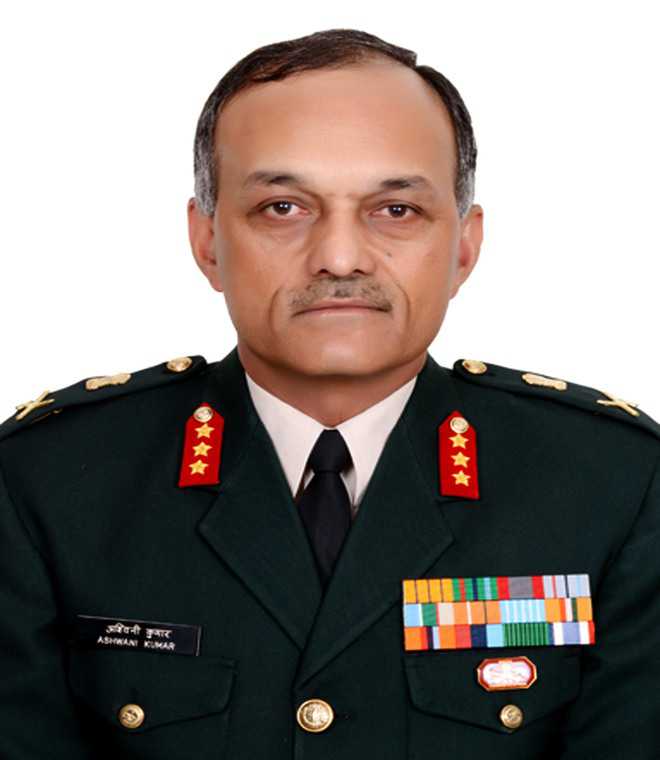
Lieutenant-General Ashwani Kumar

Tribune News Service

Bathinda, March 30

Lieutenant-General Ashwani Kumar, General Officer Commanding, Chetak Corps, was awarded the Ati Vishisht Seva Medal (AVSM) by President Pranab Mukherjee during the Defence Investiture Ceremony at Rashtrapati Bhavan.The general is an alumnus of the Indian Military Academy, Dehradun. He was commissioned into the Air Defence Artillery (now Army Air Defence) in June 1980.He later commanded a Light Air Defence Regiment, which was actively involved in Operation Parakram.He has the distinction of commanding an infantry brigade in Western Theatre and was the Deputy General Officer Commanding of an infantry division in Jammu and Kashmir.He is the second Army Air Defence Officer to command an infantry division and has the distinction of being the first Army Air Defence officer to command a Corps.Currently heading the Chetak Corps at Bathinda, Lieutenant-General Ashwani Kumar was awarded the Ati Vishisht Seva Medal on the Republic Day for his distinguished services as Additional Director General (Discipline & Vigilance) and Director General (Discipline, Ceremonial and Welfare) as part of Adjutant General Branch at the integrated headquarters of the Ministry of Defence (Army).

Chetak Corps to hold rally for ex-servicemen

Bathinda, March 30

The Chetak Corps will organise a rally for ex-servicemen of Bathinda and Mansa districts at the Bathinda Military Station on April 2 from 10am to 5pm.The aim of the rally is to assist ex-servicemen for resolving their problems, if any, and increasing awareness regarding the latest policies and job opportunities.The administration has given its consent to set up stalls of agriculture, health, fisheries, irrigation, horticulture, banks and many more for the benefit of ex-servicemen.The Military Hospital, Bathinda, will also organise a medical check-up camp during the rally. — TNS


ASSEMBLY OF THE YOUNG

PUNJAB XI The 15th assembly of Punjab witnessed a historic departure from the bipolar politics practised by the state since independence. For the first time, the leader of the Opposition was not from the two traditional rivals, Congress or Shiromani Akali Dal, but from the debutant Aam Aadmi Party. It’s also arguably the youngest assembly in the history of Punjab with 43% first­timers, 34 of them below the age of 45. The fresh faces reflect the demographics of a state growing younger by the year. Youngsters between 18 and 39 constituted 53% of the state’s voters in the assembly polls. Little wonder then that the poor state of education, rampant unemployment & drugs are the three concerns raised by almost every young legislator. Manraj Grewal Sharma speaks to the 11 young legislators between 25 and 36 years of age to find out how they propose to be the agents of change for a resurgent Punjab.

SANJEEV SHARMA/HTFrom left: Pirmal Singh Dhaula, Jai Krishan Singh, Gurmeet Singh Meet Haher, Rupinder Kaur Ruby, Baljinder Kaur, Kulbir Singh Zira, Inderbir Singh Bolaria, Barindermeet Singh Pahra, Dalvir Singh Goldy and Angad Singh.


AFT upholds 3-yr jail term for Major

Vijay Mohan

Tribune News Service

Chandigarh, February 24

The Armed Forces Tribunal (AFT) has upheld sentence of a Major who was cashiered from service and awarded three years rigorous imprisonment by a general court martial (GCM) on charges that included abetting a soldier to set a Captain’s house afire, stealing his car, encouraging the soldier to desert and improperly borrowing money from a subordinate.In his petition, the officer had contended that false charges had been levelled against him and the trial by the GCM was without jurisdiction as his trial had commenced and concluded before the trial of the main accused had started. He said he could not have been tried as an abettor until the charges against the main accused in the case had been established in a legal proceeding.The petitioner, ex-Major Om Prakash, had been tried on seven charges under various provisions of the Army Act and the GCM had held him guilty on five of the charges. The AFT, later, absolved him of a charge and finally, upheld the conviction on four charges.The GCM, convened by the General Officer Commanding, 24 Infantry Division, had tried him for abetting the jawan to set a Captain’s official accommodation on fire at the Suratgarh military station, thereby causing a loss of Rs 4.08 lakh to the victim and of Rs 2.01 lakh to the government.He was also tried for abetting the jawan to steal the Captain’s Santro car; inciting the jawan to desert, which he did the same day; improperly granting excess casual leave to the jawan; failing to pay transportation cost to a private contractor for transporting goods to his village and borrowing Rs 35,000 and Rs 5,000 from two soldiers in contravention of rules.


‘Can You Give us What We Need’ Asks Army Chief

The Chief of Army Staff, General Bipin Rawat releasing the ‘Compendium of Problem Statements Vol II’, in New Delhi on March 24, 2017.
CNR :94857 Photo ID :100246

General Bipin Rawat chaired a combined session of ‘the user and the provider’ attended by renowned industrialists, academicians as well as the decision making hierarchy of the Army and released the ‘Compendium of Problem Statements Vol II’, which has been prepared by Army Design Bureau (ADB) after detailed interaction with all stake holders including soldiers deployed in field.

The first volume, with 50 problem statements released on 5th December 2016, was received with tremendous amount of enthusiasm, 28 new problem statements have now been added which will enable industry and academia to understand the ‘Felt Needs’ and come up with indigenous solutions incorporating the latest technology trends for India’s military power.

Giving feedback on the first vol, industrialists and academicians expressed keenness to step up R&D for solutions to Army’s problems and deeply appreciated Army’s efforts calling the raising of ADB as a path breaking step. Mr RS Bhatia pointed that India is probably the only great nation where Industrial might of the country is not yet reflected in its Defence Forces.

General Rawat took the opportunity to challenge the industry and academia by asking them to align the solutions to the stated problems. ‘We want to fight next war with technology on our side and not like the past’, he said. He sought efforts towards the most important need to bring in transparency of the battlefield to allow better decision making. Pointing out the drawbacks in trial equipment, he asked the industry and academia to focus on the fact that Indian Army will fight its wars in varied terrain and weather conditions seeking them to come up with robust, rugged, miniaturised yet technologically compatible solutions. He further nudged them to come up with a ‘Society for Defence Manufacture’ as the next step.

Industry leaders and the academicians who seemed greatly ‘fired up’ committed to work towards ensuring that‘Indian Army Will Win India’s Wars with Indian Solutions’.

*****

Col Aman Anand

PRO (Army)
(Release ID :159931)

Welfare Of Families Of Martyred Soldiers

Assistance / other facilities provided to and welfare schemes for the families / Next of kins (NoKs) of martyrs and disabled soldiers are at Annexure.  In addition, some State Governments also extend benefits to the families of martyrs.

Petitions are received from widows and dependents of Defence Personnel disabled, incapacitated or killed in action with regard to payment of family pension, special family pension, ex-gratia etc. from time to time.  Efforts are made to dispose these petitions expeditiously, based on the Government policies in this regard and their disposal is monitored at appropriate levels.

This information was given by Minister of State for Defence Dr. Subhash Bhamre in a written reply to Shri Naranbhai Kachhadiya in Lok Sabha today.

NAMPI/Rajib

 (Release ID :159867)