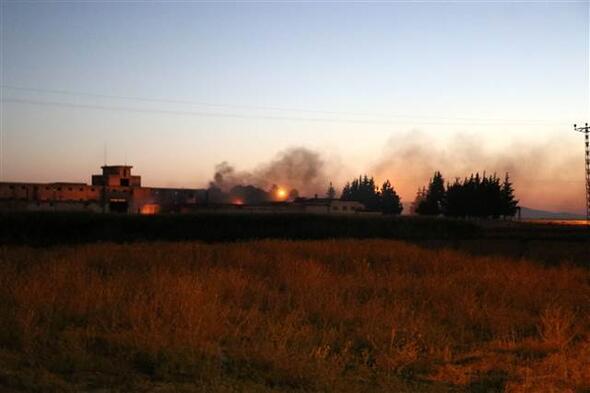
The panic was gripped across Rajasthan’s Jaisalmer district after loud explosions were heard as the Indian Army destroyed its old ordnance last evening.The Indian Army stated, “Old ordnance was being destroyed between 6.30 pm and 7.15 pm at Pokhran area of Thar desert, IANS reported.
The force said it is a routine affair and there was nothing unusual about it. As the sound of the blasts reached across the border, the Pakistan security forces were put on alert.
People in the vicinity came out of their homes in panic as the window panes rattled due to the impact of the five or more blasts.
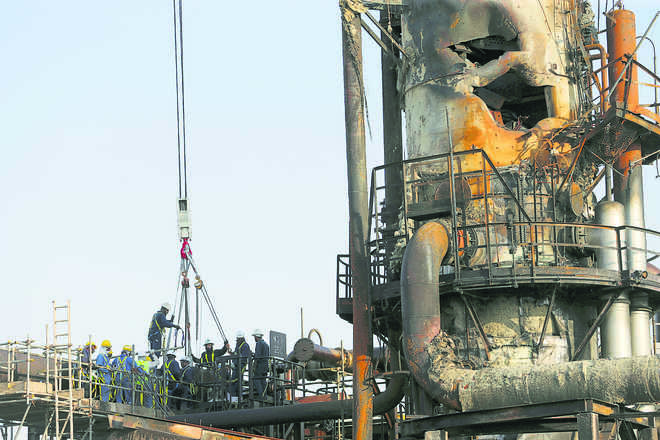
Strikes on oil facilities fuel Gulf tensions Maj Gen Ashok K Mehta (retd)
What are the lessons from the lethal strikes on Saudi oil facilities that were forecast and war-gamed in 2012? Sanctions alone will not alter the Iranian regime’s behaviour. The failure of a kinetic response in May/June has emboldened the Iranian Revolutionary Guard to step up the attacks.
Vulnerable: The Saudi regime can’t defend itself despite a military budget of $68 bn.
Maj Gen Ashok K Mehta (retd) Military commentator
ON September 14, I was in Muscat (Oman) when the Abqaiq refinery and the Khurais oilfield in Saudi Arabia were struck by drones/missiles that reduced Saudi Aramco’s daily oil production by half. One week later, I returned to Muscat to take stock of the devastating aerial strikes that sent oil prices soaring for major importers of Saudi light crude like Japan, South Korea, China and India and assess its strategic impact in the region. In February 2012, I had attended the annual strategic conference at the Interdisciplinary Centre, Herzliya (Israel), where a terrorist strike on oil facilities in Abqaiq was simulated and counter-measures recommended, which obviously went unheeded.
The geography of the region, viewed from Oman, is breathtaking: the Strait of Hormuz sits at the north-western edge of the Gulf of Oman as it enters the Persian Gulf that divides, rather sandwiches Saudi Arabia between Iran to the north and Yemen to the south. The United Arab Emirates, Qatar and Bahrain girdle the western reaches of the Persian Gulf. The rest of the Middle East — Iraq, Syria, Jordan and Israel — straddles the mighty Euphrates river and the Mediterranean Sea. The Hormuz Strait is a choke point for the movement of oil tankers and shipping in the Persian Gulf via the Gulf of Oman into the Arabian Sea, accounting for 20 per cent of the world’s oil.
Iran-backed Houthi rebels claimed the September 14 aerial strikes with a swarm of 17 missiles and drones that dodged the Saudi air defence network and knocked out 5 per cent of the world’s oil supply of 5.7 million barrels of crude a day. This was a big blow for Saudi Aramco just when Prince Abdulaziz bin Salman, son of King Salman and older half-brother of Prince Mohammad bin Salman, had taken over as Energy Minister, the first time any royal had taken charge of the country’s crown jewels. Aramco claims it has restored half of the lost output and hopes for full restoration by October 14. The stunning success of the not-unexpected precision strikes has unnerved the Saudis, their US allies and other Gulf monarchies in the region. They have unanimously blamed Iran for an act of war, though President Trump has not named the country he despises the most. Saudi Foreign Minister Adel al Jubeir confirmed the source of the attack as ‘not from Yemen but from the north’. Meanwhile, Houthi rebels, in an act of magnanimity, announced a halt to all attacks — drones, missiles and other means — in Saudi Arabia as part of a peace initiative five years after capturing Yemen’s capital Sanaa.Mark Esper, US Defence Secretary, had immediately ordered additional deployment of US troops in Saudi Arabia, including defensive air and missile systems. Trump took to Twitter to declare (on September 14) that our response is “locked and loaded” but “under what terms we will proceed to protect the Saudis, we will have to work out,” adding that “we’d like to avoid war.” Trump’s last five words summed up the US policy on the aerial strikes and the limits to US power. The Trump doctrine, in essence, amounts to bluff and bluster. On May 4, there were four unclaimed attacks on tankers — two Saudi, one Norwegian and one Emirati — transiting the Strait of Hormuz. There was no US response despite noises in the White House that Iran was behind the attacks. Similarly, in June, two more oil tankers were attacked by suspected Iranian patrol boats. Also in June, a $130-million US drone, Global Hawk, was downed over Iran. In July, Iran seized a British ship when British marines tried to stop an Iranian oil tanker. The US was conspicuously inactive during these depredations except in ratcheting up sanctions against Iran and its leaders.
Meanwhile, after Tehran’s latest alleged act of war, Commander of the Iranian Revolutionary Guard (IRG), Gen Hossein Salami, warned that any country that attacks Iran will become the main battlefield. Tehran displayed remnants of the RQ4-Global Hawk drone that was downed in June, the RQ170 Sentinel drone captured intact in 2011 and the Khordad3 air defence battery which had shot down the RQ4. In addition to threats of retaliation and cyberattacks, the US upped the ante with still new sanctions on Iran and targeting a critical funding mechanism that Iran uses to finance its terrorists including the Qods force — its foreign operational arm. Tehran said US cumulative sanctions would block Iranian access to food and medicine and denied that the cyberattacks on September 14 had disrupted its oil flow.What are the lessons from the lethal strikes on Saudi oil facilities in 2019 that were forecast and war-gamed in 2012? That sanctions alone will not alter the Iranian regime’s behaviour. The failure of a kinetic response in May/June has emboldened the IRG to step up attacks. In case of US punitive strikes — once evidence is available that the source is Iran — Tehran will hit back at Saudi Arabia, Bahrain, the UAE and target US troops in Syria and Afghanistan. Clearly, the Saudi regime cannot defend itself despite a massive military budget of $68 billion (more than India’s) and the deployment of US Patriot3 and THAAD air defence systems. Ironically, Russia jumped in, offering its S400 ordered by Turkey, China and India.
On September 25, President Rouhani was unrepentant and defiant at the UN even as a US-led international group to protect navigation in the Gulf was revamped. Gen Joseph Dunford, Chief of Joint Chiefs of Staff, has said: “All options have been presented to Commander-in-Chief Trump,” adding that “it is a political judgement not for the military to decide.” Strategic choices are located between inaction and escalation. For Trump, in testing times, discretion seems to be the better part of valour.
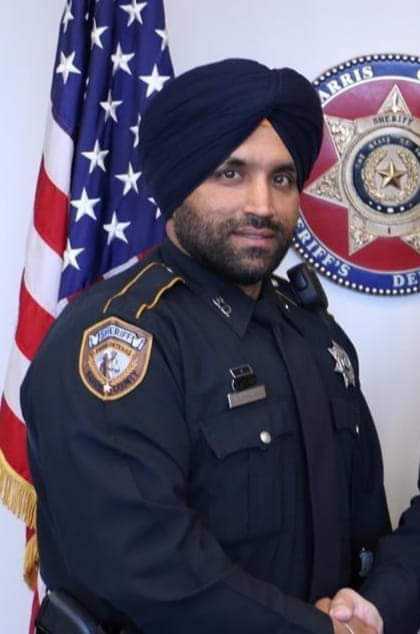
Sikh police officer killed in line of duty in Houston, US
An Indian-American Sikh police officer died after being shot multiple times from behind in a “ruthless, cold-blooded way” during a traffic stop in the US state of Texas, a senior official said Saturday.
Sandeep Singh Dhaliwal, Harris County Sheriff’s deputy, was shot while conducting a traffic stop, Sheriff Ed Gonzalez said.
Dhaliwal, who was in his early 40s, was the first police officer in Texas to serve while keeping his Sikh articles of faith, including a turban and beard.Gonzalez said Dhaliwal, a 10-year veteran of the department, stopped a vehicle with a man and woman inside and one of them got out and shot him “ambush-style” at least twice in a “ruthless, cold-blooded way.” The shooter was seen running to a shopping centre nearby, officials said.
Investigators were able to identify what the shooter looked like by watching Dhaliwal’s dashcam video.
“They immediately looked at his dashcam to see what the suspect looked like, they took a photo of the suspect on the scene with their phone and immediately got that out to our intel people,” Gonzalez said.
The vehicle the shooter was driving was found and is being investigated, officials said.
The gunman and the woman were taken into custody, they said.
Dhaliwal was married and a father of three children.
“Deputy Sandeep Dhaliwal was a trailblazer. He was an example for many. He represented his community with respect and pride,” said Commissioner Adrian Garcia.
“Deputy Dhaliwal is known to everybody as someone with a giving heart,” Gonzalez said. “Post (Hurricane) Harvey, when we needed the help most, he brought an 18-wheeler of people that he gathered together, that came all the way from California to deliver goods to our community.”
Since 2015, Dhaliwal was the “history-making” police officer in Texas to serve while keeping his Sikh articles of faith. He was allowed to wear the turban and beard while patrolling the streets in order to bolster cultural diversity.
With this policy, one of the largest sheriff’s offices in the country had affirmed that a person does not have to choose between their faith and a career of service. Since 9/11, misperceptions about Sikhs’ religiously mandated turbans and beards have led to an increase in discrimination against the community.
Policy changes like that at the Harris County Sheriff Office and other law enforcement agencies across the country aim to combat this stigma while also giving qualified men and women a chance to serve the community.
Dhaliwal worked with United Sikhs, a global humanitarian relief and advocacy nonprofit, to help organize the donation of truckloads of supplies for first responders after Harvey. – PTI
Lockheed to begin supplying F-16 wings from Indian plant in 2020
NEW DELHI: Lockheed Martin will begin supplying wings for its F-16 combat jets from a facility in southern India from next year, a senior executive said on Thursday.
Lockheed is bidding for a contract, estimated at more than $15 billion, to supply the Indian Air Force with 114 combat planes and has offered to shift its F-16 production line from the United States to India. It plans to build an upgraded version of the aircraft which it calls F-21.
During the recently held ex – servicemen’s rally at Nagpur, Lt Col MP Deshpande (Retd) was felicitated by Shri Ashwin Mudgal IAS Collector and District Magistrate Nagpur for his contribution towards motivating and guiding the youth to join the armed forces of India. Since 2007, Lt Col MP Deshpande of ‘The Forces Foundation’ assisted by his wife Mrs Sphurti Deshpande are committed to train the armed forces aspirants and more than 250 candidates groomed by them have cleared various entrance exams and SSB Interviews for various military academies. During the rally held on 16 September 2019, Shri Ashwin Mudgal shared his memorable experiences while undergoing attachment training with the Army formations in Arunachal Pradesh and lauded the contributions of ex – servicemen towards the betterment of society
Soon, Army may open parts of Siachen glacier to civilians
Soldiers perform Yoga on 2nd International Yoga Day in Siachen. Siachen is strategically important because so long as it is in India’s control, the Pakistani army can’t link up with the Chinese and pose a threat to Ladakh.(File photo: PTI)
Mooted by army chief, General Bipin Rawat, the proposal to give civilians access to the glacier is at an initial stage but is being considered seriously, one of the officers cited above said on condition of anonymity
The Indian Army is examining a proposal to allow civilians to visit the world’s highest battlefield, the Siachen glacier, to gain first-hand experience of the tough conditions in which soldiers operate, two senior army officers said on Tuesday.
Mooted by army chief, General Bipin Rawat, the proposal to give civilians access to the glacier is at an initial stage but is being considered seriously, one of the officers cited above said on condition of anonymity.
Siachen is strategically important because so long as it is in India’s control, the Pakistani army can’t link up with the Chinese and pose a threat to Ladakh. It acts as a wedge between the Shaksgam Valley under Chinese control and Baltistan, which is occupied by Pakistan.
“We are examining how the proposal can be implemented, the logistics involved and areas that can be opened to the public. We are looking at the possibility of allowing people to visit the Siachen base camp and some nearby posts,” said the second officer, asking not to be named. Since 2007, the army has been conducting a civilian trek to the Siachen glacier every year.
India, which spends Rs 5 to Rs 7 crore daily on guarding the glacier, has deployed around 3,000 soldiers at Siachen, where temperatures can drop to minus 60 degrees Celsius. More than 1,000 soldiers have died guarding the area since the army took control of the inhospitable glacier in April 1984, almost twice the number of lives lost in the Kargil war. While about 220 men have been killed in firing from the Pakistani side, the other casualties have been caused by extreme weather and treacherous terrain.
Guns have been silent on the glacier since the November 2003 ceasefire between India and Pakistan.
Experts welcomed the move to give civilians access to the glacier, stressing that it will give them a better understanding of India’s national security challenges.
“It will be a capability demonstration for the people of the country. They will appreciate how our brave troops are trained to fight in any kind of terrain and also the challenges they encounter daily,” said former Northern Army commander, Lieutenant General BS Jaswal (retd).
Soldiers have to trek for almost 28 days, covering a stretch of 128km to reach some of the farthest pickets on the glacier, one of the most desolate places on the planet.
Former army vice chief, Lieutenant General AS Lamba (retd), said the move will allow people to comprehend the complexities of guarding the country’s farthest frontiers at any cost. “It will also create a new sense of integration of these remote areas to the rest of the country,” Lamba added.
The Indian Army launched Operation Meghdoot in April 1984 to secure the glacier after the Pakistan army occupied the heights at Siachen, a 76km river of slow moving ice. Almost 80% posts on the glacier are located above 16,000 feet, with Bana towering above the rest at 21,753 feet.
Islamabad has made repeated demands for demilitarising the glacier, invoking long-term peace but India has taken a cautious approach on the sensitive issue. Several rounds of talks between India and Pakistan on demilitarising the glacier — a contentious issue in bilateral ties — have failed, with Islamabad refusing to authenticate troop positions on the ground.
Imran Khan assures multiple on-arrival visas for Sikhs
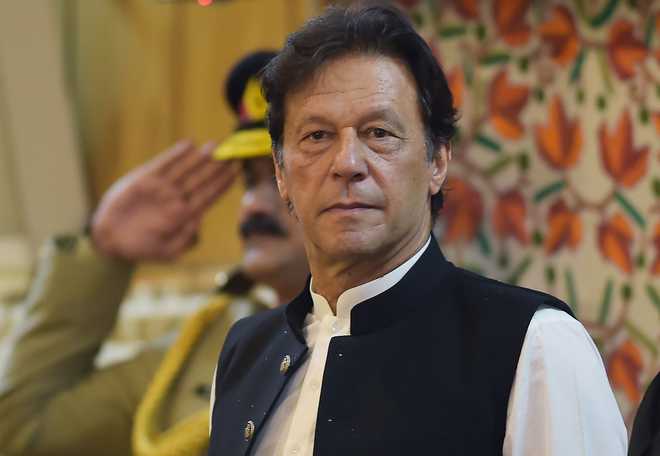
Pakistan Prime Minister Imran Khan announced that his government would issue multiple and on-arrival visas to Sikh pilgrims coming from India and abroad and provide them maximum possible facilities during their visit to the holy sites.
“I assure that you will be issued multiple visas… This is our responsibility. We will facilitate you rather will give you visas at airport,” The News International quoted Khan as saying on Monday while addressing the International Sikh Convention at the Governor House here.
“(We) will give you multiple visa to facilitate your journey,” he added.
The convention was attended by Punjab Governor Chaudhry Sarwar, federal and provincial cabinet members, and Sikh pilgrims from the UK, the US, Canada, Europe and other countries.
The Prime Minister said after coming into power, his government realized the difficulties faced by foreigners to get Pakistani visas intending to visit the country for pilgrimage or tourism.
“Though our government has changed the visa regime, the mindset of creating hurdles will gradually diminish,” he added.
Monday was the last day of the convention, which began on August 31, on the initiative of the Punjab Governor aimed at inviting suggestions regarding preparations for the 550th birth anniversary celebrations of Guru Nanak Dev, the founder of Sikhism, at the gurdwara in Kartarpur Sahib in November.
Indian Sikh pilgrims along with thousand others from across the world will visit the gurdwara in Pakistan’s Punjab province, where Guru Nanak Dev spent his final days.
All for nothing: If Trump does decide to fully pull out before the 2020 presidential elections, the Americans could well be forced to leave ignominiously.
G Parthasarathy Former diplomat
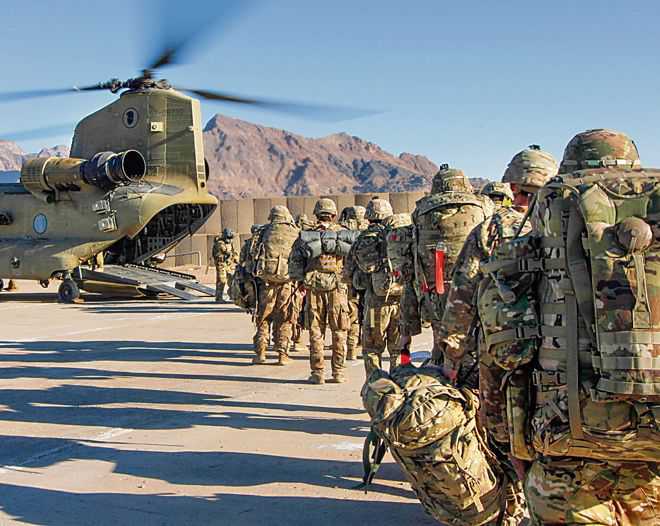
It now is evident that President Trump is determined to sign a virtual surrender document with the Taliban. This would permit him to ensure that there is no US combat military presence in Afghanistan when America goes for presidential elections, scheduled for November 3, 2020. Trump’s electoral support, drawn predominantly from a White Caucasian base, would like all their ‘boys’ back home to celebrate Christmas next year.
Figures show that US casualties from 2003 to 2018 were 2,372 killed and 20,320 wounded while an estimated 1.10 lakh Afghan soldiers and civilians paid with their lives. Is this example of the US entering conflicts and leaving the conflict zone without a decisive outcome something new? The Vietnam Conflict ended with an ignominious US withdrawal from South Vietnam. The then US ambassador, Graham Martin, was evacuated by helicopter from Saigon after North Vietnamese forces entered the South Vietnamese capital. An estimated 1.8 million Vietnamese were dead. US casualties were 31,952 killed and 2 lakh wounded.
Vietnam was united under Communist Party rule, which continues. But Vietnam did not become, as the US feared, a Communist Party ruled, Soviet/Chinese satellite. Vietnam has a close strategic relationship with the US today, aimed at containing Chinese expansionism in the South China Sea. This, after the Vietnamese gave the Chinese a bloody nose in 1979, when Deng Xiaoping promised to teach Vietnam a ‘lesson’ and invaded Vietnam.
One looks back at the Iraq conflict with similar sentiments. President Saddam Hussein was backed by the US during the Iran-Iraq war. The US, thereafter, forced Iraq to withdraw after it invaded Kuwait in the first Gulf War in 1990-1991. While the Iraqis reportedly lost about 1 lakh soldiers, US casualties were 383 killed. The Second Gulf War in 2003, based on false US allegations that Saddam was producing nuclear weapons, resulted in around 1.1 lakh Iraqi deaths. While Saddam, a Sunni, was anti-Iranian, the present Shia-dominated Iraq government avoids involvement in Arab-Iranian sectarian rivalries. US participation in conflicts has seldom produced the desired results.
Much has been written about Trump’s assertion during Imran Khan’s visit that Modi asked him to mediate on Kashmir. The Washington Post revealed last month that Trump had made 10,796 misleading statements since he assumed office in 2017! New Delhi has, therefore, been restrained in responding to his falsehoods, recognising that Trump has similarly offended countries like Canada and Mexico and European allies like France, Germany and Japan. He has no respect for international treaties like FTA, WTO guidelines, climate change and international agreement on Iran’s nuclear programme. The only ‘leader’ that Trump appears to admire is North Korea’s Kim Jong-un, who is not exactly a champion of democratic values!
It is too early to conclude how realistic Trump’s belief is that he can persuade Imran Khan, and more importantly, General Bajwa to facilitate a smooth withdrawal of US forces. Trump has bent backwards to please the Taliban and snub the elected government of President Ashraf Ghani, with presidential elections in Afghanistan scheduled for September this year. The Afghan army is, meanwhile, suffering huge casualties. Pakistan has moved deftly to persuade China, Russia, Turkey, Iran and Qatar to follow the US example of placing the Taliban and the Ghani government on the same pedestal. But Ghani has little prospect now of seriously influencing US policies.
The Taliban should not be regarded as omnipotent. It is an exclusively Pashtun organisation. Pashtuns constitute about 40% of Afghanistan’s population. The Taliban is tenacious, but survives with Pakistan’s patronage. Moreover, large sections of Pakistani Pashtuns, especially in the tribal areas bordering Afghanistan, are affiliated to groups like Tehrik-e-Taliban and Pashtun Tahafuz Movement, comprising Pashtuns with nationalistic inclinations, with scant regard for the Durand Line. These Pashtuns, on both sides of the disputed Line, will not take kindly to coercive Pakistani military actions against their brethren. With the exit of US troops, many Afghan Pashtuns are not likely to be responsive to Pakistan army’s demands to end their backing of Pakistani Pashtun brethren living across the disputed border.
Over the past two decades, India has won substantial goodwill across the ethnic divide in Afghanistan by adopting a non-interfering approach to developments within Afghanistan. The Taliban has never had a comfortable relationship with minority communities like Tajiks, Uzbeks, Turkmen and Shia Hazaras. Pashtun leaders like former President Hamid Karzai and Tajik leaders like Governor of Balkh province Atta Mohammad Noor and former Afghan intelligence chief Amrollah Saleh, regard India as a trusted friend. India’s economic and educational assistance to Afghanistan has won widespread regard. It would, however, also be prudent to keep channels of communication with the Taliban open.
Much is now dependent on how Trump plays out his withdrawal schedule. There are pressures from the State Department and the military to avoid a precipitous withdrawal and retain a residual presence. If Trump decides to fully pull out before the elections, the Americans could well be forced to leave Afghanistan ignominiously. If they phase out withdrawal and give time to the Afghan National Army and ethnic militias to be armed and trained, they would have created a credible force to face the Taliban. Finally, if southern Afghanistan is destabilised, Pakistan’s own stability will face challenges.
What’s Next for U.S-Pakistan Relations After Imran Khan’s U.S Visit?
Imran Khan made a historic visit to the US and was successful in persuading White House of his commitment towards peace in the region. Washington didn’t ask Islamabad to do more this time but calling this a reversal of the US-Pak relations is far-fetched. There is still much more to do.
Michael Kugelman July 29, 2019
For proponents of the U.S.-Pakistan partnership, there’s much to be heartened about after Prime Minister Imran Khan’s recent visit to Washington.
There were smiles and kind words all around as he met with senior officials from across the U.S. government spectrum, including President Trump. Other members of Khan’s delegation, including Army Chief Qamar Javed Bajwa, met with critical stakeholders as well.
Understandably, optimism broke out in Islamabad following what the Pakistani government rightly proclaimed a successful visit. Upon returning home, a euphoric Khan declared that he felt “not as if I have returned from a foreign trip, but as if I have returned after winning” the cricket World Cup.
U.S.-Pakistan relations have come a long way, especially given their dreadful state during the Trump administration’s early months. Still, it’s important not to overstate the improvements in the relationship. Khan’s visit cemented the two sides’ deepening cooperation in Afghanistan, as Washington rapidly pursues a deal with the Taliban to give President Trump the cover he needs to announce a troop withdrawal.
But beyond Afghanistan, the obstacles to greater cooperation remain considerable. It’s worth examining these obstacles in detail, and also what we can expect this slowly stabilizing but a still-volatile partnership to look like in the coming weeks and months.
Continued Constraints to Cooperation
A core challenge is reconciling an expectations disconnect. Islamabad is keen for a reset and broadening of the relationship, while Washington—even after Khan’s successful visit—remains fixated on orienting the relationship around reconciliation in Afghanistan and Pakistan-based terrorism. The Trump administration has stated that there is potential for cooperation beyond these two issues, but only after Washington sees Pakistan making more progress addressing them. And on this count, it will be a tall order for Islamabad to deliver in ways that Washington would like.
COAS General Qamar Javed Bajwa paying tribute to martyred US soldiers at Arlington cemetery
Afghanistan may be the easier nut to crack. U.S. officials want Islamabad to convince the Taliban to agree to a ceasefire and to negotiate directly with Kabul. That’s a mighty big ask, given that the insurgents—who enjoy ample leverage in talks thanks to all the territory they hold and a lack of urgency, relative to Washington, to get a deal—have plenty of incentive to say no.
Washington’s message is simple. Pakistan expunged Pakistan Taliban why it can’t also target the Afghanistan- and India-focused militants on its soil as well
Still, after seven rounds of U.S.-Taliban talks and a recent intra-Afghan dialogue that produced a roadmap for peace document, there is unprecedented momentum. So, Islamabad may be able to make some headway—though it won’t be easy.
The terrorism issue is trickier. U.S. officials haven’t been satisfied with Islamabad’s recent crackdowns, which have included the arrests of dozens of militants and closures of their facilities. The White House is looking for what it describes as “irreversible” steps against the entire terrorist infrastructure. It includes the prosecution and convictions of top terrorist leaders and the dismantling of all training facilities and financial networks.
Pakistan may be under pressure to crack down heavily because of pressure from the Financial Action Task Force, the terrorist financing watchdog, but U.S. officials remain skeptical. Even if there is progress on Afghan reconciliation, Washington will remain relentless in pressuring Pakistan on the terrorism front.
Indeed, for many U.S. policymakers, this is an emotional issue. A fervent belief motivates these officials that Islamabad has long been complicit in cross-border attacks, carried out by Pakistan-based militants, on U.S. troops in Afghanistan. Trump administration officials have stated that the president’s principal foreign policy goal is to protect Americans overseas. That position, in line with Trump’s “America First” strategy, suggests that Washington won’t ease up on the pressure until it’s satisfied that Americans in Afghanistan are no longer threatened by militants in Pakistan.
Washington’s message is simple. Pakistan demonstrated it has the will and capacity to expunge anti-state terrorism, given its admirable efforts to all but eliminate the Pakistani Taliban threat, so there is no reason why it can’t also target the Afghanistan- and India-focused militants on its soil as well.
Washington understands that Islamabad faces risks in targeting the latter types of militants as opposed to the anti-Pakistan ones—from alienating valuable assets to provoking blowback against the Pakistani state—but this won’t make U.S. policymakers less insistent that they are targeted in irreversible ways. To be sure, however, progress in Afghanistan leading toward a peace deal may ease these terrorism-related tensions.
If the Taliban and its allies are no longer fighting U.S. troops, then the threat to Americans from Pakistan-based, Afghanistan-focused militants would become moot. However, the issue of India-focused militancy—another core U.S. concern—would remain salient.
All this said, imagine that Islamabad helps produce a deal in Afghanistan and takes counterterrorism steps that satisfy Washington. Even then, U.S.-Pakistan relations would face significant constraints due to geopolitics. Indeed, one can’t overemphasize enough the fundamental policy divergences between the two countries. These divergences are encapsulated by Washington’s rapidly growing security ties with New Delhi and Islamabad’s alliance with Beijing.
Despite some recent bumps in these relationships—from Beijing’s concerns about the safety of Chinese workers in Pakistan to worsening U.S.-India trade tensions—the overall trend lines for these partnerships remain strongly positive. In effect, Washington and Islamabad enjoy deep partnerships with each other’s main adversary. They are also each pursuing foreign policies in Asia that depend heavily on these partnerships, and that goes against the other’s interests.
The Trump administration has taken a hard line on Beijing, America’s top strategic competitor. Significantly, the Trump White House’s first national security strategy, which was released in 2017, described strategic rivalry—not terrorism—as America’s biggest national security threat. This suggests that for Washington, Beijing isn’t a mere competitor; it’s an all-out threat. Not surprisingly, the Trump administration’s Asia policy—its Indo-Pacific strategy—revolves around pushing back against China, with hoped-for assistance from India. Meanwhile, Islamabad’s core policy involves undercutting India in the region, with Beijing’s support.
These geopolitical realities mean we’re unlikely to see the kind of moves that could help strengthen U.S.-Pakistan relations. Washington isn’t about to press New Delhi to ease up on its repressive activities in Kashmir, or—despite President Trump’s recent offer—to position itself as a mediator in that dispute, one that New Delhi believes is non-negotiable. Similarly, Islamabad isn’t about to shut down the CPEC enterprise or curtail Chinese influence in Pakistan.
Khan’s visit cemented the two sides’ deepening cooperation in Afghanistan, as Washington rapidly pursues a deal with the Taliban to give President Trump the cover he needs to announce a troop withdrawal
Additionally, these problematic geopolitical realities preclude the ability of Washington to regard Pakistan as a nation worth engaging more broadly because of the critical strategic player that it is—thanks in significant part to its size, location, and key bilateral partners.
At the very least, figuring out how to square this circle—how to deepen a partnership despite a geopolitical state of affairs heavily stacked against it—will require a lot of bilateral discussions, and over a long period of time. This is another obstacle for U.S.-Pakistan relations: The Trump administration, unlike its predecessor, is not a fan of the extended, careful, and private dialogue that can encourage new thinking and help build up much-needed goodwill and trust (it bears mentioning that in Washington, many policymakers’ views of Pakistan remain hostile and jaded, despite increased bilateral cooperation on Afghanistan). Instead, it prefers transactional diplomacy and summitry.
What’s Next?
What, then, can we expect for U.S.-Pakistan relations, given the genuine improvements in recent months coupled with the major constraints? In the coming weeks, expect bilateral ties to enjoy more wins amid intensified efforts to get a deal in Afghanistan. Some goodwill gestures, meant to signify each side’s commitment to partnering with the other in the Afghan peace process, are likely to ensue. Several such moves—Islamabad’s (latest) arrest of Jamaat-ud-Dawa leader Hafiz Saeed and Washington’s decision to provide $125 million in technical support for Pakistan’s F-16 fleet—have already been made.
Future steps might include easing up on restrictions imposed on the movements of each other’s foreign diplomats or intensifying the frequency of bilateral consultations under the Trade and Investment Framework Agreement (TIFA).
Further afield, if—and that’s a big “if”—Pakistan helps get a deal in Afghanistan and sufficiently addresses Washington’s concerns about terrorism in Pakistan, the relationship could experience a dramatic boost. Under this scenario, Washington would likely unfreeze its suspended security assistance to Pakistan and resume some broader security cooperation. This may include sharing intelligence on the movements and locations of regional terror threats—such as ISIS—that both sides view as threats, and that would not be a party to any peace deal in Afghanistan.
Additionally, the two sides may aim to expand their trade relations, which totaled nearly $7 billion last year—a new record. Based on recent White House statements, Washington may be particularly inclined to ramp up energy trade, and specifically LNG.
Prime Minister Imran Khan meeting with President Trump in White House
Perhaps the biggest medium-to-long-term question for U.S.-Pakistan ties is the impact of a U.S. troop withdrawal from Afghanistan on the bilateral relationship. On the one hand, with no more American soldiers in Afghanistan, a core reciprocal tension point—Pakistan’s role in the Taliban insurgency and its complicity in attacks on Americans—could wither away.
At the same time, if U.S. troops leave before the Taliban has agreed to stop fighting, the troubling spillover effects in Pakistan of a rapidly destabilizing Afghanistan could generate accusations in Pakistan of Washington’s having abandoned the region once again; just as it did after the Soviet withdrawal from Afghanistan several decades ago.
Furthermore, imagine if Washington, with no more troops in Afghanistan and therefore unencumbered by the risks to U.S. forces there if Islamabad retaliates harshly to hardline U.S. moves, tries to tighten the screws on Pakistan in order to compel it to crack down harder on the India-focused militants on its soil.
COAS General Qamar Javed Bajwa meeting with the US top security officials
The future trajectory of U.S.-Pakistan relations; much like that of the Afghanistan quagmire to which those relations are firmly tethered, is riven with uncertainty. There is potential for growth, but how much is unclear. Likewise, significant constraints will remain, but how severe they will be is unknown.
Ultimately, the relationship’s challenges amplify the importance of two core nonofficial (that is, non-government) components of the U.S-Pakistan partnership—the U.S.-based Pakistani diaspora and the U.S. and Pakistani private sectors. If given the proper incentives, the Pakistani diaspora and American and Pakistani companies can—through stepped-up investment, joint ventures, and other forms of engagement—help bring more trust and goodwill to a formal relationship, severely lacking in both.
In fact, those proper incentives are already emerging: Consider the diaspora’s enthusiasm for Imran Khan, and the increasing market and investment opportunities afforded by Pakistan’s young population and improved security situation.
The U.S.-Pakistan relationship can likely only go so far. Still, its relative growth potential is real—and especially if each side taps into underutilized resources outside the official partnership.
The article appeared in the Global Village Space on 29 July 2019
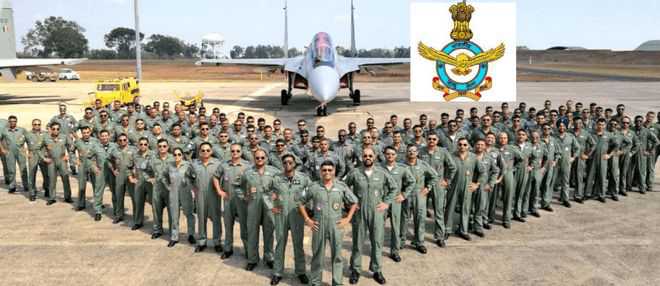
Deputy Commissioner Sandeep Hans on Wednesday called upon the youth from the district to participate in the upcoming recruitment rally of the Indian Air Force (IAF) which will be held at the Punjab Armed Police Grounds in Jalandhar on August 5.
The Deputy Commissioner said Moga was among the 12 districts in the state selected for the recruitment rally being held for posts under Group ‘Y’ (non-technical) (automobile tech and IAF police).
Sandeep Hans said the youth who were born between July 19, 1999, and July 1, 2003, could participate in this rally. He said physical fitness test and written test for youth of the district would be held on August 5 and their adaptability test I & II would be held on August 6.
State Stalwarts
DEFENCE MINISTER
Minister Rajnath Singh
ALL HUMANS ARE ONE CREATED BY GOD
HINDUS,MUSLIMS,SIKHS.ISAI SAB HAI BHAI BHAI
CHIEF PATRON ALL INDIA SANJHA MORCHA
LT GEN JASBIR SINGH DHALIWAL, DOGRA
SENIOR PATRON ALL INDIA SANJHA MORCHA
MAJOR GEN HARVIJAY SINGH, SENA MEDAL ,corps of signals
.
.
PATRON ALL INDIA SANJHA MORCHA
MAJ GEN RAMINDER GURAYA ,MADRAS REGIMENT
sanjhamorcha303@gmail.com
PRESIDENT SOUTH ALL INDIA SANJHA MORCHA
COL SS RAJAN BOMBAY SAPPERS,
PRESIDENT UTTARAKHAND ALL INDIA SANJHA MORCHA
COL B M THAPA ,BENGAL SAPPERSS
PRESIDENT HARAYANA STATE CUM COORDINATOR ESM
BRIG DALJIT THUKRAL ,BENGAL SAPPERS
PRESIDENT TRICITY
COL B S BRAR (BHUPI BRAR)
PRESIDENT CHANDIGARH ZONE
COL SHANJIT SINGH BHULLAR
.
.
PRESIDENT PANCHKULA ZONE AND ZIRAKPUR
COL SWARAN SINGH
INDIAN DEFENCE FORCES
DEFENCE FORCES INTEGRATED LOGO
INDIAN AIR FORCE
Air Officer C-in-C WESTERN AIR COMMAND
AIR MSHL S PRABHAKARAN AVSM VM
AOC-IN-C, EASTERN AIR COMMAND
Air Marshal Inderpal Singh Walia
AOC-in-C SOUTH WESTERN AIR COMMAND
Air Marshal Vikram Singh
AOC-IN-C, SOUTHERN AIR COMMAND
Air Marshal J.Chalapati
AOC-IN-C TRAINING COMMAND
AIR MARSHAL SK GHOTIA VSM
AOC-IN-C MAINTENANCE COMMAND
Air Marshal Jagdish Chandra
Flag Officer Commanding in Chief, Western Naval Command
ice Admiral R Hari Kumar, PVSM, AVSM, VSM
Flag Officer Commanding in Chief, Eastern Naval Command
Vice Admiral Sanjay Bhalla, AVSM, NM
Flag Officer Commanding in Chief, Southern Naval Command