All posts by webadmin

INS Viraat decommissioned, navy wants it as a museum

MUMBAI: The commissioning pendant of the longest serving aircraft carrier in the world — INS Viraat — was lowered at 6.50 pm at the naval dockyard in Mumbai on Monday, marking the end of a glorious tenure of the vessel that served both the Royal Navy and the Indian Navy for 56 years since it was commissioned in 1959.

ANSHUMAN POYREKAR/HT PHOTOINS Viraat, the oldest serving aircraft carrier, at the naval dockyard in Mumbai on Monday.

Navy chief admiral Sunil Lanba said they were keen to see it be converted into a museum. “If Andhra government refuses to make it a museum then the navy will examine it and convert it into a marine museum.”

Meanwhile, for the British men who served on board the vessel, it was surreal to see the warship once again.

Andy Trish, who had joined the Royal Navy as a naval airman in 1981 and served on INS Viraat, which was then HMS Hermes, termed the journey as memorable. “I would like to take her with me,” said Trish.

Steven Robertson, who served on the ship as a naval airman during the Falkland war, said, “It’s good to see that it is still well maintained.”

Mark Shepherd, another British national who was posted on the ship during the Falkland war, opined that the ship should be turned into a museum . “I was 16 -years-old when I was posted on this ship and I served for 103 days during the war,” said Shepherd.

Commissioned into the Royal Navy in November 1959 as HMS Hermes, she served the British for 27 years before being decommissioned in 1984. India then bought the vessel and christened it INS Viraat to be commissioned into the Indian Navy on May 12, 1987.


Stand ground on IWT by Vivek Katju

Indus Waters Commissioner must insist on sticking to treaty provisions

Stand ground on IWT
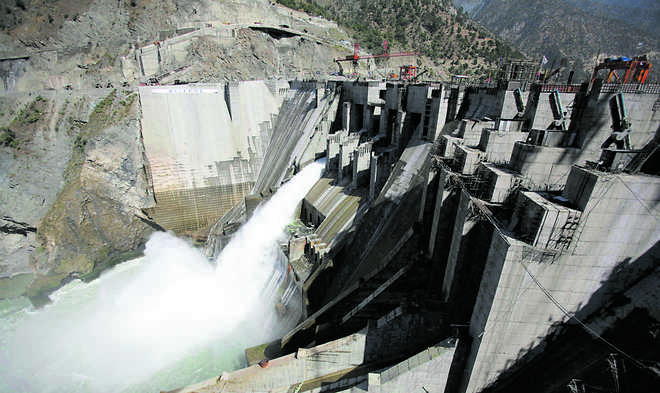
The Baglihar power project on the Chenab at Chanderkote. File photo

India and Pakistan’s Indus Waters Commissioners are expected to meet later this month in Pakistan, though the dates of the meeting have not been announced as yet. India’s decision to allow the commission to meet could only have been taken with a nod from Prime Minister Narendra Modi himself. Does it connote a softening in the hard but appropriate approach he had adopted towards Pakistan after the Uri attack in September last year? Besides, will this meeting have a bearing on the impasse that has developed between the two countries in resolving their differences over the Kishanganga Hydroelectric Project (KHEP) and Pakistan’s objections on the Ratle project on the Chenab?During the recent Punjab Assembly election campaign, Modi asserted that India would use all the water assigned to it under the Indus Waters Treaty (IWT). In actual terms, it means using the full potential of the Ravi, Beas and Sutlej rivers, which are assigned to India in the treaty. In so doing, he became the first Prime Minister to refer to the IWT in these terms and that was correctly taken to be part of India’s post-Uri terrorist attack aggressive approach towards Pakistan. Importantly though, these assertions in themselves did not, in any way, mean abrogating the treaty or a departure from any of its provisions.Clearly, Modi exercised care in formulating the remarks he personally made on the IWT. The comments attributed to Modi in a briefing meeting on the IWT that was held eight days after the Uri attack went beyond what Modi has said himself on the treaty. Sources told the media that Modi had made it clear that blood and water cannot flow together and that the Indus Waters Commissioners could only meet in an atmosphere free from terror. All this obviously sought to convey the impression that Pakistan should not take India’s commitment to the IWT for granted.Major terrorist attacks against Indian army installations took place after the Uri attack, though since General Qamar Bajwa took over as Pakistan army chief after the retirement of General Raheel Sharif in November last year terrorist attacks have abated and provocations along the Line of Control and the International Border have also come down. However, there is no indication that Pakistan has done a rethink on the pursuit of low-intensity war against India. In these circumstances, the permission given to the Indus Waters Commissioners to meet indicates that particularly the remarks attributed to Modi in the wake of the Uri attack were part of the domestic political management exercises that successive Indian governments have undertaken after major Pakistani terrorist strikes. The twists and turns that Indian governments take as part of such political management only reinforce Pakistani prejudices about India’s lack of stamina.The question now is will India show stamina in insisting that the provisions of the IWT be adhered to in the settlement of differences over KHEP and the Ratle project? This is especially when by agreeing to the meeting of the Indus Waters Commissioners India is respecting the treaty. Article VIII (5) mandates that the commission shall meet at least once a year, but also when requested by either commissioner. The background to the KHEP and the Ratle project disputes as well as India’s hitherto forceful and correct stand were given by this writer in these columns on January 9 this year.Over the past two months, the World Bank has attempted to resolve the impasse that threatens the IWT. Its new CEO, Kristalina Georgieva, visited Pakistan in end January and India last week. In Pakistan she met Prime Minister Nawaz Sharif and his colleagues. Predictably, they maintained that KHEP and the Ratle project violated the IWT and insisted on the convening of a Court of Arbitration to resolve the dispute. However, the World Bank “pausing” the untenable dual track approach it undertook continues to seek to find a way that the two countries will accept and then formally move it under the bilateral dispute resolution mechanism envisaged by the treaty.In this context, the Bank’s official media release of Georgieva’s discussions in Pakistan on KHEP and the Ratle project is revealing. It states, “Maintaining a neutral role as a Treaty signatory the World Bank in December announced a pause in the separate processes initiated by India and Pakistan under the IWT to allow the countries to consider alternate ways to resolve their differences.” It invoked the spirit of the treaty and cautioned, “Pursuing concurrent processes could make the treaty unworkable over time.”The fact is that no extent of obfuscation can hide the mess that the World Bank has made in handling Indian and Pakistani differences over KHEP and the Ratle project. Neutrality cannot imply avoidance to make a determination that under the IWT provisions, the Indian request for a neutral expert to go into these differences was correct and the Pakistani demand for a Court of Arbitration was not sustainable. If the treaty were now to become unworkable because of current differences, then the onus for the failure would lie not only on Pakistan but on the World Bank too. This would be ironic, for the Bank played a principal role in the making of the IWT.Pakistani media reports indicate that it is not interested in the commissioners trying once again bilaterally to find a resolution to differences on KHEP and the Ratle project. This may be mere posturing or a way of putting pressure on the World Bank to seek concessions from India on the design of the project and the volume of water in the KHEP reservoir. Re-engaging Pakistan bilaterally on the current differences is in keeping with India’s overall emphasis on direct talks between the two countries on all outstanding issues. However, while doing so it is not only essential not to concede ground on the position that India has taken on substantive issues but also to insist that it would be without prejudice to its position on the neutral expert.Pakistan has mismanaged its water resources. As Tilak Devasher notes in “Courting the Abyss”, his recent excellent study of Pakistan, “Pakistan has become a water-scarce country from a water-abundant one in 1947. It is in danger of becoming an absolute water-scarce country by 2035.” Instead of taking steps to ameliorate its water situation, it blames India for denying its share of the waters under the IWT. However, as Devasher reveals, Rao Irshad Ali, chairman of Pakistan’s Indus River System Authority, repudiated these charges. He told the Pakistan Senate in July 2015, “Reports in media about India getting more water is propaganda.”The writer is former Foreign Secretary


Two associates of suspected middleman get bail

Two associates of suspected middleman get bail
The court had last year issued an open-ended non-bailable warrant against the accused. File photo

New Delhi, March 4

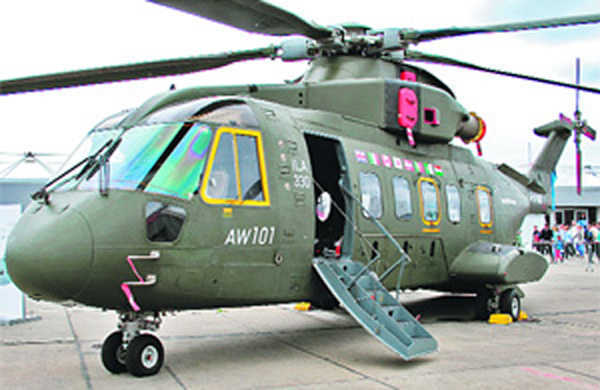
Two Indian associates of alleged middleman Christian Michel James were on Saturday granted bail by a special court in a money laundering case relating to the Rs 3,600-crore AgustaWestland VVIP chopper deal.

Special Judge Arvind Kumar allowed the bail pleas of accused RK Nanda and JB Subramaniyam, who were earlier summoned by the court.

The court granted them the relief on furnishing of a personal bond of Rs 1 lakh and a surety of the like amount.

It also directed them not to leave the country without the court’s prior permission and not to tamper with the evidence or influence the witnesses.

Advocate NK Matta, who represented the Enforcement Directorate, opposed the bail applications saying there was enough evidence on record to show the involvement of the two accused in the case.

The court had last year issued an open-ended non-bailable warrant against James, a British national, while summoning his Indian associates and M/s Media Exim Private Limited in the case. The firm was created by James, along with Nanda and Subramaniyam who are directors of the firm.

The ED had pressed for an open-ended NBW to bring James from the UK to face trial. An open-ended NBW does not carry a time limit for execution.

In June last year, the ED had filed a 1,300-page prosecution complaint (equivalent of a chargesheet) in connection with its money laundering probe in the case.

It had claimed that its probe had found that James had allegedly received Euro 30 million (about Rs 225 crore) from M/s AgustaWestland and alleged that this was nothing but kickbacks paid by the company to execute the deal for sale of 12 helicopters to India in favour of the firm in the guise of genuine transactions for performing multiple work contracts.

James is one of the three alleged middlemen being probed by the ED and the CBI in the case, apart from Guido Haschke and Carlo Gerosa. Both the agencies have also notified an Interpol Red Corner Notice or a global arrest warrant against him.

The complaint delved into the detailed role of James in the deal, his multiple visits to India and his transactions.

The first complaint in the case was filed in November 2014.

According to sources, the ED has already sought extradition of James from the UK.

In its complaint, the ED also claimed that the three middlemen “managed” to make inroads into the Indian Air Force in order to influence and subvert the force’s stand regarding reducing the service ceiling—the altitude at which a helicopter can fly—from 6,000 to 4,500 metres in 2005 after which AgustaWestland became eligible to supply the dozen choppers for VVIP flying duties.

It had said the remittances made by James through his Dubai-based firm M/s Global Services, FZE to the firm he had floated here, were made from the funds which he got from M/s AgustaWestland SpA through “criminal activity” and corruption being done in the chopper deal. — PTI


Nuh MLA questions BJP’s commitment to martyrs

Sushil Manav

Tribune News Service

Chandigarh, March 3

The state government’s commitment towards martyrs and Prime Minister Narendra Modi’s Beti Bachao, Beti Padhao campaign came under question from INLD MLA from Nuh Zakir Husaain during Question Hour in the Assembly today.Reacting to the answer given by Education Minister Ram Bilas Sharma on question whether there was any proposal under consideration of the government to establish a university in Nuh, Husaain alleged that despite the Chief Minister Manohar Lal Khattar’s announcement, the government had not opened a women’s college in the name of martyr Lt Kiran Shekhawat at Kurthana village of Mewat.“When Lt Shekhawat was martyred in a Navy aircraft crash in March last year, becoming the first woman officer of the country to die in the line of duty, Khattar had visited her Kurthana village and had announced to open a women’s college in her memory.

When Khattar laid the foundation stones of 21 women’s colleges on a single day on February 10, the one announced for Kurthana has been left out even when all formalities had been completed ahead of the event,” Hussain alleged.He said the BJP government not only chose against giving due recognition to the brave officer’s martyrdom, but had also forgotten its own Beti Bachao, Beti Padhao slogan in case of Mewat.Refuting Hussain’s allegations, Sharma maintained that there were some issues relating to the land identified for the college, a claim that Nuh MLA contradicted.Sharma said when Khattar laid the foundation stone of 21 women’s colleges on February 10, one of them was in Punhana falling in Hussain’s assembly constituency Nuh.In contrast, when Congress MLA from Jhajjar Geeta Bhukkal tried to pooh-pooh the government’s Beti Bachao, Beti Padhao campaign and alleged that women MLAs were not being provided ample opportunity to speak in the Vidhan Sabha, she had to withdraw her comments following strong reactions from the BJP MLAs.Having asked one supplementary question during Health Minister Anil Vij’s reply to Panchkula MLA Gian Chand Gupta’s question on specialist doctors, Bhukkal raised her hand for another question, but the Speaker, who perhaps did not look at her, asked the next member to ask question.“Women members are not being allowed to ask questions. Is this your Beti Bachao, Beti Padhao Abhiyaan?” she asked. However, several BJP members, including Finance Minister Captain Abhimanyu, Urban Local Bodies Minister Kavita Jain, Ambala City MLA Aseem Goyal and others strongly objected to her comments and asked her to withdraw it.Ostensibly realising her mistake, Bhukkal chose to withdraw her comments.


Freedom of expression fine, but what of national interest, asks Dwivedi

Veteran Congress man takes a line independent of his party on the Gurmehar Kaur issue

Freedom of expression fine, but what of national interest, asks Dwivedi
Gurmehar Kaur had said that she was not afraid of the ABVP. ANI file

Aditi Tandon
Tribune News Service
New Delhi, March 1
Known to speak his mind, veteran Congress leader Janardan Dwivedi on Wednesday questioned the growing “politicisation” of student movements saying these are now planned and no longer spontaneous.Close on the heels of the clash between ABVP and SFI supporters on Ramjas College campus and the consequent controversial post by Gurmehar Kaur, who said she was not afraid of the ABVP, Dwivedi said, “This is unfortunate. It is not a question of the freedom of expression of one student. It is a larger question; it’s a question of how a generation behaves and whether all this is in the interest of the nation. The whole atmosphere is getting vitiated. This can have grave consequences,” Dwivedi said, remembering his own days at Allahabad University when student movements “germinated on their own and political parties joined them later”.

(Follow The Tribune on Facebook; and Twitter @thetribunechd)

The AICC general secretary (organisation) held all political parties responsible for the politicisation of student affairs, saying, “The movement for educational reforms was at its peak in the 1960s and 1970s. Those were the times when academic reform and issues moved along with each other. These days issues are not meant to solve problems. Issues are planned and then politicised. Who says there should not be freedom of expression? But parties must take responsibility for taking sides on such an issue and then making political capital out of it,” said Dwivedi, pointing to the need for introspection at a time when every party has a student wing.To drive home his advice to political parties to leave campuses alone, Dwivedi recalled a visit by former Prime Minister Jawaharlal Nehru to Allahabad University campus and how Nehru then advised students to just “study”.“This advice came from a man who led the youth in the struggle for India’s independence and someone who nursed socialist sentiment in the Congress,” said Dwivedi, taking a line independent of the Congress on the issue of Gurmehar Kaur.Dwivedi’s comments came on a day when the Congress’s student wing, NSUI, held a march in favour of Kaur’s “right to free speech”. The march was attended by some senior Congress leaders.Dwivedi has courted controversy in the past for saying things he considers right, whether or not they gel with the party’s official line.He had welcomed demonetisation as a “socialist measure”. Earlier, he had argued for reservations on the basis of economic status, inviting a rebuttal from Congress President Sonia Gandhi. Post BJP’s 2014 Lok Sabha win, Dwivedi had said, “This is a win for Indian-ness.”Head of Congress’s communications and media department for years, Dwivedi no longer represents the official voice. As one insider says, “The leadership may not like what he says but every party needs conscience-keepers and Dwivedi is one for the Congress.”

Cong officially backs Gurmehar

Dwivedi’s advice apart, Congress media head Randeep Surjewala on Wednesday backed Gurmehar and again attacked the BJP for not coming out in support of the girl who “called the bluff of ABVP goons”. “After the note ban, the Narendra Modi government wants ‘zuban-bandi’ and ‘soch-bandi’, a ban on speech and thought,” he said.Surjewala said Kaur was harassed online as she dared to speak against the ABVP.


Grandfather comes to rescue of Gurmehar Mother keeps mum, says daughter’s security more important than news

Grandfather comes to rescue of Gurmehar
Gurmehar Kaur’s grandfather Kanwaljeet Singh.

Tribune News Service

New Delhi/Jalandhar, February 28

Gurmehar Kaur’s grandfather Kanwaljeet Singh on Tuesday hit out at the politicians asking them to refrain from giving any statement on her granddaughter.

“Drama is being created, which shouldn’t be highlighted. Politicians must refrain from giving statements,” said Kanwaljeet.

He said: “She is just a young girl, lost her father to Kargil war. Don’t they (politicians) see a daughter in her.”

However, the mother of the 20-year-old Delhi University student, whose defiant stand against the ABVP drew a volley of hate messages on her Facebook account refused to be drawn into the controversy over it.

When contacted, Rajvinder Kaur said, “No thanks… I do not want this controversy to go on.”

“For me, security of my daughter is a much bigger issue than any news”, she said.

(Follow The Tribune on Facebook; and Twitter @thetribunechd)

Gurmehar’s uncle Davinderdeep Singh, a professor at a college in Nakodar at Jalandhar, Gulmehar’s hometown, said his brother would have stood like a rock behind her.

“She is entitled to her opinion… she did not say anything anti-national,” he said.

Kaur, who is a Delhi University student and daughter of Kargil war martyr, invited a stir by posting a message against the Akhil Bharatiya Vidyarthi Parishad (ABVP) on social media.

Kaur has also filed a complaint with the  Delhi Commission for Women alleging that she received rape threats on social media for posting the message.

The Delhi Police also filed an FIR against the rape threat to Kaur. The FIR was registered under relevant Sections of the IT Act and the IPC.

The entire controversy gained momentum after last week’s clash that erupted between Left-affiliated All India Students Association (AISA) and the Bharatiya Janata Party (BJP) backed ABVP over cancellation of Jawaharlal Nehru University (JNU) student Umar Khalid’s event at Delhi University’s Ramjas College.

The seminar was withdrawn by the college authorities following opposition by the ABVP.  —Agencies


BSF proposes Wagah-like shows at two BOPs in Meghalaya

BSF proposes Wagah-like shows at two BOPs in Meghalaya
File photo

Shillong, February 24

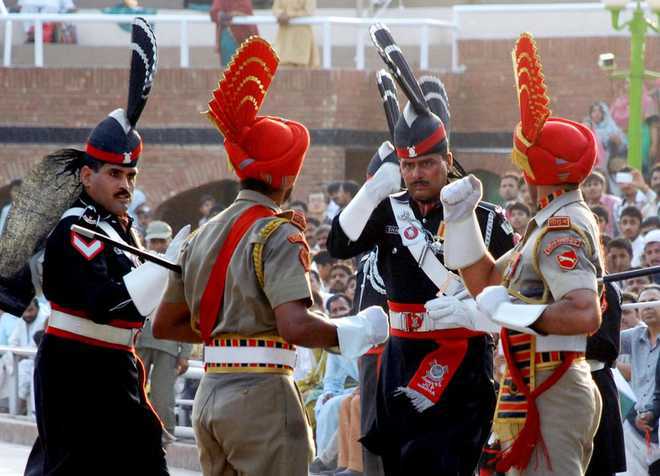
The BSF have proposed to set up shows similar to that performed at the Wagah border along the Indo-Pak border, albeit, a more friendly one with the BGB of Bangladesh at two BOPs in Meghalaya, an official said.

Two border out posts (BOPs) along the Indo-Bangla border have been identified and a proposal of Rs 2 crore was sent to the Tourism ministry, Meghalaya Frontier BSF IG P.K. Dubey said.

“We have selected two BOPs – Dawki in West Jaintia Hills and Kilapara in West Garo Hills for border tourism in Meghalaya,” he said.

A proposal of Rs 1 crore each for developing these two BOPs along the Indo-Bangla border as tourist spots have been submitted and approval is awaited, he said.

The BSF here has plans to develop a similar show of that at the Wagah border but in a more friendly way.

“We will try some joint retreat ceremony in the evening where flag hoisting will be done jointly by the border security force (BSF) and border guards of Bangladesh (BGB),” Dubey said.

“The idea is to showcase the BOPs where tourists can visit and have first-hand information about the border,” he said.

Photo exhibition, arms display and documentary are on the cards, he said adding that they have also proposed new items like games on the border.

A war memorial at Kilapara was built as a tribute to nine BSF soldiers who lost their lives during the 1971 Indo- Pak war.

The BSF IG, who had just returned from the BSF-BGB meet at Dhaka, also informed that a proposal was put forth for a expedition – cycling, rock climbing besides joint training for better coordination between the BSF and BGB.

“BGB personnel can be trained here in border management so that they also understand the problem of Indo – Bangla border. Courses will be conducted for them here in Shillong or Siliguri,” he said.

With regards to the border haats, he said that four border haats have been approved by the government but they are yet to be constructed by the state.

“The MoU on this has expired and now it is expected to be signed once after the PM visit and they (border haats) will be activated in the next one year,” Dubey added.

He further informed that Indian government has decided to provide medical facilities in case of emergency to BGB in places where their medical facility does not exist.

“The MHA has approved this and whatever medical facility we are having on the border will be extended to BGB personnel in case of emergency,” he said. — PTI


At 13%, India is world’s largest arms importer

At 13%, India is world’s largest arms importer

Ajay Banerjee

Tribune News Service

New Delhi, February 20

India has once again emerged as the world’s largest importer of weapons and military equipment, accounting for 13 per cent of all such international imports. Saudi Arabia, United Arab  Emirates,  China  and Algeria  are the next four biggest global importers.These trends have emerged from a report released by the Sweden-based think tank Stockholm International Peace Research Institute (SIPRI) today. The assessment was done for a five-year period (2012-2016).(Follow The Tribune on Facebook; and Twitter @thetribunechd)Titled “Trends in international arms transfers-2016”, the report says, “India was the largest importer of major arms in 2012-16, accounting for 13 per cent of the global total.”Comparing two five years blocks — 2007-11 and 2012-16 — the report says, “India’s imports increased by 43 per cent and were far greater than those of its regional rivals, China and Pakistan, in the most recent period.”The SIPRI report said a major reason for the high level of imports is that the Indian arms industry has failed to produce competitive indigenously designed weapons. The USA had 14 per cent and Israel 7.2 per cent share in the Indian market, it said. “Based on existing orders and weapons, Russia will remain, by far, the main supplier of major arms to India for the foreseeable future,” the report said. Russia accounts for some 68 per cent of all military equipment supplies to India.However, the report said India expects increasing deliveries due to several major orders from France (another traditional supplier), the US, South Korea and Spain— which recently became arms suppliers to India.During the period studied by SIPRI, India procured fighter jets, a sea-borne  aircraft  carrier and  Mi-17 V5 helicopters from Russia; specialised transport planes, the C-130J Super Hercules and the C-17 Globemaster along with maritime surveillance planes Boeing P-8I from the US; UAVs and radars from Israel.

IndiA – the Arms importing Behemoth

In 2012-2016, India continued to dominate the world as the largest importer of major arms, according to the latest report released by the Stockholm International Peace Research Institute (SIPRI) on Monday


MES Delhi chief’s posting stayed over vigilance issues

Vijay Mohan

Tribune News Service

Chandigarh, February 17

Observing that prima facie there were discrepancies in the vigilance policies governing promotion and postings of officers, the Chandigarh Bench of the Central Administrative Tribunal has restrained the Ministry of Defence from filing the post of Chief Engineer (CE), Delhi Zone, in the Military Engineer Service (MES).In his petition, Dev Raj, Joint Director General (Personnel and Training), Western Command, said when he was promoted as CE in June 2016, he was considered to be cleared from the vigilance, but when his case for posting as CE of a zone came up, he was not considered on the ground that he hadn’t got the vigilance clearance. Dev Raj, an Indian Defence Service of Engineers cadre officer, averred that an officer junior to him was posted as CE Delhi. The Delhi Zone CE oversees construction and maintenance of all Army official and residential buildings in the NCR.Dev Raj claimed he was implicated in a case related to procurement of pipes in 1995. Though vigilance gave him a clean chit at the initial stage, inquiry was ordered many years later and he was held blameworthy. The MoD said  vigilance criteria for promotion and posting to a sensitive appointment are different.However, observing that the MoD used same facts to promote and deny the officer the posting, the CAT said: “The act of creating this artificial distinction between these two situations does not appear logical or even legal.”


Major Dahiya was part of surgical strike teams

Major Dahiya was part of surgical strike teams
Major Satish Dahiya

Ravinder Saini

Tribune News Service

Mahendragarh, February 15

The two-year deputation of Major Satish Dahiya (32), who sacrificed his life while fighting terrorists during a special operation in Kupwara district of Jammu and Kashmir yesterday, was about to end this month and his family members were expecting his next posting in Jaipur (Rajasthan).They also got his two-and-a-half-year-old daughter – Priyansa – enrolled in a play school in Jaipur recently, but the destiny had another plan for Major Dahiya. The braveheart had returned to his posting station on January 2 after spending 20 days in the village.“Since Jaipur was believed to be his new posting station, a rented accommodation was already taken for him. Even, his wife had started residing there after getting their daughter enrolled in a school,” said Sunil Kumar, cousin of Major Dahiya.Major Dahiya was the only child of Anchal Singh who runs a brick-kiln in partnership with his two brothers in the village. Major Dahiya had joined the Army Supply Corps (ASC) in 2009 and the Rashtriya Rifles in 2015 on deputation for two years.“Major Dahiya had led several operations successfully during his career. He was also the part of the teams which conducted surgical strikes in Pakistan last year,” said Major Naveen Phoghat who was here to console the bereaved family.Earlier, a pall of gloom descended on the village as soon as the tragic news of his death reached here last evening.“A large number of villagers spent sleepless night at Major Dahiya’s house yesterday as they had lost their brave son,” said Ishwar Singh, a villager.Shocked father Anchal Singh and mother Anita Devi were unable to speak and they responded to relatives and co-villagers merely by shaking their heads.Major Dahiya’s wife Sujata Choudhary said she was proud of her husband who made the supreme sacrifice for the motherland. “I will send my daughter to the Army to serve the nation,” she added.Bhup Singh, uncle of Major Dahiya, said that he talked to him over phone when he was about to launch the operation yesterday. “Major Dahiya told me that he himself will call back after the operation,” he added.Sarpanch Nihal Singh said that Major Dahiya had not only made the village proud by attaining martyrdom, but also set an example of patriotism for the youth of the village.“More than 50 youths from the village are serving in the Army and the paramilitary forces, but Satish is the first who sacrificed his life for the country,” he added.