All posts by webadmin

Pak may consider India’s request for NIA visit: Aziz

Pak may consider India’s request for NIA visit: Aziz

New Delhi, April 18

Pakistan Prime Minister’s Adviser on Foreign Affairs Sartaj Aziz today indicated that his country may consider a request by India for a visit by its NIA team to further probe the Pathankot terror strike, days after top Pakistani envoy ruled out the same.Aziz said Pakistan High Commissioner to India Abdul Basit’s comments that the bilateral peace process was “suspended” did not mean “cancelled or given up” and hoped that the Indo-Pak dialogue will resume soon.On whether India’s National National Investigation Agency (NIA) team will be allowed to visit Pakistan in connection with Pathankot attack probe, Aziz told CNN-NEWS18 in an interview that “once the stage is reached…India makes a request and then we 

will see”.

Claiming that Basit’s comments that cooperation not meaning reciprocity were “over-interpreted”, he said he did not exclude option of NIA’s visit to Pakistan.”I don’t think he used that word. He said that right now cooperation is more important than that of reciprocity and does not exclude option and he said that let’s cooperate and then thing will work out. So, I don’t think one should over interpret statement, he (Basit) just said that cooperation is more important which is true,” Aziz said.Earlier this month, Basit had indicated that an Indian probe team is unlikely to be allowed to visit Pakistan, which had sent its JIT to probe the terror attack at the air base, saying, “…the whole investigation is not about question of reciprocity in my view. It is more about extending cooperation or our two countries cooperating with each other to get to the bottom of the incident”.Aziz also downplayed Basit’s remarks on “suspension” of Indo-Pak peace process, saying “… suspending doesn’t mean cancelled or given up”. For the time being you called it suspended as obviously after January, four months have passed, and to that “extent dialogue is suspended but I hope it will resume soon,” he added.He also alleged that the recent arrest of the former Indian naval officer, Kulbhushan Jadhav, was “not the case of one individual. It is network which is operating in Baloachistan. We have arrested some more people… We don’t want consular access to affect our investigating in to this entire episode.”Jadhav was arrested last month by Pakistan authorities, who alleged that he was an Indian spy, an allegation rejected by India that has sought consular access to him. —  PTI Pakistan High Commissioner to India Abdul Basit’s comments that the bilateral peace process is “suspended” does not mean “cancelled or given up”. I hope the Indo-Pak dialogue will resume soon. – Sartaj Aziz, Adviser to Pakistan Prime Minister

Govt too hopeful of probe team visit

  • Union minister Kiren Rijiju on Monday said the government was hopeful a NIA team would soon visit Pakistan to gather evidence in the Pathankot attack case
  • “We are hopeful that a team of NIA will visit Pakistan soon,” Rijiju said. Pakistan High Commissioner Abdul Basit had indicated that Indian team might not be allowed to visit Pakistan

There are no human rights in PoK: Kiren Rijiju

There are no human rights in PoK: Kiren Rijiju
short by Ankur Vyas / 10:09 am on 15 Apr 2016,Friday
Reacting to recent protests in Pakistan-occupied Kashmir (PoK), Union Minister Kiren Rijiju on Thursday said, “There is no human rights [there]. This has been amply exposed many times.” Notably, students reportedly carried out a demonstration in Muzaffarabad area of PoK, condemning the “oppressive rule” by Pakistan. They were raising the issue of job vacancies being opened only to Pakistani youth.


OROP gets retrospective Cabinet nod

The One Rank One Pension scheme, brought in last November to benefit more than 2.5 million ex- servicemen and war widows, on Wednesday received ex-post facto approval from the Cabinet.

Under the scheme, pension would be revised on the basis of the pension of retirees of calendar year 2013 and the benefit will be effective from July 1, 2014.

In future, the pension would be revised every five years.

“The Financial implications on account of grant of OROP would be Rs. 10,925.11 crore for payment of arrears and annual financial implication would be Rs. 7,488.7 crore,” a statement here said.


Lt COL SANDEEP BHANOT TAKEOVER PRESIDENT HARAYANA UNIT SANJHA MORCHA

col sandeep Bhanot


Lt COL SANDEEP BHANOT (RETD), has joined the Sanjha Morcha team as President Harayana Unit , we all wish  him all the best and welcome him to the folds of Sanjha Morcha . He is Bcom Graduate  and commissioned from IMA in 1987 in the corps of ASC  and  Took premature retirement in 2008 after 21 years of service. At Present he  running his own successful business and wants that  ESM to start their own ventures instead of seeking security jobs which are lowly paid and compromises status of ESM irrespective of ranks in civil.

we are hopeful that he will come out with solid schemes for ESM for self employment which is Sanjha Morcha first priority


Pathankot attack: Punjab SP among 13 probed by Pak JIT

Pathankot attack: Punjab SP among 13 probed by Pak JIT
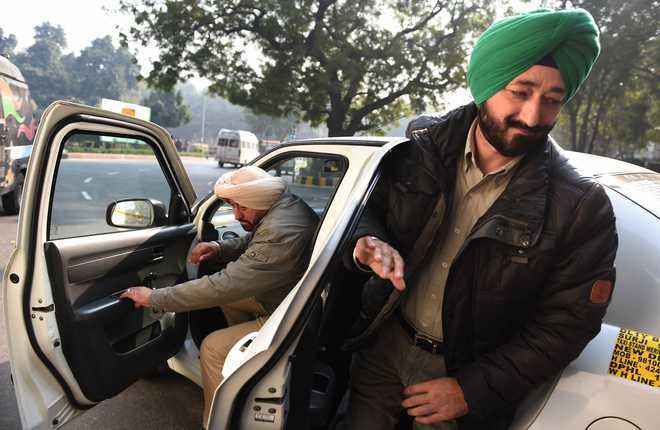
SP Salwinder Singh. AFP file photo

Shaurya Karanbir Gurung

Tribune News Service

New Delhi, March 31

The Pakistan Joint Investigation Team (JIT), which is in India to probe the Pathankot air base attack, has admitted that the attackers were Pakistanis and that “there is a Pakistan link to the attack,” a National Investigation Agency (NIA) officer said here today.He said the two agencies agreed on those responsible for planning and orchestrating the attack. Asked if the JIT had claimed that there was not enough evidence to link Maulana Masood Azhar, head of Pakistan-based Jaish-e-Mohammed (JeM), to the Pathankot attack, the officer said: ” It is incorrect to say so.”It is the first time that a Pakistan investigation team is in India to probe a terrorist attack. After the 26/11 carnage, only a Pakistan judicial commission had arrived in India to probe the attack.The NIA officer said as per the terms of reference based on reciprocity, 13 witnesses were examined again by the JIT regarding the Pathankot attack. Among them were Punjab SP Salwinder Singh, his jeweller friend Rajesh Verma and his cook Madan Gopal. The three were allegedly kidnapped by terrorists on the intervening night of December 31, 2015, and January 1 this year who later attacked the Pathankot air base.The NIA said the process of sharing evidence began yesterday. Today, the NIA handed over the Pak team some important documents. “The documents include the postmortem reports of the terrorists, their DNA reports, details of the arms and ammunition used by them (that had Pakistan markings) and details of the calls made to Pakistan before the attack,” said another NIA officer.”As per the agreed terms of reference of the two governments, we have provided the JIT with evidence for prosecuting those responsible for the attack,” he said. “For this to happen, the JIT has to establish its case, including the fact that the terrorists came from Pakistan, in their court of law. And in the court of law, evidences such as the autopsy reports of the terrorists have to be given,” the officer said.






Ex-Navy man in Pak to get help

Ex-Navy man in Pak to get help
Kulbhushan Jadhav

Quepem (Goa), March 28

The External Affairs Ministry has been asked to extend all possible help to former Navy official Kulbhushan Jadhav, arrested by Pakistan claiming he was a RAW operative, Defence Minister Manohar Parrikar today said.“We do agree, to the extent I know, that he is an Indian citizen and we have asked for consular access,” Parrikar said, adding that he is concerned about Jadhav since he is a veteran. Giving details, the Minister said he had “indicated” to the MEA that Jadhav is an ex-officer and should be given all assistance and support required.Praising External Affairs Minister Sushma Swaraj, Parrikar said the MEA was doing its best. He said that Swaraj was very active and one can even reach her at night on Twitter and get a reply with action taken reports usually given by (next) morning.“Sushmaji has been working vigorously to help Indians abroad who are in problem. In this case, since the other country has made allegations, it may take a longer time,” he said.Parrikar refused to comment more on Jadhav saying “other than paying him One Rank One Pension I cannot talk about anything on an ex-officer”.Jadhav, a 1991 commissioned Naval officer, was arrested earlier this month by Pakistan authorities on the charges that he was dealing with Balochistan freedom fighters. The allegation was that the officer, who retired in 2013, was an active RAW agent, a charge denied by India. Sources in the government say Jadhav is a small businessman.— PTI




Soldier dies as avalanche hits Army patrol in Ladakh

Another missing; downpour in Kashmir division again

Tribune News Service

Srinagar, March 25

A soldier was killed and another reported missing after an Army patrol was hit by an avalanche in the remote Turtuk area of Ladakh as downpour began in the Kashmir division.Two soldiers were buried under snow at 8 am today when an Army patrol in the Turtuk area of Ladakh was hit by an avalanche.An Army official said an operation was immediately launched and one soldier was rescued while the other was still missing.The rescued soldier, who was in a critical condition, later succumbed to his injuries, the official said. The deceased soldier was identified as Lance Havildar Bhawan Tamang, a resident of West Bengal.The official said efforts were being made to rescue the missing soldier. It was the second time this month that the Army suffered casualties in avalanche-related incidents.Last week, two soldiers on surveillance duty at a post in the Kargil sector were hit by an avalanche. One soldier was rescued immediately, but another was found dead three days later.The Kashmir division, which includes Ladakh’s two districts, received moderate to heavy rain and isolated snowfall in recent weeks as the region had a brush with back-to-back wet spells after a winter without snow.Rain began at most places in the Kashmir valley on Friday when the latest spell of heavy rain hit the region. The wet spell was likely to continue over the next couple of days.The downpour caused day temperature to dip by several degrees below the average temperature for this time of the year.According to the Meteorological Department, the downpour was likely to decrease in intensity over the next two days.The Kashmir valley was expected to receive scattered rain on Saturday and isolated rain on Sunday, following which the weather was likely to remain dry.A previous spell of downpour last week had forced the highway connecting the Kashmir valley with the Jammu division to be closed for four consecutive days.


PAKISTAN’s NAVY :: A Quick Look

By Alex Calvo

Traditionally the junior service, operating in the Army’s shadow and receiving a ten percent share of the 2015 defence budget of $6.6 billion, Pakistan’s Navy personnel numbers more than 22,000 active, plus 5,000 in the reserve. This secondary role stands in contrast with the economy’s dependence on the sea, with the port city of Karachi contributing 25 percent of GDP and the proposed China Pakistan Economic Corridor (CPEC) raising the country’s maritime profile even further.

Much of the Navy’s backbone, including its seven submarines, five French-made ‘Khalid’ class conventional hunter-killer (SSKs) acquired in the 1990s plus two ‘Hashmat’ class SSKs from the 1970s, is nearing retirement. The Navy is working to acquire new surface and undersea combatants, boosting domestic shipbuilding in the process and in cooperation with Beijing.

Plans include procuring an additional four 3000-ton F-22P/’Zulfiqar’ (Sword) class frigates with improved sensors and weapons (including HQ-17 surface-to-air missiles, developed from Russia’s Tor 1/SA-N-9), as well as six Type-022 Houbei stealth catamaran missile boats. State-owned shipbuilder Karachi Shipyard and Engineering Works (KSEW) is responsible for these programs, and is expanding its facilities with a new foundry, manufacturing areas, and two dry docks of 26,000 and 18,000 dead weight tons, spread over 71 acres. Islamabad had been hoping to procure six Perry-class frigates from the US on easy terms, but congressional hostility has prompted greater reliance on China, a country heavily committed at all levels to Pakistan, being a key to Beijing’s strategy of securing access to the Indian Ocean and keeping New Delhi distracted by a regional rival.

Karachi is the traditional home of the Pakistani Navy, and remains of the utmost importance, despite diversification into other bases, among them PNS Siddique (in Turbat, in the south-west, close to the strategic deepwater port of Gwadar and the border with Iran), Pasni, and Jinnah Naval Base (also in the south-west). Asked whether security is considered by the Pakistani Navy as a reason to push for further diversification away from the city, Zoha Waseem (PhD Candidate at King’s College London and an expert in Pakistani security and policing) explains that “the situation in Karachi in terms of the ongoing operation is linked with the need of the military to keep investing in Karachi. The construction of military bases, infrastructure, and training centres and accommodation does not appear to be decreasing. Karachi is an ATM machine, and a prime location for any stakeholder to have its assets here.”

While new ships are seen as essential in terms of maritime security and the fight against piracy, it is Pakistani plans to acquire new submarines that have met with the greatest concern in New Delhi. In March 2015, Islamabad announced plans to procure eight new Chinese submarines, and in October 2015 confirmed that four would be purchased from Beijing and four built at KSEW. The package includes a training centre in Karachi and probably includes access to China’s Beidou-II (BDS-2) satellite navigation network. Thanks to similar designs, Beijing, in turn, gets to enjoy the necessary maintenance personnel and facilities enabling her to operate her own submarines much more efficiently in the Indian Ocean, home to vital SLOCs (sea lanes of communication) for China. Ideally the Navy would like a total of 12 new boats. These Chinese-designed submarines will probably be based on the air independent propulsion (AIP) equipped Type 39B Yuan SSK (known as S-20 in its export version). Displacing 2,300 tons, they can fire both cruise missiles and 533 mm torpedoes, and can also deploy mines and special forces. Pakistan, already working on a version of the National Defence Complex Babur missile capable of launch from her old Khalid submarines, sees the S-20 as more than a conventional platform, although preventing an Indian blockade is certainly a major goal in and by itself. A sea-based deterrent would provide Islamabad with a second strike capability, while avoiding perceptions of falling behind India in the nuclear sphere. The resulting improvement in survivability is seen by Mansoor Ahmed (Stanton Nuclear Security junior faculty fellow at the Harvard Kennedy School’s Belfer Center), as providing greater strategic stability to South Asia, given that India could not be sure of completely destroying Pakistani nuclear forces and thus escape unacceptable damage herself.

Work on a sea-based deterrent may also be closely linked to the Navy’s status within the military. According to Scott Cheney-Peters (US Navy reserve officer and CIMSEC founder) “Unless Pakistan’s Navy can develop an at-sea strategic nuclear deterrent it is likely to remain the ‘junior service.’ This means it has a strong institutional incentive to pursue an SLBM second-strike capability. But just as this incentive may not be enough to bring the capability to fruition any time soon, so the second-capability may not be enough to remove the perception of the Navy as a junior partner in the nation’s armed forces.”

Alex Calvo is a guest professor at Nagoya University (Japan) focusing on security and defence policy, international law, and military history in the Indian-Pacific Ocean Region. A member of the Center for International Maritime Security (CIMSEC) and Taiwan’s South China Sea Think-Tank, he is currently writing a book about Asia’s role and contribution to the Allied victory in the Great War. He tweets @Alex__Calvo and his work can be found here.


Connecting Nepal India should grab the opportunity

The reflex action of the Indian strategic community to China’s offer to build a railway line to Nepal is bound to be consternation. The air will be imbued with dire predictions of the Chinese dragon’s spreading tentacles into South Asia. The so-called string of pearls theory that accuses China of building alliances to box in India will be recast to include Nepal, a country that had never figured in this alleged game plan. This is because China had so far been content to let Nepal remain an Indian backyard. The same set of retired soldiers and diplomats who will now vent against China must share part of the blame for the imminent loosening of India’s monopolistic hold over Nepal’s trade. They had failed to raise the flag when the RSS and the South Block went a step too far with an undeclared blockade of Nepal that lasted months.New Delhi’s single minded devotion to the Madhesi cause must have stiffened Kathmandu’s resolve to open up alternatives for trade. After all it couldn’t have remained indifferent to the impact of the blockade on the prices and availability of essentials like LPG and medicines. Now that the die is cast, India can either join the connectivity game or rail against the intensification of China-Nepal relations. The second option will be a nonstarter because every nation has the sovereign right to choose its alliances. Just like India which dallies both with the US and Russia.India could take the cue from the recent SAARC conclave where all the foreign ministers pitched for greater connectivity. India needs to accelerate work on two rail links to Nepal and put on the front-burner plans for another three. This will dovetail with the planned BCIM (Bangladesh-China-India-Myanmar) corridor and the US-Japan supported Pacific Corridor from India to Vietnam via Myanmar and Thailand. Instead of lamenting an inevitable, India must build on its advantages with Nepal. The South Block’s response is in the right direction. It has refused to get drawn into the comparison game, knowing well that no other country in the world has the kind of ties India has with Nepal.


India gives power supply to B’desh, gets Net bandwidth

India gives power supply to B’desh, gets Net bandwidth
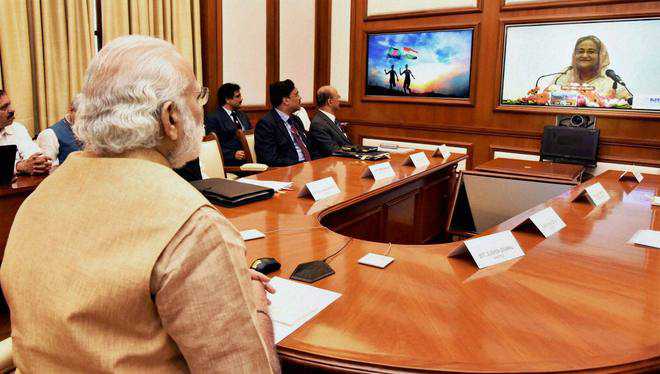
Prime Minister Narendra Modi dedicates the second cross-border power transmission system between India and Bangladesh through video-conferencing in New Delhi on Wednesday. PTI

Agartala, March 23

Prime Minister Narendra Modi today inaugurated by remote control 100 MW power supply from Tripura’s Palatana to Bangladesh.At the same time, Bangladesh Prime Minister Sheikh Hasina provided 10 GB Internet bandwidth to India and the entire programme was held through video-conferencing.“In this age of interdependence, the two countries would further strengthen their ties and it is a significant day that both are promoting the ways of development,” Modi said.Hasina said that “the relation between the countries has further consolidated through the supply of power and Internet bandwidth.”“Bangladesh would observe its National Day on March 26 and I pay my respect to the memory of the Father of the Nation of Bangladesh. The era of good relations began during the time of ‘Bangabandhu’ between the two countries, which still continues,” Modi said.He was referring to ‘Bangabandhu’ Sheikh Mujibur Rahman, the founding leader of Bangladesh and the father of Prime Minister Sheikh Hasina.The eight north-eastern states would be immensely benefited with the opening of the third International Internet gateway, he said, adding that Bangladesh, India, Nepal and Bhutan had made considerable development in road links.“Now India and Bangladesh is connected through water, surface communication and air. We want to be connected with Bangladesh though space also,” the Prime Minister said.He said the festival of Holi has started in India and Bangladesh and both would be coloured with new colours.Modi congratulated India and Bangladesh teams for the World T20 tie between the two this evening at Bengaluru.Hasina, in her speech, said, “We always remember India’s cooperation during the liberation movement in 1971.” On power supply, she said during her visit to Tripura in 2012, she discussed the matter of getting power from the state’s Palatana project.Hasina said her country was getting 500 MW power from India now and both the countries made considerable development in the field of cooperation through roads, railways and power.She also thanked Prime Minister Modi and Tripura Chief Minister Manik Sarkar for their cooperation.Sarkar, at the invitation of External Affairs Minister Sushma Swaraj, also joined the programme from here through video-conferencing. — PTI