









Sanjha Morcha

US approves $428 million support services sale for India’s Apache helicopters, M777 howitzers

US State Department says proposed Foreign Military Sale includes long-term logistics, training and technical support for Apache helicopters and M777A2 howitzers, aimed at strengthening India’s defence capabilities

The US has approved the possible sale of support services and related equipment for Apache helicopters to India for an estimated cost of USD 198.2 million, the US Department of State said.

The Department of State also approved a possible sale of sustainment support for M777A2 Ultra-Light Howitzers for an estimated cost of USD 230 million.

The principal contractors for the Apache support services deal will be the Boeing Company and Lockheed Martin, the State Department said.

For the howitzers support, the principal contractor will be BAE Systems, located in Cumbria, UK.

The Department of State said India has requested to buy AH-64E Apache sustainment support services; US Government and contractor engineering, technical, and logistics support services; technical data and publications; personnel training; and other related elements of logistics and program support.

India had also requested to buy long-term sustainment support for M777A2 Ultra-Light Howitzers.

The following non-major defence equipment items will be included: ancillary items; spares; repair and return; training; technical assistance; field service representative; depot capability; and other related elements of logistics and program support, the Department of State said, referring to the support services for the howitzers.

The possible sale of support services for the helicopters and the howitzers will take place under the Foreign Military Sale channels.

The Department of State said the proposed sale of helicopters and howitzers will support the foreign policy and national security objectives of the US by helping to strengthen the US-Indian strategic relationship.

It will also help improve the security of a major defence partner, which continues to be an important force for political stability, peace, and economic progress in the Indo-Pacific and South Asia regions.

The proposed sales will improve India’s capability to meet current and future threats, strengthen its homeland defence, and deter regional threats.

India will have no difficulty absorbing these articles and services into its armed forces, the Department of State said.

The proposed sales of the equipment and support will not alter the basic military balance in the region. There will be no adverse impact on US defence readiness as a result of this proposed sale, the Department of State said.


SC allows euthanasia of stray dogs posing threat to human life

Refuses to recall verdict on relocation and sterilisation of stray canines at public places

As incidents of stray dog bites and attacks continue to occur across India with “alarming frequency and severity”, the Supreme Court on Tuesday, for the first time, allowed euthanasia of rabid, incurably ill or demonstrably dangerous stray dogs to curb the threat to human life.

A three-judge Bench led by Justice Vikram Nath, however, made it clear that such action might be taken only after assessment by veterinary experts and strictly in accordance with the provisions of the Prevention of Cruelty to Animals Act, 1960, the Animal Birth Control Rules, 2023, and other applicable statutory protocols.

The Bench, which also included Justice Sandeep Mehta and Justice NV Anjaria, refused to recall its November 7, 2025 directions that stray dogs picked up from public places such as hospitals, bus stands, schools and railway stations must not be released back to the same locations after vaccination or sterilisation.

“This court cannot remain oblivious to the deeply disturbing ground realities emerging from various parts of the country where young children and elderly persons have been attacked, ordinary citizens have been left vulnerable in public places, and even international travellers have fallen victim to such incidents,” it said.

The court dismissed applications seeking modification of its directions issued in November last year in a suo motu case concerning the stray dog menace. Holding that stray dogs did not possess an “indefeasible or absolute right” to occupy all categories of public spaces irrespective of their nature and use, the top court clarified that the statutory framework for humane management of stray dogs could not be interpreted as conferring a perpetual right of occupation in sensitive institutional spaces.

The right to live with dignity encompassed the right to move freely without the threat of harm from dog bite attacks, it said, directing states and UTs to ensure implementation of its earlier order that dogs picked up from public places should not be returned to the same spots after vaccination or sterilisation.

Ordering states and UTs to strengthen the animal birth control framework, the court said erring officials who failed to implement the directions would be liable for contempt and disciplinary action.

“Article 21 necessarily encompasses the right of every citizen to move and access public places without living under a constant apprehension of physical attack or exposure to life-threatening events such as dog bites in public areas. The state cannot remain a passive spectator where preventable threats to human life continue to proliferate despite statutory mechanisms specifically designed to address them,” it said.

“The Constitution does not envisage a society where children, elderly persons and vulnerable citizens are compelled to survive at the mercy of physical strength, chance or circumstance due to failure of the state machinery,” the court added.

The top court directed high courts across the country to register suo motu writ petitions to monitor compliance with its directions through continuing mandamus proceedings.

However, it clarified that high courts would be free to expand or tailor the scope of directions depending on local conditions and exigencies, without diluting the intent of the Supreme Court’s order.

“The jurisdictional courts shall be empowered to take appropriate action, including contempt proceedings, against erring officers responsible for non-compliance, inaction or wilful disregard of this court’s directions,” it said.

Issuing a fresh set of directions for implementation of its earlier orders, the court asked states and UTs to establish at least one fully functional Animal Birth Control (ABC) centre in every district, equipped with adequate infrastructure, trained personnel, surgical facilities and supporting logistics.

It also directed authorities to undertake comprehensive capacity-building measures, including training personnel, augmenting veterinary services, strengthening shelter facilities and conducting vaccination drives in coordination with relevant departments.

The court further asked governments to ensure adequate availability of anti-rabies vaccines and immunoglobulin in all government medical facilities and put in place an effective public health response mechanism for dog-bite cases.

The Bench directed the National Highways Authority of India, in coordination with states and UTs, to formulate and implement a comprehensive and time-bound mechanism for addressing the presence of stray and other animals on national highways and expressways.

This includes deployment of specialised transport vehicles for safe handling and relocation of street cattle and other animals, creation of shelter facilities, and coordination with animal welfare organisations.

“No FIR or criminal proceeding shall ordinarily be initiated against officers in respect of bona fide action undertaken for implementing directions of this court, except where a prima facie case of mala fide intent and gross abuse of authority is made out,” the Bench said.


8th CPC panel meets injured soldiers amid disability pension tax row

The Artificial Limb Centre (ALC) in Pune is among the country’s premier military rehabilitation institutions and has played a key role in treating battle casualties and personnel with life-altering injuries for decades.The visit comes at a time when ex-servicemen associations and disabled veterans have raised concerns over the Union government’s proposed move to restrict income tax exemption on disability pensions in the armed forces.Under the new provision announced in the Union Budget, armed forces personnel receiving a disability pension after ‘superannuation’ may no longer be eligible for complete income tax exemption.The exemption is proposed to remain applicable only to those who are ‘invalidated out of service’ due to bodily disability. The visit, however, has assumed significance amid these concerns.The delegation interacted with officers and soldiers undergoing treatment and rehabilitation for apputations and spinal cord injuries.

speaking to TOI, Col Gaurav Dutta, former blade runner, said the visit by the Pay Commission members was important in helping policymakers understand the issue beyond technical definitions.“The government, in the Budget, has announced that armed forces personnel receiving disability pension after superannuation will no longer be entitled to income tax exemption. Only personnel who were invalidated out of service due to bodily disability will now be entitled to the exemption. The Income Tax Department is yet to issue a notification in this regard,” Dutta told TOI.“There are veterans who have taken home loans, education loans, etc., based on the expected tax-exempt pension and will be severely impacted. This will have huge financial ramifications for them. Therefore, the current visit was crucial to understand how injured and disabled soldiers go through in this phase and why disability pension is necessary,” he added.Veterans have argued that the distinction between personnel invalidated out of service and those who continue serving despite disabilities before superannuating is unfair and insensitive to the realities of military life.“Several disabled soldiers continue in service despite severe injuries, often taking up instructional, administrative or staff roles after rehabilitation. These personnel should not be penalised for choosing to remain in service and contribute further to the armed forces,” said another senior veteran on the condition of anonymity.Military veterans believe such engagements could influence future recommendations on pensions, rehabilitation support and welfare measures for injured armed forces personnel.“The cadets at the NDA also get injured during the training. Some of them even get medically boarded out. Such issues need to be dealt in a sensitive manner so they will get rehabilitated in a proper way,” said Col Vinay Dalvi (retd).

The Artificial Limb Centre (ALC) in Pune is among the country’s premier military rehabilitation institutions and has played a key role in treating battle casualties and personnel with life-altering injuries for decades.The visit comes at a time when ex-servicemen associations and disabled veterans have raised concerns over the Union government’s proposed move to restrict income tax exemption on disability pensions in the armed forces.Under the new provision announced in the Union Budget, armed forces personnel receiving a disability pension after ‘superannuation’ may no longer be eligible for complete income tax exemption.The exemption is proposed to remain applicable only to those who are ‘invalidated out of service’ due to bodily disability. The visit, however, has assumed significance amid these concerns.The delegation interacted with officers and soldiers undergoing treatment and rehabilitation for amputations and spinal cord injuries.  Speaking to TOI, Col Gaurav Dutta, former blade runner, said the visit by the Pay Commission members was important in helping policymakers understand the issue beyond technical definitions.“The government, in the Budget, has announced that armed forces personnel receiving disability pension after superannuation will no longer be entitled to income tax exemption. Only personnel who were invalidated out of service due to bodily disability will now be entitled to the exemption. The Income Tax Department is yet to issue a notification in this regard,” Dutta told TOI.“There are veterans who have taken home loans, education loans, etc., based on the expected tax-exempt pension and will be severely impacted. This will have huge financial ramifications for them. Therefore, the current visit was crucial to understand how injured and disabled soldiers go through in this phase and why disability pension is necessary,” he added.Veterans have argued that the distinction between personnel invalidated out of service and those who continue serving despite disabilities before superannuating is unfair and insensitive to the realities of military life.“Several disabled soldiers continue in service despite severe injuries, often taking up instructional, administrative or staff roles after rehabilitation. These personnel should not be penalised for choosing to remain in service and contribute further to the armed forces,” said another senior veteran on the condition of anonymity.Military veterans believe such engagements could influence future recommendations on pensions, rehabilitation support and welfare measures for injured armed forces personnel.“The cadets at the NDA also get injured during the training. Some of them even get medically boarded out. Such issues need to be dealt in a sensitive manner so they will get rehabilitated in a proper way,” said Col Vinay Dalvi (retd).


HEADLINES : 18MAY 2026

LEST WE FORGET :FESTUBERT ONE OF THE MOST GALLANT EPISODES OF THE WORLD WAR I(Maj Gen Harvijay Singh, SM)

WWII soldier’s widow died without family pension; AFT orders lifetime arrears to daughter-in-law

Pension cannot be deducted from salary if new job not linked to past military service or offers no pay protection: HC

Soldier’s wife gets new lease of life as Army helicopter airlifts kidney from brain-dead accident victim

Colonel Babu’s Maha Vir Chakra at Galwan and his regiment’s 270-year-old legacy of Bihari musketeers

Army, NSG Black Cats train jointly in counter-terror operations

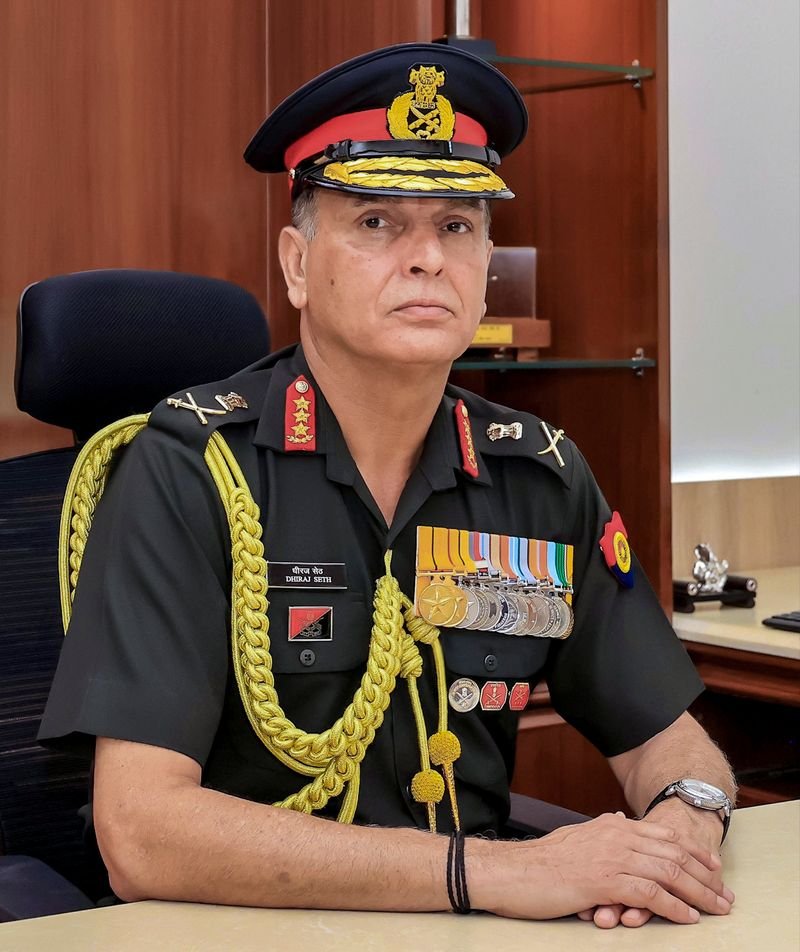
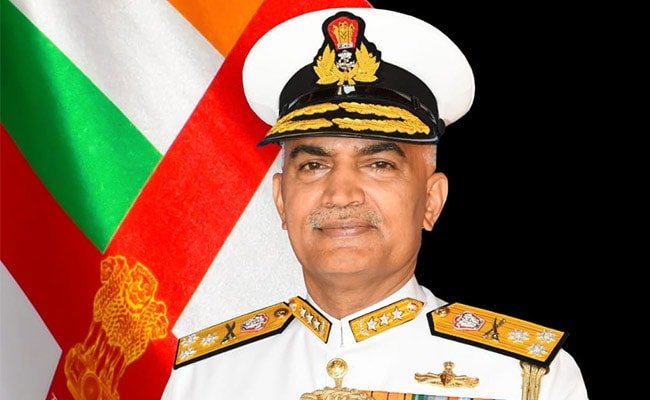
Laying the path for the new CDS

Ethnic fault lines deepen across Manipur

Lanka airport lease near China-controlled port opens door for India

India, UAE navigate shifting sands

Pakistani forces kill 35 terrorists in Balochistan operation, capture 3 high-profile commanders

2 US jets collide mid-air during Idaho air show; crew members eject safely


LEST WE FORGET :FESTUBERT ONE OF THE MOST GALLANT EPISODES OF THE WORLD WAR I

Maj Gen Harvijay Singh, SM) Senior Patron Sanjha Morcha

Jo to praym khaylan ka chaao, sir dhar talee galee mayree aao.Those who wish to play the game of love (Sikhi way of life), come to me with your head in your palm. Guru Gobind Singh

On 17 May 1915, a company of 15th SIKHs (Now 2nd Battalion, the SIKH Regiment) were in occupation of a section of a German trench. Engaged in the northern pincer of the offensive, near Richebourg l’Avoué, they were a part of the 3rd (Lahore) Division – 9th (Sirhind) Brigade Area between the two sides had been barricaded with corpses; the stench was un-bearing. Their state of ammunition was critically low. Resupply from the reserve trenches 250 yards away could enable them to hold out. British units had attempted to do so twice, on both occasions the officer in command had been killed and the party practically wiped out; a frightful situation to say the least.

Only a desperate action could save the day. Lieutenant John Smyth, 15th SIKHs, was ordered to take a bombing party. He took with him ten bombers from a crowd of volunteers. It became difficult for him to reject volunteers and finally he chose randomly perhaps looking for bigger guys who could pull the heavy load. Names of these heroes must be recalled with pride. Lance-Naik Mangal Singh, Sepoys Lal Singh, Sucha Singh, Sampuran Singh of 15th SIKHs. Sarain Singh, Sundur Singh, Ganda Singh, Harnam Singh of 19th PUNJABIs. Fateh Singh, Ujagar Singh, of 45th SIKHs. They set out with a gusty battle cry: ‘Jo Bole So Nihal, Sat Sri Akal’, ……. taking two boxes containing ninety-six bombs.

Dropping over the parapet they wriggled their way through the mud, pulling and pushing the boxes along with them. They used pagris attached to the boxes and the men in front pulled them along, over and through the dead bodies, those behind pushed. • Even before they progressed a few yards, Fateh Singh fell, severely wounded. • In another hundred yards, Sucha Singh, Ujagar Singh and Sundur Singh were shot. Extreme bravado and faith in their Guru kept the remaining six going. • They nearly reached the end, when, Sarain Singh and Sampuram Singh were shot dead. Ganda Singh, Harnam Singh and Mangal Singh were wounded.

The second box had to be abandoned. Lieutenant Smyth and Sepoy Lal Singh wriggled their way ahead yard by yard. Water around them churned by a hail of bullets, and, clambered up the far bank amongst their cheering comrades. Both were unhurt, though their clothes were perforated by bullet holes. • However, shortly afterwards Lal Singh was struck by a bullet and killed instantly. In the final count, all ten Brave Sikhs were casualties. Once again after Saragarhi all Sikh Soldiers in a detail, had fallen executing an extreme and impossible task. For them the ‘izzat’ (pride) of the regiment and devotion to duty was above any other fear and danger. So ended one of the most gallant episodes of the World War I. “Attaching their puggarees to the fronts of the boxes, the men pulled them over or through the dead bodies, all of the party lying flat on the ground.

At any moment the bombs in the boxes might have exploded, for the whole of the ground was hissing with the deluge of rifle and machine gun fire, while the air was white with the puffs from bursting shrapnel.” Page 37, Leader Newspaper (Melbourne), Saturday 31 July 1915 Lieutenant Smyth was awarded the Victoria Cross. Lance Naik Mangal Singh received the Second-Class Indian Order of Merit, while the Indian Distinguished Service Medal was conferred on all sepoys of the bombing party; another and only collective award after the epic battle of Saragarhi. Many critics have felt the Sikhs deserved higher gallantry awards; for the gallant bombers, this was never a consideration. The Indian Armed Forces stand tall among their global peers because of their rich battle-hardened heritage, high motivation and tough training. ………………Contd, because these stories must be told – Lest we Forget

The 15th Sikh Regiment of the British Indian Army – A rich legacy. Today the: 2nd Battalion, the SIKH Regiment (2 SIKH) — the direct, unbroken successor of the old 15th (Ludhiana) Sikhs. The 15th Sikhs built a formidable record across Asia and Africa: • China Expedition (1860–62) • Second Anglo-Afghan War — Ahmed Khel, Kandahar • Sudan (Mahdist War) — Suakin, Tofrek Chitral Expedition • Tirah Campaign • World War I o Western Front (France) o Egypt (Western Frontier Force) o Mesopotamia


:WWII soldier’s widow died without family pension; AFT orders lifetime arrears to daughter-in-law


The applicant’s husband, who too has since died because of cancer, approached DSC Records in 2022 to get his mother’s family pension and life time arrears (LTA) sanctioned

In an unusual case, the Armed Forces Tribunal (AFT) has granted life time arrears of family pension to the daughter-in-law of a World War II-era soldier whose widow could not be sanctioned family pension for the duration she was alive after his death.

The father-in-law of the applicant, Ram Surat was enrolled in the Indian Army as a Sepoy in 1944 and discharged from service in 1946. He later enrolled in the Defence Security Corps (DSC), where he served from 1962 to 1975.

On release from service, the soldier was granted service pension. He died in 2003 and his wife passed away in 2009. However, the pension payment order (PPO) for grant of family pension in her favour could not be issued during her lifetime due to non-receipt of the required documents.

“After the demise of soldier, it was the duty cast upon the respondents to issue PPO in favour of the wife of the late soldier for grant of family pension, but the same has not been issued for want of required documents,” the bench of Justice Suresh Kumar Gupta and Lt Gen Anil Puri observed in their order of May 6.

“However, the respondents did not make any sincere efforts to obtain the documents from the wife of the late soldier and she died in the year 2009 without getting family pension,” the bench added.

The applicant’s husband, who too has since died because of cancer, approached DSC Records in 2022 to get his mother’s family pension and life time arrears (LTA) sanctioned. The respondents claimed that the LTA certificate was received from the Treasury Officer concerned in June 2023, stating that the wife of the soldier has already been paid LTA benefits of her late husband, and hence the applicant is not entitled for payment of LTA.

This was countered by the applicant, saying that in reply to a letter from DSC Records in 2024, the Senior Treasury Officer, requesting the Records to take necessary action for releasing of family pension in respect of the soldier’s widow so that the due amount could to be paid to the next kin.

“The husband of the applicant and now the applicant have been raising the issue of family pension / LTA right from the year 2009. In 2026, the amount of LTA has still not been released in favour of the applicant. This itself shows the lackadaisical approach of the respondents in not releasing the amount of LTA in favour of the applicant, who happens to be the daughter-in-law of late soldier,” the bench remarked.

Directing the respondents to release the LTA amount within three months, the bench said that there is no other claimant except the applicant and as such, there would be no hurdle in releasing the LTA amount in favour of the applicant particularly when she is the only legal heir of the late soldier.


Pension cannot be deducted from salary if new job not linked to past military service or offers no pay protection: HC

The Delhi High Court has ruled that the amount of pension drawn by defence officers cannot be deducted from the salary paid by Central Public Sector Enterprises if the post-retirement appointment through open advertisement is not linked to past military service and no subsequent pay protection is granted.

Two retired officers, a Colonel and a Wing Commander, were selected by Engineering Projects (India) Limited (EPIL), a Central Public Sector Enterprise in 2013 through a recruitment advertisement and their pay was fixed at the minimum of the applicable pay scales and no pay protection with reference to their last drawn military pay was granted. All details about their past service and defence pension drawn were duly furnished.

In 2019, EPIL sought to deduct the defence pension drawn by them from the salary paid by the organisation and for that purpose, directed them to furnish pension particulars for refixation of pay. They challenged the action as arbitrary, unreasonable, contrary to the governing policy framework and irreconcilable with the pay fixation consciously made and acted upon by EPIL itself at the time of their appointment.

“The officers were not absorbed into EPIL from the Armed Forces or any government department, nor were they appointed on deputation or with continuation of any lien from their previous service. They responded to public advertisements, participated in an open selection process and were thereafter appointed as regular employees to civil posts,” Col Indra Sen Singh (retd) counsel for the petitioners told The Tribune.

“Pension can be deducted only where an employee receives the benefit of past service by way of pay protection or fixation at a higher stage. If pay is fixed after reckoning last pay drawn, the non-ignorable portion of pension may be deducted to prevent double benefit. However, where the employee is treated as a fresh recruit and salary is fixed at the bare minimum of the scale, there is no rationale to deduct pension,” he added.

EPIL maintained that as per departmental rules the pay of re-employed government pensioners in CPSEs is to be fixed at the minimum of the applicable scale and that pension admissible to the retired employee is to be subtracted from admissible pay. It further averred that the petitioners had failed to furnish complete pension particulars, thereby preventing proper pay fixation in accordance with the applicable policy, and payments made contrary to applicable rules can be recovered.

Observing that pension earned for past service cannot be subjected to unilateral adjustment or deduction unless the rules clearly and fairly authorise such consequence, the Bench of Justice Sanjeev Narula, in its order of May 8, held that where the employer has consciously declined to grant pay protection or any corresponding advantage, the rationale for deducting pension does not operate with force.

The Bench also pointed out that the petitioners entered EPIL through open selection and the terms of appointment did not state that the defence pension drawn by them would be subtracted from their salary. No pay protection was granted and EPIL accepted and acted upon these terms for several years and the issue regarding deduction of pension was sought to be reopened only thereafter.

Finding it ‘considerably difficult’ in accepting EPIL’s interpretation of the said rules, the Bench said that if the organisation considered the provision applicable to the petitioners, the same ought to have been applied at the stage of appointment itself, or at least within a reasonable period.

“In the absence of fraud, concealment or misrepresentation on the part of the petitioners, the provision could not remain unacted upon for years together and thereafter be invoked retrospectively to unsettle service conditions which had been consciously fixed and acted upon,” the Bench remarked. “EPIL was not justified in seeking to deduct the defence pension drawn by the Petitioners from the salary fixed and paid by EPIL,” the Bench ruled.


Soldier’s wife gets new lease of life as Army helicopter airlifts kidney from brain-dead accident victim

An Army Aviation helicopter executed the critical life-saving mission from Chandimandir to Rohtak and back with precision and within stringent timelines, the Western Command says

article_Author
Vijay Mohan

The wife of a serving soldier received a new lease of life after the Command Hospital, Chandimandir, in collaboration with the Post Graduate Institute of Medical Sciences, Rohtak, successfully facilitated the retrieval and rapid air transportation of a kidney from a brain-dead road accident victim.

An Army Aviation helicopter executed the critical life-saving mission from Chandimandir to Rohtak and back with precision and within stringent timelines, the Western Command said on Sunday.

The harvested organ was swiftly airlifted along with the medical team of Command Hospital, for an urgent transplant procedure at Chandimandir.

The successful transplant provided a new lease of life to the wife of a serving soldier, reflecting the operational efficiency, seamless civil-military coordination and humanitarian commitment of the Indian Army,” the Command said.

Command Hospital, Chandimandir, a tertiary care institution under the Western Command, is the Army’s premier organ retrieval and transplant centre and has made pioneering advancements in this field.

Earlier this month, the hospital had carried out its first heart retrieval for transplant, and in the process saved the life of a 14-year-old Sudanese boy admitted to a Delhi hospital. The organ was harvested from a 42-year-old brain-dead woman and airlifted to Delhi via a chartered flight within half an hour.

The boy was terminally ill and in the last stage of the battle for life. The hospital’s organ transplant team had also retrieved her liver, pancreas and kidneys, thereby enabling multiple recipients a new lease of life through organ donation.

In the past, Western Command Hospital has performed several organ harvesting and transplant operations, providing a new lease of life to critically ill people by harvesting kidneys, pancreas, liver, heart and cornea from brain-dead patients. It was among the first in the country to undertake pancreas transplant, said to be among the most difficult surgeries.

Organ donation was started in the Armed Forces in the late 2000s and introduced at the Western Command Hospital in 2014. The process is coordinated by the Armed Forces Organ Retrieval and Transplantation Authority in New Delhi.

Several other military hospitals across the country have also performed similar life-saving organ transplant operations.


Colonel Babu’s Maha Vir Chakra at Galwan and his regiment’s 270-year-old legacy of Bihari musketeers

During the intervening night of June 14-15 six years ago, Indian and Chinese troops clashed violently at Galwan on the Line of Actual Control (LAC) in eastern Ladakh, resulting in fatalities on both sides, including the Commanding Officer of the Sixteenth Battalion of the Bihar Regiment, Colonel Bikkumalla Santosh Babu, who was decorated posthumously with the Maha Vir Chakra, the second highest award for gallantry in the face of the enemy.

The battalion was deployed in Galwan during Operation Snow Leopard following the protracted stand-off between India and China that began in the Spring of 2020 and has still not been fully resolved. It was tasked to establish an observation post opposite Chinese positions.

According to the citation for his award, while holding the position, his column faced stiff resistance from the adversary who attacked using lethal and sharp weapons along with heavy stone pelting from adjoining heights. Undaunted by the violent and aggressive action by the overwhelming strength of the enemy soldiers, the officer continued to resist the enemy’s attempt to push back Indian troops.

Despite being grievously injured, Colonel Bikkumalla Santosh Babu led from the front with absolute command and control despite hostile conditions to deter the vicious enemy attack on his position. In the skirmish that broke out and ensuing hand-to-hand combat with enemy soldiers, he valiantly resisted the enemy attack till his last breath, inspiring and motivating his troops to hold ground,” the citation states. Displaying exemplary leadership and astute professionalism, he showed conspicuous bravery in the face of the enemy and made the supreme sacrifice for the nation.

It was after two decades that a Maha Vir Chakra (MVC) was conferred for actions on the battlefield. In fact, the last MVC to be awarded was also to an officer serving with the Bihar Regiment, which was announced in 2000.

As part of Operation Vijay during the 1999 Kargil conflict, Captain Gurjinder Singh Suri, commissioned in the Army Ordnance Corps but was serving as the Ghatak platoon commander with 12 Bihar, was killed in a gun battle in the Uri sector in November 1999 when Pakistani army attacked the Faulad Post.

After the attack was repulsed, the platoon was clearing bunkers during which he killed two enemy soldiers and silenced a machine gun. In the process, he received a burst in his left arm but continuing with the task lobbed two hand grenades into a bunker killing another soldier. At this point, he was hit by an enemy rocket-propelled grenade critically wounding him.

Skilled musketeers of yore

Though amongst the Indian Army’s youngest Infantry Regiments, having been raised in its present form in 1941, its troops trace their martial lineage to 1757, when the 34th Sepoy Battalion was raised at Patna by Lord Robert Clive, the first British Governor of the Bengal Presidency and architect of the East India Company.

Barring the Parachute Regiment that was formed in 1945, the Bihar Regiment is among the last three Infantry Regiments to have been raised as part of the erstwhile by the British Indian Army. In 1941, amidst the Second World War, three infantry regiments came into being – the Assam Regiment in June 1941, the Bihar Regiment in September 1941 and the Mahar Regiment in October 1941.

The Sepoy Battalion was formed by men from only from the Bhojpur region of Bihar and subsequent battalions expanded their recruitment base across the entire Shahabad area that comprises present day districts of Bhojpur, Buxar, Rohtas and Kaimur.

According to the Indian Army’s official website detailing infantry regiments, their success in combat had impressed the local ruler, Mir Kasim, to begin raising units trained in western combat techniques. The Bihari battalions raised by Mir Kasim had not only done well, but also beaten the British in some engagements.

The Bihari or ‘Poorbia’ soldiers as they came to be called because they hailed from the eastern Ganga plains, thereafter continued to be the backbone of the Bengal Infantry of the British, emerging as disciplined soldiers and quick to learn and apply the tactical drills and field craft with initiative.

An essay contained in the book, ‘India’s Princely States: People, Princes and Colonialism’, states that over time, Purbias had emerged as a community of specialist musketeers in context of Malwa armies and rulers in Malwa were keen to enlist Poorbias for the expertise in firearms possessed by them in order to update their military technology.

1857 War of Independence and beyond

As part of the Bengal Native Infantry that comprised personnel from Awadh and Bihar regions, Bihari troops played a significant role in the First War of Independence, 1857, which the British also refer to as the Sepoy Mutiny. In March 1857, at Barrackpore near Calcutta, Sepoy Mangal Pandey of the 34th Bengal Native Infantry, who hailed from Ballia in eastern Uttar Pradesh, attacked British officers, and in May 1857, the war began in earnest from the Meerut garrison. Thereafter, Biharis were not encouraged by the British to join the military until after the First World War.

In 1923, an Indian Territorial Force Battalion, the 11th (Territorial) Battalion of the 19th Hyderabad Regiment (11/19HR), was formed with its headquarters at Danapore Cantonment. The Bihar Regiment was formed in 1941 by regularising 11/19HR and christening it as the First Battalion of the Bihar Regiment.

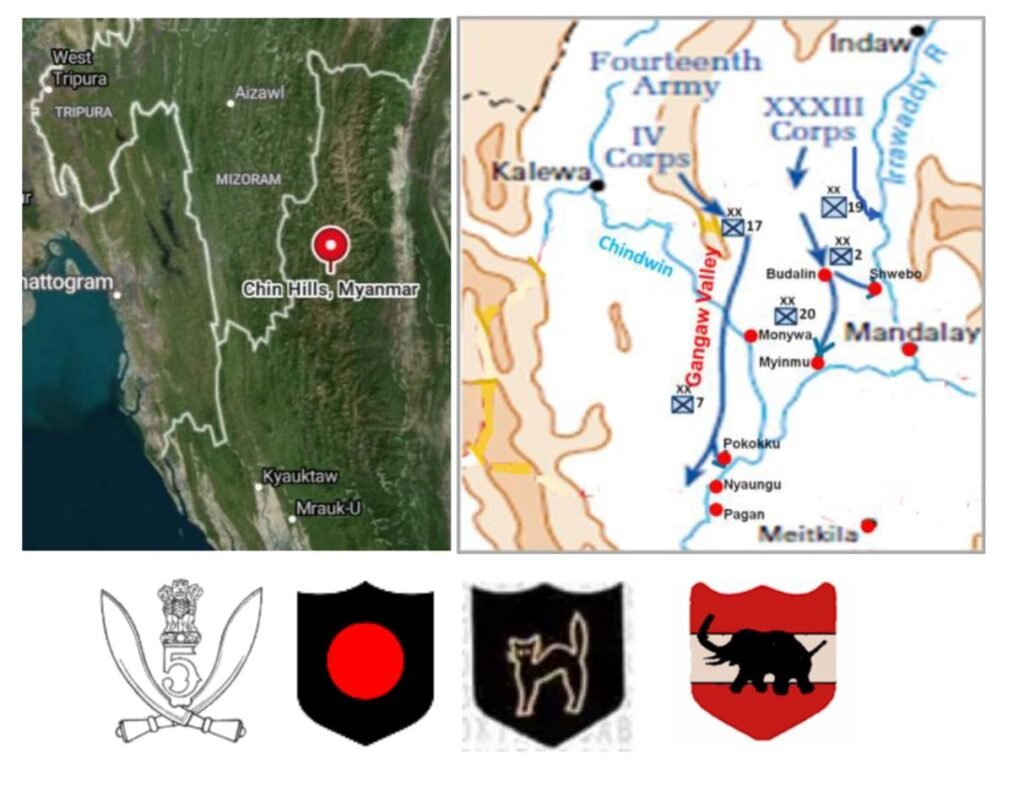
The newly raised battalion saw action in the Burma Campaign of World War – II, and as part of the Lushai Brigade and captured Haka in October 1944 and Gangaw in January 1945. For its actions, the battalion was awarded two Battle Honours – Haka and Gangaw, and bestowed the Theatre Honour Burma. The Second Battalion, raised in December 1942 participated in Operation Zipper for recapturing British Malaya. A third battalion was raised in 1945.

The Regiment’s first post-Independence raising was in 1960 and at present it has 20 regular battalions, four Rashtriya Rifles battalions and two Territorial Army battalions that draw their manpower from the states of Bihar, Jharkhand, Uttar Pradesh and some pockets of Odisha and West Bengal.

Post-Independence, the Regiment has participated in every war and major operation, including Kargil where it was awarded a Theatre Honour, as well as overseas in Sri Lanka and UN peacekeeping missions. Its roll of honour includes four Ashok Chakra, the highest civilian gallantry award and three Maha Vir Chakra.


Army, NSG Black Cats train jointly in counter-terror operations

Troops of the Army’s Pine Division conducted intensive joint training exercises in counter-terror operations with commandos of the National Security Guard (NSG) to hone their skills in fighting in built-up areas.

Sniper action, cordon and search, urban assault, room intervention, staircase clearing, close quarter battle drills were among the activities undertaken during the exercise, along with battle inoculation, obstacle course and physical training.

Newly inducted technology like drones, robotic mules, night vision goggles and thermal imaging devices were also employed along with the use of traditional assault dogs for neutralising and restraining hostile elements.

“The joint training enhanced combat capability of the troops, interoperability and mission readiness for operating in built-up areas,” the Western Command said. It was held at the NSG Centre in Manesar near New Delhi.

Functioning under the Ministry of Home Affairs, NSG is India’s nodal national counter terror force, trained and equipped to deal with anti-terrorist activities in all its manifestation and thwart serious acts of terrorism.

About 9,000 strong, the NSG is entirely a deputationist force where volunteers from the Armed Forces and Central Armed Police Forces (CAPF) serve for a fixed tenure.

It has two major arms – the Special Action Group, which is the offensive strike wing composed entirely of personnel drawn from the Indian Army and the Special Ranger Group (SRG), a support and protection group comprising personnel deputed from the CAFPs and state police forces.

The NSG carries out regular training exercises with the Army as well as with other forces, besides conducting specialist training courses in special operations and bomb disposal for state police forces.

The Army also has its own Special Forces – primarily the Parachute Regiment that comprises 15 battalions training and equipped for strategic tasks like operations behind enemy lines and raids at high value enemy assets, as well as anti-terrorist operations. The Air Force and the Navy have their own Special Forces.