













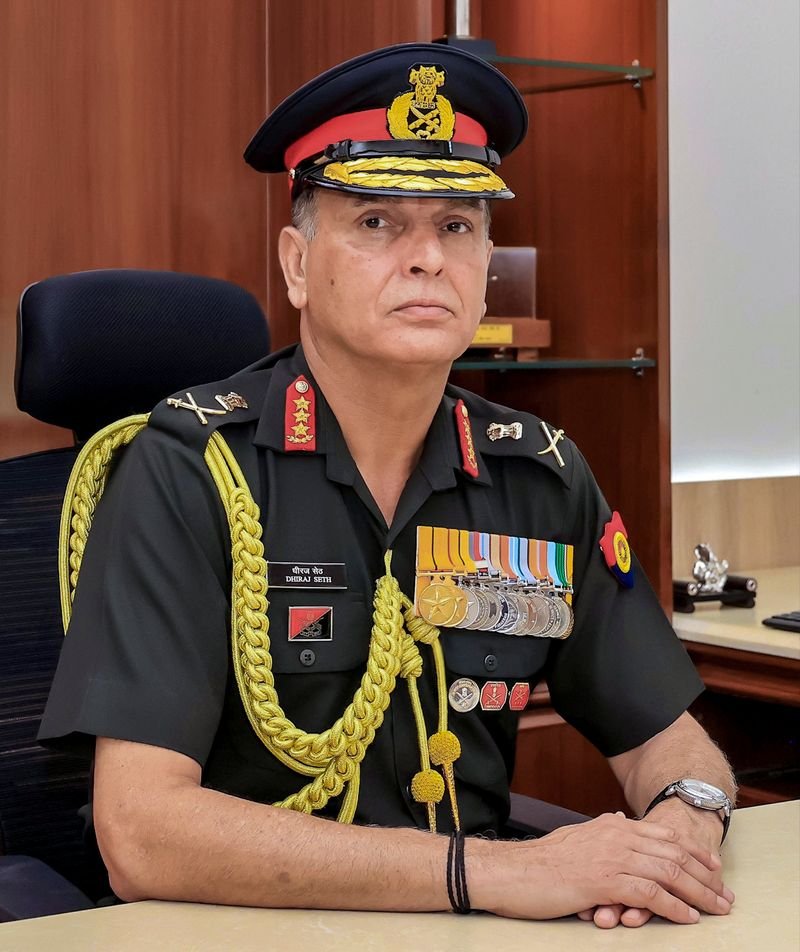

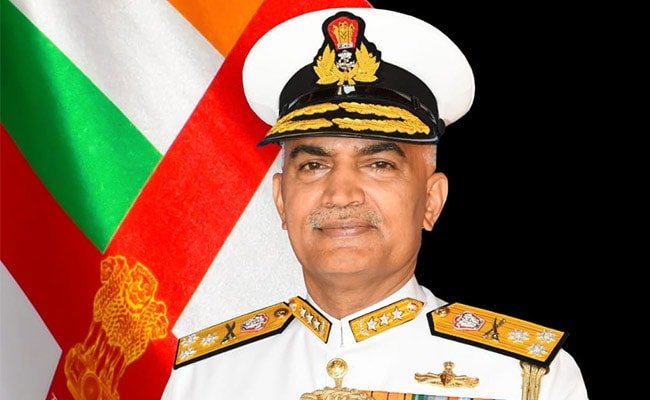






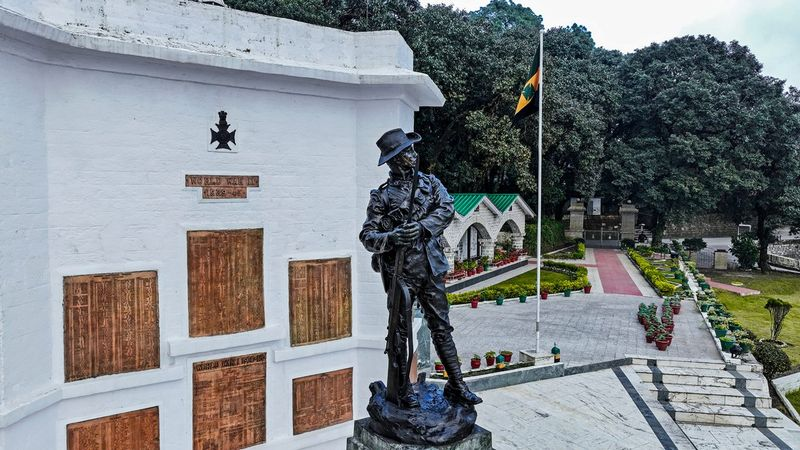
Of the 32 four-star generals who have been at the helm of the Indian Army post-Independence, including two British officers, 20 have been from the Infantry, six from the Armoured Corps, five from the Artillery and one from the Engineers
When Lieutenant General N.S. Raja Subramani dons the rank of Chief of Defence Staff (CDS) following the retirement of the incumbent, Gen Anil Chauhan, the Garhwal Rifles, among Indian Army’s oldest and most highly decorated Infantry regiments that was carved out from the Gorkha regiments 139 years ago, will get its first four-star officer.
General Chauhan will superannuate on May 30 and Lt Gen Raja Subramani’s term will begin from the date he assumes charge subsequently. Presently, serving as a military adviser at the National Security Council Secretariat, he had retired as Vice Chief of the Army Staff in July 2025.
Under law, the government can select any senior serving or retired officer from amongst the Three Services for appointment to the post of CDS who, by stature, is the senior-most military officer in the country. The CDS is the principal military adviser to the government but does not exercise any operational command over the Services.
Commissioned into the Garhwal Rifles in December 1985, Lt Gen Raja Subramani is closely associated with two of its battalions – the 8th into which he was commissioned, and the 16th which he later commanded in Assam.
The rank and file of the Garhwal Rifles comprises troops from the Garhwal region of western Uttarakhand. In fact, the Kumaon regiment, another illustrious Infantry regiment drawing its manpower from the neighbouring Kumaon region in eastern Uttarakhand, has produced one Army Chief, Gen TN Raina, a Maha Vir Chakra recipient who headed the Army from June 1975 to May 1978.
The Gorkha Rifles has produced three Army Chiefs — Field Marshal Sam Manekshaw, Gen Dalbir Singh Suhag and Gen Bipin Rawat, who was later appointed as the first CDS.
Of the 32 four-star generals who have been at the helm of the Indian Army post-Independence, including two British officers, 20 have been from the Infantry, six from the Armoured Corps, five from the Artillery and one from the Engineers. The rank and status of the CDS and the three Service Chiefs is denoted by four stars.
The historical Gorkha linage
With 21 regular battalions, three Rashtriya Rifles battalions and two Territorial Army battalions at present, the Garhwal Rifles was raised in 1887 as the 39th (Garhwal) Regiment of the Bengal Army of the East India Company. It traces its lineage to the Gorkha Regiments, the first of which was raised by the British in 1815 and is now the Indian Army’s First Battalion of the First Gorkha Rifles (1/1GR).
Until 1887, troops from Garhwal were enlisted in the Gurkha regiments, as Gorkha is spelled by the British, which were part of the Bengal Infantry and the Punjab Frontier Force. The first proposal to raise a separate regiment of Garhwalis was initiated in January 1886 by Lieutenant General (later Field Marshal) Sir Frederick Sleigh Roberts, the then British Commander-in-Chief in India.
Gorkha troops were in the news recently with the British Army raising a new Artillery regiment exclusively comprising these hardy mountain warriors, even though recruitment of Gorkhas into the Indian Army has been in a limbo since 2020.
Christened the King’s Gurkha Artillery (KGA) by King Charles III, the current British monarch, the unit’s ‘Kasam Khane Parade’ for its first batch of 20 directly selected recruits from Nepal was held at Larkhill Camp in south-west England on April 20.
After Independence, some Gorkha units of the British Indian Army were transferred to the UK under an India-Nepal-UK tripartite agreement and currently about 4,000 Gorkhas, directly recruited from Nepal, serve in the British forces and undertake the same duties as other British soldiers.
After an overall hiatus on intake in the aftermath of the Covid-19 pandemic came the Agnipath scheme that entailed short-term recruitment into the rank and file of the Armed Forces for a period of four years instead to the earlier term of 15 years or more. Nepal did not agree to the terms of the scheme for its citizens, saying that it violated the terms of the agreement, and also voiced concern over the re-employability of Gorkha soldiers after their 4-year term is over.
Both Gorkha and Garhwali troops have seen extensive combat over the past two centuries, serving in campaigns around the world, including the two World Wars, as well as all post-Independence wars and major operations and United Nations peacekeeping missions, and earning numerous gallantry awards and battle honours.
The first India-born recipient of the Victoria Cross, the highest British award for gallantry in the face of the enemy, was Naik Darwan Sing Negi of the 39th Garhwal Rifles, who was decorated for his actions near Festubert in France in 1914 during the First World War. Three Indian recipients of the Victoria Cross and one recipient of the Ashok Chakra, India’s highest peacetime gallantry award, belong to the Garhwal Rifles.
As part of their ceremonial attire, officers and troops of the Garhwal Rifles wear a wide-brimmed felt slouch hat, called Terai hat, the rakishly worn headgear that is widely associated with the Gorkha Rifles.
Legacy of the 8th Battalion
The 8th Battalion of the Garhwal Rifles, Lt Gen Raja Subramani’s parent unit, has a chequered history. It is known for its role in the Battle of Butur Dograndi fought in the Sialkot sector of Punjab during the 1965 India-Pakistan War.
The battalion was deployed as the advance guard for the 43 Lorried Infantry Brigade under 1 Armoured Division. On September 8, it launched an offensive that penetrated about 20 km into Pakistan, which was one of the deepest thrusts in the sector. It faced intense enemy counterattacks supported by armour, artillery and aircraft but repelled them successfully and held on to its objectives.
The fighting was extremely fierce and costly, with the battalion losing its Commanding Officer, Lt Col JE Jhirad, and the Second-in-Command, Major AR Khan and about 130 other officers and men. For its role in the 1965 war, the battalion was awarded the Battle Honour Butur Dograndi and Theatre Honour Punjab 1965.
The 1971 Indo-Pak War saw the unit in action again on the Western Front. Elements of the battalion captured the enemy’s Ghurki post and held it under continuous shelling until ceasefire.
In 2014, a team from 8 Garhwal led by Major Lalit Mohan Joshi won the Gold Medal at the Cambrian Patrol, a prestigious international military skills competition held in Wales, in the United Kingdom. The Garhwalis excelled in tactical skills, navigation and endurance, outperforming over 140 teams, including international and UK Special Forces, in a gruelling 80-km competition often described as the “Olympics of patrolling”.

Observing that an 80-year-old widow could not get family pension after the death of her husband because the relevant documents had been destroyed after the specified period, the Armed Forces Tribunal (AFT) has asked the government to revise the stipulated period after which documents are automatically destroyed.
The applicant’s husband, late Audesh Narain Singh of the Rajputana Rifles, was enrolled in the Indian Army in August 1948 and discharged from service in October 1963. After his death in 2021, the applicant did not receive family pension. It emerged that the wife’s name was not entered in the personal service records after marriage. Amendments in the records could not be carried out because they had been destroyed on completion of 50 years after the individual’s retirement.
There is a requirement of the relevant authorities revising the policy on destruction of documents mechanically after 50 years of retirement of an individual without consideration to the fact that either the pensioner or his dependent receiving a family pension is alive,” the Tribunal’s Bench comprising Justice Suresh Kumar Gupta and Maj Gen Sanjay Singh, ruled while holding that the applicant was entitled for pension and directing the authorities issue the relevant documents in respect of the applicant.
“Life expectancies have considerably increased over the years and there is an urgent need to revise the policy on retention of documents of retirees to ensure that documents of an individual are not destroyed, while pension in respect of an individual and his or her dependent is still being disbursed and for some years thereafter to cater for life time arrears,” the Bench said.
To this end, data available with the Controller General of Defence Accounts (CGDA) through existence/annual life certificate, etc. be synchronised with data at the Record Office periodically, and the duration for which data is retained in physical or digital form post- retirement or discharge of an individual is revised,
After leaving the Army, the soldier was re-enrolled in the Central Reserve Police Force (CRPF) from where he was also granted service pension on completion of service. At the time of his death, he was in receipt of pensions both from the Army and the CRPF. Thereafter, the applicant received family pension from the CRPF.
Aggrieved with non-grant of family pension from the Army, she submitted an application to the Records Office, The Rajputana Rifles, in July 2021, annexing the requisite documents and later visited the Zila Sainik Kalyan Evam Punarvas, for grant of family pension. After protracted correspondence, it emerged that ‘Part-II Order’ regarding her marriage with the deceased soldier was not published and that was the reason she was not granted family pension from the Army.
During hearings before the AFT, the authorities contended that service documents of the deceased soldier had been destroyed by burning in 2013 on expiry of its stipulated period of retention and since the name of the applicant was not recorded in the Long Roll, she is not entitled to grant of family pension. Further, he had been advised in October 2022 to submit certain documents for publication of Part-II Order, but due to non-receipt of the complete set of documents, it could not be published.
Observing that it was not in dispute that the soldier was receiving both the pensions and the applicant was receiving pension from CRPF, the Bench said that destroying service documents of a pensioner, who is in receipt of benefits, was not rational or logical.
Part 1, The Soldier at the Door : Why India’s military deserves a framework of its own
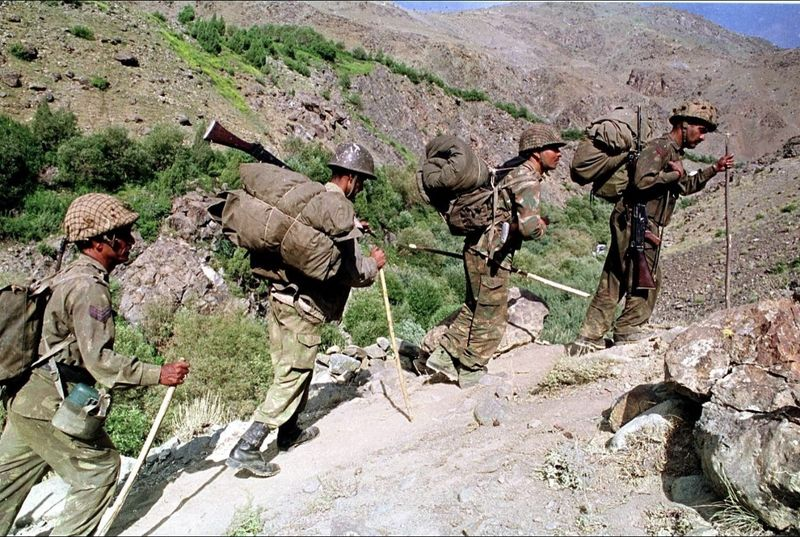
Generations : From 1948, 1971, Kargil to Op Sindoor, the Indian soldier has been victorious. File photo
“When you go home, tell them of us and say, for your tomorrow, we gave our today.”
It is not a slogan. It is a statement of fact.
Many recall the Indian soldier’s contribution in the First and Second World Wars, fought across three continents. Few remember that the Second World War was also fought on Indian soil. The Battle of Kohima, once described as the “Forgotten War”, is today recognised by military historians across the world as among the finest military campaigns of that war.
In 1944, on a ridge that became synonymous with the Battle of Kohima, soldiers fought at such proximity that the tennis court between opposing trenches became part of the battlefield. Years later, that inscription came to mark not victory alone, but something deeper: the nature of military service itself.
It did not create something new. It recognised something ancient. The civilisational legacy of the Indian soldier.
Historically, he has always been a volunteer for the ultimate sacrifice. That distinction matters. It matters more today than it ever has.
Unlike others, the soldier cannot quit on a whim, cannot unionise, cannot litigate against a transfer and cannot refuse an order that may lead to his death. This is not a lifestyle choice. It is a legal surrender of rights every other citizen retains.
It is the only profession in the Republic where the Constitution is not something you merely live under, but something you may be ordered to die for.
To subject that covenant to the same framework as defined liability service is not merely administratively untidy. It is a category error.
But the soldier’s liability does not end with the body. It extends to the self.
He sets aside everything that marks him in civilian life. Language, caste, religion, region, political preference and personal ambition all remain part of him as a human being, but none may override the larger compact he has entered. The transformation is not ceremonial. It is operational. Trust in combat cannot wait for sociological negotiation. Cohesion under fire cannot pause for identity management.
The regiment functions because the uniform has replaced the self with something larger. Identity is subordinated because survival, command and trust require it.
That is why the soldier eventually becomes, in the fullest sense, everyone’s soldier.
When he arrives at the citizen’s door in flood, in fire, in the aftermath of violence, the citizen does not ask his caste. The soldier does not offer it. Everything that fractures Indian public life dissolves at that threshold.
He surrendered those fragments long before he arrived there. At the SSB (Services Selection Board). At the passing-out parade. At the first moment he wore the uniform and understood what it demanded of him.
That surrender is not incidental to service. It is the deepest form of it.
The soldier who stands at that door has not merely shown up. He has arrived as the nation. Undivided. Unreserved. Unconditional.
At that door, the Republic is not debated. It is delivered.
The military in India is one of the very few institutions where unity in diversity is not aspirational rhetoric but operational necessity.
That achievement is among the Republic’s greatest institutional successes.
Generation Z understands this instinctively, and perhaps more clearly than the debate itself yet does.
This generation does not romanticise institutions. It joins, when it does, after conscious calculation about how to spend the one life it has. It has grown up in an identity-saturated world where every platform asks it to perform, market and continuously explain itself.
The self has become performance. And the performance is exhausting.
Then they encounter the uniform.
The uniform says: here, none of that matters.
For many of them, that is not sacrifice. It is relief.
The military offers what no startup, no salary package and no influencer economy can provide: a purpose that absorbs the self completely and returns something larger in its place.
The soldier at the citizen’s door is not diminished by having no caste in that moment. He is elevated by it. He is perhaps the only person in that doorway who has genuinely transcended the fractures others are still negotiating.
This generation is not running from self-erasure. It is searching for a place where the self can finally rest.
The uniform is that place.
The young volunteer who steps forward today is not an accident of recruitment statistics or nostalgia for another era. Generation Z is shaped not only by its own choices, but by the values it inherits from family, peers and the moral climate around it. Somewhere within that continuum, the legacy of the soldier still survives in the bloodstream of the Republic.
That is why the calling endures.
Each generation, in its own language and under its own pressures, chooses the covenant again.
From 1948, 1971, Kargil to Operation Sindoor, generation after generation has answered that covenant without renegotiation. In mountains, deserts, jungles, counter-insurgency grids and humanitarian crises, the Indian soldier has repeatedly demonstrated something increasingly rare in the modern world: disciplined force under constitutional restraint.
At a time when conflict elsewhere often struggles even to define its own exit, India’s military tradition has remained tied not merely to victory, but to proportion, control and return.
The covenant, however, must run both ways.
The Republic often measures military service only in moments of visible sacrifice. But the deeper cost is quieter, slower and cumulative.
The officer who retires early has given the nation the very decades other professions use to consolidate careers, wealth, networks and security.
He does not merely risk his life.
He surrenders his earning arc.
That sacrifice is not incidental to military service. It is embedded into its design. The nation requires youth in combat leadership. It requires a force capable of movement, endurance and decision under pressure. The compressed military career is therefore not an administrative flaw. It is part of the operational logic of the institution itself.
And when a young person understands that clearly, steps forward with open eyes and accepts that covenant anyway, the Republic owes that person an answer written not merely in ceremony, but in structure. In policy. In design.
The author led a tank squadron to Dhaka during the Liberation War in 1971 Tomorrow: The covenant complete
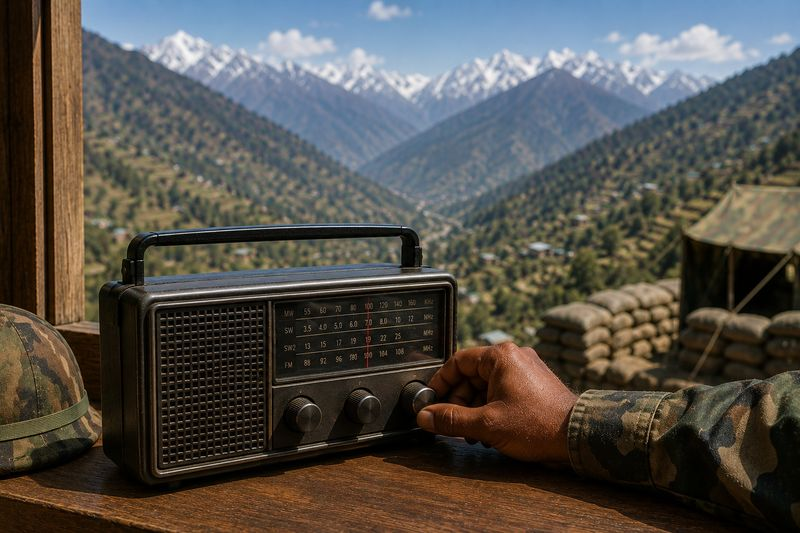
Radio programmes in border areas along India and China in Himachal Pradesh and Uttarakhand now have a new flavour. Broadcast over the frequency modulation (FM) band, these stations cater to local populations, address them in local dialects and inform them about day-to-day issues, besides subtly countering misinformation along the sensitive boundary.
In the past 18 months, two such radio stations have come up in Kinnaur and Spiti in Himachal Pradesh, while three are operational in Uttarakhand — at Joshimath, Pithoragarh and Harsil. These stations cover a range of topics including fruit crops, hyper-local weather patterns, snowfall estimates, agriculture, tourism, education and career guidance.
In these border areas, all located along the Line of Actual Control (LAC) with China, mobile networks remain patchy. Hence, the radio stations, which broadcast for nearly 12 to 14 hours daily, are also being used to counter misinformation and connect isolated communities with the Army. They also disseminate information about government welfare schemes, health initiatives and Army recruitment opportunities for local youth.
The Army’s Sadbhavana project is funding and managing the FM technology for operating these stations under the Vibrant Villages Programme.
Four more stations are planned in Uttarakhand, including at Gunji, located near the tri-junction of India, Nepal and Tibet, and Dharali, near Gangotri. The other two planned stations are in the lower hills at Lansdowne and Ranikhet.
In Himachal Pradesh, the radio stations “Voice of Spiti” and “Voice of Kinnaur” are located in the apple belt. Farmers are provided real-time updates on market prices, modern grafting techniques and pest control measures for apple and dry fruit cultivation.
Crucial warnings regarding landslides and heavy snowfall, which frequently cut off the Hindustan-Tibet Road, are also broadcast through these stations in Himachal. The same is the case with the stations in Uttarakhand, as these are located along major pilgrimage routes to Gangotri, Badrinath, Hemkund Sahib and the annual Kailash Mansarovar Yatra to Tibet.
Programmes in Himachal are broadcast in the local Kinnauri dialect, while those in the Garhwal and Kumaon regions of Uttarakhand use their respective local dialects.
Folk songs and oral histories are aired regularly, while women, youth and farmers are also given a platform.
In Joshimath, located near the shrines of Badrinath and Hemkund Sahib, the station is named “Tarana”. It broadcasts programmes in Garhwali and Hindi and focuses on agro-tourism, sustainable tourism, local handicrafts and mountain farming techniques.
The station at Harsil, located on the route to Gangotri, also provides updates on weather, landslides and road conditions, which are crucial for both locals and pilgrims.
At Pithoragarh, situated on the route to Lipulekh Pass and onwards to Tibet, the radio station carries the tagline “Hill se Dil Tak” (From the hills to the heart). Its primary focus is on agriculture and horticulture.
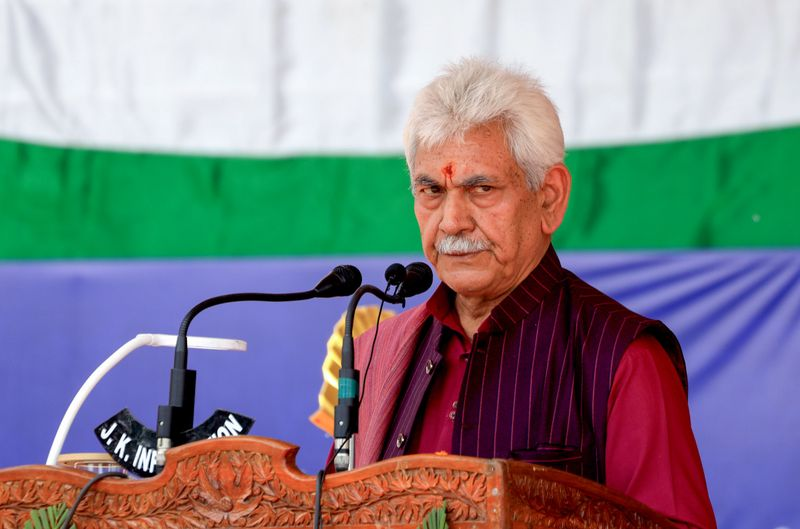
Jammu and Kashmir Lieutenant Governor Manoj Sinha on Sunday said the most dangerous terrorists exploit data and encrypted networks to operate across borders.
“Today, the world’s most dangerous criminals and terrorists do not always carry weapons; instead, they exploit code, data and encrypted networks to operate across borders. These are no longer threats of the distant future; they are the stark realities of the present,” Sinha said at a function here.
The L-G was addressing newly recruited police personnel after handing over appointment letters to them.
Around 4,000 recruits were selected through a transparent, merit-based process conducted by J&K Service Selection Board.
Sinha congratulated the new recruits and exhorted them to discharge their duties with absolute integrity, impartiality and unwavering commitment to national service.
“Joining the Jammu and Kashmir Police is not merely a career choice but the acceptance of a legacy written in blood. I am confident that you will rise to the occasion and uphold the honour of this glorious force,” he said.
Paying tribute to J&K Police’s bravehearts, Sinha said that the peace and progress enjoyed by the citizens of J&K are the results of the unwavering resolve and sacrifices made by brave police personnel.
“The Jammu & Kashmir Police stands as a testament to selfless service, duty, sacrifice and public trust. It is recognised as the benchmark of excellence in upholding the rule of law and executing counter-terrorism operations,” he said.
The L-G also spoke on the shifting landscape of internal security and called for the increased integration of Artificial Intelligence in policing operations. He urged the police to prepare a roadmap to make the force future ready.
He emphasised that the battlefield has expanded beyond physical borders. He warned that modern threats such as cybercrime, narco-terrorism, digital fraud and narrative warfare are increasingly being driven by technology rather than traditional weaponry.
Reiterating the eradication of all forms of terrorism and ensuring the safety of the public as top priority, Sinha urged the recruits across all wings of the police to leverage robust digital infrastructure to combat these threats.
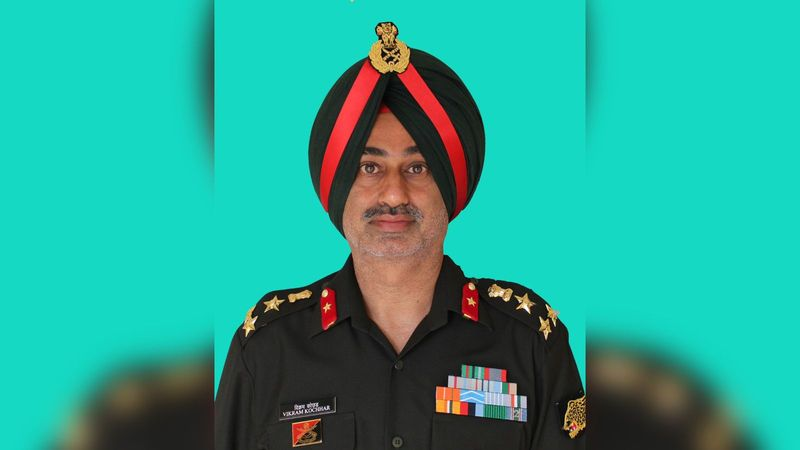
Having said that, he also reminisces how ‘Operation Sindoor’, a swift military response to the Pahalgam terror attack, showcased strong coordination among the army and the Gurdaspur civil administration.
The Brigadier was helming men and military equipment at the Tibri cantonment, widely perceived to be one of the biggest army areas in the country, when the sound of multiple jets moving towards Pakistan was heard by residents of Gurdaspur in the wee hours of a warm May morning. He is now posted somewhere in the Northern sector.
Almost everyone in the city woke up around 3 am as the jets flew above them.
Nobody knew their intention till dawn broke, when news started surfacing that ‘Operation Sindoor’ was under way.
Brig Kochhar knew the importance of collaborating with the district administration to ensure border villages of the district, particularly in the strategic Dera Baba Nanak area, remained safe and secure.
He recalled, “In peace, sons bury their fathers. In war, fathers bury their sons. I did not want this to happen. I took DC Dalwinderjit Singh and SSP Aditya along to visit the border areas.”
“The onus was on me to play an active role in the local security and civil-military relations in the border district which had witnessed the 1965 and 1971 wars from close quarters. Any past mistakes were not to be repeated. We started Operation ‘Rahat’ and set up Village Defence Committees (VDS) in all the border villages. An air-umbrella was created for the Tibri cantonment and adjoining areas by installing Air Defence Systems (ADS). Villagers were told to construct community bunkers. We told them that this war was unlike the earlier wars — then there were no missiles — this time only missiles were used. The villagers felt anxious, but it was quickly replaced by calmness and serenity,” said the Brigadier.
Brig Kochhar further stated that one Pakistani missile had dropped in Pandher village, near Tibri cantonment, after it was neutralised by the ADS.
Villagers recall how scores of army men came to their village minutes after they had heard a loud thud and subsequently cordoned off the entire area, adjoining the Gurdaspur-Mukerian highway.
Army officers say that this battle was a different kind of a fight.
“This time, educational institutes, hospitals, malls and commercial establishments remained open throughout the day during the war. However, as dusk fell, people would reach their homes, anticipating an attack. Everything used to go back to normal the next morning. Blackouts were in place during the hostilities,” noted a senior officer.
The army also laid emphasis on effective emergency response.
Security-related matters including safeguarding sensitive information and protection of military personnel were taken up with the help of the Gurdaspur
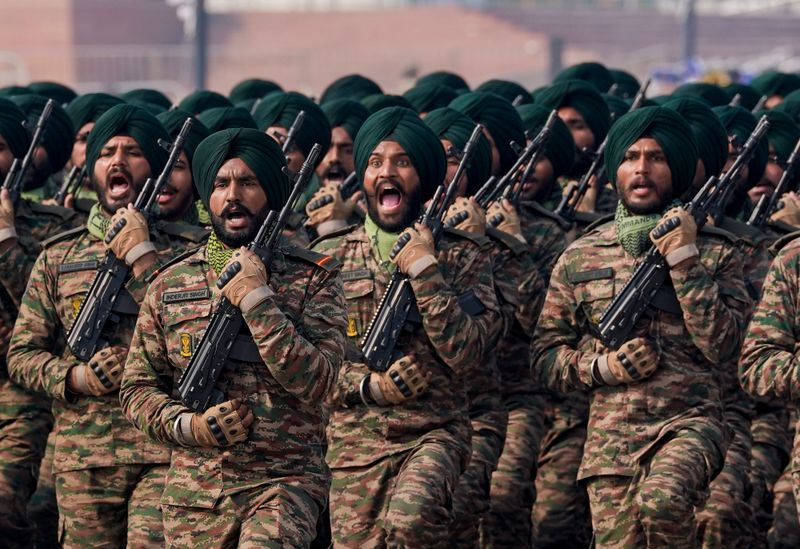
A year after the India-Pakistan conflict in May last year, the armed forces have undergone a significant transformation, with the Army’s war-fighting architecture seeing the most visible and rapid overhaul. This includes greater reliance on drones, extended-range rockets, precision artillery and the integration of artificial intelligence.
The changes have been reinforced by the creation of specialised units for modern warfare. Among the most significant is the raising of new artillery regiments, called “Shaktibaan”, which will deploy loitering munitions and swarm drones in future conflicts. Around 25 such regiments are being pre-positioned at key locations along the western front with Pakistan and the northern frontier with China.
Supporting these are newly raised ‘Divyaastra’ batteries —equipped with long-range artillery guns, surveillance drones and anti-drone systems, backed by AI-enabled fusion centres that collate real-time data.
Together, Shaktibaan and Divyaastra represent a reimagining of offensive operations by integrating conventional firepower with unmanned systems and AI-enabled targeting.
This shift marks a move away from traditional artillery roles. The new formations are designed as integrated, multi-domain strike units capable of deep precision strikes, real-time surveillance, area defence and independent operations. They also feature built-in air defence against enemy UAVs and AI-driven systems that can recommend targeting solutions.
In January, Army Chief Upendra Dwivedi said 2026 and 2027 would be dedicated to strengthening “networking” within the force and making it more data-driven. The aim is to improve connectivity, information flow and coordination, enabling faster and better-informed decision-making.
“Networking and data-centricity” in the armed forces refer to building a digitally connected military in which data flows seamlessly across units, enabling faster decision-making, resilient communication and integrated operations. Network-centricity is expected to shape outcomes in future wars, with the side that decides faster gaining the upper hand. Data-centricity, in turn, ensures those decisions are well-informed. Achieving this speed requires rapid transmission of data, imagery and satellite inputs to commanders on the ground as well as at senior levels.
The government has also cleared a long-pending proposal to set up Integrated Battle Groups (IBGs). The first is expected to come up under the China-focused 17 Mountain Strike Corps. Under the plan, its two division-sized formations will be reorganised into four IBGs, each led by a Major General.
IBGs are designed as agile, brigade-sized combat units comprising infantry, artillery, armoured elements, engineers, signals and air defence, capable of launching operations within 48 hours.
The Army’s drone-based battle system has now been operationalised. All 385 infantry battalions have been equipped with specialised drone units called ‘Ashni’, supported by AI-based satellite imagery analysis.
The Army has also developed its own AI platform, ‘Ekam AI’, to deliver mission-grade intelligence, automation and decision support. Another system, ‘Skynet Intel’ is a drone forensics tool that can extract and analyse data from captured enemy drones, including telemetry, GPS tracks, mission logs, sensor files and even partially damaged or encrypted data.
Additionally, the Army has raised five specialised commando battalions called ‘Bhairav’, with initial deployments in critical areas under the Northern Command, including Ladakh and Srinagar. The western and eastern sectors are also expected to receive such units.
At the brigade level, firepower has been enhanced through integrated formations called ‘Rudra’, which combine infantry, mechanised units, armour, artillery, special forces and unmanned aerial systems.
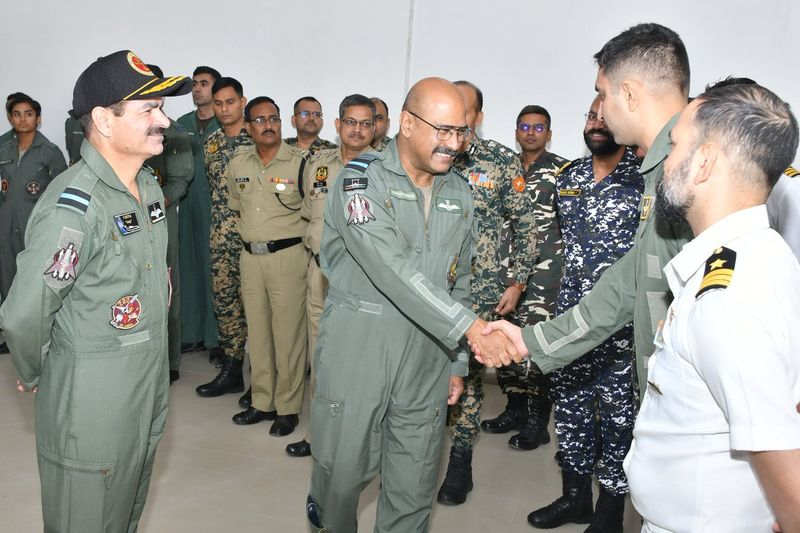
A year after the India-Pakistan skirmish in May last year highlighted the use of drones in modern warfare, the Indian Armed forces have opened a tri-services ‘drone warfare’ training school.
Serving officials from all the three services will be trained at what has been named ‘Tri Service Unmanned Aerial Systems School’.
Located at a frontline airbase in Punjab, the ‘school’ was inaugurated by the Western Air Command Chief Air Marshal George Thomas on Wednesday.
Air Marshal Thomas reviewed the operational preparedness of the base.
The Western Air Command said in a post on X that the drone warfare school would be the centre for training, tactics development and integration of all training, tactics and procedures of force structures and UAV capabilities.
The India-Pakistan skirmish in May last year had witnessed large-scale tri-service deployment of drones and missiles for precision strikes deep inside Pakistan.
The Armed Forces — the Army and the Air Force — had effectively neutralised hundreds of enemy drones across the entire western frontier through an integrated air defence shield.
In April this year, the Army released the ‘Technology Roadmap for Unmanned Aerial Systems (UAS) and Loitering Munitions’, a 50-page document focusing on indigenous drone technology.
As many as 30 types of UAS and loitering munitions covering 80 variants across five categories — surveillance, strike, air defence, special roles and logistics, which can be deployed for different operational situations and terrain conditions have been identified.
The IAF is focusing on its own set of drones and counter-drones systems.
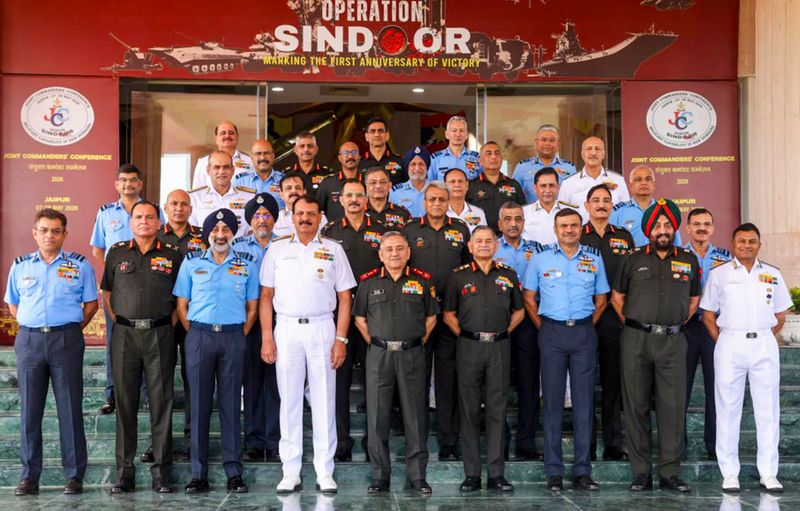
Chief of Defence Staff General Anil Chauhan, Chief of the Army Staff General Upendra Dwivedi, Chief of the Naval Staff Admiral Dinesh K Tripathi, Chief of the Air Staff Air Chief Marshal AP Singh with others during the joint commanders’ conference commemorating the first anniversary of Operation Sindoor, in Jaipur. PTI
India’s military leadership on Thursday said it was ready to tackle fresh threats from Chinese-origin missiles acquired by Pakistan and reiterated that no terror sanctuary in Pakistan was safe, while also ruling out any third-country role in brokering peace between the two neighbours.
The military leadership — Lt Gen Rajiv Ghai, Air Marshal AK Bharti and Vice Admiral AN Pramod — who had led military operations during Operation Sindoor in May last year, emphasised that Pakistan had failed to damage any military or civilian infrastructure in India during the skirmish (May 7-10, 2025).
On newer Chinese-origin missiles being tested by Pakistan, Air Marshal Bharti said, “We are continuously scanning… to always stay ahead of their capabilities.” Two more units of the Russian-origin S-400 air defence missile systems are expected to be inducted this year, including one later this month. The IAF currently operates three such systems.
On the destruction caused inside Pakistan during Operation Sindoor, Air Marshal Bharti said,” Eleven Pakistan Air Force bases were hit and 13 planes were destroyed during the skirmish, forcing Pakistan to seek cessation of hostilities. “Narrative and rhetoric do not give you victory,” he remarked.
General Ghai said, “Pakistan lost 100 soldiers. We have presented hard facts of military losses to Pakistan with irrefutable pictures and videos. Show us one evidence Pakistan has provided for its claims.”
The three officers were addressing a press conference in Jaipur on the sidelines of the Joint Commanders’ Conference. On terror infrastructure across the border, General Ghai said, “We have identified terror launch pads, terror camps and terror infrastructure across the Line of Control (LoC)… no sanctuary across the LoC is safe.” He said the number and nature of such camps might fluctuate and some had shifted deeper inside Pakistan in the belief they would be safer, but no sanctuary was safe.
Speaking on the Navy’s role during last year’s skirmish, Vice Admiral Pramod said indigenous ships such as aircraft carrier INS Vikrant and the Kolkata and Visakhapatnam-class destroyers validated the Navy’s investment in indigenous capability and preparedness. “If challenged again, we will not merely respond, we will shape the battlespace from the outset,” he said.
Asked about the possibility of Turkiye, China and Pakistan colluding as they did during last year’s conflict, General Ghai dismissed the concern. “You play against the team that turns up on the park. That is not something that should worry us so much. It is not something within our control. India and its armed forces are fully on the path to meeting these challenges,” he said.
The military leadership also said that after Operation Sindoor, the armed forces were undergoing transformation involving new weapons, missiles and upgrades of air defence systems and networks across both conventional and next-generation warfare domains.
General Ghai described Operation Sindoor as a defining moment in India’s strategic journey. “It played out like clockwork. It is the gold standard of operations,” he said. Air Marshal Bharti said Operation Sindoor had reaffirmed the primacy of air power, including aircraft, missiles, UAVs and helicopters.






























