









Sanjha Morcha

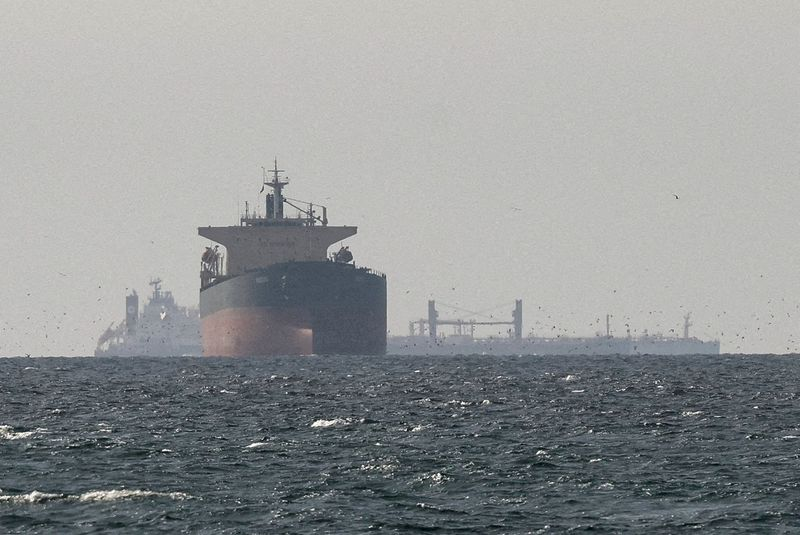
Future of US alliances hinges on Kharg Island

The US military can seize the island, but it cannot compel others to share in whatever outcome follows

article_Author
Carla Norrlof

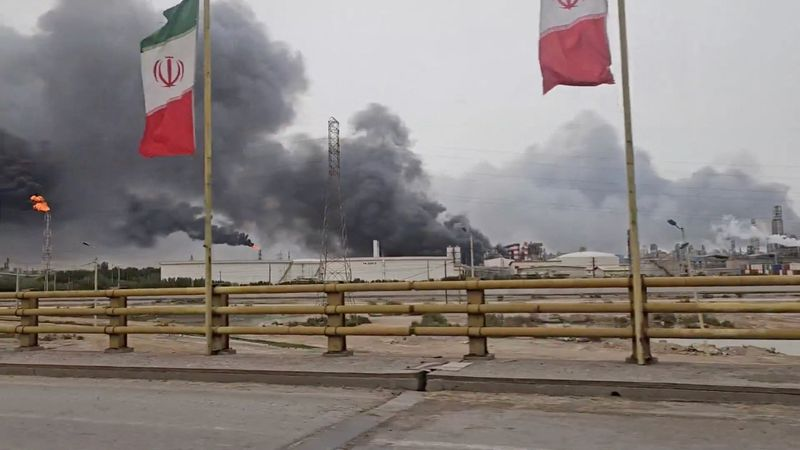
The key question about Iran’s energy-export terminal on Kharg Island is not whether the United States can seize or disable it. Of course it can. The real issue is what happens afterwards, when the conditional logic that the US has applied to its alliances begins to shape allied behaviour in turn. When allies’ behaviour can no longer be assumed, American power becomes more constrained. The key variable is no longer what the US can do, but what costs others will be willing to bear. American primacy rested on a simple bargain — pay more, decide more, and allies follow. That bargain is broken.

Such is the problem now confronting US President Donald Trump’s administration. Kharg Island looks like the kind of target the world’s strongest military should be able to turn into leverage with relative ease. But difficult trade-offs would soon follow. Seizing and holding it would impose a sustained burden that allies would be expected to help carry, whereas destroying it would deliver a sharper, escalatory blow whose costs would be immediate, unevenly distributed, and concentrated among the partners most vulnerable to energy shocks. Both options rely on allied participation in different forms, and neither can be taken for granted.

Obviously, any serious disruption would cascade through global energy markets, tightening supply, driving up prices, and increasing shipping and insurance risks. But much of that sensitivity reflects the vulnerability of the Strait of Hormuz, a chokepoint for a significant share of global oil flows, where even limited disruption can affect supply expectations far beyond any single facility.

Kharg Island, by contrast, handles roughly 90% of Iran’s own oil exports (more than one million barrels per day), concentrating a significant share of supply at a single, exposed point. That concentration makes the island immediately visible to markets, which have already responded to the risk of escalation despite the continued flow of exports. War-risk premiums are increasing for tankers moving through the Gulf, raising the cost of transit even without sustained physical damage. Insurers are restricting or withdrawing coverage, and some shipments are being delayed or diverted, tightening effective supply at the margin and adding upward pressure on prices even before any sustained supply loss.

In the event of a disruption at Kharg Island, these effects would not be confined to Iran. They would be felt acutely in economies that depend on imported energy, most of which are already struggling to manage inflation and weak growth, with limited political room to absorb further shocks. Recent tanker data show how quickly these pressures fragment, with rates splitting sharply across allied routes by early March, revealing a fundamental asymmetry in how the shock is transmitted. For governments in Europe and across Asia, higher energy costs translate directly into domestic pressure, because they affect industrial competitiveness, household budgets, and political stability.

In earlier periods, those costs might have been willingly absorbed within the US alliance network. Though they would not have been evenly distributed, they would have been accepted as part of a shared strategic effort. Not anymore. What has changed is not simply the distribution of costs, but expectations about who will bear them, and uncertainty about whether they will be shared at all.

For years now, the US has treated alliances less as durable commitments than as arrangements to be publicly questioned and renegotiated. There have been repeated disputes over burden sharing within NATO, with US officials openly questioning Article 5 (mutual defence) commitments and publicly disparaging allied governments. As a result, security guarantees have become contingent commitments.

This change has prompted allies to hedge their bets by not automatically aligning themselves with the US during crises. The cumulative effect has been a shift in how allies think about what they can rely on in crises. Arrangements that were once organised around standing commitments are increasingly taking the form of situational coalitions. While selective autonomy on the part of US allies can work in some cases, if it becomes the default, coordination will splinter, producing uneven responses from one crisis to the next.

That is what we are now seeing. The shift to greater conditionality is shaping how all governments respond to geopolitical developments, with some US allies already limiting their involvement as the risks of escalation grow. In reducing their exposure, they weaken the expectation of coordinated allied action.

By concentrating both the potential benefits and the costs of action, Kharg Island brings this dynamic into sharper focus. Seizing it would increase pressure on Iran, but it would also redistribute strain across the coalition needed to sustain that pressure. The same move that generates leverage introduces risk, and that risk is distributed across the partners expected to bear it.

More broadly, moving from a system of assumed alignment to one that must be negotiated raises the political cost of collective action and weakens its strategic effect. Conditional alliances will not end all cooperation, but they make it more difficult to translate alignment into power on a predictable basis.

That is why Kharg Island — the “forbidden island” — matters. It is important not because it lies beyond American reach, but because it is tempting the US to pursue a course of action with consequences others may not be willing to shoulder. The US military can seize the island, but it cannot compel others to share in whatever outcome follows. The old message was clear: contribute more or the security guarantee weakens. The new one is just as stark: without agreement on the mission, allied support weakens.

The writer is Professor of Political Science at the University of Toronto

Copyright: Project Syndicate, 2026.

www.project-syndicate.org


Trump wants to reshape Iran

As US President threatens to bomb Iran into the Stone Age, Pezeshkian writes a letter

article_Author
Gaddam Dharmendra

TWO contrasting messages were sent on April 1 by the principal protagonists of the ongoing war in West Asia. One was a much-anticipated speech by US President Donald Trump, while the other was a “Letter to American People” by Iranian President Masoud Pezeshkian.

In a made-for-television address, Trump eventually had nothing new to say as he rehashed his social media posts and media comments. There was no mention of unblocking the Strait of Hormuz, under the chokehold of Iran’s Revolutionary Guard Corps Navy (IRGC-N), nor of inserting US ground troops, massed in their thousands across the region, into Iran.

The strait, through which one-third of global energy flows, remains under the IRGC’s control. Financial and commodity indices, monitored closely by Trump, are steadily trending upwards, while countries from Australia to Egypt are facing fuel shortages and shutdowns. The entire global economy is on edge, with the International Monetary Fund (IMF) predicting a recession. Till date, Trump has been cleverly manipulating markets, aligning his comments to shape them. No longer, it seems. Stock markets are now moving more in line with battlefield developments rather than Trump’s comments.

Pezeshkian’s letter — penned in English, not Farsi — was circulated widely on social media. Given the country’s official stance of hostility towards the US, this is an unusual, perhaps even brave, message. Both sides have previously exchanged letters at the highest levels, but such a public outreach by a sitting Iranian President has no historical precedent. After all, the two countries broke off diplomatic ties in 1979 following the kidnapping of US diplomats stationed in Tehran. Pezeshkian is now seeking to set the record straight on Iran-US relations, that these were “not originally hostile”, and goes on to lay the blame for the current conflict entirely on the US and Israel.

Pezeshkian’s plea is mature and subtly goes beyond a US audience. He addresses the world by saying that attacking Iran’s vital infrastructure constitutes a war crime, that these “generate instability, increase human and economic costs, and perpetuate cycles of tension, planting seeds of resentment that will endure for years”. Chronologically, it needs to be noted, Iran’s strikes on infrastructure in the region, as opposed to military targets, were usually reactive and not proactive.

In his address, Trump doubled down on a globally unpopular war. He appeared reasonable while simultaneously renewing his trademark threats, declaring, “We are going to hit them (Iran) extremely hard over the next two to three weeks. We are going to bring them back to the stone ages where they belong. In the meantime, discussions are ongoing… We have all the cards; they have none.”

An unfazed Iran, confident that it currently holds the upper hand, taunted US troops to “come closer”. One Iranian analyst succinctly noted that an aerial assault from 36,000 feet is vastly different from “manly” combat at six feet.

Trump’s address is also replete with contradictions. He claims completion of “core strategic objectives”, but elsewhere in the same address, he says that “we will continue until our core objectives are fully achieved”. This contradiction is deliberate, not random.

It is directed at a target audience of critical importance to him, electorally and financially. The former is an increasingly nervous MAGA base, which he has assuaged by saying “we are winning, bigly”. The latter is a band-aid, a placebo, to the six Persian Gulf countries witnessing, in real time, the devastation of the entire foundations on which their economies were built.

The US President’s coarse and insulting language towards Saudi Crown Prince Mohammed bin Salman and the Kuwaitis simplifies complex issues to a populist base unconcerned with niceties.

Trump is essentially signalling a further escalation, which could last several more weeks. In recent days, the US and Israel have sharply expanded their bombing campaign, going beyond military targets to strike at the very heart of Iran’s society and industrial base. They have bombed two of Iran’s steel plants, a pharmaceutical factory, civilian installations, gymnasiums and residential areas. The Mobarakeh steel plant in Isfahan is, in fact, the largest in West Asia. As one analyst describes it, “Steel sits at the core of infrastructure, construction and industrial circulation. Damage it, and the effects cascade far beyond one sector”.

The US President is not merely wreaking havoc but is seeking to shape a post-war Iran, ensuring that its economic recovery and reconstruction will be long and painful. As such, his rhetoric needs to be taken with deadly seriousness. Clearly, “regime change” is no longer on the US-Israel agenda, but wishing to send Iran back to the “Stone Age” is playing itself out before the entire world. This is an assault on a people who just two months ago were, quite ironically, assured by Trump that “help is on its way”.

Trump is also casually papering over a military quagmire into which he has drawn the entire US CENTCOM (Central Command), and, for us in India, the US PACOM (Pacific Command), a theatre of vital importance. US military assets are being relocated from East Asia to replenish the losses in West Asia. Till date, the Iranians have destroyed half a dozen THAAD radar systems, decapitated the US’s most complex radar array at the Al-Udaid base in Qatar and with pinpoint precision destroyed E3 Sentry surveillance aircraft, KC 135 air refuelling tankers and other surveillance aircraft. This is just a small inventory of what the Iranians have managed to destroy, apart from the devastating damage inflicted on US bases.

Meanwhile, ongoing mediation talks, being brokered by Pakistan, Egypt, Saudi Arabia and Turkey, don’t appear to be making much headway. So also is the Pakistan-China “5-point initiative”. The latter is heavy on optics and light on substance, a classic diplomatic feint, which will please none and achieve nothing.

The reality is that the US and Iran are locked in maximalist positions. Iran’s Foreign Minister Abbas Araghchi made this abundantly clear, saying that Iran has neither been consulted nor is it in any way engaged in the mediation. Araghchi also says these are not negotiations but merely an exchange of messages.

He rejected any claims of a ceasefire, saying that Iran seeks a complete and perpetual cessation of all hostilities and compensation for damages. The danger, as always with the Iranians, is their tendency to overplay their hand and not know when to fold their cards.


HEADLINES :01 APR 2026

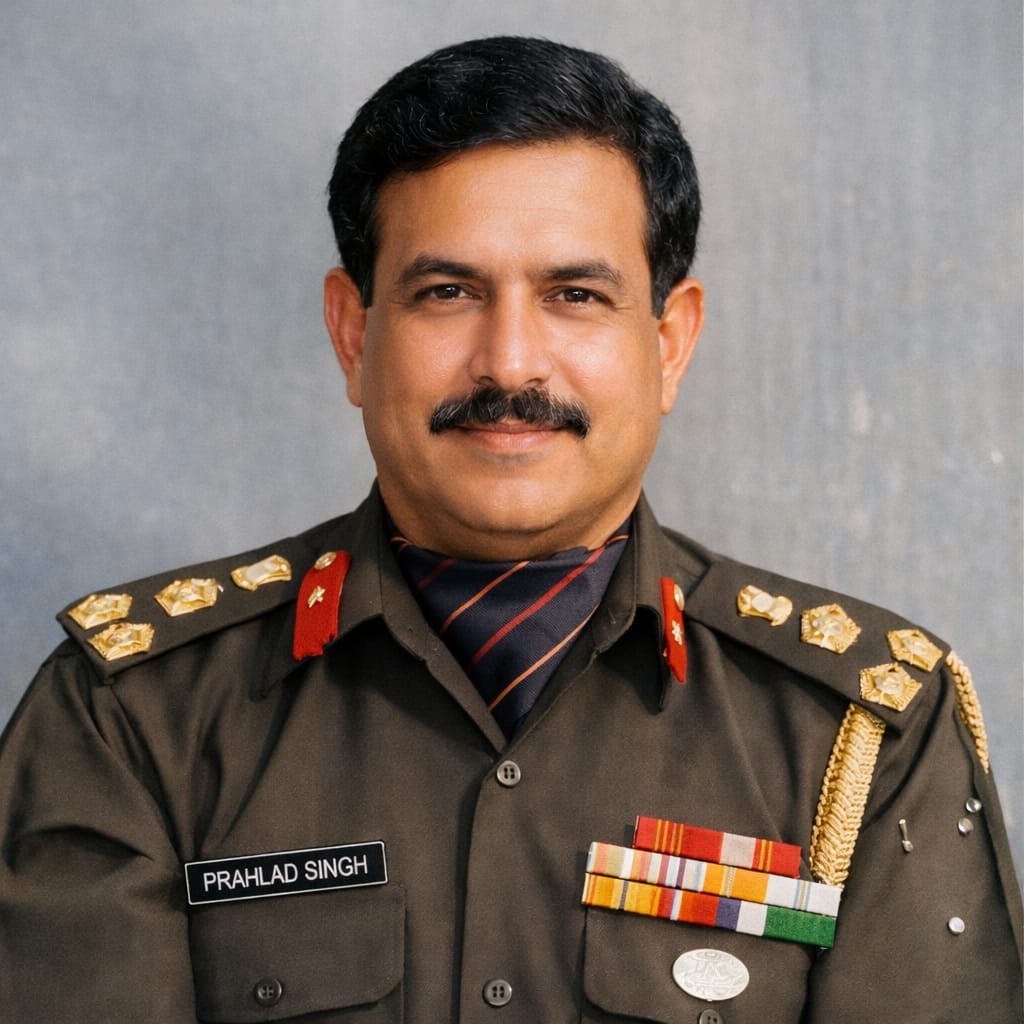
Brig Prahlad Singh Chairman Sanjha Morcha motivating student to join armed forces : Sujanpur

SARDARNI MEHAR KAUR W/O COL SHAMSHER SINGH DHANOA: ANTIM ARDAS

Obituary Col Gurdial Singh :Antim Ardas on 04 Apr 2026: Gurdwara Sahib Sector 34A:Chd

Modern warfare exposes India’s defence shortcomings

The future battlefield is defined by hypersonic missiles, swarm drones, electronic warfare and artificial intelligence.Lt Gen (retd) Harwant Singh

Attari-Wagah retreat ceremony timing revised

Short Service Commission: brief service, long neglect:Lt Col Gurprakash Singh Virk retd

IRAN: THE MOST NATURALLY DEFENDED COUNTRY ON EARTH: MAJ MAJ GEN HARVIJAY SINGH

When Empanelled Hospitals Deny Treatment: A Veteran’s Tactical Guide to Cashless Care

Army veteran Brigadier (retd) Mukesh Joshi (70) falls prey to a senseless Dehradun club fallout

Station Headquarters Jaipur:Established Crematorium Facility “Moksh Dham”

India’s Shia, BJP & Iran

Ex-Army Capt nabbed from MP in wife’s murder case after LPG booking gives away his location

Himachal CM Sukhu rolls back border entry tax hike following protests

Iran says US-Israel failed to meet war objectives even after 30 days

Lt Gen Manoj Katiyar to retire as Western Command chief after 40 years of service


SARDARNI MEHAR KAUR W/O COL SHAMSHER SINGH DHANOA: ANTIM ARDAS

55 ENGR REGIMENT : ATTENDED ANTIM ARDAS

STANDING BEHIND SOL SS DHANOA : HAVING LANGER :SEATED IN FRONT

L TO R—Brig Amarjit Singh, Col Charanjit Singh Khera, Maj Gen Manmohan Singh, Col Tajinder Singh Sandhiu, Col Paraminder Nirwal , Col Om Prakash, Col Harbinder Singh .

Col Parminder Nirwal drove down from Jullundur (140Km) to attend the antim ardas : Regiment and Bengal sappers spirit

[


Obituary Col Gurdial Singh :Antim Ardas on 04 Apr 2026: Gurdwara Sahib Sector 34A:Chd

Colonel Gurdial Singh (The Bengal Sappers), 1971 war veteran, mentor to the golfing community and Secretary SEPTA, Chandimandir for more than 20 years.cremated on 28th March 2026.

Condolences on text/whatsapp may be conveyed to

Mrs Nargis G Singh, 9316441063

Major Navdeep Singh, Senior Advocate, High Court 9316132817

Navjosh Singh, 9814210900

What an irreplaceable loss of a sterling human being and an ace golfer & creator of golf courses. He never bothered which course he was working for he simply loved to create unique golf courses. He was instrumental in creating / assisted to create golf courses in Chandimandir, Roorkee, Assam where created a new course from scratch for the Governor.
As a human he was a humble, big hearted person who was always ever ready to help others in whatever form the help was required. Col. Gurdial will be sorely missed & so will be his legacy & magnanimity. He was self motivated, tireless, dedicated soul. He was also instrumental in creating our Faujeshwar Enclave in Roorkee.
May his soul rest eternally in peace. JAI HIND
Brig Sewak S. Sidhu- one of admirers of Col. Gurdial Sing


Attari-Wagah retreat ceremony timing revised

The authorities stated that the change had been made keeping in view the changing weather conditions and daylight hours

The timing of the iconic retreat ceremony at the Attari-Wagah joint check post at the Indo-Pakistan border in Amritsar has been revised.

The daily ceremony, which draws thousands of spectators from across the country and abroad, will now be held from 5:30 pm to 6:00 pm.

Earlier, the ceremony used to begin at 5:00 pm and conclude by 5:30 pm. The authorities stated that the change had been made keeping in view the changing weather conditions and daylight hours.

The new timing has come into effect from April 1.

The retreat ceremony, jointly conducted by Indian Border Security Force and Pakistan Rangers, remains a major attraction for both tourists and locals, showcasing discipline, coordination and patriotic fervour.


Short Service Commission: brief service, long neglect

The treatment of SSC officers post-release raises uncomfortable questions of policy, equity and national foresight.

article_Author
Lt Col Gurprakash Singh Virk retd

INDIA’S armed forces are one of the most respected institutions in the nation, built on discipline, sacrifice and honour. Yet, within this proud structure exists a silent contradiction — one that affects thousands who once wore the uniform under the Short Service Commission (SSC). Their contribution is unquestionable, but their treatment post-release raises uncomfortable questions of policy, equity and national foresight.

If the country is to optimise both its military strength and socio-economic potential, Short Service must be reimagined — not as a temporary arrangement, but as a strategic national asset. The issue is neither new nor unknown. Since the promulgation of Army Instruction AI 11/S/64, which ambiguously stated that “pension under consideration orders will be issued separately”, a policy vacuum has persisted. For over six decades, this assurance has remained largely unfulfilled, leaving SSC personnel in a state of uncertainty.

This gap has not gone unnoticed. Courts, including the Supreme Court and various high courts, have increasingly been called upon to intervene. Recent judicial pronouncements — particularly those granting relief by notionally treating certain categories as deemed to have completed 20 years of service — have exposed the deeper malaise. These judgments reflect prolonged executive inaction.

The core issue is not limited to gender or specific cases. It is a systemic neglect of the SSC cadre itself.

Short Service entrants volunteer in the prime of their youth. They undergo the same rigorous training, carry the same responsibilities and face the same operational risks as their permanent commission counterparts. For five, 10, or 14 years, they serve with unwavering commitment.

Yet, upon release, they step into an uncertain civilian landscape — often without pension, without full healthcare benefits and without a structured resettlement pathway. The absence of these basic assurances creates financial insecurity as well as a sense of institutional indifference.

One of the starkest manifestations of this disparity is in the access to the Ex-Servicemen Contributory Health Scheme (ECHS). While regular retirees enjoy comprehensive healthcare coverage, SSC veterans often face restrictions or exclusion. This has led to ongoing litigation, including writ petitions in high courts.

Healthcare cannot be selectively granted. It is an extension of the nation’s obligation to those who have served. Any deviation from this principle undermines both constitutional values and institutional credibility.

A common argument against extending pensionary benefits to SSC personnel is fiscal burden. However, a closer examination reveals the opposite. Regular commission personnel typically serve 20 years or more and draw pension for life. In contrast, SSC personnel serve for shorter durations and then transition into civilian careers, where they continue to contribute economically through taxes, enterprise and professional engagement.

Granting pro-rata one rank one pension (OROP) to SSC personnel would involve a lower per capita pension outgo while generating long-term economic gains. It creates a dual-benefit model — reduced pension liability and increased national productivity. In essence, the SSC becomes not a cost centre, but a force multiplier.

Perhaps the greatest strength of the SSC model lies in its potential to produce disciplined, skilled and motivated individuals at a relatively young age. Released in their 30s or early 40s, they are ideally positioned to contribute meaningfully in civilian sectors. From corporate leadership to public administration, from entrepreneurship to internal security, their training and experience are invaluable. Yet, in the absence of structured support, much of this potential remains underutilised.

A well-designed resettlement framework can transform this transition into a national advantage.

India lacks a comprehensive legal structure to address the resettlement and welfare of Short Service personnel. Existing schemes are fragmented and lack enforceability. An armed forces resettlement and welfare Act is needed — one that provides statutory backing to key provisions, such as:

  •  Pro-rata OROP for all SSC personnel
  •  Universal and non-discriminatory access to ECHS
  • Structured resettlement programmes aligned with national employment policies
  • Lateral entry into government and public sector roles
  • Recognition of military rank and experience in civilian hierarchies

Such a framework would ensure fairness and enhance institutional efficiency.

Beyond policy and economics lies a more fundamental issue — the moral contract between the nation and those who serve it. When a young individual joins the armed forces, there is an implicit assurance of dignity, fairness and respect — not just during service, but also beyond it. Any perception of neglect erodes this trust and, by extension, affects morale and motivation.

The growing discontent among SSC veterans calls for introspection and corrective action. The transformation of Short Service into a national asset requires a shift in perspective. It demands that policymakers move beyond incremental adjustments and adopt a holistic approach.

Key steps in this direction include:

  • Addressing the long-pending ambiguities of AI 11/S/64
  •  Extending pro-rata pensionary benefits
  • Ensuring parity in healthcare and welfare schemes
  • Institutionalising resettlement through legislation
  •  Recognising SSC personnel as equal stakeholders in national defence

These measures are not radical — they are rational. The need for a youthful, agile military force is matched by the need for skilled human capital in the civilian domain. The SSC model, if properly structured, can serve both objectives. It can provide the armed forces with flexibility and vitality while simultaneously enriching the civilian workforce.

Military rank and honour earned during Short Service should be a lifelong asset, not a post-service liability. Those who have worn the uniform, even for a limited tenure, carry with them values that the nation cannot afford to overlook. It is time to move from ad hoc measures to institutional reform and from ambiguity to assurance.

Making Short Service a national asset is not just in the interest of those who serve; it is in the interest of India itself.


IRAN: THE MOST NATURALLY DEFENDED COUNTRY ON EARTH: MAJ MAJ GEN HARVIJAY SINGH

Comments by my former GOC, very apt.

Lack of terrain knowledge has been the cause of defeat of many militaries.

US, never known for its knowledge of history and geography, is making a huge mistake.

Jokingly said “US makes war to learn world geography”.

Hormuz is sacred to Persia, named after the Zoroastrian deity of wisdom and light, Ahura Mazda ( modified to Hormoz or Hormuzd in Middle Persian).

Iranian men & women will fight to the death to protect their nation.

On the other side, the Boab el-Mandeb (Arabic for “Gate of Tears” or “Gate of Lamentation”) is a critical 16-mile-wide shipping strait between Yemen & Djibouti. Again a death trap.

Yanks are fingering two Wasp hives.

Hope they have bought extra land at Arlington Cemetery to recieve the certain & large no of body bags.


When Empanelled Hospitals Deny Treatment: A Veteran’s Tactical Guide to Cashless Care

Preamble: The Battle for Dignity

Comrades, quality, cashless treatment is a right earned through service; it is not a request. Empanelled hospitals are partners in delivering this right, not gatekeepers trying to block it. This guide ensures that no veteran or their family is ever intimidated by hospital administration.

For many veteran families, the hardest battle isn’t fought on the border; it’s fought at the registration desk of an empanelled hospital. The gut-punch of being told, “We aren’t taking ECHS today,” or “No beds available for ECHS,” while in pain or distress, is unacceptable.

Thanks for reading Ravjeet’s Substack! Subscribe for free to receive new posts and support my work.Subscribe

This installment of Fire Plan ‘Jeevan Raksha’ is not just an advisory; it is a field manual. It is designed to ensure that every ECHS beneficiary—from a retired flag officer to a sepoy’s family in a remote village—knows exactly how to breach the wall of hospital refusal and secure their rightful cashless treatment.

An empanelled hospital is not doing the veteran a favor. They are under a legally binding contract (Memorandum of Agreement, or MoA) with the Government of India to provide care.

The Standing Order: According to the MoA, an empanelled hospital cannot deny cashless treatment to an eligible ECHS beneficiary. A refusal is a breach of contract. This guide provides the tactical maneuvering space for every beneficiary to defend their dignity and their health.

To help visualize this entire tactical process, below is a summarizing diagram that consolidates the key stages of managing a hospital refusal, from on-site soft engagement to escalating up the chain of command.


Phase 1: On-Site ‘Soft Power’ Engagement

The veteran’s first tactic must be calm, firm, and informed engagement. Do not lose tempo; gain ground through accountability.

1. Verification of Force:

The veteran must always carry their valid ECHS smart card, the referral letter from the Polyclinic (if applicable), and Aadhaar card. Proper documentation is the first line of defense.

2. Demand the Breach Report:

If the desk staff refuses admission, the veteran must steadily ask “Why?” They must not accept a vague answer.

3. Identify the Enemy of Protocol:

The veteran must note the name and designation of the individual issuing the refusal. They should ask, “Who has given you the authority to deny treatment to an ECHS beneficiary?”

4. Cite the MoA:

Mentioning the contract often changes the hospital’s posture. The veteran should state, “I am aware of the MoA between this hospital and ECHS for cashless treatment. Are you officially stating that this hospital is violating that legal agreement?”

OIC’s Tactic: If the hospital claims “no beds are available,” the veteran must ask them to verify this status. If the refusal persists, the veteran must demand the refusal and the specific reason (e.g., “No ECHS beds”) in writing. Hospitals are often reluctant to document their violations.


Phase 2: Immediate On-Site Escalation

If Phase 1 fails, the veteran must escalate the situation immediately, without leaving the hospital premises. Leaving the site breaks the tactical advantage.

1. Activating the Nodal Officer:

Every empanelled hospital is required to have a dedicated ECHS Nodal Officer or a designated Help Desk. The veteran must demand to speak to them instantly. Their mandate is to resolve conflicts between the hospital and ECHS beneficiaries.

2. Engaging Hospital Management:

If the Nodal Officer is unavailable or unhelpful, the veteran must escalate to the Medical Superintendent (MS) or the hospital’s Chief Operating Officer (COO). The veteran must clearly state: “I am an eligible ECHS beneficiary with a valid referral. This hospital is under contract to provide cashless treatment. Your staff is denying service, which is a direct violation of the MoA.”


Phase 3: Activating the ECHS Chain of Command

If hospital management refuses to self-correct, the veteran must deploy the authority of the ECHS administration.

3A: The OIC Polyclinic Call (Priority 1)

This is the most critical action. The veteran must contact their parent Polyclinic OIC immediately.

  • The veteran must save the OIC Polyclinic’s official number in their contacts.
  • Upon connection, the veteran must state their Rank, Name, and current location: “Sir/Madam, I am at [Hospital Name] and they are refusing ECHS admission/treatment.” They must provide the name of the staff member who refused them and the reason given.

The OIC’s Mandate: The OIC Polyclinic will immediately engage the hospital’s top management or Nodal Officer. This call carries the full weight of the ECHS organization. In an overwhelming majority of cases, intervention by the OIC resolves the denial within minutes, securing admission for the veteran.

3B: The ECHS Toll-Free Helpline (1800-114-115)

If the OIC is unreachable, the veteran must activate the central helpline.

  • Call 1800-114-115.
  • The veteran must instruct the operator that they need to lodge a formal complaint of “Denial of Service by an Empanelled Hospital.”
  • Critical: The veteran must obtain the complaint number. This is vital evidence of the incident.

Phase 4: Tactical Scenarios & Special Operations

The Rules of Engagement change based on the medical scenario. The hospital’s liability is absolute in specific cases.

Scenario Alpha: Medical Emergency (No Excuses)

In a medical emergency, the hospital’s obligation is immediate and unconditional.

The Emergency Standing Order: If an ECHS beneficiary arrives at an empanelled hospital in an emergency state, the hospital MUST admit and stabilize them immediately. They are legally and contractually prohibited from demanding a referral, an ECHS card, or any form of payment before providing stabilizing treatment.

A hospital refusing emergency care violates not only the MoA but also Supreme Court rulings regarding the ‘Right to Life.’

Emergency Tactics:

  1. Immediate Insertion: Get the patient to the Casualty/Emergency Room (ER) immediately.
  2. Declare ECHS Status: State clearly, “This is an ECHS patient. This is a medical emergency.”
  3. Admit First, Document Later: Stabilization is paramount. The 48-hour window to inform ECHS applies only after the patient is out of immediate danger. The veteran must not let administrative hurdles delay medical attention.

Scenario Bravo: Strategic Escalate to SEMO and RC

If the situation involves systemic failure or blatant disregard for the chain of command:

  • SEMO (Senior Executive Medical Officer): The SEMO (Commanding Officer of the nearest Military Hospital) holds technical authority over medical services. Blatant refusals can be reported to their office for medical-level intervention.
  • Director Regional Centre (RC): The Director RC is the administrative commander of all ECHS operations in the region. They possess the authority to penalize, suspend, or ‘de-empanel’ hospitals that repeatedly violate the MoA.

Phase 5: Post-Incident Intelligence (Securing the Paper Trail)

Even if the veteran is successfully admitted after intervention, the initial attempt to refuse service is a grave violation. A formal, written intelligence report must be generated. Without written evidence, ECHS cannot take disciplinary action.

1. Generate the SITREP:

As soon as the patient is stable, the veteran (or their family) must write a clear, factual SITREP (Situation Report) detailing the encounter. This must include:

  • Date and precise time of the refusal.
  • Names/descriptions of the hospital staff involved.
  • The specific reason given for the denial.
  • The ECHS card number of the beneficiary.

2. Submit to OIC:

This written complaint must be submitted formally to the OIC Polyclinic. This document is the ammunition the OIC requires to escalate the issue to the Regional Centre.

3. Utilize Grievance Portals:

The veteran should also file a formal grievance on the CPGRAMS portal or via the official ECHS website. Every registered complaint strengthens the case against non-compliant hospitals.


Veteran’s Battle Card: A Summary


Veterans’ Tactical Handbook: 10 Critical ECHS FAQs

Comrades, in the chaos of a hospital refusal, clarity is your strongest weapon. Use this handbook to cut through the confusion and enforce your rights.

Q1: The hospital receptionist says, “ECHS is closed for the day,” or “No ECHS beds available.” Do I just leave?

Answer: NEGATIVE. This is a soft denial. A bed is a bed. An empanelled hospital cannot legally set a ‘quota’ or separate ‘ECHS ward’ unless specifically authorized in their MoA (which is rare). You must calmly ask, “Are you officially stating that this entire hospital has zero beds available, and if so, will you put that in writing?” Proceed immediately to Phase 2 (Nodal Officer).

Q2: Does “cashless” treatment mean I don’t have to pay for anything at all?

Answer: AFFIRMATIVE, in 99% of cases. The MoA dictates that cashless means zero payment for all treatment, procedures, diagnostics, and medicines included in your authorized package or emergency care. You only pay for non-medical items (e.g., telephone calls, deluxe room upgrades, or food not provided by the hospital diet).

Q3: The hospital is demanding a “deposit” for admission, claiming ECHS payment is delayed. Is this legal?

Answer: NEGATIVE. This is a direct violation of the MoA. An empanelled hospital cannot demand any advance payment or deposit from an ECHS beneficiary for authorized treatment. ECHS bill delays are an administrative issue between ECHS and the hospital; they cannot be passed on to the veteran. If they insist, call your OIC Polyclinic immediately.

Q4: What if I have a valid ECHS card and Aadhaar, but no referral, and it’s a non-emergency?

Answer: You must get a referral. For non-emergency (planned) treatment, an official referral from your parent Polyclinic is your tactical ‘Movement Order’. An empanelled hospital cannot admit you without it for planned procedures. If you go without one, they will correctly treat you as a private patient.

Q5: In an emergency, I went to a non-empanelled (private) hospital. Will ECHS cover it?

Answer: YES, but it’s a different protocol. The rule of ‘Life over Protocol’ applies. You must get the patient stabilized first. ECHS will cover emergency treatment at non-empanelled hospitals, but you must:

  1. Formally inform your OIC Polyclinic within 48 hours of admission.
  2. File an Emergency Reimbursement Claim (not cashless).

Q6: I am from Bhopal but am visiting family in Delhi. Can I use ECHS there if I get sick?

Answer: AFFIRMATIVE. ECHS is a pan-India system. Your 64Kb smart card grants you access to any ECHS Polyclinic and any empanelled hospital across India, regardless of your parent Polyclinic.

Q7: Can a hospital force me to buy medicines from outside, claiming their pharmacy is out of ECHS stock?

Answer: NEGATIVE. This is another MoA violation. The empanelled hospital is responsible for providing all required medicines cashless for the duration of your indoor treatment. They must procure the medicine themselves if their in-house pharmacy is stocked out.

Q8: Does ECHS cover the full cost of cancer (oncology) drugs if I have to buy them privately?

Answer: AFFIRMATIVE, 100% Actual Cost. As per the 2026 tactical updates, cancer care is protected. If you must purchase authorized anti-cancer drugs from an external vendor (due to ALC failure, etc.), you are entitled to 100% reimbursement of the actual cost, provided you have a handwritten/digital NA slip and a GST invoice.

Q9: My ECHS card has expired or I lost it. Am I denied treatment?

Answer: Temporary No. If you are in the process of renewing an expired card or replacing a lost one, you must obtain a temporary ‘ECHS slip’ or ‘authorization letter’ from your OIC Polyclinic. This letter, combined with proper identification (Aadhaar/Service Certificate), is accepted as valid for treatment by empanelled hospitals for a limited period.

Q10: Who signs the NA (Not Available) slip if the OIC Polyclinic is on leave?

Answer: The Designated Medical Officer (MO). ECHS operations are continuous. When the OIC is on leave, there is always a designated MO acting as the Officiating OIC. The command chain—and your supply line—does not stop for administrative absences.

Final Word

Every ECHS beneficiary must know that the entire ECHS chain of command stands ready to support them, but the veteran must be the first responder in defending their dignity and their health.

Jai Hind.