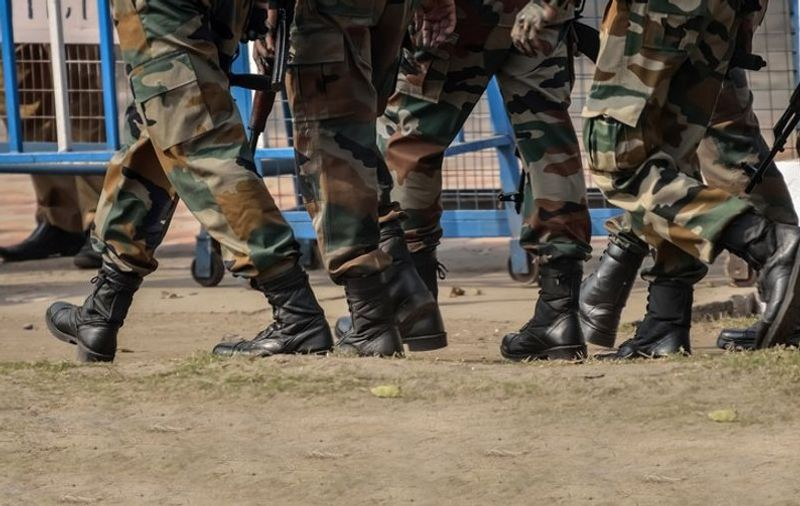
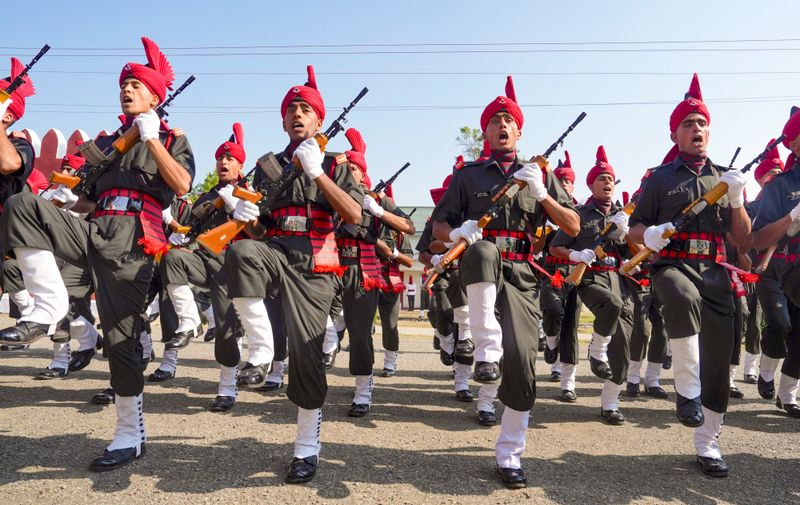
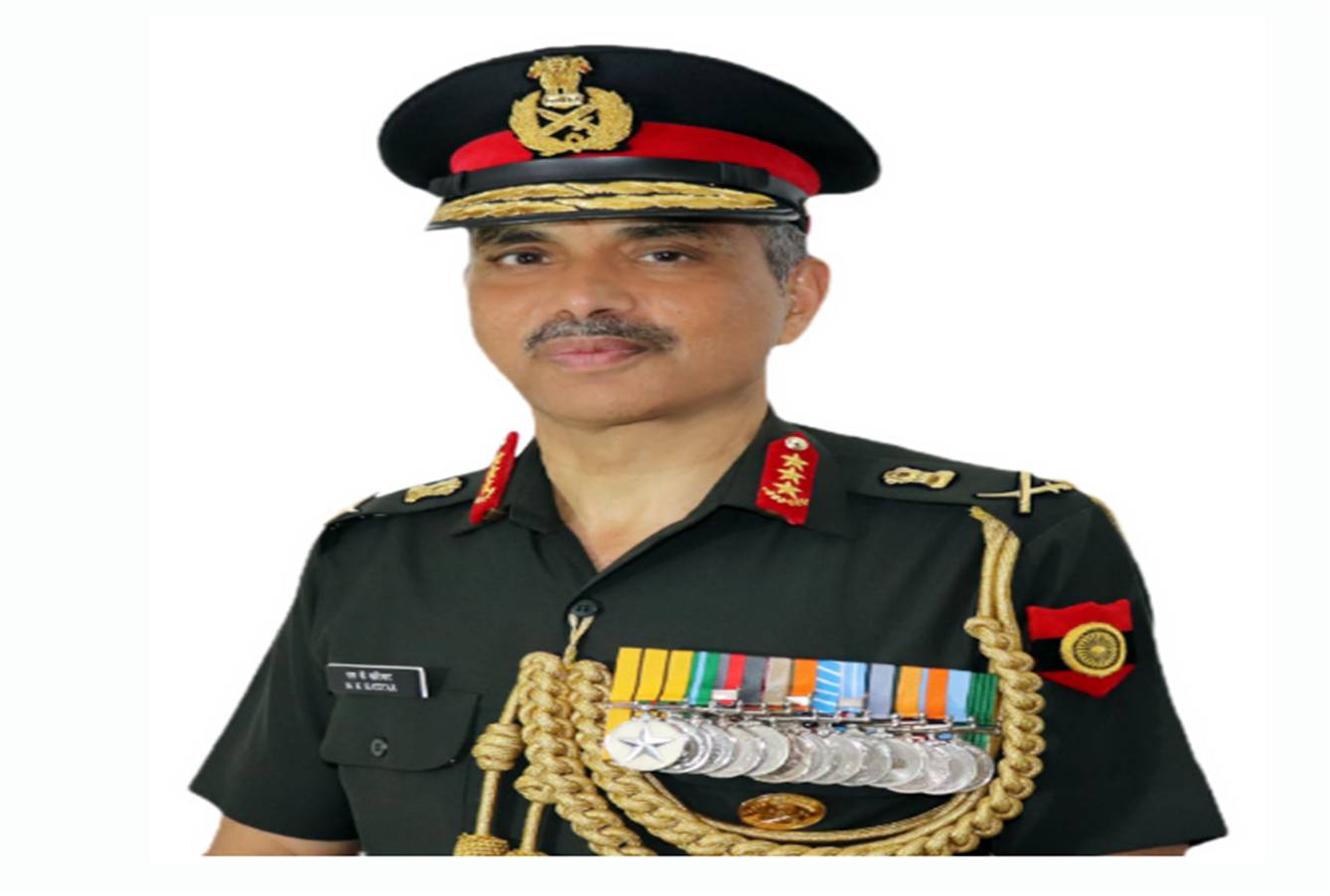
In a move that will benefit former defence personnel, the Centre today amended rules to broaden the definition of “ex-servicemen” for re-employment in central services.
Officials said the amendment was aimed at removing ambiguity and ensuring uniform recognition of service rendered across different branches and categories of the armed forces, including Military Nursing Service, for the purpose of re-employment.
The key change relates to the definition under Rule 2(c)(i) of the 1979 Rules. The amended provision now explicitly includes persons who have served in any rank–whether as combatant or non-combatant–in the Army, Navy or Air Force, as well as those who have served in the Military Nursing Service.
According to a notification issued today, the government exercised powers under the proviso to Article 309 of the Constitution to promulgate the Ex-servicemen (Re-employment in Central Civil Services and Posts) Amendment Rules, 2026.
The amended rules come into force with immediate effect from the date of their publication in the Official Gazette.
The Ministry of Personnel, Public Grievances and Pensions, through the Department of Personnel and Training, notified amendments to the Ex-servicemen (Re-employment in Central Civil Services and Posts) Rules, 1979, with the objective of widening the scope of eligibility for re-employment in Central Government services.
The notification was issued by the Department of Personnel and Training and signed by Manoj Kumar Dwivedi, Additional Secretary. The principal rules were originally notified in 1979 and have been amended periodically in 1986, 1987, 2012 and 2020.
PM Modi avoiding debate on Naravane book, alleges Rahul Gandhi
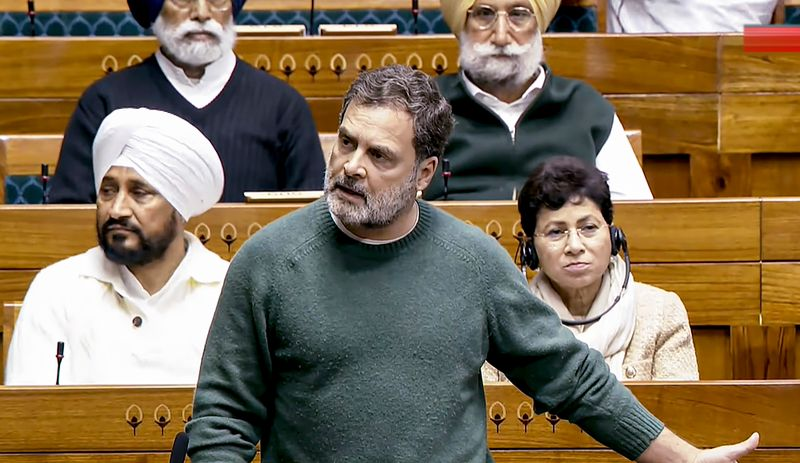
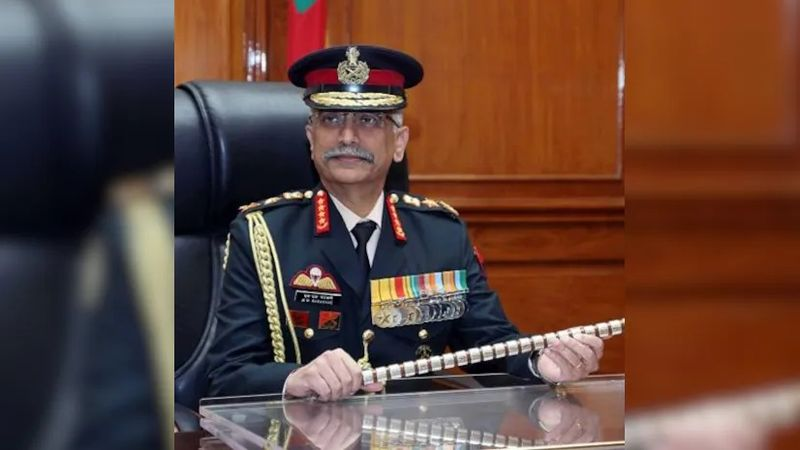
Congress MP and Leader of Opposition Rahul Gandhi yet again attacked Prime Minister Narendra Modi on Monday, claiming that he did not come to the Lok Sabha to reply to the discussion on Motion of Thanks on President’s Address as he was afraid of a debate on the issue of former Army Chief Gen MM Naravane’s book.
He also dared those claiming that there was a threat to the PM from Opposition lawmakers last week to “file an FIR” against the persons threatening Modi.
Rahul said this while speaking to mediapersons outside Parliament. The Leader of Opposition was again not allowed to speak in the Lok Sabha on Monday. The House was adjourned for the day without transacting any business.
The proceedings were completely washed out after repeated adjournments amid protests by Congress-led Opposition members, who objected to Rahul not being allowed to speak and also on the India-US trade deal. The Opposition has alleged that the government failed to safeguard the interests of farmers and was unsuccessful in getting the 18 per cent tariff on Indian goods removed in the deal.
After the House was finally adjourned for the day, Rahul along with Samajwadi Party chief Akhilesh Yadav, TMC’s Abhishek Banerjee and DMK’s TR Baalu, met Speaker Om Birla, where he raised the issue of not being allowed to speak. He also raised other matters, like the suspension of Opposition MPs, the allegation against women MPs “posing danger” to the PM and BJP MP Nishikant Dubey’s “offensive remarks” about the Nehru-Gandhi family.
Birla assured Rahul that he would get back to him on the issues after discussion with the government, sources said.
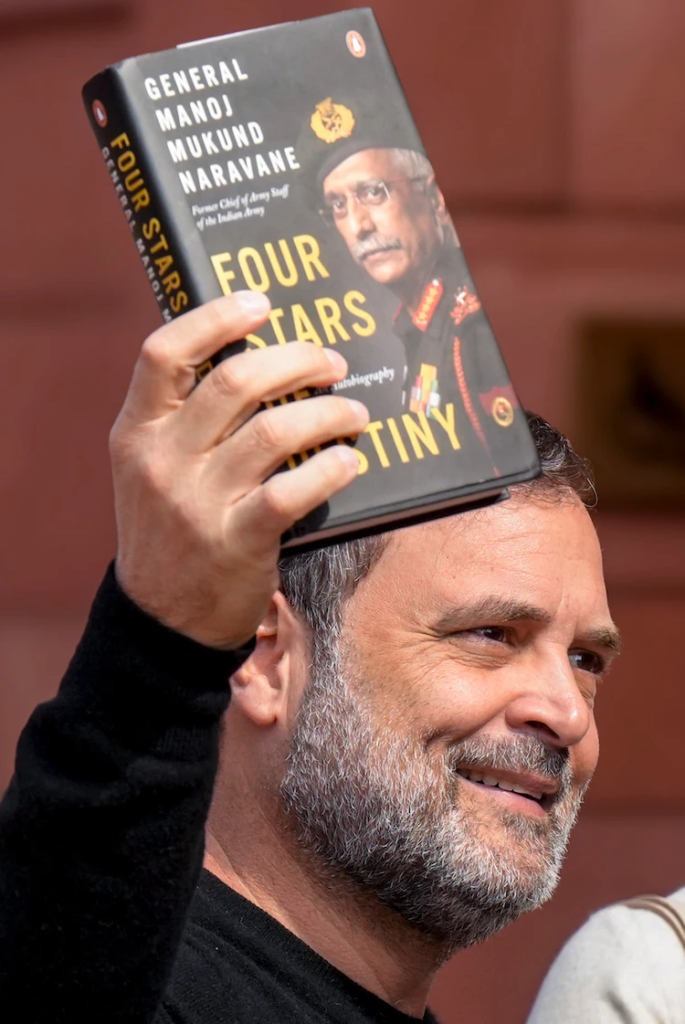
While speaking to reporters later, Rahul said, “My view is that the government is afraid of a debate. The PM did not come to the House that day because he was afraid of what we were going to say and even of being presented with Naravane’s book. I believe the government is also worried because issues such as the US deal and its impact on farmers will be raised during the Budget discussion.”
Alleging that Defence Minister Rajnath Singh made a false claim that the book was unpublished, Rahul said, “The book has been published and we have got a copy of it.”
Meanwhile, after a couple of adjournments in the morning, when the House reconvened at 2 pm, BJP MP Sandhya Ray, who was adjudicating the proceedings, called for a discussion on the Budget and invited Congress MP Shashi Tharoor to initiate it.
However, Tharoor said the LoP wanted to speak and he should be allowed to do so. But Rahul was not allowed to speak, as Ray insisted that he had not given any notice to speak. The LoP said Congress leaders had met Birla, who had committed to them that he would be allowed to speak and raise certain points before the Budget discussion, but the Chair was now “going back on its word”.
At this point, Parliamentary Affairs Minister Kiren Rijiju interjected and said, “No commitment was given by the Speaker to Rahul on being allowed to speak.”
Delhi Police to probe Naravane book leak, file FIR
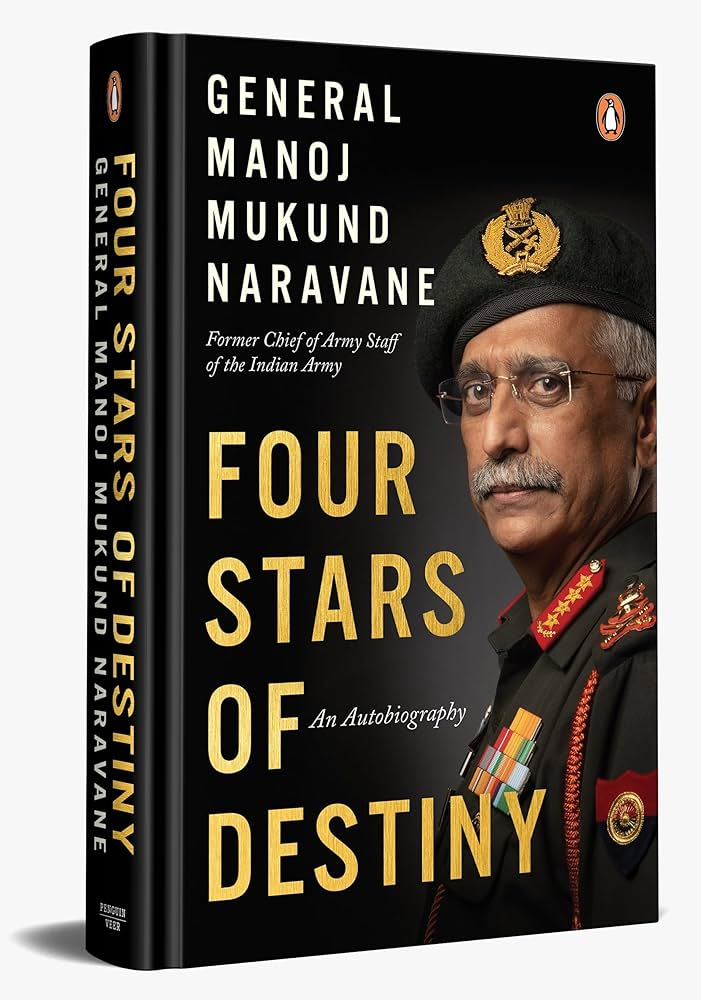
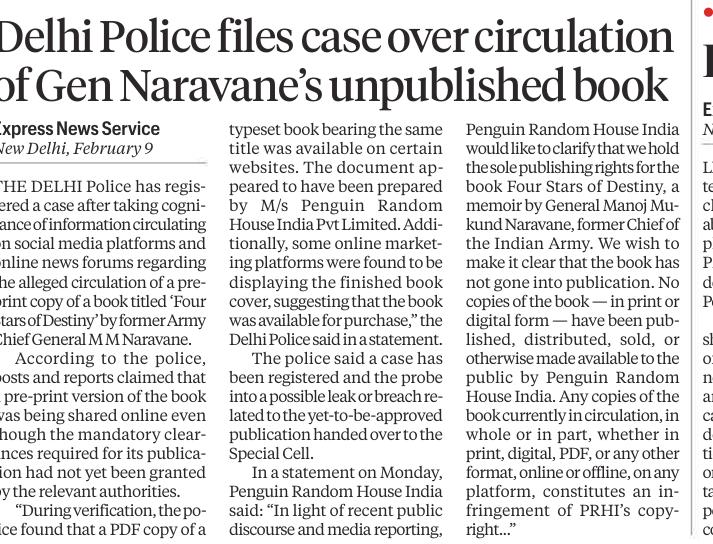
The Delhi Police on Monday filed a first information report (FIR) at the Special Cell police station to launch a probe into the alleged leak and circulation of an unapproved and unpublished book by former Chief of Army Staff General Manoj M Naravane.
According to a senior police officer, the FIR comes after the police took cognisance of information found on various online social media platforms and news forums claiming that pre-print copies of ‘Four Stars of Destiny’ are being circulated.
“It was also reported that the necessary clearance for publication of this book is yet to be received from the relevant authorities. Upon verification, it was found that a PDF copy of a type-set book with the same title, and apparently prepared by M/s Penguin Random House India Pvt. Limited, is available on certain websites, and some online marketing platforms have displayed the finished book cover as if it is available for purchase,” said an officer.
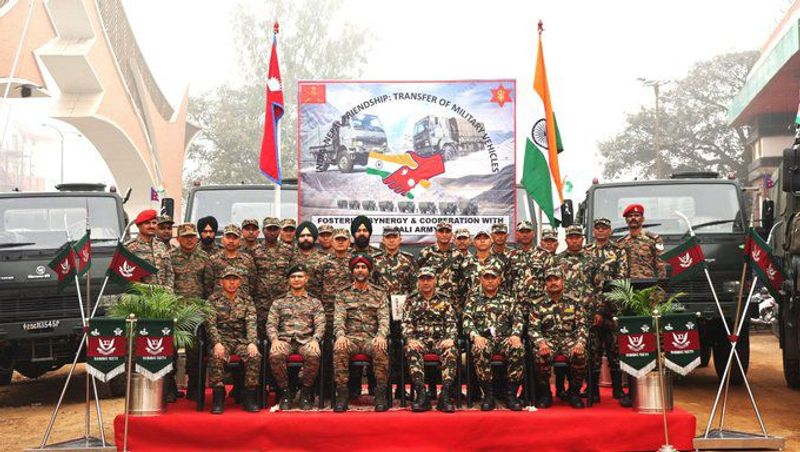
The Indian Army on Monday said it had handed over 50 military utility vehicles to the Nepal Army at the India-Nepal border, underscoring the “enduring bond” between the two forces.
In a post on X, the Indian Army also shared some pictures of the handover. “#DefenceCooperation #IndianArmy handed over 50 military utility vehicles to the #NepaliArmy at the India-Nepal border. The vehicles will be formally presented by the Ambassador of India to Nepal during a ceremony in Kathmandu,” it said.
The initiative reflects the Indian Army’s steadfast commitment to enhancing capacity-building efforts of the Nepal Army and “underscores the enduring bond of friendship, trust, and close cooperation” shared between the two armies, the army posted.
In a separate post on X, the Indian Army spoke about its cooperation with the Myanmar Army.
“Furthering #DefenceCooperation with Friendly Foreign Countries, the Indian Army Mobile Training Team from the Simulator Development Division installed and operationalised a 12-Lane Infantry Weapon Training Simulator at the Myanmar Army Combat Forces School, Bahtoo,” it said.
“Comprehensive training was imparted to Myanmar Army personnel on system handling, scenario execution, and technical maintenance,” the army said.
IAF promotion policy cannot be struck down merely because there is no vacancy: AFT
The Armed Forces Tribunal (AFT) has ruled that lack of a vacancy is not a ground on which the promotion policy in the defence services can be struck down and that result of a selection committee cannot be challenged only on the ground that the assessment was not proper or justified.
“Merely the fact that the petitioner could not be promoted on account of non-availability of vacancy before his superannuation is not a ground on which the promotion policy can be struck down. The promotion policy can be struck down only if it has no reasonable nexus with the objective to be achieved and is discriminatory,” the Tribunal’s Bench comprising Justice Anil Kumar and Vice Admiral Atul Kumar Jain said while dismissing the petition of an Air Vice Marshal who was not empanelled for promotion two times.
The Bench observed that Air Vice Marshal Rajesh Isser of the Flying Branch was rightly considered by the Special Promotion Board-2019 and he superannuated on June 30, 2019, before accrual of vacancy at his own turn. Twelve officers were considered by the board for promotion to the rank of Air Marshal for six anticipated vacancies.
He had filed two statutory complaints against his non-empanelment for promotion, which were rejected by Chief of the Air Staff and the Ministry of Defence, following which he moved the AFT.
He had contended before the Tribunal that since 4-5 officers of the panel were due to retire before accrual of the vacancies, it made the zone of consideration unbalanced, and if the future retiring officers were placed in the select list, the Air Force ought to extend the zone of consideration to fulfil the vacancies.
The Bench held that the promotion policy is a merit-cum-seniority-based policy, and since none of the officers being considered was retiring before occurrence of the first vacancy on May 1, 2019, there was no requirement of extension of zone of consideration as it was not in consonance with the policy on the subject.
The Bench also said that the allegations made in the petition with regard to biasness and maliciousness on the part of the Air Force authorities seem to be on unfounded grounds. On scrutiny of the appraisal reports dossier, we find that his appraisal reports have not been moderated downwardly as apprehended by the petitioner, the Bench held.
“It is for the interview/selection committee which amongst others consisted of a ‘High Power Committee’ to judge the relative merits of the candidates who were orally interviewed, in the light of the guidelines laid down by the relevant rules governing such interviews. Therefore, the assessment on merits as made by such an expert committee cannot be brought in challenge only on the ground that the assessment was not proper or justified as that would be the function of an appellate body and we are certainly not acting as a court of appeal over the assessment made by such an expert committee,” the Bench ruled.
Fresh violence in Manipur’sUkhrul: 21 houses torchedamid Tangkhul-Kuki clashes
Fresh violence broke out in Manipur’s Ukhrul district on Monday afternoon af ter armed miscreants allegedly set fire to more houses in Litan Sareikhong village, officials said. Armed groups also fired several rounds in the air in the vicinity of the hill village, forcing residents to flee with essential belongings to safer areas in neighbouring Kangpokpi district. Several Tangkhul villagers were also reported to have left the area. Violence first started in the area on Saturday night after a Tangkhul Naga community member was allegedly assaulted by seven to eight persons at Litan village. The matter was settled by the victim’s side and the chief of Litan Sareikhong, and both parties mutually agreed to resolve the issue through customary means, with a meeting scheduled for Sunday, the officials said. However, the meeting did not take place.
Explainer: How drone threat is expanding Army’s role
Monitoring flying objects up to a range of 35 km from the borders is the latest strategy to counter the challenge
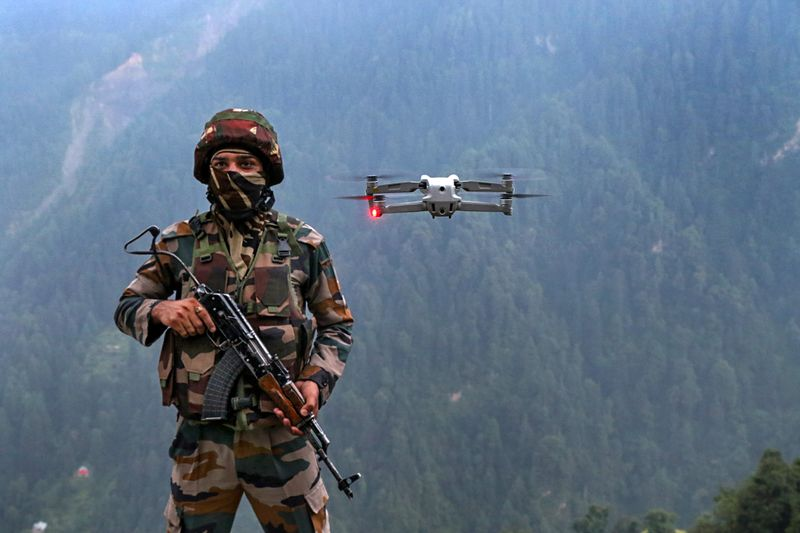
Less than a year after the employment of drones and counter-drone systems during Operation Sindoor marked a perceptible shift towards unmanned platforms in warfare, the armed forces are putting in place new strategies and leveraging evolving technologies to meet the emerging challenges. Among the recent developments is the Army being mandated to monitor flying objects up to a range of 35 km from the borders and up to a height of about 10,000 feet above ground level.
TWO developments of February 4-5 significantly altered the course of the India-facilitated Mauritius-UK agreement of May 2025 on sovereignty over the Chagos Archipelago.
First, while the US had earlier termed the pact as an ‘act of great stupidity’, its mercurial President Trump has since softened his criticism, saying it was the best deal British Prime Minister Keir Starmer could obtain. He added that the US would militarily thwart any threat to the joint US-UK military base of Diego Garcia in the Chagos Archipelago, whose sovereignty the UK has relinquished for reasons of decolonisation and self-determination.
Second, Maldives President Mohamed Muizzu has disowned his predecessor Solih’s endorsement of the agreement, which forfeited claims to the Special Economic Zone around Mauritius. Earlier, the House of Lords failed to ratify the agreement, which has faced the Opposition’s strategic ire. It reflects that long-term agreements are subject to alteration by regime change and a U-turn in the case of the US.
Of the Chagos Archipelago’s islands, Diego Garcia is the crown jewel. It was detached from Mauritius in 1965 prior to the grant of independence and established as a joint UK-US military base. The UK will pay Mauritius 3.4 billion pounds for 99 years, with a provision to extend the lease by another 44 years.
The agreement not being ratified will hurt India’s interests in the Indian Ocean Region as Mauritius had an in-principle agreement with India for the development and surveillance of the Chagos Marine Protected Area as it is ecologically sensitive. India’s relations with Mauritius were reflected when PM Modi called the Chagos agreement as a milestone for its sovereignty. An Indian national has been the NSA in Mauritius since 1984. India has helped Mauritius develop the Agalega Island, a dual-use strategic infrastructure with a 3,000-m runway, deep water jetty, surveillance and monitoring station. It is linked to its Indian Ocean Region Surveillance Network in Madagascar, the Seychelles and Sri Lanka. Access to Agalega is strictly by invitation.
Diego Garcia is the most coveted real estate in the IOR, which the UK has used profitably since the 18th century and the US militarily for the last half a century for operations in West Asia and East Africa. The US has deployed 2,500 military personnel and the UK 100 Marines. It is administered by a diplomat- commissioner based in London. Last November, nuclear-capable B2 bombers struck Houthi targets in Yemen from Diego Garcia, which the US calls ‘indispensable to security.’
France is the other country to have sovereign island territories, like Reunion in the IOR. China has constructed military facilities at Djibouti and is jockeying for dual-use space in Gwadar, Hambantota, Coco Islands and Madagascar.
India has invested heavily in Mauritius, the latest being the 2025 tranche of $680 million for Maritime and Defence Cooperation Agreement. India is building a metro system and a supreme court building and assisting in the revamp of Air Mauritius. Prime Minister Navin Ramgoolam who replaced Pravind Jugnauth has hailed Port Louis ties with Delhi as ‘perpetually beneficial.’
When Mauritius regained its sovereignty last year over Chagos, both India and the UK offered to provide ships to access Diego Garcia to plant the Mauritian flag. Eventually, three flags will fly on the military base. For India, the 2015 Agalega Agreement and last year’s Maritime and Defence Cooperation Partnership are strategic. China has an active Belt and Road Initiative (BRI) and FTA and is modernising Port Louis. South Africa has been an old partner in trade, economics and tourism.
Russia is conspicuously absent from the IOR. One of the reasons the US and the West laughed away Sri Lanka and India’s calls for making the IOR a zone of peace and neutral, nuclear-free region because they said the USSR was in occupation of Afghanistan for a decade overlooking the IOR.
The official renewal of the lease and grant of sovereignty over Chagos will face hurdles. In the May 22, 2025 agreement, the UK formally agreed to cede sovereignty of the Chagos Archipelago and Diego Garcia. Both countries require parliamentary approval and the Peers want to make amendments: referendum by Chagosians on the deal, including on the right to self-determination, human rights and decolonisation. The dispute over the ChagosIislands is rooted in international law as the International Court of Justice in 2019 said that the UK’s separation of the Chagos Archipelago from Mauritius was unlawful and it must end its administration of territory ‘as rapidly as possible.’
A future Mauritian government could lease any of the Chagos Islands to China and Russia. Security safeguards and the sovereignty issue are embedded in the 2025 agreement. The existing marine-protected area is well patrolled by the British Navy; last year, 32 Indian fishermen from Kerala and Kanyakumari were detained and charged with sailing towards Diego Garcia. If the 2025 agreement comes into force, according to Human Rights Watch, some of the 10,000 displaced Chagosians may return to other islands, but Diego Garcia will remain off limits.
The East-of-Suez vacuum of the 1960s caused by British withdrawal has now crowded the IOR, with contestants seeking their share of control in the region. The UK took charge of Chagos in 1965 on the pretext of establishing a communications base in Diego Garcia despite a UNGA Resolution not to dismember Mauritius. Even without Diego Garcia, Mauritius is strategic geography. The recovery of sovereignty over Diego Garcia, when it happens, will make no difference to the UK-US joint military base and for Washington’s long-strike arm.
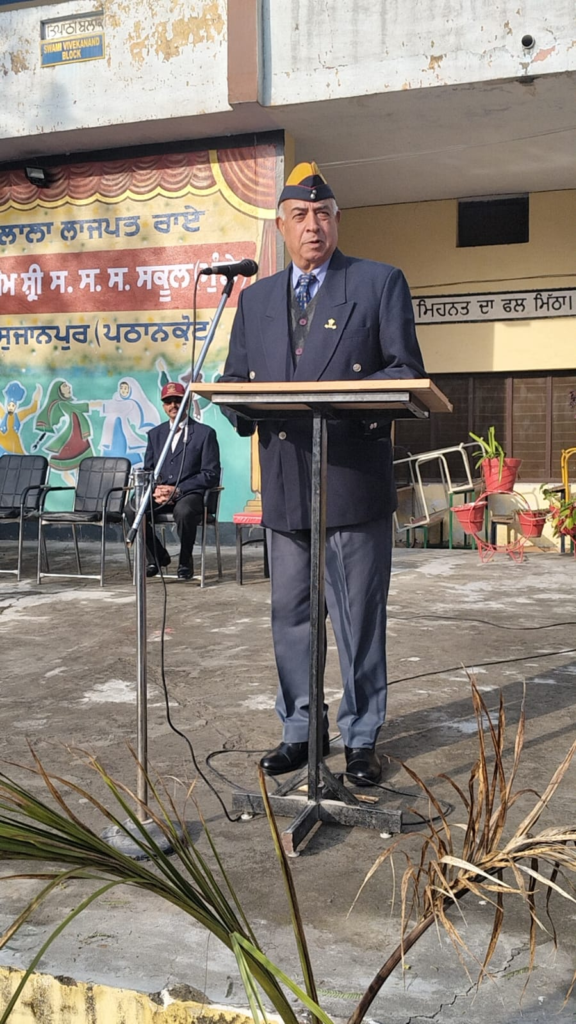
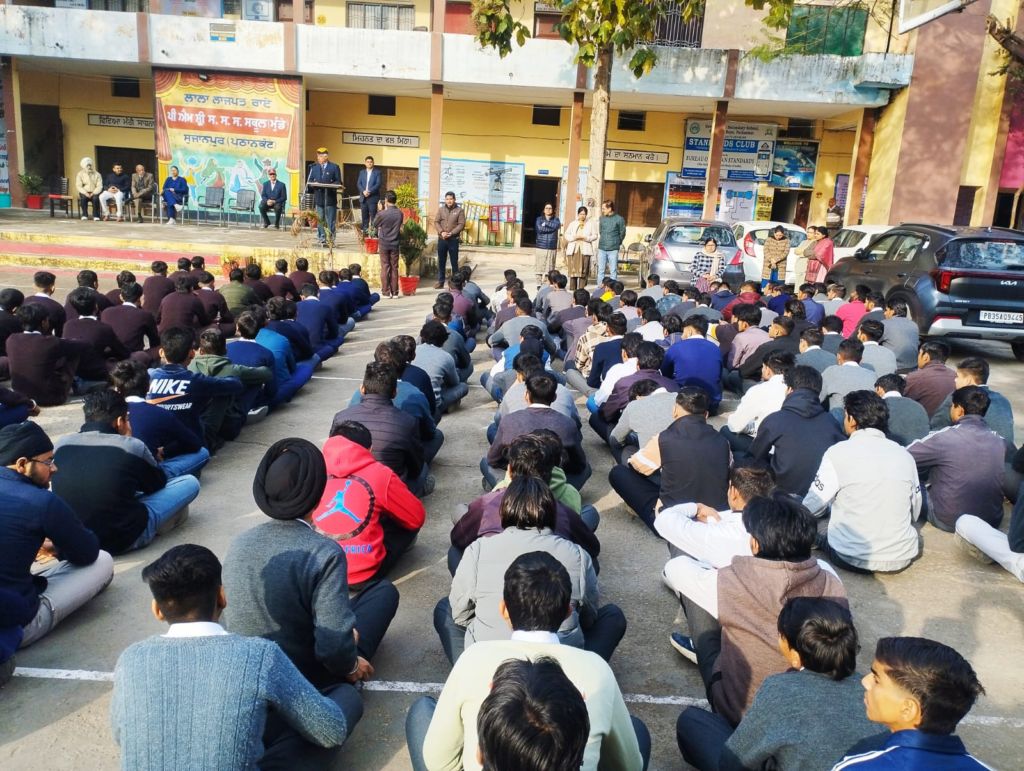
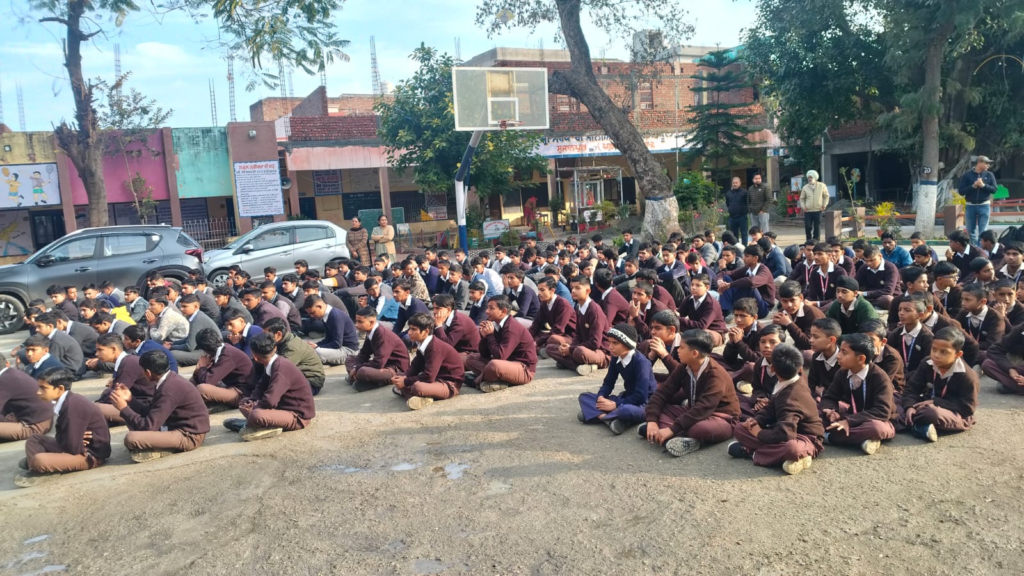
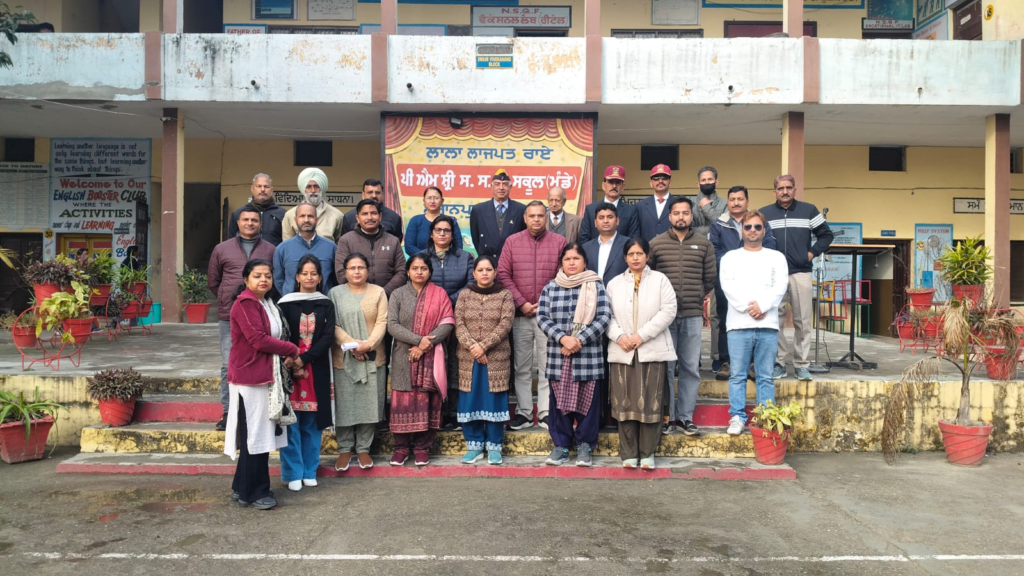
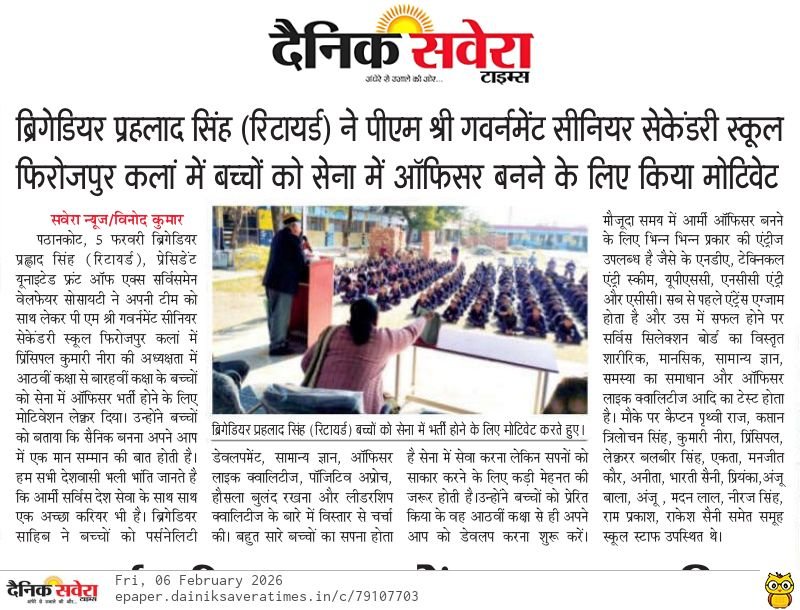
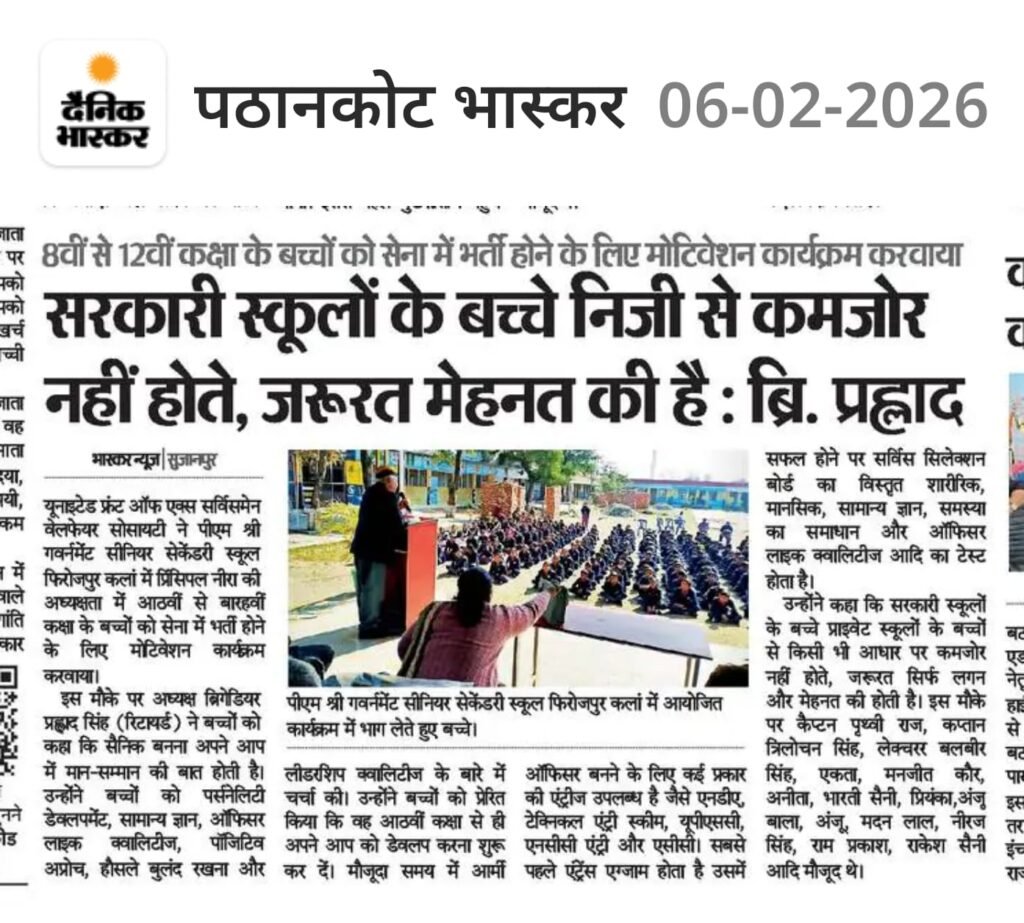
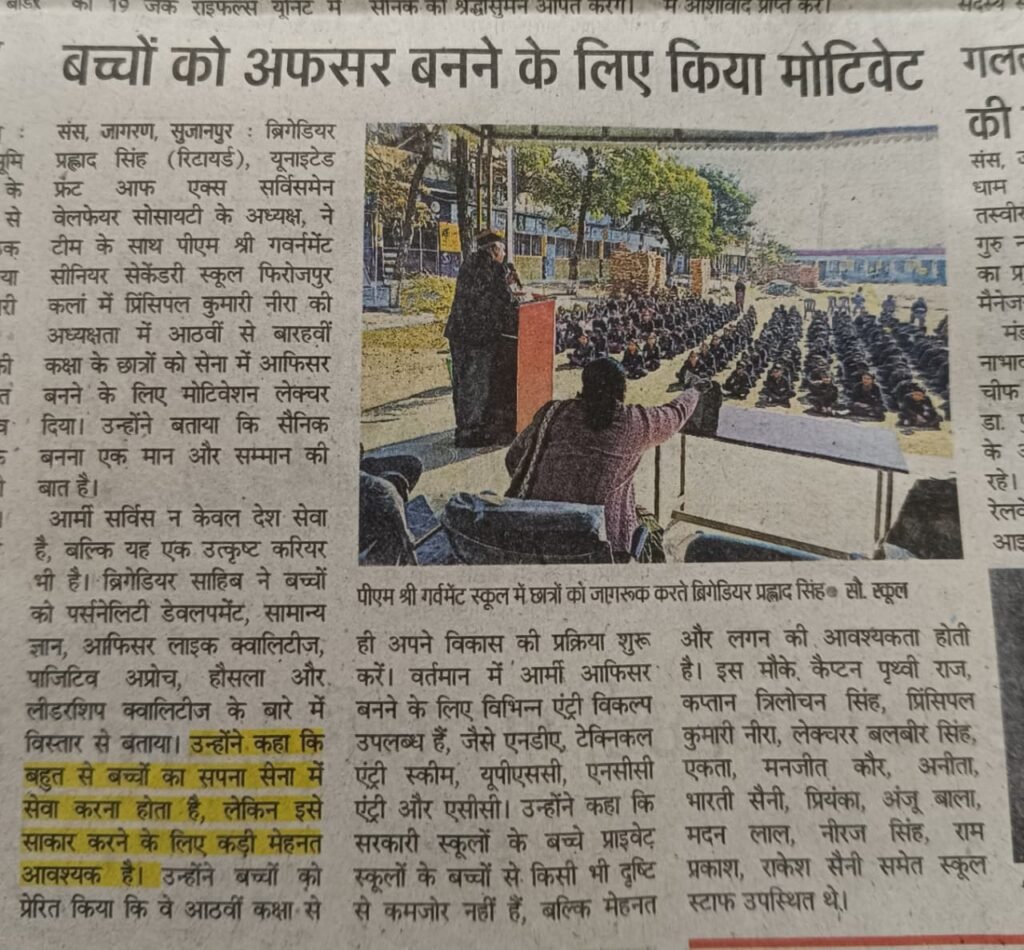
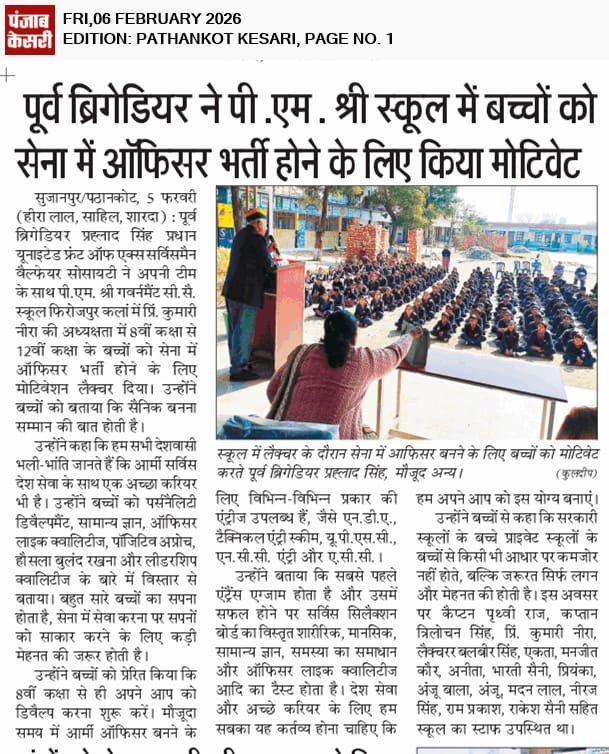
Chairman Sanjha Morcha Brig Prahlad Singh on motivational training to Surjanpur and Firozpur Kala Govt Sr Sec Schools students : How to Join Army as Officers
To facilitate progression of Agniveers who will be relieved after completing four years in defence forces, the Centre has amended rules tasking the Ministry of Home Affairs to coordinate activities related to their professional future.
The MHA will coordinate with various ministries and Central and state government departments to facilitate their career progression, said sources. According to rules, while the defence forces will retain 25 per cent of Agniveers, the remaining 75 per cent will be relieved from the service.
The sources said for coordinating and monitoring further progression of ex-Agniveers, an online portal would be set up.
The first batch of Agniveers had passed out in 2022 and were deployed across India in different units and formations.
Seventy-five per cent of Agniveers of the first batch would be eased out of services in 2026, thus necessitating their rehabilitation. The first batch had been trained and inducted in the armed forces in late 2022.
To ensure a stable future for ex-Agniveers, the MHA had last year decided to reserve 10 per cent of vacancies in CAPFs and Assam Rifles for them.
Now, the amendment made to the Government of India (Allocation of Business) Rules, 1961, will allow the MHA to facilitate the career progression of these ex-Agniveers.
State Stalwarts
DEFENCES FORCES RANKS
ARMY, NAVY, AIRFORCE RANKS
FORMATION SIGNS
FORMATION SIGNS
ALL HUMANS ARE ONE CREATED BY GOD
HINDUS,MUSLIMS,SIKHS.ISAI SAB HAI BHAI BHAI
CHIEF PATRON ALL INDIA SANJHA MORCHA
LT GEN JASBIR SINGH DHALIWAL, DOGRA
SENIOR PATRON ALL INDIA SANJHA MORCHA
MAJOR GEN HARVIJAY SINGH, SENA MEDAL ,corps of signals
.
.
PATRON ALL INDIA SANJHA MORCHA
MAJ GEN RAMINDER GORAYA , CORPS OF
sanjhamorcha303@gmail.com
PRESIDENT HARAYANA STATE CUM COORDINATOR ESM
BRIG DALJIT THUKRAL ,BENGAL SAPPERS
PRESIDENT TRICITY
COL B S BRAR (BHUPI BRAR)
PRESIDENT CHANDIGARH ZONE
COL SHANJIT SINGH BHULLAR
.
.
PRESIDENT PANCHKULA ZONE AND ZIRAKPUR
COL SWARAN SINGH
PRESIDENT SAS NAGAR (MOHALI)
COL BALBIR SINGH , ARTY
INDIAN DEFENCE FORCES
DEFENCE FORCES INTEGRATED LOGO
FORCES FLAGS
15 Th PRESIDENT OF INDIA SUPREME COMMANDER ARMED FORCES
Droupadi Murmu
DEFENCE MINISTER
Minister Rajnath Singh
CHIEF OF DEFENCE STAFF (2nd)
General Anil Chauhan PVSM UYSM AVSM SM VSM
INDIAN FORCES CHIEFS
CHIEF OF ARMY STAFF(29th)
General Upendra Dwivedi, PVSM, AVSM (30 Jun 2024 to Till Date)