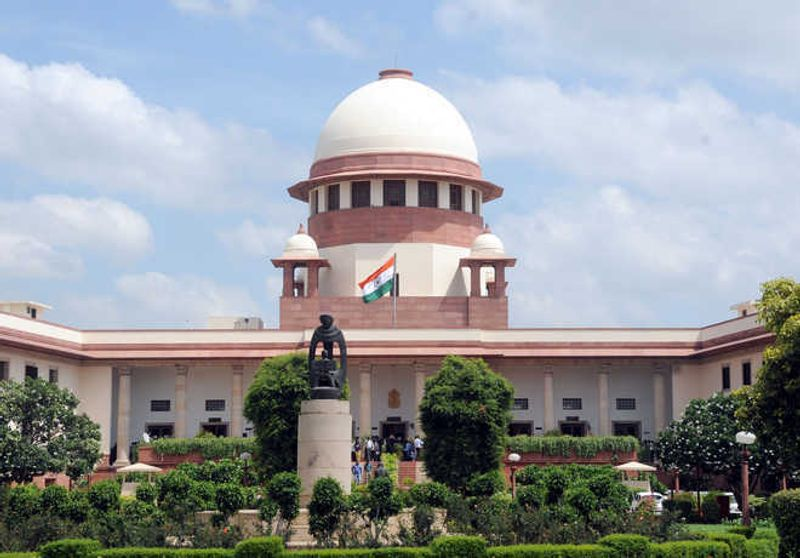
The officer, a fighter pilot, has claimed that the jawan had jumped from his gypsy and tried to run away and in the process fell in a cemented ditch and sustained fatal injuries
About three decades after an IAF Wing Commander was dismissed from service by a general court martial (GCM) on charges of murdering an Army jawan, he was reinstated in service earlier this year after being finally acquitted of all charges by the Supreme Court, but has been denied post-retirement notional promotion to higher ranks on the grounds that he did not meet the eligibility criteria.
“After his dismissal from service based on the conviction in the court martial till his reinstatement in May 2025, the petitioner had not discharged his duties, he had not earned his confidential reports (ACRs) and other qualitative requirement (QR) criteria required for promotion to various posts from Wing Commander to be promoted as Group Captain, thereafter as an Air Commodore, Air Vice Marshal and then as an Air Marshal,” the Armed Forces Tribunal Bench comprising Justice Rajendra Menon and Lt Gen CP Mohanty observed in their order passed recently.
The officer, a fighter pilot, has claimed that the jawan had jumped from his gypsy and tried to run away and in the process fell in a cemented ditch and sustained fatal injuries. The GCM held him guilty and cashiered from service and sentenced to five years of rigorous imprisonment, which was remitted by the Chief of Air Staff to two years in a civilian prison.
He challenged the GCM proceedings before the Delhi High Court in 1999 and the matter was transferred to the AFT on its formation. The AFT acquitted him of the charges in 2010 after holding that in the absence of evidence, the conviction was not sustainable. The AFT also directed that the officer would be deemed to be in service till the date of his retirement in the present rank and be entitled to pension thereafter.
The Tribunal’s orders were challenged by the Central Government before the Supreme Court, which in November 2024 saw no error in the Tribunal’s judgement and dismissed the government’s appeal. Thereafter orders were issued in May 2025 to reinstate him in service and initiate action for grating him consequential benefits.
Following this, he moved the AFT, contending that since he has been acquitted of all charges, he was entitled to be notionally promoted to the rank of Air Marshal and granted pay, allowances and all other benefits treating him as having superannuated from the post of Air Marshal.
“Admittedly he had not earned his ACRs and other QR criteria required by discharging duties in all these posts and therefor, applying the principle of law based on a judgement of the Delhi High Court, we see no reason to make any indulgence into the matter,” the Bench ruled.
The Bench also pointed out that the earlier orders were for reinstatement in the present rank and pension thereafter, with no orders on back wages. Further, there was nothing on record to indicate that his case for promotion, if any, was denied to him during the disciplinary process against him, and neither as the Supreme Court indicate any direction to grant him consequential benefits of promotion.
Ex-CAPF personnel seek justice for ITBP Dy Commandant who took his own life
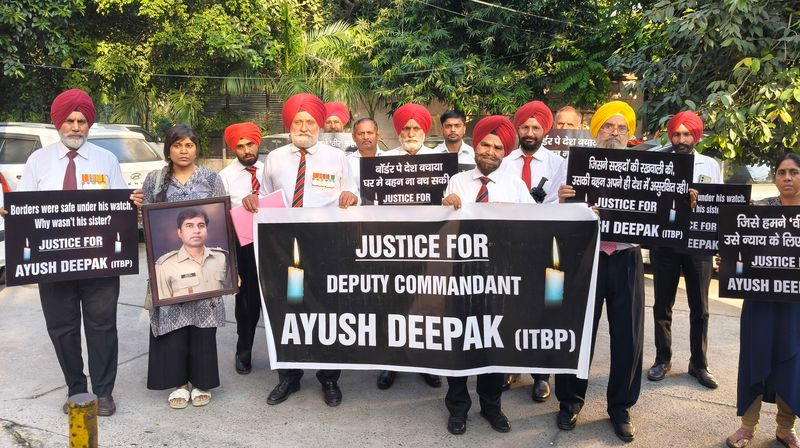
The Ex-Central Armed Police Force Personnel Welfare Association, along with the family of the late Ayush Deepak, Deputy Commandant of the Indo-Tibetan Border Police, organised a candle march in Jalandhar to express their outrage and grief over his tragic death by suicide. The candle march was held after a press conference which they addressed in Jalandhar.
The Association held a press conference at the Punjab Press Club in Jalandhar today to draw the attention of the public and the government to the tragic suicide of Ayush Deepak, Deputy Commandant of the Indo-Tibetan Border Police, who took his own life on October 3, at the ITBP Headquarters in Patiala.
According to information shared by the family, Ayush Deepak had repeatedly attempted to seek help from the Bihar Police for his sister, Jyoti Bharti, who as per his allegations, was tortured in custody by police officers at the Lalmitiya police station in Bhagalpur, Bihar. Despite his appeals, the family alleged, no timely or effective action was taken by the authorities concerned.
Deeply distressed by the humiliation of his sister and his inability to protect her, Deputy Commandant Ayush Deepak took the drastic step. A suicide note reportedly recovered from his residence blames an SHO of the Lalmitiya police station in Bhagalpur, for the tragic decision.
During a press conference, the deceased’s family members, including Jyoti Bharti (the victim), shared their harrowing ordeal. They appealed for immediate justice and accountability against the officials responsible for the harassment and negligence.
Pakistan amends Constitution; Asim Munir to become Chief of Defence Forces
Munir’s upcoming promotion follows his elevation as Field Marshal by the Pakistani government, days after the India-Pakistan May conflict
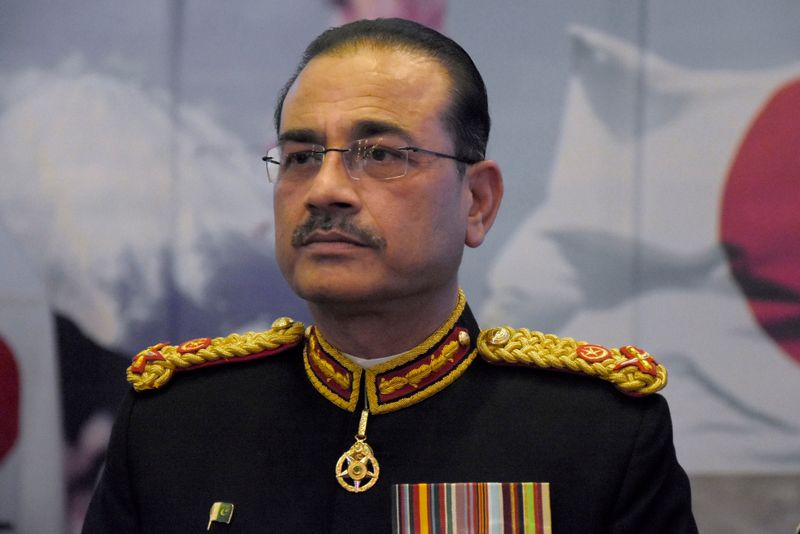
Pakistan Army Chief Asim Munir is likely to assume the newly created role of Chief of Defence Forces as part of Pakistan’s proposed 27th Constitutional Amendment, Dawn reported.
Munir’s upcoming promotion follows his elevation as Field Marshal by the Pakistani government, days after the India-Pakistan May conflict. The confrontation had ended after Pakistan’s Director General of Military Operations (DGMO) dialled his Indian counterpart with a plea to stop hostilities, after Indian forces peppered Pakistani airbases, damaged and destroyed radar systems, command centres, runways, hangars, and surface-to-air missile (SAM) systems, among other critical infrastructure.
The Pakistan federal cabinet approved the draft amendment, which was later tabled in the Senate on Saturday and referred to the National Assembly and Senate standing committees on law and justice for joint review, Dawn reported.
During discussions, according to Dawn, Law Minister Azam Nazeer Tarar clarified that the office of the Chairman Joint Chiefs of Staff Committee (CJCSC) would be abolished from November 27, once the current incumbent’s term ends.
Pakistan’s General Sahir Shamshad Mirza currently holds the office. During his clarification, Tarar referred to Mirza as a “hero” and stated that “Parliament cannot even consider depriving him of the role during his tenure.”
“It will be abolished after his appointment ends,” Tarar said.
He also stated that no new appointments would be made to the position since the Chief of Army Staff (COAS) would assume the role of Chief of Defence Forces, thereby consolidating the top command structure under Munir’s leadership, Dawn added.
The law minister further explained that the bill also formally acknowledges General Munir’s title of Field Marshal, describing it as “a title, not a rank, not an appointment as such.”
He noted that the title is honorary and for life, similar to distinctions like Marshal of the Air Force or Admiral of the Fleet in other countries.
“Where the federal government promotes a member of the armed forces to the rank of Field Marshal, Marshal of the Air Force or Admiral of the Fleet, such officer shall retain the rank, privileges and remain in uniform for life,” the minister added while reading from the bill.
He further said that it was made clear that only Parliament, not the Prime Minister, would have the power to revoke or cancel the title.
According to the Dawn report quoting the law minister, the Prime Minister would not have the authority to revoke or cancel the title of Field Marshal; that power would rest solely with the Pakistani Parliament.
The proposed amendment has also provoked a political debate.
The Pakistan Peoples Party (PPP) said it supports amendments to Article 243 related to the armed forces but opposes any rollback of provincial autonomy under the 18th Amendment.
The Jamiat Ulema-i-Islam-Fazl (JUI-F) and the opposition Pakistan Tehreek-e-Insaf (PTI) have also criticised the bill, with PTI calling it an “attack on Parliament”, Dawn reported.
As per Dawn’s report, the joint law committees of both Houses are set to reconvene on Sunday to continue deliberations on the proposed amendment.
Defence ministry to double DPSU R&D spend to Rs 32,766 crore in 5 years
The Ministry of Defence plans to double the pace of research and development (R&D) to be carried out by Defence Public Sector Undertakings (DPSUs). R&D is needed to master new technologies for indigenous military equipment. A sum of Rs 32,766 crore is proposed to be spent over the next five years only on R&D. The DPSUs manufacture planes, tanks, helicopters, electronic parts, missiles, artillery guns, ammunition, warships, rifles, radars and sensors.
The matter will be discussed on Monday when Defence Minister Rajnath Singh will undertake an annual performance review of the 16 DPSUs. After the review, a compilation of R&D projects carried out in the last 10 years and the plan for the next five years will be released.
In addition, the new R&D Manual of the aviation company Hindustan Aeronautics Limited (HAL) providing flexibility, speed, risk assessment and allocation in R&D projects will be unveiled.
Over the last 10 years, a total sum of Rs 30,952 crore has been invested in R&D by the 16 DPSUs. All DPSUs have prepared their fresh R&D roadmap for the next five years.
“The pace of R&D is now proposed to be doubled with projected expenditure of Rs 32,766 crore over the next five years,” the MoD said.
The Ministry of Defence said on Saturday that the year 2025 has been declared the ‘Year of Reforms’, underscoring the importance of developing new technology by DPSUs and the need for enhancing exports and indigenisation. The DPSUs have been asked to increase their investment and manpower for R&D.
While most of the R&D investment over the last 10 years was made by older DPSUs, notably HAL, Bharat Electronics Limited, and Bharat Dynamics Limited, the thrust on R&D is now spread across all DPSUs. In the next five years, the seven new DPSUs formed upon corporatisation of the Ordnance Factory Board will invest over Rs 3,000 crore for R&D, while defence shipyards have planned an investment of over Rs 1,300 crore.
The minister will also release a report on renewable energy titled ‘Swayam’. This report is the first‑ever attempt made under the aegis of the Department of Defence Production to compile the energy‑efficiency practices of all 16 DPSUs.
The performance of DPSUs in 2024‑25 has been commendable, the MoD said. The total turnover stood at Rs 1.08 lakh crore, up 15.4 per cent from that in 2023‑24. The DPSUs recorded a cumulative profit after tax in 2024‑25 of Rs 20,021 crore, registering a growth of 19.5 per cent over the previous year. Remarkably, in 2024‑25, DPSUs achieved an increase of 51 per cent in exports over the previous financial year.
The event will witness felicitation of various DPSUs for their notable achievements in different areas and the exchange of significant MoUs.
Infiltration bid foiled at LoC, 2 terrorists killed
Operation Pimple launched in Keran sector of Kupwara
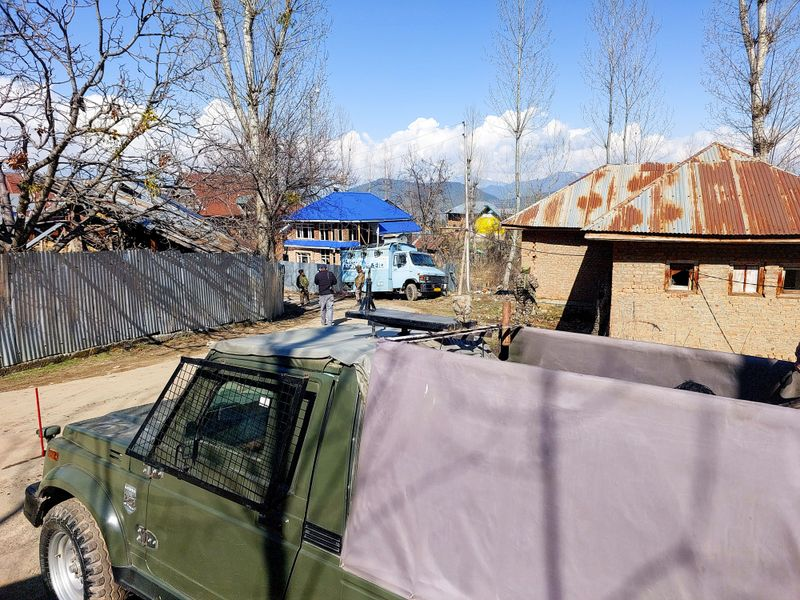
Two unidentified infiltrators were killed after security forces foiled an infiltration bid along the Line of Control in north Kashmir’s Kupwara district, officials said on Saturday.
The Army’s Srinagar-based Chinar Corps, in a post on X, said on Friday, based on a specific intelligence input about an infiltration attempt, a joint operation named “Operation Pimple” was launched in the Keran sector of Kupwara.
The Army said “alert troops spotted suspicious activity” and challenged the adversary, prompting the infiltrators to open indiscriminate fire. “Contact was established and terrorists trapped,” the Army said and later confirmed that two terrorists had been neutralised in the ongoing operation.
Army sources said the two slain terrorists had not been identified yet and a combing operation is still underway. “Search of the area is still in progress,” an official said.
Today’s infiltration bid comes as high-altitude passes are set to close due to heavy snowfall. Every winter, security forces say, militants increase infiltration attempts as heavy snowfall in the coming months makes movement difficult.
Last month, another infiltration attempt was foiled in Kupwara district. On October 14, the Army said two infiltrators were killed in the Machil sector.
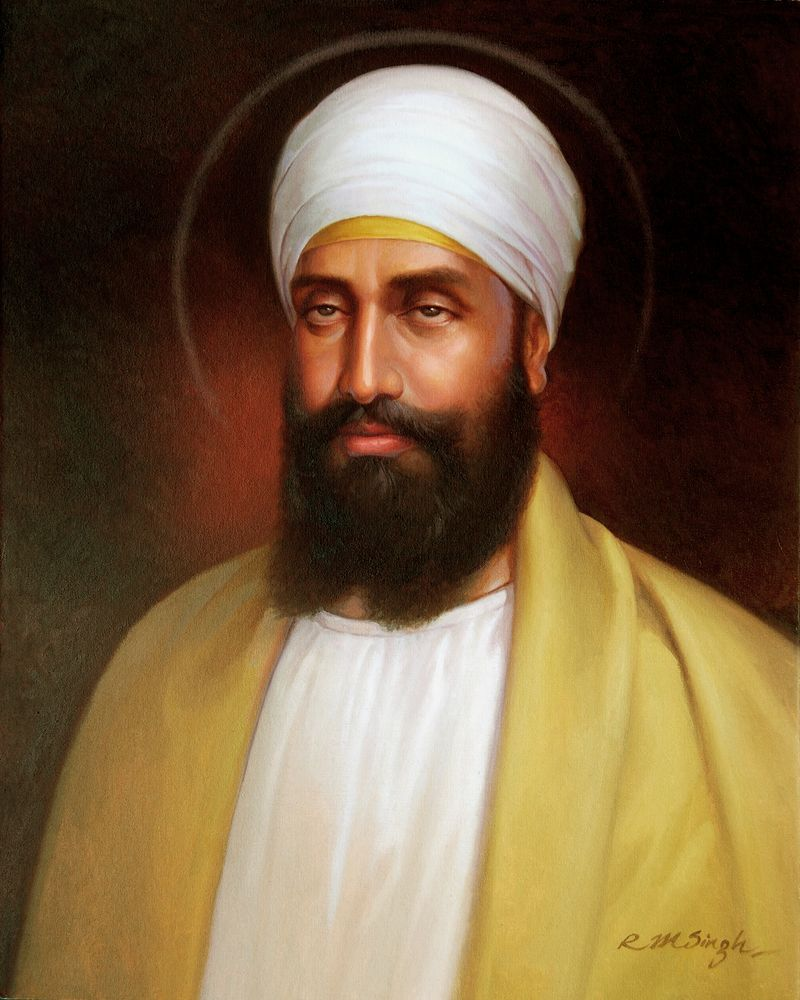
As we commemorate 350 years of Guru Tegh Bahadur’s martyrdom, it is essential to understand that his sacrifice gave people the right to choose their spiritual destiny, which became central to the Sikh ethos and what we now call human rights. He died protecting the principles of religious freedom & tolerance
A unique conflation of conviction, courage, and compassion led the head of a faith to give up his life advocating for the right of others to practise their faith. As we commemorate 350 years of Guru Tegh Bahadur’s martyrdom, we must understand more about him, his life, and his teachings.
Born in 1621 at Amritsar, he was the youngest son of Guru Hargobind and Mata Nanki. Gurdwara Guru Ka Mahal in Amritsar marks his birthplace. Tyag Mal, as he was known then, spent many years in Amritsar with his elder brothers Gurditta, Ani Rai, Atal Rai, Suraj Mal, and their sister, Viro.
One can easily imagine their childhood steeped in the Sikh ethos, since not only were they the children of the sixth Guru, but also the grandchildren of Guru Arjan Dev and Mata Ganga, with many cousins in the same age group. In time, the eldest, Gurditta, would become known for his scholarship as well as for being a formidable warrior who slayed a Mughal General in battle and later led the Udasi tradition (founded by Guru Nanak’s eldest son, Sri Chand), all before the age of 24, when he passed away.
The doctrine of Miri-Piri, established by his father, Guru Hargobind, shaped them. It is natural to expect that both traditional scholarship, which included a study of religious and literary texts (by Bhai Gurdas), and martial skills, such as archery and horsemanship (by Baba Buddha), were imparted to the siblings.
As was the tradition, Tyag Mal was married at a young age to Gujri, the daughter of Bhai Lal Chand of Kartarpur, in 1632. In the Battle of Kartarpur in 1635, Tyag Mal fought alongside his father and brothers against the forces of Painde Khan, a governor of Emperor Shah Jahan. His prowess earned him the sobriquet Tegh Bahadur (also spelt Bahadar).
Kiratpur became the next headquarters for the sixth Guru and his family’s home. Here, Tegh Bahadur spent nine years with his father, learning from scriptures, absorbing the teachings of the Guru and meditating.
Guru Hargobind, before his passing, asked his wife Mata Nanki, son Tegh Bahadur, and daughter-in-law Gujri to move to Bakala, which was Mata Nanki’s ancestral village. Bakala is located 40 km from Amritsar. At the time, Tegh Bahadur was 23. He attended to his worldly duties and meditated extensively.
Spiritual journeys
Entrusted with the responsibility of spreading Guru Nanak’s teachings by his father’s successor, Guru Har Rai, Tegh Bahadur travelled through what is now known as the Malwa region of Punjab, Haryana, Uttar Pradesh, and Bihar, meeting and guiding Sikhs. He was accompanied by his mother, wife, and some important Sikhs on this journey, which started in 1656 and lasted four years.
Many are familiar with the ‘Baba Bakala’ story. Guru Har Krishan, the eighth Guru, had pronounced his successor with the words “Baba Bakale” before he passed on. Sikhs looked for his successor at Bakala but found that there were many claimants. Of course, they were pretenders, but the question was, how to identify the real Guru? After approximately four months of confusion, a trader named Bhai Makhan Shah arrived in the town. While on a perilous sea voyage, he had vowed to present the Guru with 100 gold coins in case he survived the journey, and had come to Bakala to fulfil his promise.
He went around giving a token to various people, which they all readily accepted and blessed him. At the prompting of someone, he went to the person who was not claiming to be Guru, leading a pious life away from the cacophony. He met Tegh Bahadur, presented him with the token, only to be gently reminded that he was falling short of what he had promised. “Guru ladheo re,” he shouted, “I have found the Guru.” Later, a delegation of Sikhs from Delhi arrived in Bakala and Guru Tegh Bahadur was anointed.
The ninth Guru focused on spreading the teachings of his predecessors, and travelled extensively. He first concentrated on Punjab and, after buying land around the village of Makhowal, established Chak Nanki, named after his mother, which later came to be known as Anandpur.
The Guru had a special connection with the sangat of Patna. Acceding to their request, he set out east again from Chak Nanki, accompanied by a delegation of prominent Sikhs — including Bhai Mati Das and Bhai Sati Das, whose names are etched in the Sikh ethos — and his family. He attracted large crowds, which sparked unwanted attention from the imperial Mughal authorities. However, so widespread was his appeal that even those who were asked to censure him found ways to help him. The Guru reached Assam and Dhaka during this journey, and his son, Gobind Rai, was born in Patna in December 1666.
Bani Mahala 9
Guru Tegh Bahadur’s 57 slokas and 59 shabads are enshrined in Guru Granth Sahib. The late Prof Harbans Singh summed it up well: “Guru Tegh Bahadur’s entire bani is one sustained meditation on the human state. In image after image, it illustrates its imperfections and limitations. It reflects on the shackles that bind man and obstruct his moral and spiritual understanding. It is full of concern about his condition and indicates the way to amelioration.”
The Guru’s bani comes at the end of Guru Granth Sahib, just before Guru Arjan Dev’s Mundavni. Scholars widely accept that the Sloka Mahala 9 Bani was written in the last days of his life. The Guru chose to write them in Braj, and they are recited before the conclusion of any path or the recitation of Guru Granth Sahib.
In these slokas, the Guru employs a first-person introspective voice to question why the mind is led astray from remembering Ek Onkar, the One Transcendent God, and states that we are condemned to bondage by kam, krodh, moh, lobh, and hankar. It is through nam simran, when we sing praises of God and surrender to His will, that we can break free of the shackles that bind us to illusions.
Guru Tegh Bahadur set his shabads in 15 ragas. These shabads, like his slokas, teach us to be detached (virag) while attending to our worldly duties, to reflect on the impermanence of material gains, and to have the moral courage to face injustice without fear of death, which is inevitable.
Once we recognise it is inescapable, our relationship with it changes, and we seek to connect with Ek Onkar and His creations. The Guru’s bani teaches us to foster kinship with fellow humans, even as it teaches us to break free of material and transient illusions so that we can merge with the transcendental.
Martyrdom
Guru Tegh Bahadur’s growing popularity and influence were inimical to many in the Mughal empire, and there are instances when the emperor of the day was incited against him. He successfully resolved the situations with diplomacy and counted on some important well-wishers in the Mughal court, who had become more hostile after Aurangzeb ascended to the throne.
The Guru completed a long trip east with his Sikhs, meeting sangats. Historical gurdwaras mark the places where he went on this eight-year journey, after which he returned to Chak Nanki in 1673. He would spend the next two years in Malwa, preaching and consolidating the sangats in Punjab.
In 1675, a delegation arrived from Kashmir at Chak Nanki. The Kashmiri Pandits, led by Kirpa Ram, had come to the Guru because they faced immense pressure from the imperial governor of Kashmir, Iftikhar Khan, to convert to Islam.
The Guru decided to lay down his life to uphold the right of people to their beliefs, and he told the delegation to tell the Mughal emperor that if he (the Guru) converted to Islam, they would do so voluntarily. The meaning of the message was clear to everyone, and there was dismay at the Guru’s impending journey to Delhi.
In Guru Tegh Bahadur’s presence, ceremonies were carried out consecrating Gobind Rai as the 10th Guru. Then, Guru Tegh Bahadur set out from Anandpur, prayed to Akalpurkh, and took leave of his family and devoted Sikhs before embarking on what would be his final journey.
Bhai Mati Das, Bhai Sati Das and Bhai Dyal Das, his devoted disciples, accompanied him. He was arrested on way to Delhi and subjected to much hardship and torture as he refused to accept Islam. The Guru’s companions were also given the choice of conversion or death — they were horrifically tortured and killed in a bid to put even more pressure on Guru Tegh Bahadur.
Guru Tegh Bahadur attained martyrdom at Chandni Chowk in November 1675. (The martyrdom day is being observed on November 24). A storm arose in Delhi, and under its cover, the Guru’s body and his head were picked up by Bhai Lakhi Shah and Bhai Jaita.
Gurdwara Sis Ganj Sahib in Delhi (top) is built at the site where Guru Tegh Bahadur attained martyrdom. Photo by the writer
Gurdwara Sis Ganj stands where at the age of 54 he gave his life for the defence of dharma, faith and righteousness.
Gurdwara Rakab Ganj stands where the body was cremated by Bhai Lakhi Shah by burning his house, and Gurdwara Sis Ganj in Anandpur stands where the young Gobind Rai cremated his father’s head, after Bhai Jaita brought it from Delhi.
Freedom of conscience
The martyrdom of Guru Tegh Bahadur transformed Sikh fundamentals. Guru Gobind Singh’s court poet Sainapati called him ‘Srishti di chadar’ (protector of humanity). Human beings’ freedom of conscience and their right to choose their spiritual destiny became central to the Sikh ethos, as did what we now call human rights.
Guru Gobind Singh set out on a path that would create the Khalsa and built a cadre of Sikhs ready to confront hegemonic forces — religious or political.
We often fall into the trap of limiting our understanding of Guru Tegh Bahadur to his martyrdom. He was humble in his demeanour and firm in his convictions. He was forgiving, even towards the person who sought to have him assassinated. He was a warrior who helped forge peace among warring factions in Assam. He founded the town of Anandpur and travelled far and wide to spread the teachings of Guru Nanak even before he became the ninth Guru. His bani gives the strength and sagacity to accept death as a part of our existence, and to focus on the Divine, to attend to our worldly duties while recognising the transitory nature of material goods.
Guru Tegh Bahadur sought to protect religious freedom. His fight was against tyranny, and against religious intolerance — a matter of concern in today’s India, indeed across the world.
We mark the birth anniversary of Guru Nanak Dev and the martyrdom of Guru Tegh Bahadur within days of each other. The first and ninth Gurus, through their spiritual teachings and commitment to speaking truth to power, whether it be Babar or Aurangzeb, set an example that shows us how to live our lives.
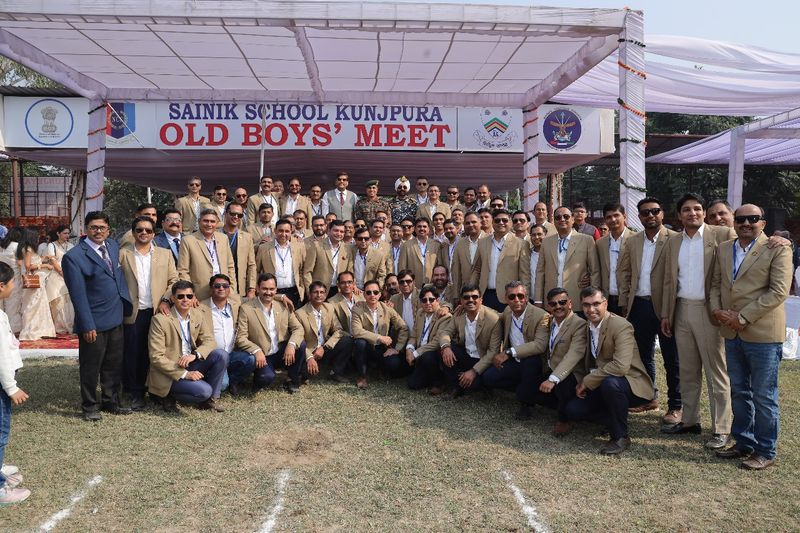
Sainik School, Kunjpura, hosted the Old Boys’ Meet 2025 on Saturday with enthusiasm and pride, as Kunjeyans from across the country returned to their alma mater to relive cherished memories and renew bonds of camaraderie.
The event was graced by Maj Gen Mukesh Bhanwala, ADG Ops Logistics, Army Headquarters, New Delhi; Maj Gen Bishamber Dayal (Retd), VSM, President, OBA; and Rajesh Kumar Sangwan, General Secretary, OBA, along with several distinguished alumni, former teachers and staff members.
The forenoon featured a Horse Show by cadets, a paramotor display, a drone display, and a tug of war, adding colour and excitement to the celebrations
On this occasion, a 76-ft High Mast National Flag was inaugurated and hoisted at the school in the presence of the Kunjeyan fraternity and Maj Gen Ashim Kohli (Retd), CEO, Flag Foundation of India, symbolising the spirit of patriotism and unity.
The Silver Jubilee Batch felicitated former teachers as well as current academic and administrative staff for their devoted service. The day concluded with a vibrant variety entertainment programme presented by cadets and attended by all dignitaries, alumni, staff and families — marking a memorable finale to the reunion.
Row over Punjabi University’s Rs 53K ‘golden chance’ scheme
Students, teachers term it ‘golden chance’ for varsity not students
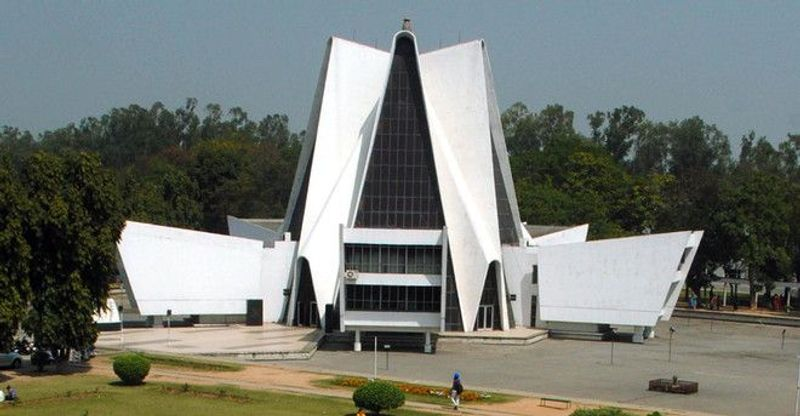
To commemorate the 350th martyrdom anniversary of Guru Teg Bahadur, Punjabi University, Patiala, has announced a “golden chance” for the students who were unable to complete their degrees for various reasons.
However, the fee being charged to avail the opportunity has sparked strong criticism among students and teachers alike.
Under the scheme, the university has fixed an examination fee of Rs 50,000 plus Rs 3,000 in taxes, drawing flak for what is being termed an exorbitant charge.
The Association of United College Teachers (AUCT) and student organisations have accused the university of exploiting students in the name of the Guru’s commemoration.
AUCT president Prof Tarun Ghai condemned the move, saying, “The recent circular issued by Punjabi University to mark the 350th martyrdom anniversary of Guru Teg Bahadur, announcing a ‘golden chance’ for students to appear in their supplementary or improvement examinations with a fee of Rs 53,000, is nothing more than a money-making move. We strongly oppose it and demand that the fee be kept nominal for students. That would be a real tribute to Guru Teg Bahadur.”
The university authorities, however, have justified the fee structure, maintaining that the “golden chance” scheme is not new and that the same fee had been in place for several years.
The last date to apply is November 15. Exams for odd semesters (first, third, and fifth) will be held in December, while even semester (second, fourth, sixth) exams will take place in May 2026.
This opportunity is open only for courses under the semester system introduced after May 2011. The exams will follow the current syllabus and will be conducted exclusively at Patiala. The university has clarified that the fee once paid will not be refunded under any circumstances.
Gurdas Singh, district president, Punjab Student Union, termed the move “exploitative” and “insensitive”.
“This is not a ‘golden chance’ for students, but for the university itself,” they said.
Gurdas Singh said, “Instead of earning money in the name of Guru Sahib, the university should allow students to complete their degrees free of cost. The administration must roll back the decision so that more students can genuinely benefit from this opportunity and secure a better future.”
Women don’t need saving or spotlighting anymore. They need space — to play, to fail, to rise
If there’s one word that will define 2025, it’s women. Not as a label or a cause, but as an unstoppable force reshaping every field — from sport to startups, from storytelling to leadership. Everywhere you look, women are no longer waiting to be invited to the table. They are building their own, often on their own terms.
Kiran Manral’s new book ‘The Game Changers’ arrives right at the cusp of this shift. It’s not a feminist call to arms or a glossy self-help guide. It’s a mirror — held up to the messy, magnificent, multi-tasking Indian woman who refuses to fit into a box. She is ambitious yet empathetic, exhausted yet unyielding, flawed yet unflinching. And in that contradiction lies her quiet revolution.
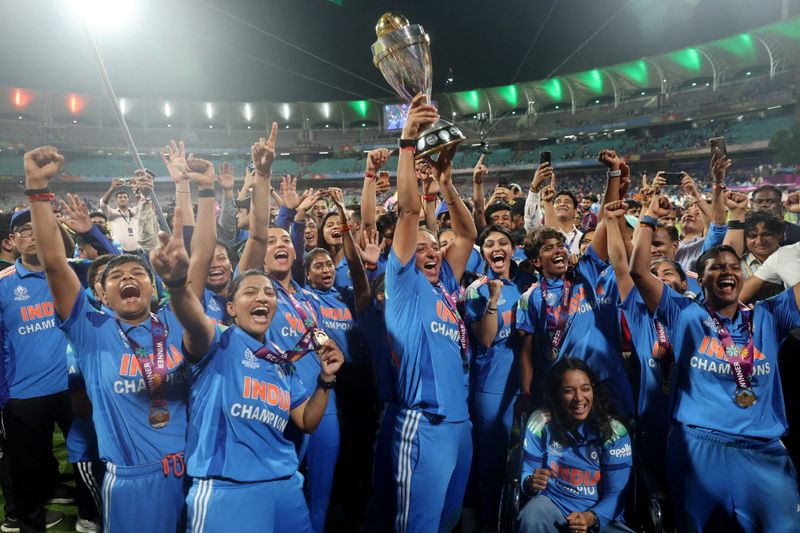
Consider women’s cricket. Once dismissed as a novelty, it has become impossible to ignore. Packed stadiums, endorsement deals, live telecasts — it’s not just a sporting moment, it’s a cultural one. When the Indian women’s team won, the triumph reverberated far beyond the boundary. It told every girl that the bat and the briefcase, the pitch and the boardroom, are all fair game.
With her new book, Manral captures the moment women have stopped asking for permission — to lead, to play, to build, to simply be. She draws a sharp, almost poetic, parallel between the women who play and the women who build. The cricketer and the entrepreneur share the same DNA: both have had to fight for visibility, credibility, and access to opportunity. Both have faced scepticism disguised as advice. And both, in their own quiet way, are redrawing the map of aspiration.
But what makes Manral’s writing powerful is that she refuses to paint these women as superheroes. She doesn’t romanticise their struggle or sanctify their success. She knows revolutions rarely come with banners and hashtags. They unfold in kitchens, in WhatsApp groups, in cramped offices and late-night commutes. They take shape when a woman asks for a pay raise, when she walks out of a bad marriage, when she starts a business from her bedroom. They are built on the everyday courage of choosing oneself.
Reading Manral, I am reminded of how the modern Indian woman doesn’t want to be glorified or victimised — she just wants to be seen. She can lead a meeting and forget her child’s tiffin. She can smash a century and still check in on her parents. Her power lies not in perfection but in persistence. Her feminism is not angry — it’s pragmatic, lived, and often laced with humour.
The women of 2025 aren’t asking to “lean in” to systems built for men. They are redesigning those systems entirely. They’re rejecting the old hierarchies that celebrated burnout and bravado, the super-woman, and offering a new template grounded in empathy, adaptability, and collaboration. The traits once dismissed as “soft” are now the ones saving businesses, democracies, and relationships.
This is what Manral calls the “feminine future”. It’s not about flipping the patriarchy and placing women at the top — it’s about rebuilding power itself. It’s about leading without ego, nurturing without guilt, winning without cruelty. It’s about saying no without apology.
And that’s why her book feels like the story of our times. It’s a chronicle of women who no longer fit neatly into stereotypes: the homemaker who invests in a startup, the founder who becomes a mother on her own terms, the athlete who turns down a movie deal to mentor the next generation. These are the women who will define this decade.
In a culture obsessed with external validation, there’s something radical about being enough for yourself. That, ultimately, is Manral’s message. Women don’t need saving. They don’t need spotlights. They just need space — to play, to fail, to rebuild, to thrive.
The shift is everywhere if you know where to look: in the startup founder disrupting industries; in the athlete winning hearts; in the storyteller like Manral herself, who is documenting the zeitgeist with a mix of mischief and gravitas. Together, they form the mosaic of modern India — a country finally learning to see its women not as symbols or slogans, but as forces of transformation.
Women don’t just represent the future, they are the future. And in 2025, that future is already here — fearless, funny, and unapologetically feminine.
Because the future isn’t female — it’s feminine. And that’s what makes it so revolutionary.
— The writer is an acclaimed author
Separate UT in Manipur not feasible: MHA to Kuki groups
During two-day talks with tribal leaders, Centre says current policy doesn’t permit it
The Centre has indicated to Kuki-Zo groups under the Suspension of Operations (SoO) agreements that their demand for a separate union territory with a legislative Assembly is not feasible.
This was conveyed to representatives of the Kuki National Organisation (KNO) and the United People’s Front (UPF), the two groups part of the SoO, during a two-day talks with the Ministry of Home Affairs (MHA) on November 6 and 7 in New Delhi.
The discussions primarily focused on the Kuki-Zo community’s core political demand for the creation of a UT with a legislative Assembly. MHA officers reiterated that though the Centre was sensitive to the plight of the Kuki-Zo people, the current policy did not support creation of new UT, sources privy to developments said. The officials are learnt to have conveyed to the representatives, the need for consultations with other communities in Manipur.
The KNO-UPF delegation urged the Centre to reconsider its position in view of the fact that the “Constitution is above the government policy”. The delegation also pointed out that the ground zero situation in the state made coexistence impossible between the Kuki-Zo and Meitei communities, requiring the need to invoke necessary provisions of the Constitution to secure Kuki-Zo lives and property.
The talks also covered key community concerns, including issues of land, forests, customs and development, along with mutual confidence-building measures to be pursued alongside the regular political dialogue.
The SoO leaders urged the MHA to take concrete steps to protect traditional tribal land rights and uphold the authority of chiefs, who traditionally manage land and customary matters in the hill areas.
They also urged the government to remove administrative hurdles related to the succession of village chiefs after their demise and to simplify procedures for land registration and deed processing, which currently require travel to Imphal, an area that has become inaccessible and unsafe for the Kuki-Zo community since the outbreak of ethnic violence, the sources indicated.
The severe problems faced by internally displaced persons (IDPs) were also discussed at length in respect to their rehabilitation being expedited with essential security and amenities ensured by the government. The first day of the talks reviewed the implementation of the September 4 tripartite agreement signed between the MHA, the Manipur Government and the SoO groups.
The Kuki-Zo representatives highlighted the breakdown of governance and law and order in Kuki-Zo inhabited areas following the ethnic conflict, calling for an alternative administrative arrangement to ensure security and development.
On the second day, deliberations centred on the Kuki-Zo demand for a UT with legislature. The delegations reiterated that “coexistence under the present Manipur state administrative structure is no longer possible” following what they described as “ethnic cleansing” beginning on May 3, 2023, in Imphal.
The Kuki-Zo leaders argued that their demand was both historically and constitutionally justified. They pointed out that before the Independence, the Kuki-Zo Hills were never under the Manipur State Durbar’s control and were classified as an “excluded area” under the Government of India Act, 1935, administered directly by the British Political Agent, not the Meitei monarchy. They further explained that the tribal chief-owned land tenure system was fundamentally incompatible with the state-controlled land model in the valley, reflecting historically distinct administrative systems.
State Stalwarts
DEFENCES FORCES RANKS
ARMY, NAVY, AIRFORCE RANKS
FORMATION SIGNS
FORMATION SIGNS
ALL HUMANS ARE ONE CREATED BY GOD
HINDUS,MUSLIMS,SIKHS.ISAI SAB HAI BHAI BHAI
CHIEF PATRON ALL INDIA SANJHA MORCHA
LT GEN JASBIR SINGH DHALIWAL, DOGRA
SENIOR PATRON ALL INDIA SANJHA MORCHA
MAJOR GEN HARVIJAY SINGH, SENA MEDAL ,corps of signals
.
.
PATRON ALL INDIA SANJHA MORCHA
MAJ GEN RAMINDER GORAYA , CORPS OF
sanjhamorcha303@gmail.com
PRESIDENT HARAYANA STATE CUM COORDINATOR ESM
BRIG DALJIT THUKRAL ,BENGAL SAPPERS
PRESIDENT TRICITY
COL B S BRAR (BHUPI BRAR)
PRESIDENT CHANDIGARH ZONE
COL SHANJIT SINGH BHULLAR
.
.
PRESIDENT PANCHKULA ZONE AND ZIRAKPUR
COL SWARAN SINGH
PRESIDENT SAS NAGAR (MOHALI)
COL BALBIR SINGH , ARTY
INDIAN DEFENCE FORCES
DEFENCE FORCES INTEGRATED LOGO
FORCES FLAGS
15 Th PRESIDENT OF INDIA SUPREME COMMANDER ARMED FORCES
Droupadi Murmu
DEFENCE MINISTER
Minister Rajnath Singh
CHIEF OF DEFENCE STAFF (2nd)
General Anil Chauhan PVSM UYSM AVSM SM VSM
INDIAN FORCES CHIEFS
CHIEF OF ARMY STAFF(29th)
General Upendra Dwivedi, PVSM, AVSM (30 Jun 2024 to Till Date)