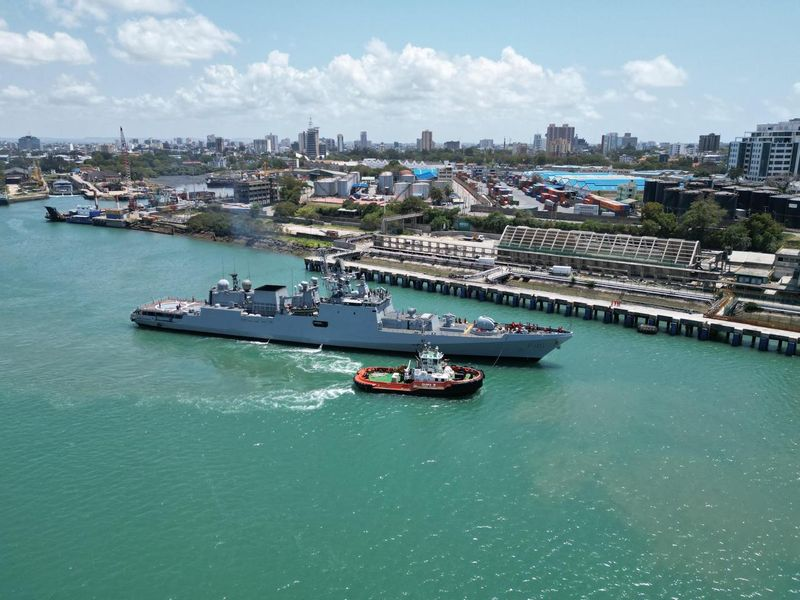
The navies of India, Japan, Australia and the US took part in the multi-nation annual maritime exercise, named Malabar, which started on Monday.
The nine-day exercise from November 10 to 18 is being hosted by the US, at Guam island, one of its military bases in the western-part of the Pacific Ocean.
Indian Navy warship INS Sahyadri has reached Guam, the Indian Navy had said on Sunday. The drills kick off with a harbour phase that would feature operational planning and discussions, alignment on communication protocols, familiarisation visits between participating nations and sports fixtures.
Following the harbour phase, all participating units will proceed for a sea phase — during which ships and aircraft will take part in naval drills, focusing on joint fleet operations, anti-submarine warfare, gun firing and flying operations.
The exercise gains importance as all the four-countries operate the same maritime surveillance planes, which are also capable of hunting submarines. Thee sensors and radars on these planes can generate a common ‘picture’ at sea. The four also have other common platforms in their arsenal, which can enable seamless communication with each other.
Security personnel and Naxalites exchange fire in Chhattisgarh forest
Exchange of fire started on Tuesday morning in the Indravati National Park forest
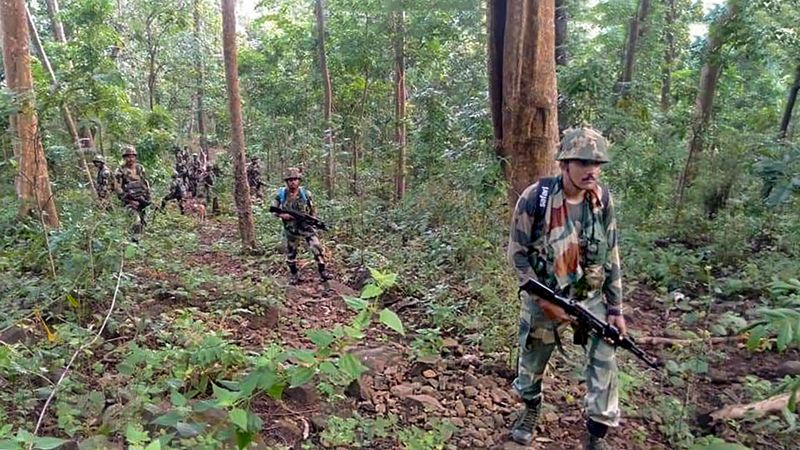
An encounter broke out between security personnel and Naxalites in Chhattisgarh’s Bijapur district on Tuesday, a police official said.
The exchange of fire started this morning in the Indravati National Park forest when a team of security personnel was out on an anti-Naxal operation based on inputs about the presence of senior Maoist cadres, he added.
ISRO successfully tests main parachutes for Gaganyaan’s crew module
The test evaluated the system’s structural integrity and load distribution under asymmetric disreefing conditions
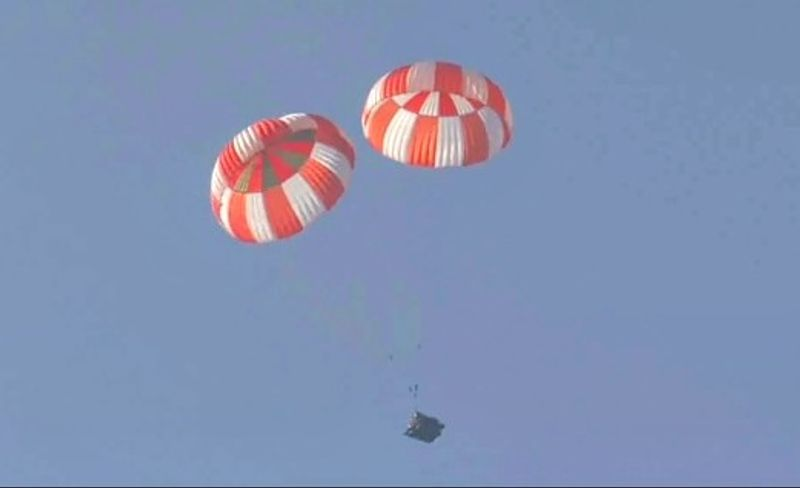
ISRO on Tuesday said it has successfully conducted an important test on main parachutes for the Gaganyaan Crew Module at the Babina Field Firing Range (BFFR) in Uttar Pradesh’s Jhansi on November 3.
The Indian space agency said this test is part of the ongoing series of Integrated Main Parachute Airdrop Tests (IMAT) for the qualification of the parachute system for the Gaganyaan mission.
The Gaganyaan mission is India’s first human spaceflight programme, aiming to send a three-member crew on a three-day mission to space and return them safely to Earth.
As part of the mission, ISRO is developing a human-rated launch vehicle, an orbital module, and a crew-escape system. The programme includes prior unmanned missions to test critical systems before the first manned flight.
In a statement, ISRO said that for the Gaganyaan Crew Module, the parachute system comprises a total of 10 parachutes of four types. It added that the descent sequence begins with two apex cover separation parachutes that remove the protective cover of the parachute compartment, followed by two drogue parachutes (small powerful parachute deployed from a fast moving object to slow it down) that stabilise and decelerate the module.
Upon release of the drogues, three pilot parachutes are deployed to extract three main parachutes, which further slow down the Crew Module to ensure a safe touchdown, ISRO said.
“The system is designed with redundancy—two of the three main parachutes are sufficient to achieve a safe landing. The main parachutes of the Gaganyaan mission deploy in a step-by-step process known as reefed inflation,” ISRO said.
In this process, the parachute first opens partially, which is called reefing, and then fully opens after a predetermined period of time, known as disreefing. This process is carried out using pyro device, it explained.
A pyro device, short for pyrotechnic device, is any mechanism that uses controlled combustion or an explosive chemical reaction to perform a specific function, usually to generate gas, pressure, heat, light, or motion.
“In this test, one of the possible extreme scenarios of delay in the disreefing between the two main parachutes was successfully demonstrated validating the main parachutes for the maximum design,” ISRO said.
“The test evaluated the system’s structural integrity and load distribution under asymmetric disreefing conditions—one of the most critical load scenarios expected during actual mission descent,” the agency said.
A simulated mass equivalent to the Crew Module was dropped from an altitude of 2.5 km using the Indian Air Force’s IL-76 aircraft, it said, adding the parachute system deployed as planned and the sequence was executed flawlessly, and the test article achieved a stable descent and soft landing, validating the robustness of the parachute design.
“The successful completion of this test marks another significant step toward qualifying the parachute system for human spaceflight, with active participation from the Vikram Sarabhai Space Centre (VSSC), ISRO, Aerial Delivery Research and Development Establishment (ADRDE), DRDO, Indian Air Force and the Indian Army,” ISRO said.
The exercise will be conducted in the airspace of Haryana, Punjab, Himachal Pradesh and Jammu and Kashmir
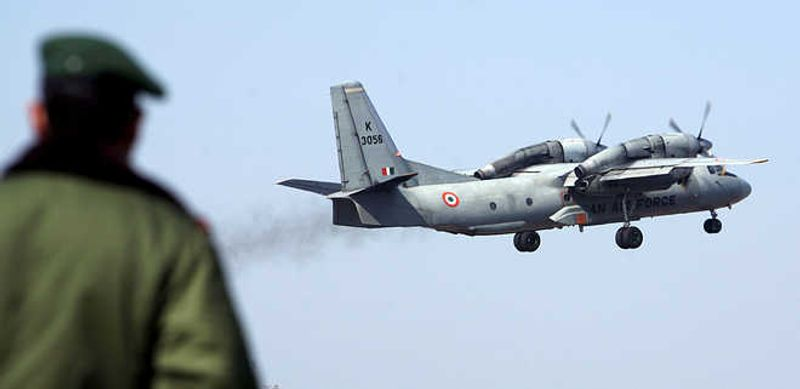
The Indian Air Force will conduct a two-day air exercise starting tomorrow over northwestern India. The exercise will be conducted in the airspace of Haryana, Punjab, Himachal Pradesh and Jammu and Kashmir.
The region has important airbases, including Chandigarh, Ambala, Halwara, Adampur, Pathankot and Srinagar, where air defence units such as S-400 are located.
A notice to airmen (NOTAM) has been issued for the 48-hour exercise from November 12 to 14. It is likely to include fighter jet operations. Fighter jets such as Rafale, Sukhoi-30MKI and MiG-29 are based at these airbases.
During Operation Sindoor (May 7-10), these bases were actively involved in launching attacks on Pakistan and defending against incoming enemy missiles.
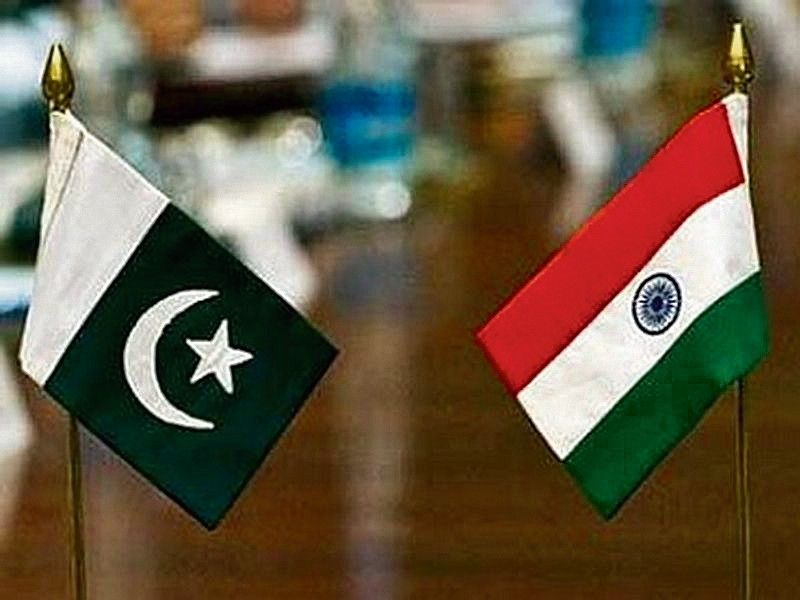
As per sources, Pakistan’s air defence systems have been activated and are closely monitoring the airspace along the Indian border
Pakistan has issued a notice to airmen (NOTAM) and placed its armed forces on high alert after the deadly car explosion near the Red Fort on Monday that killed several people.
NOTAM, effective from November 11 to 12, imposes restrictions on air traffic and signals a significant rise in security preparedness. Officials in Islamabad have also declared a “red alert” across all airbases and airfields after intelligence warnings suggested the possibility of retaliatory action or cross-border tension with India.
As per sources, Pakistan’s air defence systems have been activated and are closely monitoring the airspace along the Indian border.
“The country’s army, navy, and air force have been directed to remain in full readiness, with the central command ordering all military branches to track developments and prepare for any contingency,” according to reports.
“We have to develop the capability to intercept ballistic and hypersonic missiles”
Stating that the quality of airpower will determine victory or defeat in any future fight, Former General Officer Commanding-in-Chief, Army Training Command, Lt Gen Raj Shukla said that towards this end, it was imperative to integrate manned aircraft with unmanned platforms, space, cyber and electronic warfare (EW) capability.
“In order to achieve air superiority, the adversary kill chains that we have to defeat are very complex. And the instruments to defeat these enemy kill chains are EW, space, cyber, information, dominance, stealth and now AI,” he said while speaking at the Military Literature Festival in Chandigarh on Friday. AI is giving you automated threat detection, automated identification.
“Just look at the electromagnetic spectrum. It consists of radars, stealth, jamming. You have to protect the spectrum and you have to attack it. And this is exactly what happened in Operation Sindoor, which was a resounding victory for India. It was the system level integration which was important,” he said.
Stating that platform level integration was very important, he said that without these “wraparound technologies”, manned aircraft would be of very little utility in modern world. “If we do not invest 50 to 60 per cent of our budget in these wraparound technologies, these piloted platforms will not be very effective,” he said.
“We have to make a decisive push towards system level integration. And therefore, if we are serious about theatre commands, the first two commands which must be given combatant command status and upgraded are space and cyber. It is so obvious because their capacities they will lubricate air power and everything else,” he said.
Air power, he said, has to play out in theatrised structures, because theatrisation is not about air power. It’s about giving theatre commanders a quasi-diplomatic role, shaping areas beyond you. Theatrisation is a far bigger argument and air power is phenomenally important, he added.
Referring to the air strikes by the Israel and the US on Iran a few months ago, he said that such missions were not possible without stealth, EW and space capabilities. “These are not non-kinetic elements. They are deadlier than kinetic. And when everything comes together, you have the classical dismantling of integrated air defence and command and control nodes.
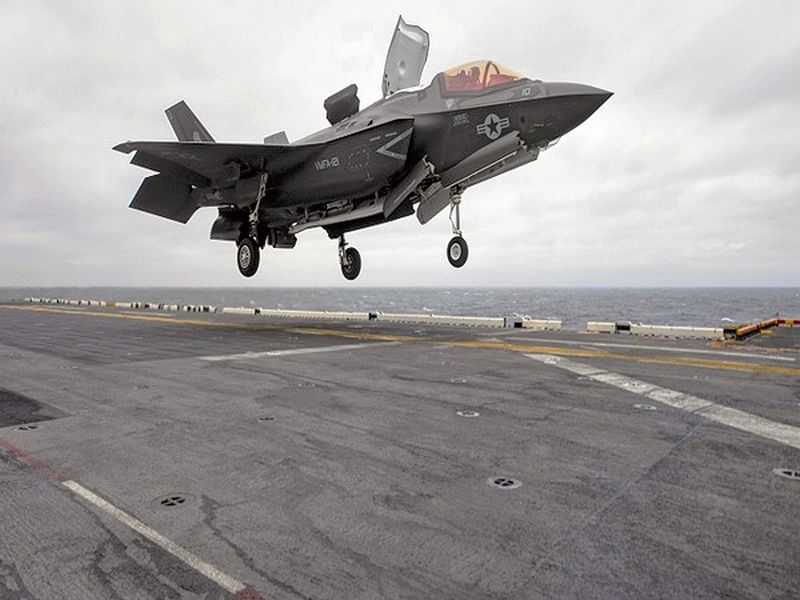
Pointing out that the missions were led by the F-35 stealth fighters, Lt Gen Shukla said that without stealth capability, you simply cannot operate in contested envelopes. So acquisition of such stealth should be our foremost priority. “Stealth was beating air defence hands down. Stealth, survivability and whatever goes around it, signature management, electronic warfare, tactic techniques and procedures,” he said. “We have to start thinking of long growing stealth. 25 years from now that can strike the Chinese mainland,” he added.
Lt Gen Shukla said that the Chinese have a formidable rocket missile force and our cities are at risk. “Space is supremely important to detect missile launches and we have to develop the capability to intercept ballistic and hypersonic missiles.” He said that we need dedicated military satellites, not just for imagery and communications, but also for EW, for cyber warfare.
MLF:Indian Navy ready to deter, but country lacks full maritime capability: Ex-Navy chief
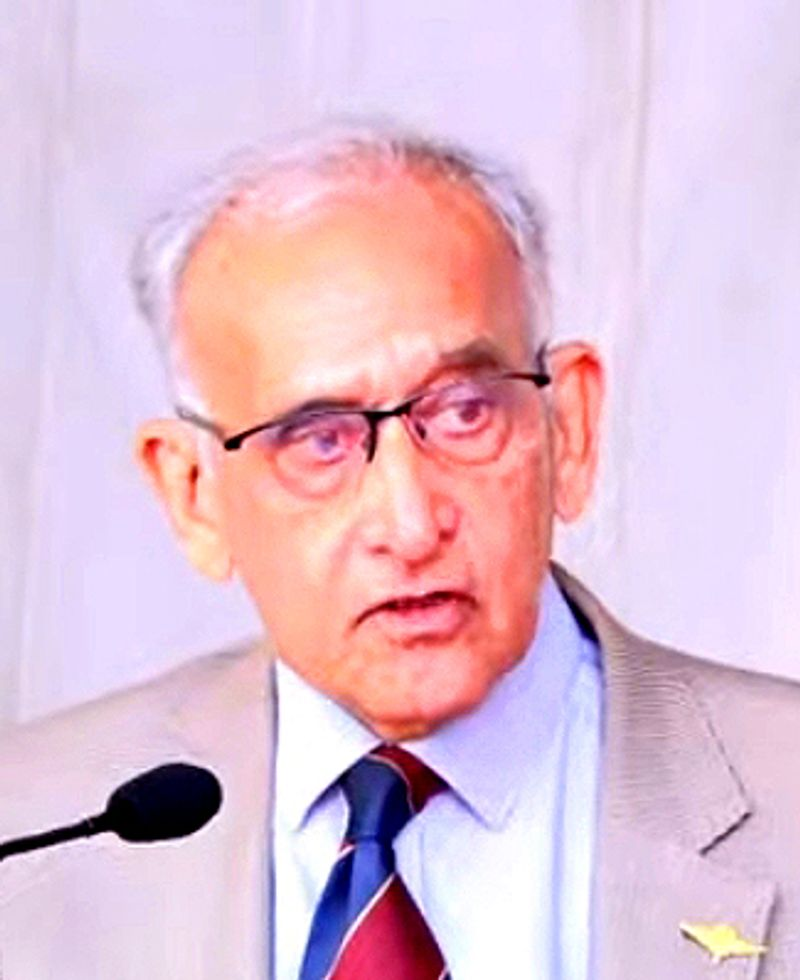
A navy is only a small component of a nation’s maritime power and we have neglected and overlooked it, said Admiral Arun Prakash
Stressing upon the importance of developing India’s maritime prowess to meet the challenges that lie ahead, Admiral Arun Prakash, former chief of Naval Staff said that the Navy was the only force having an advantage over India’s principal adversaries in the Indian Ocean region.
“In my own perception, if there is a two-front war or two-and-a-half-front war, which means a nexus between China and Pakistan, then the best that our gallant Army and very capable Air Force can do is to hold them there, create a stalemate. I doubt if we can go anything beyond that,” he said while speaking at Military Literature Festival in Chandigarh on Saturday.
“But if we look seaward, we have a tremendous advantage over both our adversaries. We dominate the Indian Ocean. We have a capable Navy. And we can certainly do harm, threaten anybody who starts a conflict with us in the waters of the Indian Ocean,” he added.
Stating that we must be more alert about our maritime security, he rued the fact that we do not understand the full implications of maritime power and speak about it lightly just because we have a competent, robust, technologically advanced navy does not mean that we are a maritime power.
“A navy is only a small component of a nation’s maritime power and we have neglected and overlooked it and there is no better example to show our lapses than to look at our neighbour China,” Admiral Prakash said.
About two decades ago the Chinese Communist Party declared that China is going to be a world power, maybe number one by 2049. But they also realised somewhere down the line that before a prerequisite for claiming the status of world power you have to be a maritime power, they were quite clear about it. So they set about becoming a maritime power in a very methodical and deliberate way, he said.
The Admiral pointed out that today, amongst the world’s best 10 ports, seven are Chinese. The Chinese shipbuilding industry is number one in the world. The Chinese navy outnumbers the US navy and the Chinese coast guard is the biggest in the world. China has 5,000 merchant ships out at sea and the Chinese fishing fleet is massive, poaching in our waters. China leads the world in deep sea exploration.
“Unfortunately in all these indices we lag behind,” he remarked. “Our ports are languishing. Our ship building industry, except for warship building is again moribund. Our merchant fleet is very small,” he said.
Admiral Prakash said that for many years, decision makers in Delhi were charged by the Navy as suffering from sea blindness. “The Indian Navy used to receive a miniscule share of the defence budget and the Navy also felt that there was a lack of comprehension of maritime issues amongst the decision makers. Fortunately, things seem to be changing and one can see a glimmer of what may be called maritime awakening amongst our decision makers,” he said.
WW 1 Sikh heroes remembered at Sarwali village memorial
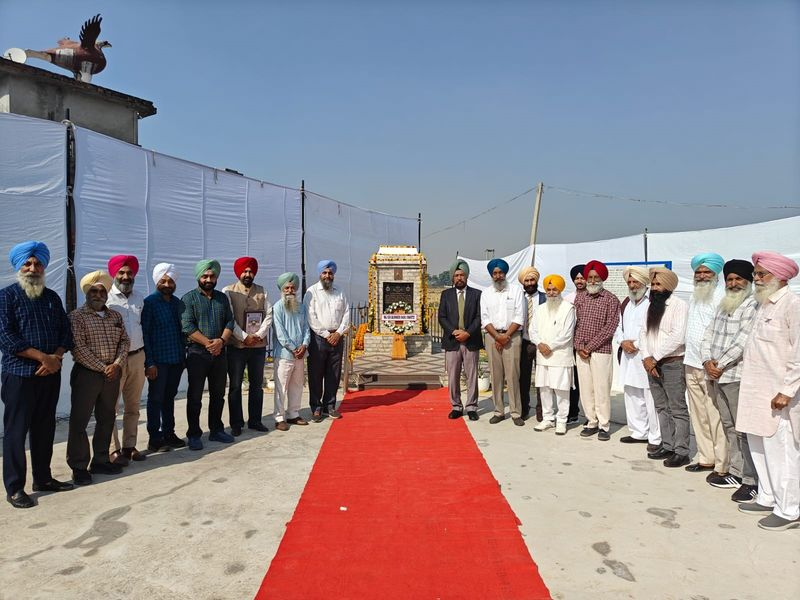
A remembrance ceremony was organised in Gurdaspur in memory of bravehearts of World War 1 (WW1) from Sarwali village, including Havildar Kala Singh of the 45 Rattray Sikhs (now 3 Sikh Battalion) and Sepoy Hazara Singh of the same battalion on their martyrdom anniversary. The event was also held to mark the 107th Armistice Day of the First World War, during which floral tributes and homage were offered to the martyrs.
Major General Balwinder Singh, VSM (retd), convener, INTACH Punjab, who addressed participant at the event, said the legacy of Sikh soldiers of WWI remained invaluable and intangible heritage of Punjabis. A ceremonial guard was presented by the 4 Sikh (Saragarhi) Battalion of the Sikh Regiment under the command of Subedar Harpreet Singh, representing the Station Commander, Tibri Cantonment, on the occasion.
“The brave soldiers of the Indian Army which was the British Indian Army at the time, who laid down their lives during the war are the priceless heritage of our nation and must always be remembered with reverence. At a time when immigration from Punjab is increasing, youth and all responsible sections of society must rethink and work collectively to shape a better present and future,” said Maj Gen Balwinder Singh.
He also encouraged young people to take full advantage of opportunities for recruitment in the Indian Army and to contribute towards the preservation of Punjab’s cultural and historical heritage.
Kuwar Amritbir Singh, who is also known as the Push-Up Man of India, and has made more than 50 records, also addressed the youth on the occasion asking them to stay away from drugs, participate in sports, and work hard with a clear life goal.
The families of the martyrs were honoured by Major General Balwinder Singh, along with Subedar Harpreet Singh (4 Sikh), Kuwar Amritbir Singh (Push-Up Man of India), educators Sunita Sharma, Manjit Singh Sandhu, Gurinder Singh Mehrok (Executive member, Khalsa College Amritsar Global Alumni Association), and Jagmohan Singh.
State Stalwarts
DEFENCES FORCES RANKS
ARMY, NAVY, AIRFORCE RANKS
FORMATION SIGNS
FORMATION SIGNS
ALL HUMANS ARE ONE CREATED BY GOD
HINDUS,MUSLIMS,SIKHS.ISAI SAB HAI BHAI BHAI
CHIEF PATRON ALL INDIA SANJHA MORCHA
LT GEN JASBIR SINGH DHALIWAL, DOGRA
SENIOR PATRON ALL INDIA SANJHA MORCHA
MAJOR GEN HARVIJAY SINGH, SENA MEDAL ,corps of signals
.
.
PATRON ALL INDIA SANJHA MORCHA
MAJ GEN RAMINDER GORAYA , CORPS OF
sanjhamorcha303@gmail.com
PRESIDENT HARAYANA STATE CUM COORDINATOR ESM
BRIG DALJIT THUKRAL ,BENGAL SAPPERS
PRESIDENT TRICITY
COL B S BRAR (BHUPI BRAR)
PRESIDENT CHANDIGARH ZONE
COL SHANJIT SINGH BHULLAR
.
.
PRESIDENT PANCHKULA ZONE AND ZIRAKPUR
COL SWARAN SINGH
PRESIDENT SAS NAGAR (MOHALI)
COL BALBIR SINGH , ARTY
INDIAN DEFENCE FORCES
DEFENCE FORCES INTEGRATED LOGO
FORCES FLAGS
15 Th PRESIDENT OF INDIA SUPREME COMMANDER ARMED FORCES
Droupadi Murmu
DEFENCE MINISTER
Minister Rajnath Singh
CHIEF OF DEFENCE STAFF (2nd)
General Anil Chauhan PVSM UYSM AVSM SM VSM
INDIAN FORCES CHIEFS
CHIEF OF ARMY STAFF(29th)
General Upendra Dwivedi, PVSM, AVSM (30 Jun 2024 to Till Date)