Sanjha Morcha

Hoofed sentinels: In flood-hit Dharali, Army mules ferry supplies where no vehicles can reach

Animals in military service are employed for search, rescue missions and for transporting supplies to inaccessible areas
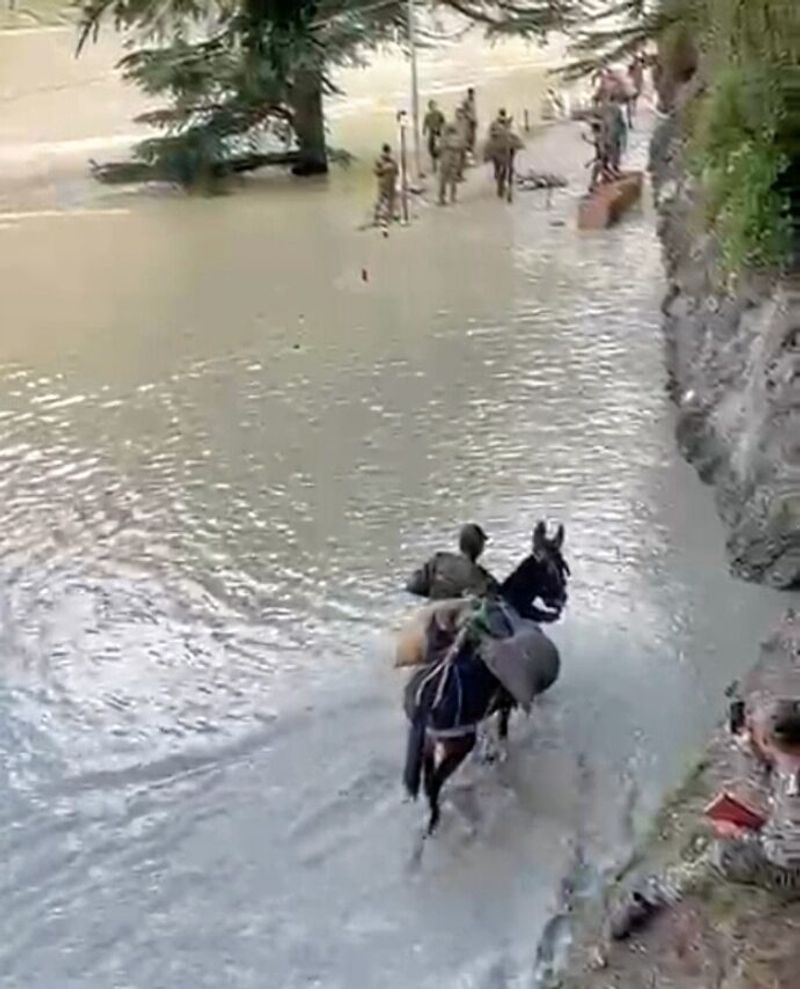
Negotiating debris, wading through water, and climbing over slush where tracks have been washed away, the Army’s mules are playing a silent yet vital role in delivering supplies to flood-stricken areas of Dharali in Uttarakhand — that remain inaccessible to vehicles after last week’s devastating flash floods.

Led by their handlers, columns of mules laden with essential supplies have been making their way to remote hill habitats that are accessible only on foot.

Videos and photos show troops — barefoot, trousers rolled up — trudging through loose soil, crossing flooded patches, and moving over makeshift bridges and tracks, gently nudging along the beasts of burden that have long been a vital part of military logistics in the mountains.

“Mechanisation cannot fully replace Animal Transport (AT) and they are the silent warriors working tirelessly towards assisting the civil administration in Operation Dharali,” the Army’s Uttar Bharat Area said in a post on X.

The mules, along with ponies, horses and dogs, belong to the Remount and Veterinary Corps (RVC), which is responsible for the training, breeding, procurement, care and management of animals used in military operations.

Animals in military service form an integral part of disaster management operations and are employed for search and rescue missions and also for transporting supplies to inaccessible areas.

The Army has approximately 4,000 mules that make up 15 units. These animals undergo rigorous training and battle inoculation to make them capable of serving in tough conditions and different operational environments. A mule can carry up to 80 kg of supplies.

Recently, the Indian Army has started supplementing animal transport with other mechanical equipment like drones and robotic mules. Their use has also been demonstrated publicly at ceremonial parades and equipment exhibitions.

Dubbed as Multi-Utility Legged Equipment (MULES), robotic mules at present have been designed to carry 12–15 kg load and are capable of operating in extreme climatic conditions ranging from minus 40 degrees Celsius to 55 degrees Celsius.

However, being much shorter and smaller than the traditional animals, and containing electronics and electrically operating components, MULES have some limitations in operating in flooded areas or places where foothold is difficult, sources said.

During Operation Brahma in Myanmar in February 2025, Indian Army columns deployed for earthquake relief had used MULES along with nano-drones for surveillance, assessing structural damage and carrying equipment in unstable terrain.

The Army plans to reduce reliance on animal transport by 60% by 2030. While robotic mules enhance efficiency and reduce risks to human soldiers in many operational scenarios, Army sources said that traditional mules remain indispensable for logistics and flood relief in the mountains.
n service for 20 years, IAF’s Embraer VIP jets set for complete facelift

The works to be undertaken involve complete repainting of the aircraft as well as a total overhaul and refurbishment of the cockpit and the passenger cabin

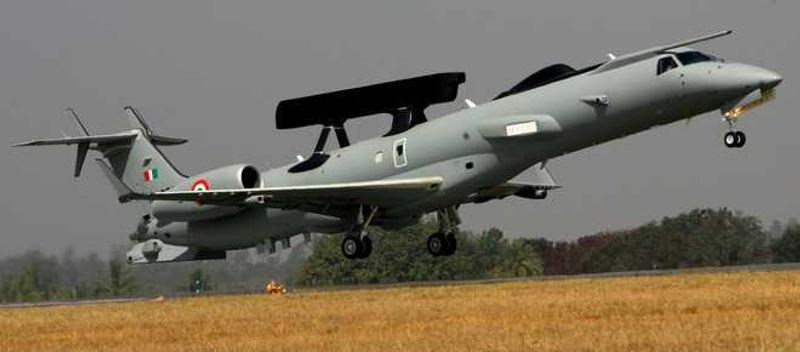
After being in service for about 20 years, the Indian Air Force’s Embraer-135 business jets that are used for transporting the nation’s top civilian and military leaders are set to undergo a complete facelift.

The works to be undertaken involve complete repainting of the aircraft as well as a total overhaul and refurbishment of the cockpit and the passenger cabin. This will include changing internal fittings and panels, polishing surfaces, and replacing all furnishings, upholstery, curtains, shades, and flooring.

According to sources, one aircraft will be refurbished at a time to ensure that three aircraft are available for operations, sources said. The entire project will be completed within a period of two years, with work on one aircraft expected to take about five months. The IAF has approached a Gurugram-based aviation firm to carry out the work.

The IAF has four Embraer jets that are deployed with the Air Headquarters Communications Squadron base at Palam in New Delhi. The squadron also operates two large Boeing 777 jetliners for use by the President, Vice-President and Prime Minister, three Boeing 737 Business Jets and six modified Mi-17 helicopters.

Manufactured by Brazil, the Embraers entered IAF in September 2005 and are extensively used by top leaders on official visits. These have a range of 7,500 km and a cabin capacity of 14 passengers.

The twin-engine Embraer jet replaced the aged HS-748 Avro twin turboprop engine that was of British origin. Bearing ‘K’ series registration numbers, these aircraft are christened Meghdoot, Vayudoot, Nabhdoot and Gagandoot.

The Air Wing of the Border Security Force (BSF) also has one Embraer-135 on its fleet strength for the Ministry of Home Affairs, which replaced its previous Avro aircraft.

In addition, three Netra Airborne Early Warning aircraft (AEW) used the Embraer-135 as the platform. These were extensively modified by the Defence Research and Development Organisation (DRDO) with an externally mounted overhead radar system, electronic warfare and navigation equipment, and work consoles.

There are also reports that the IAF is acquiring six used Embraer-145 jets for conversion into AEW aircraft by the DRDO in collaboration with Embraer. These would be more advanced and capable variants of the existing Netra.

The Brazilian aerospace major, which manufactures several types of military and civilian aircraft, is looking at expanding its footprint in India. The company has nearly 50 aircraft of 11 different types currently operating in India.

It has established a subsidiary in India to expand its presence in defence, commercial aviation, and business aviation sectors. The company is also exploring opportunities for Maintenance, Repair and Overhaul (MRO) facilities in India.

Beyond maintenance, the company is also partnering with Mahindra Defence Systems to bid for the IAF’s Medium Transport Aircraft (MTA) program with the C-390 Millennium, potentially involving 40–80 aircraft. This bid includes plans for local assembly, maintenance, repair, and overhaul (MRO), and technology transfer, indicating a long-term commitment to India’s aerospace ecosystem.


Smart fence system, drones & ATVs boost security along LoC in J&K

article_Author
Arjun SharmaOur Correspondent

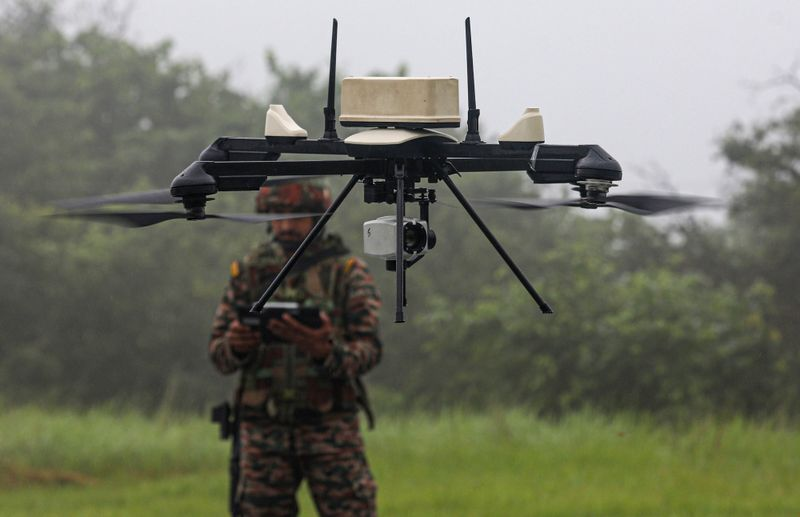
An Army jawan operates a drone near the Line of Control ahead of Independence Day. PTI

Amid growing infiltration attempts by Pakistani terrorists, the Army has significantly upgraded its surveillance and defense capabilities along the Line of Control (LoC) in the Rajouri and Poonch sectors of the Jammu region, introducing high-tech equipment and enhanced patrol systems.

In recent weeks, several infiltration bids were reported in Poonch, all of which were successfully foiled by alert Army personnel. On July 30, two terrorists attempting to cross into Indian territory were neutralised by soldiers deployed at the LoC in Poonch. The intruders were carrying a cache of arms and ammunition from Pakistan.

To counter such threats more effectively, the Army has deployed a range of modern surveillance tools, including the Smart Fence System, which significantly boosts border security through real-time monitoring and automated alerts.

Lt Col Suneel Bartwal, Defence PRO based in Jammu, said, “There are formidable challenges faced by soldiers stationed at the border, who steadfastly defend the nation with determination and selflessness. Amidst the breathtaking yet unforgiving landscapes, the soldiers display an indomitable spirit as they tackle adversities with unwavering commitment and an assuring smile.”

He added that despite extreme weather conditions, isolation, and the constant need for vigilance, the soldiers continue to demonstrate remarkable resilience.

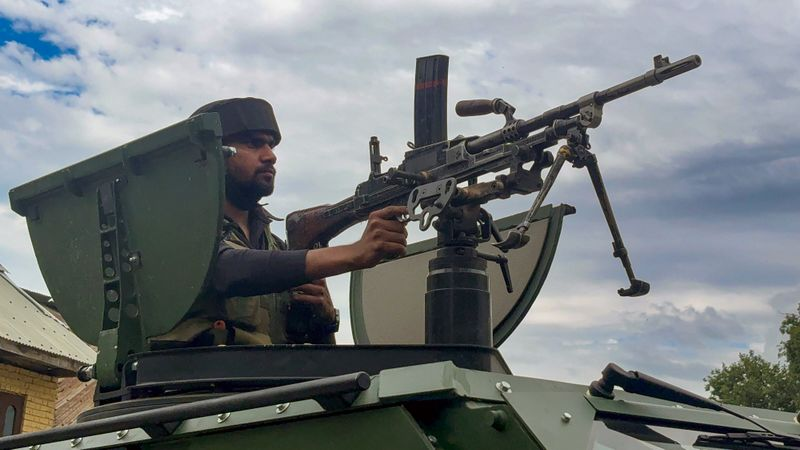
To enhance their capability, the Army is now equipped with quadcopters, advanced surveillance tools, bulletproof vehicles, All-Terrain Vehicles (ATVs), modern weaponry, and night vision devices to detect and neutralise infiltration attempts—especially during night operations when visibility is low.

Quick Reaction Teams (QRTs) have benefited from the induction of military vehicles such as the Armado and ATVs, enabling them to operate efficiently in challenging terrain and dense forests.

Also, drones have become a central part of the Army’s surveillance strategy. The official said the increasing integration of Mini Unmanned Aerial Vehicles (UAVs) and Surveillance Drones is transforming operations by enabling persistent monitoring of sensitive areas and supporting potential strike missions.

Night vision devices are also proving critical, especially during dark hours when infiltrators exploit poor visibility. These tools allow border guards to identify and engage threats even in pitch darkness.

On the International Border (IB)—guarded by the Border Security Force (BSF)—locals are being trained as Village Defence Guards (VDGs) in arms handling and self-defense. This initiative is particularly active in the Akhnoor sector, which has witnessed infiltration attempts this year. BSF officials are providing training in the use of semi-automatic weapons to enhance community-level defense.

Meanwhile, ahead of Independence Day celebrations, the Army has intensified patrolling and implemented a three-layered security system along the LoC to prevent any terrorist attempts to disrupt the national event.


Army foils ‘infiltration’ bid in Uri, soldier killed

article_Author
Adil Akhzer


Army foils ‘infiltration’ bid in Uri, soldier killed

article_Author
Adil Akhzer

Srinagar, Updated At : 02:00 AM Aug 14, 2025 IST

Follow usConnect with us

featured-img
featured-img

File photo

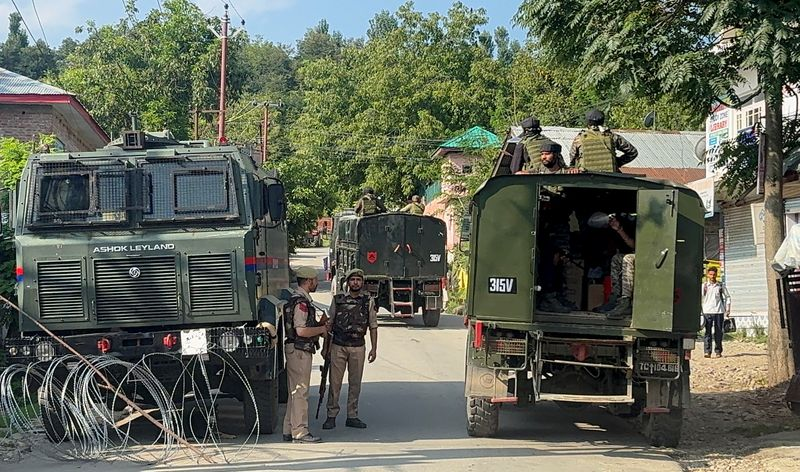
AdvertisementA soldier was killed in an exchange of fire with terrorists as the Army foiled an “infiltration bid” along the Line of Control (LoC) in the Uri sector on Wednesday, sources said.

A senior security official said a “short, intense” exchange of fire took place in the sector and one soldier who sustained bullet injuries later succumbed.

The slain soldier has been identified as Ankit Kumar, a resident of Bihar.

The sources said alert personnel foiled an infiltration bid in the sector and the terrorists were pushed back. The terrorists were suspected to have been assisted by Pakistan’s Border Action Team (BAT), the sources said.

However, the Army has not confirmed whether BAT was involved in the infiltration bid on Wednesday. Soon after the incident, a massive search operation was launched in the area.

Though no statement was issued about the incident, Srinagar-based Chinar Corps paid tributes to the deceased soldier.

“Chinar Corps honours the supreme sacrifice of braveheart Havildar Ankit Kumar, who laid down his life while undertaking operational duty along the Line of Control in Uri, Baramulla,” the Army posted on X.

“Chinar warriors salute his immense valour and sacrifice, express deepest condolence and stand in solidarity with the bereaved family,” it said.

Today’s death of a soldier comes a day after another one was killed in “operational duty” along the LoC in Baramulla district on Tuesday. The Army did not clarify how the soldier died.

The gunfight along the LoC comes a few days after two soldiers were killed and two were injured in a fierce encounter in the Akhal forest of Kulgam district. The operation, which continued for nearly two weeks, was called off on Monday, with the elimination of one terrorist. However, other militants managed to escape from the area.


HEADLINES:10 AUG 2025

Sanjha Morcha Calls all Ex=Servicemen 0f Punjab to boycott

Punjab soldier’s wife mourns, her hands still adorning mehndi, arms with wedding bangles move many to tears

Khanna soldier martyred in Kulgam, pall of gloom descends on village

2 Punjab soldiers killed in Kulgam encounter

Femina Highlight the brave ladies of Army

Army proud of ladies in Indian Army: femina

7 Ladies in Army known for their Bravery and beauty

TO GET CSD CARDS, NOW YOU CAN APPLY ONLINE AND GET CARD DELIVERED AT YOUR HOME.

MoD seeks 200 copters to replace ageing fleet

26 years after IAF pilot died in helicopter crash, widow gets due benefits 


Ministry of Defence seeks 200 helicopters to replace ageing fleet

Following Op Sindoor’s success, defence panel urges rapid military modernisation

5 Pakistani fighter jets, 1 spy plane shot down during Operation Sindoor: IAF Chief

Encounter breaks out between security forces and terrorists in J-K’s Kishtwar

Operation Sindoor was a game of chess, not conventional warfare: Army Chief


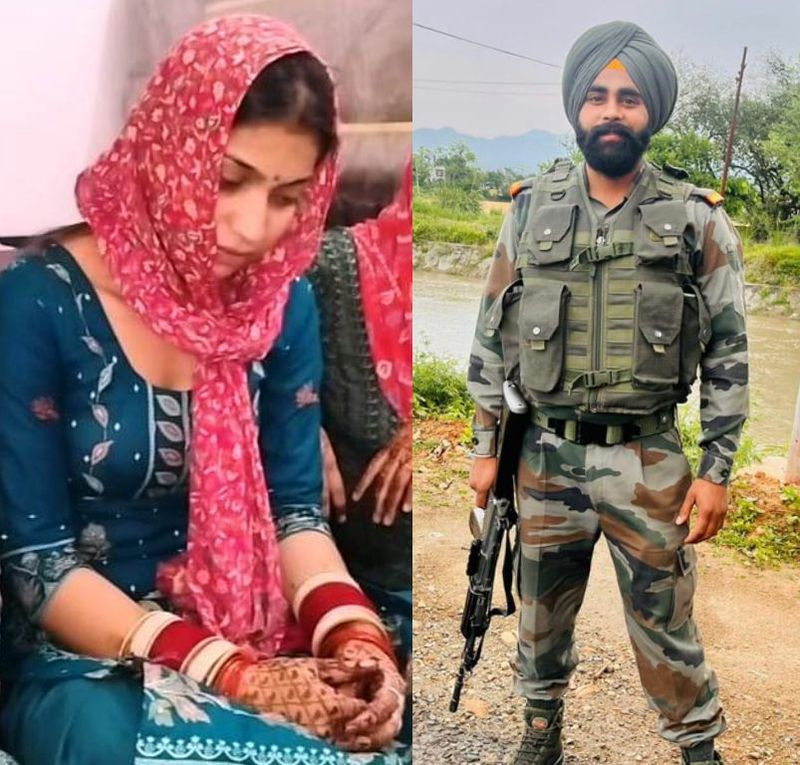
Punjab soldier’s wife mourns, her hands still adorning mehndi, arms with wedding bangles move many to tears

Khanna’s Lance Naik Pritpal Singh was killed during an anti-terrorist operation in the dense forests of Kulgam, Jammu and Kashmir

article_Author
Nikhil Bhardwaj Tribune News Service

Army soldier Lance Naik Pritpal Singh was killed during an anti-terrorist operation in the dense forests of Kulgam, Jammu and Kashmir, on Friday night. Another soldier  who was killed has bene identified as Sepoy Harminder Singh from Badinpur (Mandi Gobindgarh).

The operation has been ongoing since August 1. His family in Khanna’s Manupur village was informed at 5 am on Saturday.

The devastating news shattered the household, especially his wife Manpreet Kaur, who had married Pritpal just six months ago on February 26.

The sight of her hands still adorned with mehndi and arms with wedding bangles moved many to tears.

Pritpal joined the Indian Army in 2015, right after completing his Class 12. He is survived by his elderly parents, wife, and two brothers, Manpreet and Harpreet Singh. The family said they were dependent on him financially and emotionally.

His brother shared that their last conversation was on Friday, during which Pritpal spoke of the intense encounter with terrorists and expressed hope that the Army would eliminate them soon.

“He was supposed to come home later this month. We had planned to celebrate our first Diwali together,” his wife said in tears.

The cremation is expected to be held in Manupur village on Sunday. The entire village and nearby regions are mourning the loss of a braveheart who gave his life for the nation.

Punjab Chief Minister Bhagwant Mann has announced an ex-gratia of Rs 1 crore each for the families of two soldiers from the state—Lance Naik Pritpal Singh from Manupur (Khanna) and Sepoy Harminder Singh from Badinpur (Mandi Gobindgarh)—who were martyred.

Taking to social media, CM Mann expressed deep grief and saluted the bravery of the soldiers who laid down their lives in the line of duty.

The Indian Army’s Chinar Corps also paid tribute, stating that the courage and dedication of the bravehearts will continue to inspire generations.

The joint operation in Kulgam, involving the Army, CRPF, J&K Police, and SOG, is still ongoing, with one terrorist neutralised so far.


Khanna soldier martyred in Kulgam, pall of gloom descends on village

article_Author
Nikhil Bhardwaj ribune News Service

Pall of gloom descended on Manupur village, in Khanna as an Indian Army soldier, Lance Naik Pritpal Singh, was martyred on Friday night during an anti-terrorist operation in the dense forests of Kulgam, Jammu and Kashmir. The operation has been ongoing since August 1.

The family was informed of the death by the Army at around 5 am on Saturday morning and was left in deep shock. The 29-year-old martyred soldier joined the Army in 2015. He had been married for only six months and leaves behind his elderly parents and wife, Manpreet Kaur. His uncle and aunt also retired from the military.

After hearing the news of her husband’s demise, Manpreet was left inconsolable. Everyone burst into tears seeing her hands still adorned with the customary wedding bangles and mehendi for the festive season. His father, while mourning the immense loss, said,” I salute my son’s martyrdom for the country. My son will never return now, but he sacrificed his life for nation.”

Pritpal Singh’s elder brother, Manpreet Singh, while talking to mediapersons, said they last spoke to him on Friday and Pritpal had apprised them of the ongoing shootout with the terrorists. “He had told us that the Indian Army would soon eliminate the terrorists,” he said.

Pritpal’s wife shared that Pritpal was supposed to come home at the end of the month as they had planned to celebrate all the upcoming festivals together, including their first Diwali as a married couple, but those dreams were left shattered.

Pritpal’s brother Harpreet Singh said they were three brothers. The whole family was dependent on Pritpal. “My brother had joined the Army as soon as he passed class XII in 2015. We had told him that it is Rakhi and that he should come home to celebrate but he had said he will come on Diwali,” he said, adding that, “I am proud of my brother. He sacrificed his life for the country. The Indian Army should eliminate the terrorists.”

Pritpal Singh’s cremation is expected to be performed at Manupur village on Sunday.


2 Punjab soldiers killed in Kulgam encounter

Operation completes 9 days; CM Mann announces Rs 1 crore ex gratia each

Two Army men were killed and two others injured in an encounter with terrorists in south Kashmir’s Kulgam district, the ongoing operation entering its ninth day on Saturday and being one of the longest in Jammu and Kashmir in recent years.

The martyrs belonged to Punjab and have been identified as Lance Naik Pritpal Singh of Manupur village in Khanna and Sepoy Harminder Singh of Badinpur village in Mandi Gobindgarh.

Punjab Chief Minister Bhagwant Mann expressed grief over the deaths and announced an honorarium of Rs 1 crore each to the families of the deceased soldiers. “We salute the spirit and bravery of the martyrs. As per our government’s promise, an honorarium of Rs 1 crore each will be provided to their families,” CM Mann posted on X. J&K Chief Minister Omar Abdullah visited the Chinar Corps headquarters at Badamibagh in Srinagar and laid a wreath in the honour of the martyred soldiers. The anti-terror operation started last week in a dense forest of Akhal. Eight Army personnel have so far been injured, with the security forces making all-out efforts to eliminate the hiding terrorists, who appear to be highly trained and well-equipped. The area has been experiencing heavy firing for several days, including during night hours.

Of late, militants have shifted their bases to jungles and high-altitude areas due to the heavy deployment of security forces in various parts of J&K in the aftermath of the Pahalgam terror attack in which 26 civilians were killed.

The body of one militant has been retrieved from the gunfight site while another terrorist is also believed to have been killed. Intelligence inputs had suggested that at least five militants were holed up in the forest when the operation started.

With the operation getting prolonged, top security officials, including J&K Director General of Police Nalin Prabhat and General Officer Commanding of the 15 Corps, Lt Gen Prashant Srivastava, have visited the site. The Army has deployed elite commandos and is taking the assistance of drones and helicopters to locate the militants.

Army’s Srinagar-based Chinar Corps wrote on X, “Chinar Corps honours the supreme sacrifice of the bravehearts. Their courage and dedication will forever inspire us. The Army expresses deepest condolences and stands in solidarity with the bereaved families.”

Army’s Northern Commander Lt Gen Pratik Sharma also paid homage to the martyrs. “The Northern Command stands firm with the bereaved families in this hour of grief,” the Army said.