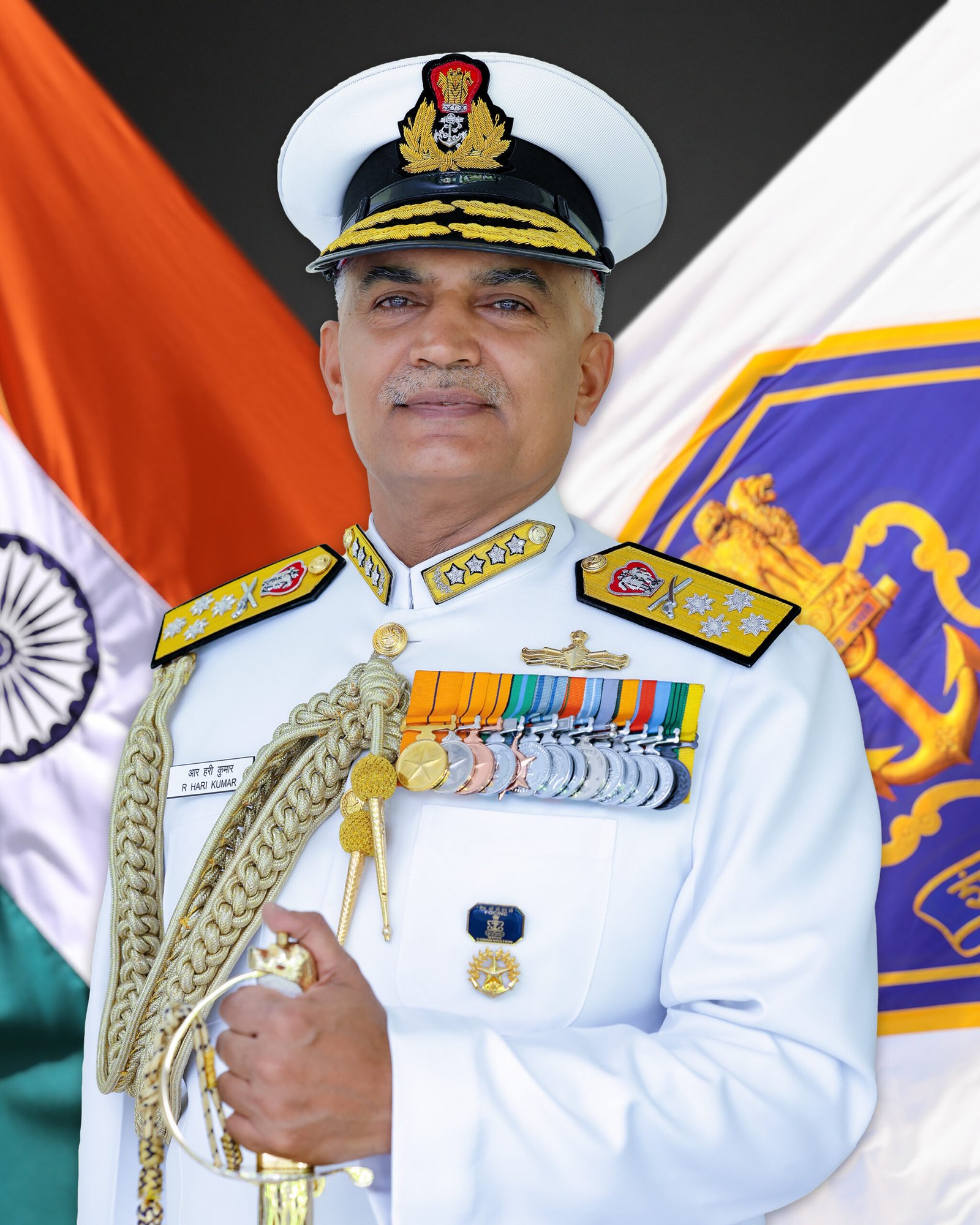
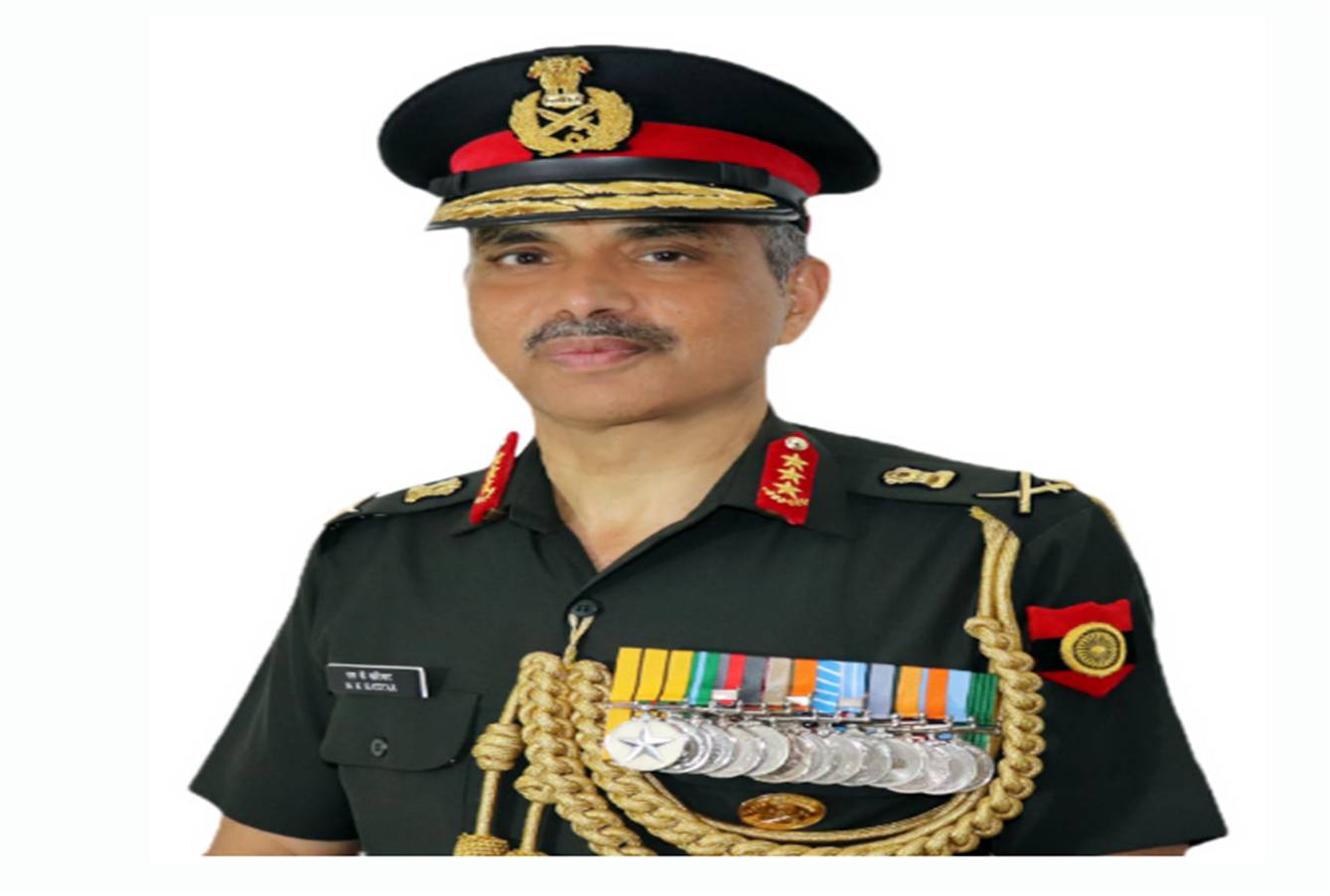
Two days after China issued a statement giving its version on the outcome of the 23rd round of Special Representative talks in Beijing, the Ministry of External Affairs today said “we stand by our statement’. The statement by China’s Foreign…
Two days after China issued a statement giving its version on the outcome of the 23rd round of Special Representative talks in Beijing, the Ministry of External Affairs today said “we stand by our statement’. The statement by China’s Foreign Ministry was at divergence from India’s statement describing the outcome of the talks conducted on December 18.
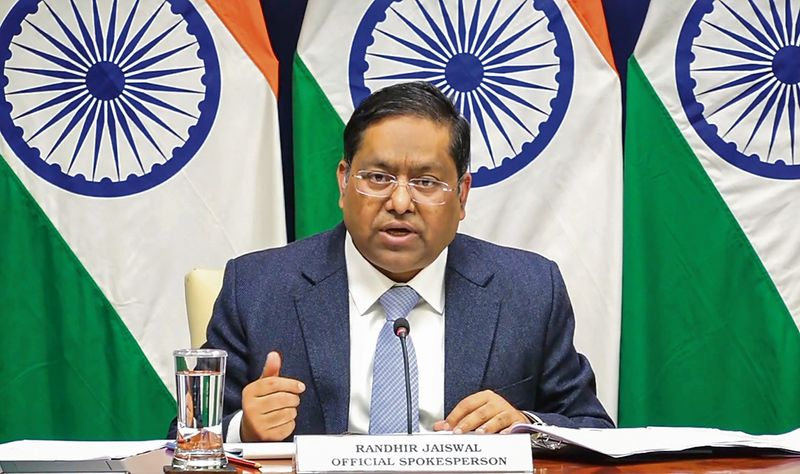
The MEA spokesperson, Randhir Jaiswal, today, while answering questions on the differences in the two statements said “We stand by our statement. Our release gives a perspective on what happened in SR-level talks”.
Talks held between NSA DOval, Minister Wang Yi
The statement by China’s Foreign Ministry was at divergence from India’s statement on the outcome of the December 18 talks
The Chinese ministry had said both sides reached a ‘six-point consensus’
It mentioned about putting the border issue in an ‘appropriate position’ and harked back to an agreement the two sides reached in 2005
India had not mentioned any of these aspects in its statement
The Chinese statement further added, “Both sides agreed to further refine the management rules for the border areas and strengthen confidence-building measures”
The Indian statement did not mention anything to ‘refine’ border management rules
The Chinese Foreign Ministry had said both sides reached a ‘six-point consensus’. It mentioned about putting the border issue in an ‘appropriate position’ in bilateral relations and harked back to an agreement the two sides had made in 2005. India had not mentioned any of these aspects in its statement issued late on Dec 18.
Answering a question on ‘six-point consensus’, Jaiswal said “our statement gives a perspective on what was discussed. We can speak for our press release only”.
Meanwhile, sources on the Indian side said the phrase ‘six-point consensus’ is misplaced. These were points of ‘discussions’ between the two Special Representatives (SRs) — National Security Adviser Ajit Doval and Chinese Foreign Minister Wang Yi.
For China, the ‘appropriate position’ of the border issue is to treat the matter as, one among, the many issues, sources said and added for India, a resolution of the pending boundary issue is a prime security concern and top-most priority. The Indian statement reflected it in as many words saying “reiterated the importance of maintaining a political perspective of the overall bilateral relationship while seeking a fair, reasonable and mutually acceptable framework for settlement of the boundary question and resolved to inject more vitality into this process”.
The Chinese statement had a different take. It said “both sides reaffirmed their commitment to continuing to seek a fair, reasonable, and mutually acceptable package solution to the border issue in accordance with the political guiding principles agreed upon by the two countries’ special representatives in 2005”.
The Chinese statement further added, “Both sides agreed to further refine the management rules for the border areas, strengthen confidence-building measures”. The Indian statement did not mention anything to ‘refine’ border management rules. It said “Drawing on the learnings from the events of 2020, they discussed various measures to maintain peace and tranquillity on the border and advance effective border management”. On expected lines, the two statements had a rather expected divergence. The Chinese side mentioned “promoting the resumption of pilgrimages by Indian pilgrims to Xizang”. Xizang is the name China uses to refer to Tibet.
The Indian side just mentioned the resumption of the Kailash Mansarovar Yatra in its statement. Also, China mentioned resumption of trade via the Nathu La Pass in Sikkim. India remained silent on the issue.
India objects to wrong map uploaded by key aide in Yunus regime
India has lodged a strong protest with Dhaka over a now-deleted social media post by a key aide of Bangladesh’s interim government that claimed certain areas of Indian territory should be part of the neighbouring country. Mahfuz Alam, known for…
India has lodged a strong protest with Dhaka over a now-deleted social media post by a key aide of Bangladesh’s interim government that claimed certain areas of Indian territory should be part of the neighbouring country.
Mahfuz Alam, known for his provocative comments, had posted on Facebook four days ago a map purportedly showing parts of West Bengal, Tripura and Assam as parts of Bangladesh. He deleted the post after it triggered backlash.
Alam is a de facto minister in the Muhammad Yunus-led interim government of Bangladesh. Reacting strongly to the post, External Affairs Ministry spokesperson Randhir Jaiswal on Friday reminded all concerned to be “mindful” of their public comments.
“We have taken this up with the Bangladeshi government. We have strongly registered a protest on this issue. We understand that the post being referred to has reportedly been taken down,” the spokesperson said.
“We would like to remind all concerned to be mindful of their public comments. While India has repeatedly signalled interest in fostering relations with the people and the interim government of Bangladesh, such comments underline the need for responsibility in public articulation,” he said.
The relations between India and Bangladesh are reeling under severe strain after the interim government headed by Yunus came to power in August.
Yunus assumed the charge as the head of the interim dispensation days after the then prime minister Sheikh Hasina resigned from the post and fled to India in the face of a massive anti-government protest.
Local militant count drops to 10 in Valley with killing of 5 in Kulgam
With the killing of five militants in south Kashmir’s Kulgam, the number of categorised local militants in Valley has come down to 10 — the lowest ever figure, officials told The Tribune. The number of foreign militants, however, is around 45.
According to figures, the number of local militants now stood at 10 in Valley after the encounter in south Kashmir’s Kulgam district on Thursday.
As per sources, nine local militants are active in south Kashmir’s police districts — two in Awantipora, one in Kulgam, four in Shopian, two in Pulwama — and one in north Kashmir’s Sopore.
The number of local militants has been continuously on the decline over the last few years. Police officials also attribute it to the change in the tactics employed by militant groups. Unlike the previous years when they would post their pictures on social media, the militants have now worn the cloak of anonymity. The police have given such people the name, “hybrid militants”, and what makes them dangerous is that officials have no record of them.
“Even though we have been successful in eliminating a large number of terrorists, at the same time, the new trend of ‘hybrid terrorists’ has increased. The hybrid mode is more challenging because now, we don’t know who the enemy is,” said a Valley-based counter-insurgency officer.
An official said it could be a new tactic of the militant groups to keep the number of local militants low in Valley, given the fact that security forces had taken massive action against those supporting the terror ecosystem here.
“Given the present scenario, wherein now we have a majority of foreign terrorists only, it is apparent that Pakistan-based terror outfits are now pushing foreigners to carry out the terror activities in Valley,” the official said.
On the other hand, sources said at present, there were 45 foreign militants operating in Valley. According to them, this year, the number of local youth joining militant groups has also remained less. Sources reveal that around seven youth joined militant ranks this year against 22 local men, who had joined militant organisations in 2023.
This month, there have been two major operations in Valley. Other than Thursday’s operation, in which five were killed in Kulgam, in another operation earlier this month, a militant from Kulgam was killed in Srinagar’s outskirts. He was one of the two militants who had carried out an attack on tunnel workers in Ganderbal.
In November, the security forces had also conducted several successful operations in Valley. Eight militants have been killed in different anti-militancy operations.
The Emperor called on his troops to account for their cowardice. They pleaded that the Sikhs had taken an unfair advantage of their position in the battle field. At one point the Emperor asked what sort of person the Guru was and what force he possessed. A Mohammadan soldier gave highly colored accounts of the Guru’s beauty, sanctity and prowess. He described him as a young handsome man, a living saint, the father of his people and in war equal to one hundred twenty-five thousand men. The Emperor was much displeased on hearing this elaborate praise of the Guru and ordered that he should be brought to his presence. In the meantime Raja Ajmer Chand made a strong representation to the Emperor for assistance to bring the Guru to submission. Accordingly the viceroys of Sirhind, Lahore and Kashmir were ordered to proceed against the Guru.
Some faithful Sikhs informed the Guru of war preparations as a result of Raja Ajmer Chand’s representationto the Emperor. The Guru made arrangements accordingly and sent for his followers. The Sikhs of Majha, Malwa and Doaba and other places thronged to Anandpur. They were delighted at the prospect of battle, and congratulated themselves on their good fortune in being allowed to die for their Guru and their faith. The Guru affirmed that the death in the battle-field in the name of religion was equal to the fruits of many years’ devotion, and ensured honor and glory in the next world.
The noteworthy point in this whole episode is that the Guru having won battle after battle, never captured an inch of territory, never nurtured enmity, and never attacked anybody as an aggressor. By the creation of the Khalsa he established equality and brotherhood of mankind. The down-trodden segments of the society which were ever ridiculed by the so called high caste Brahmans and Khatris, had now become undaunted saint-soldiers after being baptized by the Guru and joining the brotherhood of the Khalsa. The Brahmans and the hill chiefs considered all this a threat to their very existence. They were, therefore, waging a constant war against the Guru and his Sikhs.
The hill chiefs who arrayed themselves against the Guru were Raja Ajmer Chand of Kahlur, Rajas of Kangra, Kullu, Kionthal, Mandi, Jammu, Nurpur, Chamba, Guler, Garhwal, Bijharwal, Darauli and Dadhwal. They were joined by the Gujars and the Ranghars of the area, and all of them formed a formidable force. The imperial army of the viceroys’ of Sirhind, Lahore and Kashmir came in large number. The chronicler judiciously remarks that the Khalsa must be congratulated because, though few in number, having the blessings of their Guru they had confidence in themselves to fight for their religion, and delighted in anticipation of the approaching conflict. It is recorded that there were ten thousand Sikhs at Anandpur while the opposing army came as strong as fifteen to twenty times in number than the Sikhs
The allied forces fell on Anandpur like locust. On seeing this the Guru ordered his artillery men to discharge their cannon into the hostile army at the thickest spot. The enemy made a charge to seize the artillery, but were quickly restrained by the fatal accuracy with which the Sikhs served their guns. They were supported by the infantry. The city of Anandpur was on a little higher elevation and the allied forces were in the open and had no protection, and consequently fell in heaps. A fierce battle was fought for a few days. The Mohammadan gunners were promised large reward if they killed the Guru but they were unsuccessful in their mission because their gun fire was either high or too low and could not hit the target. The allied army finding their guns useless tried hand to hand fight. On seeing this the Guru began to discharge his arrows with marvelous effect. The fearful carnage continued, horses fell on horses, men on men. The allied forces rallied a strong effort to conquer, but was so vigorously and successfully repulsed that they were obliged to uspend hostilities at the end of each day of warfare. The Mohammadans and the hill chiefs had different opinions as to the cause of the success of the Sikhs. Some thought that the Guru had supreme miraculous power and the supernatural forces fought on his side. Others maintained that the Guru’s success was owing to the fact that his men were protected behind their ramparts. While this discussion was going on, the Mohammadan viceroys decided to storm the fortress where the Guru was stationed. On seeing this the Sikhs put their two guns called Baghan (tigress) and Bijai-ghosh (sound of victory) in position. The aims were taken at the enemy. The tents were blown away and great havoc was caused. On seeing this the Mohammadan viceroys retreated and the hill armies fled. That evening the Guru offered thanksgiving, and beat the drum of victory.
Having failed through dire ct assault, the allied army planned a siege of the city of Anandpur in such a waythat all entrances and exits for both goods and persons were completely closed. This siege took eight months long, and is often known as the War of Sri Anandpur Sahib, which the Mughal Imperial Army, allied with each of the Hill Raja clans except a few launched an all out war against Guru Ji’s Khalsa. The siege numbers were one million soldiers of the Mughal Imperial Army and 10,000 sikhs under the control of the founder of Khalsa. They completely besieged the city, and the Guru’s supplies were failing. Food position became extremely serious and the Sikhs were driven to undertake some dangerous expeditions. They went out at night to snatch provisions from the besiegers. After some time the allies collected their stores at one place and guarded them day and night. When the enemy learnt about the distressful situation of the Sikhs, they planned a different strategy to induce the Guru to leave Anandpur. Raja Ajmer Chand sent his envoy to him saying that if he left Anandpur, their armies would withdraw and he could afterwards return whenever he pleased. The Guru did not pay any heed to this proposal. The offer was repeated several times, but the Guru did not accept it. Having suffered extreme hardships, the Sikhs besought the Guru to evacuate the fort, but the Guru counselled them patience for some time more. The Sikhs who heard enemy’s proposal, went to the Guru’s mother to use her influence on him. She pleaded with him but in vain. The Guru told her that the enemy’s proposal was hypocritical since they planned to draw out the Sikhs from within the shelter of the city and attack them. Some of the Masands and the Sikhs who were influenced by the hill chiefs, insisted that the proposal of the enemy be accepted and the city be abandoned. Some Sikhs became impatient and
Dish eartened. The Guru asked them to declare their allegiance. Forty of them signed a disclaimer saying that the was not their Guru and they were not his Sikhs. After they signed the disclaimer, they were allowed by the Guru to go away. (These 40 sikhs came back at the Battle of Mukstar, and in Sikhi are known as the “Chali Mukte” or 40 immortals. Under the command of a legendary sikh general, they fought 10,000 Mughal Imperial Soldiers, and gave such devasting damage to the enemy, they had no option but to retreat. Guru Ji, in the end blessed them, as they had come back to fight for there protector) Guru Ji then brought out a scheme to expose the hypocrisy of the enemy.
The Guru sent for Raja Ajmer Chand’s envoy and told him that he would evacuate Anandpur if the allied armies would first allow the removal of his treasure and property. The Hindus swore on the Salgram (their idol) and the Mohammadans on the holy Quran, that they would not deceive or molest his servants departing with his property. The Guru then immediately ordered a number of cartloads of useless articles. To the bullocks’ horns were attached torches and at the dead of night, the caravan of bullocks with their loads, started along with some Sikhs accompanying them. When the caravan reached the enemy lines they forgot all their pledges and fell upon the small company of the Sikhs to loot the treasure. Their disappointment was great when they found out that the treasure was made up of rubbish articles. In this way the Guru exposed the treachery of the enemy and told his Sikhs that everything they had endured had been by the Will of God, and he quoted Guru Nanak- “Happiness is a disease, the remedy for which is unhappiness”.
At last came an autographed letter from the Emperor to the Guru- “I have sworn on the Quran not to harm. You. If I do, may I not find a place in God’s court hereafter! Cease warfare and come to me. If you do notdesire to come hither, then go whithersoever you please.” The Emperor’s envoy added that the Emperor promised that he would not harm the Guru. The hill Rajas also swore by the cow and called their idols to witness, that they would allow safe passage to the Guru. The Guru told the enemy,” You are all liars, and therefore all your empire and your glory shall depart. You all took oaths before and then perjured yourselves.”
An important result of the institution of the Khalsa was escalation of tension. The hill chiefs did not want Guru Gobind Singh to stay at Anandpur on his own terms. In the first battle of Anandpur they failed to dislodge him. But they requested him to leave Anandpur as the cow’s feed (gau-bhat). Two battles were then fought outside Anandpur: one at Nirmoh and the other at Basoli. Guru Gobind Singh returned to Anandpur. With the support of the Mughal authorities, finally, the hill chiefs laid a long siege to Anandpur. Seeing no end to the armed conflict, they gave offers of safe passage to Guru Gobind Singh for voluntary evacuation of Anandpur. Aurangzeb’s oath on the Qu‘ran was used for this purpose. In view of the pressure from the people of the town, including some of his Khalsa, Guru Gobind Singh decided to leave Anandpur against his own judgment.
The Sikhs went again to the Guru’s mother to complain of his refusal to listen to reason. He, however, felt that their pleading was not reasonable but it was not appropriate to accept the terms of the enemy and leave the fort. The Sikhs stricken with hunger, supported the envoy’s representation. The Guru comforted them,” My brethren, waver not, I only desire your welfare. You know not that these people are deceivers and design to do us harm. If you hold a little longer, you shall have food to your heart’s content.” When the Sikhs refused to wait any longer, he asked them to wait only a few days more when the great God would send them relief. The Sikhs, however, refused to wait even for a day. The Guru repeated his request saying that the enemy would then retire and they would all be happy. He also warned the Sikhs,” O dear Khalsa, you are rushing to your destruction, while I am endeavoring to save you.”
The Sikhs were so much hunger stricken that they refused to stay even for a day. The Guru’s mother was also in favor of evacuating the fort. The allied armies sent a Saiyid (a Mohammadan priest) and a Brahman, both of whom were to swear, on behalf of the allied armies, solemn oaths of safe conduct for the Guru should he evacuate Anandpur. On seeing this the Sikhs began to waver in their allegiance to the Guru, and in the end only forty Sikhs decided to remain with him and share his fortunes. He told them that they too might desert him. They refused and said that they would either remain within the fort or force their way out as the Guru directed. He knew that the seed of his religion would flourish. He then finally decided to leave Anandpur and gave orders to his men that they all were to march at night. Sri Anandpur Sahib was finally evacuated on 6-7 Poh, Sambat 1762 (20-21 December, 1705).
Bhai Daya Singh and Ude Singh walked in front of the Guru, Mohkam Singh and Sahib Singh on his right, the second batch of baptized Sikhs on his left. His sons the legendary hereos of Chamkaur, Shaheed Baba Ajit Singh Ji and Shaheed Baba Jujhar Singh Ji followed with bows and arrows. Then came Bhai Himmat Singh carrying ammunition and matchlocks. Gulab Rai, Sham Singh and other Sikhs and relations accompanied him. The rest of the followers brought up the rear, about five hundred in all. The moment the enemy got the news of Guru’s departure, they again forgot all about their pledges and set out in hot pursuit immediately. Skirmishes started from Kiratpur onwards. Realizing the impending danger the Guru charged Ude Singh with the responsibility to check the advance of the enemy. Bhai Ude Singh fought a bloody battle at Shahi Tibbi. The enemy surrounded and killed the dauntless and the bravest of the Guru’s brave warriors, Ude Singh. When the battle of Shahi Tibbi was in progress, the Guru had reached the bank of Sarsa river. At that time a news came that a contingent of enemy troops was fast approaching. Bhai Jiwan Singh, a Rangretta Sikh, was given a band of one hundred warriors to encounter the pursuers. With the rest of his people the Guru plunged into the flooded waters of the Sarsa river. The flood was so strong that many were drowned and many were scattered in different directions including the Guru’s mother with two younger sons, Shaheed Baba Zorawar Singh Ji and Shaheed Baba Fateh Singh Ji. Besides, there was a heavy loss of valuable literature and property. The Guru accompanying his two eldest sons and some veteran Sikhs reached the village Ghanaula on the other side of Sarsa river. Apprehending that the route ahead might be beset with danger, the Guru gave Bhai Bachitar Singh a band of one hundred Sikhs and instructed him to march by the direct route to Rupar, whereas he with some veteran Sikhs preferred to take a longer route and reached Kotla Nihang near Rupar to stay with Pathan Nihang Khan who was an old and sincere devotee of the Sikh Gurus. Bhai Bachitar Singh and his men had to fight their way through a cordon of the Ranghars of Malikpur, a village near Rupar, and the Pathans of Rupar. During the fierce fighting that took place on this occasion, majority of the Sikhs fell dead and Bachitar Singh was mortally wounded.
The Guru did not stay long at Kotla Nihang. It seems that he was to proceed to Machhiwara and Rai Kot. Accompanied by his two eldest sons and forty Sikhs, the Guru halted at Bur Majra after Kotla Nihang. A news was received that a large body of Sirhind troops was chasing them. Immediately the Guru decided to face the enemy from within the Garhi of Chamkaur and he hurried towards it. He was well aware of the importance of this Garhi (mud fortress) as he had, on a previous occasion, fought a battle at this place.
Despite giving assurance of safe conduct, the Mughal soldiers were looking for Guru Gobind Singh, to take his head as a trophy. After learning that the party of Sikhs had taken shelter in the haveli, they laid siege upon it. The actual battle is said to have taken place outside the haveli where Guru Gobind Singh was resting.[4] A council of Panj Piare was convened during the battle, whom ordered Guru Gobind Singh to leave the battlefield to preserve his life and continue leading the Sikhs, a request which the Guru obeyed.[15] Negotiations broke down and the Sikh soldiers chose to engage the overwhelming Mughal forces, thus allowing their Guru to escape. Another Sikh who resembled the Guru, Sangat Singh, donned the Guru’s clothes and remained with the soldiers. The next morning the remaining Sikhs were killed by Mughal forces.[16]
VIJAY DIWAS CHNDIMANDIR: CONTRIBUTED BY BRIG KULDEEP SINGH KHALON
Pakistan has strongly condemned the recent sanctions imposed by the United States on its missile program, labelling the actions as biased and detrimental to regional peace and security. The U.S. Department of State announced sanctions against four Pakistani entities, including the National Development Complex (NDC) and three associated companies, for their involvement in the development of long-range ballistic missiles. This move is part of a broader U.S. strategy aimed at preventing the proliferation of weapons of mass destruction and their delivery systems.
In a statement issued by Pakistan’s Foreign Office, the government asserted that these sanctions threaten strategic stability in South Asia and have dangerous implications for global security. The statement emphasized that Pakistan’s missile capabilities are essential for national defence and regional stability, describing the strategic program as a “sacred trust” of its 240 million citizens. The Foreign Office criticized what it termed “discriminatory practices” by the U.S., arguing that similar restrictions have been applied without substantial evidence and often based on mere suspicion.
The U.S. has maintained that its sanctions are a necessary measure to protect its national security interests and to uphold international non-proliferation norms. State Department spokesperson Matthew Miller reiterated that the U.S. will continue to use sanctions to prevent any potential misuse of its financial systems by proliferators. He highlighted that these actions are part of a consistent policy aimed at curbing support for Pakistan’s ballistic missile program, which the U.S. views as a proliferation threat.
Pakistan’s response reflects a broader concern regarding perceived double standards in international arms control policies, particularly in how different countries are treated under similar circumstances. The Pakistani government has called for a more equitable approach to export controls and non-proliferation efforts, arguing that such unilateral measures not only undermine regional stability but also contradict the objectives of global peace and security.
Indian Navy Chief Hosts Deck Reception Aboard Ins Mysore In JakartaThursday, December 19, 2024 by Indian Defence News
Admiral Dinesh K. Tripathi, the Chief of the Indian Navy, hosted a significant deck reception aboard the INS Mysore in Jakarta, Indonesia, on December 18, 2024. This event was part of a goodwill visit aimed at strengthening the bilateral ties between India and Indonesia.
The reception was attended by various dignitaries, including Admiral Muhammad Ali, Chief of Staff of the Indonesian Navy, senior military officials from Indonesia, and the Indian Ambassador to Indonesia, Sandeep Chakravorty. The gathering emphasized cultural exchange and friendship between the two nations, highlighting the importance of camaraderie in military relations.
During this four-day visit, which took place from December 15 to 18, Admiral Tripathi engaged in several high-level discussions focusing on enhancing naval cooperation and defence collaboration between India and Indonesia. These discussions included topics such as information sharing, capacity building, and partnerships in the defence industry. The visit underscored the ongoing efforts to bolster the Comprehensive Strategic Partnership between the two countries, particularly in maritime security.
The Indian Navy’s spokesperson noted that this event and the accompanying professional discussions were pivotal in deepening military ties and fostering robust bilateral cooperation between India and Indonesia.
Two Soldiers Killed, One Injured In Ammunition Explosion During Tank Training In Bikaner
Two soldiers of the Indian Army were killed and another was injured in an ammunition explosion during a tank training exercise at the Mahajan field firing range in Bikaner, Rajasthan, on December 18, 2024.
The incident occurred while the soldiers were loading ammunition into a tank when a charger exploded, resulting in the immediate deaths of Ashutosh Mishra and Jitendra, while a third soldier sustained serious injuries and was airlifted to Chandigarh for treatment.
The explosion was sudden, prompting immediate responses from senior military officials at the site. Initial investigations suggest that a mistake during the ammunition loading process may have caused the tragic incident.
The bodies of the deceased soldiers have been sent to a military hospital in Suratgarh for further arrangements. This incident marks a significant concern regarding safety protocols during military training exercises, especially following another recent fatality at the same location involving Havildar Chandra Prakash Patel just days prior.
No Mention of Jammu And Kashmir In UNGA Resolution Tabled By Pakistan, MEA
he Ministry of External Affairs (MEA) of India has clarified that recent foreign media reports regarding a resolution tabled by Pakistan in the United Nations General Assembly (UNGA) are misleading. According to MEA sources, the resolution, which was adopted without a vote, does not mention Jammu and Kashmir at all.
This resolution is an annual initiative by Pakistan, typically addressing the “Universal Realization of the Right of Peoples to Self-determination.” While Pakistan has claimed that the resolution highlights the plight of people in “Indian Illegally Occupied Jammu and Kashmir,” Indian officials have firmly stated that such assertions are unfounded and misrepresent the content of the resolution.
The UN General Assembly (UNGA) is the main policy-making organ of the Organization. Comprising all Member States, it provides a unique forum for multilateral discussion of the full spectrum of international issues covered by the Charter of the United Nations. Each of the 193 Member States of the United Nations has an equal vote.
The work of the United Nations General Assembly’s Third Committee, particularly during its recent sessions, has focused significantly on human rights issues. This committee plays a crucial role in examining human rights questions, including reviewing reports from the special procedures of the Human Rights Council, which was established in 2006.
The MEA emphasized that the resolution’s adoption is routine and does not alter India’s position on Jammu and Kashmir, which it maintains is an integral part of India.
State Stalwarts
DEFENCES FORCES RANKS
ARMY, NAVY, AIRFORCE RANKS
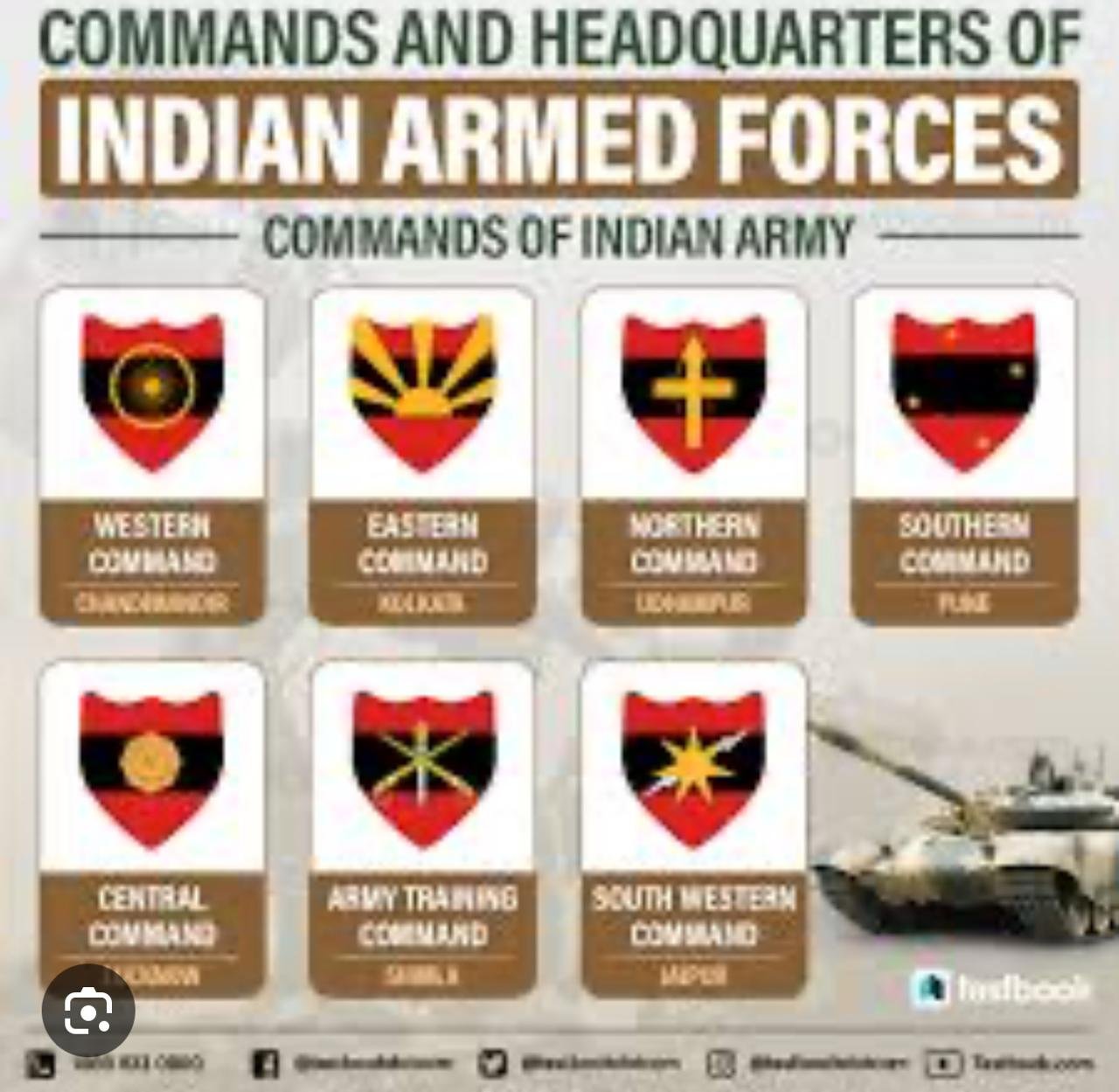
FORMATION SIGNS
FORMATION SIGNS
ALL HUMANS ARE ONE CREATED BY GOD
HINDUS,MUSLIMS,SIKHS.ISAI SAB HAI BHAI BHAI
CHIEF PATRON ALL INDIA SANJHA MORCHA
LT GEN JASBIR SINGH DHALIWAL, DOGRA
SENIOR PATRON ALL INDIA SANJHA MORCHA
MAJOR GEN HARVIJAY SINGH, SENA MEDAL ,corps of signals
.
.
PATRON ALL INDIA SANJHA MORCHA
MAJ GEN RAMINDER GORAYA , CORPS OF
sanjhamorcha303@gmail.com
PRESIDENT HARAYANA STATE CUM COORDINATOR ESM
BRIG DALJIT THUKRAL ,BENGAL SAPPERS
PRESIDENT TRICITY
COL B S BRAR (BHUPI BRAR)
PRESIDENT CHANDIGARH ZONE
COL SHANJIT SINGH BHULLAR
.
.
PRESIDENT PANCHKULA ZONE AND ZIRAKPUR
COL SWARAN SINGH
PRESIDENT SAS NAGAR (MOHALI)
COL BALBIR SINGH , ARTY
INDIAN DEFENCE FORCES
DEFENCE FORCES INTEGRATED LOGO
FORCES FLAGS
15 Th PRESIDENT OF INDIA SUPREME COMMANDER ARMED FORCES
Droupadi Murmu
DEFENCE MINISTER
Minister Rajnath Singh
CHIEF OF DEFENCE STAFF (2nd)
General Anil Chauhan PVSM UYSM AVSM SM VSM
INDIAN FORCES CHIEFS
CHIEF OF ARMY STAFF(29th)
General Upendra Dwivedi, PVSM, AVSM (30 Jun 2024 to Till Date)