



Sanjha Morcha

Bangladesh seeks deposed PM Sheikh Hasina’s extradition from India

Hasina, 77, has been living in India since August 5
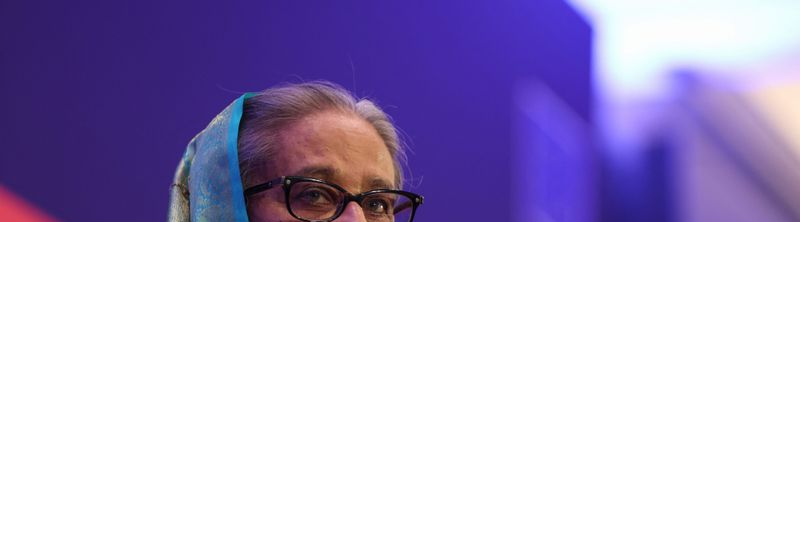
Bangladesh’s interim government on Monday said it has sent a diplomatic note to New Delhi requesting for extradition of deposed prime minister Sheikh Hasina, who has been living in India since fleeing Bangladesh in August.

Bangladesh’s de facto foreign minister Touhid Hossain said Dhaka wants Hasina back to face the judicial process.

“We have sent a note verbale to the Indian government saying that Bangladesh wants her back here for the judicial process,” Hossain told reporters in Dhaka.

It is learnt that the diplomatic note or note verbale was handed over to India’s External Affairs Ministry by the Bangladeshi High Commission in New Delhi.

Indian government sources confirmed receiving the note verbale.

“We confirm that we have received a note verbale from the Bangladesh high commission today in connection with an extradition request. At this time, we have no comment to offer on this matter,” said a source.

There was no comment from the ministry.

Hasina, 77, has been living in India since August 5 when she fled the country following a massive student-led protest that toppled her 16-year regime.

Bangladesh-based International Crimes Tribunal (ICT) has issued arrest warrants for Hasina and several former Cabinet ministers, advisers, and military and civil officials for “crimes against humanity and genocide”.

Earlier on Monday, Home Adviser Jahangir Alam said his office sent a letter to the foreign ministry to facilitate the ousted premier’s extradition from India.

“We have sent a letter to the foreign ministry regarding her extradition. The process is currently underway,” he told reporters in response to a query.

Alam said an extradition treaty between Dhaka and New Delhi already exists and Hasina could be brought back to Bangladesh under it.

Last month, in an address to the nation on the completion of 100 days of the interim government, Bangladesh’s Chief Adviser Muhammad Yunus said it will seek the extradition of Hasina.

“We must ensure justice in every killing… We will also ask India to send back fallen autocrat Sheikh Hasina,” he said.

Yunus, who assumed office on August 8, claimed that about 1,500 people, including students and workers, were killed while 19,931 others were wounded during the protest against the Hasina government.

In October, Law Adviser Asif Nazrul had reportedly said that Bangladesh would strongly protest if India tried to refuse Hasina’s extradition by citing any provision in the treaty.

In an interview with PTI in Dhaka in September, Yunus had said that Hasina making political remarks from India is an “unfriendly gesture”, asserting that she must remain silent to prevent discomfort to both countries until Dhaka requests her extradition.

“If India wants to keep her until the time Bangladesh (government) wants her back, the condition would be that she has to keep quiet,” he said.

In recent weeks, Hasina has accused the Yunus-led interim government of perpetrating “genocide” and failing to protect minorities, especially Hindus, since her ouster.

The relations between India and Bangladesh came under strain after the interim government headed by Yunus came to power.

India has been expressing concerns over attacks on minorities, especially Hindus, in that country.

There has been a spate of attacks on minorities including on the Hindu community in Bangladesh in the last few months.

Foreign Secretary Vikram Misri visited Dhaka two weeks back during which he conveyed to the Bangladeshi side India’s concerns, especially those related to the safety and welfare of minorities.


Drones hit Russian fuel depot again

Putin vows retaliation over Ukrainian strikes on residential buildings in Kazan

Agencies Agencies

Ukrainian drones struck a major Russian fuel depot for the second time in just over a week on Sunday, according to a senior Russian regional official, as part of a “massive” cross-border attack on fuel and energy facilities that Kyiv says supply Moscow’s military.

The strikes came days after Russia launched sweeping attacks on Ukraine’s already battered energy grid, threatening to plunge thousands of homes into darkness as winter tightens its grip over the region, and as Russia’s all-out invasion of its neighbour nears the three-year mark.

Putin holds talks with Slovakian PM

Russian President Vladimir Putin on Sunday held talks with Slovakia’s PM Robert Fico in a rare visit to Moscow by an EU leader since Russia’s invasion of Ukraine in 2022

  • Fico’s views on war differ sharply from most other European leaders

A fire broke out at the Stalnoy Kon oil terminal in Russia’s southern Oryol region, local Gov Andrey Klychkov said in a post on the Telegram messaging app, adding Russian forces downed 20 drones targeting “fuel and energy infrastructure” in the province.

Russian independent news outlet Astra shared video of what it said was an explosion at the site, showing a massive orange blaze lighting up the night sky. While the clip could not be independently verified, it was later shared by a Ukrainian security official who described it as footage from Oryol.

According to Klychkov, the local governor, the fire was extinguished hours later and did not cause casualties or “significant” damage.

Ukraine’s military previously claimed to have struck the Stalnoy Kon terminal with drones on December 14, causing a “powerful” blaze.

Meanwhile, Russia’s Defence Ministry said Sunday that its forces had intercepted 42 Ukrainian drones launched overnight at Russian territory. According to the ministry, 20 of those were over the Oryol region, where the local governor said a blaze tore through the oil terminal.

Meanwhile, Russian President Vladimir Putin on Sunday vowed retaliation after Ukrainian drones the day before struck residential buildings in the city of Kazan, in the Tatarstan region over 1,000 kilometres from the front line.

Speaking to Tatarstan’s regional governor, Rustam Minnikhanov, Putin asserted that anyone attacking Russia has to reckon with Moscow inflicting “many times greater damage” in return, but did not elaborate. His remarks were carried by Russian state news agencies.

Minnikhanov’s press service on Saturday said that eight drones attacked Kazan. Local authorities said there were no casualties.


Sydney Schanberg, who covered 1971 Bangladesh Liberation War for The New York Times, wrote this about the Indian Army:

Sydney Schanberg, who covered 1971 Bangladesh Liberation War for The New York Times, wrote this about the Indian Army:

“I don’t like sitting around praising armies. I don’t like armies because armies mean wars. But this (Indian) army was something. They were great all the way.
There never was a black mark … I lived with the officers and I walked, rode with the jawans, they were all great. But I never saw a man flinch because he was scared. There was a tremendous spirit in the Indian Army and it did one good to experience it.
“I have seen our boys [US Army] in Vietnam—and this army was different. Their arms and equipment aren’t as good-but what they had were used with effect and boy! could they improvise. I saw heavy recoilless guns carried on shoulders, big guns pushed across marshes like ox-carts, by jawans, villagers, officers, everybody was in it together and they were perfect gentlemen. I never saw them do a thing wrong not even when they saw just how bestial the enemy had been.”

BY

Lt Gen Harwany SIngh


Pakistan plans to procure 40 5th-Gen stealth fighter jets from China

The sale is expected to recalibrate regional dynamics, particularly in relation to Pakistan’s rival India, reports Hong Kong-based South China Morning Post

Pakistan plans to procure 40 jets of advanced Chinese stealth fighter J-35, which, if materialised, will mark the first export of China’s latest jet, according to a media report on Monday.

The sale would mark Beijing’s first export of fifth-generation jets to a foreign ally and is expected to recalibrate regional dynamics, particularly in relation to Pakistan’s rival India, the Hong Kong-based South China Morning Post reported.

The Post quoted Pakistan media reports stating that the Pakistan Air Force (PAF) had approved the purchase of 40 aircraft, expected to be delivered within two years, to replace its ageing fleet of American F-16s and French Mirage fighters.

The acquisition of new aircraft was pursued despite the serious economic crisis faced by Pakistan.

There is no official confirmation in Beijing or mention of such a deal in the official media here, though speculation is rife since the J-35, primarily regarded as a jet fighter meant for Chinese aircraft carriers, was exhibited at the prestigious annual air show at Zhuhai city last month attended by top PAF officials.

The land-based version of J-35 was called J-31, according to previous reports. China is currently the only country in the region to have developed stealth aircraft.

PAF chief Air Marshal Zaheer Ahmed Baber Sidhu said in January that “the foundation for acquiring the J-31 stealth fighter aircraft has already been laid”, according to the Post report.

All weather allies, China and Pakistan, shared a deep military relationship shrouded in secrecy. Beijing has been helping the modernisation of all three wings of the Pakistan military as it modernised its own armed forces with billions of dollars of defence expenditure.

China has helped Pakistan to jointly develop and operate the J-17 Thunder fighter jet, the mainstay of the PAF.

China has delivered four advanced naval frigates to the Pakistan Navy in the last few years to enable it to play a bigger role along with its navy in the Indian Ocean and Arabian Sea.

The reports of Pakistan’s plans to acquire China’s latest fighter jets come in the backdrop of the visit of top PLA General Zhang Youxia to Pakistan last month, during which he held one-on-one talks with Pakistan’s Army chief Gen Asim Munir.

Gen Zhang is Vice Chairman of the Central Military Comm­ission (CMC), the overall command of the Chinese military headed by President Xi Jinping.

A readout issued by the ISPR after the talks said their engagements focused on “matters of mutual interest, regional security dynamics, measures for regional stability, and enhancing bilateral defence cooperation”.

Gen Zhang’s visit coincided with the arrival of 300 Chinese troops to Pakistan to take part in counter-terrorism drills.

According to Pakistan media reports, China is pressing Pakistan to allow its security firms to protect about 20,000 Chinese personnel working on the projects of the China-Pakistan Economic Corridor (CPEC), who are increasingly coming under attacks from militant groups in Pakistan.

For its part, Pakistan says it has deployed over 30,000 military and para-military personnel to protect the Chinese workers.

Pakistan has been reportedly resisting Beijing’s pressure to deploy Chinese troops over sovereignty concerns, according to the reports.


Impetus on developing border infrastructure, but equipment deficiencies, budgetary constraints remain

The Parliament’s Standing Committee also observed deficiencies in equipment holding by the BRO vis-à-vis its requirement

Vijay Mohan Tribune News Service

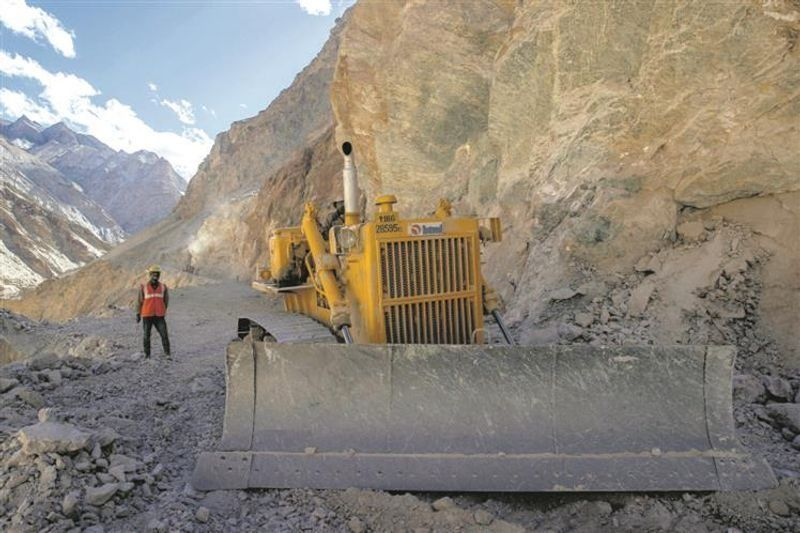
Even as the Central Government has been giving an impetus to develop infrastructure and connectivity in remote areas in view of the threat perception, the Border Roads Organisation (BRO) is facing equipment deficiencies and lower budgetary allocations than the financial projections.

Over the past five financial years, allocations under revised estimates (RE) have been consistently less than the projections, according to a report presented by Parliament’s Standing Committee on Defence this month.

Functioning under the administrative control of the Ministry of Defence, BRO is mandated with the construction and maintenance of roads, bridges and tunnels connecting remote and inhospitable areas along the border to facilitate troop movement and logistics, which also benefit the civil populace residing in these regions.

Though the budget for BRO has shown an increase in absolute terms over the past five years, barring the 2021-22 fiscal possibly due post pandemic situation, there have been instances during this period of the actual expenditure exceeding the revised allocations.

According to official figures, the revised projections for 2019-20 and 2020-21 were Rs 6.373 crore and Rs 7,515 crore, respectively, which fell to Rs 4,509.5 crore in 2021-22. This shot up to Rs 9,602 crore in 2022-23 and Rs 12,544 crore in 2023-24.

The commensurate allocations for these years, on the other hand, were Rs 5,688.91 crore, Rs 6,935.25 crore, Rs 3,932.42 crore, Rs 9,369.50 crore and Rs 12,042.00 crore.

In the current 2024-25 fiscal, the budgetary projection and allocation is Rs 14,074 crore and Rs 12,107.41 crore, respectively, while the revised projection is Rs 12,157.41 crore. The revised allocation will be finalised later.

The committee also observed deficiencies in equipment holding by the BRO vis-à-vis its requirement. The list included hydraulic excavators, tippers, excavators-cum-loaders, wheel loaders, hot mix plants, stone crushers, load carriers and concrete mixers.

The equipment varies from year to year, depending upon allocated target and the task at hand. In the 2024-25 the deficiency ranged up to 36 per cent, with the shortfall being the highest for concrete mixers and tippers. Deficiency is met by hiring equipment or outsourcing work to contractors.

Established in 1960, BRO has its footprints in all the border states of India across diverse terrains such as mountains, deserts, plains and forests, besides having a presence in neighboring countries such as Afghanistan, Bhutan, Myanmar, Tajikistan and Sri Lanka.

The BRO has constructed over 62,000 km of roads, 915 permanent bridges, four tunnels and 19 airfields under adverse climatic and geographical conditions. At present, it has 10 major projects having strategic implications underway in Ladakh, Jammu and Kashmir, Himachal Pradesh, Uttarakhand, Sikkim, Arunachal Pradesh, Manipur, Mizoram, Nagaland and the Andaman and Nicobar Islands.


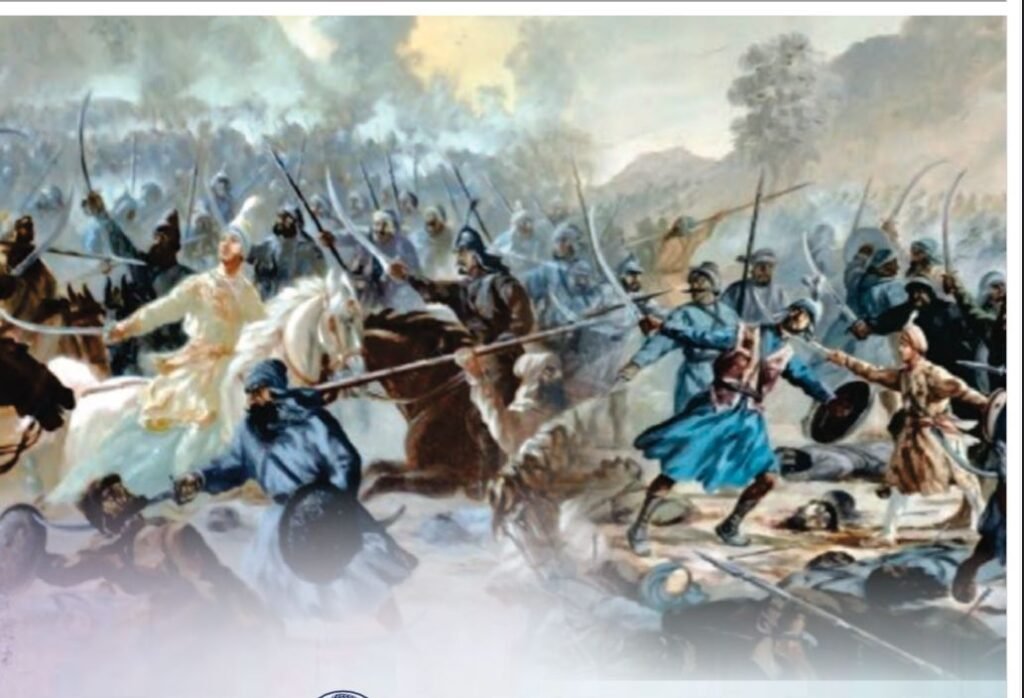
BATTLE OF CHAMKAUR SAHIB : DESCRIBED IN SHABAD/SONGS

ਇਹਨਾਂ ਦੇ ਪੁਰਖਿਆਂ ਦੀ ਸੀ ਚਮਕੌਰ ਦੀ ਗੜ੍ਹੀ | Guru Gobind Singh Ji | Battle of Chamkaur 

MARTYRDOM (SHAHEEDI)OF SINGHs AT CHAMKAUR SHAHIB: 23 DEC

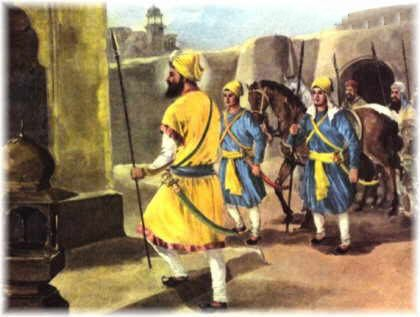
On 21 December 1704, Guru Sahib, Panj piaras and 40 Singhs camped in an open space in Chamkaur. In the evening Guru with his sikhs took control of Kachi Garhi a Mud fortress on a small hill. Kachi Garhi was owned by two brothers Chaudhari Roop Chand and Jagat Singh. They offered their services to Guru. Guru Sahib had visited Chamkaur in 1702 while returning from Kurekshetra. Guru Sahib and 40 Singhs moved into the house of Chaudhari Roop Chand and Jagat Singh situated on a hill. The Haveli with its high paraimeter mud brick wall now became the fort of Guru Sahib.

At the commencement of Amritvela (early hours of the day before sunrise) Guru Sahib woke up Bhai Sangat Singh.

“Wake up Sangat Singh, its time for Asa di Var. Let’s do Kirtan,” Guru ji said.

What an amazing warrior-saint Guru was! An army of around 1 Million was pursuing Guru Sahib and planning to attack the place where they were staying, and yet Guru Sahib was still blissfully continuing his daily discipline of meditation, Nitnem and Kirtan, with his Singhs.

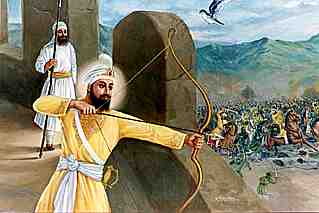
Mugal generals, yelled over the wall, “Gobind Singh! If you and your Sikhs come out now, you will be spared!” Guru Sahib replied to this with a rain of arrows. There was silence now in the cold morning. Clouds filled the sky followed by thunder and lightening. Guru and the Singhs became ready for the battle.

Preparing for Battle

In the chilly hours before sunrise a Mughal messenger came to negotiate with the Sikhs. However, Guru Sahib told the messenger to go away or face death. Inside the four walls of the mud-house Guru Sahib declared war.

First one Singh came out and when he was about to become Shaheed (martyr), he roared the Jaikara (slogan) of “Sat Sri Akal!” As soon as the sound of “Sat Siri Akal” echoed throughout the battlefield, the next Singh came out to fight in the battleground. The Nawab was astonished at what these Singhs were made of. He remembered the sayings of the Sikhs that “One Sikh equalled Sava Lakh (125,000)” – the bravery of one Sikh is equal to that of 125,000 ordinary men.

After the day’s fighting, by the night, writer Dalip Singh in Life of Sri Guru Gobind Singh Ji tells us that the following 11 Sikhs remained alive:

1: Bhai Daya Singh2: Bhai Dharam Singh3: Bhai Mann Singh4: Bhai Sangat Singh5: Bhai Sant Singh6: Bhai Ram Singh7: Bhai Kehar Singh8: Bhai Santokh Singh9: Bhai Deva Singh10: Bhai Jiwan Singh11: Bhai Katha Singh


During the night of 22/23 December 1704, Bhai Daya Singh and Bhai Dharam Singh (two of the original Panj Piarey) along with Bhai Maan Singh and other Singhs remained in the fort of Chamkaur Sahib. There were a total of 11 Singhs left on the night of December 22-23,1704. Fighting paused at nightfall while the Mughals regrouped but this also gave valuable time to the few remaining Sikhs to hatch a plan.

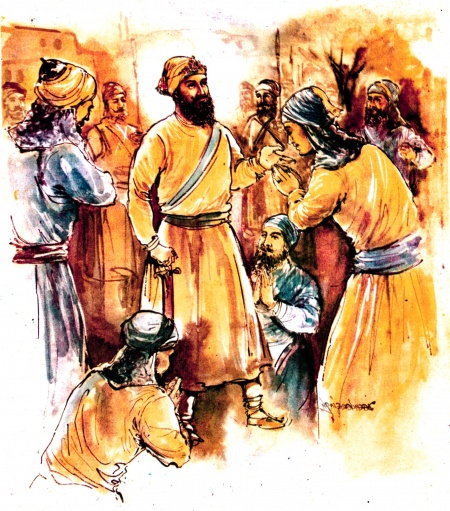
The 11 Singhs left included Bhai Daya Singh and Bhai Dharam Singh (the two remaining panj piaare) and Bhai Mann Singh, Bhai Sangat Singh, Bhai Sant Singh and 6 others. These 5 Singh begged Guru Ji to escape, they said “At Kesgarh Sahib we watched you beseeching the five beloved ones to initiate you with Amrit.

You had said then, I am of the Khalsa, and the Khalsa is mine. Today we ask in the capacity of the Khalsa to beseech you to leave Chamkaur and escape to a safer place.” Guru Sahib had no choice but to accept their demands. It was decided that Guru Ji, Mann Singh and the two panj piaare would leave the fort and that they would dress up Sangat Singh to look like Guru Ji because he had an uncanny resemblance to Guru Sahib.

Guru Ji killed the few soldiers that were on watch. Then he left in the pitch dark and started to shout “Sat Sri Akal”. The Mughals who couldn’t see where anyone was ended killing several of their own while Guru Ji and the three Sikhs who accompanied him escaped.

They had previously agreed if they had split up to meet on the outskirts of Machhiwara, twenty seven kilometres away. Sant Singh, Sangat Singh and the other Singhs left at the fort inflicted great losses to the enemy at night by causing distraction and confusion.

The end of the Battle

As day broke, the Mughals launched an all out attack on the fortress. There was stiff resistance. They finally entered the fort, after hours of battering the fort, but Bhai Sangat Singh, Bhai Sant Singh and the remaining Sikhs charged out on horseback. They engaged the enemy and killed scores of the enemy before attaining martyrdom. The Mughals thought they had killed Guru Ji but the Guru had already escaped. The Khalsa lived to fight another day.

Guru Sahib had not left quietly. On leaving, Guru Sahib blew his horn and stood on high ground and clapped his hands three times saying “Peer-e-Hind rwad” (“The “Peer” of India is leaving”).

“Blessed is that land, blessed is that father, blessed is the great mother. Whose son has shown the way to live, for centuries to come.”


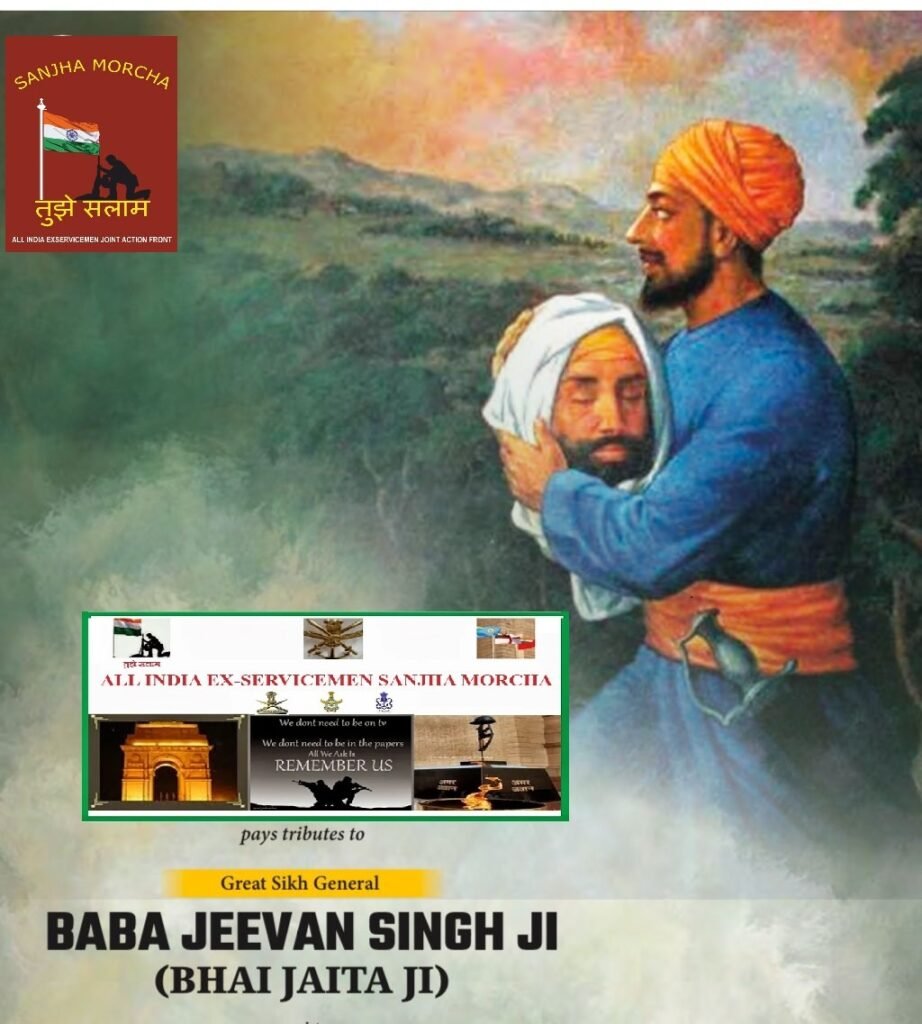
SANJHA MORCHA PAYS , TRIBUTE TO SAHIBZADEE, AJIT SINGH AND JUHAR SINGH AND BAWA JEEVAN SINGH, SIKH GENERAL

bhai Jivan Singh (13 December 1649 – 22 December1705) was the name given to Bhai Jaita after he had received the rites of initiation at the hands of Guru Gobind Singh on the day – 14 April, 1699 when the Khalsa was inaugurated. He was a Sikh from PatnaIndia who had belonged to the Majhabi (scavenger) caste.

He received initiation into Khalsa panth from Guru Gobind Singh who had previously given him the special honour by addressing him as “Ranghareta Guru Ka Beta” (“the young man of the Ranghar caste is the Guru’s own son”). The Ranghar caste was a caste created for those born of a union between a Hindu and a Muslim. Both the children and their descendants were considered outcasts by the Hindus.

It was Bhai Jaita who had risked his life to recover and return the severed head of Guru Tegh Bahadur to the Guru for cremation. He became famous when he cut the head of his own father (bhai sada nand) and remaing body was buried under the home where all family residing and placed on where ninth guru of sikhs Guru Teg Bahadur sahib ji, and then he rescude the severed head of ninth guru of the sikhs Guru teg bahadur sahib ji who has been executed in the dilhi on the order of Aurangzeb .

He succeeded in evading the guards and escaping with the severed head of the ninth Guru to Anandpur where he was received with much honour by Guru Gobind Singh. othe

Bhai Jaita Ji, his uncle Bhai Agya Ram Ji and Bhai Oodai Ji hurriedly removed the head and trunk of Guru Ji, put Bhai Sada Nand Ji’s head and trunk at that place and disappeared on tiptoe. Putting Guru Ji’s head and trunk on their horses tethered at some distance, Bhai Agya Ram Ji reached his house at Bhai Kaliana’s Dharamshal in village Raisinha near Delhi. They cremated Guru Ji’s body by raising a pyre within the house.

The Kotwal of Chandni Chowk, Khwaja Abdullah and Aurangzeb’s daughter Zebunnisa had assisted in this act. Later when Emperor Aurangzeb came to know of the cremation, he martyred Bhai Agya Ram Ji and his family by torturing them to death. However, no reference is available regarding what happened to Pandit Shiv Narain Ji’s family. Aurangzeb confiscated the site of Bhai Agya Ram’s house and built a mosque there. Later on Jathedar Baghel Singh demolished this mosque and built there a Gurdwara named Rakab Ganj Sahib.

After he cremated the Guru Ji’s trunk in his uncle’s house, Bhai Jaita took the head along, taking advantage of the dark of the night and rainy weather and deceiving the royal forces. Following a zig-zag passage and passing through Bagpat, Taraori, Ambala, Nabha etc. he reached Kiratpur Sahib on 15 November, 1675 A.D.

Battles
Baba Jiwan Singh Ji had stood by Guru Ji and showed the feats of his bravery in the following battles:

1. The Battle of Bhangani
2. The Battle of Nadaun
3. The Battle of Anandpur Sahib
4. The Battle of Bajrur
5. The Battle of Nirmohgarh
6. The First Battle of Anandpur Sahib
7. Sudden Attack on Anandpur Sahib
8. Second Battle of Anandpur Sahib
9. Third Battle of Anandpur Sahib
10. Fourth Battle of Anandpur Sahib
11. The Battle of Bansali/Kalmot
12. Sudden Attack-A Battle near Chamkaur Sahib
13. Freeing a Brahman Woman at Bassi Kalan
14. The Battle of Sirsa
15. The Battle of Chamkaur

While fighting the battle of Sirsa, Sahibzada Ajit Singh was caught in the siege of the enemies. Baba Jiwan Singh rode his horse, holding swords in both hands, held the reins of his horse in his mouth, made a short work of many enemies and succeeded in extricating Sahibzada Ajit Singh safe and sound from the circle of the enemy.

There can hardly be any fighter in the world who may ride his horse, holding the reins in mouth and wield two swords with his right and left hand at the same time. Similarly, no match to Baba Jiwan Singh Ji has been so far born in the world who may make sure shots with two rifles at the same time. That is why during the warfare he always kept his two guns Nagni and Baghni with him.

Guru Ji introduced the war-drum (Ranjit Nagara) to inject heroism in his soldiers during the war, the second of which could be heard over a long distance. The drum was beaten under the supervision of Baba Jiwan Singh Ji because he was the Chief Drummer, and the fighting was always started with the beat of the drum.

He possessed special expertise in guerilla warfare. In addition to this Guru Ji had appointed him the Chief of the Intelligence Department. According to historical research he was also the tutor of the two elder sons (Sahibzada Ajit Singh Ji & Sahibzada Jujhar Singh Ji) of the Guru Ji in military training.

Sri Gur Katha

He was not only a great fighter, but he was also an excellent poet. His work “Sri Gur Katha” is a great contribution to the Sikh religion. This book contains a first hand account of Guru Ji’s battles.

The praises of Guru Ji sung in a devoted and emotional manner in this book make Baba Jiwan Singh Ji a poet of the rank of Bhatt Poets in Guru Granth Sahib. The picture of the personality of Satguru Ji is matchless and unique. He has also recounted in this book all the incidents in relation to Amrit captivation, the mode of preparing Amrit, the importance of five symbols in Sikhism, sikh conduct and conventions, martyrdoms of Guru Teg Bahadur Ji and Bhai Sada Nand Ji (The Father of Bhai Jiwan Singh Ji) in detail.

To express his thoughts and emotions Baba Jiwan Singh Ji has used various like Kabitt, Swaiyya, Dohira, Sarkhandi, Kundlia, Rala, Bisham Padi (Shabad), Chopayee, Sortha etc. To express his meaning Baba Ji has used various literary techniques such as Alliteration, Simile, Metaphor, Proverbs, Examples, Weepsa Alankar, Utparokhia Alankar and Ulek Alankar. Baba Ji’s writing is dominated by thoughts founded on devotion, on which account essence of solace is supreme, but he has also made use of Pathos, Vir Ras and Vibh Ras.

The style is the image of a writer’s personality. Love of the Guru in his heart, courage, devotion, faith, forbearance, humility, enthusiasm etc. all have contributed to making his style distinctive.

The Martyrdom of Baba Jiwan Singh Ji at Chamkaur Sahib

Guru Gobind Singh Ji along with 40 Singhs, including two of his older sons, and the five Panj Piyare, the original “Beloved Five” reached Chamkaur di Garhi, after leaving Anandpur on the night of December 22/23, 1704A.D., crossing the flooded Sarsa rivulet, and resting at Kot Nihang Khan. They asked permission of the city chief for shelter to rest for the night in their garhi or haveli.

The Battle Of Chamkaur Sahib was a battle fought between Khalsa led by Guru Gobind Singh against the Mughal forces led by Wazir Khan and other Mughal Generals.


A Serving solider dies death is not attributed to military service. Brig CS Vidyasagar (Retd)

Dear Sir,

  1. A few Young serving soldiers die at young age and the medical boards do not consider the death as Attributable to Military Service. The young widow gets the same family pension as that of her husband had he been alive with that length of service for 10 years from date of death. Though such cases are few yet there are many such widows who approach for help. The Ex-Servicemen who get discharged after 15 years if they die in one or two years of their retirement, the widows gets the pension of her husband for just 7 years when her children are still going to elementary school or at the most higher secondary school. Thereafter the pension is reduced to Ordinary Family Pension which is Rs Rs 20325 x 0.60 = Rs 12,195 in Dec 2024. Most of the widows of Sepoys or Naiks or Havildars are less educated and do not get jobs in their native villages.Most of them do not own single bed room house even. These young widows find it extremely difficult to bring up their children with meagre family pension after 10 years / 7 years.

2.⁠ ⁠Brig SC Kuthaila (mob no: 98116 60251 and Email id: kuthiala2743@gmail.com) of NOIDA has taken the initiative to remove the restriction of 10 years / 7 years for widows of Defence Services Personnel by registering a NGO titled Family Pensioners Welfare Samiti and filed a legal case in Hon’ble Supreme Court. The first hearing took places in a record time on 20 Dec 2024 (less than six months for filing the case in Hon’ble Supreme Case). He raised funds with help of few friends and some ladies. The bank balance is Rs 5.39 lakhs. He expects the expenditure will touch Rs 10 lakhs.
3.⁠ ⁠⁠I contribute Rs 1,000 for this noble cause. I request you to generously contribute for this legal case. Kindly see the attachment where I give more details about Family Pensioners Welfare Samiti and the legal case No: W.P.(C) NO. 232/2024 – FAMILY PENSIONERS WELFARE Vs. UNION OF INDIA AND ANR is listed on 20-12-2024 in Court No. 3 as Item No. 36 subject to order for the day.

  1. Kindly speak with Brig SC Kuthiala (Retd) in NOIDA as per the contact number I have given and then only remit your contribution to his NGO.

warm regards,
Brig CS Vidyasagar (Retd)
President, T SEWA
Mob No: 75695 13350
brigvidya.tsewa@gmail.com


Manipur conflict not just a local crisis

It is a microcosm of the broader challenges of managing diversity in a pluralistic society

article_Author
Lt Gen DS Hooda retd.

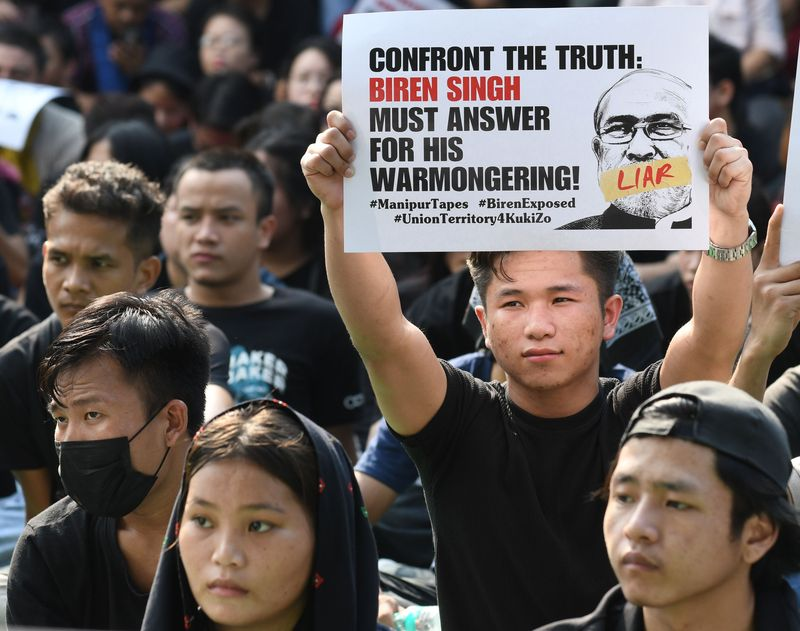
THE conflict in Manipur, now in its 19th month, shows few signs of an early resolution. In his address on Vijay Diwas on December 16, Chief Minister Biren Singh blamed the unrest on ‘certain agencies’ that are attempting to destabilise the state. He further cited the role of politically motivated and one-sided information as a major contributor to Manipur’s instability. He also claimed that misinformation had been conveyed to Central leaders, creating confusion regarding the appropriate course of action.

In evaluating the situation in Manipur, it is helpful to reflect on how the Indian State has effectively managed insurgencies across the Northeast and why Manipur has now diverged as an exception. The Northeast has long been a battleground of ethnic assertions, with armed movements emerging soon after Independence. These movements, primarily fuelled by tribal groups asserting their identities, have raised demands ranging from secession to calls for greater autonomy. The Indian State has adopted a two-pronged approach to address them: overwhelming military force to establish control and sagacious accommodation of ethnic aspirations.

The Army initially adopted harsh measures, like the forcible relocation of villages, large-scale cordon-and-search operations and retributive punishments. The military’s role in suppressing insurgencies has often drawn criticism for human rights violations, yet it succeeded in establishing the writ of the State.

Alongside, the government displayed great foresight in addressing the concerns of different ethnic identities. The states of Nagaland, Mizoram and Meghalaya were carved out of Assam, while Manipur and Tripura went from UTs to statehood. Articles 371A, 371C and 371G were incorporated in the Constitution, providing special provisions for the tribal communities. Autonomous councils under the Sixth Schedule further empowered ethnic groups like Bodos, Dimasas, Karbis, Khasi, Garos and Chakmas, giving them legislative and administrative control over land and local customs.
A concerted effort was made to get the armed cadre to eschew violence through generous surrender programmes. One criticism of this was that the cadre remained in designated camps and were never absorbed into civil society through rehabilitation and, thus, retained their militant group identity. While not perfect, the dual strategy of control and accommodation was successful in significantly reducing violence in the Northeast, with terror-related deaths dropping from over 1,000 in 2008 to just 13 in 2022.

Manipur represents a volatile blend of three major communities — Meiteis, Nagas and Kukis — each with distinct cultural traditions. All groups maintain armed militant factions, often regarded as crucial for safeguarding their identity in a multi-ethnic landscape. The Meiteis, as the majority community residing in the central valley, have traditionally held significant political power in Manipur. However, they lack the constitutional safeguards available to the tribal Nagas and Kukis, such as quotas in education, jobs and land rights. This imbalance has long been a source of tension. Frequent blockades by tribal groups to press their political demands also affected the Meiteis by disrupting daily life, deepening economic woes and worsening inter-community ties.

On the other hand, the tribal communities view the special provisions as essential protections against cultural erosion — protections that they argue are necessary due to their minority status. State and Central governments have sought to balance a complex interplay of differing types of accommodation — political power for the Meiteis and special safeguards for the tribals. While this meant that some grievances of the Meiteis remained unaddressed, a fragile status quo was maintained.


In a sensitive ethnic environment, self-aggrandising politicians can exacerbate conflict by using ethnic identities as a tool to mobilise support, portraying themselves as the protectors of one group while demonising another.

This is what happened in Manipur when the CM’s rhetoric against the Kukis became strident. While he justified his actions as acting against illegal immigrants, drug traffickers and encroachers on forest land, they sparked alienation among the Kukis. In March 2023, the state government withdrew from the Suspension of Operations agreements with the Kuki National Army and Zomi Revolutionary Army, signalling an end to negotiated peace efforts.

David Lake and Donald Rothchild, in their seminal work Containing Fear: The Origins and Management of Ethnic Conflict, argue that “stable ethnic relations can be understood as based upon a ‘contract’ between groups. Such contracts specify, among other things, the rights and responsibilities, political privileges and access to resources of each group… ethnic contracts channel politics in peaceful directions.”

Any perceived imbalance in this contract can ignite conflict. In Manipur, this imbalance was exacerbated by exploitative politics and ethnic activism that created a deep polarisation between the Meiteis and Kukis. Violence appeared inevitable, and the spark came in May 2023 when the Manipur High Court directed the state government to recommend granting ST status to the Meiteis.

Today, the geographical and psychological divide between the Meiteis and Kukis is nearly complete. The state forces appear to be helpless actors as armed civilian gangs from both sides roam the countryside in search of defenceless victims. Amid the civil war in Myanmar and instability in Bangladesh, the situation in Manipur is acquiring a larger national security dimension.

We must learn some lessons. Manipur’s conflict is not just a local crisis but a microcosm of the broader challenges of managing diversity in a pluralistic society. India’s ethnic mosaic is both its strength and a vulnerability. Handling ethnic diversity is not about sharpening differences, but embracing them within the framework of mutual respect and shared aspirations. The Northeast experience shows that peace is possible when governance is inclusive, leadership responsible and ethnic harmony treated as the foundation of a resilient democracy.