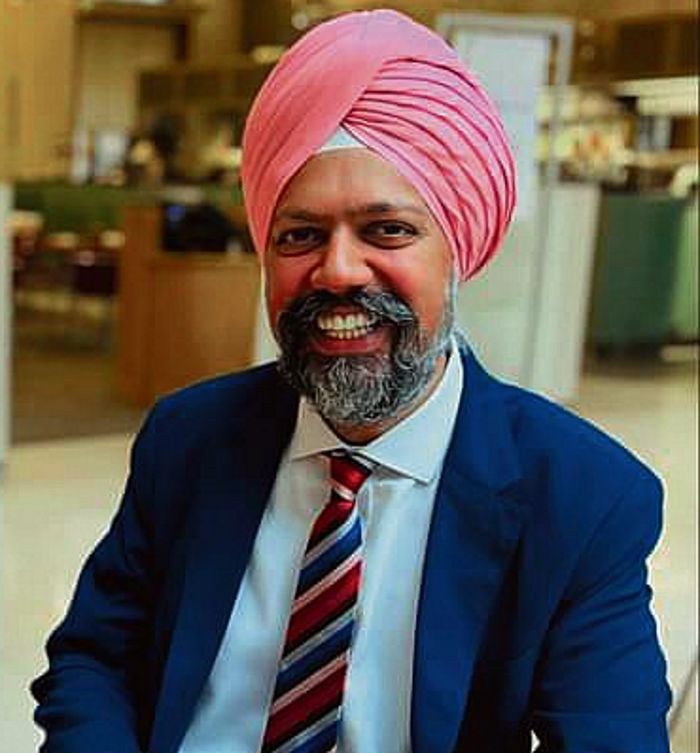
UK’s Punjabi-origin MP Tanmanjit Singh Dhesi was reportedly stopped by the immigration authorities at the Amritsar airport for two hours this morning. He reached Amritsar via an Air India flight (AI-118) from Birmingham at 9 am.
According to information, Dhesi did not have an Overseas Citizenship of India (OCI) card. The immigration officials asked him for the documents following which he was stopped at the airport.
It took two hours to provide all documents before the authorities allowed him to leave the airport around 11am. There was, however, no statement or reaction about the incident by Dhesi on his social media platforms.
Punjab VB books Capt Amarinder’s ex-media adviser BIS Chahal in assets case
The Punjab Vigilance Bureau (VB) has registered a case of disproportionate assets against Bharat Inder Singh Chahal, former media adviser to former Chief Minister Captain Amarinder Singh.
Booked in 2007, too
Bharat Inder Singh Chahal, who was the media adviser to Capt Amarinder Singh during the Congress regime (2002-07), was booked for corruption in 2007 as well, during the Shiromani Akali Dal-BJP rule and faced a probe by the Vigilance Bureau. He was, however, acquitted in the case in 2016 after the bureau failed to prove charges in the disproportionate assets case.
However, following a plea by Chahal, the Punjab and Haryana High Court (HC) last week restrained the bureau from arresting Chahal.
The VB said an FIR (number 26) was registered under Sections 13(1)B and 13(2) of the Prevention of Corruption Act against Chahal at the Patiala police station yesterday. Chahal joined the BJP in September 2022 last year, along with Capt Amarinder Singh.
As per the FIR, from March 2017 to September 2021, the income of Chahal and his family members was Rs 7.85 crore against the expenditure of Rs 31.79 crore, which was almost 305 per cent more than his known sources of income.
The FIR states that Chahal acquired properties in his own and his family members’ names, including Dashmesh Luxury Wedding Resort (Alcazar) at Fatehgarh Sahib, a five-storey commercial building on the Mini Secretariat road in Patiala, 72 kanal and 14 marla land at Kalyan village near a toll plaza on the Nabha road. “Apart from that, he also bought land at Malaheri and Harbanspura villages in Fatehgarh Sahib,” it adds.
The HC has, however, restrained the VB from arresting Chahal in the case. On June 1, the HC restrained the VB from taking action pursuant to the probe. However last week, it modified that order and said the VB was permitted to conclude the inquiry and to give effect to the same and in case, it came to the conclusion that an FIR was required to be registered, it would hand over a copy of the FIR to Chahal’s counsel, but not arrest him till the next date of hearing on August 7.
A senior VB official told The Tribune that in the preliminary probe “only the aforementioned properties have been taken into account. However, our probe is on and various other properties bought in the names of other relatives are also under the scanner”.
“The probe is not complete and we need to grill Chahal to know the sources of income used to buy all such properties,” he said.
Abducted’ by ultras in Kulgam, Indian Army soldier found
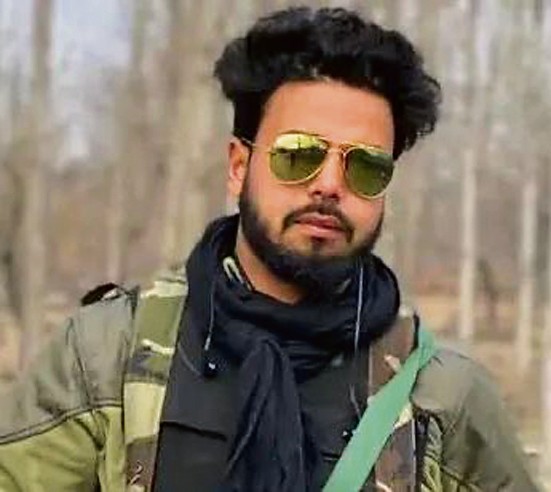
Army soldier Javed Ahmad Wani, who had been missing from Kulgam since Saturday evening, has been found by security forces in South Kashmir, the police said on Thursday.
Rifleman Wani (25) of Achathal village in Kulgam district was reportedly abducted by terrorist when he was returning in his car after purchasing groceries from the neighbouring Chawalgam village.
Kashmir ADGP Vijay Kumar stated that a joint interrogation would start shortly after Wani’s medical checkup. Further details shall follow, he added.
Posted in Kargil, Wani was scheduled to resume his duty on Monday. The armed men intercepted Wani’s car and abducted him, leaving behind a pair of slippers.
Wani’s family made an emotional appeal to the abductors, pleading for their son’s safe return. Describing him as innocent, they asked for forgiveness if he had inadvertently done anything wrong.
“Please release him, bring him back home. We apologise if he has committed any mistake. I have endured many hardships. Please bring Javed back to us. We will persuade him to leave his job. I will keep him by my side. I won’t send him back to his job. We don’t seek his employment. We implore you,” expressed Wani’s mother in her heartfelt plea to the terrorists.
(Maj Gen Harvijay Singh, SM) Cluster Bombs: they come in different hues but are equally devastating. A new ‘Game Changer’; the Cluster Bomb enters the Ukraine war to spearhead the latest Ukrainian offensive. It is being reported that the Ukrainian military’s 47th Mechanised Brigade has breached Russian lines to reach the outskirts of Robotyne, a village 20 KMs to the north-east of Tokmak in the Zaporizhzhia region. Ukraine would be keeping its fingers crossed that this newest ‘Game Changer’ will be ……….. ‘the Game Changer’. Cluster Bombs; the Americans call their Artillery Cluster Ammunition as DPICMs (Dual-Purpose Improved Conventional Munition), a weapon President Joe Biden recently decided to supply to Ukraine. The cluster munitions, contain a multitude of explosive submunitions which can be launched from ground, air, or sea to coat a large area with several hundred explosives. The area can be several 1000s Sq Metres and anyone within the cluster munitions strike zone – military or civilian – are likely to be killed by the submunition or seriously injured. One of the first notable civilian casualty to the American DPICM has been a Russian war reporter Rostislav Zhuravlev, who was killed, and three other Russian journalists wounded in a Ukrainian artillery attack near the frontline in Zaporizhzhia region. The weapon is so dangerous that as of April 2023, at least 123 countries signed on to UN’s 2008 Convention on Cluster Munitions—a treaty that bans the use of cluster munitions. The irony however is Russia, Ukraine, nor the United States is a signatory. (Even India, China and Pakistan are not) Notably most submunitions are not precision guided, their accuracy can be affected by weather and other environmental factors. They may therefore hit areas outside the military objective targeted. Also, according to reports, up to 40 % of cluster munitions fail to detonate upon impact, leading to sporadic explosions and long-lasting disruptions that can span decades. Unexploded submunitions often explode when handled or disturbed. There isn’t a weapon used in warfare that doesn’t carry the risks of killing people. That’s what these weapons are all about. Leon Panetta, a former Defence Secretary and CIA director. It is easy for the Americans to be laisse faire on the issue; they would cook up an escape if things went out of hand blaming the Ukrainians. Biden has already called the move a “difficult decision”, “helped along by a promise by the Ukrainians to use the weapons carefully”. The measure was planned as stopgap according to Biden, one that would presumably allow Ukraine to keep fighting while the US and its allies worked on getting more 155 mm artillery shells for them; strange excuses really! It is surprising, however that the Ukrainians are exploding these ‘gifts’ from USA to contaminate their own occupied territory underscoring the bizarre and persisting effects of cluster munition to which their citizens will return. They are excited enough to go to the extent of telling an anti-cluster bomb German MP to “go to hell”. UK and Spain have already voiced their objection to the cluster bombs transfer. As far as progress of the fresh offensive is concerned, Ukraine’s presidential adviser Mykhailo Podolyak has “reiterated that the Ukrainian counteroffensive will be slow and difficult but will prevent Russian forces from retaking the battlefield initiative”. A mature appreciation of a tactical position at this stage
Indira Gandhi National Open University (IGNOU) in collaboration with the Indian Air Force has launched unique skill-based Bachelor’s Degree Programs for newly joined Agniveers. The Degree Program has an equal weightage of the knowledge and skill components, thus meeting the mandate of NEP-2020 for integrating higher education with skill education. It was launched by IGNOU in the presence of Prof Nageshwar Rao, Vice Chancellor, IGNOU and Air Marshal Suraj Kumar Jha of the Indian Air Force. The three years degree program has provisions for multiple entry and exit. After completion of 1st year with 40 credits, the undergraduate certificate will be awarded and with 80 credits in two years, there is the provision of an undergraduate diploma. The learners have options for exit and re-entry. The knowledge component of the program will be offered by IGNOU from its bouquet of courses available for bachelor’s degree students in Arts, Science, Commerce, Tourism Management and Vocational Studies (MSME). The skill-based courses will be aligned to the NSQF and imparted through IGNOU and training at the IAF training establishment. During the ceremony, Prof Nageshwar Rao gave insights into the delivery mechanism for student support services to Agniveers for their smooth progress in pursuing the programs and appearing for the examination at different IGNOU centres at their convenience. Air Marshal Suraj Kumar Jha emphasised the far-reaching implication of this collaborative effort and exhorted it to be a game changer for the Defence Forces particularly the Agniveer to pursue higher education while on the job.
MYSTERY OBJECT THAT WASHED UP ON AUSTRALIAN COAST WAS FROM INDIA’S PSLV’, CONCLUDES AUS AGENCY
Countries must return any ‘foreign’ space objects found in their territory to owners The Australian Space Agency has concluded that the dome-shaped mystery object that washed up on a beach in Western Australia was from an expended Indian rocket. The agency said it is communicating with India’s space organization ISRO to determine next steps. On July 15, the object was discovered near the beach in Green Head in Western Australia (WA) about 250 kilometres north of the city of Perth. The Australian Space Agency tweeted, “We have concluded the object located on a beach near Jurien Bay in Western Australia is most likely debris from an expended third-stage of a Polar Satellite Launch Vehicle (PSLV). The PSLV is a medium-lift launch vehicle operated by @isro.” The space agency also said, “The debris remains in storage and it is working with the Indian Space Research Organisation (ISRO), who will provide further confirmation to determine the next steps, including considering obligations under the United Nations space treaties.” It added, “The Australian Space Agency is committed to the long-term sustainability of outer space activities, including debris mitigation, and continues to highlight this on the international stage.” According to the UN Office for Outer Space Affairs, countries are required to return any “foreign” space objects found in their territory to the owners, the BBC reported. “If the community spots any further suspected debris they should report it to local authorities and notify the Australian Space Agency via space.monitoring@space.gov.au,” the agency tweeted. Space debris both man-made and natural has a habit of coming down in WA’s vast outback, although it is rare for it to be found washed up on the state’s 12,895 kilometres of coastline. Most famously, the Skylab space station came hurtling back to Earth in 1979, with pieces of the rogue station found in the most remote of outback locations in Balladonia, north-east of Esperance in WA’s south. The local council hit NASA with a $400 littering fine, which reportedly remains unpaid. But scientists with their eyes trained on the skies have also recovered fragments of space rocks that have made it through the atmosphere and slammed into the ground in WA’s outback.
ISRO’S OFFER TO PRIVATISE SSLV ROCKET ATTRACTS 20 COMPANIES
The SSLV is developed by the Indian Space Research Organisation. It caters to the growing market for launching clusters of satellites. India’s ambitious goal is to increase its share of the global satellite launch market India’s Small Satellite Launch Vehicle (SSLV) was developed by the Indian Space Research Organisation and had its first successful satellite launch in February. India is making significant progress in its space program, with a recent initiative to privatise part of its operations. Centre recently opened bids for the construction of its Small Satellite Launch Vehicle (SSLV), attracting interest from 20 companies. This move is part of a broader policy drive by Prime Minister Narendra Modi to open up space businesses to private investment, following the lead of space agencies like Nasa, and the European Space Agency. The SSLV, developed by the Indian Space Research Organisation (ISRO), is designed as a cost-effective solution for launching satellites weighing up to 500 kg into low-earth orbit. It caters to the growing market for launching clusters of satellites for communications and data, a sector currently dominated by SpaceX and its rivals. The bid to take over the manufacturing and development of the SSLV rocket program marks the first privatisation of its kind under this new policy. The process was initiated on July 11 by the newly formed Indian National Space Promotion and Authorization Centre (IN-SPACe), which invited qualified companies to register their interest. Pawan Goenka, chairman of IN-SPACe, revealed that 20 companies had submitted an “expression of interest” in the rocket program. These applicants will undergo a pre-EOI consultation within two weeks. To be eligible to bid, companies must be profitable, and the lead bidder in a consortium must have at least five years of manufacturing experience and an annual revenue of over $48 million. India’s ambitious goal is to increase its share of the global satellite launch market fivefold within the next decade. Goenka expressed confidence that the winning bidder for the SSLV program would be able to develop the small-satellite launch business and position India as a global hub for such launches. SSLV, the sixth launch vehicle designed and developed by ISRO, lifted off from the Satish Dhawan Space Centre in Sriharikota for a 15-minute flight to Low Earth Orbit with three payloads weighing over 350 kilograms in February this year. ISRO has said that the key features of SSLV are low cost, with faster turn-around time, flexibility in accommodating multiple satellites, launch-on-demand feasibility, and minimal launch infrastructure requirements.
State Stalwarts
DEFENCES FORCES RANKS
ARMY, NAVY, AIRFORCE RANKS
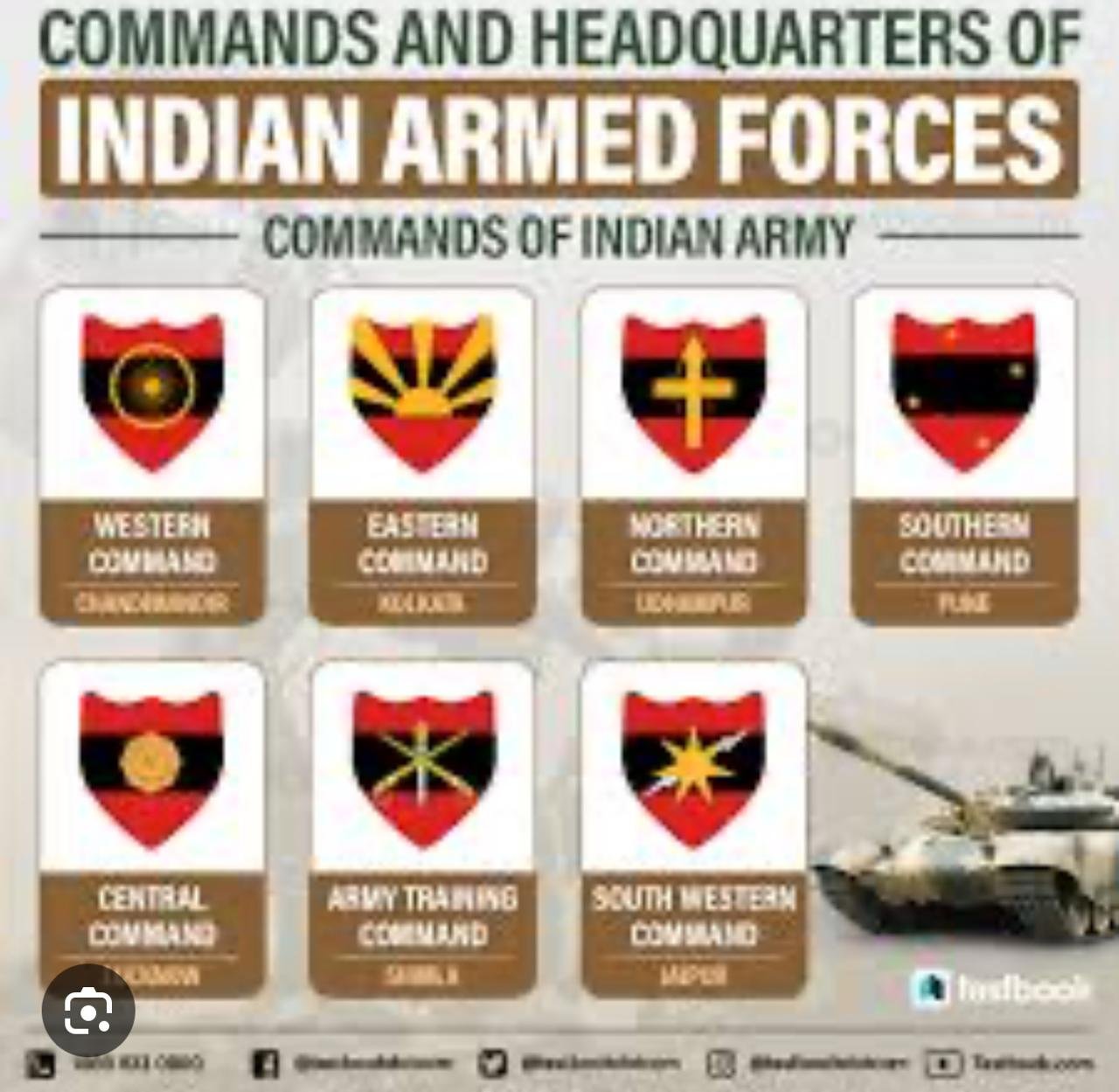
FORMATION SIGNS
FORMATION SIGNS
ALL HUMANS ARE ONE CREATED BY GOD
HINDUS,MUSLIMS,SIKHS.ISAI SAB HAI BHAI BHAI
CHIEF PATRON ALL INDIA SANJHA MORCHA
LT GEN JASBIR SINGH DHALIWAL, DOGRA
SENIOR PATRON ALL INDIA SANJHA MORCHA
MAJOR GEN HARVIJAY SINGH, SENA MEDAL ,corps of signals
.
.
PATRON ALL INDIA SANJHA MORCHA
MAJ GEN RAMINDER GORAYA , CORPS OF
sanjhamorcha303@gmail.com
PRESIDENT HARAYANA STATE CUM COORDINATOR ESM
BRIG DALJIT THUKRAL ,BENGAL SAPPERS
PRESIDENT TRICITY
COL B S BRAR (BHUPI BRAR)
PRESIDENT CHANDIGARH ZONE
COL SHANJIT SINGH BHULLAR
.
.
PRESIDENT PANCHKULA ZONE AND ZIRAKPUR
COL SWARAN SINGH
PRESIDENT SAS NAGAR (MOHALI)
COL BALBIR SINGH , ARTY
INDIAN DEFENCE FORCES
DEFENCE FORCES INTEGRATED LOGO
FORCES FLAGS
15 Th PRESIDENT OF INDIA SUPREME COMMANDER ARMED FORCES
Droupadi Murmu
DEFENCE MINISTER
Minister Rajnath Singh
CHIEF OF DEFENCE STAFF (2nd)
General Anil Chauhan PVSM UYSM AVSM SM VSM
INDIAN FORCES CHIEFS
CHIEF OF ARMY STAFF(29th)
General Upendra Dwivedi, PVSM, AVSM (30 Jun 2024 to Till Date)