Captain Shiva, peacekeepers to Sudan break gender barriers
The New Year bodes well for gender parity in the armed forces as it began with two historic developments. Captain Shiva Chauhan from the Corps of Engineers became the first woman officer to be operationally posted at the challenging frontline post of the Siachen Glacier. Proving the naysayers wrong, she has showed that unflinching commitment towards a goal is the key to mastering the arduous physical training needed to qualify for deployment on the world’s highest battlefield. To best serve in the 20,000-ft-high zone, the soldiers, irrespective of their gender, have to ace endurance and survival drills and learn ice wall climbing and avalanche and crevasse rescue operations, besides battling frostbite and chilly winds to come up trumps. Captain Shiva’s feat has paved the way for other women to follow suit.
Then, before the first week of 2023 ended, came the proud moment for India as it sent the largest-ever all-woman platoon (comprising two officers and 25 soldiers of varying ranks) to the UN’s peacekeeping force for deployment in the hostile Abyei area on the Sudan-South Sudan border. Female soldiers are known to be better at engaging with women and children who suffer in conflict situations. Their roles during the humanitarian crisis include conducting patrols and dialogue with locals, information-gathering and perception management. These jobs are critical components of the peacekeeping process.
The appointment of the first woman — Major Gen Kristin Lund of Norway — as Force Commander in a UN peacekeeping operation (in Cyprus) in 2014 was a watershed moment, acknowledging the shift to engaging more women in these hitherto male-dominated areas. Her performance in various top positions of duty has repeatedly affirmed that women are exceptional in the prevention and resolution of conflicts, negotiations, peacekeeping, humanitarian responses and post-conflict reconstruction, peace and security. Major Gen Lund is an inspiration for female soldiers. Before her, the courageous women stars of the Israeli army, who broke major gender ceilings, have kept the flag flying high. But despite all the strides, some gender barriers remain to be overcome by women warriors, particularly in combat roles.
Post killing spree, LeT front warns Sikhs living in J&K
At a time when the Centre has gone on a spree of anti-terror crackdown by banning two proxy organisations of the dreaded Lashkar-e-Toiba and the Jaish-e-Mohammad and declared four individuals “terrorist” in the past four days, one of the LeT proxies, The Resistance Front (TRF), has issued a warning to the Sikh community living in Jammu and Kashmir against helping the police.
In an open letter, the proxy for the Pakistan-based terror group Lashkar-e-Toiba, has recently said that several Sikh youth in J&K have been “working as Special Police Officers (SPOs) in the Police Department under the garb of civilian cover; hence, we openly declare that any person, irrespective of religion, who works as an SPO, will be treated as an agent of the RSS…”
“Further, some persons from the Sikh community allow the use of religious places as meeting halls for political persons. No such further incident will be tolerated and the committee concerned will be responsible for it,” it said. The group threatened by saying that this was the final warning and “you must stop such things, otherwise you would not have place in Kashmir”. It said, “Don’t become a scapegoat like Kashmiri Pandits, and don’t get provoked by the fascist regime’s saffronisation talks; we are fully monitoring the situation…”
Verify Canadian varsities, Indian envoy warns students
Indian High Commissioner to Canada Sanjay Kumar Verma says though 99 per cent of the Canadian institutions are genuine, about 10 private institutes have fleeced several students with false claims
Indian High Commissioner to Canada Sanjay Kumar Verma has cautioned Indian students to make proper checks before joining private universities in Canada.
In an exclusive interview with The Tribune, Verma said though 99 per cent of the Canadian institutions were genuine and offered world-class education, about 10 private institutes had fleeced several students with false claims.
“Several visas (sought on the basis of these institutes) were rejected, causing hardships to students and their families. I have more concern about India where falsified information is being spread by unscrupulous agents and recruiters sitting in India itself. The most disturbing aspect is that students are taking decisions based on factually incorrect information provided by these unscrupulous recruiting agents,” he said.
Verma pointed out that students must follow a checklist provided online by Canada’s IRCC (Immigration, Refugees Citizenship Canada) before investing huge money in seeking a life in the foreign country. He said his office was also concerned about the use of Canadian soil by gangsters and pro-Khalistani elements. “This issue is of particular concern,” he said. Nearly 10 gangsters and drug smugglers, besides members of radical organisations, are stated to be operating from Canada and causing violence in Punjab
The High Commissioner said his office was constantly working towards facilitating more talks between the Indian and Canadian authorities on such issues as part of measures to build trust. “It is imperative for India and Canada to keep talking on such sensitive matters at the political and diplomatic level so that positive results emerge and speedy action can be taken against the anti-national elements,” he said.
Indian-origin Manpreet Monica Singh has been sworn in as a Harris county judge, becoming the first woman Sikh judge in the US.
Singh was born and raised in Houston and now lives in Bellaire with her husband and two children.
Singh’s father immigrated to the US in the early 1970s. “It means a lot to me because I represent H-town (a nickname of Houston) the most, so for it to be us, I’m happy for it,” she said at the oath ceremony.
India deploys women platoon in Abyei for UN peacekeeping misson
India, among the largest troop-contributing countries to UN peacekeeping, is deploying a platoon of women peacekeepers in Abyei, the country’s largest single unit of female Blue Helmets in a UN mission since 2007.
Country’s single largest women peacekeepers unit since 2007
This will be India’s largest single unit of women peacekeepers in a UN mission since 2007
As of October 31, 2022, India second largest contributor to UN peacekeeping missions after Bangladesh
5,887 Indian troops and personnel deployed across 12 missions, Bangladesh deployed 7,017
The move heralded India’s intent of increasing significantly the number of women in peacekeeping contingents.
India’s Permanent Mission to the UN said in a statement that the platoon of women peacekeepers will be deployed in Abyei as part of the Indian Battalion in the United Nations Interim Security Force, Abyei (UNISFA) on January 6, 2023.
“This will be India’s largest single unit of women Peacekeepers in a UN Mission since we deployed the first-ever all-women’s contingent in Liberia in 2007. It will also herald India’s intent of increasing significantly the number of Indian women in Peacekeeping contingents,” the statement said.
The Indian contingent, comprising two officers and 25 other ranks, will form part of an engagement platoon and specialise in community outreach.
ndia has 25-odd airfields along the Himalayan border capable of launching air operations across the hilly terrain into the Chinese mainland. Therefore, high-tech fighter aircraft, such as the J-20B, need not necessarily do the job in terms of objectives, as their radar missile combination would also be compromised in the high terrain. Another important consideration would be the efficacy of ground attack and air defence weaponry.
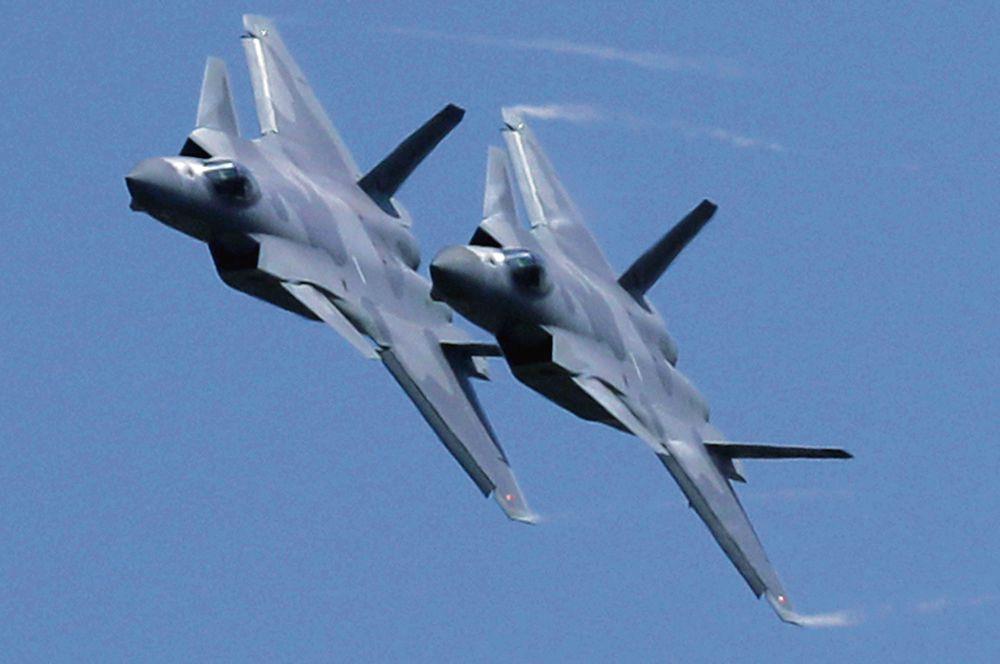
Pipe dream: The Chinese are seeking to replace the existing AL-31 F2 turbofan on the J-20 with the indigenous, more powerful WS-15. PTI https://cdn.vuukle.com/widgets/audio.html?version=1.0.3 Advertisement
Gp Capt Murli Menon (Retd)
Defence analyst
While much has been written about the two armies’ capabilities amid the India-China standoff, a comparison between the air forces has been scarce. A recent article in Hong Kong-based South China Morning Post has raved about the touted ‘supermanoeuvring’ capabilities of the upgraded J-20B ‘Mighty Dragon’ Generation 5 interceptor/air superiority fighter, reportedly slated for mass production since last July.
The lessons learnt by the Chinese from the Indian Su-30MKI vs US F-15s during the Red Flag exercise of suboptimal use of ‘thrust vectoring’ or ‘supermanoeuvrability’ (which seeks to enable harsh defensive manoeuvring against aerial missile threats or even better, achieve advantageous weapon launch parameters during close combat with an adversary) have been used to refine their upgraded J-20B stealth platform. This, in itself, indicates a doctored proposition as the Indian Su-30MKIs allegedly wove circles around the Americans during those engagements! They had procured some thrust vector control (TVC) Su-35 aircraft from Russia, possibly to reverse-engineer the technology.
The images (albeit unclear) accompanying the South China Morning Post article appear to indicate changes in airframe-control surfaces for enhanced manoeuvrability and an enlarged spine fuel tank capacity. Now, whilst the Chinese are past masters at info/psychological operations/warfare campaign, especially against neighbours, suffice to say that everything mentioned in the article need not necessarily be gospel truth; sans any authentic kinetic or computer fly-off against established fighter technologies from the West and even India (such as the Su-30MKI or the impending Tejas 2 or Advanced Medium Combat Aircraft, AMCA), these comparisons would remain speculative.
The Chinese are seeking to replace the existing AL-31 F2 turbofan on the J-20 with the indigenous, more powerful WS-15 to achieve an enhanced thrust-to-weight ratio. But this will remain a pipe dream until the WS-15 indigenous manufacturing project gains fruition. But then, why should the Chinese be seeking supermanoeuvrability as a preferred option for the J-20B, if indeed the advantage of TVC is negated by the disadvantage of a rapidly decaying speed vector and consequent vulnerability to “follow-on” attacks by the adversary?.
Quite clearly, the Chinese author praising the unique thrust vector capability of the J-20B does not understand if it is indeed a plus point in design or rather a handicap in close combat. The renowned vectoring in forward flight (or ‘VIFFing’ as colloquially known) had proved tremendously advantageous to the Royal Navy Harriers fighting Argentine fighter resistance during the Falklands War of 1982. So it does appear that the Chinese are hell-bent on achieving air superiority as an attribute for their air force in any future air war against the Americans over Taiwan. But the crux of the issue would be air combat training, a perennial weak area for the People’s Liberation Army Air Force.
Experience from past episodes in fighter engine manufacturing does not suggest dramatic capabilities with the Chinese aircraft manufacturing industry, regardless of their tendency to ‘steal’ technology from the West. In the earlier case of the FC-1 (later JF-17) programme, the plan was to use Russian RD-33 engines (same as those on our MiG-29s) till Russian President Vladimir Putin himself declared that the transfer of technology would not be made available to the Chinese.
So, it is doubtful that the Chinese would remain at the mercy of Russian technology for engines, lest the entire aircraft programme flounders. Engine manufacture, especially from the ‘raw material’ stage, is challenging and has been the bane for industries in China and India (our own sad story of the Kaveri engine is typical)..
Another key hindrance, especially for high-altitude fighter operations, would be the tailoring of fuel-metering jets on the engines to prevent a ‘rich cut’, especially during start-up.
The Indian Air Force (IAF) learnt to adapt to this peculiar requirement whilst learning to maintain the MiG-23BNs, MiG-23MFs and MiG-29s at Leh and Thoise. Ahead, the IAF could also think of operating fighters from Daulat Beg Oldie (DBO). Our experience found that it is easier to operate western-technology aircraft from high altitudes such as Mirages and Hawker Hunters. So, would it be for the Rafales and perhaps the Tejas and the advanced medium combat aircraft down the line as our technicians are proficient in these tweaks? The Chinese have been doing limited J-10 operations periodically from their high-altitude air bases such as Hotan and Lhasa Gongga.
But operationally, these bases pose stringent load penalties. On the other hand, India has 25-odd airfields along the Himalayan border capable of launching air operations across the hilly terrain into the Chinese mainland. Therefore, high-tech fighter aircraft, such as the J-20B, need not necessarily do the job in terms of objectives, as their radar missile combination would also be compromised in the high terrain. Another important consideration would be the efficacy of ground attack and air defence weaponry..
Traditionally, Russian and Chinese missiles, more so the air-to-air ones, have not been proven in air combat, unlike the ones employed in various air operations since World War II and Vietnam War by the Americans and their NATO allies.
The Chengdu Aerospace Corporation hopes to roll out 200 J-20Bs in the next five years, an amazing one aircraft or so per month over four production lines, which is remarkable by any standard. The aircraft is meant to bridge the technology gap with the American F-35 and F-22 and a naval version using TVC is also supposedly slated. The older J-20As flew across the Taiwan straits last year during the standoff over Nancy Pelosi’s visit. In any case, the Chinese would not in the long term accept Russian engine technology for their J-20Bs.
Celebrate the odds, be the winner, says Major DP Singh
“If you wish to give up anything, give up ‘giving up’. That’s the message I wish to give everyone and that’s the reason I run every day.”
This was the key takeaway from an address by Major DP Singh, the Kargil War survivor and India’s first blade runner, as he spoke as the chief guest at the inaugural ceremony of the new academic session at the PGI. The event was attended by key functionaries, heads of the departments and newly joined residents while observing the Covid-appropriate behaviour, at Bhargava Auditorium on the PGI premises here today.
“Losing a part of the body does not lead to disability. Losing the will to fight our odds does. Odds are in the head and not in the heart. Celebrate odds and be the winner,” stated Major DP Singh, while he narrated his journey from being declared ‘dead’ in an Army hospital in July 1999 during the Kargil War to 14 years hence, returning as India’s first blade runner, showing the world how the invincible spirit in a true warrior can make a handicap into a ‘handy- capable’ person.
Motivating the newly inducted doctors, Major DP Singh said, “Always remember an acronym, ‘ASK’, to be successful in life. It stands for attitude, skill and knowledge.” He shared that ‘attitude’ was the most important aspect in life and that if one focused on one’s goal with the right attitude, the other two factors would automatically fall in place.
He concluded, “Failure is important in one’s life as it teaches one to absorb shock and learn to adapt to difficult situations. So, don’t be scared of failures, lead the change and not wait for others to begin.”
Earlier, Prof Vivek Lal, Director, PGI, while welcoming the chief guest, recounted the valour of the braveheart. Lal said, “Major DP Singh’s journey from soldier to a marathon runner, who overcame all odds, even cheated death, is stuff for celluloid.”
The PGI Director urged residents “to emulate Major DP Singh’s exemplary courage, unwavering commitment and ‘never-say-die’ attitude in the face of even worst of the circumstances.
Lal stated that in the past 59 years, the institute witnessed a spectacular expansion from 230 beds to over 2,200-bed facility, setting high ideals of medical professionalism in mitigating the pain and sufferings of those ailing and becoming the last port of call for patients with many serious and chronic illnesses.
Prof R Sehgal, Dean (Academics), conducted the pinning ceremony of resident doctors who had joined the institute in the July 2022 and January 2023 sessions.
INDIAN NAVY SIGNS CONTRACT FOR AUTONOMOUS ARMED BOAT SWARMS UNDER SPRINT SCHEME
This is the 50th contract under ‘SPRINT’, which aims at the development of 75 indigenous technologies by the industry for the Navy Immediate Support Vessel (ISV), a light and armed patrol boat of the Indian Navy. File image for representation. The Indian Navy has signed an agreement with Sagar Defence Engineering Pvt. Ltd for armed autonomous boat swarms under ‘SPRINT’, an initiative to promote development of niche defence technologies by domestic companies. This is the 50th contract under ‘SPRINT’, which aims at the development of 75 indigenous technologies by the industry for the Navy, officials said. The contract was signed on Wednesday. “We are keeping the pressure on to sign the 100th contract by January end. Our aim is to induct 75 new technologies by August 15, 2023 as part of Azadi ka Amrit Mahotsav,” a Navy official said. Sagar Defence Engineering has the know-how to create the nation’s first armed autonomous unmanned boat with swarming capabilities, the company said in a statement. “The agreement refers to an Indian Navy project of the Defence India Start-up Challenge (DISC 7) SPRINT initiative, and the Indian Navy expects to place an order for 12 systems after the construction of the weaponised autonomous unmanned boat,” it stated. The platform will be able to conduct a range of navy and security tasks including high-speed interdiction; surveillance; constabulary operations; Command, Control, Communications, Computers (C4) Intelligence, Surveillance and Reconnaissance (C4ISR); and low-intensity maritime operations. ‘SPRINT’ stands for Supporting Pole-Vaulting In R&D through Innovations for Defence Excellence (IdeX), Naval Innovation and Indigenisation Organisation (NIIO) and Technology Development Acceleration Cell (TDAC). It was launched by Prime Minister Narendra Modi last July.
by Dr. S Samuel C Rajiv November 2022 saw the visit of the French Defence Minister Sebastien Lecornu as well as the US Secretary of the Navy Carlos Del Toro to India. Lecornu was in New Delhi for the Fourth India–France Defence Dialogue, where both countries decided to enhance military industrial cooperation with a focus on Make In India (MII). Apart from their interactions in New Delhi, Lecornu and Del Toro also visited Kochi, the headquarters of the Southern Naval Command, where the indigenously constructed aircraft carrier, INS Vikrant, is also based. The visits of the French and the American delegations brought into focus their parallel efforts to secure the contract for equipping India’s indigenous aircraft carrier with a fighter wing. The Indian Navy’s sole operational aircraft carrier, INS Vikramaditya, currently operates MiG-29K fighters. The choice of the Multi-Role Carrier Borne Fighter (MRCBF) program to equip the INS Vikrant is between the twin-engined US Boeing F/18 E/F Super Hornet and the French Rafale Marine (M). The single-engine TEJAS Light Combat Aircraft (LCA) was found unsuitable for aircraft carrier operations.1 The Ministry of Defence (MoD) issued a Request for Information (RFI) for MRCBFs procurement in January 2017 for 57 fighters, which was subsequently reduced to 26 fighters to be procured via the government-to-government (G2G) route. These include eight twin-seater trainer variants and 18 single-seater variants. Aircrafts In Contention Both the aircrafts in contention, the Rafale and the Super Hornet, did demonstration ski-jumps at the Shore-Based Test Facility (SBTF) at INS Hansa, Goa in January and June 2022 respectively. Boeing insists that the Super Hornet is fully compliant with the requirements of India’s aircraft carriers, INS Vikramaditya and INS Vikrant and notes that the two-seater F/18 can also be used for land-based missions as well as a trainer aircraft. The US aerospace major also highlights the fact that the aircraft is inter-operable with the Indian Navy’s Boeing P-81 reconnaissance aircraft. Boeing notes that the P8I is operated by three out of the four Quad countries (US, Australia and India). Two out of the four Quad countries also operate the F/18 aircraft (US and Australia). Boeing further reiterates that the same family of engines powers the F/18 and the TEJAS. While the General Electric (GE) F-414 powers the F/18, the US$ 716 million contract to supply 99 GE F-404 engines to power the TEJAS MK-I A fighter aircraft was signed in August 2021. The MoD had earlier in February 2021 placed an order with Hindustan Aeronautics Limited (HAL) for 83 TEJAS MK-1A jets worth Rs 48,000 crore. Boeing further reiterates that over 800 Super Hornets and its variants have been delivered worldwide and the massive scale will enable competitive incorporation of newly developed technology. The US aerospace major’s ‘By India-For India’ sustainment program is also expected to ensure a higher availability of aircraft for operational deployment. As for the other competitor, Rafale Marine, India has procured 36 Rafale aircraft for the Indian Air Force (IAF), the contract for which was signed in 2016. While the first aircraft was received in October 2019, all 36 were inducted by December 2022. Apart from France and India, Egypt, Qatar and Greece also operate the cutting-edge French fighter aircraft while the UAE signed a deal to acquire 80 Rafales in December 2021 and Indonesia signed a deal in February 2022 to acquire 42 Rafales. The MRCBF options are slated to be an interim solution, before the Twin-Engined Deck Based Fighter (TEDBF) project comes to fruition. The project was approved in 2020, with the Preliminary Design Review (PDR) expected to be completed by mid-2023. The aircraft will be powered by the GE F414 engines—the same engines that power the F/18s, and is expected to be inducted by 2031–32.3 Both Dassault and Boeing are also competing for the multi-role fighter aircraft (MRFA) program of the IAF, RFI for which was issued in 2018. French Arms Exports To India The Rafale is the latest in a series of fighter aircraft of French origin that have been operated by the IAF. French fighter aircraft in India’s inventory date back to 1953, when the IAF acquired the Ouragans (Toofani), becoming Dassault Aviation’s first export customer. Subsequently, the IAF also procured the Jaguars (beginning from 1978) and the Mirage 2000, from 1982 onwards. India currently has more than 100 Jaguars and more than 50 Mirage 2000s (single and dual-seat versions). The Mirages were upgraded with new radars, mission computers and electronic warfare (EW) suites (from Thales) in 2011. Prior to the 2016 Rafale G2G deal, the 2005 Scorpene deal for six submarines was another major acquisition from France. The first submarine, INS Kalvari was launched in 2015 and commissioned in 2017 while the sixth INS Vagsheer, was launched in 2022. The Scorpene and the Rafale deals accounted for India being the second biggest purchaser of French arms during 2010–20, after Saudi Arabia. While Saudi Arabia imported over Euros 9 billion from France, India imported arms worth Euros 7.2 billion.4 Egypt, Qatar and the United Arab Emirates, along with Saudi Arabia and India, made up the top five importers of French arms during 2010–20. Aircraft were the major category of French arms exports during 2010–20, accounting for a quarter of all its arms exports. The Strengthened India–US Defence Relationship Even as India’s arms imports from France registered a massive jump in 2010–20, and irrespective of India’s interim naval fighter choice, the India–US defence and strategic partnership has been significantly strengthened in recent times. India was designated as a Major Defence Partner in 2016. While US Foreign Military Sales (FMS) to India from 1950 to 2021 amounted to US$ 13.2 billion, US$ 4.7 billion (or 28 per cent) were during the period 2017–21.6 The authorised value of US defence articles and services through Direct Commercial Sales (DCS) to India has been over US$ 18 billion in the period 2010–21.7 Some of the key equipment that have been procured include transport aircrafts (Lockheed Martin C-130J; 12 inducted), multi-mission helicopters (Boeing CH-47F I Chinook; 15 inducted), Anti-Submarine Warfare (ASW) maritime patrol and reconnaissance aircraft (Boeing P8-I; 11 inducted; 1 more ordered), and attack helicopters (Boeing AH-64E Apache; 22 inducted in IAF; six more ordered for Indian Army in 2020), ASW helicopters (Lockheed Martin/Sikorsky MH-60R; 24 helicopters worth US$ 2.6 bn to be inducted by 2025), heavy transport aircraft (Boeing C-17A Globemaster III; 11 inducted) and UAVs (General Atomics MQ-9 Sea Guardian; two leased). India–US joint ventures like the Tata Boeing Aerospace Limited (TBAL), established in 2016, has supplied over 150 Apache fuselages to Boeing’s global clientele. At the India–US 2+2 Ministerial Dialogue held in April 2022, both sides also pledged to ‘promote the means to encourage reciprocal participation of Indian and US vendors in each other’s defence supply chains’. Going Forward If India opts for the Rafale Marine, as noted in this 9 December 2022 report, it will highlight the continued lack of success of US fighter aircraft manufacturers to become a part of India’s inventory, despite long-standing and robust efforts. It will also signify an increasing share of European manufacturers in the Indian military aerospace market. This is in the light of the 2016 Rs 60,000 crore Rafale deal and the 2022 Rs 22,000 crore deal for 56 C-295 transport aircraft from Airbus, 40 of which will be manufactured at Vadodara by Tata Advanced Defence Systems Limited and Airbus Defence and Space. While the C-295 is a replacement for the IAF’s HS-748 transport planes, it is also being seen as a possible replacement for the 100-odd AN-32s in the IAF fleet. Even as the robust India–US defence and military partnership can be expected to absorb the near-term setback that could possibly flow out of India’s interim choice for naval fighter aircraft, US aircraft engine manufacturers like GE will continue to be an integral part of indigenous fighter aircraft programs like the TEJAS MK 1 and MK-2A. Dr S. Samuel C. Rajiv is Associate Fellow at the Manohar Parrikar Institute for Defence Studies and Analyses, New Delhi
In touch with India to end Ukraine war, impose costs on Russia: US
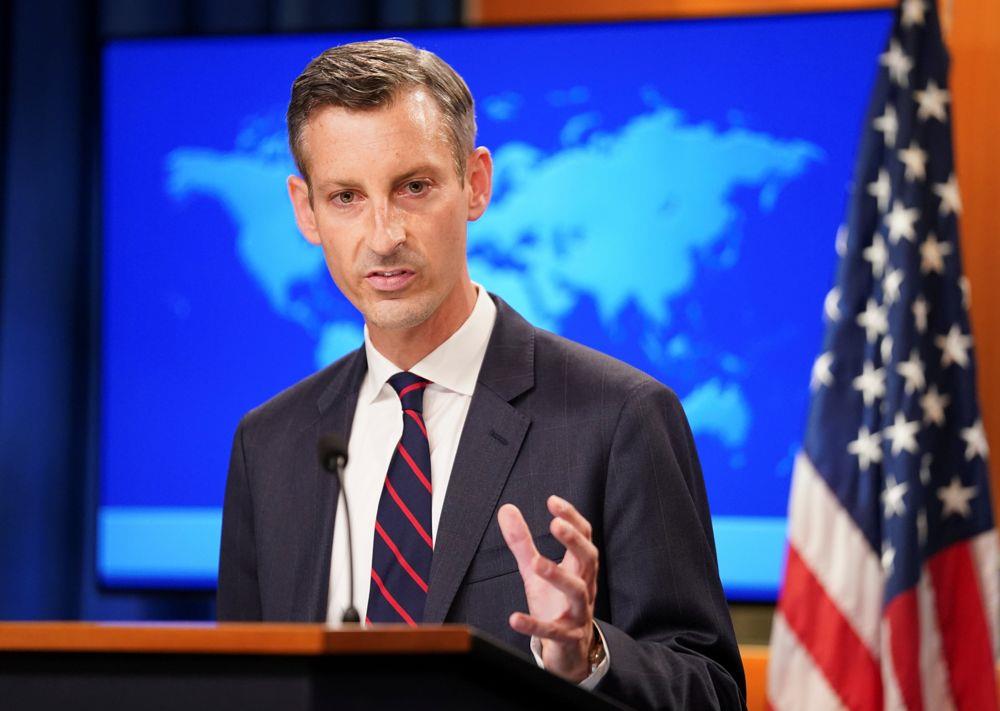
India can be among the countries that can have a role in diplomacy to end the ongoing Russia-Ukraine conflict even though New Delhi and Washington may not see eye to eye on policy issues, State Department spokesman Ned Price said.
Dialogue and diplomacy
We do believe that countries like India may be in a position to help bring about dialogue and diplomacy that could one day put an end to this war. — Ned Price, State Dept Spokesman
Moscow views observations approvingly
Moscow viewed the observations approvingly with its state media prominently running Price’s comments
Turkey has been trying to become a self-appointed mediator
It is unpalatable for both Moscow and New Delhi due to Ankara’s NATO ties
India is better positioned to act as a mediator to end the war as it is not a bloc member
“We do believe that countries like India, countries that have a relationship with Russia and with Ukraine, may be in a position to help bring about dialogue and diplomacy that could one day put an end to this war,” Price said on Friday at a briefing for foreign correspondents.
Moscow also viewed the observations approvingly with its state media prominently running Price’s comments. Turkey has for long been trying to become a self-appointed mediator, but such a development is unpalatable for both Moscow and New Delhi due to Ankara’s NATO ties as well as involvement with Azerbaijan and Pakistan.
Speaking of the possible diplomatic role for India in helping end the Ukraine war, Price did not see it as a near-term possibility. “I put this in the conditional because there is one country that, of course, has demonstrated no willingness to put an end to this war, to end the brutal aggression, and that, of course, is Russia,” he said.en in the context of recent discussions, we took note of the Kremlin’s statement that it is willing to engage in dialogue but only if the new territorial realities are recognised. That is as clear a sign as any that Moscow has no genuine appetite to engage in dialogue and diplomacy that will lead to just and durable peace,” he said.
“We have been in regular, close contact with India regarding what we can do to hold Russia accountable and to impose additional costs on Russia for its war. We may not always share precisely the same policy approaches, but we both share a commitment to upholding a rules-based international order that respects territorial integrity and sovereignty,” he said while downplaying differences between the two countries.
India is better positioned to act as a mediator as it is not a bloc member. Last week in Austria, External Affairs Minister S Jaishankar dismissed suggestions that India was an ally of Russia. However, India is a member of several plurilateral groupings with Russia and the US. India is part of the SCO, RIC and BRICS, which also has Russia. It is a member of the Quad with the US, Australia and Japan as well as of I2U2, with the US, Israel and the UAE.
State Stalwarts
DEFENCES FORCES RANKS
ARMY, NAVY, AIRFORCE RANKS
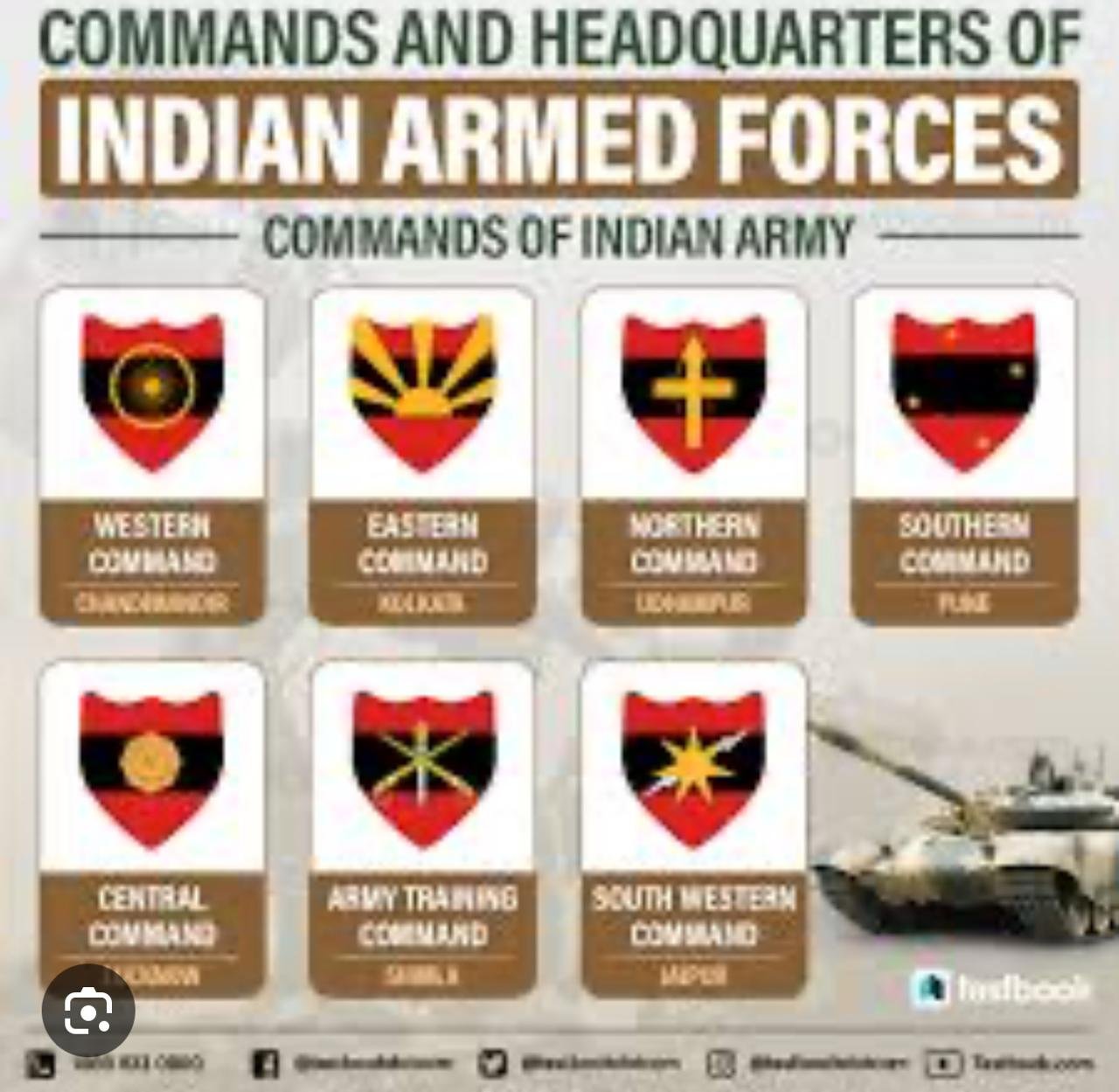
FORMATION SIGNS
FORMATION SIGNS
ALL HUMANS ARE ONE CREATED BY GOD
HINDUS,MUSLIMS,SIKHS.ISAI SAB HAI BHAI BHAI
CHIEF PATRON ALL INDIA SANJHA MORCHA
LT GEN JASBIR SINGH DHALIWAL, DOGRA
SENIOR PATRON ALL INDIA SANJHA MORCHA
MAJOR GEN HARVIJAY SINGH, SENA MEDAL ,corps of signals
.
.
PATRON ALL INDIA SANJHA MORCHA
MAJ GEN RAMINDER GORAYA , CORPS OF
sanjhamorcha303@gmail.com
PRESIDENT HARAYANA STATE CUM COORDINATOR ESM
BRIG DALJIT THUKRAL ,BENGAL SAPPERS
PRESIDENT TRICITY
COL B S BRAR (BHUPI BRAR)
PRESIDENT CHANDIGARH ZONE
COL SHANJIT SINGH BHULLAR
.
.
PRESIDENT PANCHKULA ZONE AND ZIRAKPUR
COL SWARAN SINGH
PRESIDENT SAS NAGAR (MOHALI)
COL BALBIR SINGH , ARTY
INDIAN DEFENCE FORCES
DEFENCE FORCES INTEGRATED LOGO
FORCES FLAGS
15 Th PRESIDENT OF INDIA SUPREME COMMANDER ARMED FORCES
Droupadi Murmu
DEFENCE MINISTER
Minister Rajnath Singh
CHIEF OF DEFENCE STAFF (2nd)
General Anil Chauhan PVSM UYSM AVSM SM VSM
INDIAN FORCES CHIEFS
CHIEF OF ARMY STAFF(29th)
General Upendra Dwivedi, PVSM, AVSM (30 Jun 2024 to Till Date)