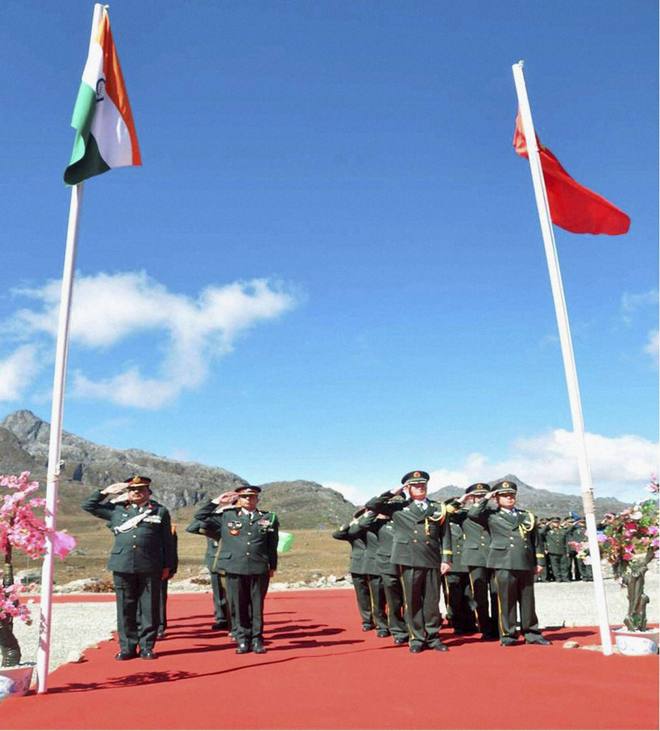
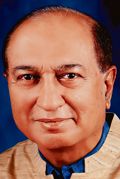
Discussing multiple challenges for India from China and Pakistan, experts have pointed out that relations with either are not expected to normalise in the near future.
Delhi Forum for Strategic Studies organised a discussion on ‘2023: Security Challenges Confronting India’. The discussion revolved around the two neighbours of India and the lessons from the Russia-Ukraine war.
Tilak Devasher, who retired as Special Secretary at the Research and Analysis Wing and is now a member of the National Security Advisory Board, said, “For India, relations with Pakistan are not a priority, India is looking at Indo-Pacific. Relations with the neighbour will be in limbo till political and financial situation stabilises there.”
“In the last 70 years we have tried to live as normal neighbours. Pakistan does not behave as a normal state, ‘anti-India’ is what defines its identity,” Devasher said
The founding head of the Defence Intelligence Agency, Lt Gen Kamal Davar (retd), mentioning China, said, “Why do we have to even talk about differing perceptions of the so-called Line of Actual Control (LAC) in Ladakh? The Chinese are in occupation of their November 20, 1962 claim-line and are now salami slicing in the buffer zone. We need to carry out mirrored actions against them.”
Maj Gen BK Sharma (retd), who heads the United Services Institution, made an assessment of the Russia-Ukraine war saying wars would be long. “In India we have been talking about short intense wars. We are in a state of war with China and have been in a state of war with Pakistan for decades. The Russia-Ukraine war has shown how inexpensive drones hit valuable targets or cruise missiles brought down a warship.”
Lt Gen Syed Ata Hasnain (retd) mentioned strategic communication as a vital tool saying, “We need research and academic back-up to run social media handles
India, he said, needs a think-tank where diplomats, retired soldiers, Indian Police Service and mass communication specialists decide on the context of communication.
Former ambassador Suresh Goel said, “Relationship between India and China is going to remain adversarial and this is not due to the territorial dispute; it’s due to China’s ambitions.
ICICI BANK PROBATIONARY OFFRS PGMR FOR VEER NAARIS AND CHILDREN
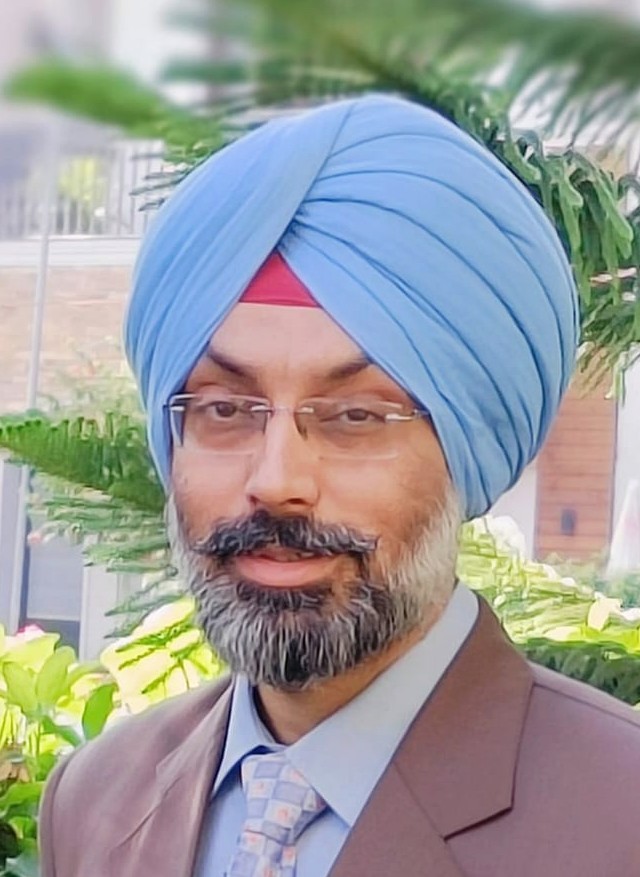
Chandigarh-based laywer, Maj Navdeep Singh, has been appointed to the Military Justice Advisory Committee constituted by the Commonwealth in December 2022, that comprises five global experts on military justice.
The Committee, under the aegis of the Office of Civil and Criminal Justice Reform (OCCJR) in the Commonwealth Secretariat, will deal with requests from member countries for assisting them in military justice reforms and other related legislative transformation.
The Commonwealth is an international body of 56 nations and promotes democracy, good governance, peace and the rule of law. It is also considering working upon model military justice principles.
Navdeep was earlier a member of the High Level Committee of Experts constituted by the Defence Minister in 2015 to reduce litigation related to service issue of defence personnel, and has authored several books on military law and regulations.
He was also a member of the ‘Yale Draft’ that was compiled after a conference of global jurists at the Yale Law School in 2018 to promote independence, competence and impartiality in military justice processes. He is an International Fellow at the National Institute of Military Justice, Washington DC.
The other members of the committee include Judge Alan Large, head of the service judiciary of the United Kingdom, Professor Eugene Fidell from Yale Law School and president emeritus of the National Institute of Military Justice, Washington DC, Chief Judge Kevin Riordan, Judge Advocate General of New Zealand and Dr Michelle Nel, Vice Dean, Faculty of Military Science of the University of Stellenbosch, South Africa.
On patrol duty in Kupwara, three soldiers fall to death
Three soldiers, including a junior commissioned officer (JCO), lost their lives after they slipped into a gorge during patrolling along the Line of Control (LoC) in North Kashmir, officials said on Wednesday. The soldiers were part of a regular operational task in Machil sector of Kupwara when the mishap took place at about 5:30 pm on Tuesday evening.
Will be remembered
Their sacrifice and selfless service to the nation will always be remembered. Manoj Sinha, L-G
Stand with families
We offer glowing tributes and express sympathies with bereaved families. Ravinder Sharma, Cong leader
“While moving towards the forward post, snow along the narrow track broke, leading to the slipping of one the JCOs and two jawans into a deep gorge,” said Srinagar-based defence spokesperson Col Emron Musavi.
The Army launched a rescue operation with the help of troops from a nearest post. Sustained efforts of the search party led to the recovery of mortal remains of the three soldiers between 4.15 am and 4.45 am on Wednesday morning,” the spokesperson said.
The deceased have been identified as JCO Parshotam Kumar, 43, of Majua Uttami village of Jammu, Havildar Amrik Singh, 39, of Una and and Amit Sharma, 23, of Hamirpur in Himachal. Kumar had joined the Army in 1996. He is survived by his wife and two kids. Singh had joined the Army in 2001 and is survived by his wife and a son. Sharma joined the Army in 2019 and is survived by his mother. The mortal remains will be taken for last rites to their respective native places.
Lieutenant Governor Manoj Sinha tweeted, “Their sacrifice and selfless service to the nation will always be remembered.” Ravinder Sharma, chief spokesperson of the J&K Congress, also expressed grief over the deaths. “We offer glowing tributes to the slain soldiers,” he added.
Even as the world celebrates the popular sport, its survival looks bleak in the north-eastern stat
RK Nimai Singh
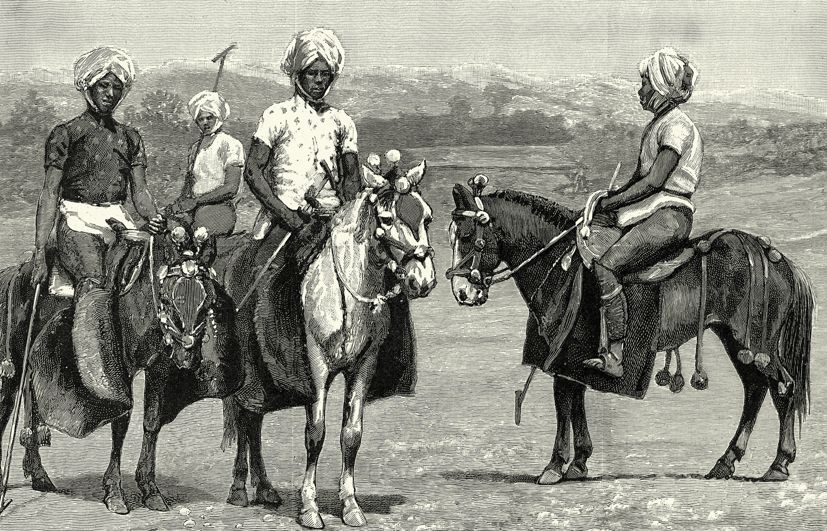
IN 2019, England celebrated 150 years of modern-day polo. While the game is popular worldwide, little is known about its connection with India in general and Manipur in particular. During the seven years’ devastation of Manipur after the invasion by Burma in 1819, many Manipuris fled to Cachar and Sylhet of the then Assam. They often played sagol kangjei (horse hockey) as a pastime. In 1854, Lt Joseph Sherer, who was posted with the Sylhet Light Infantry, saw the game being played. He was impressed by the courage, skill, horsemanship and presence of mind in the game. Along with Capt Robert Steward, assistant deputy commissioner of Cachar, and British tea planters, he would play the game with some Manipuris. The two are regarded as the first Englishmen to play sagol kangjei. In 1859, Steward was appointed the deputy commissioner of Cachar and Sherer the assistant deputy commissioner. Under their initiative, the Silchar Kangjei Club was established in the same year. Soon, the game reached Calcutta, the capital of British India, and in 1862, the Calcutta Polo Club was established. Today, it is the oldest living polo club in the world.
Since the Manipuris played the game in what is known as “Leibak Macha Tana Sannaba” (Play in a Cultured Manner), the British adopted written rules in a meeting of the Silchar Kangjei Club in 1863. The game reached England in 1869. The first recorded match took place between the 9th Lancers and 10th Hussars at Hounslow Heath in 1871. The British found the term ‘sagol kangjei’ a tongue twister, they adopted the simpler word ‘polo’ from Balti term ‘pulu’, which means a ball. The rules were subsequently revised in 1887, leading to the birth of modern-day polo.
In the four-player polo, there are no goalposts. But in the seven-player sagol kangjei, there are no goalposts and once the ball crosses the goal line, it is counted as a goal. The game is divided into four chukkers with specific time in polo, but in sagol kangjei, it is based on the number of goals, say 13, or 15, or 17.
The first mention of the game was made in 1606 during the reign of Meidingu Khagemba (1597-1652) in ‘Cheitharol Kumbaba’ (‘CK’), the royal chronicle of Manipur. ‘CK’ mentioned that the game was very popular during the reign of Meidingu Kiyamba (1467-1508). ‘Kangjeirol’, a treatise, mentions that the game was started by King Kangba, who ruled during the pre-Christian era. According to popular oral tradition, the game was played between the friends of Nongda Lairen Pakhangba in 33 CE when he was introducing Queen Laisna to the royal crowd. The names of the players on that occasion were Marjing (now regarded as the presiding deity of sagol kangjei), Khamlangba, Irum Ningthou, Ikop Ningthou, Irong Ningthou, Nongshaba and Pureilomba on one side and Thangjing, Khoriphaba, Wangbren, Yangoi Ningthou, Mayokpa, Oknarel and Loyalakpa on the other. They are now all deified.
Unlike elsewhere where polo is an elitist game, in Manipur, it is egalitarian. In his book ‘Manipur and Naga Hills’, Sir James Johnstone wrote, “Between the residency ground, the Sana Keithel and the great road was the famous polo ground, where the best play in the world might be seen. There was a grand stand for the royal family on the western side, and one for myself on the north. Sunday evening was the favourite day and then the Princess appeared and in the earlier day, the Maharaja. In my time, one of the Maharaja’s sons, Pucca Sana, and the artillery men were the champion players.”
An entry in ‘CK’ mentions that the British officers stationed in Manipur left for Cachar to play polo on October 29, 1854, and returned on November 3, 1854. Another entry notes down a match between Empress Victoria’s army and the Manipur Levy on January 29, 1855, at Imphal, probably the first international match, though the match between the US and the British in 1876 is recognised globally. In 1869, a Manipuri team played in Calcutta where in the first match for 13 goals, the British could not score even once. It was replayed again and again by adding more players on the British side but still they lost. The next day, the seven-player Manipuri team took on the nine British players for a 17-goal match. The British scored only one goal. This can also be regarded as the first international polo match, if the 1855 match is discounted since it comprised only armymen. During the visit of the Prince of Wales in 1901, a team from Manipur went to play exhibition matches at Calcutta and Delhi.
In deference to the Manipuri ponies, which stand about 12 hands high, all animals in polo, including those above 14 hands high, are called pony. About the Manipuri pony, a recognised breed in India, TC Hudson, in his book ‘The Meitheis’, wrote, “Manipuri pony are strong, wiry creatures, rarely more than 12 hands in height, and are fed on grass, the saddle is large, it peaked both in front and back and the most curious feature about the saddle is the addition to it of a pair of leather flaps which project around the legs of the rider and afford some protection from a blow…”
During the annual Sangai festival from November 21 to 30, an international polo tournament is held on Manipuri ponies, while in January, an international women’s tournament is held that culminates on January 21 in the Manipur Statehood Polo Tournament. In November last year, the first Chief Minister’s Sagol Kangjei Championship was held during the Sangai festival to ensure the survival of this indigenous game. The number of ponies in Manipur has been irreversibly dwindling due to the lack of grazing grounds. Efforts are on to increase the number of original polo ponies, which are semi-feral in nature. The government and enthusiasts are doing their bit, but more needs to be done.
Tough times ahead amid growing bankruptcy and Taliban violence
G Parthasarathy
Chancellor, Jammu Central University & former High Commissioner to Pakistan
Ever since the 9/11 terrorist attack in New York by the Al-Qaeda, the US has kept a global watch to track down those involved in the attack. The mastermind of the attack, Osama bin Laden, was tracked down and killed in the cantonment city of Abbottabad, located close to the Pakistan army’s elite Military Training Academy, in 2011. The US search for the perpetrators of the 9/11 attack continued relentlessly, with President Biden announcing last year that US airstrikes had killed Osama’s successor, the 71-year-old Ayman-al Zawahiri, living in the heart of Taliban-ruled Kabul. Biden described Zawahiri as ‘one of those most responsible for attacks that murdered 2,977 people on American soil’, while adding that ‘for decades, he was the mastermind of attacks against Americans’.
Pakistan has only itself to blame for TTP’s rise, as it looked the other way while playing host to as well as arming and equipping Taliban leaders and cadres on its soil.
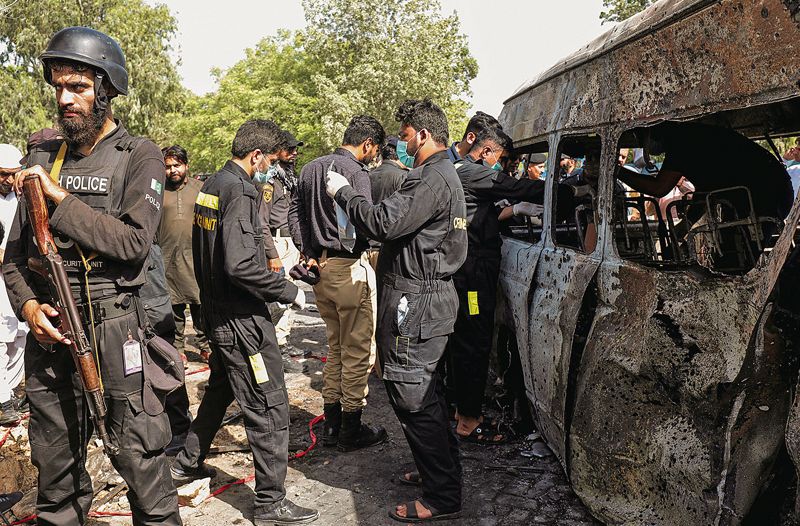
The reality, however, is that the Al-Qaeda steadily disintegrated across the world after Osama was killed. Other radical Pakistan terrorist groups emerged with the passage of time, which have not targeted India. Even China is the subject of public wrath in Balochistan for its close involvement with the Pakistan military in the Gwadar Port project. Two of the most significant armed, radical Islamic groups still remaining across the subcontinent are the Afghan Taliban and its Pashtun brethren, the Tehrik-e-Taliban Pakistan (TTP). Both groups started off as allies of Pakistan’s ISI. Both now loathe and ridicule the ISI. The TTP remains influential in the tribal areas of Pakistan’s Khyber Pakhtunkhwa province, with a relatively small number spreading into northern Balochistan. The growing influence of the TTP has led to increasing concern and anger in Pakistan. The TTP has carried out about 140 attacks in Pakistan in the past three months, including a suicide attack in Islamabad. The prospects for any Pakistan-TTP dialogue remain bleak.
In a recent television interview, Pakistan’s interior minister Rana Sanaullah proclaimed that Pakistan could target TTP militants in Afghanistan if the Afghan authorities in Kabul did not take action against them. The Pakistan government believes that the TTP has 7,000 to 10,000 cadres based in Afghanistan and in the Pashtun tribal areas of Pakistan. Virtually mocking Pakistan, Afghanistan’s deputy PM Ahmed Yasir warned its neighbour of serious consequences in case of an attack on Afghanistan. He tweeted a photograph of Gen AAK Niazi signing Pakistan’s document of surrender to the Indian Army in Bangladesh in 1971.
Pakistan has only itself to blame for the TTP’s rise, as it looked the other way while playing host to, and arming and equipping Taliban leaders and cadres on its soil. Some of these leaders have assumed ministerial positions in Kabul.
Pakistan had justified its earlier support for the Taliban, claiming that the Taliban presence in Kabul gave it ‘strategic depth’ against India. This, after the Taliban colluded with the ISI during the hijacking of IC 814 in Kabul. While New Delhi has not formally recognised the Taliban, it has established a working relationship with the Taliban administration for providing medical and other assistance to the people of Afghanistan, and maintaining an office in Kabul. Like Russia and China, India has avoided taking an adversarial or judgemental position on its relations with the Taliban.
Pakistan is now threatening to attack TTP members residing in its Pashtun-dominated tribal areas, and also across the border in Afghanistan, evidently, with US encouragement and support. This could result in uniting Pashtuns on both sides of the Durand Line to take on the Pakistan army. It is estimated that 374 Pakistani security personnel and 365 TTP fighters were killed in combat last year.
The focus on the geopolitics of Afghanistan by Pakistan and the US ignores the increasing misery the people of Pakistan face, as the country stares at the prospects of continuing bankruptcy, despite efforts by the US, IMF, and other friends, like Saudi Arabia and China, to bail it out. Pakistan’s astute finance minister Ishaq Dar, who works in consultation with the sober planning minister, Ahsan Iqbal, has acted realistically in dealing with the economic crisis. There is an expectation by Pakistan of an early $3 billion Saudi bailout. But these measures are of little relevance in the longer term until Pakistan meets the stringent IMF conditions. Pakistan could face a payments default if it mismanages or miscalculates on its foreign exchange holdings
While the US may relish Pakistan attacks on the TTP and Taliban strongholds, the Taliban will not stand by idly if its kinsmen are attacked.
In the meantime, the Shehbaz Sharif government appears to be losing public confidence. While Pakistan could slowly pull itself out of its economic turbulence, the reality is that the government will have to take hard financial decisions that will not endear it to the electorate in the general election later this year. Despite promises of assistance from Saudi Arabia and others, the days ahead are going to be hard. This situation is becoming murkier, with efforts by the ruling dispensation to get Imran Khan disqualified from participating in the polls.
The recent retirement of General Bajwa and the appointment of his protégé, Gen Syed Asim Munir, as his successor, would appear to indicate that the present relationship between Pakistan and the Biden administration would continue. General Bajwa had, after all, overseen the supply of arms and ammunition from Pakistan to Ukraine in aircraft of the Royal Air Force. There are noises from Washington, backing Pakistan’s policy of getting tough with the Taliban. It would, however, be vital to remember that Afghanistan has a history of being the ‘graveyard of empires’.
3 soldiers die after slipping into deep gorge during patrolling along LoC in J-K’s Kupwara
Three soldiers, including a junior commissioned officer (JCO), died after they slipped into a deep gorge during patrolling along the LoC in Kupwara district of Jammu and Kashmir, the Army said on Wednesday.
The incident took place in Machil sector when they were on a regular operation task in the forward area.Powered By
“Incident Chinar Warriors in Machhal Sector. During a regular op task in forward area, a party of 01 JCO & 02 OR slipped into a deep gorge, when snow on the track gave way. Mortal remains of all the three bravehearts have been retrieved,” Indian Army’s Srinagar-based Chinar Corps tweeted.
Patrolling, troops deployment along LoC strengthened ahead of Republic Day, says BSF officer
Patrolling and deployment of troops along the Line of Control (LoC) in Jammu and Kashmir have been strengthened ahead of Republic Day, a senior BSF officer said on Wednesday.
“Terror outfits always try to carry out violence but jawans are alert on the border. Our endeavour is not to allow infiltration by terrorists. Such attempts are on from across the border but we prevent them forcefully,” said Ashok Yadav, the inspector general of the BSF Kashmir Frontier.
“Our alertness doubles whenever there is an event like this (Republic Day). We have strengthened our patrolling and deployment. Many of our companies are also deployed for law-and-order duties and the endeavour is to prevent any such incident,” he told reporters here.
He was addressing an event to flag off the educational-cum-motivational Bharat Darshan Tour to Mumbai of 29 Kashmiri students of different schools.
Asked if there was any input about the possibility of any terror incident like the recent one in Jammu, the IG BSF said he had no such knowledge.
State Stalwarts
DEFENCES FORCES RANKS
ARMY, NAVY, AIRFORCE RANKS
FORMATION SIGNS
FORMATION SIGNS
ALL HUMANS ARE ONE CREATED BY GOD
HINDUS,MUSLIMS,SIKHS.ISAI SAB HAI BHAI BHAI
CHIEF PATRON ALL INDIA SANJHA MORCHA
LT GEN JASBIR SINGH DHALIWAL, DOGRA
SENIOR PATRON ALL INDIA SANJHA MORCHA
MAJOR GEN HARVIJAY SINGH, SENA MEDAL ,corps of signals
.
.
PATRON ALL INDIA SANJHA MORCHA
MAJ GEN RAMINDER GORAYA , CORPS OF
sanjhamorcha303@gmail.com
PRESIDENT HARAYANA STATE CUM COORDINATOR ESM
BRIG DALJIT THUKRAL ,BENGAL SAPPERS
PRESIDENT TRICITY
COL B S BRAR (BHUPI BRAR)
PRESIDENT CHANDIGARH ZONE
COL SHANJIT SINGH BHULLAR
.
.
PRESIDENT PANCHKULA ZONE AND ZIRAKPUR
COL SWARAN SINGH
PRESIDENT SAS NAGAR (MOHALI)
COL BALBIR SINGH , ARTY
INDIAN DEFENCE FORCES
DEFENCE FORCES INTEGRATED LOGO
FORCES FLAGS
15 Th PRESIDENT OF INDIA SUPREME COMMANDER ARMED FORCES
Droupadi Murmu
DEFENCE MINISTER
Minister Rajnath Singh
CHIEF OF DEFENCE STAFF (2nd)
General Anil Chauhan PVSM UYSM AVSM SM VSM
INDIAN FORCES CHIEFS
CHIEF OF ARMY STAFF(29th)
General Upendra Dwivedi, PVSM, AVSM (30 Jun 2024 to Till Date)