



Sanjha Morcha

We are paying for missed opportunities on border

The Indian force, if sent in early 1950, would have accomplished a fait accompli. Reports available suggest that Tibetans, including the young Dalai Lama, would have welcomed an Indian force to deter the Chinese invasion. It was militarily feasible to occupy Tibet by employing two divisions supported by air. The US assistance would have been readily available. But given Nehru’s love for China, besides military fatigue, the invasion did not take off.

We are paying for missed opportunities on border

Maj Gen Ashok K Mehta (retd)

Military Commentator

On January 12, briefing the media before Army Day, Gen Manoj Pande, the Army Chief, described the situation on the northern borders as ‘stable but unpredictable.’ Things could have been different.

Of the 18 books by former External Affairs Minister Jaswant Singh, India At Risk: Mistakes, Misconceptions and Misadventures of Security Policy is today the most relevant. He remarks that India is in a strategic straitjacket, being confined by four lines: the LoC, the LAC, the Durand Line and the McMahon Line.

There is a reference to a paper in the book relating to external defence, called India’s Mongol Frontier. In the paper, Lt Gen Francis Tuker, in 1946, as the Eastern Army Commander, highlights that India’s vital area is the Tibetan Plateau, adding that China, not Russia, was the main threat to British India. He says that as British power withdraws from India, Tibet will lean to China, and India, rather than witness Chinese occupation of Tibet, should not just prevent it but also be prepared to occupy the Tibetan Plateau to negate a Chinese invasion. Routes for an Indian expeditionary force, moving to Lhasa through Sikkim and Diwangiri, are mentioned. He also recommends that India should maintain good relations with Nepal, especially with its people.

No historical records appear to exist as to why this pre-emptive operation was not undertaken, given that detailed records were available of the 1903-04 Francis Younghusband expedition which fought its way to Gyantgse, reached Lhasa and ultimately established a consulate

The Anglo-Tibet Convention of Lhasa, later reinforced by the Simla Agreement (1914), granted special rights to British India in Tibet. These included trading marts in Yatung, Gyangtse and Garthok, temporary ceding of the Chumbi valley and a trade commissioner in Lhasa. These trading posts had military and communication detachments which were in place till 1954 and were unilaterally withdrawn due to Nehru’s fatal attraction to China and the Panchsheel Agreement.

Military records show that two rifle companies of 8 Gorkha Rifles (in the Indian Army today) and one company of the Royal Fusilliers were the infantry component of the Younghusband force. Lt John Grant and Havaldar Kabir Pun won the Victoria Cross and the Indian Order of Merit First Class, the highest award for the non-British at the time. Marwari traders in Gangtok even today recall their forebears doing a thriving business in Tibet through the Nathu La and Jelep La Passes.

Surprisingly, in several books on China by Indian authors, this missed opportunity is not considered — in fact, hardly, if at all, mentioned. It would have changed the face of the Indian subcontinent and India’s locus standi in the region

The moot question is: was the occupation of Tibet feasible to prevent the Chinese invasion in 1950? No one has seriously investigated this idea, though Jaswant Singh mentions in India At Risk that in January 1961, the then Army Chief Gen KS Thimayya, when asked about the practicality of the Tibet operation, said: “I cannot as a soldier imagine India taking on China in open conflict on its own as war will be beyond the capacity of our forces. China’s present strength in manpower, equipment and aircraft exceeds our resources.” Thimayya, before he became Army Chief in 1957, presumably advised against a Tibet adventure. His apprehension was echoed by the Director General, Military Operations, Brig DK Palit.

Consider the military situation after the Partition: India’s share of military assets was around 3,00,000 troops from the 4,00,000-strong undivided British Indian Army. New raisings were in the pipeline. Operations in J&K had sucked in roughly 1,30,000 (all ranks) and a ceasefire was announced on December 31, 1948. Home Minister Sardar Patel’s two White Papers — one in July 1948 on the McMahon Line and another in February 1950 — resulted in Maj Bob Khathing establishing Indian Administration in NEFA and evicting Tibetan officials from Tawang in 1951. It seems that even the redoubtable Patel did not press for the pre-emptive military expedition to occupy Tibet.

The Indian force, if sent in early 1950, would have accomplished a fait accompli. Reports available suggest that Tibetans, including the young Dalai Lama, would have welcomed an Indian force to deter the Chinese invasion. Given Nehru’s love for China, besides military fatigue, the invasion did not take off

Another reason for ignoring the Tuker option is mentioned in Gen Monty Palit’s War in the High Himalayas. Palit states that there was probably an agreement between India and China. The Indian intervention in 1950 to fly out King Tribhuvan happened around the same time (October 1950) as China took Tibet. India succeeded in toppling the Rana autocracy to restore monarchy through the Delhi Agreement of 1951 and it subsequently introduced democracy in Nepal. The India-China agreement was perhaps a Nepal-Tibet quid pro quo.

Returning to Tibet, in hindsight, it was militarily feasible to occupy Tibet in early 1950 by employing two divisions supported by air. The US assistance would have been readily available. The pre-emptive operation may have resolved the unsettled borders in Ladakh and the McMahon Line. Tibet would have remained the buffer between India and China. After World War II and the Kashmir operations, the Army was indeed stressed but a Tibet expedition was not undoable, though it required political will and risk-taking.

We are paying for that mistake hands down. Equally, had we accepted Chinese Premier Chou Enlai’s offer in the 1950s of a land swap — Aksai Chin for the McMahon Line, veritably the status quo then — we might have prevented the high cost of a two-front dilemma.

Today, India holds a subordinate status on the border, but some relief may accrue from restoring deterrence through horizontal escalation: another Snow Leopard. It is the only way to break the stalemate in military and political dialogue and also reviving the Special Representative-level talks on the border issue. The border will be volatile and escalation-prone.
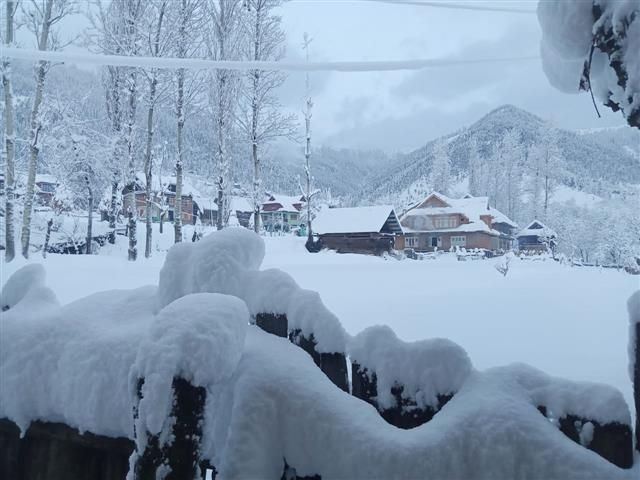
Fresh snow in J-K shuts national highway, flight operations affected

Fresh snow in J-K shuts national highway, flight operations affected

PTI

Srinagar, January 13

Most parts of Kashmir received fresh snow and rain on Friday leading to the closure of the Srinagar-Jammu national highway and impacting the flight operations to and from the Valley, officials said here.

While the higher reaches of Jammu and Kashmir experienced moderate to heavy snow, many areas in the plains received light to moderate snow, they said.

The fresh snow started early in the morning and continued till the reports last came in, they said.

The famous ski resort of Gulmarg, tourist resorts of Pahalgam and Sonamarg and many other places experienced fresh snow, they said.https://92544af17cb90d881b826f7cb06dd04a.safeframe.googlesyndication.com/safeframe/1-0-40/html/container.html

The upper reaches of Srinagar also received snow, while the plain areas were lashed by rain.

The inclement weather has resulted in the closure of the Srinagar-Jammu national highway, the officials said.

The highway was closed for traffic due to landslides in Mehar area of Ramban district and slippery conditions of the road, they said.

The officials said road clearance operations are going on but continuous snow and rain are making the job difficult.

The weather conditions also affected the air traffic at the Srinagar airport here, they said.

While flight operations took place in the morning, the operations were affected after 9am. Several flights had been delayed due to low visibility, the officials said.

The operations would resume after the visibility improved, they added. 


Punjab for tribunal on river waters issue

Punjab for tribunal on river waters issue

Tribune News Service

Chandigarh, January 12

Punjab reiterated its claim over its river waters, Chandigarh as its capital and on Panjab University during the 20th meeting of the Standing Committee of the Northern Zonal Council (NZC) held here today.

The state’s claim in the wake of the longstanding dispute over the construction of the Sutlej-Yamuna Link canal was raised by Chief Secretary Vijay Kumar Janjua in the presence of the Adviser to the Chandigarh Administration, Chief Secretaries of Haryana, Rajasthan and Delhi, besides Himachal Pradesh, Jammu and Kashmir and Ladakh. Officers of the Union Ministry of Home Affairs were also present at the meeting.

In his inaugural speech, Janjua also raised the demand for setting up of a tribunal to assess the situation with regard to the river waters, increasing international flights from the Mohali airport and starting the UDAN scheme from airports in the state.

He also called for strengthening the international borders, uniform policy for purchasing land and stemming the loss to Punjab from the Hansi-Butana canal and the Ghaggar by presenting facts and figures.

The Chief Secretary batted for cooperative federalism and said such meetings were the right platform for bringing to the fore inter-state matters and debate for their solutions.

He made it clear that as per the current state of river waters, Punjab was facing the shortage of water hence it didn’t have extra water to spare for other states.

“These are emotional issues for Punjab and being the parent state, it has full right on its capital which has been denied to it all along,” said the Chief Secretary, adding that Chief Minister Bhagwant Mann had also pressed for the state’s claims on these issues.

In keeping with the principles of one nation, one family, there must be a uniform policy concerning buying and selling of land in all states. It was imperative for Punjab that these issues should be sorted out, said he.

During the agenda-wise discussions, Principal Secretary, Water Resources, Krishan Kumar said the level of water, which was available with Punjab at the time of river waters agreements, had come down drastically and the state was facing the paucity of this precious resource.

Other demands raised by chief secy

  • Increasing international flights from the Mohali airport
  • UDAN scheme from airports in the state
  • Uniform policy for buying and selling of land in states

Rajouri terror attack investigation handed over to NIA: Home Minister Amit Shah in J-K

Rajouri terror attack investigation handed over to NIA: Home Minister Amit Shah in J-K

Tribune News Service

Jammu, January 13

Union Home Minister Amit Shah on Friday said investigation of Rajouri terror incident has been handed over to the National Investigative Agency. A team of NIA along with J-K police will investigate the incident jointly.

Shah said during a press conference in Jammu that he talked to the kin of victims of Rajouri attack after reaching Jammu as he was not able to visit Dhangri village due to bad weather.

Seven civilians were killed in twin terror attack on January 1 and 2 at Dhangri village in Rajouri.

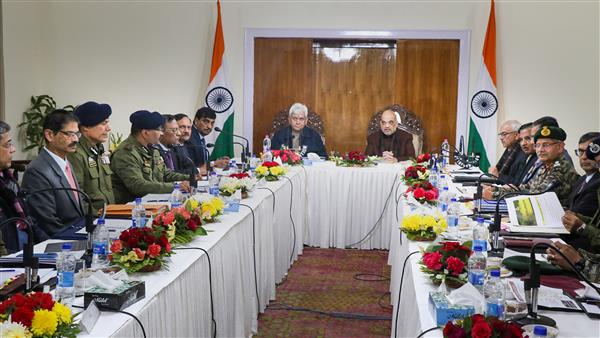
Shah held a security review meeting at Raj Bhawan in Jammu where officials of J-K police, BSF, Army, CRPF among others were present.

“Security grid especially of Jammu region will be strengthened to stop such incidents in coming days” said Shah.

He informed that all terror incident that took place in Jammu during past one year will be investigated by the NIA.


Woman academic from Punjab accuses Pakistan High Commission officials of asking her if she supported Khalistan

Woman academic from Punjab accuses Pakistan High Commission officials of asking her if she supported Khalistan

New Delhi, January 13

A woman academic from Punjab has accused staff of the Pakistan High Commission in the visa section in Delhi of indecent behaviour and sexual harassment. 

She had applied for a visa to travel to Pakistan and had booked an appointment with the Pakistan High Commission online.

The professor alleged that an employee there asked her personal questions, which made her uncomfortable. She alleged, “The employee asked me, ‘Why am I not married? How do I live without marriage? What do I do for my sexual desires?'” 

“It was also asked whether I supported Khalistan. Or could I write on Kashmir issues?” she told ANI.

She said she was uncomfortable with the questions and tried to change the topic.

“I continued to be polite and tolerated him as I wanted the visa. Around 45 minutes of this torture continued,” she said.

According to a WhatsApp chat screenshot which the victim has sent to ANI, it is alleged that the Pakistan diplomat asked her to write against the Government of India and offered her handsome remuneration. She said she refused to do so.

The victim has written to the Ministry of External Affairs and authorities concerned about the harassment and sought justice.

“I wish to inform you about the indecent and objectionable behaviour of officials of the High Commission of Pakistan, New Delhi, during my visit for obtaining a visa and also a month later over the phone and chat on my personal number,” the academic told ANI.

Describing her experience to ANI over the phone, she said, “On March 15, 2022, I had a visa appointment at the High Commission which I had booked online over the website. I reached there around 9.45 am and entered the complex around 10am. I was asked to wait for an hour and a half in the waiting lounge. I was asked a few general questions about my visit and then later asked to go to a room where I waited along with some officials for a few minutes before the visa officer arrived. He asked me the purpose of my visit. I explained that I wished to visit Lahore, photograph the monuments and write on them and then visit Abbottabad University for a lecture at the university. In less than two minutes he told me that the visa cannot be granted.

During chats for visa approval, the Pakistan High Commission officials asked her to come for dinner and stay with them, she claimed.

She said she wanted punishment for the officials.

The Pakistan High Commission said it is looking into the allegations.


GUTS AND GLORY PART IX

CLICK BELOW TO OPEN NEWSPAPER

THE EXPRESS INDIA NEWS : NEWSPAPER

LEST WE FORGET: GUTS AND GLORY ON FOREIGN SOILS – IX

Ishar Singh, The hero of Waziristan

(Maj Gen Harvijay Singh, SM)

1921: Between the Wars

Sardar Bahadur Captain Ishar Singh Victoria Cross

In 1921, Ishar Singh was a Sepoy in the 28th Punjabis, Indian Army.

During the First World War, the Battalion fought on the Tigris Front, as the British made desperate efforts to relieve their besieged garrison at Kut al Amara. In 1917, the regiment took part in the Third Battle of Sannaiyat, the Capture of Baghdad, and the actions at Istabulat and Tekrit. In 1918, the 28th Punjabis participated in the Palestine Campaign. During the war, the regiment suffered a total of 1423 casualties. It raised a second battalion in 1918, which was disbanded after the war.

In 1921, Sepoy Ishar Singh of the 28th Punjabis was awarded the Victoria Cross for exceptional valour during the Waziristan Campaign.

The Waziristan Revolt of 1919-1920 was sparked by the Afghan invasion of British India in 1919. Though the Waziri tribesmen fought hard. This conflict the first time that air power was used in the Sub Continent.

Near Haidari Kach, Waziristan, Sepoy Ishar Singh was No. l of a Lewis Gun-Section when the convoy protection troops were attacked.

Ishar Singh received a serious gunshot wound in the chest, and fell next to his Lewis gun. The British officer, Indian officer, and all the Havildars of his company were either killed or wounded, and his Lewis gun was seized by the enemy.

Calling up two other men he got up, charged the enemy, and recovered the Lewis gun. Despite bleeding profusely, he again got the gun into action and killed many of the enemy breaking their attack.

Ordered to go back and have his wound dressed, he went to the medical officer. There he instead started helping the other wounded and carried water to them, making many trips to the nearby river and back. It was only after three hours that he finally submitted to be evacuated, being then too weak from loss of blood to object.

His bravery was recognised with the award of the Victoria Cross.

During World War II, the 28th Punjabis (redesignated as the 4th Battalion, the 15th Punjab Regiment) fought in the Burma Campaign with great distinction, suffered 921 casualties and was awarded numerous gallantry awards including two Victoria Crosses to Lieutenant Karamjeet Singh Judge and Naik Gian Singh. In 1947, the Battalion was allocated to the Pakistan Army.

Indian Armed Forces stand tall among their global peers because of their rich battle-hardened heritage, motivation and tough training.

………………Contd, because these stories must be told


Situation along northern border stable but unpredictable: Army chief Manoj Pande

Situation along northern border stable but unpredictable: Army chief Manoj Pande

Tribune News Service

Ajay Banerjee

New Delhi, January 12

Army chief Gen Manoj Pande on Thursday said the security situation along the northern borders (with China) is stable but remains unpredictable. 

Addressing a press conference ahead of the Army Day, the Army chief said they had resolved five of the seven friction points along the Line of Actual Control (LAC) in eastern Ladakh.

Gen Pande praised the troops on the ground saying, “We have been able to maintain a robust defensive posture to prevent our adversary from changing the status quo along the LAC.

“The Army has decided to undertake transformation of Army across five key domains. These are force re-structuring and optimisation; modernisation and technology infusion; man management like agnipath; jointness; and the refining systems and processes.https://d22cba0186b65889fd9bfa3075bbe965.safeframe.googlesyndication.com/safeframe/1-0-40/html/container.html

“2023 will be the year of transformation,” Gen Pande said, adding that the process would continue.

On being asked about modernisation, Gen Pande said, “We as of now have 45 per cent vintage equipment; 41 per cent of the equipment is current technology and some 12 to 15 per cent are state-of-the-art.

“By 2030 we aim to have 45 per cent state-of-the-art and 35 per cent current technology,” Gen Pande said. 

When asked if there was any impact on military movement ahead of Joshimath, he replied in the negative, adding that they were ready to help the local administration, if required.

There is a slight increase in the number of troops of People’s Liberation Army facing the eastern command, Gen Pande said.

“The troops that came for training have remained,” Gen Pande said, adding that they had adequate deployment and the reserves to meet any challenge.l

“There is a marked improvement in infrastructure on our side,” the Army chief said, adding that the tunnel under the Zoji La would be operational by the end of the year. The issue of round-the-year connectivity to Ladakh will be sorted,” he said.


Picture of courage on snowy heights BY Col TBS Bedi (retd)

Picture of courage on snowy heights

Col TBS Bedi (retd)

The India-China conflict in Arunachal Pradesh and Ladakh has brought to the fore the challenges faced by our troops deployed along the Line of Actual Control. I am reminded of my own ‘lockdown’ at Daulat Beg Oldie (DBO) in 1985. There was no road up to DBO at that time, and the only source of access was an old airstrip lying virtually abandoned after its use in the 1962 War. The supplies for our troops used to be managed through mules or by air-dropping in the DBO area. Fairchild Packet aircraft were used to carry out logistics sorties. Fortunately, now there is a fairly well-maintained airstrip, which has put us in a strong position in the Karakoram area.

I was commanding a field company of engineers operating in the Siachen Glacier area under Operation Meghdoot at Thoise. Our brigade commander, Brig Jal Master, called me to his office and told me that a special Cheetah helicopter had been arranged for going to DBO, and that I had to go there urgently for carrying out a recce of the abandoned airstrip and to reactivate it fast. The next day, I took off in a helicopter from Thoise. We followed the old Hindustan-Tibet Silk Route, which was visible from the air. DBO is located on that ancient route, about 16 km from the Karakoram Pass.

We could see the carcasses of perished animals along that route. After about 45 minutes, we landed there. I was dropped along with my haversack and the pilot flew back to Thoise as there were no refuelling facilities available at DBO. I carried out the recce of the advanced landing ground (ALG) the very next day. It was a gravel-type airstrip, situated at an altitude of 16,700 ft.

But when I had completed my assignment and was waiting for the helicopter, the weather suddenly turned very bad. The temperature was below minus 30 degrees and the wind velocity was around 150 km per hour. The arrival of the helicopter was ruled out. I was stranded in a semi-underground bunker for 28 days. In freezing weather, in a land without trees or grass and no human around, it was the kerosene bukhari that kept me warm. My family was worried until my unit informed them about my safety. It was quite an experience. Guarding our frontier against a formidable enemy in such abnormal conditions is not easy. We must salute our soldiers for the courage they bring to their task.