Martyr Harbhajan Singh’s wife Jaswinder Kaur and son Ranjit Singh.
Sukhmeet Bhasin
Tribune News Service
Mansa, June 21
An unemployed ETT-TET pass son of a martyred soldier is angry with the Punjab Government’s decision to give jobs to sons of MLAs on compassionate grounds.
Harbhajan Singh, a soldier from Mandali village in Mansa district, was martyred in Operation Rakshak in Jammu and Kashmir in 1995. His son Ranjit Singh, who was only three years old at that time, now holds BA and MA
degrees. He has also cleared ETT and TET.
Ranjit Singh said, “My father was with the 7th Rashtriya Rifles Battalion of the Army and was martyred on June 7, 1995, in Jammu and Kashmir.”
After completing higher education, Ranjit Singh sought a job from the government on compassionate grounds, but it rejected his request. “We are not begging, we are just asking for our rights,” he said. He also said the state government had not provided any assistance to the family till date. In 2017, he wrote a letter to the state Department of Defence Services Welfare, but got a reply that his case could not be taken up.
HOW NSA AJIT DOVAL PLAYS KEY ROLE IN CENTRE’S MISSION KASHMIR 2.0
After playing a critical role in the abrogation of Article 370 in Jammu and Kashmir, National Security Advisor (NSA) Ajit Doval is now playing a key role once again in bringing political parties to the talking table with the central government. Prime Minister Narendra Modi will chair a meeting with political parties of Jammu and Kashmir on June 24 in New Delhi. The meeting is being seen as the most significant step of the Centre to end the political impasse in J&K since the abrogation of Article 370 and the bifurcation of Jammu and Kashmir into two Union Territories. Ajit Doval has been engaging with local leaders in Kashmir valley for months to bring them to hold talks with the Centre. According to government sources, Doval has been engaging with leaders at the lowest level to gauge the mood of the people in the Valley. Earlier, Ajit Doval had participated in the crucial process to revoke Article 370 that earlier guaranteed special rights to the people of J&K. Recently, he was also involved in the process to ensure ceasefire agreements between the armies of India and Pakistan along the Line of Control (LoC).
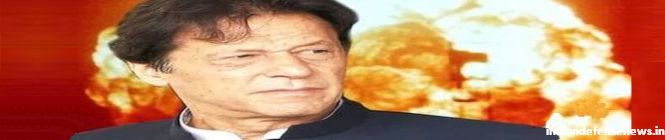
NO NEED FOR NUCLEAR DETERRENTS ONCE KASHMIR ISSUE IS RESOLVED: IMRAN
Prime Minister Imran Khan has said that once the Kashmir issue is resolved, there will no longer be any need for nuclear deterrents. He said this while speaking to journalist Jonathan Swan on Axios on HBO. “Intelligence analysts say Pakistan has the fastest growing nuclear arsenal anywhere in the world. Why?” the interviewer questioned. “I don’t know where they’ve come up with this. Pakistan’s nuclear arsenal is simply a deterrent, to protect ourselves,” he said, adding that he was “not sure” whether it was growing. “As far as I know, it’s not an offensive thing. Any country which has a neighbour seven times its size would be worried.” He went on to say that he was “completely against nuclear arms”. “I always have been. We’ve had three wars against India and ever since we have had a nuclear deterrent, there has been no war between the two countries. We’ve had border skirmishes but we’ve never faced war. “The moment there is a settlement on Kashmir, the two neighbours would live as civilised people. We will not need to have nuclear deterrents.” Uighur Muslims Asked why he was so outspoken about Islamophobia in the West but silent about the genocide of Uighur Muslims in China, he said that all issues were discussed with China “behind closed doors”. “China has been one of the greatest friends to us in our most difficult times. When we were really struggling, China came to our rescue. We respect the way they are and whatever issues we have, we speak behind closed doors. “I look around the world what’s happening in Palestine, Libya, Somalia, Syria, Afghanistan. Am I going to start talking about everything? I concentrate on what is happening on my border, in my country.” He questioned why this was such a big issue in the Western world when the people of occupied Kashmir were being ignored. “It is much more relevant. Compared to what may be going on with the Uighurs, 100,000 Kashmiris have been killed,” he said, adding that the occupied valley had been turned into an “open prison”. “Why is that not an issue?” he asked, adding that he considered it to be “hypocrisy”. He said that he was concentrating on the things that concerned the country and its borders. “One hundred thousand Kashmiris dying, that concerns me more because half of Kashmir is in Pakistan,” he said. Talking about the open letter he had written to leaders of Muslims states calling on them to unite against Islamophobia, PM Imran said: “There is a big communication gap between the Islamic world and Western societies. It happened after 9/11 when the world ‘Islamic’ terrorism came into currency.” The moment you say Islamic terrorism, the common man in the West thinks there is something within the religion which leads to terrorism, he said. After 9/11 any time there was a terrorist act where a Muslim was involved, 1.3 billion Muslims across the world started becoming targets, he said. Sexual Violence In Pakistan Asked to respond to his comments linking the incidence of rape to obscenity, the premier said: “It is such nonsense. I never said that […] I said the concept of purdah which is to avoid temptation in society.” He said that Pakistan had a completely different society and way of life. “If you raise temptation within society and all these young guys have nowhere to go, it has consequences.” “Do you think that what women wear has any effect, that it is part of this temptation?” Swan asked. “If a woman is wearing very few clothes, it will have an impact on men unless they are robots. I mean it’s common sense,” he said. If you have a society where people haven’t seen that sort of thing it will have an impact on them, he said. When the interviewer brought up his past as an international cricket star, PM Imran said: “This is not about me. It’s about my society. My priority is how my society behaves […] so when I see sex crime going through the roof we sit down and discuss how to tackle it. It is having an impact in my society.”
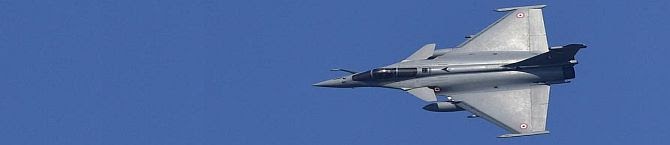
WE’RE ABSOLUTELY ON TARGET ON RAFALE INDUCTION PLAN: IAF CHIEF
Hyderabad: In 2016, India had signed an inter-governmental agreement with France to procure 36-Rafale jets at a cost Rs 59,000 crore. IAF Chief RKS Bhadauria on Saturday said the induction of 36 Rafale aircraft into the Indian Air Force would take place by 2022. The IAF is absolutely on target with respect to the Rafale induction plan, he said while responding to a reporters’ query on timeline for receiving the 36 fighter jets from France. “The target is 2022. It is absolutely on target. I mentioned earlier. Except for one or two aircraft, minor delays because of Covid related issues, but, in fact, some deliveries have been ahead of time. So, broadly, we are absolutely on target on the Rafale induction plan. On the operationalisation plan, you are aware, we are fully operational.. so, in terms of time, we will be absolutely on time,” he told reporters after reviewing the Combined Graduation Parade (CGP) at the Air Force Academy in Dundigal here. In 2016, India had signed an inter-governmental agreement with France to procure 36-Rafale jets at a cost Rs 59,000 crore. Defence Minister Rajnath Singh had in February said the country would have the entire fleet of the fighter aircraft by April 2022. Asked for his assessment on the situation in eastern Ladakh on the Indo-China border, the IAF Chief said talks are on between the two sides and the first attempt is to continue with the parleys and carry out the disengagement at the “balance friction points.” “The first attempt is to continue with the talks and do the disengagement at the balance friction points. And, of course, follow it up with de-escalation,” he said. “However, in parallel, the ground realities are being monitored closely. Whatever is the reality across, in terms of current leftover locations, deployments, any changes, that is being monitored closely and whatever actions are required on our part, we are taking, Bhadauria said.
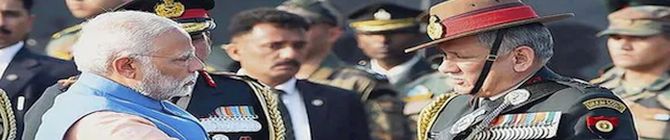
INDIAN ARMY AND NAVY FAVOUR THEATRE COMMANDS, AIR FORCE PLAYS THE LONE RANGER
While the Indian Army and Navy are in favour of military theatre commands, the Indian Air Force has issues over division of its air assets, nomenclature of commands, leadership of theatre commands and dilution of powers of chiefs Chief of Defence Staff General Bipin Rawat has called a meeting on Wednesday of the tri-services and other stake holders to understand their concerns over theatre commands and iron out differences before working towards the raising of maritime and air defence commands this year. The ministry of defence had accorded acceptance in principle to theatre commands in 2017 with Prime Minister Narendra Modi handing over the mandate of reorganization to Gen Rawat. Earlier this month, after a presentation, defence minister Rajnath Singh had asked Gen Rawat to call a meeting of stake holders and discuss all the issues threadbare before taking the theatre command concept to Cabinet Committee on Security (CCS) for final approval. Majority nations, including tiny Maldives to mighty US, function on theatre command concept with the idea of seamless integration among the land, sea and air forces for better coordination and response. While China has reorganized its seven military districts into five theatre commands, Pakistan has sought support of Beijing to help its forces also be reorganized under the same military concept. Although there have been media reports indicating that the entire process may be delayed, the ministry of defence, Indian Army and the Indian Navy are totally in favour of activation of the theatre commands with the Indian Air Force ploughing a lonely furrow on even issues like naming of the commands. Since the end of 1999 Kargil war, the Indian Air Force has its own version of jointmanship and integration with the sole purpose of keeping its air assets undivided and protecting its own turf. The fact is that even today, official files pertaining to army are labelled as Integrated Headquarters, Army (Ministry of Defence). The Navy filed are labelled Integrated Headquarters, Navy, but the Air Force files are still labelled as air headquarters only. This speaks volumes about Air Force vision of integration of the three services. A senior military commander explained the context and said: “Those in doubt are confused and outdated. Has corporatisation of ordnance factory boards come with 100 per cent consensus or is it based on efficient and better management of resources. Leadership in military is meant to take decisions in best interests of security ensuring optimum and efficient management of resources. Whatever is the best way for us to achieve the objective is the way forward.” Under the present theatre command concept, there will be three land-based commands – North comprising only of Jammu and Kashmir, and Ladakh, East comprising land area from Himachal to Arunachal Pradesh and West comprising of land area from Punjab to down south. Apart from this there will be an air defence command and a maritime theatre command with the Andamans and Nicobar Command under its jurisdiction. The maritime and air defence command will be raised by serving commander in chiefs after announcement this year and start functioning next year under the newly appointed theatre commanders. The theatre commanders will be selected from the serving commander in chiefs of the three services with air defence command going under an air marshal and maritime theatre command under a vice admiral without creation of any new posts. With Pakistan on its west and China on its eastern flank, the northern command will remain a single unit under an army general as the theatre is expected to remain active on the Line of Control and the Line of Actual Control for time to come. Apart from getting its air assets divided and issues like rotation among services for theatre commanders, the IAF’s concern is the perceived dilution of powers of the air chief as the theatre commanders will be in-charge of operations and directly report to the Chairman, Chiefs of Staff Committee with three chiefs as members. This concept is similar to the US concept where the chief of staff is responsible only for procurement and training while the theatre commanders report to the defence secretary. The present command structure in the Indian military is lop-sided with Indian Army having seven commands, a much smaller Indian Air Force having similar number and Indian Navy having three commands. This structure will be rationalized under the theatre command concept with the Indian Navy expected to get one more commander in chief position. With the Chinese PLA already functioning as one integrated unit under the Western Theatre Command along the 3488 km Line of Actual Control (LAC), the Indian military needs to get its act together and move fast on theatre commands for a cogent and strong response to the adversary in future. India has no other options.
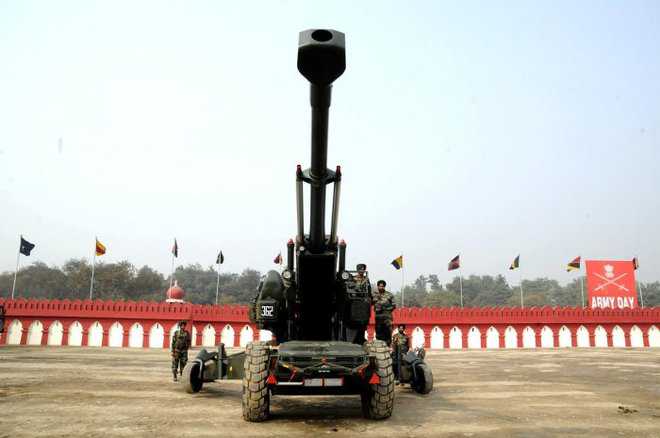
No outsider yet, only MoD top brass to head newly corporatized OFB on deputation
According to latest figures compiled by the MoD, the total manpower in OFB as on February 1, 2021 was 74,085
Photo for representation.
Vijay Mohan Tribune News Service Chandigarh, June 21
No outsider would be appointed to the Board of Directors in the newly corporatized Ordnance Factory Board (OFB) and appointments thereof for the time being would be made from within establishments under the Ministry of Defence (MoD).
“The first set of Board of Directors of the corporate entity (ies) is to be appointed from the serving senior officials of the OFB/Department of Defence Production, Armed Forces, Controller General of Defence Accounts and the existing nine defence public sector undertakings,” a note issued by the planning wing of the Department of Defence Production states.
On June 17, the Union Cabinet had approved the corporatization of the OFB, resulting in its 41 factories being subsumed as seven defence public sector undertakings owned 100 per cent by the government.
The Ministry of Defence has sought the list of officers fulfilling the eligibility criteria, who opt to join the newly created companies, from the aforementioned departments by June 30.
The selected officers would be placed on deemed deputation to the new corporate entities but without deputation allowance. They would be governed on terms applicable for foreign service and would be subject to service rules and regulations such as pay and allowances, leave and career progression as applicable to them in their parent cadre, the note adds.
Headquartered at Kolkata, the OFB is the oldest and the largest organisation in the country’s defence industry, dating back to 1787 when a gunpowder factory was established by the British at Ishapore.
They produce a vast array of equipment for the armed forces, para-military organisations and to a limited extent, the civilian market.
This includes weapons and ammunition, soft-skin vehicles, armoured vehicles, personal equipment and clothing, parachutes, opto-electronic devices, surveillance equipment and ancillary items.
Under the new scheme of things, the 41 factories have been converted into seven defence public sector undertakings. Ammunition and Explosives, headquartered at Khadki, will take over 12 factories, while Weapons and Equipment, headquartered at Kanpur, and Ancillary, headquartered at Ambajhari, will get eight factories each.
Vehicles, headquartered at Avadi, will get five factories, Troop Comfort Items, headquartered at Kanpur, will get four. Opto-electronics, headquartered at Dehradun will get three, while Parachute at Kanpur will comprise a single unit.
The plan for corporatization of the OFB was conceived about two decades ago to revitalise and streamline the functioning of the factories which have often drawn fire from Parliament’s Standing Committee on Defence and the Comptroller and Auditor General of India oversight over poor quality of products, mismanagement, delayed timelines and lack of technological advancements.
According to latest figures compiled by the MoD, the total manpower in OFB as on February 1, 2021 was 74,085 and the revenue generated in 2020 was Rs 12,755 crore. Arms and Explosives had the lion’s share in both, with 24,436 employees and a revenue of Rs 4,348 crore.
Pakistan’s audacious defence budget needs to stay on paper. It’s good for everyone
File photo of Pakistan Army chief General Qamar Javed Bajwa | @OfficialDGISPR | TwitterText Size: A- A+
Decoding Pakistan’s actions can be a difficult game. There are so many intertwined threads and hidden agendas that analysing them can be exhausting. But the task is necessary, especially when this volatile country hikes its defence expenditure by a reported 6.28 per cent. That’s a lot for anyone, but especially Pakistan, which has trouble paying its bills. Added to that is speculation that the defence rise is tied to the concessions that Pakistan expects from the US in its policy on Afghanistan. There’s no end to the audacity of Rawalpindi, but that bluff can be called, for many reasons. The cards are simply not falling right.
Defence budget and Pakistan’s economy
First, the budget itself. The unseemly brawl during the budget session was bad enough, with mostly treasury benches resorting to violence and name-calling. But the devil lies in the details of those budget papers being thrown around. Actual expenditure for the defence services, which in India covers several pages of detailed information, is so short as to be a parody. The total for ‘Defence Services’ is PKR 1.37 trillion, far more than what the federal government transfers to its provinces. That figure doesn’t include pensions pegged at PKR 360 billion and the Armed Forces Development Program at PKR 340 billion. There are other heads that are opaque, including the Defence Services Miscellaneous and Security Deposits, which runs to more than PKR 184 million. Add all of this up, and the total is far above the stated figure.
Pakistani analysts indignantly point out that the army gets just 1.1 per cent of GDP. India’s entire defence budget is just 2.15 per cent of GDP. And there’s not a bit of use saying India’s GDP is sized at $2,709 billion trillion, almost ten times that of Pakistan’s $263 billion or thereabouts. India is more than twice the size in territory with upwards of 13,000 sq. km in land boundaries to Pakistan’s 7,257 sq. km, and a coastline about seven times more. Besides, we have a fire breathing dragon at our borders. Pakistan has co-opted it, fire and all.
Then there are the perplexing figures. For instance, there is a mysterious rise in remittances, which is sustaining the current account balance. It was as much as $14 billion in the first half of FY 2020-21, despite a steep slump in workforce exports from 6,25,203 in 2019 to 2,24,705 in FY 2020. That is supported by data sets from the State Bank, which shows a precipitous drop
Pakistan’s own economists express doubts about its claimed 3.94 per cent GDP growth rate. Prime Minister Imran Khan now claims this as 4 per cent and above growth rate. The International Monetary Fund’s sedate prediction? It’s 1.5 per cent. Those are very large gaps in assessments. And here’s the worst news. About a quarter of the budget deficit of PKR 4 trillion is to be financed in part by the International Monetary Fund (IMF) and international bonds.
But as analysts note, the IMF has quietly decided to postpone its review until the government can demonstrate the viability of the budget. In simple words, the creditors are not enthusiastic about Imran Khan’s mathematics. That being the case, the projections for a defence budget rise to such an extent seems dim. Yet, the government powers on in high confidence.
The reason for high confidence is hardly rocket science. Top US officials like CIA chief William Burns have been visiting recently, at a time when the US is hastening out of Afghanistan. Leaks from Islamabad confirmed the secret visit, with public refusals on any operations from Pakistan into Afghan territory. In fact, so vociferous are these denials that it virtually confirms that there is a great deal of hard bargaining going on in return for Pakistan’s help in delivering its ‘ace in the hole’, which is the Taliban, and arising from that, urgently needed ground intelligence.
The bargaining was apparent in a New York Times story, which reported that Pakistanis wanted prior knowledge of any US attack into Afghanistan, with some Pakistani officials going so far as to say that the US should just hand over the drones to them. That in itself would have infuriated CIA officials. But Islamabad, like Oliver Twist, is never afraid of asking for more. Finance Minister Shaukat Tarin was quoted as saying that US withdrawal from Afghanistan had given Pakistan ‘some space’ in diluting the demands of the IMF. Tarin denied it later, but the position was clear. Even as the IMF balks at Pakistan’s unrealistic budget, Islamabad clearly feels it has the dominant hand to push the international lending agency to give it what it wants. This is not some wishful thinking. After all, this has been the story since the 1980s when the Soviets invaded Afghanistan. In three decades, Islamabad has honed such bargaining into a fine art.
The crux of it all is whether the US can call Pakistan’s bluff – which is that it will ‘control’ the Taliban and persuade it to deliver US objectives; primarily eradicating the terror threat, and ensuring a modicum of uniform governance for all. This assumes that the Taliban will act almost entirely on Pakistan’s wishes, providing intelligence on the ground on the activities of al-Qaeda and its many affiliates or competitors like the Islamic State. True, that is almost exactly what the Taliban commanders have done for the last two decades, given the need for safe havens.
But the picture has changed. As victory looms large, differences in power-sharing will inevitably emerge, with indicators already pointing in that direction. A new leadership may emerge that can’t be taken for granted. True, the Haqqanis and the like will still retain their strength in areas bordering Pakistan. But much of the rest, especially in the north and west, is up for grabs.
Meanwhile, Secretary of State Antony Blinken’s meeting with Central Asian leaders indicates the US is scouting for alternative bases. That’s not going to be easy, given that suitable airfields (which means sufficiently remote) are hard to find. Karshi Khanabad in Uzbekistan, for instance, was abandoned after it was found to be polluted with toxic materials including depleted uranium. Kyrgyzstan seems to offer a place to everyone, including India. Kazakhstan is much too far. Turkmenistan has declared neutrality. Besides, none will want to annoy Moscow, or the Taliban.
The advantage is that this time, the US is there not to target the Taliban, with which it has a peace agreement, but to hit the others, for which it is willing to pay in ‘support’ for the future Afghan government. For the US, it might be easier to kiss and make up with Moscow, than ever hope that Pakistan will change its double-dealing nature. Even as Islamabad gears up for the IMF to loosen the strings, India needs to do some hard diplomacy as well as open its purse, to ensure that US objectives are met in other geographies, and that its own Taliban outreach delivers at least the confidence that far more reliable friends are there for the long haul. Pakistan’s ambitious defence budget needs to stay where it is, on paper. That is good for everyone, including Pakistan itself.
The author is a Distinguished Fellow at the Institute of Peace and Conflict Studies, New Delhi. She tweets @kartha_tara. Views are personal.
Rajouri SHO alleges assault at Army’s Poshana checkpoint
Photo for representation only. File photo
Tribune News Service
Jammu, June 20
The Army has ordered an internal inquiry into the alleged assault on a police officer by its personnel at a checkpoint in Poonch district, sources said on Sunday.
Rajouri Station House Officer (SHO) Sameer Jilani was travelling to Kashmir to visit his ailing mother when he was allegedly manhandled by Army personnel, led by an officer, at Poshana checkpoint on Mughal Road on Saturday.
Terming it as unfortunate, sources said the one-off incident was an aberration to the excellent work being done by both the security agencies in ensuring a secure environment. An Army officer said the force and the police reaffirm their solidarity towards ‘awaam’ (public) and are committed to maintain peace and stability in the region. The police have registered an FIR against the soldiers.— PTI
The mortal remains of Milkha Singh were immersed in the Sutlej at Gurdwara Patalpuri Sahib here on Sunday. – File photo
Kiratpur Sahib, June 20
The mortal remains of Milkha Singh were immersed in the Sutlej at Gurdwara Patalpuri Sahib here on Sunday.
After a long battle with Covid, the 91-year-old sprinter died at the PGI, Chandigarh, late on Friday night.
His son and ace golfer Jeev Milkha Singh along with sisters and other relatives reached Gurdwara Patalpuri Sahib in the morning where an ‘ardas’ was offered for the departed soul. Following this, his ashes were immersed in the Sutlej. Later, the relatives paid obeisance at the gurdwara. — TNS
NGO makes blankets, bags, masks for old-age home inmates
Tribune News Service
Tribune News Service
New Delhi, June 20
With large stacks of military uniform awaiting “graceful” disposal, a retired Army officer has set up an NGO, Sewaj Neesim Foundation, which collects used uniform and uses it to prepare blankets, schoolbags, masks, aprons, bibs and other useful items.
Maj Gen Ashim Kohli (retd) says, “We have so far collected 4,000 pairs of uniform, but the work was affected due to the Covid-19 pandemic.”
An associated NGO is getting the stitching work done from women working from homes in slum areas. It has employed nearly 10 women in NCR and another seven in Pune.
The NGO aims to collect old uniform from across the country. The products made from recycled cloth would be donated to the needy, especially in children and old-age homes.
Maj Gen Kohli says, “The military uniform cannot be thrown away or given to the poor as non-authorised persons are allowed to wear it or may misuse it. We thus came up with this idea of gracefully disposing of the uniform.”
State Stalwarts
DEFENCES FORCES RANKS
ARMY, NAVY, AIRFORCE RANKS
FORMATION SIGNS
FORMATION SIGNS
ALL HUMANS ARE ONE CREATED BY GOD
HINDUS,MUSLIMS,SIKHS.ISAI SAB HAI BHAI BHAI
CHIEF PATRON ALL INDIA SANJHA MORCHA
LT GEN JASBIR SINGH DHALIWAL, DOGRA
SENIOR PATRON ALL INDIA SANJHA MORCHA
MAJOR GEN HARVIJAY SINGH, SENA MEDAL ,corps of signals
.
.
PATRON ALL INDIA SANJHA MORCHA
MAJ GEN RAMINDER GORAYA , CORPS OF
sanjhamorcha303@gmail.com
PRESIDENT HARAYANA STATE CUM COORDINATOR ESM
BRIG DALJIT THUKRAL ,BENGAL SAPPERS
PRESIDENT TRICITY
COL B S BRAR (BHUPI BRAR)
PRESIDENT CHANDIGARH ZONE
COL SHANJIT SINGH BHULLAR
.
.
PRESIDENT PANCHKULA ZONE AND ZIRAKPUR
COL SWARAN SINGH
PRESIDENT SAS NAGAR (MOHALI)
COL BALBIR SINGH , ARTY
INDIAN DEFENCE FORCES
DEFENCE FORCES INTEGRATED LOGO
FORCES FLAGS
15 Th PRESIDENT OF INDIA SUPREME COMMANDER ARMED FORCES
Droupadi Murmu
DEFENCE MINISTER
Minister Rajnath Singh
CHIEF OF DEFENCE STAFF (2nd)
General Anil Chauhan PVSM UYSM AVSM SM VSM
INDIAN FORCES CHIEFS
CHIEF OF ARMY STAFF(29th)
General Upendra Dwivedi, PVSM, AVSM (30 Jun 2024 to Till Date)