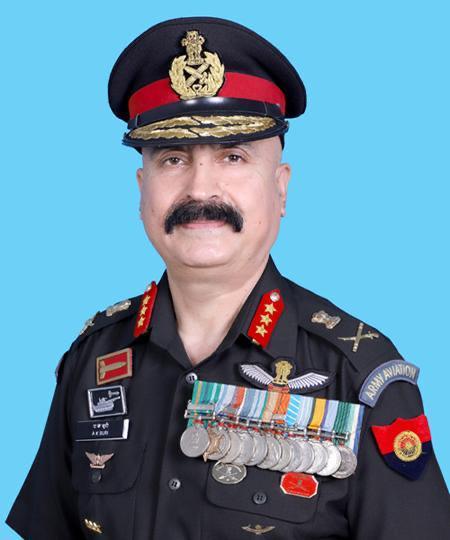
St. Edward’s School alumnus, was born & raised in Shimla
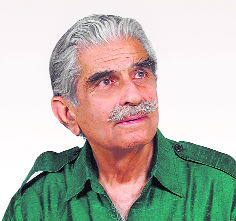
Lt Gen Ajay Kumar Suri
Shimla, June 22
Lt Gen Ajay Kumar Suri has taken over as Director General and Colonel Commandant of Army Aviation in the Indian Army. He was born and brought up in Shimla. A pass-out of St. Edward’s School and Kendriya Vidyalaya, Jakhoo, Suri was commissioned as Second Lieutenant on June 8, 1985, from the IMA, Dehradun, and he joined the artillery regiment.
Later, he earned his flying badge in June 1990 and has over 6,000 flying hours to his name. Lt Gen Suri recently moved a proposal for women helicopter pilots via the Chief of Army Staff and as a result two women officers joined training in Nasik after a rigorous selection process. — TNS
PROMISE OF BUDGETARY SUPPORT FOR DEFENCE INNOVATION
The actual allocation of funds to DIO would depend on how much money the finance minister is able to allocate each year for this purpose by Amit Cowshish On June 13, Defence Minister Rajnath Singh approved budgetary support of Rs 498.8 crore for the Defence Innovation Organisation (DIO). This will enable DIO to provide funds to nearly 300 aspiring entrepreneurs and 20-odd Partner Incubators (PIs) to undertake R&D and innovation projects. The funds will be released by the Department of Defence Production (DDP) over the next five years. Considering that the budgetary allocations are made annually in the federal budget, the approval given by Rajnath Singh can best be described as the indicative budget for the next five years. The actual allocation of funds to DIO would depend on how much money the finance minister is able to allocate each year for this purpose. This five-year budget includes Rs 450 crore for funding the projects, Rs 29.6 crore for the PIs and Rs 19.18 crore for the DIO’s internal operations, including administrative and management cost and the expenditure on monitoring and evaluation of projects. During the current financial year, DIO is expected to be allocated Rs 66.1 crore. It is now known whether the DDP already has sufficient funds from which this amount will be released, or it will now approach the Ministry of Finance for additional allocation. Incorporated in 2018 under Section 8 of the Company Act, 2013, DIO is a not-for-profit organisation that manages Innovation for Defence Excellence (iDEX) scheme. The aim of this scheme is to create ‘an ecosystem to foster innovation and technology development in Defence and Aerospace by engaging Industries including MSMEs, start-ups, individual innovators, R&D institutes and academia and provide them grants/funding and other support to carry out R&D development which has good potential for future adoption for Indian defence and aerospace needs’. This nascent organisation is managed by a Board of Directors, with Secretary (DDP) as the Chairman, Additional Secretary as the Chief Executive Officer, and CMDs of Hindustan Aeronautics Limited (HAL) and Bharat Electronics Limited (BEL), and the MD of Atal Innovation Mission (AIM), as members. The DIOs’ activities have so far been largely confined to organising Defence India Start-up Challenge, or DISC, though currently it also seems to be running a 45-day awareness programme since June 1 for the aspiring innovators. The iDEX challenge is open to start-ups, MSMEs (Micro, Small and Medium Enterprises), R&D institutions, academia, and individual innovators. They are required to work on the problem statements prepared by the armed forces, Defence Public Sector Undertakings (DPSUs), Ordnance Factory Board (OFB) -now facing the prospect of being broken up into seven corporations- and by other agencies which have signed Memorandum of Understanding (MoUs) with the DIO. Milestone-related financial assistance in the form of grant, equity, debt, and other analogous arrangements is provided to the maximum limit of Rs 1.5 crore to entities shortlisted for taking up the challenge and, following an elaborate process of assessment and evaluation, the winners are announced by the DIO. Four challenges have been conducted so far under the iDEX framework. In addition, at least one challenge seems to have been conducted exclusively for the armed forces personnel. The iDEX scheme also envisages funding the PIs for undertaking similar activities to the extent of Rs 40 lakh if the program is deemed worthwhile. It, however, remains unclear if any partner has benefitted from this provision so far. As for the outcome of the past three years that DIO has been in existence, the picture is hazy, as the information available on the iDEX website is too sketchy, disorganised, and difficult to collate. However, a rough count shows that so far at least 72 individual innovators, small companies, military personnel and one institution -IIT Palakkad- have won 30-odd challenges posed by the armed forces, Goa Shipyard Limited (GSL), BEL and HAL. A wide range of prototypes and technologies have been successfully developed by the winners. The list includes Individual Protection System, See-through Armour, Secure Hardware Encryption Device, Unmanned Surface/Underwater Vehicles, Computer Generated Targets for Virtual Training, 4-G tactical Area Network, Autonomous Underwater Swarm Drones, AI based Satellite Image Analysis, Foliage Penetration Radar, and Remote Real Time In-Flight Health Monitoring of Aircrew. Credit must be given where it is due. The fact that the four rounds of challenges held so far have elicited good response and quite a few prototypes and technologies have been developed by a cross-section of innovators is both impressive and heartening. However, the mystery surrounding the scheme endures, not least because of the incomprehensibility and disjointedness of the information posted there. Nevertheless, three issues stand out. First, though many prototypes and technologies have been developed, this cannot be an end in itself. It is not known how many of these have been, or are being, integrated with the in-service, under development or under production equipment, platforms, and weapon systems. This is the only yardstick that can be used to assess the ultimate utility of the solutions developed by the innovators. Second, the commercial viability of developing the solutions, which may also require the innovators to partially fund the projects themselves, would depend on their ability to sell the product. No information is available on the DIO website about the solutions developed by the innovators being bought by the Indian industry or the MoD, or their export by the innovators. Third, the iDEX scheme seems to run in parallel with the Technology Development Fund (TDF) managed by the Defence Research and Development Organisation (DRDO) to promote self-reliance in technology development. It would be disingenuous to argue that there is a nuanced difference between the objectives of both these schemes. Even if it is conceded for argument’s sake that these schemes serve somewhat different purposes, there is no denying that a synergised approach to innovation and R&D can produce better results. Turf war between DDP and DRDO seems to have trumped the need for such synergy.
PLA SILENT ON REFERENCE POINTS ON LAC FOR BUFFER ZONES
Indian Army has a geographical and time disadvantage on Ladakh LAC as the PLA has positions on flat Tibetan plateau which are connected by black top roads while Indian troops are on unmotorable and glaciated high mountain terrain When the Sumdorong Chu stand-off between Indian and Chinese armies was at its peak in the autumn of 1986, the People’s Liberation Army (PLA) suggested that both sides create a buffer zone by moving 20 kilometres from the friction points in Arunachal Pradesh to avoid the possibility of an accidental flare-up. The Indian Army, under General K Sundarji, responded by asking their Chinese counterpart about the reference point of the buffer zone as the 1,126-km Line of Actual Control (LAC) in Arunachal Pradesh was undefined and Beijing claimed the Indian state as its own territory. The Chinese never got back with the reply and the Sumdorong Chu stand-off was finally resolved some eight years later with Indian Army not budging an inch. Cut to May 2020 transgressions along the 1597-km LAC in Ladakh. The Chinese army, under instructions from the highest levels, transgressed into Gogra Hot Springs area near Kongka La and to Finger 4 mountainous spur on the northern banks of Pangong Tso with the intention of imposing the 1959 Green Line defined by then prime minister Chou En-Lai on the Ladakh LAC. This resulted in a stand-off with Indian Army matching the Chinese strength on ground to day with no signs of PLA disengagement at Gogra-Hot Springs and de-escalation limited to only Pangong Tso fingers and the south banks of the salty cold lake along the Rezang La-Rechin La ridgeline. During the 11 rounds of military dialogue, the PLA again came up with the proposal of creating a buffer zone on north banks of Pangong Tso and a 10-km no fly zone around the LAC to ensure that there was no accidental escalation due to local friction. With deception and subterfuge as its legitimate tools, the PLA suggested Finger 4 to be the reference point rather than Finger 8, which is the Indian perception of the LAC. It is understood that the Indian side offered a via media solution by proposing a buffer zone from median finger 6 as the reference point, but the PLA never agreed. For a country that withdrew from the exchange of maps in the western sector way back on July 17, 2002, the Chinese reluctance to give the reference points to the buffer zone or no patrolling zone is understandable as the grid location will define the LAC on paper. While Indian Army is willing to discuss the buffer zone only with a reference point rather than a general area location, it has some fundamental objections to this proposal due to geography of East Ladakh. The Chinese positions across the Ladakh LAC are on flat Tibetan plateau and motorable to the zero point, while the Indian Army positions are on Ladakh range, whose average height is little less than 6,000 metres. The Pangong Range runs parallel to the Ladakh range and south of it lies the Kailash Range that culminates in Mount Kailash in Tibet. The terrain on Pangong and Ladakh range is heavily glaciated and subject to extreme weather conditions with the Indian troops boxed in by over 16,000 feet high mountain passes between the Ladakh and the Pangong-Kailash Ranges. According to top Indian military commanders, the Chinese buffer zone proposal for Indian troops sitting at heights would make no sense as the PLA will reach their positions much faster due to flat terrain and black top roads in the worst-case scenario. Another proposal to set up a hot line between the two armies to avoid any border flare-up is mired in Chinese double-speak. While India wants the Indian Director General Military Operations to have a line with his PLA counterpart in Beijing, the PLA perhaps wants to show the Indian Army down by only allowing the hot-line to the Chengdu based Western Theatre Command. Given the trust deficit between the two countries, the best option is for both sides to restore the April 2020 status quo ante with the armies on both sides going back to their peace time locations. This will not only restore sanctity to the bilateral agreements since 1993 but also normalize ties between two neighbours.
by Harsha Kakar Post Kargil there were multiple committees established to study causes, shortcomings and suggest remedial measures. Kargil in 1999 and Ladakh in 2020 had a few things in common, the most obvious was to have been surprised, followed by a reaction. The Indian polity had closed its mind to the fact that China was a threat, while in 1999, it never expected Pakistan to risk an offensive manoeuvre, considering differences in military power. The political belief was that diplomacy and economic bonding would contain Chinese adventurism. Post Doklam, General Bipin Rawat had stated at a seminar in CLAWS, “Salami slicing, taking over territory in a gradual manner, testing our limits of threshold is something we have to be wary about.” It was a warning, yet when China entered Ladakh, India was unprepared. Kargil was a failure of intelligence and laxity by forces deployed in the region. Ladakh was no different. The Chinese had planned and prepared for the incursion, keeping it below thresholds of war. The use of medieval handheld weapons at Galwan were indicative of their in-depth planning. They exploited Indian involvement in stemming the pandemic, while Pakistan exploited Indian casualness. Indian reserve formations, which deploy in Ladakh for exercises to counter additional forces, were held back on the premise that China was conducting routine training exercises. Subsequent Indian reactions were similar during Kargil, which was to rush forces to the region. The Lahore summit between Prime Ministers Atal Behari Vajpayee and Nawaz Sharif had taken place in February 1999, while the Mahabalipuram summit between PM Narendra Modi and President Xi Jinping occurred in October 2019. In both instances, India trusted diplomacy and believed that bonding and peace talks would ensure the borders remained peaceful. Conversely, while their leaders discussed peace, cooperation and trade, the armed forces of our two neighbours were planning offensive manoeuvres in Indian territory. In Kargil, Pakistan had studied our routine and exploited it, in Ladakh the Chinese did the same. Trust deteriorated subsequently. The major difference between Kargil and Ladakh was in the levels of violence. In Ladakh, apart from Galwan where India lost 20 of its bravest, there were no other instances of violence, and talks have been adopted to resolve the dispute. In Kargil, the army was compelled to take offensive action to evict intruders, leading to large loss of lives. The other difference was the Indian offensive action of occupying the Kailash Ridge, pushing China on the defensive and leading to resolution on both banks of Pangong Tso. We reacted to hostile actions by our neighbours, which occurred due to our own shortcomings. Another commonality was induction of additional formations and reassigning operational responsibilities. In Kargil, an additional division was inducted, as also 14 Corps raised, splitting the responsibility of the erstwhile 15 Corps. In the case of Ladakh, an offensive Corps in the plains has been reassigned for similar tasks in the region, enhancing offensive capabilities. Additional troops have been deployed all along the LAC to cater for any future Chinese misadventures. Pragmatism and correct assessment of national threats over the years, as also logical allocation of funds for national security would have avoided sudden spurts in expenditure, reduced the capability gap and possibly resulted in the Chinese thinking twice before attempting misadventures. The mountain strike corps, whose raising was stalled by the government due to paucity of funds, has been revived. Thus, defence expenditure has witnessed an increase, rather than a reduction. The same occurred post Kargil. During Kargil, there were increased allocation of funds to procure equipment essential to make up shortfalls in capabilities, as defence budgets had reduced over years. A near-similar scenario of poor allocation for defence continued until the government was shaken by the Chinese intrusion. The forces had been forced to re-adjust procurement plans due to poor allocation of capital funds, despite repeated requests to the finance ministry. Governments slept, unwilling to accept that threats to national security had not reduced and China would exploit its military superiority at some stage. When Ladakh happened, the government woke from its slumber and hurriedly released funds for procurement. To shift procurement responsibility on to service HQs, they enhanced financial powers of service chiefs. The government ignored the fact, in both instances, that defence equipment is never available off the shelf and there is always a gap between placing orders, procuring equipment and enhancing capabilities. Had it continued with logical financial allocations in defence budgets, such haphazard solutions would not have been resorted to. Similar to the post-Kargil scenario, once the Ladakh intrusion occurred, the government realised the importance of logistics and connectivity. Infrastructure towards the LAC once again came into focus. Connectivity projects along the entire LAC, from Ladakh to Arunachal, saw infusion of funds. Deadlines were reduced, projects closely monitored, and every completed project inaugurated by a senior government functionary, aimed at sending a message. Procurement of essential ammunition stocks and winter clothing, slowed due to paucity of funds, picked up steam. Such was the initial shortfall that the US released winter clothing from its reserve stocks. Currently, the army is procuring for future use. Post Kargil there were multiple committees established to study causes, shortcomings and suggest remedial measures. The take-off point was the Dr K Subramanyam-led Kargil Committee. Failures were identified and creation of additional coordinating bodies and institutions recommended. Many were created. No such committee has yet been announced for determining the causes of the Ladakh crisis as also recommending remedial measures. It appears that the government is unwilling to accept criticism or even an assessment into how the nation was surprised and compelled to react. India has always claimed to be a state which desires peace and tranquillity. It expects the same from its neighbours. However, every time it was led up the garden path and surprised. National leaders of both Pakistan and China engaged in talks with India, while their military planned offensive actions. Thus, they were part of strategic deception, willingly or unwillingly. In such a scenario, there is bound to be a trust deficit, which will impact future relations. India needs to ensure that it is never again compelled to react as also deter misadventures by enhancing military capabilities. Our political leadership must never blindly trust the adversary’s leaders.
140% RISE IN CEASEFIRE VIOLATIONS BY PAKISTAN AFTER INDIA SCRAPPED ARTICLE 370 IN J&K: HOME MINISTRY
New Delhi: Pakistan, which has been very vocal against India’s decision to scrap the special status of Jammu and Kashmir, has increased the incidents of ceasefire violation by nearly 140 per cent in the last three years — from 2,140 in 2018 to 5,133 in 2020, Union Home Ministry data shows. Further, in 2019, there were over 3,400 ceasefire violations by Pakistan along the border. Of these, nearly half took place after August 2019 — when the Centre took away the special status of Jammu and Kashmir and divided it into Union Territories. The data analysed by CNN-News18 shows that between August 5, 2019 and February 28, 2021, 31 civilians were killed and 39 security forces personnel were martyred in such incidents. While the ceasefire violations have increased by over double in the last three years, the civilian casualties have dropped from 30 in 2018 to 22 in 2020, the ministry data analysed by CNN-News18 shows. Similarly, fewer civilians were injured in such incidents over the year — from 143 in 2018 to 71 in 2020. Further, 29 security personnel were martyred in 2018. This dropped to 24 in 2020. However, the number of security personnel injured in these violations has increased from 116 in 2018 to 126 in 2020. Ceasefire violations and cross border firing by Pakistan along the Line of Control (LoC) and International Border (IB) in Jammu and Kashmir have been reported since decades, the Home Ministry data says. India shares a 3,323-km border with Pakistan, of which 221 km of the IB and 740 km of the LoC fall in Jammu and Kashmir. India and Pakistan entered into a ceasefire agreement in 2003. Between 2006 and 2011, less than 100 violations were reported each year. No civilian has been killed in a law-and-order situation since the abrogation of Article 370 in Jammu and Kashmir. However, 59 were killed in militancy related incidents, Home Ministry data shows. Among all the districts, Kulgam and Pulwama reported highest 15 and 12 civilian deaths, respectively, since the abrogation of Article 370. Jammu and Kashmir is the only part of India that has reported terror incidents in 2019 and 2020, the Home Ministry said. In 2018, apart from Jammu and Kashmir, Punjab reported one terror incident. Three people were killed that year in terror incidents, the Home Ministry said. Between 2018 and 2020, each year more than 35 people were killed in terror incidents in Jammu and Kashmir. During the same period, 635 terrorists were killed.
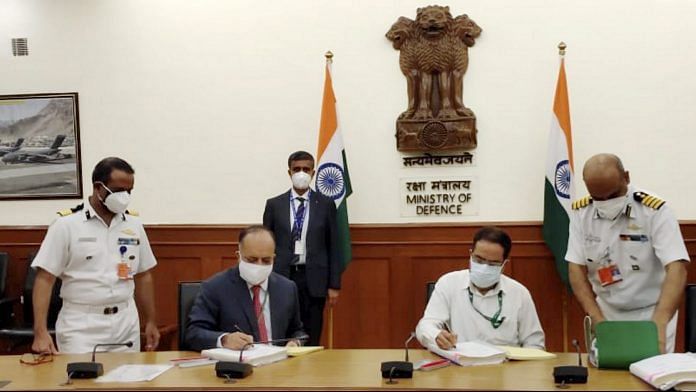
Defence ministry signs Rs 583-cr deal with Goa Shipyard to procure 2 pollution control ships
Ministry of Defence officials sign a contract with Goa Shipyard Ltd (GSL) for construction of two Pollution Control Vessels (PCVs) for Indian Coast Guard (ICG) in Panaji on 22 June, 2021 | PTIText Size: A- A+
New Delhi: The Defence Ministry on Tuesday signed a contract with Goa Shipyard Ltd (GSL) for the construction of two pollution control vessels for the Indian Coast Guard at a cost of about Rs 583 crore, officials said.
The ships are being procured to significantly augment the capability of the Indian Coast Guard (ICG) to respond to incidents of oil spills at the sea and also boost the force’s pollution response mechanism.
These two vessels are scheduled for delivery by November 2024 and May 2025 respectively.
The defence ministry said the “special role ships” will be indigenously designed, developed and built by GSL.
“The acquisition will significantly augment the capability of ICG to respond to oil spill disasters at sea,” it said.
At present, ICG has three pollution control vessels (PCVs) in its fleet at Mumbai, Visakhapatnam and Porbander to carry out dedicated pollution surveillance, oil spill monitoring and response operations in the Indian exclusive economic zone and islands around it.
“The new PCVs planned are for pollution response requirements in eastern and the ecologically sensitive Andaman and Nicobar regions,” the ministry said in a statement.
“The vessels, with the capability of operating helicopter on board, will have many advanced features with modern pollution response equipment of niche technology for containing, recovering and dispersing of the marine oil spill,” it said.
The ministry said the contract would further boost the indigenous shipbuilding capability and increase employment opportunities in the shipbuilding sector that involves around 200 MSME (micro, small and medium enterprises) vendors.
General Hlaing’s political solution consists of changing the electoral system from first-past-the-post to one that ensures the military-backed USDP wins a majority which will require tweaking the military-drafted Constitution and encouraging the entry of additional political parties. Suu Kyi neither encouraged second-rung leadership, which she kept overcentralised, nor tapped provincial talent.
Growing divide: Resistance to the military coup in Myanmar is rising with the junta eyeing alternatives to Aung San Suu Kyi. Reuters
Maj-Gen Ashok K Mehta (retd)
Military Commentator
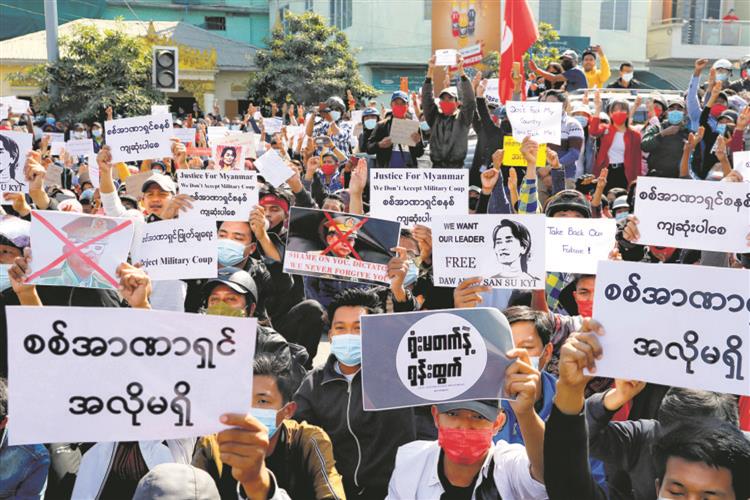
Myanmar has entered the fifth month after the military coup, with resistance to the coup optically resilient and bedding in. No coup led by the Commander-in-Chief (General Min Aung Hlaing) himself has met with such popular dissent and wide-scale opposition. But this coup is atypical, as the military was voluntarily sharing power with the elected National League for Democracy (NLD) led by Aung San Suu Kyi in a unique hybrid system where the military called the shots and the powerful NLD provided the democratic veneer.
The junta’s game plan of legally disqualifying the NLD from future elections and taking penal action for sedition and corruption against Suu Kyi is playing out to a delayed schedule due to the growing strength of resistance. A recent study reveals that while protests have visibly declined, use of explosive devices and fighting in the border regions with Kachins, Karens and Chin has risen exponentially. Detained protestors are being tortured by the Office of Military Security which has raised a vigilante group called Pyuisawhti — a Burmese warrior prince — in May for surveillance in urban areas. According to the UN Human Rights Office, 893 civilians have been killed and nearly 6,000 protestors detained.
In the military’s estimate, action of the shadow National Unity Government (NUG) with the Civil Disobedience Movement and People’s Defence Force with their alliance with four ethnic armed organisations, has been brought under control. General Hlaing has given himself an indefinite extension of service beyond July when he was to retire. He is saying elections will be held (not in one or two years) but when peace and stability are restored. The economy has collapsed (down to 3 per cent and poverty risen from 24 to 27 per cent), replaced with underground trade and business by criminal networks. A suspicion that Beijing was behind the coup has boosted anti-China sentiments, prompting Chinese Ambassador Chen Hai to say his country is playing a constructive role in bringing peace and stability. While sanctions have not worked, internally displaced numbers have reached 100,000, mainly from Kayah State while refugees have crossed over into Thailand and India. Eight weeks after the ASEAN five-point consensus to find a negotiated solution, even the search for a special envoy is proving elusive.
Government prosecutors are completing their presentation of charges this month after which Suu Kyi’s defence team will present its case. In his first interview, General Hlaing told Hong Kong Phoenix TV that transfer of power to civil administration will happen after the elections. The NUG’s first press conference on June 4 had to be aborted as the military shut down the Internet.
As the peak of resistance is probably past, so has the use of force by the elite 77 Infantry Division, infamous for deployment against protests like the CDM. General Hlaing’s political solution consists of changing the electoral system from first-past-the-post to one that ensures the military-backed Union Solidarity and Development Party (USDP) wins a majority which will require tweaking the military-drafted Constitution and encouraging the entry of additional political parties like the National Democratic Force which split from the NLD in 2010, People’s Party founded in 2018 and People’s Pioneer Party formed in 2019. Suu Kyi neither encouraged nurturing second-rung leadership, which she kept overcentralised, nor tapped provincial talent.
General Hlaing’s plans for regime change roughly follow the Thailand model. General Hlaing reached out to former General and now Prime Minister Prayuth Chan o’cha through the effervescent and pro-military Foreign Minister Wunna Maung Lwin. A back-channel has existed between General Chan o’cha who won the Thai elections in 2019 by leading a pro-military political party. In 2014, General Chan o’cha had reached out to General Hlaing when he staged a coup, but recently he was disinclined to be publicly associated with Hlaing. That was the reason he skipped the Jakarta ASEAN meet in April. But in 2018, Hlaing was awarded the Knight and Grand Cross of Most Exalted Order of White Elephant for his support to the Thai military.
Burmese Generals are inward looking and consider themselves as guardians of society, religion and moral values. The military is the backbone of state administration and functional order.
India’s support for restoration of democracy may not align with the Hlaing model. Its Act East policy has been jolted due to unrest on the Indian and Thai borders as insurgency has been revived. India drew flak when it ordered states bordering Myanmar to prevent refugees from entering overland into Mizoram, Manipur and Nagaland. India has not signed the 1951 UN Refugee Convention and its 1967 Protocol. Despite bar orders from New Delhi, Mizoram and Manipur have permitted 17,000 refugees, including the Chief Minister of Chin state, fleeing fighting, to enter their states. Unless India along with Japan, creates a niche position for itself in the ASEAN peace plan, its support for the junta will hurt its democratic credentials.
This month’s UNGA resolution condemning the coup and urging an arms embargo, passed with 119 out of 193 votes, was only the fourth resolution after Haiti (1991), Burundi (1993) and Honduras (2009). India is among 36 abstentions and it must step up support for democratic resistance for an inclusive Myanmar.
The ASEAN process is beset with challenges that are contained in the military spokesperson’s statement: “Whether we can allow a special envoy of ASEAN will depend on stability. Whether we follow ASEAN’s suggestion (five-point consensus) will depend on the situation in the country.”
Civil-military cohabitation appears not to have worked for both sides. Worse, they feel they don’t need each other. Military under genuine civilian control in a democratic dispensation is a distant goal; even restoration of power-sharing is unlikely, further limiting India’s strategic choices.
The Ambala police have today arrested a Squadron Leader after his wife Lieutenant Sakshi (29) allegedly committed suicide at her service quarter in Ambala Cantonment on Monday.
The police said Sakshi’s husband, Navneet Sharma, has been arrested and will be produced before a court on Wednesday. A case has been registered under Sections 304-B and 34 of the IPC at the Ambala Cantonment police station against Navneet Sharma, his mother Luxmi Sharma, father Chetram Sharma and brother Mohit Sharma.
The complianant, Sourabh, Sakshi’s brother, said Sakshigot married in December 2018. Her in-laws used to harass her for dowry and beat her over petty issues. “She had told us that her in-laws want to give her son to Navneet’s sister. They have been torturing her. She informed us the same on Sunday night too. On Monday, we got call that Sakshi has committed suicide. Navneet had also got CCTV cameras installed in their room and threatened to divorce Sakshi,” he added. Sourabh alledged that the accused may have got the footage erased. Demanding police action the family today reached outside the police station in Ambala Cantonment and refused to accept the body till the accused were arrested. The SHO Ambala Cantonment, Vijay Kumar, said “Following a complaint, the squadron leader has been arrested .” — TNS
Service rules amended in J&K, recruits to give 5-year cellphone numbers
Intending to ensure that “unscrupulous” elements do not get into government jobs, the J&K administration has amended the Civil Services (Verification of Character and Antecedents) rules. Photo for representation only
Tribune News Service
New Delhi, June 22
Intending to ensure that “unscrupulous” elements do not get into government jobs, the J&K administration has amended the Civil Services (Verification of Character and Antecedents) rules, making it mandatory for those entering the services to provide educational details from the age of 15 years, mobile numbers used in last five years, information about in-laws and details of loans taken.
The General Administration Department (GAD) of the UT has made the amendment and an order was issued on late Monday evening. It stated that the decision was taken after a panel, set up under the chief secretary last year, recommended proper character and antecedent verification by the Criminal Investigation Department (CID).
Mandatory to furnish educational, bank details
Educational details from the age of 15 years, mobile numbers used in the last five years, details of family, in-laws, loans, vehicle registration number, social media or web-based accounts, bank account numbers.
In case of stay abroad (including Pakistan/PoK), the candidates have to reveal particulars of the places they resided for more than 1 year after attaining age of 18 years. PTI
The candidates, besides being asked to provide information about themselves, their family members, including in-laws, will have to provide information about the mobile numbers used during the last five years, the registration number of vehicles owned or used, email and social media or web-based portal accounts, in addition to bank and post office account numbers. Among other details are candidates as well as their spouses data, purpose and hosts of foreign visits in the last five years and membership or association, if any, with prescribed or banned organisations, details of membership of club or society or association or trust or charity and similar bodies.
“The appointing authorities, on the receipt of attestation forms from the candidates, shall forward these forms with a covering
letter (sealed and marked secret) to the CID Headquarters for verification of the character and antecedents of the selectees,” the order stated.
“The CID shall conduct verification of character and antecedents of the selectees and forward the same to the requisitioning authority within one month. In case the process in respect of some candidates requires more time, the CID may seek another one month,” it said, while further clarifying that the entire time period in the verification process should not be more than two months under any circumstances.
The order read, “In case of receipt of an adverse report and on confirmation thereof by the state/divisional/district-level screening committee, as the case may be, the appointment shall automatically stand cancelled without any notice.”
The government warned that the furnishing of false information or suppression of any factual information in the attestation form would entail disqualification, and is likely to render the candidate unfit for employment under the government.
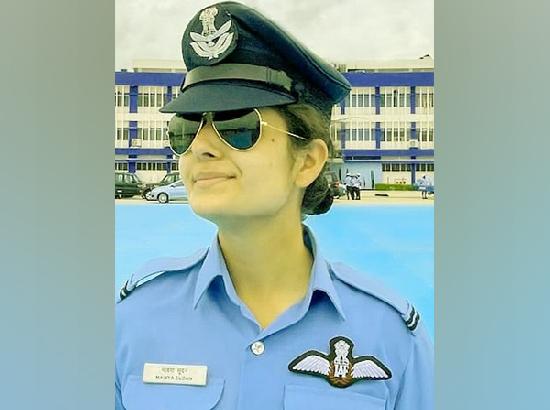
Meet Mawya Sudan, first woman fighter pilot in IAF from J-K’s Rajouri
Meet Mawya Sudan, first woman fighter pilot in IAF from J-K’s RajouriRajouri (Jammu and Kashmir) [India], June 20 (ANI): Mawya Sudan, a resident of Jammu and Kashmir, has become the first woman fighter pilot in the Indian Air Force (IAF) from Rajouri district.Hailing from the village of Lamberi, of Border Tehsil of Nowshera in Rajouri, she commissioned into the IAF as Flying Officer.Mawya has become the 12th woman officer and first from Rajouri to be inducted as a fighter pilot in the IAF. Air Chief Marshal Rakesh Kumar Singh Bhadauria reviewed the combined graduation passing out parade, held on Saturday at the Air Force Academy, Dundigal, Hyderabad.
Mawya’s father, Vinod Sudan, expressed his happiness over his daughter’s achievement. He said, “I am feeling proud. Now she is not just our daughter but a daughter of this country. We have been receiving congratulatory messages since yesterday.”The fighter pilot’s sister, Manyata Sudan, who is a JE in Shri Mata Vaishno Devi Shrine Board, told ANI that since her school days, Mawya was inclined towards Air Force and always wanted to become a fighter pilot.”I am incredibly proud of my younger sister. This was her dream since childhood. I am sure she will add to her laurels soon. This is just the beginning. Everyone is treating her like her own daughter. People from all over the country are supporting and motivating her. It is an inspiring story for everyone,” she said.Sushma Sudan, the mother, said, “I am happy that she has worked so hard and achieved her goal. She has made us feel proud.” Everyone in the village is happy over Mawya’s news, said her grandmother Pushpa Devi. (ANI)
State Stalwarts
DEFENCES FORCES RANKS
ARMY, NAVY, AIRFORCE RANKS
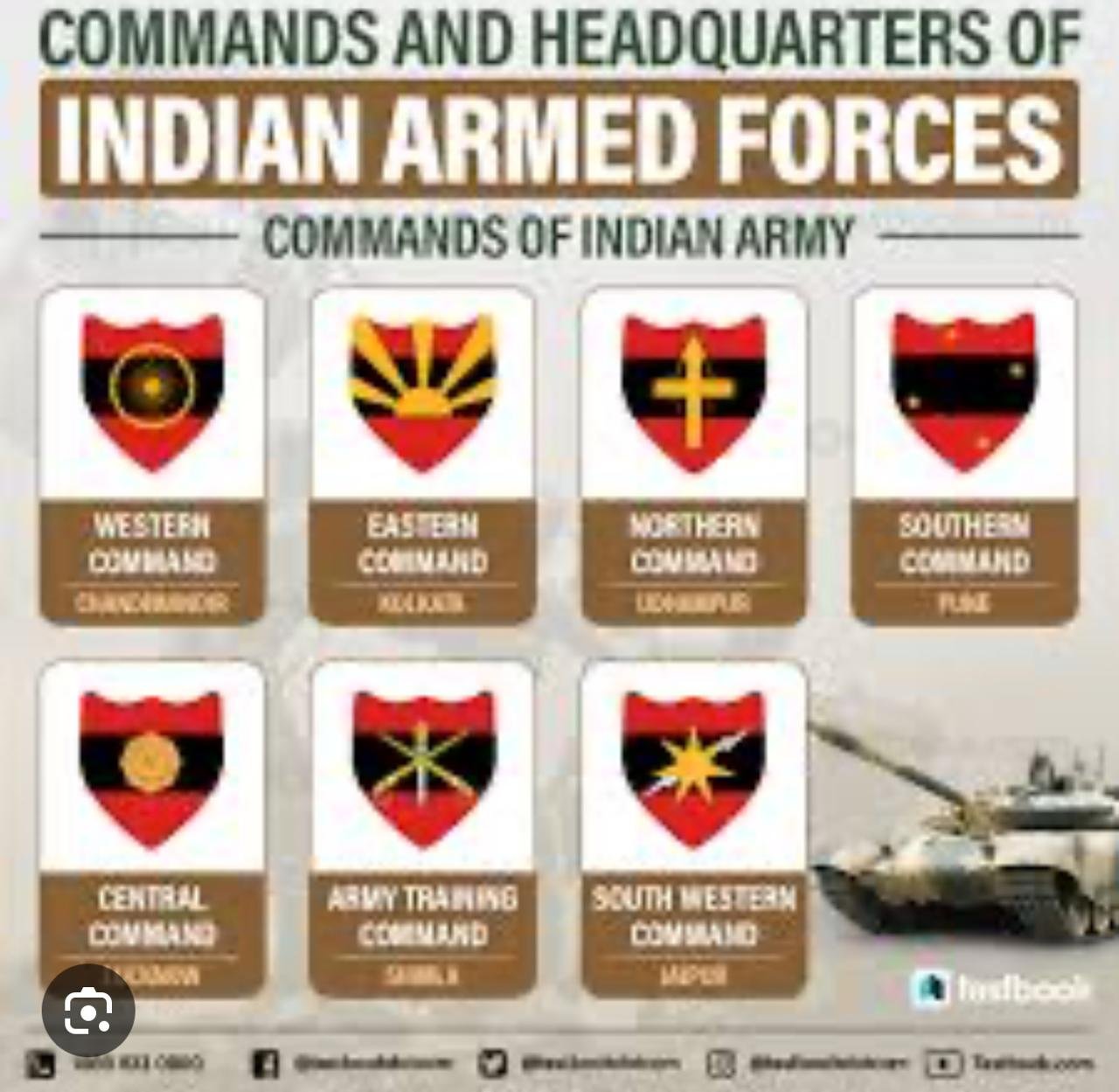
FORMATION SIGNS
FORMATION SIGNS
ALL HUMANS ARE ONE CREATED BY GOD
HINDUS,MUSLIMS,SIKHS.ISAI SAB HAI BHAI BHAI
CHIEF PATRON ALL INDIA SANJHA MORCHA
LT GEN JASBIR SINGH DHALIWAL, DOGRA
SENIOR PATRON ALL INDIA SANJHA MORCHA
MAJOR GEN HARVIJAY SINGH, SENA MEDAL ,corps of signals
.
.
PATRON ALL INDIA SANJHA MORCHA
MAJ GEN RAMINDER GORAYA , CORPS OF
sanjhamorcha303@gmail.com
PRESIDENT HARAYANA STATE CUM COORDINATOR ESM
BRIG DALJIT THUKRAL ,BENGAL SAPPERS
PRESIDENT TRICITY
COL B S BRAR (BHUPI BRAR)
PRESIDENT CHANDIGARH ZONE
COL SHANJIT SINGH BHULLAR
.
.
PRESIDENT PANCHKULA ZONE AND ZIRAKPUR
COL SWARAN SINGH
PRESIDENT SAS NAGAR (MOHALI)
COL BALBIR SINGH , ARTY
INDIAN DEFENCE FORCES
DEFENCE FORCES INTEGRATED LOGO
FORCES FLAGS
15 Th PRESIDENT OF INDIA SUPREME COMMANDER ARMED FORCES
Droupadi Murmu
DEFENCE MINISTER
Minister Rajnath Singh
CHIEF OF DEFENCE STAFF (2nd)
General Anil Chauhan PVSM UYSM AVSM SM VSM
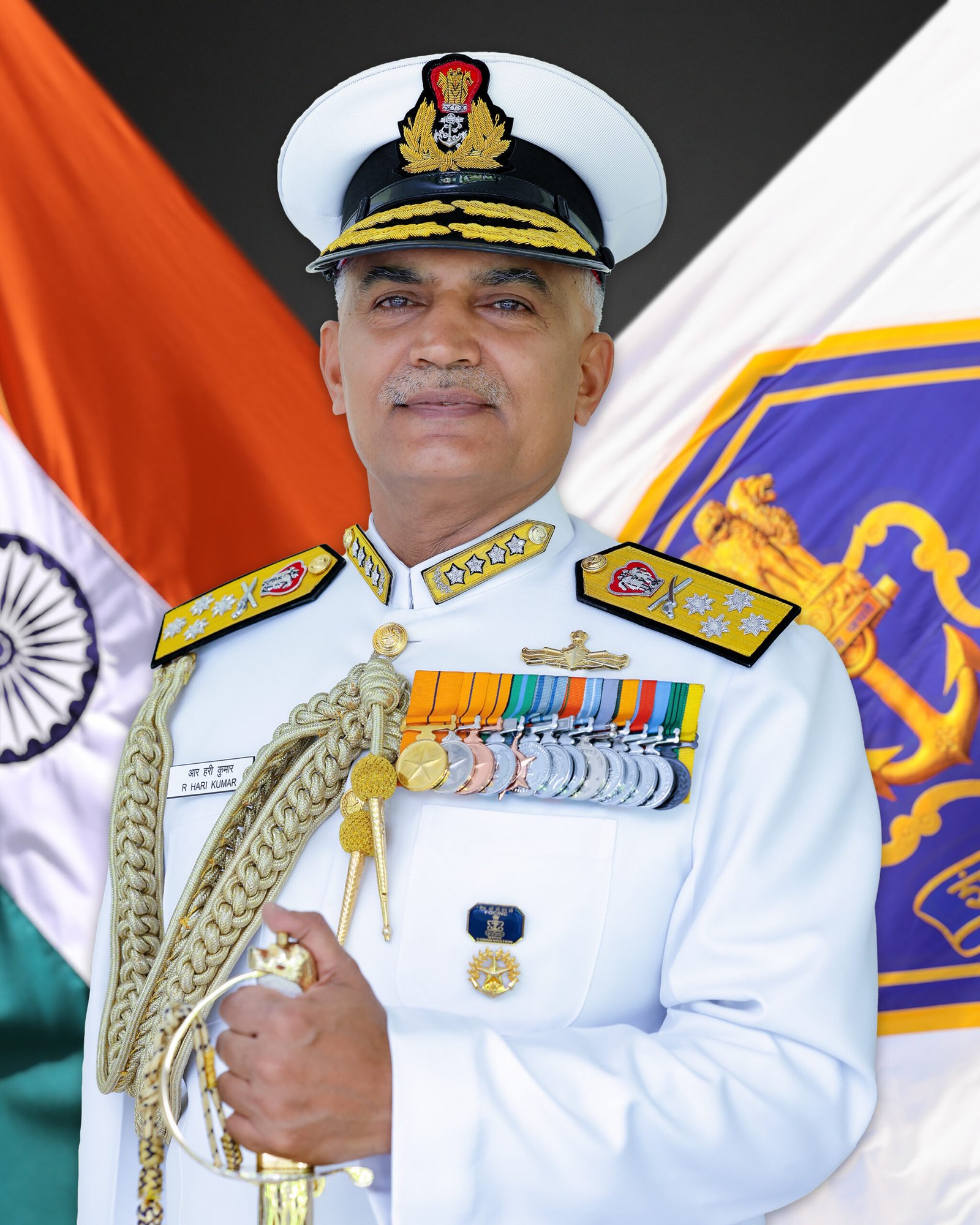
INDIAN FORCES CHIEFS
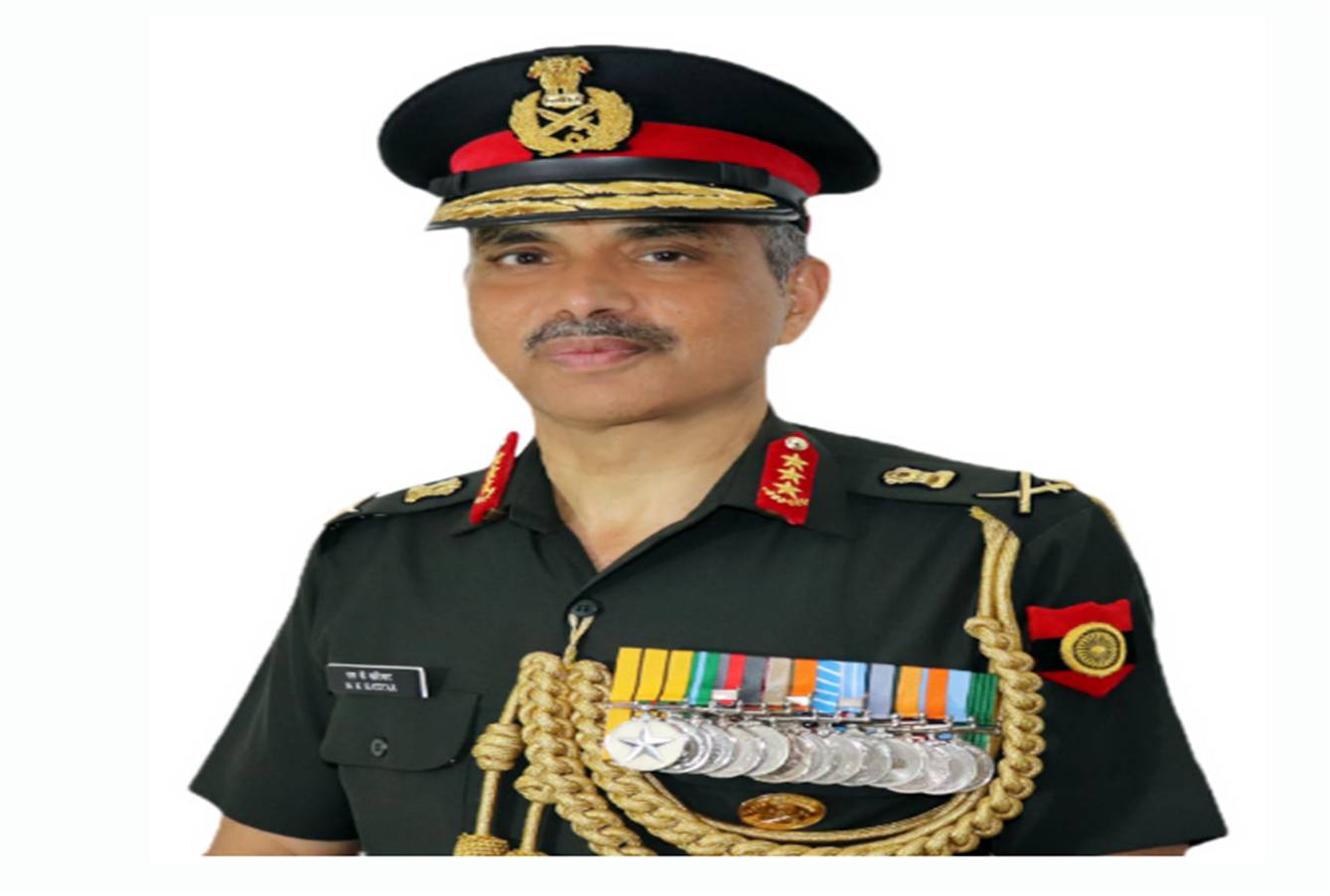
CHIEF OF ARMY STAFF(29th)
General Upendra Dwivedi, PVSM, AVSM (30 Jun 2024 to Till Date)










 Meet Mawya Sudan, first woman fighter pilot in IAF from J-K’s RajouriRajouri (Jammu and Kashmir) [India], June 20 (ANI): Mawya Sudan, a resident of Jammu and Kashmir, has become the first woman fighter pilot in the Indian Air Force (IAF) from Rajouri district.Hailing from the village of Lamberi, of Border Tehsil of Nowshera in Rajouri, she commissioned into the IAF as Flying Officer.Mawya has become the 12th woman officer and first from Rajouri to be inducted as a fighter pilot in the IAF. Air Chief Marshal Rakesh Kumar Singh Bhadauria reviewed the combined graduation passing out parade, held on Saturday at the Air Force Academy, Dundigal, Hyderabad.