Sanjha Morcha

PLA Armour Offensive in Himalayas

Lt Gen KJ Singh (Retd)
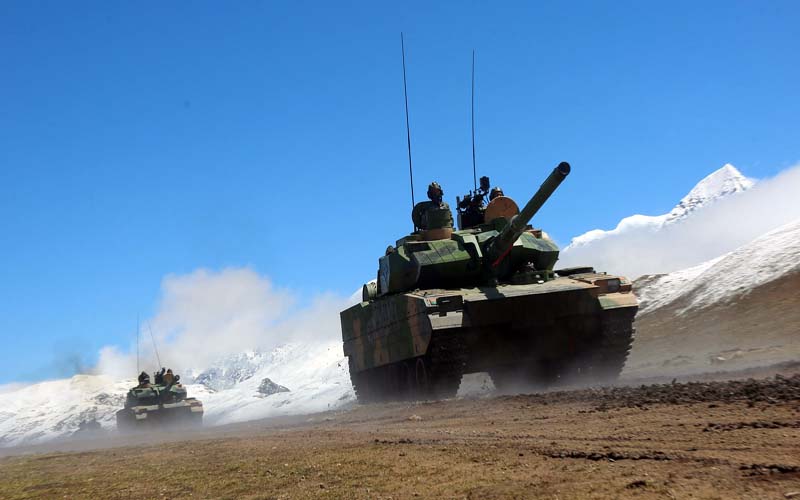
PLA Armour Offensive in Himalayas

Background

PLA executed its ‘Three warfare’ strategy spear-headed by an array of armoured formations in Ladakh. PLA exercises in last few years have included mechanised manoeuvres and heavy drop of armoured vehicles, simulating capture of passes and lightly held areas in high altitude. It is widely reported that 6 Highland Mechanised Infantry Division and 4 Highland Motorised Infantry Division have deployed assorted AFVs- medium, light tanks and heavy support equipment across LAC in Ladakh to project their coercive messaging potential, as part of psychological warfare.

At the very outset, it can be categorically stated that India has not only stalemated the situation but had also caused criticality for PLA by pre-emptive occupation of dominating features on Kailash range. The operation on Kailash Range had mechanised elements in vanguard and were in face of massed PLA armour across Spanggur gap. According to informed experts stalemate, for initiator claiming to be global hegemony, amounts to loss.

Theme Setting

PLA has injected more versatility in their armoured fleet with introduction of light tank, ZTQ, first fielded during Doklam crisis.  Our BMP-2s, ICVs, duly integrated with medium tanks can be adapted for some of the relevant tasks. The Chinese threat, though stemmed currently could manifest again and more such forays can’t be ruled out. Hence, it was axiomatic that a review of mechanised fleet was carried out to meet emerging challenges in Himalayan sector. Consequently, Request for Information (RFI) for 350 light tanks has been issued. Concurrently, customised modernization of existing fleet of medium tanks is also being fast tracked.

PLA’s Mechanised Profile in Tibet 

6 Highland Mechanised Infantry Division and 4 Highland Motorised Infantry Divisions are orbatted with two Mechanised Infantry Regiments (Brigades) supported by an armoured regiment.  Each Mechanised Infantry Regiment has four mechanised battalions. It has combat support elements – artillery, air defence regiments supported by engineers, EW and CBRN Defence battalions. Division has reconnaissance battalion equipped with eighteen ZBD-04A infantry fighting vehicles armed with ATGMs. Artillery and Air Defence and most other combat support equipment are tracked. Other associated equipment like helicopters, drones and rocket artillery are grouped as per envisaged tasking.

Comparative Evaluation-Medium Tanks

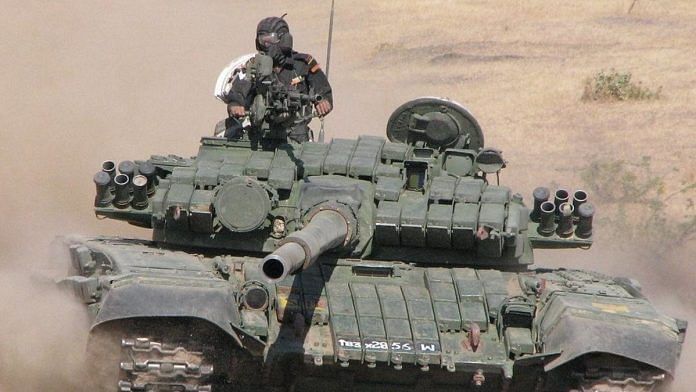
PLA medium tank battalions are equipped with thirty-five ZTZ-99A (Type 99) tanks or earlier versions like Type 96. Chinese tanks follow an evolutionary approach and are reverse engineered from original Russian models and cloned by China North Industries Corporation (NORINCO). Their numbering has typical psychological hype attached. T-54 clone is referred to as Type-59 and T-90 equivalent as Type-99. Current lot of PLA medium tanks weigh around 55 tonnes, 125 mm smooth bore guns and 1000 to 1200 HP engines.

Our medium tanks, T-90s and T-72, in right combination are more than a match for these tanks.  It is pertinent to highlight that numerically four of our regiments can match five Chinese regiments as our regiments have nearly 50 A vehicles. However, our main stay- T-72 needs to be equipped with upgraded engine. Additional power is required to compensate for de-rating of engines by approximately 25% in high altitude areas. Russian tanks are customised to operate in extreme cold climate but customised value additions like Auxiliary Power Unit (APUs) have been identified, as part of ongoing modernisation including creating an eco-system of heated garages and repair bays, which needs to be fast tracked.

Comparison-Mechanised Infantry

PLA’s mechanised infantry ismix of old tracked Type 86 ICVs,  wheeled WZ-551 APCs (6×6) and limited number of more contemporary VN-1 (8×8) ATGM carriers with Red Arrow missiles. Our BMP-2s are more than a match to PLA ICVs. It is seen that PLA infantry has got used to being transported and operates largely in motorised mode. Although we enjoy marginal edge in our ICVs, yet modernisation in terms of up-gradation of power pack is a critical requirement for operation in high altitude terrain to offset losses in engine power. While India follows traditional philosophy of employment of infantry, largely without vehicles, yet the need is to give them some protection and mobility in form of mechanised/motorised infantry. It is indeed commendable that much needed though belated correctives are underway with induction of Kalyani M4, Mahindra ALSV and TATA LAMV variants.

Appraisal-PLA Light Tank

China added considerable versatility to its mechanised fleet by fielding a light tank, ZTQ-15 also referred to as Type 15 or Xinquingtan. It is essentially lighter medium tank with weight of around 34 tonnes, amounting to sort of hybrid between medium and light tanks.  Classically, light tanks are generally in sub 30 tonne class, ideally 25 tonnes, with Power to weight ratio (PWR) between 30 to 35. Type-15 has been fitted with extra wide tracks to offset additional weight and reduce Nominal Ground Pressure (NGP). PWR and NGP are key enablers for agility and trafficability in marginal terrain. To that extent, it is compromise of sorts specially in terms of protection, fire power and mobility.

Type 15 has been utilised in heavy droppings, giving it as an edge for utilisation in quick reaction forces. This tank was introduced in 2017 and 40 tanks have been supplied to Bangladesh, with 140 more in pipe line. The main features of this tank are 105 mm rifled guns and 1000 HP engine. Type 15 though hyped as game changer is neither really light nor replacement for medium tanks, certainly not panacea. In keeping with Chinese reliance on incremental or evolutionary designs, this tank is follow-up and replacement for antiquated Type-62 tanks.

History- Indian Light Tanks

As is well known, we currently don’t have a light tank on our inventory. Historically, light tanks had defining and iconic role in 1947 operations, when Stuart tanks were inducted across Zojila to stem raiders. AMX-13 were again utilised in Chusul during 1962. We had Stuarts, Shermans, AMX-13 and assorted armoured cars in 1965 and earlier operations till 70s. Russian PT-76 tanks, replacement of older light tanks proved their mettle in 1971 operations. Light tanks have their utility in reconnaissance, scouting and out of area contingencies including peace keeping operations. They can be also be utilised in riverine, creeks/marshy back waters, island territories and coastal areas besides high altitude terrain.  Light tanks, if applied audaciously and with imagination for reconnaissance in force, can open up possibility for Quid Pro Quo (QPQ) operations.

Quest For Replacement Light Tank

After de-induction of PT-76 tanks in 1989, half-hearted attempts to find replacement were made including trials of Brazilian- Uruthu; British- Scorpion and French light tank in late 80s. Formalised RFI for 200 wheeled and 100 tracked light tanks was promulgated again in 2009 as part of build up for Mountain Strike Corps. Major specifications were 22 tons with gun calibre between 105 to 120 mm. Wheeled variant was to be 8×8 or 6×6 configuration. However, this RFI was retracted. Concurrently, DRDO has experimented with certain variants, utilising BMP chassis with 105 mm gun as also French GIAT TS-90 chassis. Even certain private manufacturers and DPSUs/Ordnance factories have produced prototypes in both wheeled and tracked versions, not finding much traction.

Current RFI and Options

India has projected requirement for 350 light tanks on fast track basis. This would translate to six to seven regiments depending on equipping norms. It will be important to clarify that the requirement is for an ‘Agile’ tank with optimum balance between fire power, weight (light) yet with sufficient protection.  Strategic mobility in terms of air portability is an added imperative enabling strategic mobility. Desired profile would be tank of around 25 tonnes with power to PWR of 30-35 and gun calibre of 105-120 mm with missile firing and modern optronics. It is desirable to have tracks with rubber shoes to minimise damage to fragile communication arteries. Modernization in terms of Active Protection System (APS), anti-drone measures and rubberized tracks could be incorporated later. The overriding parameter is ownership of not only TOT but also ‘know-how’ through co-development under Atam Nirbhar route.

Options

Scan of global inventory generates few options ranging from eight wheeled Stryker variants, which were tried out in Yudh Abhyas series of joint exercises and even offered by USA through FMS route but not found suitable. Russia has 2S25 Sprut-SD light tank , weighing 18 tonnes, with 125 mm SB gun and PWR of 28.3 hp/ton. These tanks have also been air dropped in exercises. Israeli Sabrah tank is in keeping with her protection oriented philosophy and weighs 55 tonnes and only suited for desert terrain. Another viable line of development is to utilise expertise gained in production of K-9 Vajra SP gun. This is aligned with S Korean, K21-105 Hanwaha tank. This tank is joint production endeavour with Belgian John Cockerill Defence. Prima-facie, it can be tweaked to meet most RFI parameters, thereby adhering to stipulated deadline. The details of this platform can be accessed on Chankya Forum site and app.

Recommendations

First and foremost requirement is to build a versatile family of ‘A’ vehicles with optimum mix of medium and light tanks with customised support equipment. Consequently, there is urgent need to fast track development process for light tanks. Secondly, we need to find partners and achieve indigenisation and joint production. Thirdly, existing fleet of medium tanks in high altitude areas needs to be modernised, most importantly by upgrading their power packs. Fourthly, ageing ICVs should be given much needed up gradation package including power pack and better protection system. Fifthly, an eco-system for garages, training and sustenance should be set up in these areas. Sixthly, infantry should be provided with protected high mobility vehicles. Seventhly, commonality of platform should be attempted to reduce logistical challenges.

Author

Lt Gen KJ Singh, PVSM, AVSM & Bar is a former Western Army Commander and is currently, Haryana State Information Commissioner, after his tenure as Advisor to CM. He holds the Maharaja Ranjit Singh Chair in PU and is Member- UT Advisory Council. He is a regular columnist.
Lt Gen Manoj Pande to take charge as Eastern Command chief on June 1

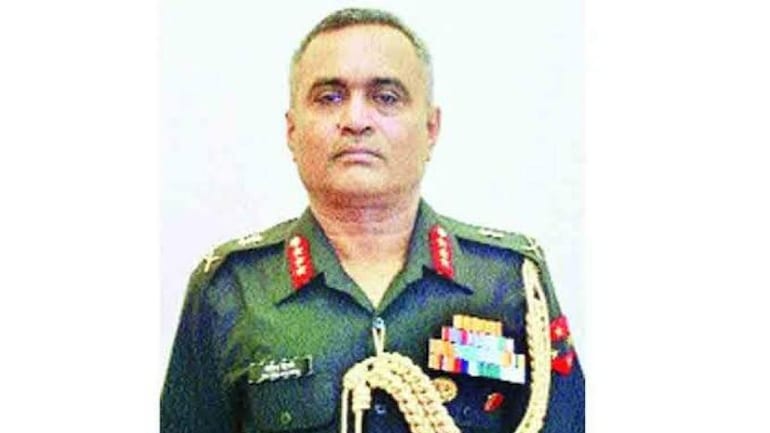
Lt Gen Manoj Pande was commissioned into the Corps of Engineers (The Bombay Sappers) in December 1982. (File photo)

Lt Gen Manoj Pande will take charge as the chief of the Indian Army’s Eastern Command on Monday, succeeding Lt Gen Anil Chauhan. Lt Gen Pande is presently heading the only operational tri-services formation Andaman and Nicobar Command at Port Blair.

An alumnus of National Defence Academy, the General Officer was commissioned into the Corps of Engineers (The Bombay Sappers) in December 1982. He is a graduate of Staff College, Camberley (United Kingdom) and attended the Higher Command Course at Army War College, Mhow and National Defence College (NDC) at Delhi. During his 37 years of distinguished service, Pande has taken active part in Operation Vijay and Operation Parakram.

He commanded an Engineer Regiment along the Line of Control in Jammu & Kashmir, an Engineer Brigade as part of the Strike Corps, an Infantry Brigade along the Line of Control, a Mountain Division in the high altitude area of western Ladakh and a Corps deployed along the Line of Actual Control (LAC) as also in Counter Insurgency Operations area in the northeast.

Lt Gen Pande has tenanted important staff assignments and was posted as Chief Engineer at the United Nations Mission in Ethiopia and Eritrea. He was Director-General at Army Headquarters dealing with subjects of discipline, ceremonial and welfare, prior to assuming the present appointment.


Army gets going on plan to buy over 1,700 ‘future tanks’ that will become its main battle tanks

Representational image. | The new FRCV procurement will replace the Russian T-72 tanks. Photo: Commons

New Delhi: The Indian Army is set to procure over 1,700 Future Ready Combat Vehicles (FRCVs) in a phased manner under the strategic partnership route, with the induction of the “future tank” expected to be completed by 2030.

According to a Request for Information (RFI) floated by the Army Tuesday, the 1,770 FRCVs will be procured along with transfer of technology, performance-based logistics, engineering support package, and other maintenance and training requirements.

The prospective vendors will have to respond to the RFI by 15 September.

An earlier Request for Proposal floated on the procurement of FRCVs in 2017 stands cancelled.

In April, the Army had also floated an RFI to procure around 350 light tanks in a phased manner under the Make in India initiative, to sharpen its mountain warfare edge amid the ongoing Ladakh stalemate.

Currently, India operates with Russian-designed T-90 tanks, which weigh around 46 tonnes, besides the T-72 tanks. The new procurement will eventually replace the Russian T-72 tanks.


Also read: India notifies 2nd list of defence items it won’t import, industry hopes more will be added


‘Future tank’

The “state-of-the-art”, “technologically-enabled” FRCVs will be able to operate in different terrains, such as high altitude areas, plains and riverine borders as well as deserts, and have high mobility. They will act as the main battle tanks of the Army.

According to the Army’s requirements, the tanks should ideally be able to defeat the adversary’s tanks, armoured vehicles, unmanned aerial vehicles (UAVs), and destroy or deter attack helicopters. The platform is needed to have multiple anti-aircraft weapons, counter UAVs and a ground role with different calibre assisted with remote control weapon stations.

The RFI also requires the platform to also have different stealth features.

The procurement is in line with the emerging future threat spectrum, the RFI says. The superior modern tank platform, it says, should incorporate niche technologies such as artificial intelligence, and can operate in a network centric and electronic warfare environment.

While tanks have been the dominant battle winning factor of the land forces, it faces new threats from loitering munitions, UCAVs (unmanned combat aerial vehicles) and their targeting have been made easier with a progress in the adversary’s ISR (intelligence, surveillance, and reconnaissance) capabilities, it says.

“….the future tank has to be in sync with technological battlefield advancements,” the RFI says, adding that it needs to upgrade and incorporate systems to negate ISR systems, counter new threats and enhance its operational performance.

The Army says the medium weight-class tank should have an weapon system that can be upgraded and equipped with advanced multipurpose smart munitions, both for main and secondary armaments with gun tube launched anti-tank guided missiles.

‘Will reduce necessity to train on multiple platforms’

A senior Army officer told ThePrint that the FRCVs will provide flexibility to switch to mechanised forces into different terrain at a short notice, as they can be deployed in all terrain.

“It would reduce the necessity to train on multiple platforms. Additionally, the overall inventory would be easier to manage in terms of spares and other reserves,” the officer said.

Lt Gen A.B. Shivane (Retd), former director general, mechanised forces had called it a “game changer”. In a seminar in 2017, he had said the FRCV would replace the Russian T-72 tanks presently in service and would not scuttle the Arjun tank programme.

The RFI clarifies that several new technologies have been sought and the prospective Original Equipment Manufacturer may not have them at present, but they can confirm the provision for their integration into the platform.


Also read: DRDO will begin trials of Made-in-India towed artillery in June but Army still has ‘concerns’


China-Pak exercise

Indian troops must be well prepared for any misadventure

China-Pak exercise

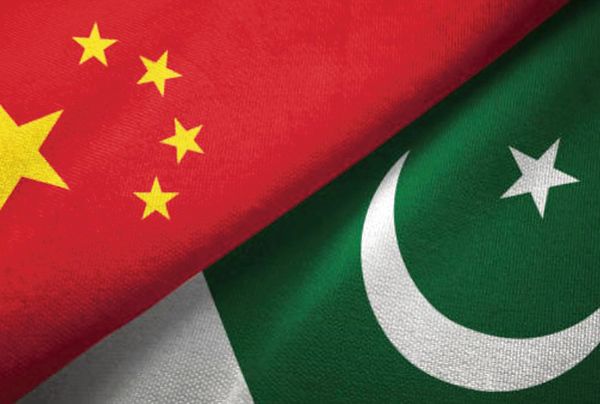
It’s no coincidence that the China-Pakistan military exercise in Tibet comes amid celebrations marking 70 years of the establishment of diplomatic relations between the two countries which share their borders with India. The drill has taken place near the Line of Actual Control (LAC) — the scene of a prolonged standoff between Indian and Chinese troops — weeks ahead of the first anniversary of the bloody clash in Ladakh’s Galwan valley. Both the venue and the timing of the exercise have struck a discordant note for India, bringing under scrutiny the intentions of the two allies. The bilateral show of strength reeks of aggressive posturing apparently aimed at unnerving India. The development is also a grim reminder that the disengagement process in eastern Ladakh has only flattered to deceive, even as Pakistan’s overtures to bring peace along the LoC can’t be taken at face value.

The writing is on the wall: military and economic ties between China and Pakistan are getting stronger by the day and India needs to remain wary of both its neighbours, which have a long history of duplicity. The leaders of the two nations congratulated each other recently on the progress of the $60-billion China-Pakistan Economic Corridor (CPEC), a major infrastructure project that connects Xinjiang province with Gwadar port in Balochistan. Though New Delhi has lodged a protest with Beijing over the CPEC, which passes through Pakistan-occupied Kashmir (PoK), China has asserted that it is an economic initiative that won’t affect its ‘principled stand’ on the Kashmir issue. The argument has failed to convince India of China’s credibility.

The Chinese consolidation of air defence assets along the LAC makes it obvious that peace and tranquillity in the area will continue to be elusive as the neighbour is in no mood for de-escalation. With the Chinese Communist Party gearing up for its centenary celebrations next month, several grand displays of military might are to be expected. That’s reason enough for Indian troops to be well prepared for any mischief or misadventure from across the border or on the high seas.


Army chief in Kashmir ‘to take stock’ as ‘fragile’ ceasefire with Pakistan completes 100 days

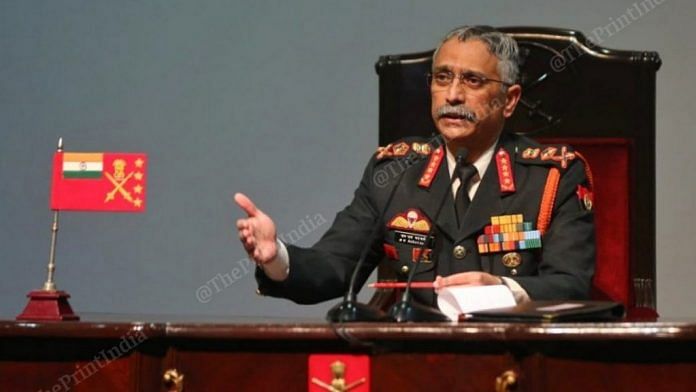
Army chief General M.M. Naravane is among the handful of officers allowed to interact with the press | Photo: Suraj Singh Bisht | ThePrint
File photo of Army chief General M.M. Naravane | Photo: Suraj Singh Bisht | ThePrint

New Delhi: Army chief General M.M. Naravane has reached Srinagar to take stock of the security situation in Kashmir and along the Line of Control (LoC), where the ceasefire with Pakistan has completed 100 days.

Sources in the defence establishment said the chief will be briefed on the operational matters and overall security scenario by 15 Corps Commander Lt Gen. D.P. Pandey and his team.

India and Pakistan agreed to a ceasefire along their tense border in 2003, but it was never followed in letter and spirit after an initial spell of silence. On 25 February, the directors-general of military operations on the two sides decided to strictly implement the ceasefire. The ceasefire, the sources said, has held up since then bar one round of firing between the Border Security Force (BSF) and the Pakistan Rangers along the International Border.

According to official figures, the total number of ceasefire violations this year stands at 592. Of this, 591 took place before 25 February. In comparison, between 1 January 2020 and 1 June 2020, Pakistan violated the ceasefire a total of 1,531 times.

In all, 2020 saw 4,635 ceasefire violations, up from 3,233 in 2019.

Despite the ceasefire, sources in the defence and security establishment said terror camps in Pakistan-occupied Kashmir (PoK) remain in place, if at a reduced scale. Infiltration, they added, has come down, with sources in the security establishment saying there was zero terror infiltration in March, April and May.


Also Read: Pakistan keeps making bad decisions with India. Its insecurity is hurting peace


‘Fragile ceasefire’

Sources in the security establishment describe the ceasefire at the LoC as “fragile”, saying Pakistan will turn up the heat when it feels the time is right.They said peace along the LoC is in favour of both countries, but more so for Pakistan.

“There are multiple factors behind the ceasefire initiative, like the global scrutiny, pullout of US-led forces from Afghanistan, and the need for them to refocus away from the LoC. There is a section within the Pakistan Army that wants peace but they seem to be facing opposition,” said a source.

“Moreover, none of the other peace initiatives is yet to be formalised. Hence, the current ceasefire can be termed fragile,” the source added.

The sources said it is important for other initiatives — like resumption of diplomatic ties with the appointment of high commissioners, and bilateral and multilateral forum talks — to take off for the ceasefire at the LoC to be successful.

Terror infrastructure continues

While there has been no ceasefire violation along the LoC since 25 February, security and defence sources said terror infrastructure like training camps continues to operate in PoK.

However, security sources said the training camps have been scaled down a lot, an assessment that is shared by the defence establishment.

While defence sources said infiltration has come down, sources in the security establishment claimed there was no terror infiltration in March, April and May.

However, they did say that arms and ammunition continue to be pumped into Kashmir through other routes besides the LoC, on a much smaller scale than before.

“The terror infrastructure continues across the LoC, though on a smaller scale. This was actually reduced after the Balakot strike (2019). The terror support to elements in Kashmir continues through hawala operators and other means, though again on a smaller scale than before,” a source said.

Another source added that while a feeling of alienation is still high in Kashmir, the situation remains under control.

“From a security point of view, the situation remains under control. It is at a level that can be managed. There has not been any infiltration since the ceasefire announcements. This is the season of infiltration and hence one needs to be watchful,” the source said.

This is an updated version of the report

(Edited by Sunanda Ranjan)


Also Read: Under Modi, India more likely to respond to Pakistan provocation with military force: US intel


Ceasefire pact between India and Pakistan followed in letter & spirit: Army

Ceasefire pact between India and Pakistan followed in letter & spirit: Army

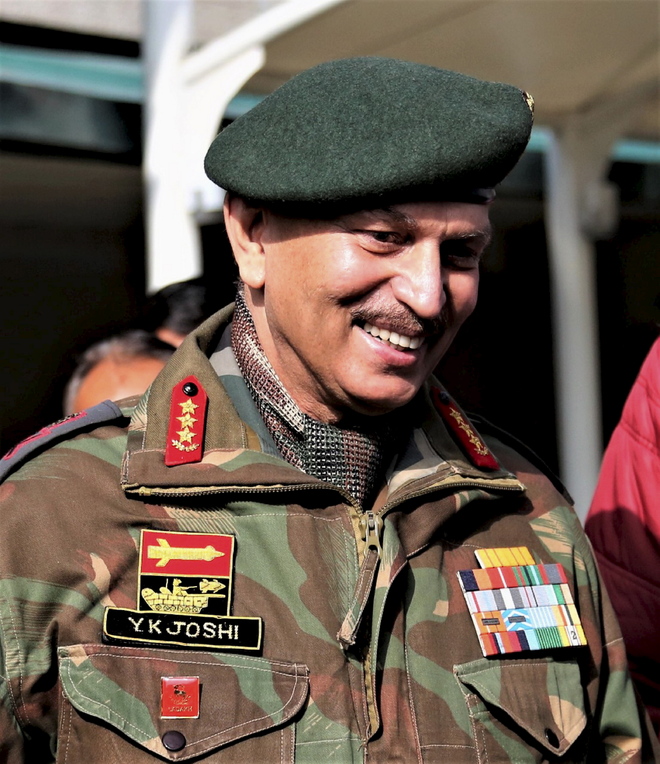
YK Joshi, Lieutenant General, Northern Command

Udhampur, June 1

Northern Army Commander Lieutenant General YK Joshi on Tuesday said the ceasefire understanding between India and Pakistan was being followed in letter and spirit by both sides since February 25, but asserted that the Army was not letting its guard down “even for one bit” along the border in J&K.

“The present situation is a reflection of our nation’s behaviour as a responsible member of the comity of nations where we have displayed maturity, restraint and humanitarian outlook during the trying times of Covid pandemic,” he said.

India and Pakistan had on February 25 this year released a joint statement announcing a ceasefire along the Line of Control (LoC), following talks between their Directors General of Military Operations. The two countries had earlier signed a ceasefire agreement in 2003 but it was repeatedly violated.

Kargil war hero Lt Gen Joshi said the direct benefactors of the fresh ceasefire understanding between the two countries had been the people residing along the Line of Control. — PTI


GOVERNMENT BROADENS RULES THAT BAR RETIRED OFFICIALS FROM PUBLISHING SENSITIVE INFORMATION

All employees would have to give an undertaking to the head of organisation that they would not publish such information failing which pension can be “withheld or withdrawn”, the amendment states.
The Centre has amended its rules barring officers who had worked in intelligence and security related organisations from publishing sensitive information by adding new clauses, including the conditions that they can’t share any material on “domain of the organisation” or its personnel.
The Central Civil Services (Pension) Amendment Rules, 2021, dated May 31 and notified late Tuesday, also states that they need to take prior permission from the “head of the organisation” for publishing such material. In the earlier 2007 rules, permission was to be taken from the head of the department.
All employees would have to give an undertaking to the head of organisation that they would not publish such information failing which pension can be “withheld or withdrawn”, the amendment states.
According to the Central Civil Services (Pension) Amendment Rules 2007 that was notified in March 2008, all such employees are already barred from publishing any sensitive information, “the disclosure of which would prejudicially affect the sovereignty and integrity of India”.
The amended provision now reads, “No government servant, who, having worked in any intelligence or security-related organisation…shall, without prior clearance from the head of the organisation, make any publication after retirement, of any material relating to and including domain of the organisation, including any reference or information about any personnel and his designation, and expertise or knowledge gained by virtue of working in that organisation”.
There was no mention of domain of the organisation and reference to any personnel in the 2007 rules.
“Domain may be taken to mean core area or core areas of the working of an organisation,” an official explained.
The head of the organisation will decide whether the proposed material for publication is sensitive or non-sensitive, and whether it falls in the domain of the organisation, according to the amended rules.
The 2007 rules had barred the employees from publishing material including “sensitive information, the disclosure of which would prejudicially affect the sovereignty and integrity of India, the security, strategic, scientific or economic interests of the state, or relation with a foreign state or which would lead to incitement of an offence” after their retirement.
The rules apply to employees who retire from the Intelligence Bureau (IB), Research and Analysis Wing (RAW), Directorate of Revenue Intelligence (DRI), Central Economic Intelligence Bureau, Directorate of Enforcement (ED), Aviation Research Centre, Border Security Force, Central Reserve Police Force, National Security Guards, Central Industrial Security Force and the Indo-Tibetan Border Police among others.
The list also includes the Narcotics Control Bureau, Special Frontier Force, Special Protection Group and Financial Intelligence Unit.
The CCS (Pension) Rules, 1972, which have been amended to make way for 2007 and 2021 rules, however, don’t apply to officers of the Indian Administrative Service (IAS), Indian Police Service (IPS) and Indian Forest Service (IFoS) among others.
The CCS (Pension) Rules, 1972 apply to those appointed on or before December 31, 2003.


PAK FIRES AT EARTH-MOVER MACHINE IN JAMMU, SECOND CEASEFIRE VIOLATION IN 4 MONTHS

The ceasefire violation took place on Wednesday morning in J&K’s Arnia Sector
Pakistan Rangers fired at an earth-mover machine along the International Border (IB) in Jammu and Kashmir’s Arnia sector. This could be Pakistan’s second ceasefire violation in nearly four months, as per official sources.
The earth- mover machine was engaged in conducting maintenance activity along the border area when the firing took place at 8:15 am in the outskirts of Jammu.
According to sources, Pakistani Rangers fired a few rounds after it noticed the bullet-proof JCB machine engaged in clearing bushes in Arnia sector’s Vikram post area.
The BSF retaliated and fired a few rounds as well, sources said, adding that no casualty was reported and the situation has returned to normal alone the International Border. The Border Security Force (BSF), which is guarding the IB, have neither confirmed nor denied the incident.
Ceasefire Violation By Pak In May
Pakistani Rangers had violated the ceasefire on May 2 by opening fire along the IB in Ramgarh sector of Samba district. It was the first ceasefire violation by Pakistan after the two countries had signed a fresh agreement to maintain calm along the border on February 25.
In March, a Pakistani intruder was gunned down by the BSF in J&K’s Samba district after he ignored repeated warnings by BSF personnel and tried to sneak in from across the border in Ramgarh sector.


COVID, PRODUCTION QUALITY CONCERNS DELAY INDUCTION OF ‘DESI BOFORS’ DHANUSH BY ARMY

Since the induction of Dhanush started in April 2019, only 12 guns have been delivered so far and six of them were delivered that month only
New Delhi: The much anticipated large-scale induction of the Dhanush artillery guns, also known as ‘Desi Bofors’, has been hit due to the Covid-19 pandemic as well as production quality concerns flagged by the Army.
Since April 2019, when the induction started, only 12 of the indigenously built long-range artillery guns have been delivered. This is far below the 18 guns required to make a full regiment.
Incidentally, the first six guns were delivered in April 2019 itself and more of the 155mm x 45mm Dhanush were to be produced subsequently. The delay meant that the first regiment of Dhanush, which was to be raised by the end of 2019, had not been completed by then and the date was later pushed to March 2020.
Furthermore, while the Army is satisfied with the guns in terms of fire power and mobility, it has flagged multiple concerns regarding the production quality. Dhanush is being manufactured by the Gun Carriage Factory (CGF) in Madhya Pradesh’s Jabalpur, which comes under the state-run Ordnance Factory Board (OFB).
“The production system has still not stabilised. After integrated firing checks, issues have cropped with regard to the hydraulics, sight and even mounting in some cases,” a source said.
Sources further noted that the Army is awaiting the production system to stabilise so that a larger number of guns, which is an advanced variant of the Bofors, can be inducted.
Incidentally, the CBI had registered a case in 2017 against a Delhi-based firm and unidentified officials of the Gun Carriage Factory for China-made parts camouflaged as those ‘Made in Germany’ finding their way to the production line of Dhanush.
Covid Delayed Production Too
Another issue that has delayed the production is the Covid-19 pandemic which has halted the work at the factory for quite some time now.
According to sources familiar with the matter, several cases of Covid emerged at the Jabalpur factory.
The national lockdown last year and the pandemic also meant that the supply chain got affected, sources said. OFB officials said t that initial manufacturing plans faced certain constraints in the supply chain “which have largely been settled”. They said that the pandemic had a widespread global impact but the OFB is making “all efforts to ensure timely supplies”.
They added that further production of guns is underway. However, they did not respond to a query on the quality concerns raised by the Army.
Army Has Ordered 114 Dhanush
Dhanush passed its final test at Pokhran in June 2018, after trials in high altitude areas like Sikkim and Leh and in hot and humid weather in Balasore, Odisha and Babina in Jhansi. The GCF got the Dhanush project in October 2011 and the first prototype was built in 2014. The Army had ordered 114 Dhanush guns in 2018.
A towed howitzer with a strike range of 38 km, Dhanush has been developed on the basis of the first phase of Transfer of Technology (ToT) deal as part of the Bofors contract in the late 1980s.
However, the Swedish Bofors company (now owned by Britain’s BAE System) could not complete the ToT as the deal got embroiled in a major political row following allegations of kickbacks under the then Rajiv Gandhi government.
The Bofors gun subsequently became the backbone of the Indian Army’s operation in the 1999 Kargil conflict with its pinpoint accuracy in targeting enemy positions.
Costing about Rs 14.5 crore a piece, Dhanush is equipped with an inertial navigation-based sighting system, auto-laying facility, onboard ballistic computation, and an advanced day and night direct firing system.
The self-propulsion unit of the gun allows it to be easily deployed in mountainous terrain.


Magisterial inquiry ordered into Shopian encounter

The Shopian additional district magistrate asked people to share information about the anti-militancy operation that took place at Kanigam in Shopian

Magisterial inquiry ordered into Shopian encounter

Photo for representation.

Srinagar, June 2

Authorities in Shopian district of Jammu and Kashmir on Wednesday ordered a magisterial inquiry into an encounter between militants and security forces last month in which three ultras were killed, officials said.

In an order, the Shopian additional district magistrate, who is also the inquiry officer, asked people to share information about the anti-militancy operation that took place at Kanigam in Shopian on May 5-6.

“It is notified for general public that as per the standing orders of the government, a magisterial inquiry of every militancy operation is required to be conducted.

“Whereas, such an incident took place at Kanigam, Shopian Tehsil Barbugh (Imamsahib) district Shopian on 05 May, 2021. If any person wants to share information regarding this incident, he/she can visit this office personally during office hours by or before 10 June, 2021,” the order read. PTI