



Sanjha Morcha

National Defence Academy to add 2 squadrons to address officers’ shortage in Army, Navy & IAF

The additional intake at NDA will take overall strength to around 2,400 cadets. It will also cater for foreign cadets and IAF cadets training for ground duty roles.
Latest news on National Defence Academy | ThePrint

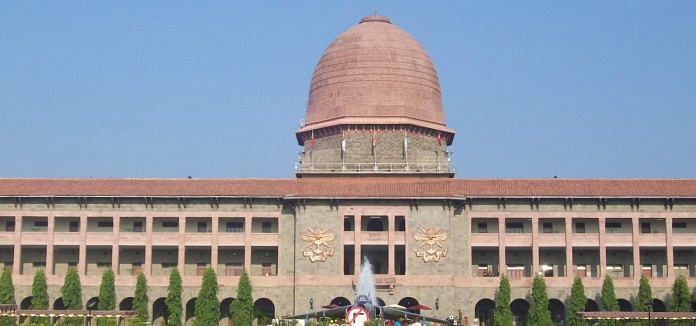
 National Defence Academy (NDA) campus |

New Delhi: The National Defence Academy (NDA) is being expanded and its annual intake of military cadets will be progressively increased by around 400 to cater to the shortfall of officers in the armed forces, ThePrint has learnt. 

The intake is also being increased keeping in mind a demand for training of foreign cadets and ground duty cadets of the Indian Air Force (IAF). 

Formally inaugurated at Khadakwasla, Pune, in 1955, the premier tri-service military training institution currently has 18 squadrons. About 2,020 cadets are undergoing training at NDA at present. Each squadron has about 120 cadets.

Defence sources told ThePrint that two more squadrons would be added to the existing squadrons, thus taking the overall strength to around 2,400 cadets.

The government sanction letter to this effect has been accorded last month, the sources added. 

“The intake will increase. This will primarily cater for the current shortfall of officers in the armed forces, but also take care of the growing demand for training of foreign cadets from friendly countries and IAF cadets who are training for ground duty roles in NDA,” a defence source said.  

In a written reply to the Lok Sabha in 2019, Minister of State for Defence Sripad Yesso Naik had said that there was an overall shortage of 9,427 officers in the armed forces. This includes a shortage of 7,399 officers in the Army, 1,545 officers in the Navy and 483 officers in the IAF, against the authorised strengths of the three services.

Move to also cater to IAF ground cadets and foreign cadets

While the NDA has traditionally been taking IAF cadets as pilot trainees, the institution has started training air force cadets for ground duties since last year. The second batch of cadets reported in March-April this year.

Ground duty officers in the IAF include those in non-flying branches such as administration, logistics, maintenance and accounts, among others. These trainees were earlier trained directly at the Air Force Academy in Dundigal, Telangana. Now they will be trained both at the academy and the NDA.

As for foreign cadets, there are currently about 20 per course. “The aim is to take it to 50 per course,” a second defence source said.  

ThePrint had earlier reported about the plans for increasing vacancies for foreign defence services officers to attend the training courses at the various institutions. 

Sources said the additional vacancies would be released on a half-yearly basis, which means around 30-35 additional vacancies per course would be admitted. 

Every year, two batches graduate from the NDA. The entire training period for a cadet in NDA is three years, which is divided into six terms. 

Every six months, a single batch or a course of cadets graduate from the academy.


Also read: New marching tunes, no more pre-1947 battle honours — armed forces set to get more ‘Indian’


Infrastructure to be enhanced

The existing infrastructure at NDA would accordingly be enhanced for the additional squadrons. 

Currently, training cadets at NDA are divided into five battalions. There are four battalions with four squadrons each, and the fifth has two squadrons.

There are also plans to enhance the capacity of the cadets’ mess, the Arun Khetrapal parade ground as well as the auditorium called Habibullah Hall, which is named after Maj. Gen. E. Habibullah, the first NDA commandant. 

Sources also said that the enhancement of NDA infrastructure is being undertaken keeping in mind a possible intake of women cadets in the institution.

“While the idea is just at a preliminary stage, it must be noted that girl children have started joining Sainik schools,” the first source quoted above said. “If, in the future, it is permitted to train women cadets in NDA, the requisite infrastructure should be there.” 

Sources said the decision could also have stemmed from the fact that the last two terms were almost fully subscribed.

While the number of vacancies released by the UPSC for NDA varies from course to course, the vacancies for the 147th course released in December last year was 370. 

Lakhs of candidates appear for the National Defence Academy (NDA) examination and the Combined Defence Services (CDS) examination to join the defence services every year. 

NDA has been continuing with the training of the cadets despite the pandemic with all Covid-19 protocols. 

Last month, the ceremonial Passing Out Parade of the 140th Course of National Defence Academy (NDA) was conducted, but families of the cadets could not attend the event due to Covid restrictions. 

Navy Chief Admiral Karambir Singh reviewed the parade. His picture doing push-ups with the NDA cadets had gone viral. 

(Edited by Arun Prashanth)


Also read: Army gets going on plan to buy over 1,700 ‘future tanks’ that will become its main battle tanks

LoC is silent but at least 40 youths joined terror ranks in Kashmir this year, 50 ‘missing

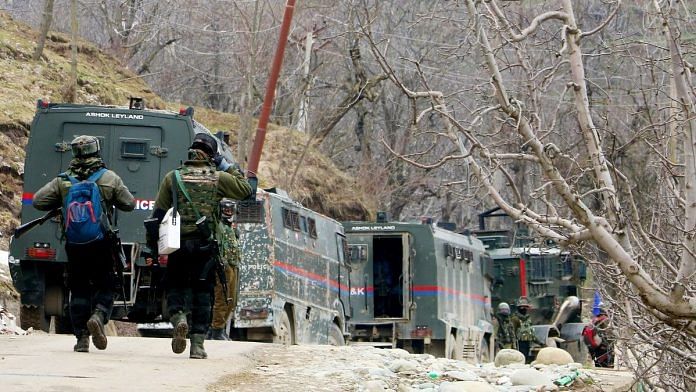
Indian Army personnel during an encounter with terrorists in Shopian (representational image) | Photo: Amin War | ANI

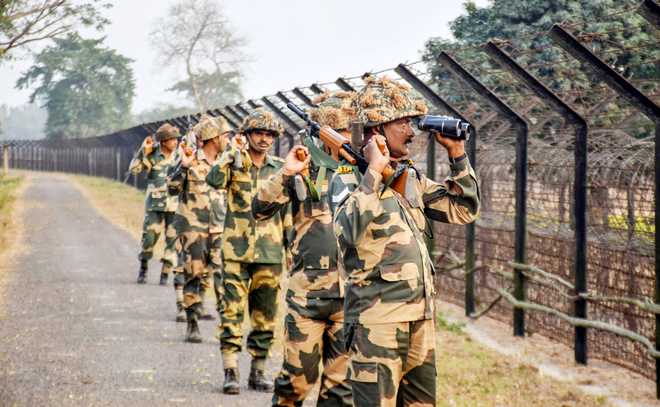
New Delhi: Even as guns have fallen silent at the Line of Control (LoC) following a ceasefire with Pakistan, terror recruitment in Kashmir continues despite the Covid-19 pandemic and the consequent lockdown.

According to sources in the security establishment, at least 40 youths have joined terror ranks this year while 50 are “missing”. Several of those “missing” are suspected to have joined terror groups but have not been included in the official count by the police and security forces as the recruitment is not established yet.

“This year there have been around 40 who have joined terror groups, basically the Lashkar-e-Toiba and the Al-Badr. However, around 50 are still missing,” a senior-level source told ThePrint.

This continuing trend of recruitment was also confirmed by another arm of the defence and security establishment, which is involved in counter-insurgency and counter-terrorism operations.

“Yes, we have not been able to arrest this recruitment trend. The trend in numbers is around the same as 2020 and that is a worry,” a source said.

Meanwhile, several new groups with different names have cropped up in Kashmir to provide a front to traditional Pakistan-sponsored terror organisations. This will allegedly allow the country to claim deniability on these terror groups.

On 2 June, ThePrint had reported that while there had been no ceasefire violations since 25 February, Pakistan’s support to terror elements in Kashmir continues through hawala operators and other means. The scale of the support, however, is smaller than before now.

Incidentally, BJP leader Rakesh Pandita was shot dead by terrorists in Pulwama district the same night.


Also read: Pakistan blames India for Quetta blast, but experts see no impact on efforts to ease tensions


FATF factor behind Pakistan’s peace initiative

Defence and security sources believe the peace initiative by Pakistan, which led to the ceasefire in LoC, is a move to escape the Financial Action Task Force (FATF) action against it. The FATF is a Paris-based global body against money laundering and terror financing.

Pakistan was placed on the ‘grey list’ by FATF in 2018 and has been struggling to come out of it since.

On Monday, the Asia Pacific Group (APG) on Money Laundering, a regional affiliate of FATF, had retained Pakistan on “enhanced follow-up” status for sufficient outstanding requirements. However, it did improve the country’s rating on 21 of the 40 technical recommendations made by the global watchdog.

“Pakistan’s peace moves are to get itself out of the grey listing of the FATF and to showcase to the world that it is not supporting terror and is actually wanting peace with India. So yes, while there has not been any infiltration attempt since February end or any ceasefire violations, the support to the terror groups in Kashmir continues,” another source told ThePrint.


Also read: Govt bans 42 groups including LeT, JeM for involvement in terrorist activities


Old terror groups get new fronts

Pakistan is attempting to ensure that while terror continues in Kashmir, no attack can be traced to the country, according to sources.

“The terror situation in Kashmir is at a stage which is under control from a security point of view given the history of the place. This is primarily because strict instructions have been given by the ISI and the Pakistani establishment to terror groups against any infiltration at LoC or big attacks that will bring a spotlight on terrorism in Kashmir,” said a source quoted earlier.

To this end, Pakistan has been propping up various fronts for original terror groups since early 2020. These fronts establish these groups as indigenous and ‘revolutionaries’.

“All the traditional terror groups, which were operating from Pakistan with direct support of the ISI, like the LeT (Lashkar-e-Taiba), Jaish-e-Mohammad have now got frontal organisations with peculiar names to showcase that Pakistan has no role in the terror activities in Kashmir,” the source said.

Most of the recent recruits have joined The Resistance Front (TRF), which is a front for LeT. Another front for the LeT is the People’s Anti Fascist Front, which claimed the attack on Pandita.

Similarly, the infamous 313 Brigade of the Harkat-ul-Mujahideen has converted into what is now known as the Jammu and Kashmir Ghaznavi Force.

The Lashkar-e-Mustafa is a front for JeM, which came into the spotlight following the Pulwama attack in 2019.


Also Read: Pakistan keeps making bad decisions with India. Its insecurity is hurting peace


Hizbul sees decline in recruitment and operations

Meanwhile, the operations and recruitment for terror group Hizbul Mujahideen has declined, primarily because of tensions in its headquarters in Pakistan-occupied Kashmir.

One of the earliest terror groups in the region, the Hizbul Mujahideen is largely believed to be indigenous since it was formed in 1989 by Kashmiris who crossed over to PoK for arms training.

However, it also comprises sections of Kashmiris from PoK, who are known as Pir Panjal, along with Pakistani Punjabis among its ranks.

Sources said there is widespread discontent among the ranks in PoK with many who had crossed over now doing normal jobs to earn a living.

“As per inputs, the salaries paid to the HM cadres in PoK have not been revised for several years. Salaries still range from about Pakistani Rupees (PKR) 10,000-11,000 (about Rs 6,000) for single men to about PKR 17,000 for those with family,” a source said.

Terror recruitment remains a worry 

Even if there is no spike in recruitment, sources in the security establishment noted that the continued recruitment is still a cause for worry.

“These recruits don’t even have arms initially and many of them after two weeks or so get pistols. In many encounters since last year, pistols have been recovered from the dead terrorists. The fact that many of these boys preferred to fight to death with pistols than surrender like in many other cases, shows the level of brainwashing that is happening,” a source said.

According to another source, measuring success based on how many terrorists are killed needs to change, instead the focus should be on ensuring that recruitment comes down. “This kill based grading system needs to change,” the source said.

Incidentally, former 15 Corps Commander Lt Gen. B.S. Raju had withdrawn the points system for recovery of arms and ammunition. The points earned by each unit for various operations helped it earn citations and other forms of recognition.

Meanwhile, the government is also working on a surrender policy for new recruits but it is yet to be finalised by the home and defence ministry.

According to official statistics, 131 Kashmiri youth had joined terror groups in 2020 till early October. This was higher than the 117 recruitments in 2019.

The highest recruitment in the last few years happened in 2018 with 214 youngsters joining terror groups.

(Edited by Rachel John)


Also read: Indian Army has new strategies for Pakistan, China: Punitive deterrence, credible deterrence


Farmers leave for Delhi borders to commemorate martyrdom day of Banda Singh Bahadur

Farmers leave for Delhi borders to commemorate martyrdom day of Banda Singh Bahadur

Farmers, under the banner of the Krantikari Kisan Union, proceed to Delhi.

Fatehgarh Sahib, June 9

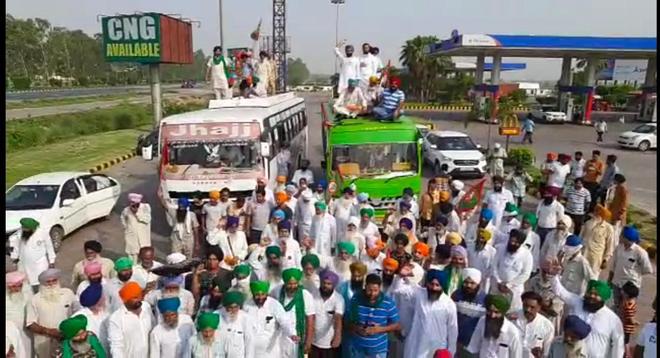
To commemorate the martyrdom day of Baba Banda Singh Bahadur on Delhi borders farmers in large numbers under the banner of Krantikari Kisan Union left for the National Capital in a convoy of buses and cars today. They started from Baba Banda Singh Bahadur Engineering College campus.

Samyukt Kisan Morcha (SKM) leaders Nirmal Singh Riona and Amrik Singh Romi said, “The morcha is commemorating the martyrdom of Baba Banda Singh Bahadur on Delhi borders.”

Baba Banda Singh Bahadur abolished the feudal system and made farmers owners of the land they were cultivating, they added. The Union government wanted to make corporate houses owners by taking away land from farmers, they said. Farmers would not allow this to happen even if they had to make sacrifices, they added. — OC


Army buys Jharkhand farmer’s bumper watermelon harvest after he offers it for free

Farmer was unable to sell his 5-tonne produce due to Covid-induced lockdown

Army buys Jharkhand farmer’s bumper watermelon harvest after he offers it for free

Ramgarh/Bokaro, June 10

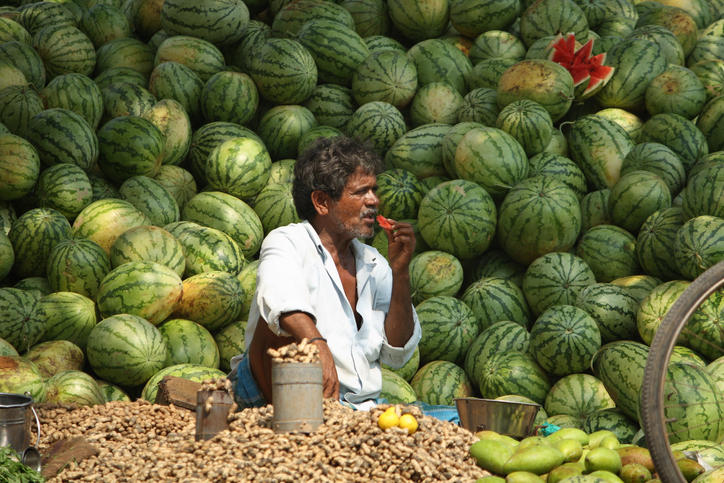
Unable to sell his bumper watermelon harvest of 5 tonnes due to the coronavirus-induced lockdown, a 25-year-old Jharkhand farmer offered the produce to soldiers of the Sikh Regimental Centre (SRC) at Ramgarh, who instead bought it at the market price.

Touched by the gesture of Ranjan Kumar Mahto, a Ranchi University graduate who chose farming as a profession, SRC officers, including commandant Brigadier M Sri Kumar, visited his farm in adjoining Bokaro district and bought the produce.

The soldiers and their family members visited the 25-acre farm at Kander with gifts, groceries and food packets for farm labourers and took the entire 5-tonne produce in their own vehicles to SRC, located 15 km away.

“It was heartening to see drip irrigation on 25 acres of land but unfortunately, the poor farmer could not sell the produce. We saw women workers too.

“We came to know that he had launched the venture two years ago but suffered losses due to the COVID-19 pandemic and cyclone Yaas,” Brigadier Kumar, also the president of the Ramgarh Cantonment Board, told PTI.

Mahto had decided to make agriculture his profession after failing to get a job.

He took the 25-acre land on lease at an annual rent of Rs 5,000 per acre and undertook watermelon cultivation on six acres with an investment of Rs 15 lakh.

“However, there were no buyers during the lockdown.

The crop started to rot. Nobody in the village was ready to buy it even for Rs 2 per kg. We sought help from various circles but to no avail.

“Finally, I decided to offer the produce to our brave soldiers for free and approached the cantonment,” he told PTI.

Mahto has employed around 40 women labourers and also planted capsicum, brinjal and other vegetables


India pushes for complete disengagement at remaining friction points in eastern Ladakh

11th round of Corps Commander-level talks was held on April 9

India pushes for complete disengagement at remaining friction points in eastern Ladakh

Disengagement at the Pangong lake area in eastern Ladakh. PTI file

New Delhi, June 10

India on Thursday once again called for completion of the disengagement process at the remaining friction points in eastern Ladakh to pave the way for both the Indian and Chinese troops to consider de-escalation and ensure full restoration of peace and tranquillity in border areas.

At a media briefing, External Affairs Ministry spokesperson Arindam Bagchi, referring to the last rounds of military and diplomatic talks, said both sides agreed on the need to resolve the outstanding issues in an expeditious manner in accordance with the existing agreements and protocols.

“We have repeatedly stressed that completion of disengagement in other areas would pave the way for the two sides to consider de-escalation of forces and ensure full restoration of peace and tranquillity and enable progress in bilateral relations,” he said.

Bagchi was replying to a question on the status of the talks between the two sides on the border standoff.

The 11th round of Corps Commander-level talks was held on April 9 while the last edition of diplomatic negotiations under the framework of the Working Mechanism for Consultation and Coordination (WMCC) on border affairs took place on March 12.

“During these meetings, both sides agreed on the need to resolve the outstanding issues in an expeditious manner in accordance with the existing agreements and protocols,” Bagchi said.

India and China are locked in a military standoff at multiple friction points in eastern Ladakh since early May last year.

However, the two sides completed the withdrawal of troops and weapons from the North and South banks of Pangong lake in February following a series of military and diplomatic talks. The two sides are now engaged in talks to extend the disengagement process to the remaining friction points.

There was no visible forward movement in disengagement of troops at the remaining friction points as the Chinese side did not show flexibility in their approach towards this end at the 11th round of military talks.

Last month, Army Chief Gen MM Naravane said there can be no de-escalation without complete disengagement at all friction points in eastern Ladakh and that the Indian Army is prepared for all contingencies in the region.

Gen Naravane also said that India is dealing with China in a “firm” and “non-escalatory” manner to ensure the sanctity of its claims in eastern Ladakh, and that it was even open to initiating confidence-building measures.  India has been insisting on complete disengagement at the remaining friction points to de-escalate the situation in eastern Ladakh. PTI


India blasts Pakistan for making unsubstantiated claim on seizure of ‘radioactive’ material

Last week, Pakistan’s foreign ministry called for a probe into what it called the seizure of nuclear material

India blasts Pakistan for making unsubstantiated claim on seizure of ‘radioactive’ material

Photo for representation.

New Delhi, June 10

India hit out at Pakistan on Thursday for making an unverified claim that some material seized recently in Jharkhand’s Bokaro was uranium and described it as an attempt by Islamabad to malign the country.

The Ministry of External Affairs (MEA) said the material seized was not uranium and asserted that India maintains a stringent law-based regulatory system for internationally-controlled items, which is reflected in its “impeccable” non-proliferation credentials.

“The Department of Atomic Energy, Government of India, after due evaluation and laboratory analysis of the material sample, has stated that the material seized last week is not uranium and not radioactive,” MEA Spokesperson Arindam Bagchi said.

“The gratuitous remarks about India by Pakistan’s Foreign Ministry, drawing upon a media report, indicate their disposition to malign India without caring to check or verify facts,” he said at a media briefing.

Bagchi was replying to a question on Pakistan’s official remarks in response to a media report on the seizure of the suspicious material in Bokaro last week.

“Let me also reaffirm that India maintains a stringent law-based regulatory system for internationally-controlled items, which is reflected in our impeccable non-proliferation credentials recognised by the international community,” he said.

Last week, Pakistan’s foreign ministry called for a probe into what it called the seizure of nuclear material.

Asked about reports of security concerns at the Indian High Commission in Pakistan, Bagchi did not give a direct reply but said the MEA maintains contacts with local authorities regarding the safety and security of its diplomatic premises.

“The MEA maintains contact with local authorities regarding the safety and security of all our diplomatic premises, which we believe is the responsibility of the host government,” he said. PTI


BSF nabs Chinese along Bangladesh border

BSF nabs Chinese along Bangladesh border

A Chinese national was apprehended by the BSF along the India-Bangladesh border in West Bengal’s Malta district on Thursday, officials said. File photo

New Delhi, June 10

A Chinese national was apprehended by the BSF along the India-Bangladesh border in West Bengal’s Malta district on Thursday, officials said. The man is being questioned by officials of the BSF, local police and intelligence agencies, and further details would be known once the session ended, they said. TNS


Deputy Commandant’s parade held at IMA in run-up to passing out parade

Deputy Commandant's parade held at IMA in run-up to passing out parade

Deputy Commandant and Chief Instructor’s Parade held at the at the Indian Military Academy on Tuesday. Tribune photo

Tribune News Service
Chandigarh, June 8

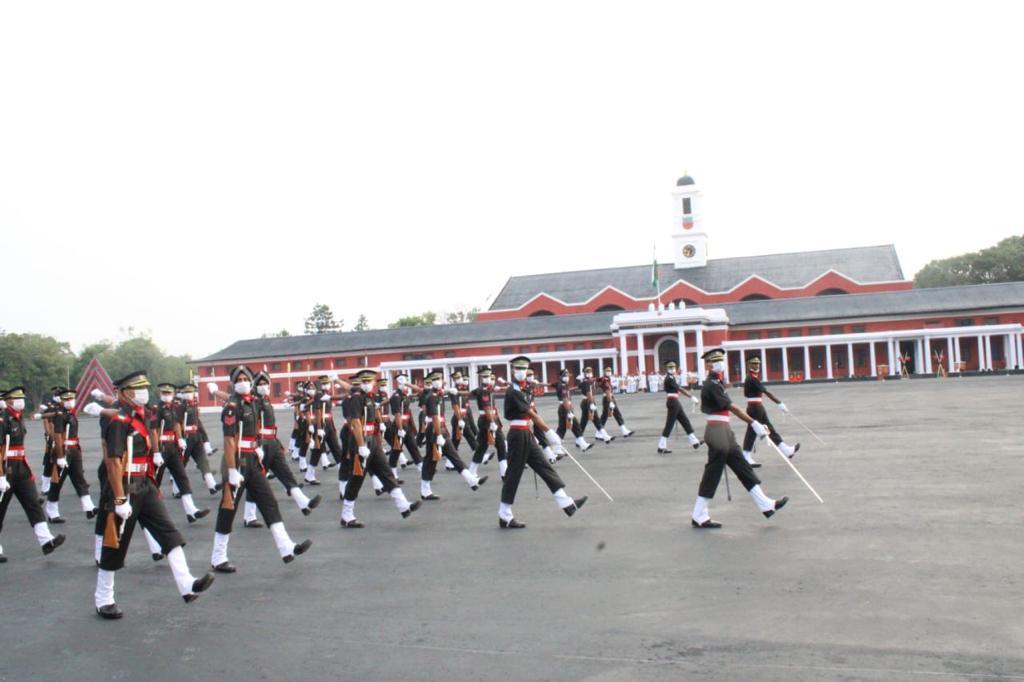
In the run-up to the Passing Out Parade (POP) scheduled to be held at the Indian Military Academy (IMA) on June 12, the Deputy Commandant and Chief Instructor’s Parade was conducted on Tuesday.

A total of 341 Indian and 84 foreign Gentlemen Cadets displayed their immaculate turnout and precision marching. This marks the preparation for the grand finale later this week and symbolises the culmination of rigorous training and transformation of a cadet into a young officer. 

The parade was reviewed by Maj Gen JS Mangat, Deputy Commandant and Chief Instructor of the Indian Military Academy. He complimented the cadets and encouraged them to strive for professional excellence. He also emphasised the importance of valour, honour, ethos, and fine traditions of Indian Army. https://4101b6bb03d512dfdb5e51c028dd09f0.safeframe.googlesyndication.com/safeframe/1-0-38/html/container.html

“The Gentlemen Cadets have been taught to lead by example and the soldiers who would be under their command should look up to them with pride. Indian troops are the best in the world, simple by heart, with unquestionable loyalty and hearts filled with patriotism. But then, as an officer you have to earn their respect and trust by your action, conduct and demeanor and above all by the truthfulness and purity of your intention and action. Once you have earned their trust and loyalty, they will follow you to every battle and win it for you,” Maj Gen Mangat said.

He also mentioned the efforts of the faculty and the hard work of the gentlemen cadets that went in the training regimen amidst the global pandemic and challenges posed by Covid-19.

He also extended his felicitations to cadets from nine friendly foreign countries on successful completion of the training and wished them all the success ahead as they carry with them the cherished memories of their time at IMA.


New marching tunes, no more pre-1947 battle honours — armed forces set to get more ‘Indian’

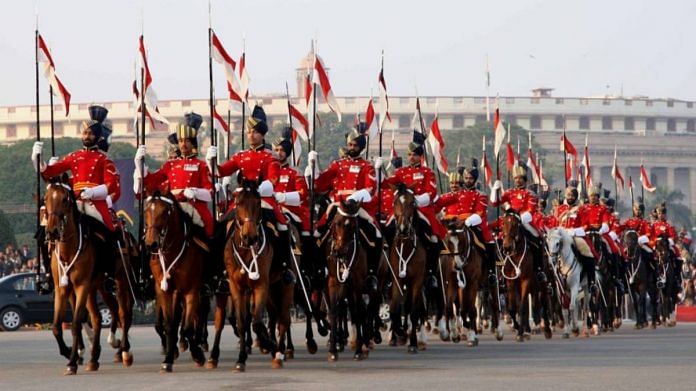
Representative Image | File photo of Beating the Retreat ceremony | Source: Ministry of Defence

Representative Image | File photo of Beating the Retreat ceremony | Source: Ministry of DefenceText Size: A- A+

New Delhi: Changing of military band tunes, pre-independence era battle honours, mess procedures and a greater emphasis on Indian war heroes in military studies — these are some of the changes being examined by the Indian armed forces as part of a larger push towards ‘indianisation’ of the forces, ThePrint has learnt.

Currently, a large number of military band tunes are of British-origin. Some of these tunes have also become a part of long-standing traditions and played during specific ceremonies. For example, Auld Lang Syne and Abide With Me, are played on all Passing out Parades and Beating the Retreat ceremony, respectively.https://953c77da90f2f91c5bec7c4b42738c0c.safeframe.googlesyndication.com/safeframe/1-0-38/html/container.html

Defence sources told ThePrint that it was being examined whether some of these iconic tunes can be replaced with suitable Indian tunes, which could continue to convey the same message.

“The search for replacing some of these tunes has started. The endeavour is to implement the changes by the time India celebrates the 75th year of Independence next year,” a top defence source told ThePrint.

Sources said that it was also being discussed whether it will be prudent to lay to rest some pre-independence era battle honours, which were awarded to units for exhibiting exceptional collective bravery during wars. One of the important traditions of the armed forces is to celebrate the bravery of the troops in wars and it is done in the form of celebrating battle honour days.

Many of these honours were awarded to units of the then British Indian Army, for fighting against local Indian kings. For example, battle honours were won by units during the first Indian uprising against the British, in 1857, including in the battle with Rani Lakshmibai.

Some were also won during the two World Wars and in other battles, such as Battle of Haifa, against the Ottoman Empire.

Sources said that while a few British-era mess procedures, especially those observed during dinner nights – formal sit down dinners –  have been modified since Independence, it was now being examined if and how any further changes can be made.

Another defence source told ThePrint that most military studies in the country refer to the writings of Sun Tzu, who authored the ancient Chinese military treatise Art of War and British strategists such as Liddel Hart and the German General Clausewitz, while there are comparatively fewer references to indigenous works such as Kautilya’s Arthashastra.

“This is likely to be given more emphasis in strategic studies (in the future),’ the source said.

In addition, strategies enunciated in the Indian epics would also be studied in greater detail, alongside the battle tactics of Shivaji – for guerilla tactics – and Raja Raja Chola I and his son Rajendra Chola – for naval warfare. There will also be a greater emphasis on Indian languages in the military, sources said.

Some of these ideas were discussed before. But, the plans and discussions have taken a renewed vigour after Prime Minister Narendra Modi, while speaking at the Combined Commanders Conference in Gujarat’s Kevadia in March, talked about enhancing indigenisation in the national security system. This was not just in sourcing equipment and weapons, but also in the doctrines, procedures and customs practised in the three services.

There had also been a discussion on indianisation of traditions and culture in defence services on the first day of the three-day Conference and a separate session on the subject on the third day of the event.

Major General Birender Dhanoa (retd), however, told ThePrint that militaries world over follow a similar equipment and training pattern as required for modern warfare, while drawing on its own culture and experience, and changes in the armed forces should not be politically motivated.


Also read: India’s military is apolitical. But hold up the mirror before it starts fraying


Was discussed in 2016 combat paper

A combat paper published by the Army War College, Mhow, in 2016 – titled Interpreting Ancient India’s Strategic Military Culture – took examples from the Mahabharata and Arthashastra, to correlate aspects of warfare and statecraft between the ancient and present times.

Defence sources told ThePrint that the paper had stated that “indigenous strategic thoughts and art of war found in the Arthashastra, Mahabharata and other literature are not only organic to Indian psyche, but are also relevant even in today’s context”.

It had also listed certain scriptures which could be used as a source of ancient ideas on statecraft and classical Indian military thought. This included the Dhanurveda (which talks about defence planning, tactics, constitution of defence forces, selection and training of defence personnel, military arrays, divisions of fighting, equipment, long range weapons etc).

The paper had also referred to chapter 7 of Manusmriti, stating that it deals with statecraft and rules of war, Shukra Niti (which it said refers to military aphorisms of sage Shukracharya) and the Puranas like Agni Purana, Brahma Purana and Brahmanda Purana which deals with diplomacy and theories on war.

It had also discussed the evolution of military strategy in India through the eras, and emphasised on the information warfare strategy by Kautilya, the Indian art of war and foreign policies.


Also read: What’s DGAFMS, Indian military’s medical wing leading the fight against Covid


“Army needs to be careful”

Major General Birender Dhanoa (retd), however, advised caution while bringing in such changes.

Talking to ThePrint, the former Army officer said that there is a belief, not entirely unfounded – “but for reasons that aren’t what politicians have understood them to be” – that the Indian Army continues to hold on to traditions and customs which are archaic and a vestige of a colonial past, which has no place in “new India”.

He said the army has been anyway changing older norms and uniforms that are more suited to a modern India, doing away with some outdated traditions. “This is a gradual process, not very visible to outsiders,” he said.

Maj. Gen. Dhanoa said issues of officers’ messes, the divide “perceived at times” between the men and their leaders, in terms of the way a regiment system is set up, also lead to an incorrect assumption that the army clings on to colonial ideas, which is not so.

“As for doctrines and leadership examples that are Indian, we’ve been doing so for ages, while also imbibing the best practices and doctrine from others. Militaries world over follow a similar equipment and training pattern, as demands of modern war dictate so,” he said.

“But then you draw on your own culture and experiences as well, to enable the men to absorb and apply that which works for you. So we’ve been doing this in schools of instruction since ages and it is not a new idea,” he said.

He cautioned that some of these ostensibly good suggestions are “politically loaded” and that the army needs to be careful in going in one direction, just because “the flavour of the period dictates so.”

‘It must retain its apolitical character and be capable of doing what the constitution and the state ask of it, and this calls for adopting good ideas and saying a polite yet firm no to those that are not in its long-term interests,” he said.

(Edited by Poulomi Banerjee)


PAKISTAN VIEWS KASHMIR THROUGH AFGHAN PRISM

The ceasefire continues to hold, despite the odd incident along the Jammu border
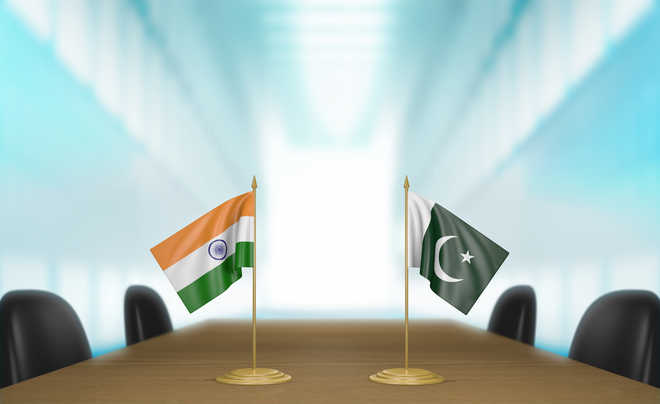
Connecting dots flowing from recent statements and incidents provide an understanding of the dilemma faced by Pakistan on ties with India and Afghanistan, especially with the ongoing withdrawal of US and NATO forces. Currently, a ceasefire, part of backchannel talks, is underway between India and Pakistan, while the US withdrawal has opened doors for internal strife in Afghanistan which could spill across the Durand Line into Pakistan. Pakistan cannot risk two active frontiers alongside increasing internal turmoil.
This scenario could break Pakistan’s economy and overstretch its military capabilities. The emerging scenario in Afghanistan and its impact can best be summed up by statements from Pakistani politicians. Foreign Minister SM Qureshi mentioned during a discussion in their senate, “what we were fearing and are concerned about is that a vacuum created in Afghanistan can drag the country back into the 1990s. There could be anarchy and God forbid, a civil war.”
Qureshi had earlier threatened the US that unless Kashmir was resolved, Afghanistan would remain in turmoil. He tried pushing the US into viewing Kashmir through the Afghan prism. The recently concluded Pakistan corps commanders’ conference resulted in the military leadership expressing concern on, “regrouping of terrorist leadership and outfits across the border”. Prime Minister Imran Khan, addressing the Economic Cooperation Organisation summit last week, stated, “It is imperative that there should be a peaceful transition in Afghanistan, otherwise 1989like chaos will occur when Soviet Union’s forces had left.”
An editorial in Dawn of 3 June states, “What Pakistan and many other regional states fear is a return to total anarchy in Afghanistan.” Pakistan knows what a civil war in Afghanistan will imply. It has faced it earlier. This scenario is Pakistan’s own creation. It was warned on multiple occasions that it was backing the wrong horse (Taliban) but refused to listen. Hillary Clinton had stated, “snakes are going to turn on whoever has them in the backyard.”
Pakistan’s Afghan narrative stemmed from fear of growing Indian influence in the country. Hamid Karzai, the exAfghanistan President stated in a recent interview, “Pakistan actually would like Afghanistan to break off relations with India.” Finally, snakes are returning to bite.
The US withdrawal, announced by President Joe Biden without any preconditions, has pushed any peace deal between the Taliban and Afghan government further away. Violence levels are rising as the Taliban assumes it possesses the upper hand and can take Kabul. Despite reports of the Afghan army abandoning some posts to the Taliban, the road to Kabul continues to be littered with roadblocks. The Afghan government currently controls 50 per cent of the country.
Realistically accepting the possibility of a civil war, Afghan President Ghani stated in an article last month, “If the Taliban choose the latter path (chaos and violence), Afghan Forces will fight them.” Pakistan’s NSA, Moeed Yusuf, stated “US has assured that Pakistan will not be made a scapegoat amidst the withdrawal, but only time will tell whether they stick to their words.” Zalmay Khalilzad, the US special envoy for Afghanistan, in an interview, mentioned, “Pakistan will be blamed (for the civil war) because much of the Taliban’s leadership lives in Pakistan.”
Global pressure is already increasing on Pakistan to rein in the Taliban and push it for talks. An editorial in Dawn last week stated, “while Pakistan can urge the group to make peace, the decision would be that of the Taliban alone. Indeed, the situation does not look promising.” Added to this is the reality that even if the Taliban does reach Kabul, there are collections of militias and terrorist groups willing to challenge it. Most challengers of the Taliban will be funded from abroad increasing instability.
Afghanistan will witness violence for a prolonged duration. Last month there were multiple attacks on Pakistani troops from across the Afghan border. The worsening security situation in Afghanistan opened space for Anti-Pak terrorist groups to enhance attacks on its army. Some of these groups are being supported by the Taliban to maintain pressure on Pakistan. The targeting of the Chinese ambassador in Quetta, in April, was claimed by the anti-Pak Tehreek-iTaliban Pakistan (TTP), backed by the Haqqani network.
Pakistan’s fear is that the CPEC would become a major target, and this would stall investments from China, adding to their economic woes. Fahd Hussain writing for Dawn stated that a civil war in Afghanistan could impact Pakistan in multiple ways. It could enhance influx of refugees as also regenerate violence and militancy in border areas, including Baluchistan. The TTP, currently sheltering on Afghan soil, could gain fresh traction and enhance attacks on Pakistani forces. The Baluch freedom groups would exploit this opportunity to target the Pakistan army and CPEC. Thus, for Pakistan, securing is western borders and provinces is gaining greater strategic prominence than backing terrorism in the Kashmir valley.
Pakistan currently has no choice.
Its only option is to seek peace with India along the LoC and reduce support to Kashmir militants. It was with this background that backchannel talks with India gained steam. Pakistan’s serious intentions can be gauged from the fact that no terrorist leader has made any counter comment on the ceasefire. The ISI has tightened its leash over them. Pakistan Army Chief General Bajwa admitted backchannel discussions are ongoing, adding that article 370, India’s red line, is of no concern, while the country’s polity opposed it.
Imran Khan and Qureshi initially insisted on restoration of article 370 as a prelude to talks; however, in a climbdown, possibly prompted by the army, Imran mentioned that Pakistan is willing for talks even if India gives a road map for restoring the article. With no comments flowing from India, the message conveyed is that statements by Pakistani politicians are solely for domestic consumption, as discussions are ongoing between the Pakistan army and the Indian government.
The ceasefire continues to hold, despite the odd incident along the Jammu border. Pakistan, which had claimed that the US must view Afghanistan through a Kashmir prism is now itself compelled to view Kashmir through the Afghan prism.