



Sanjha Morcha

Galwan incident exposed Chinese vulnerabilities

Following operations on the Kailash Range in early September last year, the Indian Army captured commanding heights to give themselves an advantageous bargaining position for the future. Also, the determination with which the ground manoeuvres were conducted, in the backdrop of the pandemic, conveyed a clear message to an unpredictable adversary.

Galwan incident exposed Chinese vulnerabilities

Lesson from Galwan: India should have seen China’s misadventure coming. PTI
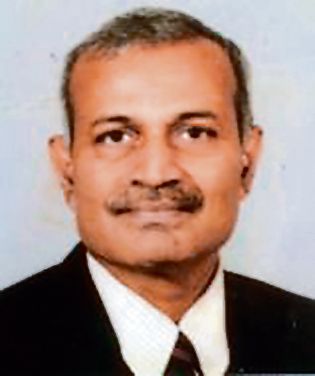
Group captain Murli Menon (retd)

Defence Analyst

It was on the intervening night of June 15-16 last year that Colonel Santosh Babu, the unassuming Commanding Officer of 16 Bihar Regiment, and 19 of his men sacrificed their lives in the Galwan valley in eastern Ladakh. The Chinese had overwhelmed India at the same locale during the 1962 debacle. As the 20 brave warriors died fighting, another posse from the same battalion, along with two adjoining units, took on the Chinese PLA army in retaliation.

The Galwan incident exposed the vulnerabilities of the Chinese as a combat-proven entity and the limitations of a rigid party-affiliated PLA. It is reported that their conscripts expressed admiration for the unarmed combat prowess of the Indian Army, wishing to learn the ropes of hand-to-hand combat themselves for future use. The adversary’s famous ‘human wave’ tactics of 1962 had no doubt been replaced by crude, unconventional weaponry such as wire-reinforced clubs and stones. But it was clear even after a series of military and diplomatic meetings that the rules of engagement would change forever. Following operations on the Kailash Range during early September last year, the Indian Army captured commanding heights to give themselves an advantageous bargaining position for the future. Also, the determination with which the ground manoeuvres were conducted, in the backdrop of the pandemic, conveyed a clear message to an unpredictable adversary. The stand-off that lasted for a good part of last year also showcased the integrated battle culture of our defence mechanism.

India should actually have seen China’s misadventure coming, threatened as the latter was along India’s motorable road from Shyok to Daulat Beg Oldi. Pushed to the wall due to international opprobrium over the origin of the novel coronavirus, the Chinese leadership perhaps resorted to the border moves as a pressure-relieving measure. India needs aggressive diplomatic forays to call out the aggressor whenever that happens and the invoking of traditional goodwill with other friendly nations, as highlighted by Prime Minister Narendra Modi during his visit to Ladakh after the Galwan violence.

Going forward, such posturing would be as important as actual military capability for a high-altitude border war, when push comes to shove. With its mouthpiece such as Global Times and its cyber warfare, China would leave no stone unturned to create trouble for us by opening up a front with Pakistan to throw us off balance. Needless to say, the Indian Air Force would play a critical role in any future military confrontation in Ladakh. Inductions such as the Rafale jets would be the key to achieving favourable end results in any future military situation versus China.

India’s preoccupation with the ongoing Covid crisis could present an opportunity to China to attempt misadventures along the northern border, which has become ‘hot’ akin to the LoC with Pakistan, but with several additional challenges of high-altitude warfare. The Department of Military Affairs would have its hands full for the foreseeable future.

Innovative national policies and measures to spend adequately on defence need not be overstated, especially as military assets to conduct a high-altitude campaign would come at a price.

But there is a limit up to which arrangements such as Quad could help to counter the Chinese threat. A Quad Plus proposition and beefing up our maritime capability across Malacca and even into the South China Sea are possible options, should a war be thrust upon us. Malacca is an Achilles’ heel for the Chinese as nearly 60 per cent of their energy needs flow through it and here is where India, sitting atop an otherwise non-militarised Indian Ocean, could call the shots. Continued strong military ties with Russia and Israel are also crucial to ensure state-of-the-art, assured military wherewithal, as also is the arming of nations such as the Philippines and Vietnam with equipment such as the Brahmos, the Tejas LCA or associated training facilities. Afghanistan is another sector, especially after the American and NATO withdrawal from there, where India could end up directly jostling for strategic elbow room with China. One also can’t overlook China’s attempts to gain traction in terms of its footprint in India’s neighbouring countries such as Nepal, Bangladesh and Sri Lanka.

Thus, the time ahead promises to be challenging, tricky and critically important for our country to maintain its international reputation as a viable secular democratic power in South Asia. In doing so, our measures — military and diplomatic — to counter China’s ‘salami slicing’ attempts hold the key. And towards this end, the international goodwill we have may need cashing in, as exemplified in recent statements by American power brokers such as Republican Mitch McConnell and commentator Ashley Tellis.

213 BSF men honoured

213 BSF men honoured

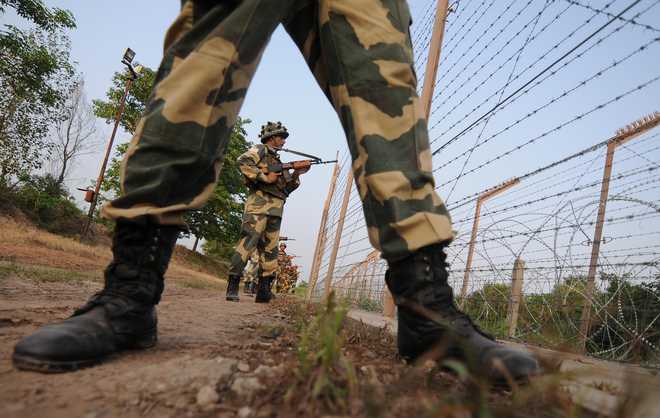
As many as 213 BSF personnel of Jammu frontier were awarded ‘Police Antrik Suraksha Seva Padak’ on Tuesday. File photo

Jammu, June 15

As many as 213 BSF personnel of Jammu frontier were awarded ‘Police Antrik Suraksha Seva Padak’ on Tuesday. Inspector General NS Jamwal presented the medals to 27 officers, 59 subordinate officers and 127 from other ranks during an investiture ceremony, a spokesman said.

So far, 8,111 BSF personnel from the Jammu frontier have been honoured, he said. — PTI


Col Santosh Babu’s statue unveiled in Telangana

Col Santosh Babu’s statue unveiled in Telangana

Suryapet: A statue of Col Santosh Babu, who died in the Chinese army attack at the Galwan valley in eastern Ladakh in June last year, was unveiled at Suryapet by Telangana Minister KT Rama Rao on Tuesday. Col Babu was a native of Suryapet, 140 km from the state capital Hyderabad. PTI


Without naming China, India reiterates for ‘rule-based order in Indo-Pacific’

China has created several man-made islands to extend its claims at the sea

Without naming China, India reiterates for ‘rule-based order in Indo-Pacific’

Rajnath Singh addressed the ADMM-plus meeting virtually.

Ajay Banerjee

Tribune News Service

New Delhi, June 16

Without naming China, India on Wednesday once again said it stood for a rule-based order in the Indo-Pacific based upon respect for sovereignty and territorial integrity of nations, peaceful resolution of disputes through dialogue and adherence to international rules and laws.

Defence Minister Rajnath Singh, speaking at the eighth ASEAN Defence Ministers’ plus meeting (ADMM-Plus) said: “India calls for a free, open and inclusive order in the Indo-Pacific.”

The ASEAN (Association of Southeast Asian Nations) is a group of 10 countries and five of those nations — Brunei, Malaysia, the Philippines, Taiwan and Vietnam – are locked in a dispute with China over claims in the hydro-carbon rich South China Sea.

China has created several man-made islands to extend its claims at the sea.

Rajnath Singh addressed the ADMM-plus meeting virtually.

With regards to developments in the South China Sea, he said it has attracted attention in the region and beyond. “India supports freedom of navigation, over flight and unimpeded commerce in these international waterways,” he said.

He hoped that the Code of Conduct negotiations will lead to outcomes that are in keeping with international law, including the UNCLOS (United Nations Convention on the Law of the Sea) and do not prejudice the legitimate rights and interests of nations that were not party to these discussions.

A few years ago, China lost its case on claims at a hearing under the UNCLOS, it did not accept the verdict and forced other parties to the dispute to enter into negotiations.  

He said the maritime security challenges were another area of concern to India.https://ba0aaf8a968633d922e67047f2e8e32a.safeframe.googlesyndication.com/safeframe/1-0-38/html/container.html

The Sea lanes of Communication were critical for peace, stability, prosperity and development of the Indo-Pacific region.

He said: “India has strengthened cooperative engagements in the Indo-Pacific based on converging visions and values for promotion of peace, stability, and prosperity in the region.”

The centrality of ASEAN and utilisation of ASEAN-led mechanisms are important platforms for implementation of our shared vision for the Indo-Pacific, he added. 


ARMY COMMEMORATES INDIA’S HISTORIC VICTORY OVER PAKISTAN IN 1971

The event was attended by Veterans, NCC Cadets and senior Army officers of Udhampur Military Station
To commemorate the decisive and historic victory of the Indian Armed Forces over the Pakistan Army in December 1971 and to pay homage to the Swarnim Vijay Mashaal (Victory Flame), a solemn Wreath Laying Ceremony was held at ‘Dhruva Shaheed Smarak’ at Headquarters Northern Command in the Udhampur Military Station on Monday.
Lt General YK Joshi, Army Commander, Northern Command, laid the wreath to honour the Swarnim Vijay Mashaal lit in remembrance of the valiant soldiers who have given the ultimate sacrifice in service of our nation. The event was attended by Veterans, NCC Cadets and senior Army officers of Udhampur Military Station.
The Swarnim Vijay Mashaal had arrived at Udhampur on 13 June from Nagrota and was received with full ceremonial honours. The Victory Flame was then escorted to the local unit quarter guard.
On 14 June after the customary ‘Last mile run’ the Victory Flame was handed over to the Station Commander, Udhampur Military Garrison who placed the Victory Flame at Dhruva War Memorial. The wreath-laying was thereafter carried out by JCOs and Veterans followed by Wreath Laying by the Army Commander, Northern Command.
On culmination of the Wreath Laying Ceremony, the Swarnim Vijay Mashaal was further handed over to the Counter Insurgency Force (Delta) where it will be taken to various units to commemorate the unforgettable victory of 1971.
The year 2021 has been named “Swarnim Vijay Varsh” by the government of India and the Nation started the celebrations of the 50 years of the Indo-Pak War which had resulted in the largest military surrender after World War II. The inaugural event was held at the National War Memorial (NWM) in New Delhi on 16 December 2020 where Prime Minister Narendra Modi, Raksha Mantri Rajnath Singh, Chief of Defence Staff and Tri-Services Chiefs laid a wreath and paid homage to the fallen soldiers.
Modi lit the ‘Swarnim Vijay Mashaal’ from the eternal flame of NWM on the occasion. Four Victory Mashaals (flames) lit from the Eternal Flame of NWM were then carried to various parts of the country including to villages of Param Vir Chakra and Maha Vir Chakra Awardees of the 1971 War. Soil from the villages of these Awardees and from areas where major battles were fought in 1971 is being brought to the NWM.


GALWAN ANNIVERSARY REMEMBRANCE IN LEH THIS WEEK

It was on the intervening night of 15-16 June 2020 that India lost 20 soldiers in the Galwan valley due to aggressive actions by the Chinese side
New Delhi: A remembrance ceremony will be undertaken this week in honour of Galwan bravehearts with the officiating commander of the Leh-based Fire and Fury Corps laying a wreath at the Leh Memorial. The officiating commander will be the senior most Indian Army officer in Leh. It was on the intervening night of 15/16 June 2020 that India lost 20 of its troops in the Galwan valley of eastern Ladakh due to aggressive actions by the Chinese side.
This was the worst ever loss of life at the Line of Actual Control (LAC) between India and China in the last 45 years. The development came after the Chinese build-up in the area that started in April of 2020. February saw a positive development, with disengagement at Pangong lake. But disengagement in areas like Gogra, Hot springs, and Depsang plans is still to happen.
Ministry of External Affairs Spokesperson Arindam Bagchi last week said, “We have repeatedly stressed that completion of disengagement in other areas would pave the way for the two sides to consider de-escalation of forces and ensure full restoration of peace and tranquillity and enable progress in bilateral relations.”
Both countries continue to hold talks with each other but the situation remains precarious. March 12 saw a diplomatic round of talks – Working Mechanism for Consultation and Coordination (WMCC), followed by the 11th India-China Corps Commander Level Meeting that took place on April 9.


ONE YEAR POST GALWAN, INDIAN FORCES DEEPLY ENTRENCHED ALONG LAC

Indian Army has moved the latest indigenous K9 “Vajara” howitzers to the line of actual control
New Delhi: A year after 20 Army soldiers had lost their lives in the violent faceoff with Chinese troops in the Galwan valley, the Indian defence forces have strengthened themselves in the entire Ladakh sector through multiple initiatives.
These include building infrastructure to enhance connectivity and deploying additional troops to tackle any possible aggression by the Chinese.
The strengthening of positions has taken place at all levels in the armed forces including both the Indian Army and Air Force.
“Surprised shortly by the sudden Chinese aggression in the Ladakh sector, the forces have now strengthened themselves significantly,” government officials said here.
The biggest achievement has been from the infrastructure point of view as road connectivity to all the forward locations have been improved, they said.
“Whether it is the Zojila pass, the world’s new highest motorable road Umling La, Marsmik La, or Khardung La, they have been kept open for troops movement throughout the year, courtesy the Border Roads Organisation,” officials said.
They added that connectivity has also helped to keep up the supplies at the forward locations throughout the year and provided us the capability to deploy troops in no time.
The Indian Army has also strengthened its deployments in Ladakh as well as the entire Line of Actual Control (LAC) as it has now deployed an additional strike corps to tackle the China border.
“The Mathura-based One Strike Corps has been reoriented towards the northern borders in Ladakh and the 17 Mountain Strike Corps has been given the charge of the entire north-eastern states along with providing it an additional Division comprising over 10,000 troops, they said.
The Indian Air Force, on its part, is also strengthening itself with the arrival of its Rafale fighter jets every couple of months, officials added.
Along with the Rafales, the MiG-29s and the Su-30 fleets have been dominating the skies all along the Northern borders and the second squadron or the planes would be ready for operations by the end of this month.
The biggest achievement of the defence forces has been in creating accommodation for the troops as the Military Engineers have created facilities planned to have been built in the next five years within the last 11 months, they added.
Officials said the preparedness of the armed forces is now at a level where the Chinese or any other adversary cannot surprise us in any way.


Rajnath Singh approves nearly Rs 499 crore for defence research as govt looks to cut imports

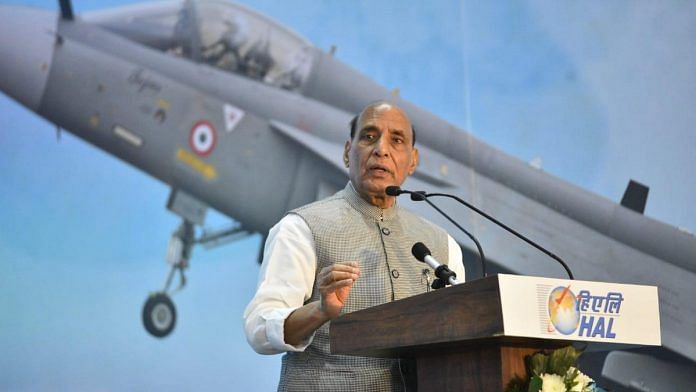
Defence Minister Rajnath Singh inaugurated the second production line for LCA Tejas in Bengaluru Tuesday | By special arrangement

Defence Minister Rajnath Singh inaugurated the second production line for LCA Tejas in Bengaluru | File photo | By special arrangementText Size: A- A+

New Delhi: Defence Minister Rajnath Singh has approved budgetary support of nearly Rs 499 crore for research and innovation in the defence sector for the next five years.

The Defence Ministry on Sunday said the funds will be used to provide financial support to nearly 300 start-ups, micro, small and medium enterprises (MSMEs) and individual innovators with a larger goal of ensuring self-reliance in the defence sector.

The scheme is in sync with the government’s push to cut imports of military hardware and weapons and make India a hub for defence manufacturing.

“Defence Minister Rajnath Singh has approved the budgetary support of Rs 498.8 crore to Innovations for Defence Excellence (iDEX)-Defence Innovation Organisation (DIO) for the next five years,” the ministry said in a statement.

It said the iDEX DIO has the primary objective of self-reliance and indigenisation in the defence and aerospace sector.

The ministry said the setting up of the iDEX framework and establishment of the DIO by the Department of Defence Production (DDP) is aimed at creating an ecosystem to foster innovation and technology development in the defence and aerospace sector.

“The scheme, with budgetary support of Rs 498.8 crore for the next five years, is aimed at providing financial support to nearly 300 start-ups/MSMEs/individual innovators and 20 partner incubators under the DIO framework,” the ministry said.

It said the DIO will enable the creation of channels for innovators to engage and interact with the Indian defence production industry.

“The scheme aims to facilitate rapid development of new, indigenised and innovative technologies for the Indian defence and aerospace sector to meet their needs in shorter timelines,” it said.

In the last couple of years, the government has unveiled a series of reform measures and initiatives to make India a hub of defence manufacturing.

Last August, Defence Minister Singh had announced that India will stop the import of 101 weapons and military platforms like transport aircraft, light combat helicopters, conventional submarines, cruise missiles and sonar systems by 2024.

A second negative list, putting import restrictions on 108 military weapons and systems such as next-generation corvettes, airborne early warning systems, tank engines and radars, was issued this week.

In May last, the government announced increasing the FDI limit from 49 per cent to 74 per cent under the automatic route in the defence sector.

India is one of the largest importers of arms globally.

The government now wants to reduce dependence on imported military platforms and has decided to support domestic defence manufacturing.

The ministry has set a goal of a turnover of USD 25 billion (Rs 1.75 lakh crore) in defence manufacturing in the next five years that included an export target of USD 5 billion (Rs 35,000 crore) worth of military hardware. — PTI


Also read: Under new policy, India could declassify military operations within 25 years unlike earlier


In a first since taking charge, Eastern Army Commander Manoj Pande visits Eastern Air Command HQ

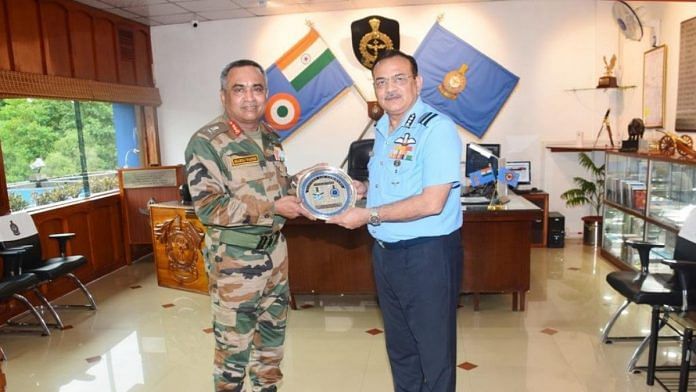
Eastern Army Commander Lt Gen Manoj Pande with Air Marshal Amit Dev in Shillong on 13 June 2021 | Twitter | ANIText Size: A- A+

Kolkata: Eastern Command GOC-in-C Lt Gen Manoj Pande on Sunday visited the Eastern Air Command (EAC) headquarters at Shillong in Meghalaya and discussed defence preparedness with EAC’s AOC-in-C Air Marshal Amit Dev, a Defence official said here.

This was the Eastern Army Commander’s first visit to the EAC headquarters since assuming charge on June 1.

“Joint operations and jointmanship were the main focus of discussions,” the official said about the deliberations between the two commanders, who trained together at the National Defence Academy and graduated from the same batch in December, 1981.

Lt Gen Pande was briefed on the details of operations by the Indian Air Force in support of the Indian Army in the Eastern Sector, he said.

“Decisions were taken on the conduct of realistic joint training exercises on a regular basis to draw out lessons for actual operations,” the official added.


Also read: Army buys 17 boats to move troops faster at Pangong Tso amid India-China stalemate at LAC