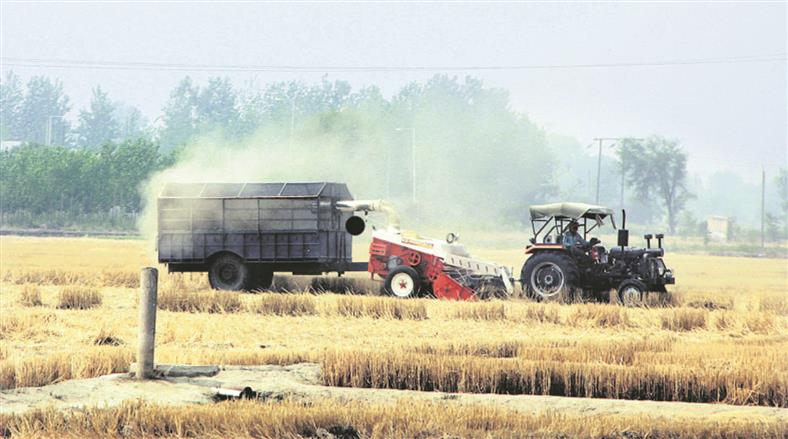
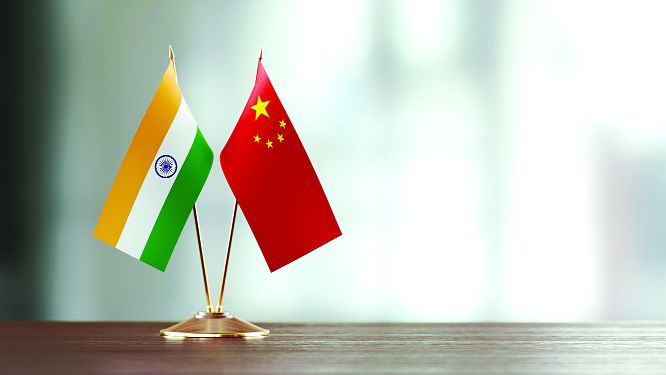
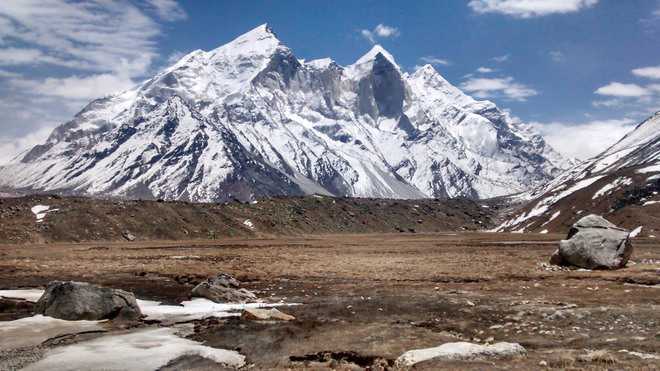
Further strengthening its deployments along the Northern borders, the Indian Army is adding around 10,000 more troops to its only mountain strike corps responsible for looking after offensive operations along the China border. The strengthening of the Mountain Strike Corps is part of the steps taken by the force to rebalance its focus more towards the Chinese border from the western front with Pakistan. An existing Division formation, with around 10,000 troops, located in the Eastern sector has now been assigned to the 17 Mountain Strike Corps headquartered in West Bengal’s Panagarh, government sources said. “The Mountain Strike Corps was cleared by the Centre about a decade ago but it had only one Division attached to it and with the latest step, it will now have more firepower and manpower at its disposal to carry out its assigned task,” they said. The Army has also done a lot of rebalancing in the recent past and a number of formations have been given dual tasks and asked to focus more towards the China border which erupted last year due to the Chinese aggression in eastern Ladakh and other areas. Meanwhile, the Indian Army and other security forces have also started returning to the summer deployments in the Ladakh sector and other mountainous areas along the Line of Actual Control (LAC). Both Indian and Chinese Armies have a large number of troops deployed at the border since last year. The formations of Mathura-based One Strike Corps have also been reoriented towards the Northern borders while one of its Armoured formations would continue to be with it. The deployment of formations and troops in the Sugar sector, Central sector and the north eastern borders have also been strengthened. Due to the Indian tactical operations along the southern bank of Pangong Tso, the Indian Army managed to secure disengagement from the Finger area, the two sides are continuing to hold talks for further disengagement and de-escalation from other friction points in the area. India is demanding disengagement at the Gogra, Hot Springs and Depsang plains area by the Chinese Army for which the 11th round of corps commander talks are being held today.
Selling defence land seen as only way to raise money for new modernisation fund
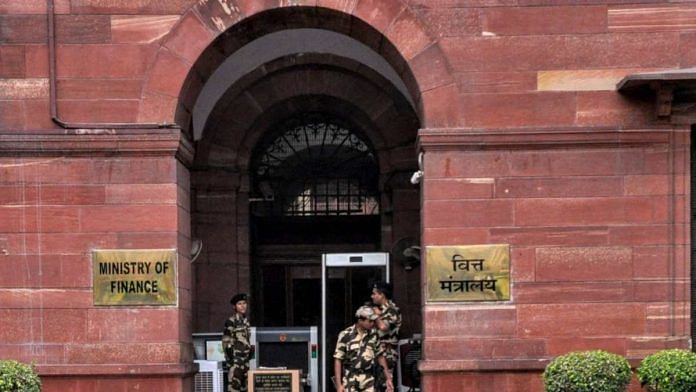
New Delhi: The Ministry of Finance has pegged monetising defence land as the only way to generate revenue for the proposed non-lapsable modernisation fund, ThePrint has learnt.
Draft cabinet note based on ministry’s comments is undergoing inter-ministerial consultations, but Department of Military Affairs had said selling land alone wouldn’t be enough.
According to government sources, a draft cabinet note on setting up the defence modernisation fund is currently undergoing inter-ministerial consultations, and a final decision is expected soon, following which it will be placed before the Narendra Modi cabinet for approval.
The Controller General of Defence Accounts (CGDA) and the Directorate General, Defence Estates (DGDE) have also been entrusted to carry out the task of a realistic assessment of surplus defence land available for monetisation, the sources said.
The concept of a non-lapsable defence modernisation fund is not new. In the interim budget of 2003-04, then Union finance minister Jaswant Singh had announced such a fund of Rs 25,000 crore, which would be made available to the defence ministry. However, in the subsequent years, the finance ministry had repeatedly objected to setting up the fund.
The fund has now been recommended again by the 15th Finance Commission, which made its report public on 1 February this year. The same month, Finance Minister Nirmala Sitharaman said her ministry had agreed in-principle to the fund. “The modalities and the structure will be worked upon,” Sitharaman had said in the Lok Sabha.
ThePrint reached the spokespersons of the finance and defence ministries through emails, but there was no response till the time of the publication of this report.
The Finance Commission had suggested several sources of revenue, including disinvestment proceeds of defence public sector enterprises (DPSEs) and receipts from defence land — to be transferred to state governments and for public projects in future — for this new fund.
The sources said other avenues discussed in the government included levying a defence cess for a certain period, defence bonds, proceeds from defence exports, tax on certain strategic projects, and reimbursements from aid to civil authorities, among others.
However, the sources said the other suggested sources of revenue are unlikely to be included, as the finance ministry has only recommended monetisation of defence land.
The finance ministry has said all proceeds from defence land monetisation will be received in the Consolidated Fund of India, the sources said. Half of such receipts will be transferred every year to the non-lapsable fund, it has recommended.
The new fund, the ministry has said, will be created in a public account and transfer of money will take place after parliamentary authorisation through ‘Demands for Grants’ by the defence ministry.
The finance ministry also said the money from the modernisation fund would be spent on modernisation projects only after the allocated capital budget is exhausted. Whatever is left over after deducting the amount for modernisation projects will be used for construction of family accommodation for defence officials, purchase of indigenous defence stores and logistics,a defence source said.
A senior government official familiar with the matter said just monetising surplus defence land is unlikely to keep the fund going in the future, and other sources of revenue need to be considered.
“Defence land is a finite source of funding, and the roll-on fund needs to keep going even after the defence land is exhausted,” the official told ThePrint.
“Moreover, the majority of defence land belongs to the Army, whereas the proposed modernisation fund is for all the three services,” the official pointed out.
The Department of Military Affairs, headed by Chief of Defence Staff Gen. Bipin Rawat, had told the government last year that that proceeds from defence land monetisation would be barely adequate to meet the armed forces’ requirements, a defence source told ThePrint.
The DMA had also highlighted that the capital budget of the defence forces is inadequate to meet their committed liabilities, and objected to 50 per cent of the funds from defence land monetisation going to the CFI.
“DMA also suggested that the condition that such funds will go back to CFI in case of non-utilisation in three years also needs a relook since defence planning and acquisition takes time,” the source said.
Other recommendations made by the DMA included setting a minimum limit for the fund at Rs 65,000 crore, and include alternate sources.
However, a second official justified the finance ministry’s recommendation, saying monetising defence land is just a start, and that other suggested sources of revenue are also not infinite.
“There is no point in parking additional money in the fund if the existing corpus is not utilised. The idea is to start with defence land monetisation first, which itself will be a long and tedious procedure,” the second official said. “Other recommendations like cess are not an option, as states would object to it.”
The first official quoted above said while a blanket defence cess is not a good idea, the government could explore cess on customs duty or defence exports to boost self-reliance in defence.
Why defence modernisation fund is needed
The fund was recommended keeping in mind the emerging needs for modernisation of the defence services, in the wake of a consistently-declining defence budget in the last few financial years. For 2021-22, the defence budget stands at Rs 4.78 lakh crore — way short of the three services’ budget projections based on their committed liabilities.
The Navy, which had projected a requirement of Rs 70,920.78 crore for 2021-22, was allotted less than half — Rs 33,253.55 crore.
The Army had projected a need for Rs 51,492 crore for modernisation, but got only Rs 36,531 crore, while the Air Force, with a projection of Rs 77,140 crore, got Rs 53,214.77 crore.
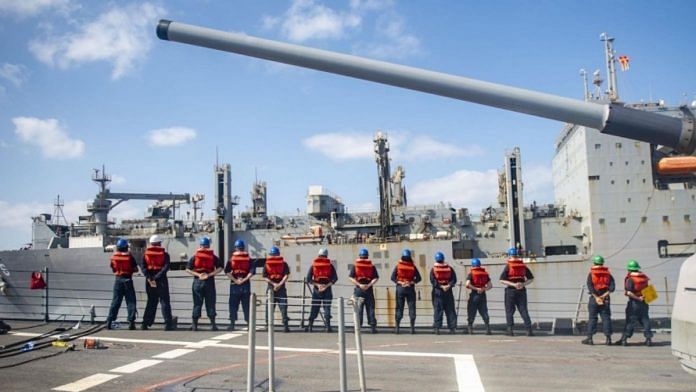
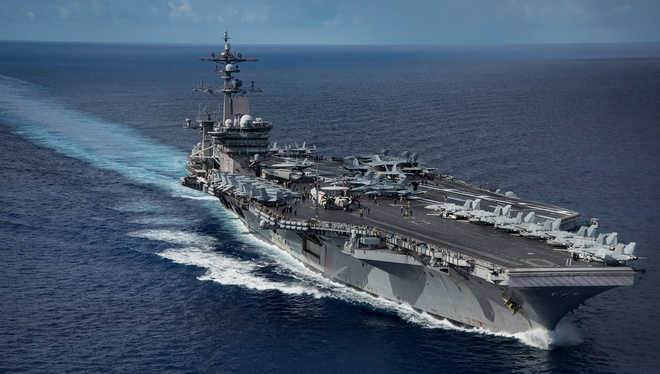
File image of USS John Paul Jones (DDG 53) | Photo:
New Delhi: A US guided missile destroyer sailed through India’s Exclusive Economic Zone (EEZ), 130 nautical miles west of the Lakshadweep Islands, without intimating India — in violation of the Indian law.
Sources in the Indian naval establishment, while accepting that the US move was a violation, said it is more of a “messaging to China” than anything else.
A statement released by the US Navy’s 7th Fleet said, “On April 7, 2021 (local time) USS John Paul Jones (DDG 53) asserted navigational rights and freedoms approximately 130 nautical miles west of the Lakshadweep Islands, inside India’s exclusive economic zone, without requesting India’s prior consent, consistent with international law.”
It said India requires prior consent for military exercises or maneuvers in its EEZ or continental shelf, and added that this claim is inconsistent with international law.
This Freedom of Navigation Operation (FONOP) upheld the rights, freedoms, and lawful uses of the sea recognised in international law by challenging India’s excessive maritime claims, it said.
“We conduct routine and regular Freedom of Navigation Operations (FONOPs), as we have done in the past and will continue to in the future. FONOPs are not about one country, nor are they about making political statements,” the US’ 7th Fleet said in its statement.
India’s Ministry of External Affairs, however, raised “concerns” through diplomatic channels over the passage of USS John Paul Jones through its EEZ, and noted the country’s adherence to the United Nations Convention for the Law of the Sea (UNCLOS).
According to UNCLOS 1982, to which India is a signatory, waters upto 12 nautical miles of a coastline is that country’s sovereign waters and between 12 and 200 nautical miles its EEZ.
Both India and China have made their own rules with regard to this despite being a signatory to the international convention. India says foreign vessels travelling through India’s EEZ has to give prior notification while China says foreign countries need permission from Beijing.
While innocent passage of foreign ships, including navies, through EEZ is allowed by India, no commercial or research activities, including fishing, is allowed.
While the Indian Navy is yet to respond officially to the US move, former Navy chief Admiral Arun Prakash told ThePrint: “This action, especially publicising it, was both uncalled for and unnecessary — especially in context of a friend and strategic partner.”
Explaining the nuances of the US move, the admiral said it was a messaging to China. He added that the situation is ironic because the US itself has not ratified the UNCLOS but quotes it to other countries.
“The US is quoting UNCLOS 1982, which it has not ratified. India has ratified the law but says that prior intimation is needed for passage through EEZ and restricts any kind of economic or research activity,” he said.
The former Navy chief added that there is no restriction on innocent passage through India’s EEZ but needs prior intimation.
“What the US has done is violated India’s rules but it has not violated any international law. This step is actually part of its messaging to China,” he said.
The US statement said it operates in the Indo-Pacific region on a daily basis.
All operations are designed in accordance with international law and demonstrate that the United States will fly, sail and operate wherever international law allows, it said.
“We conduct routine and regular Freedom of Navigation Operations (FONOPs), as we have done in the past and will continue to in the future. FONOPs are not about one country, nor are they about making political statements,” it added in what is seen as an oblique messaging to China.
MEA responds
In a statement issued Friday evening, India’s external affairs ministry said it had raised the matter of the USS John Paul Jones passing through the EEZ with the US.
“The USS John Paul Jones was continuously monitored transiting from the Persian Gulf towards the Malacca Straits. We have conveyed our concerns regarding this passage through our EEZ to the Government of U.S.A through diplomatic channels,” it said.
India reiterated its adherence to the UNCLOS and said that the laws under this “does not authorise other States to carry out in the Exclusive Economic Zone and on the continental shelf military exercises or manoeuvres, in particular those involving the use of weapons or explosives, without the consent of the coastal state.”
The incident comes close on the heels of US Secretary of Defence Lloyd Austin’s visit to India, which was the first high-level visit under the new Joe Biden administration.
India, US, Japan and Australia — that constitute the Quad grouping — also recently held their first summit in March under the larger ambit of the strategic Indo-Pacific strategic initiative.
(With inputs from Nayanima Basu)
(This report has been updated with details of the statement issued by India’s Ministry of External Affairs.)
Wheat procurement is to start in Punjab from Saturday, smuggling of grain from states where no MSP is paid has already begun
Sukhmeet Bhasin
Tribune News Service
Bathinda, April 9
Even as wheat procurement is to start in Punjab from Saturday, smuggling of grain from states where no MSP is paid has already begun. At least 24 wheat trucks from other states reportedly arrived here last night.
Traders make Rs 2L per truck
Traders buy wheat at Rs1,100 per quintal from states which don’t pay MSP to farmers and sell it in Punjab at MSP (Rs1,925 per quintal)
They earn over Rs2 lakh per consignment of 400 quintals in one truck after paying Rs225 per quintal for transportation
Sources say traders buy wheat at Rs 1,100 per quintal from other states and sell it in Punjab at the MSP of Rs 1,925 per quintal. Even after paying Rs 225 per quintal transportation and other costs, the traders make over Rs 2 lakh per truck carrying 400 quintals of wheat.
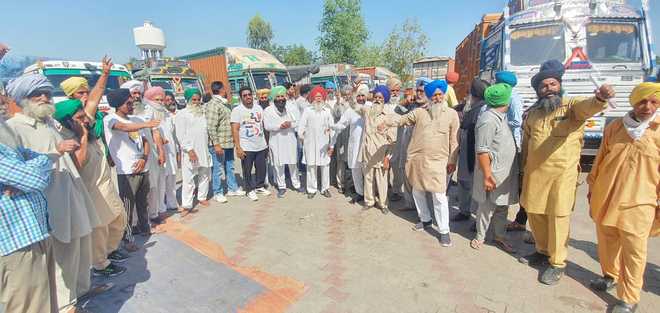
The matter came to light after acting on a tip-off, local BJP leader Sukhpal Sra and his supporters reached the grain market late last night and found wheat-laden trucks parked there. They called the police. Sra alleged many drivers fled with their trucks, but three of them were nabbed.
Inderjit Singh, a truck driver, said: “I had brought 380 quintal of wheat from Darbhanga (Bihar). I was told to unload it at a chemical factory here.” Following the incident, farmers under the banner of BKU Sidhupur started a protest at the grain market, demanding a probe into the illegal practice. Kuldeep Singh Brar, DGM (Ferozepur Division), Punjab Mandi Board, said: “Around 20 trucks laden with wheat were brought here from Bihar and Rajasthan. Unscrupulous traders were trying to sell the low-priced grain at MSP here.” Daljit Brar, SHO, Kotwali police station, said three trucks were seized and an FIR was registered against two firms.
Farmers block the Ropar-Kharar highway on Friday. Tribune photo
Ropar, April 9
Protesting import of wheat from Uttar Pradesh by local flour mill owner, farmers blocked the Ropar-Kharar national highway here today.
They said the move would hurt those whose crop was yet to be procured by the government. The mill owner, however, avoiding confrontation, agreed to return the imported wheat and announced Rs 2.5 lakh contribution to the farmer agitation. Last night, 40 truckloads of wheat from UP arrived at a mill near Solakhian. On getting the information, farmers reached the spot and protested.
Officials from the police and district marketing office arrived at the scene and promised to look into the matter. Around 11.30 am today, farmers assembled on the Ropar-Kharar highway demanding action against the mill owner.
Farmer leader Gurmail Singh Barra said it was a conspiracy to weaken the farmers of Punjab financially. Two hours later, the police and marketing board officials effected a compromise between farmers and the mill owner, following which it was decided that the imported wheat would be returned and the mill owner would contribute towards the farmer agitation. — TNS
India-China military talks focus on further disengagement in eastern Ladakh
Disengagement process in remaining friction points Hot Springs, Gogra and Depsang
ndia and China held another round of military talks on Friday to take forward the disengagement process
India and China held another round of military talks on Friday to take forward the disengagement process in the remaining friction points such as Hot Springs, Gogra and Depsang in eastern Ladakh, people familiar with the development said.
The 11th round of the Corps Commander-level talks began at around 10:30 am at the Chushul border point on the Indian side of the Line of Actual Control (LAC) in eastern Ladakh, they said.
The 10th round of the military dialogue took place on February 20, two days after both militaries concluded the withdrawal of troops and weapons from the North and South banks of the Pangong lake. The talks lasted for around 16 hours.
The Indian delegation at Friday’s talks is led by Lieutenant General PGK Menon, the Commander of the Leh-based 14 Corps.
One of the people cited above said India will insist on completing the disengagement process at the remaining friction points at the earliest.
Late last month, Army chief General MM Naravane said the threat to India has only “abated” following the disengagement in the Pangong lake areas, but it has not gone away altogether.
The border standoff between the Indian and Chinese militaries erupted on May 5 last following a violent clash in the Pangong lake areas and both sides gradually enhanced their deployment by rushing in tens of thousands of soldiers as well as heavy weaponry.
As a result of a series of military and diplomatic talks, the two sides completed the withdrawal of troops and weapons from the North and South banks of the Pangong lake in February, in line with a disengagement agreement.
India has been insisting that the resolution of the outstanding issues, including at Depsang, Hot Springs and Gogra, is essential for the overall ties between the two countries. PTI
Not even fear of COVID-19 can disrupt protest, say agitating farmers
India on Friday registered a record single-day spike of 1,31,968 new COVID-19 cases
Farmers protest at the Singhu border in Delhi. — PTI
New Delhi, April 9
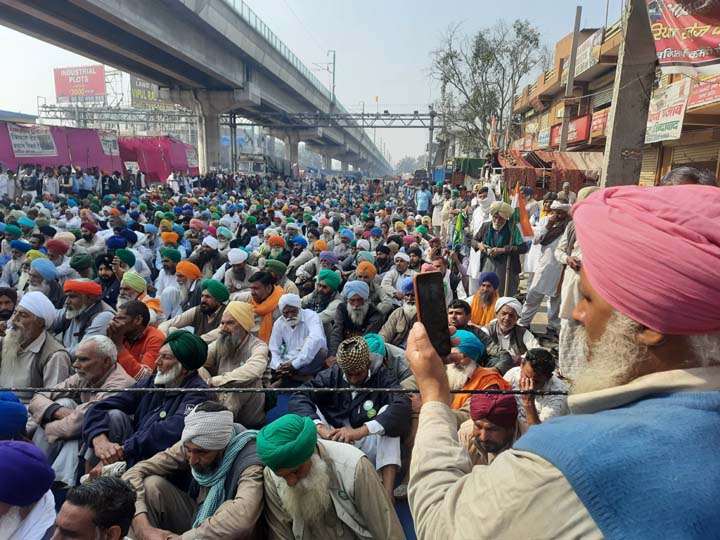
The alarming rise in the number of COVID-19 cases in Delhi notwithstanding, farmer leaders on Thursday said that nothing, not even the fear of coronavirus, can disrupt their protest against the agri laws.
Over the past four months, the farmers have managed to keep their agitation going, withstanding extreme cold, rains, and heat.
They devised many ways to deal with these issues – for cold there was ample supply of winter wear, for rain they elevated their beds, and to prepare for the heat, they have started building houses, and arranging for ACs, coolers and fans.
Tackling the second wave of COVID-19 won’t be very different for them, they said, adding they are prepared with certain basic precautions in place.
“We have been making announcements from the stage at the Singhu border about the necessity of wearing masks, and washing hands frequently. We are also encouraging the protestors to get vaccinated,” said Lakhbir Singh, vice president (Punjab) of All India Kisan Sabha.
With multiple health camps at these protest sites, immediate medical assistance is always at the farmers’ disposal in case a protestor develops symptoms like fever or breathlessness.
“If somebody has fever or cold, or any other COVID-like symptoms, then the doctors here take a call. The patient is either admitted to a hospital, or sent back to their village for 8-10 days,” said Jagmohan Singh, general secretary of the Bharatiya Kisan Union (Dakaunda).
On Friday, India registered a record single-day spike of 1,31,968 new COVID-19 cases. Delhi too, recorded 7,437 fresh cases in its highest single-day spike this year, with the capital’s death roll reaching 11,157 on Thursday.
According to Swaraj India president Yogendra Yadav, farmers do treat the pandemic with a “certain indifference”, but also pointed out that none of the protest sites were COVID-19 hotspots either, making it difficult to challenge the farmers’ attitude.
“If you would notice, each of these places has doctors, clinics. They are not doing COVID testing, but if many people are reporting fever and so on, they would get to know because qualified doctors are there in every single morcha.
“Some of them have proper hospitals. If there was a surge in fever and breathlessness that would have been noticed immediately,” he said.
He added that while the habit of wearing masks and washing hands was being cultivated among the farmers, “distancing has not worked”, which, he added, was true for most places in the country.
“Farmers are just like any ordinary Indian citizen… they are just about as careful as other citizens are, or about as careless, as most Indian citizens are,” Yadav said.
One of the major threats that seems to loom over the farmers’ movement with the rising number of COVID-19 cases, is the repeat of what happened to the Shaheen Bagh protest last year – they were forced to end the agitation fearing the spread of the disease.
This year, Yadav said, however, the situation was different.
“That time, there was a sense of doom, a sense of ‘you don’t know what would happen’ with corona. It was just the beginning… we didn’t know anything at that point.
“Now, that unspecified sense of doom is not there, and therefore, while at that time the government could use that as a pretext to get the protestors to move away, using that now would be utterly cynical,” he said.
He added that if the government uses the coronavirus as an excuse to remove the protesting farmers, it would only expose their “hypocrisy” with the election campaigning underway in West Bengal.
“In that case they should ban election campaigning in Bengal. The first thing they should do is to ban BJP’s own rallies, where the home minister is addressing the crowds. The hypocrisy of that would obviously be seen,” Yadav said.
Thousands of farmers from different parts of the country have been protesting against the three farm laws since the last week of November, 2020.
While the government has been projecting these laws as major agricultural reforms, farmers have expressed apprehension that the move would lead to the elimination of the Minimum Support Price system, and leave them at the mercy of big corporates.
Ask Paramjit Singh if the farmers are afraid of contracting the disease that has already claimed over 1.6 lakh lives in the country, and he said, “what choice do we have?” “Our lives are already on the line. We were afraid of the biting cold, and are afraid of the heat that awaits us, so yes we are afraid of the disease but there is no other option.
“We are taking precautions at individual levels by wearing masks and avoiding shaking hands with people, but the movement has to and will continue,” the Bhartiya Kisan Union (Lakhowal) Punjab general secretary said. —PTI
Non-uniformity of Himalayas foresees significantly large earthquake events
These seismic activities manifest large-scale subsurface deformation and weak zones, underlining the need for deeper insights into the ongoing deformation beneath these tectonically unstable zones. — File Photo
Tribune News Service New Delhi, April 9
Scientists have found that the Himalayas are not uniform, and have assumed different physical and mechanical properties in different directions.
The property present in crystals is called ‘anisotropy’—which could result in significantly large earthquake events in the Himalayas.
Researchers, including Dr Sushil Kumar, Shubhasmita Biswal, Professor William Mohanty, and Mahesh Prasad Parija from Wadia Institute of Himalayan Geology (WIHG), Dehradun, and Indian Institute of Technology Kharagpur (IIT KGP), used data from WIHG to show that the North-West Himalayan region exhibits a peculiar characteristic present in crystals, according to an official statement.
The NW region of India—an area covering Garhwal and Himachal Pradesh—has been hit by four destructive moderates to great earthquakes since the beginning of the 20th century-the Kangra earthquake of 1905, the Kinnaur earthquake of 1975, the Uttarkashi earthquake of 1991, and the Chamoli earthquake of 1999.
These seismic activities manifest large-scale subsurface deformation and weak zones, underlining the need for deeper insights into the ongoing deformation beneath these tectonically unstable zones, it said.
The joint study, using seismic waves from 167 earthquakes recorded by 20 broadband seismic stations deployed in the Western Himalaya, suggested that the major contribution of the anisotropy is mainly because of the strain induced by the Indo-Eurasia collision (going on for 50 million years) and deformation due to the collision is found to be larger in the crust than in the upper mantle. It has been recently published in 2020 in the Journal ‘Lithosphere (GSA)’.
The inhomogeneity along the Himalayas influences the stressing rate is because of variation in the geometry of the Main Himalayan Thrust (MHT) system, and it controls the rupture size during the earthquake.
This lack of homogenous physical and mechanical properties of the Himalayas could help explore new perspectives on deformations taking place at the Himalaya-Tibet crustal belt involved in the formation of the Himalayan Mountains.
US Navy sails in Indian Exclusive Economic Zone; asserts it is right, India’s claim wrong
In what could lead to serious questions on the India-US relations, the US Navy has announced that it has ‘asserted’ navigational rights in the Arabian Sea and inside India’s Exclusive Economic Zone (EEZ), without requesting India’s prior consent.
The 7th Fleet of the US Navy has made an announcement about one of its warships saying “USS John Paul Jones (it) asserted navigational rights and freedoms approximately 130 nautical miles west of the Lakshadweep Islands. This freedom of navigation operation (“FONOP”) upheld the rights, freedoms, and lawful uses of the sea recognised in international law by challenging India’s excessive maritime claims.”
The US said its act was consistent with international law while India’s claims were not in order of the international law. “India requires prior consent for military exercises or manoeuvres in its exclusive economic zone or continental shelf, a claim inconsistent with international law,” the statement of the 7th fleet said.
The statement said, “We conduct routine and regular FONOPs, as we have done in the past and will continue to in the future. FONOPs are not about one country, nor are they about making political statements.”
US forces operate in the Indo-Pacific region on a daily basis. All operations are designed in accordance with international law and demonstrate that the United States will fly, sail and operate wherever international law allows, it said.
Former Indian Navy chief Admiral Arun Prakash tweeted, “There is irony here. While India ratified UN Law of the Seas in 1995, the US has failed to do it so far. For the 7th Fleet to carry out FoN (Freedom of Navigation) missions in Indian EEZ in violation of our domestic law is bad enough. But publicising it? USN please switch on IFF (identification of friend or foe).”
The Indian Navy is yet to respond.
Two years ago, a Chinese survey vessel was driven out of the EEZ off the coast of Andaman and Nicobar Islands on the same grounds that it had no prior permission.
The US statement has come even as five countries, including four members of the Quadrilateral or ‘Quad’ countries, are in the middle of a military exercise in the Bay of Bengal near the strait of Malacca, the busy shipping way that leads to China.https://54046f2092377def32de0ec3791bd3b7.safeframe.googlesyndication.com/safeframe/1-0-38/html/container.html
The ‘Quad’ — India , US, Japan and Australia — along with the French Navy are doing a first-of-its kind multi-lateral maritime exercise, La Pérouse.
India conveys concerns to US
Meanwhile, India on Friday said it has conveyed concerns to the United States over a US Navy ship carrying out a freedom of navigation operation in the Indian exclusive economic zone (EEZ).
In a statement, the Ministry of External Affairs (MEA) said US Navy ship John Paul Jones was continuously monitored transiting from the Persian Gulf towards the Malacca Straits.
India’s reaction came after the US Navy, in an unusual move, announced that one of its ships conducted patrols in the Indian EEZ this week, without seeking consent from India.
“The USS John Paul Jones was continuously monitored transiting from the Persian Gulf towards the Malacca Straits. We have conveyed our concerns regarding this passage through our EEZ to the government of USA through diplomatic channels,” the MEA said.
It said India’s stated position has been that the UN Convention on the Law of the Sea does not authorise other countries to carry out military exercises or manoeuvres in an EEZ and on the continental shelf without the consent of the coastal nation.
“India’s stated position on the UN Convention on the Law of the Sea is that the convention does not authorise other States to carry out in the Exclusive Economic Zone and on the continental shelf, military exercises or manoeuvres, in particular those involving the use of weapons or explosives, without the consent of the coastal State,” the MEA said. —with PTI
Public roads can’t be blocked in protest: Supreme Court
Top court makes Haryana govt party to a PIL filed by a single mother troubled by blockade of roads in NCR
File photo for representation.
Satya Prakash Tribune News Service New Delhi, April 9
Public roads can’t be blocked in protest and there should be free flow of traffic on roads, the Supreme Court said on Friday.
While hearing a PIL filed by a woman commuter against blocking roads connecting Delhi with Noida by farmers protesting against farm laws, a Bench led by Justice Sanjay Kishan Kaul made the government of Haryana party to the case.
The top court clarified that it was not concerned with the larger issue on farm laws which can be decided judicially, politically or administratively but limited to clearing of roads blocked by farmers.
“We have said this before, roads should not be blocked. This is a single mother who has to face many issues because of blocked roads,” the Bench said posting the matter for further hearing on Monday.
Solicitor General Tushar Mehta appeared for the governments of Delhi, UP and Haryana.
As the main roads connecting Delhi and Noida remain blocked since the beginning of protests against farm laws in November last, the Supreme Court had on March 29 issued notice to the Centre and the UP government on a petition by a woman who said commuting had become a nightmare for her.
Acting on the PIL filed by Monicca Agarwaal – a resident of Noida and a single parent with some medical issues, a Bench had asked the Centre and Uttar Pradesh government to explain why the roads connecting Delhi and Noida were not kept free from blockades.
“We consider it appropriate to issue notice to the Union government and others to ensure that the road area is kept clear so that the passage from one place to another is not affected,” it had said.
Agarwaal said though her work place was in Noida she had to travel to Delhi frequently as she was in a marketing job.
Noting that it was taking two hours instead of the normal 20 minutes, she contended that it had become a nightmare to commute between Noida and Delhi.
Maintaining that “democracy and dissent go hand in hand”, the Supreme Court had on October 7, 2020 ruled that roads and public spaces can’t be blocked indefinitely and demonstrations expressing dissent have to be in designated places alone.
On February 9, the top court dismissed a petition seeking review of the verdict, saying the right to protest can’t be anytime and everywhere.
Agarwaal pointed out that despite directions issued by the top court to keep the roads blockade-free nothing had happened.
Noting that a judicial view had already been taken and the matter reflected an administrative failure, the Bench agreed to take up the matter after the petitioner said the court should ensure that people’s right to passage wasn’t hindered.
State Stalwarts
DEFENCES FORCES RANKS
ARMY, NAVY, AIRFORCE RANKS
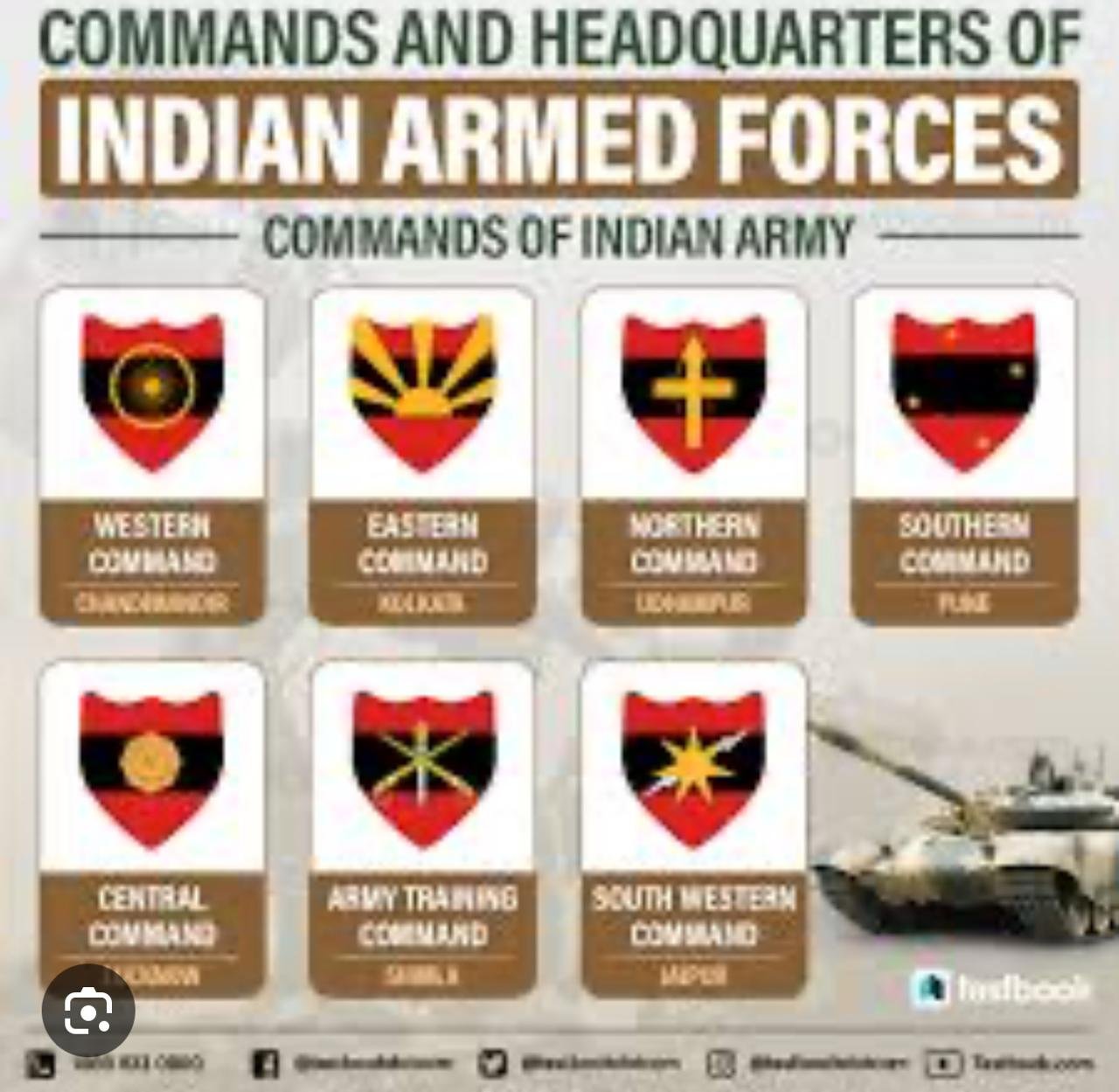
FORMATION SIGNS
FORMATION SIGNS
ALL HUMANS ARE ONE CREATED BY GOD
HINDUS,MUSLIMS,SIKHS.ISAI SAB HAI BHAI BHAI
CHIEF PATRON ALL INDIA SANJHA MORCHA
LT GEN JASBIR SINGH DHALIWAL, DOGRA
SENIOR PATRON ALL INDIA SANJHA MORCHA
MAJOR GEN HARVIJAY SINGH, SENA MEDAL ,corps of signals
.
.
PATRON ALL INDIA SANJHA MORCHA
MAJ GEN RAMINDER GORAYA , CORPS OF
sanjhamorcha303@gmail.com
PRESIDENT HARAYANA STATE CUM COORDINATOR ESM
BRIG DALJIT THUKRAL ,BENGAL SAPPERS
PRESIDENT TRICITY
COL B S BRAR (BHUPI BRAR)
PRESIDENT CHANDIGARH ZONE
COL SHANJIT SINGH BHULLAR
.
.
PRESIDENT PANCHKULA ZONE AND ZIRAKPUR
COL SWARAN SINGH
PRESIDENT SAS NAGAR (MOHALI)
COL BALBIR SINGH , ARTY
INDIAN DEFENCE FORCES
DEFENCE FORCES INTEGRATED LOGO
FORCES FLAGS
15 Th PRESIDENT OF INDIA SUPREME COMMANDER ARMED FORCES
Droupadi Murmu
DEFENCE MINISTER
Minister Rajnath Singh
CHIEF OF DEFENCE STAFF (2nd)
General Anil Chauhan PVSM UYSM AVSM SM VSM
INDIAN FORCES CHIEFS
CHIEF OF ARMY STAFF(29th)
General Upendra Dwivedi, PVSM, AVSM (30 Jun 2024 to Till Date)