Sanjha Morcha

Humility in Hall Bazaar by Lt Gen RS Sujlana (retd)

Humility in Hall Bazaar

Lt Gen RS Sujlana (retd)

During a trip to the holy city of Amritsar, a naval mate of mine, Arvind, took me on a memorable walk through the back lanes of the Old City. A raconteur by habit, I was regaled by many a tale. When we entered the famous Hall Bazaar, he halted in front of Sur Chemists. This, he said, was once ‘Surbabu and Company,’ owned by Field Marshal Sam Manekshaw’s father, a doctor, and served as his clinic.

The Field Marshal, born and brought up here, had studied at Amritsar’s famed Hindu College. Years later, he visited his alma mater, and humbly attributed his achievements to his former gurus and mates there. His sister, Mrs Chawahji, was a respected and caring mathematics teacher at the local St Francis School.

Arvind’s father, a college mate of the Field Marshal, also had a family shop here and a visit there was equally interesting. My attention was drawn to a photograph of an elderly gentleman. ‘Who is this?’ I enquired. ‘My grandfather,’ said Arvind, and kept quiet. Thankfully, another person furthered the introduction. The portrait was of Prof Ram Chander Kohli, remembered and respected for his convictions, humane and humble qualities, an outstanding educationalist who was an MA in pure maths from University of Calcutta in 1922 and BA in French from University of Punjab.

The professor, a person of simple habits, always wore plain clothes, but he had his own way to convey a message. Once, like a commoner, he had queued up to register himself in a government office. When his turn came, the clerk, thinking him to be illiterate, held the professor’s thumb and impressed it in lieu of the signature. Unperturbed, the professor took out his pen, signed and endorsed his name, annotated with MA, BA. The clerk, taken aback, asked the next person in line, ‘Sign karoge ki angutha lagaoge?’ The lesson was delivered.

The professor worked in the English department prior to Independence. Once, an Englishman walked into his office. Uninvited, he took a chair and directed him to do something which was in contravention to rules. The professor refused to abide. The Englishman was given the option to leave his office or be thrown out! Dazed, he left in a huff.

To avoid any embarrassment, the professor handed over his resignation letter. The day he left office was a hot summer day. Near his house, he observed a beggar in a rather pitiable state, trudging barefoot. The professor asked Arvind to give the beggar a pair of his shoes. A few days later, the same beggar was found barefoot again.

The professor asked his grandson to give him another pair of shoes. The grandson protested. The professor replied that the beggar must have bartered the first pair for something he needed more. The grandson had to relent.

I again looked at the portrait. Kindness seemed to flow from his eyes. I left with a prayer that may many such plebeians be born to right the growing decadence in our society.


Why I declined to be a ship-breaker

Why I declined to be a ship-breaker

Photo for representation only. – File photo

Lal Singh

I RECENTLY read an article regarding INS Viraat going to Alang, a graveyard for decommissioned ships. I reminisced of the time when I was an engineer with India’s pioneer shipping company, Scindia Steam Navigation, in Bombay. The company came into being in 1919 and ruled the seas in cargo trade. It had a fleet of over 60 ships. As a ship aged and became economically unviable, it was either sold to a new company that repaired and ran the ship or it was declared unseaworthy, when it became a liability, instead of an asset.

If a ship was declared unseaworthy, Alang was its final resting place. For any officer and crew who worked on board that ship, it was a heart-wrenching moment as all that was left was the memory of a ship whose name was etched in their mind, of the wonderful, varied experiences they had on board which enhanced careers, the moments she rose and crashed with each wave, how many ports the ship had called on, and of so many untold tales. It may have been the death of the ship, but the ship lived on in the memories of all who served on her. A ship-breaker will never understand the soul and story behind each ship.

For the ship-breaker, she was just a piece of metal — to be torn apart and her parts resold to the highest bidder. Though merchant navy ships can’t be compared with INS Viraat, and whose sailors, too, must be remembering their service on her, but for the crew serving on cargo and passenger ships, attachment with their livelihood providers can’t be underestimated.

After serving for long in the merchant navy, I explored the options of a shore job. Coincidentally, while travelling on a train, a co-passenger got interested in my experience as chief engineer on board a merchant ship. He was the owner of a ship-breaking company and came straight to the point and made a lucrative job offer at Alang. For a while, I was tempted, but there was a gnawing at the back of my mind which stirred my conscience into declining his proposal. After all, it was the ships that provided me with a job, livelihood, sights of the world, and places visited, sometime with my family on board. My conscience would not permit me to tear it apart.

How could I think of a service in which I have to supervise the very breaking up of a ship that had provided me with resources for a good living? I was trained to repair and run her, even with all her age-related problems.

Just like the sea waves, life too has its crests and troughs, and so all things must come to an end, as is the law of nature. But for those whose lives have revolved around it, it leaves an indelible imprint, to be cherished forever.


Unwise to tinker with composition of Gorkha units

he quality of Indian-domiciled Gorkhas has been a continuing problem. While better educated, they lack the spirit, tenacity and mountain craft of their cousins from Nepal. More recently, the numbers required to fill the 40% quota were not forthcoming despite some relaxation in standards. It is surprising the MoD did not sanction the quick and easy solution: a two-year reprieve for increasing the Nepali quota from 60% to 70-80%. This would make good the shortfall

.Unwise to tinker with composition of Gorkha units

FIXED DNA: Initially, only Gorkhas from Nepal were recruited. Around 1975, the plan was changed to having around 30% recruits from Indian-domiciled Gorkhas. Tribune photo

Maj Gen Ashok K Mehta (retd)

Military Commentator

Nepal was in the news in 2020, but the MoD’s tinkering with the legendary Gorkha Regiments slipped under the radar. For diehard Gorkhas, it was like fake news: the recent report stated that the Army Headquarters had sanctioned for next two years’ recruitment from Uttarakhand of Garhwalis and Kumaonis for three Gorkha regiments from the next recruitment cycle.

This is the first time that non-Gorkhas are being recruited in Gorkha units. Last year, due to the Covid-19 pandemic, no recruitment had taken place and the 1, 5 and 8 Gorkha regiments — already deficient of 100 to 150 soldiers in each battalion from the authorised strength of 850 — would be worse off.

Tinkering with the fixed-class composition of the single-caste infantry regiments, especially Gorkha battalions which are drawn predominantly from Nepal, is an unwise step when easier options are available. If, as seems likely, it is a political decision, though some discount it, it has the potential to undermine a valuable Indian strategic asset in the politically contested Nepal and the haloed infantry regimental system.

Gorkhas were recruited in Maharaja Ranjit Singh’s army in Lahore much before they joined the British Indian Army in 1815. Any Nepalese who becomes a soldier of fortune is called Lahure. The British kept the Gorkhas insulated from other Indian regiments and only the British were allowed to command them till the Partition, when most Gorkha regiments volunteered to remain in India.

When the 5th Gorkhas was raised (1815) initially, it had one-third each of Gorkhas, Kumaonis and Garhwalis as Gorkhas were not available in sufficient numbers as Rana rulers would not allow it. During the expansionist rule of the Shah dynasty, the Himalayan kingdom had extended its borders from the present Mechi to Mahakali rivers further east and west up to the Teesta and Sutlej rivers and south into UP and Bihar. All of Kumaon and Garhwal became part of Nepal and shared several affinities on becoming cousins.

But that is no justification for the retrograde step. Bureaucrats and politicians who never served in the Indian Army (IA) do not understand the bonding in the infantry regimental system where the battalion torch is passed on from family and village for generations. Any tampering with its composition and traditions is dangerous.

The recruitment of Gorkhas is regulated by the Tripartite Treaty of 1947 between Nepal, India and the UK, which permitted recruitment from Nepal for the British, Indian and Nepali armies. The IA has 43 infantry battalions in 1, 3, 4, 5, 8, 9 and 11 Gorkha regiments. The British, who at the end of World War II had 51 Gorkha battalions, are left with just two battalions. Field Marshal Bill Slim, a 6 Gorkha officer, lamented in 1947: “Gorkhas march on in glory, but alas, no longer on our side.”

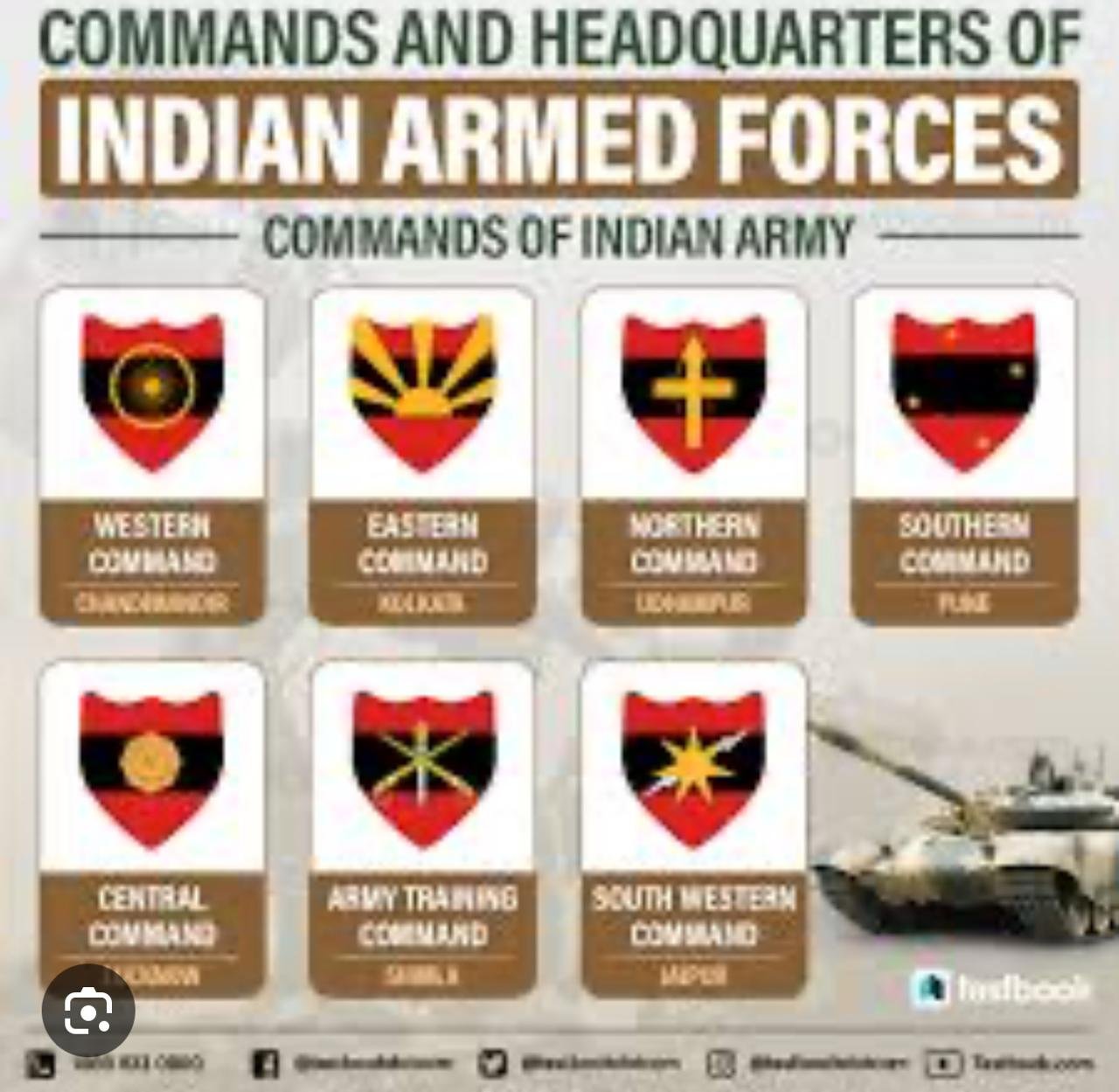
The 9th Gorkhas consist of Brahmins, Thakuris and Chhetris; and Rais and Limbus of east Nepal join 11 Gorkhas. The other five regiments recruit mainly Magars and Gurungs from central and western Nepal. Initially, only Gorkhas from Nepal were recruited; this was changed around 1975 to 70 per cent from Nepal and 30 per cent from the Indian-domiciled Gorkhas (IDG).

In the 1990s, the proportion was changed further to 60:40, whereas Gorkha officers have been recommending reverting to 70:30 as the quality of IDG was below par. The fear is that the government wishes to make it 40:60, devaluing the foreign asset.

The quality of IDG has been a continuing problem. While better educated, they lack the spirit, tenacity and mountain craft of their cousins from the north. More recently, the numbers required to fill the 40 per cent quota were not forthcoming despite some relaxation in standards. In 2015, to prove a political point to Nepal’s Communist parties which are periodically threatening to stop recruitment, the then Army Chief, Gen Dalbir Singh, ordered the raising of a new all-IDG battalion — 6/ I Gorkha Rifles. The current drought of IDG — in both numbers and quality — though puzzling, may not be a short-term problem.

The existing deficiencies in some Gorkha regiments are a serious handicap, given the challenges on the LAC and LOC. It is surprising the MoD did not sanction the quick and easy solution: a two-year reprieve for increasing the Nepali quota from 60 to 70-80 per cent. This would make good the shortfall, instead of by inducting Kumaonis and Garhwalis into Gorkhas, especially when the new DMA is headed by the CDS, Gen Bipin Rawat, a second-generation Gorkha officer. That is, unless curtailing recruitment from Nepal was being used to counter Kathmandu’s cartographic aggression. But relations with Nepal seem to be on the uptick now.

Acknowledging in 2014 the vital Gorkha connect in Nepal’s parliament, Prime Minister Narendra Modi said: no war has been fought by India in which Nepali blood has not been shed. The Gorkha network in Nepal is a million-strong, including the ex-servicemen’s extended families that cherish and foster this bonding. You have to visit Pokhara, the hub of the Indian Gorkha ex-servicemen, to feel their infinite linkages with India displayed while commemorating battle honour days.

They are India’s ambassadors in Nepal’s nook and corner; even facing flak from their compatriots when India-Nepal relations nosedive due to incidents like the economic blockade or the maps row. Regimes may change in Nepal but the Gorkha-India bonding will survive and thrive. Former Indian ambassadors to Nepal acknowledge that the Gorkha connect is one of the foundational pillars of bilateral relations, especially when political and diplomatic channels weaken.

In 1974, a nutty proposal emanated from the Indian Embassy in Kathmandu to stop the recruitment of Nepali Gorkhas and disband the Gorkha regiments around the time Nepal had proposed the ‘zone of peace’ idea. The then PM, Indira Gandhi, on the recommendation of Army Chief Gen Gopal Bewoor, a Gorkha officer, rejected it.

In 1915, in a war document, Gen Sir Ian Hamilton, not from any Gorkha regiment, wrote: “The fame of Gorkhas will never die. And if any politician of the hereafter dreams of disbanding their cadre or changing their number or any other like atrocity, may the perusal of this document paralyse his sacrilegious hand.”

Today, 115 years later, Hamilton’s warning remains relevant. The MoD should order a temporary reversion to the 70:30 policy of recruitment to avoid changing the DNA of Gorkha regiments.


Pak caught in maze of legality over Gilgit

For CPEC to succeed, Gilgit-Baltistan has to be a full-fledged province of Pakistan, with three seats in each House to reflect Gilgit, Diamer and Baltistan divisions. Yet, if it does so, Pakistan virtually ends the Kashmir dispute, by which it claims the whole of Kashmir as one entity that should decide its own future.

Pak caught in maze of legality over Gilgit

STRATEGIC POSITION: The CPEC enters Pakistan in Gilgit-Baltistan, and any trouble in this area will hit the entire $60-billion economic corridor. Reuters

Tara Kartha

Former Director, National Security Council Secretariat

It is probably not going to be a happy new year for Gilgit-Baltistan (GB). That region, however, may well hold the key to the future in 2021 for Pakistan internally, for India-Pakistan relations, and certainly, for the China Pakistan Economic Corridor (CPEC) that passes through it.

At present, neither part of Pakistan nor separate from it, given the iron grip of the military, its status as the last truly colonial set-up seems about to it change, as Pakistan readies itself to give the area a full provincial status, thus doing the very changing of borders that it accuses India of. There’s also more to come that threatens to overturn the fragile area into a legal minefield.

Recent reports indicate that Prime Minister Imran Khan has constituted a 12-member committee to make recommendations for turning GB into a province with federal secretaries of defence, foreign affairs, finance and others, including the Attorney-General, as part of it. The committee is chaired by Minister of Kashmir Affairs Amin Ali Gandapur, a rather colourful politician who once threatened a missile attack against any country that supports India. It is his task to allot Pakistan territory that at present lies wholly outside its constitutional ambit.

In simple words, turning Gilgit Baltistan into a province will require a constitutional amendment, which means agreement in two-thirds of both Houses in Parliament. The ruling party at present has a slender majority. The committee is to consider the issue through the lens of the UN Resolutions on Kashmir as well as a strange Supreme Court order that extended its jurisdiction to a territory that is not part of Pakistan. It’s all inextricably complicated.

Many wonder why Pakistan is considering this legally challenging task when it already has GB by the throat. Under the guise of giving it more powers, Islamabad had passed the Gilgit-Baltistan Order 2018 which effectively reversed some marginal freedoms granted earlier by removing an entire tier of government and remanding the powers to the Prime Minister. This created protests across party lines, with this being called an ‘Emperor’s Ordinance’ and subsequent appeal to the Supreme Court.

The court on January 17 opined that the Pakistan government could not change the status of the area, harking back to the ‘principled position’ of the government on the Kashmir dispute. In another twist, the court then allowed Islamabad to hold General Elections in GB anyway, which led India to issue a demarche to a senior diplomat in Delhi, stating that GB was, in fact, a part of the Indian territory. It’s all a little like spaghetti, with a great many entangled strands. And in the middle of it all are the unfortunate people of GB.

Now it seems that the Centre has decided to move the Frontier Corps, Pakistan’s primary paramilitary force, to Gilgit-Baltistan to ‘protect the forests’. The Prime Minister is reportedly personally monitoring this move apparently against the timber mafia operating for decades in the area. Who is going to pay for this deployment is unclear, though it would seem that GB would have to dip into its pocket since the administration, which is remote-controlled from Islamabad, ‘sought help’ for the problem.

Social media is accusing Islamabad of turning the state into a garrison. That suspicion is not without basis. After all, this is a government which has decided to build a wall around Gwadar that will check its own population from going in. If it can do this on legitimate Pakistan territory, it can do almost anything else in its colony.

The reason for this hurrying is not hard to fathom. First, the announcement of making GB into a province happened just before elections. As veteran diplomat Sartaj Aziz observed recently, realisation dawned that the move would be a win-win for the ruling party. Expectedly, they turned to the Army Chief, who together with the ISI chief, Lt Gen Faiz Hameed, had the now famous secret meeting with major party leaders and persuaded them to come on board. Apparently, the leaders naively agreed, with the caveat — clearly an army idea — that the actual legislation should be after the elections.

Unsurprisingly, the PTI won the elections, which in any case shows little. As local reports indicate, despite the noisy electoral exercises, the people remain voiceless and powerless. Despite the mighty Indus flowing through their territory, electricity is a scarce commodity, as is the Internet.

There is a second and more important reason for all this activity. The all-important CPEC enters Pakistan in GB, and any serious trouble in this highly strategic area will hit the whole $60-billion CPEC. In addition, is the geographic importance of the area. There are plans to build connectivity to Tajikistan, while recently Pakistan announced the seeking of a loan of $4.8 billion for international financial institutions for setting up a railway track through Afghanistan to the Central Asian connectivity node in Uzbekistan.

This follows hard on the heels of India also courting Uzbekistan for connectivity through Chabahar. With Russia also apparently on board on this exercise, its academics have been roped in to sell Pakistan as a pivot to being the ‘Zipper of Eurasia’, a rather curious term, considering how quickly Pakistan tends to unravel. For CPEC to succeed, however, GB has to have a modicum of legal stability. No project that wants its bank guarantees will take off unless GB’s archaic laws are changed to match the mainland, that it is not yet a part of.

For CPEC to succeed, GB has to be a full-fledged province of Pakistan, subject to the same laws, and with at least three seats in each House of Parliament to reflect its three divisions of Gilgit, Diamer and Baltistan. Yet, if it does so, then Pakistan virtually ends the Kashmir dispute, by which it claims the whole of Kashmir as one entity that — according to its ‘principled position’ — should decide its own future. The probability is that GB will be given only a ‘provisional’ constitutional status, but that’s legally questionable. Will the votes of the three members be ‘provisional’?

Meanwhile, India is likely to be kept busy as Pakistan makes its way through this maze of legality to gulp up territory it never had or legally claimed in the first place. In comparison, the setting aside of Article 370 is a mere constitutional whisper.


To fuel stir, ex-Army man foots diesel bill

To fuel stir, ex-Army man foots diesel bill

Goldy Manepuria, ex-army man

Ravi Dhaliwal

Tribune News Service

Dhariwal (Gurdaspur), January 4

Cash-rich Punjabis and NRIs of Majha have propped up a Gurdaspur-based ex-Army man as their frontman to anonymously pump in massive doses of funds to sustain the farmers’ agitation.

Goldy Manepuria, Ex-army man

Tie-up with stations

I have tied up with almost all fuel stations on the 120-km highway. Whenever a tractor needs diesel, all owner of the pump has to do is call me and I deposit the money in his account.

Goldy Manepuria has also, rather inadvertently, sparked off a Twitter spat between actor Swara Bhaskar, who praised his efforts, and a TV news anchor, who called him “a fake Army man” and asked the Army to check his credentials. Hailing from Manepur village, Manepuria is the go-to man for farmers travelling to the Capital. He ensures that every tractor-trailer gets fuel from petrol pumps located on the Pathankot-Gurdaspur-Batala national Highway. The onus of picking up the tab is on him.

“I have tied up with almost all fuel stations on the 120-km highway. Whenever a tractor needs diesel, all owner of the pump has to do is call me and I deposit the money in his account,” said Manepuria. Ever since December 16, when the first tractor was refueled, the man has made a Dhariwal-based pump his home. He is aided by Kanwalpreet Singh and Gurpreet Singh.

He says the maximum rush was seen on December 24 and 25, when farm leaders had given a call that 250 trailers from Majha should reach Delhi. On all other days, 60 to 80 vehicles on an average are provided diesel.

“We spend Rs 4,500-Rs 6,000 on fuelling one tractor. Most of the protesting peasants have small landholdings. I myself own just two acres…I can feel the pain of my brethren. The purpose of life is not to be happy. It is to be useful, to be compassionate. Members of my community are sitting there in biting cold. To me, a community is like a ship. Everybody ought to be prepared to take the helm,” he said. He is not willing to reveal the names of his benefactors “because they themselves want to work incognito”. Manepuria said he was livid when the TV anchor cast aspersions on him. “I uploaded a video informing him that I have served at the China border in freezing cold. I also invited him to leave the comfort of his TV studio and brave it out with my brothers in Delhi,” he added.


Trust offers free education to deceased farmers’ kids

Trust offers free education to deceased farmers’ kids

Photo for representation only. – File photo

Sangrur, January 4

Acknowledging that financial aid given by the government was insufficient for the families of all deceased farmers, members of the Sant Attar Singh Gursagar Mastuana Trust have decided to provide free education to all children of the deceased and extend other help also.

The trust runs various institutes to provide education in pharmacy, physical education, computer science, management, science, arts and commerce. It also runs an academy affiliated to the CBSE till Class XII.

‘Centre must help’

  • SGPC president Jagir Kaur on Monday said the Modi government should give the status of martyr as well as compensation to the families of all those who lost their lives during the farm agitation

“The farmers, who lost lives during the agitation, are our martyrs as they have laid down their lives to save the farming of Punjab. We have decided to provide free education and all possible help to their families,” said Lehra MLA Parminder Dhindsa, who is a trust member and former minister. His father and Rajya Sabha MP Sukhdev Singh Dhindsa is the chairman of the trust.

Parminder today visited Lidhran village and met the family of Shamsher Singh who died at the Delhi border on Sunday. Since Lidhran is near Mastuana, the trust has announced giving a job to the next of kin apart from providing free education and other financial help.

“Around 20 children of farmers, who committed suicides due to debt, have been studying for free here. Our members will visit the families of deceased farmers in the coming days to make them aware of the free education here,” said Jaswant Singh Khaira, secretary of the trust. — TNS


Congress offers aid to kin of farmers who died during stir against agri laws

Congress offers aid to kin of farmers who died during stir against agri laws

eader of Opposition in Haryana Assembly and former Chief Minister Bhupinder Singh Hooda. File Photo

Chandigarh, January 4

Haryana Leader of Opposition Bhupinder Singh Hooda on Monday said the Congress Legislature Party would provide a financial assistance of Rs 2 lakh each to families of farmers who have died during the agitation against the Centre’s farm laws.

Hooda said all Congress MLAs would make efforts to help the families.

The former Haryana Chief Minister also demanded from the state government to provide financial help and government job to a member of the each family.

He said it was the responsibility of the government to do so as people had lost their lives because of its stubborn attitude and insensitivity.

“In such a situation, the government should come forward to help the affected families without delay. If the present government does not do this, then this work will be done whenever the next Congress government is formed,” said the Hooda.

During the ongoing agitation at the borders of Delhi, many farmers have lost their lives. PTI


Using dung cakes, ‘desi’ geysers bring relief in biting cold at Tikri

Using dung cakes, ‘desi’ geysers bring relief in biting cold at Tikri

 farmer uses a geyser at the Tikri border. Tribune Photo

Parvesh Sharma

Tribune News Service

Sangrur, January 3

The indefinite protest of farmers at the Delhi borders has seen many firsts, including the optimum use of ‘desi’ geysers, manufactured in Punjab with little expertise.

It is the first time that a ‘desi jugad’ has got such a huge response as a majority of people are getting hot water from these self-made machines, which deliver 14 liters of hot water with around 2 kg waste, including papers and empty plastic bottles and two-three dung cakes.

“Our desi geysers are the only source of hot water in this biting cold. They are running round the clock and delivering hot water to thousands of farmers,” said Rampal Sharma, a BKU (Ugrahan) leader from Sangrur district. Sharma has been at the Tikri border since the start of the agitation.

Along with ration, warm clothes and making all arrangements in their modified trailers, some farmers had taken these geysers with them. But once they realised that their Delhi protest would not end soon, many called up their families and got delivered more geysers to the Delhi border.

“I have participated in many agitations earlier, but it is the first time that I have seen the use these geysers in such a huge number,” said Jaswant Singh, a farmer at the Tikri border.

Apart from families of farmers, many NGOs are also sending the geysers in large numbers as they know that hot water is the basic need these days.

“Since its manufacturing is cheap and our inexpert mechanics are also manufacturing these, we have enough machines now. Anyone can take them as per his requirement from our stock for free,” Gobind Singh, another farmer, said.


One-size-fits-all policy can be self-defeating

There are diverse agro-ecologies in the country. Thus, states are in a better position to design and implement policies tuned to their strengths and weaknesses. The implementation of a uniform policy across the nation, ignoring resource endowments and agro-ecologies of the states or regions, may be counterproductive. States should be allowed to levy taxes on the trade of agricultural produce outside the APMC markets as well.

One-size-fits-all policy can be self-defeating

Baldev Singh Dhillon and Kamal Vatta

THREE farm sector-related Acts, passed by Parliament in September, claim to create an ecosystem to provide freedom to farmers and traders to trade, and empower the farmers to engage with agri-business firms and other players of agricultural value chains by providing a national framework for mutual agreements and reducing excessive regulatory restrictions on private business operations by removing basic food items from the list of essential commodities.

Photo: istock

There are divergent views about their implications for the agriculture sector, especially Punjab. Some claim that the laws will make markets more efficient, increase competition, strengthen agri-value chains and benefit farmers, whereas others argue that the farmers may ultimately lose due to the increase in market power of traders and corporates, and through dismantling of the MSP regime and public procurement of foodgrains. The state may also suffer loss of revenue from market fee and cesses, which may adversely affect agricultural infrastructure and other public expenditure on agriculture and rural development.

Photo: istock

Punjab Agricultural University, Ludhiana, recently organised a webinar on ‘Farm Sector Laws and their Implications for Punjab Agriculture’ to examine the claims regarding these laws, their timings, effect on market power, state autonomy, MSP and public procurement, impact on small farmers and the way ahead for the state. The discussion focused on understanding various aspects of the laws and their implications for Punjab’s economy. There was a general agreement that the laws were enacted in haste and there should have been broader consultations with the states, farmers and other stakeholders. Agricultural policies should be the state’s prerogative because agriculture is not only a state subject but there is also great diversity in agro-ecology of India.

Some arguments that MSP and public procurement benefit only 6 per cent of the farmers in India and this entails huge financial outlay are also misplaced. The outlay is nothing when compared to the tax and other economic benefits given to the big corporates in India. Nearly 60 per cent of the rural population largely earns about 16 per cent of gross value added in Indian agriculture, which indicates gross inequality in income distribution between agricultural/rural households and others. Hence, our efforts should focus on enhancing income/profit of the remaining 94 per cent farmers, while the new developments emphasise on eroding the livelihood of 6 per cent of the farmers, who are receiving MSP backed by public procurement.

The widening inequality between the rich and the poor can be gauged from the fact that half of the 100 richest Indians increased their wealth by 14 per cent, amounting to $63.5 billion, even during the Covid-19 period. One is forced to think why no steps are being taken to redistribute the income from the rich to the poor and the focus is on the so-called rich farmers (6 per cent), who are in fact poor as compared to those in other sectors, what to say of corporate houses.

The assumption of improvement in market efficiency through these laws may be misplaced for in Bihar, where the APMC markets were absent and foodgrains were sold through private traders, there were no economic gains as the farmers were unable to sell at MSP.

There are theoretical expectations that the new laws will facilitate crop diversification through the entry of private trade and provide better prices for crops. If it is so, then why has it not happened in the case of crops other paddy and wheat? The market prices of an important alternative crop, maize, were substantially lower at Rs 700-1,000 per quintal than the MSP of Rs 1,850, even when the ordinances were issued or the laws were enacted.

Crop diversification requires MSP backed by assured marketing for alternative crops or adequate compensation to the farmers for any loss due to crop shifts. This will also require better research in markets, establishing industries, and developing value chains and post-harvest infrastructure. These require large investments and a long gestation period.

The following key recommendations emerged from the webinar:

  • In agriculture, the views of states should prevail as agriculture is a state subject. There is an open divergence of views of the Central government and those of some states, which needs to be avoided in the larger national interest.
  • There are extremely diverse agro-ecologies in the country (consider the cropping system in three adjoining states: Himachal Pradesh, Punjab and Rajasthan). Thus, states are in a better position to design and implement policies tuned to their strengths and weaknesses. The implementation of a uniform policy across the nation, ignoring the resource endowments and agro-ecologies of the states/regions, may be counterproductive.
  • As verbal and written assurances are being given on the MSP’s continuation, there should be no roadblock to legalising it.
  • There should be a policy to narrow down the inequality between agricultural and non-agricultural sectors by generating income opportunities and raising income levels of farmers rather than providing a platform and a free hand to the corporate houses to flourish at the cost of poor farmers.
  • The loss of state revenue on account of abolition of market charges may adversely affect infrastructure development in agriculture and rural areas. Thus, the state should be allowed to levy taxes on the trade of agricultural produce outside the APMC markets also.
  • The laws must have adequate safeguards for the farmers and the government should explore quasi-judicial forms of dispute settlement rather than leaving it to the bureaucracy.
  • The Covid-19 pandemic has demonstrated the importance and role of public sector R&D institutions. Therefore, agricultural R&D will require huge financial resources to cater to the needs of the changing times and remain relevant.
  • Farmers should be compensated for ecosystem services and conservation of natural resources resulting from the adoption of sustainable farming practices as these may cause a fall in profits.
  • There is a need to create viable farm and non-farm income avenues for the rural poor so that their current level of livelihood/profits are not adversely affected. It must be ensured that their vulnerability is not aggravated under the new marketing regime.

The authors are Vice Chancellor and Head, Dept of Economics & Sociology, respectively, PAU, Ludhiana


Assured MSP is the key

Assured MSP is the key

Photo for representational purpose only

Sanjeev Singh Bariana

LEGALISING the Minimum Support Price (MSP) recommended for all 23 crops by the Commission for Agricultural Costs and Prices (CACP) is the best way to boost the farmers’ income, according to experts. The uncertainty over assured payment on their crop yields is one of the major reasons for the ongoing farmers’ protests against the new farm laws.

Assured MSP on all crops will give farmers freedom to grow other crops besides wheat and paddy. In Punjab, this choice will provide relief to the underground water reserves that have dwindled due to paddy plantation. Leading farm economist Prof SS Johl has been repeatedly saying that at the current rate of water usage, particularly for paddy, Punjab could go dry within 25 years. “Our groundwater level is falling at the rate of about 20-25 cm each year and farmers don’t get an assured price on most of their crops. How can you ask them to quit planting paddy,” he asks.

Agri expert Devinder Sharma says, “Privatisation of agriculture has failed in the US, Canada, Europe and China. India is no exception; so, unless the ground reality of farmers’ costs and returns is not made a part of the agriculture policy, the farming sector will not thrive.”

Besides paddy and wheat, the CACP has also recommended MSP for cotton, chana, masur, mustard, sugarcane and jute. A progressive farmer, Maninder Singh Gurm, says, “The MSP, by definition, is the minimum justifiable price that is offered to the farmer. It is supposed to be 25 per cent above what he spends. The Swaminathan Commission wanted this to be raised to 50 per cent.”

On the impact of lack of assured MSP, Gurdeep Singh, a farmer from Bathinda district, says, “In the absence of MSP, our government imports maize, oilseeds and other products. If our crops get assured prices, we can grow more of them and become self-sufficient.”

Currently, maize grown during February-March goes for as low as Rs 800-900 per quintal against the MSP of Rs 1,850. Sunflower sells for Rs 3,500 per quintal against the MSP of Rs 5,885, he adds.

Gurm says: “Besides a legal provision for MSP, the government needs to make MSP the benchmark for the price of the crop. No one, including the private sector, should be allowed to purchase below the MSP. This will safeguard the interests of farmers as well as consumers.”

Agri economist Prof SS Gill recently argued that if the government also started buying crops other than wheat and paddy at MSP, through its own agencies or aligning with the private sector, farmers would be benefited.

The government’s target of doubling farmers’ income by 2022 is meaningless, says Devinder Sharma. “There is no scientific basis to work out the average of a farmer’s income today, so what will get doubled? No single formula can give the correct figures for farmers’ earnings in a country where 85 per cent of them have less than four acres each,” he adds.