Sanjha Morcha

Army halts monetisation of defence land plan amid Covid-induced real estate slump

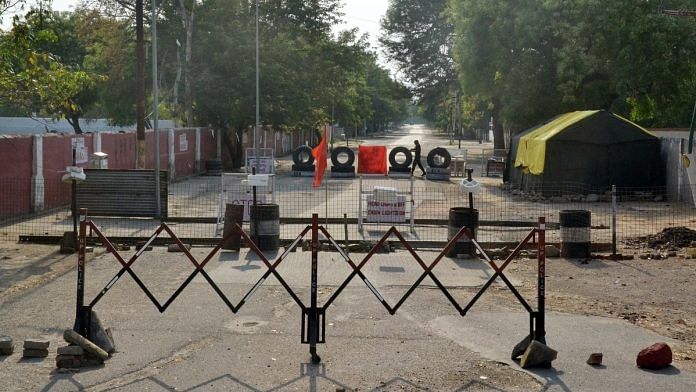
Representational image. A file photo of the cantonment in Agra. | Photo: ANI

Representational image. A file photo of the cantonment in Agra. | Photo: ANI

New Delhi: The Army has put on hold the monetisation of defence land, given that real estate prices have dropped due to the coronavirus pandemic, and will move ahead as soon as the situation improves, Army chief General M.M. Naravane said Tuesday.

Describing the land monetisation plan as a good way to beat the budgetary constraints, the general said the step will help all three armed forces and not just the Army.

Speaking at the annual press conference ahead of Army Day, Gen. Naravane also hoped that the armed forces will get additional money to go ahead with modernisation plans in light of the continuing stand-off with China in Eastern Ladakh.

“As far as land monetisation is concerned, there has been a lot of progress. We have got permission for equal value infrastructure. We will go ahead with the monetisation of land. But because there is a Covid situation, land prices have also fallen. Hence, we are waiting. As the situation improves, we will move it forward,” he said.

In October 2020, the Narendra Modi government paved the way for a number of stalled public projects to take off by approving new rules that allow equal value infrastructure (EVI) development for armed forces in lieu of the land procured from them.

Under the new rules, eight EVI projects have been identified, which the acquiring party can provide infrastructure for in coordination with the service concerned.

The Ministry of Defence is the biggest land-owner in the country and, according to the Directorate General, Defence Estates, the ministry has about 17.95 lakh acres of which about 16.35 lakh acres are outside the 62 cantonments in the country.

Gen. Naravane said the new scheme is an important step and will be good for the three services since unused land like old camping ground and land belonging to now-dismantled military farms can be traded for creation of EVI.

“A lot of budgetary constraints will also go away,” he said.


Also read: How Army’s artillery modernisation plan, stuck in a rut after Bofors, is picking up pace


Budget and modernisation

The Army chief said that the force works according to the long-term integrated plans.

“Depending on the situation and budgetary allocations, these priorities keep changing. And we make whatever changes that need to be made on the modernisation plans,” he said.

He noted that while all ministries were told that instead of 25 per cent expenditure every quarter, only 20 per cent had to be spent, no restrictions were placed on the defence ministry.

“We are hopeful that at the Revised Estimates stage, and have full belief, that we will get, especially in revenue expenditure, more funds so that the more work that needs to be done is completed,” he said.


Also read: Border tensions a challenge to defence resources, but govt will ensure success, Rajnath says


‘Even I am under stress’ — Army chief jokes as he junks ‘soldiers under pressure’ report

Gen M.M. Naravane questions the sample size of the study by tri-services think tank USI that said over half of the over 13-lakh-Army personnel ‘seems to be under severe stress’.

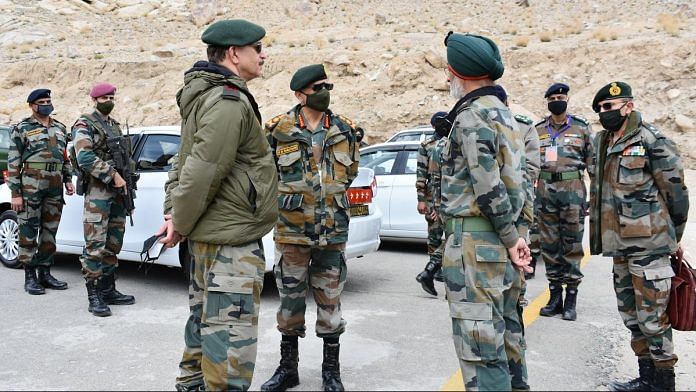
File photo of Army Chief General M.M. Naravane at Leh to review security situation and operational preparedness along the Line of Actual Control in Eastern Ladakh | Photo: Twitter/@adgpi

File photo of Army Chief General M.M. Naravane at Leh to review security situation and operational preparedness along the Line of Actual Control in Eastern Ladakh | Photo: Twitter | @adgpi

New Delhi: Army chief General M.M. Naravane Tuesday junked a study published by the tri-services think tank United Service Institution of India (USI), which said more than half of the over 13-lakh-strong Indian Army personnel seem to be “under severe stress”.

Asked about the USI study that created a storm in the defence circles, but was taken down later, Naravane said in a lighter vein: “Even I am under stress.”

The Army chief questioned the report over sample size and representation.

“I have read this report. I will say that the sample size was only 400. And I understand this is not an adequate sample size. If you want a 99 per cent accuracy with 1 per cent margin of error, then for such a study, 19,000 samples should have been taken. And for 95 per cent accuracy, it will come down to 7,000-8,000 sample size,” he said.

Highlighting that a sample size of 400 can’t accurately assess the stress factor, he said, “Maybe there is stress. Even I am stressed. But stress is not always a bad thing. Stress can also result in good work”.

He added that the Army has taken a number of steps to address concerns over stress, and also issued multiple advisories.

“We have taken into consideration what all factors can be there. For example, somebody might not be able to produce children, someone might not be getting married, someone’s child is in 12th, it also leads to stress about whether he/she will pass or not and whether the child will get admission or not. Some are stressed about their child’s marriage,” said Naravane.

“We have analysed all these factors and keeping this in mind, the company commander and the commanding officer keep talking to people in that category and try for solutions,” he said.

The Army chief added that suicide cases in the force, according to his information, are falling on an annual basis. “My facts and figures are that suicide figures have actually (come) down year on year,” he said.

There have been over 1,100 cases of suicide among various ranks since 2010.


Also read: Army halts monetisation of defence land plan amid Covid-induced real estate slump


The study in question

According to the USI study, the Army lost more personnel every year due to suicides, fratricides and untoward incidents than in response to enemy or terrorist activities.

The study — by a serving Colonel — and its summary was published on the think-tank’s website last month. However, it was removed on 8 January when it gained traction.

Some of the major organisational causes of stress among Army officers were identified as inadequacies in the quality of leadership, overburdened commitments, inadequate resources, frequent dislocations, lack of fairness and transparency in postings and promotions, insufficient accommodation and non-grant of leaves.

The main organisational stress factors, as perceived by Junior Commissioned Officers/Other Ranks, were delay and denial of leaves, excessive engagement, humiliation by seniors, lack of dignity, zero error syndrome, unreasonable restrictions on the use of mobile phones, poor quality of ration and cooked food, besides lack of recreational facilities and conflict with seniors as well as subordinates.


Also read: Ready to hold ground in eastern Ladakh ‘for as long as needed’ — Army chief Gen Naravane


Army looks to cut troops deployed on internal security duty in Northeast, but not in J&K

Army chief Gen.M.M. Naravane says situation in Northeast, especially Nagaland, has significantly improved, which could see more troops being pulled out from the region.

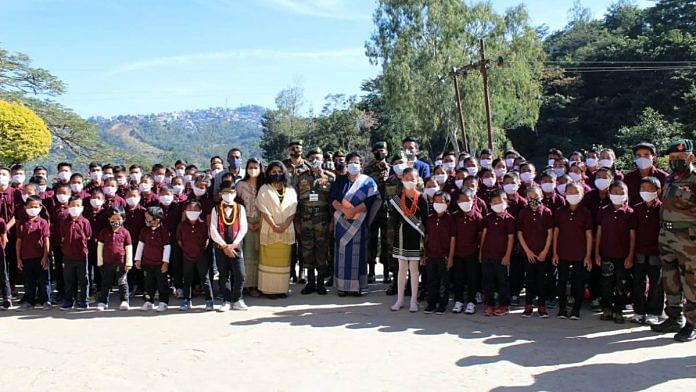
Chief of Army Staff General M.M. Naravane during the inauguration of a new residential facility at Kohima Orphanage, in Kohima, Nagaland, in November 2020 | ANI File Photo


hief of Army Staff General M.M. Naravane during the inauguration of a new residential facility at Kohima Orphanage, in Kohima, Nagaland, in November 2020 | ANI File Photo

New Delhi: The Army is planning to gradually reduce the number of troops deployed for internal security duties in the Northeast, but is not contemplating moving soldiers out of Jammu and Kashmir because of the prevailing terror situation in the Union Territory, Army chief General M.M. Naravane said Tuesday.

Addressing the media ahead of Army Day on 15 January, General Naravane said that while terror continues unabated in J&K, the security situation in the Northeast has improved manifold. As a result, the Army has already pulled out one of its brigades from the region and now plans to move out another one or two in the near future.

With this, the Army will be able to concentrate on its primary duty of conventional war fighting, he said.

“As far as internal security duties are concerned, terror continues unabated in J&K, although the situation in the hinterland has improved somewhat. We have not yet reached a level where we can contemplate moving troops out of the UT of J&K,” he said.

He added that the security situation in the Northeast has improved.

Now, concerns remain only in three districts of Arunachal Pradesh. In Nagaland, the Army chief said he hopes the National Socialist Council of Nagaland-S.S. Khaplang (NSCN-K), which is not part of the ceasefire agreement, will rejoin the ceasefire process with the surrender of its top leadership, making the state violence-free again.

He added that there is no violence in Mizoram, only one or two groups are involved in Manipur, and most of Assam is quiet.


Also read: ‘Even I am under stress’ — Army chief jokes as he junks ‘soldiers under pressure’ report


Not a first

This is not the first time that the Army chief has spoken about withdrawing troops from the Northeast.

In January last year, while interacting with a small group of journalists, he said the region was going through a transitional phase and the Army had drawn up a plan to increasingly withdraw troops deployed there for counter-insurgency and counter-terrorism operations.

He had then said two battalions of troops, or around 2,000 soldiers, have already been withdrawn from the Northeast and the same could be replicated in Kashmir in the future given that the long-term focus of the Army remains conventional war-fighting, as against the short-term and immediate goals of being involved in counter-insurgency and counter-terrorism operations.


Also read: Army halts monetisation of defence land plan amid Covid-induced real estate slump


One brigade out, a few more could follow

General Naravane said the overall situation in the Northeast has improved by leaps and bounds for the last one or two years, both due to the efforts of the security forces (the Army, the Assam Rifles and the state police forces) as well as various initiatives taken by the government.

“As a result of this, we have carried out reassessment of our commitment in internal security and one brigade has already been pulled out,” he said.

He added that the Army was awaiting the successful conclusion of the Bodoland Territorial Council election, which was held in December 2020.

“Once that stabilises, we will be able to pull out further — at least one or two more brigades, and with that, hand over the law and order situation to the state police apparatus and other CAPFs,” he said, adding that the Army will then be able to concentrate fully on its primary task, which is to deal with external threats.

He, however, mentioned that certain emergent requirements keep coming up, especially in aid to civil authorities and Humanitarian Assistance and Disaster Relief (HADR) operations, for which the Army has to step up and be available. He cited the recent example of a forest fire in Dzukou range in Nagaland.


Also read: Ready to hold ground in eastern Ladakh ‘for as long as needed’ — Army chief Gen Naravane


US-based NRI sends dry ration for farmers

US-based NRI sends dry ration for farmers

Coming out in support of protesting farmers, US-based NRI and social worker Darshan Singh Dhaliwal has sent many trailers of dry ration to Delhi borders. File photo

Patiala, January 11

Coming out in support of protesting farmers, US-based NRI and social worker Darshan Singh Dhaliwal has sent many trailers of dry ration to Delhi borders.

Hailing from Patiala, Singh said farmers needed the support to continue the ongoing protest against the farm laws. “Every time, people of Punjab face a problem, we have always come out in support. This time also, we have sent dry ration for farmers protesting at Delhi borders,” Dhaliwal said. He said he himself would be protesting at Delhi borders along with the farmers. Meanwhile, Akali Dal leaders said they had erected waterproof tents for the farmers so that they did not face any problems during the protest. — TNS


Cyclothon marks golden jubilee year of Indo-Pak war

Tribune News Service

Amritsar, January 10

http://

With the 1971 Indo-Pak war entering its golden jubilee in 2021, the Army, along with the BSF, organised a programme, as a part of the ongoing ‘Swarn Vijay Varsh’ to celebrate India’s victory over Pakistan.

Besides, honouring the war veterans and kin of martyrs at the Punjab State War Memorial and Museum, a cyclothon was also flagged off by BSF DIG Bhuphinder Singh. Officers, as well as children of the Army and the BSF officers participated in the cyclothon, from the Attari border to the war memorial.

Seven 1971 war heroes and the next of kin of the martyrs joined the wreath laying ceremony.

Major General Raju Baijal, recipient of the Sena Medal, said the event also marked the formation of East Pakistan as the new nation of Bangladesh. “The occasion marked the brave deeds of our soldiers who sacrifised their lives in the service of the nation,” he said.

Col HP Singh (retired), general manager of the memorial, said, “The memorial is the apt place to pay tributes to the soldiers of the war. An original Patton tank that was captured from Pakistan forces is also stationed here, and there is a full-fledged gallery erected at the memorial,” he said.

Brigadier Joginder Singh Jaswal (retired), recipient of the Vir Chakra and the Sena Medal, who was a part of the 1971 squad, also showed solidarity with the farmers, who were protesting against the farm laws.

“Constitutional dictatorship is prevailing at the Centre, worse than that at the time of the Emergency during the regime of Indira Gandhi. The farmers have been braving the adverse weather conditions. The former servicemen too face discrimination. They have been fighting to get one rank-one pension (OROP) for the past five years, but in vain. Similarly, many facilities given to the veterans have also been withdrawn. Taxes have been imposed on canteen facility,” he said.


Time for breakthrough Leave it to states to accept, modify or even reject farm laws

Time for breakthrough

Photo for representational purpose only

Nothing is gained any longer from weighing the rights and wrongs of the farm laws; it is time for a breakthrough. The losses to Punjab, Haryana, western Uttar Pradesh and private and government enterprises like the railways are mounting day by painful day. Punjab Government officials claim that the state could have incurred a loss of Rs 4,500 crore during the ongoing agitation. The loss of lives (60, according to certain accounts) among the agitators in the coldest months of this particularly harsh winter; the three who have committed suicide; and those elderly who brave the elements are all pointers to the human suffering involved in the agitation. Equally miserable are those whose lives and livelihoods have been disrupted due to the blockade. Thursday’s tractor march on the Kundli- Manesar-Palwal Expressway forewarnsof Delhi being cut off from Punjab, Haryana, Chandigarh, parts of Himachal Pradesh and western Uttar Pradesh. This is a crisis and the government is badly mistaken if it plans to wear the farmers out. That is no plan.

The meeting of Baba Lakha Singh of Nanaksar Gurdwara with Agriculture Minister Narendra Tomar is a welcome move. The Baba says he has been serving the protesters langar at the Delhi border and knew the fellow priest from Karnal of the Nanaksar sect, who took his life to express solidarity with the farmers. The BJP’s Kisan Morcha seeking out the Akal Takht Jathedar, its religious symbolism notwithstanding, is a promising signal because the Centre ought to pause and let the state governments decide whether they want to notify the farm laws and implement them. Agriculture is a state subject and it should remain so. The Centre has a responsibility to give direction and to push the nation towards prosperity by framing model laws on state subjects; but then it should leave it to the people, particularly the state governments, to accept, modify or even reject the proposals.

A well-intentioned proposal will surely get the people’s acceptance in due course of time. Meanwhile, good governance is all about finding solutions, however intractable the situation is. Let there be governance.


Amshipora encounter case: Army says it has no system of cash rewards for its personnel

Amshipora encounter case: Army says it has no system of cash rewards for its personnel

Photo for representation. — iStock

Srinagar, January 11

The Army on Monday denied that its captain, who is facing the allegation of a fake encounter in Amshipora, was “driven” by a Rs 20-lakh reward for killing terrorists, saying there was no system of cash rewards for its personnel for any acts in combat situations or otherwise in the line of duty.

The brief statement was released by Srinagar-based defence spokesperson Col Rajesh Kalia.

“There are media reports quoting that Amshipora encounter actions were driven by a Rs 20 lakh award for the killing of terrorists. It is clarified that the Indian Army has no system of cash awards for its personnel for any acts in combat situations or otherwise in the line of duty,” the statement said.

It said the reports are “not based on facts of the processes internal to Indian Army”.

Three youths, who were dubbed as terrorists, were killed in the alleged fake encounter in July last year.

However, the Special Investigation Team constituted by the Jammu and Kashmir police to probe the incident stated in its charge sheet that “by staging the encounter” the accused Capt. Bhoopinder Singh and two other civilians—Tabash Nazir and Bilal Ahmed Lone—also “purposefully destroyed evidence of the real crime that they have committed and also have been purposefully projecting false information as part of a criminal conspiracy hatched between them with the motive to grab prize money of Rs 20 lakh”.

The army had ordered a Court of Inquiry into the incident.

The charge sheet was filed by the police before Chief Judicial Magistrate Shopian on December 26, 2020. PTI


SC threatens to stay farm laws; says situation very delicate, farmers suffering in cold, dying by suicide

SC threatens to stay farm laws; says situation very delicate, farmers suffering in cold, dying by suicide

People are suffering in cold and pandemic situation, who is taking care of water and food, says SC. PTI/File

Satya Prakash
Tribune News Service
New Delhi, January 12

A Bench headed by CJI SA Bobde on Monday took up petitions challenging the validity of the three farm laws and those seeking removal of agitating farmers from Delhi roads.

Attorney General KK Venugopal tells the top court that farmers’ organisations had rejected various offers made by the government.

The CJI said, “We are extremely disappointed the way government is handling the issue. Last four times you said negotiations are on. What negotiations are you talking about?”

“If you have some sense of responsibility, and if you say you will withhold the implementation of laws, we will form committee to decide. We don’t see why there should be an insistence that the laws must be implemented at any cost.”

“Our intention is clear. We want an amicable solution to the problem. That is why we asked you last time, why don’t you keep the laws on hold? But you keep asking for time. We are not on the merits of the law. We are not on repeal. This is a very delicate situation.”

The CJI said it will not help the government to say that the previous government started it. “We don’t know if you are part of the problem or solution,” said the CJI.

 Solicitor General Tushar Mehta said, “We are part of the solution… We have many farmers’ organisations coming to us and telling that the farm laws are progressive. Rest of the farmers have no difficulty”.

The CJI pointed out that “we don’t have any single petition before us saying that the laws are good.” He said if the laws are beneficial, let the vast majority of country tell the committee (to be set up by SC).

 The CJI threatened to stay the laws if the government did not do so on its own. “People are committing suicide. People are calling names. People are suffering in cold and pandemic situation,” said the CJI-led Bench.

Whether you have faith or not, we are the Supreme Court of India.

 “People are suffering in cold and pandemic situation. Who is taking care of water and food? Elderly people and women are on the ground. Why are the elderly at the farmers’ protest. We don’t want to comment on the agitation.”

The CJI proposed to form a committee and if government did not do so they will stay the implementation of the farm Acts.

“Whether you have faith or not, we are the Supreme Court of India. We will do our job,” asserted the CJI, after a lawyer said, “We have full faith in you.”

The CJI said: “We will stay implementation of the laws.”

“We want to make it clear we are not stifling the protest.  You can carry on with the protest.  But the question is whether the protest should be held at the same site.”

 The CJI said: “We are doing this because you have failed to solve the problem. Union of India has to take the responsibility. The laws have resulted in a strike and now you have to solve the strike.”

Attorney General KK Venugopal opposed the stay. He cited judgments to contend that there was no violation of fundamental rights or lack of legislative competence. Venugopal asserted that farmers of other states had not joined the protests.

 “Let them come and say to the committee, but don’t stay the laws,” said Venugopal.

Senior advocate Harish Salve said the government had agreed on minimum support price.

 “All areas on which they are not agreeing with the Centre can be resolved by judicial orders. The objectionable parts of law can be stayed.”

Venugopal cited bursting of crackers and ensuing Republic day celebrations to caution about potential violence from farmers.

The CJI said it was for the police to deal with the situation not the court. Courts cannot restrain peaceful protest. They cited Mahatma Gandhi’s satyagraga.

The CJI said: “We want to ensure no violence or blood bath in the streets. If somebody breaks the law you take action. The court would not break any violence.”

 The CJI said: “We should not be understood that we are protecting any law breaker. If someone breaks the law, they will face the consequences sequences. We are not encouraging breaking of law. We propose to pass this order to prevent loss of life and property.”

As Venugopal vehemently opposed any stay, CJI Bobde said, “We are still thinking. It’s equally effective if we stay the implementation of the law without staying the law.”

However, Venugopal said, “It’s the same thing.”

“We can always a stay a legitimate executive action under a law,” insisted the CJI.

“Who shall be held responsible for any bloodshed?” asked the CJI, asserting that the court had a bounden duty to protect citizens lives and properties guaranteed under Article 21 of the Constitution.

Salve, representing a Delhi-resident, said the court should have an assurance from farmers’ unions that they would go to the committee if the farm law was stayed.

Senior advocate Dushyant Dave, representing farmers’ unions, said he needed to take instructions as there were 400 farmers’ bodies involved in the agitation.

 “Don’t create an odd situation where the unions went to the government, but won’t go to the committee,” the CJI told Dave, who sought a day’s time to respond.

Salve cautioned the court against the possibility of protests getting scaled up to demand repeal of the laws following stay on their implementation.

 On behalf of the Delhi government, advocate Rahul Mehra said it was the ego of certain governments, which was not allowing a fair dialogue.

Advocate Archana Pathak Dave, representing a South Indian farmers’ body, demanded implementation of the three farm laws.

Senior Advocate Colin Gonsalves appeared for some farmers’ unions. He said: “The unions had appointed a committee of four lawyers, which had Dushyant Dave, Prashant Bhushan, HS Phoolka and me. All of us will go back and consult unions and take a stand on this.”

“If not cold, farmers are in danger of covid. If we stay the law, there is no need for farmers to be at the site, said the CJI, citing the ensuing Republic Day.

He asked senior advocate HS Phoolka and other lawyers to persuade them to go back. “At some time, we might say in the order that old people and women need not be there in the protests.”

The top court said it’s contemplating to request former CJI RM Lodha to head the committee proposed by it.

The CJI said the court will pass appropriate orders on Tuesday and hinted at the staying of implementation of the three farm laws.

Attorney General KK Venugopal wondered, “When they (farmers) go before the committee, will it be their only demand that the laws must be repealed? If they are not prepared to tell their exact grievances, the committee will not be useful.”

Solicitor General said, “Kindly remove the impression that we didn’t do enough. We gave our best. But the farmers groups have been non-cooperative during talks.”


Fighting stress in Army Recommendations need serious consideration

Fighting stress in Army

Photo for representational purpose only

The high motivation levels of the Army personnel despite harsh and challenging service conditions came shining through at a recent seminar by a leading think tank. However, the deliberations and recommendations regarding the prevailing stress levels need serious consideration. The observation that ‘more than half of the Army seems to be under severe stress… due to operational and non-operational reasons’ calls for a carefully-thought-out policy intervention and remedial measures. A shift in strategy is all the more necessary because the various stress management steps implemented during the past 15 years have apparently not been able to achieve the desired results.

The cause-and-effect list includes the prolonged exposure to counter-terrorism environment, non-combat-related reasons, inadequacies in the quality of leadership, overburdened commitments, inadequate resources and frequent dislocation. A more supportive and responsive organisational and administrative climate has been advocated. Stress prevention and management, it has been pointed out, have to be treated as a leadership role. An insightful suggestion is making government agencies and the society at large more sensitive to the peculiar service conditions and the ethos of the soldiers.

The issues that need to be addressed on priority, according to experts, are those related to the quality of command and man-management that affect the morale, motivation, honour and dignity of Army personnel. Aspirational concerns, better support facilities for self and family, delay or denial of leave, unreasonable restrictions, lack of recreational facilities, conflict with seniors as well as subordinates, health problems, delay in crediting of financial claims and poor quality of rations — the catalogue may be long, but solutions have to be found and changes implemented. As aptly articulated, prolonged exposure to excessive stress has serious adverse effects on the health and efficiency of soldiers and combat units. Be it the Army or other armed forces, of paramount importance is improving and maximising institutional arrangements to deal with personnel under stress; from counselling to motivating to showing empathy.


Army Capt staged encounter for Rs 20 lakh prize money: Cops

Army Capt staged encounter for Rs 20 lakh prize money: Cops

Shopian, January 10

The Army Captain, involved in the alleged fake encounter in Shopian in July last year in which three youths were killed, had hatched a conspiracy along with two civilians to “grab” the reward money of Rs 20 lakh and also fired at the victims even before his men could lay a cordon, said a police chargesheet.

Capt Bhupinder Singh, currently in the custody of the Army, was likely to face court-martial proceedings, said sources. The case relates to the encounter at Amshipora in Shopian on July 18 last year in which three youths of Rajouri district — Imtiyaz Ahmed, Abrar Ahmed and Mohammed Ibrar — were killed and branded as terrorists. The chargesheet submitted before the Chief Judicial Magistrate of the district also details the role of the two civilians — Tabish Nazir and Bilal Ahmed Lone — in the case. Lone has since turned an approver and recorded his confessional statement before a magistrate.

Shopian: chargesheet names 75 witnesses

  • The J&K Police have given evidence, including call data records, of the accused
  • On July 18 last year in Shopian, 3 Rajouri youths were killed and branded as terrorists
  • The police have named 75 witnesses in the chargesheet against the Captain, 2 civilians

After reports emerged on social media that the three youths were not associated with terrorism, the Army had ordered a Court of Inquiry, which completed its probe in September. It had found “prima facie” evidence that the troops had “exceeded” the powers granted under the Armed Forces Special Powers Act (AFSPA).

Following this, the Army had initiated disciplinary proceedings against the officer. The chargesheet submitted by the Special Investigation Team of J&K Police has listed 75 witnesses in support of its findings and has also provided technical evidence, including call data records, of the accused persons. — PTI