Sanjha Morcha

Government job for deceased farmers’ kin: CM

Government job for deceased farmers’ kin: CM

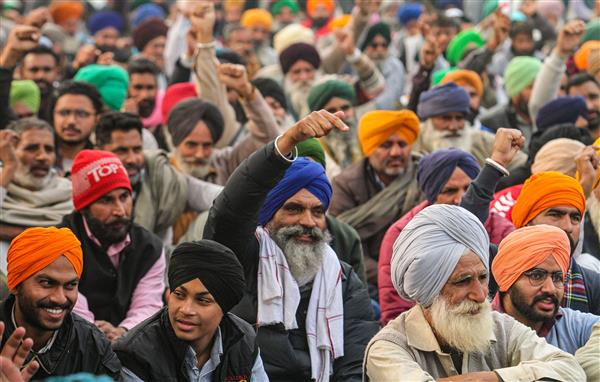
Farmers protest during their ongoing agitation against the farm laws at the Singhu border on Friday. PTI

Tribune News Service

Chandigarh, January 22

Chief Minister Capt Amarinder Singh today announced jobs for one member of each of the families of the state’s farmers who had lost their lives in the agitation against the “black” laws.

Hitting out at the Centre, the Chief Minister said it should repeal the laws, sit with farmers and frame new laws after taking all stakeholders into confidence. Pointing out that the Constitution of India had already been amended so many times, he asked why the Government of India was adamant about not taking back the farm laws.

Slamming the central government for pushing the laws through Parliament with brute majority without any discussion, the Chief Minister said the entire country was paying the price for this. “Is there a Constitution in the country? Agriculture is a state subject under Schedule 7, so why has the Centre interfered with a state subject?” he said, adding that “it went ahead and enacted these laws without consulting anyone, because

of which we all have landed in this situation”.

Asserting that “we are with the farmers and will stand by them,” the Chief Minister said during the 20th edition of his Facebook Live #AskCaptain session that the Punjab Government and every person in Punjab stood with farmers.

The sad part, said the Chief Minister, was that “we are losing our farmers to the cold every day, with an estimated 76 farmers dying so far”. In addition to the Rs 5 lakh compensation being given to the families of the deceased farmers, his government

would also give a job to a family member, he added.

Replying to a question by a Ferozepur resident, the Chief Minister said the Akalis and Aam Aadmi Party (AAP) were spreading lies on the issue of the high-powered committee on the agricultural reforms, as exposed by an RTI response. Pointing out that Punjab was not even included initially in the committee, he said it was only after he wrote to the Centre that Punjab’s name was added, by which time the first meeting had already taken place without the state’s representation. The second meeting was attended by Manpreet Badal as financial issues were discussed, while in the third and final meeting, no politician was invited.

On the NIA notices to some farmers and supporters of the farmer agitation, the Chief Minister told the news editor of a New Zealand Punjabi weekly that it was a wrong step and he would be writing soon to the Union Home Minister on the issue.

‘Centre interfered in state subject’

Slamming the Centre for pushing the laws through Parliament without any discussion, the Chief Minister said the entire country was paying the price for this. “Agriculture is a state subject under Schedule 7, so why has the Centre interfered with a state subject,” he asked, adding that “it went ahead and enacted the laws without consulting anyone”.


Tractor parade to go ahead as planned on Republic Day: Farmer leaders Coming out of the meeting, Balbir Singh Rajewal said it was for the government to ensure that the rally was peaceful

Tractor parade to go ahead as planned on Republic Day: Farmer leaders

Photo for representation. PTI file

New Delhi, January 22

Protesting farmer leaders on Friday have said their proposed January 26 tractor ‘parade’ will take place on Delhi’s busy Outer Ring Road as decided earlier, after their 11th round of talks with the government ended in a deadlock.

Coming out of the meeting, farmer leader Balbir Singh Rajewal said it was for the government to ensure that the rally was peaceful.

“Tractor march on January 26 will take place as decided by us on Outer Ring Road. We have informed the police that it is for the government to ensure that it should be peaceful,” Rajewal said.

The government’s negotiations with protesting farm unions hit a roadblock on Friday as protesting unions stuck to their demands for a complete repeal of three farm laws, even after the Centre asked them to reconsider its proposal for putting the Acts on hold for 12 to 18 months.

Unlike the last 10 rounds of talks, the 11th round could not even reach a decision on the next date for the meeting as the government also hardened its position saying it is ready to meet again once the unions agree to discuss the suspension proposal.

Union leaders said they would intensify their agitation while keeping it peaceful.

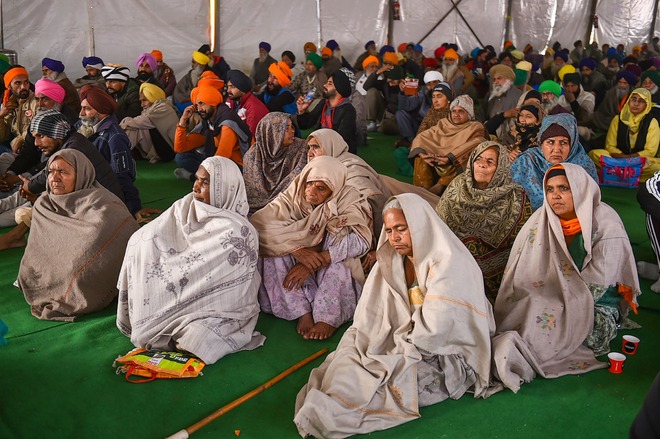
Thousands of farmers, mostly from Punjab and Haryana, have been camping at several Delhi border points since November 28, demanding a repeal of three farm laws and a legal guarantee on minimum support price for their crops. PTI


Rethink, it’s best offer: Govt to farmers Tomar: Anything but repeal of laws

Rethink, it’s best offer: Govt to farmers

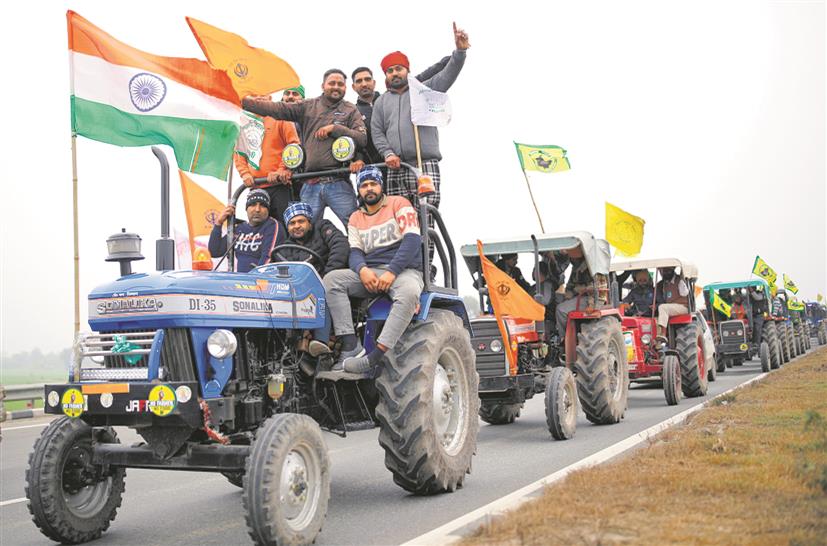
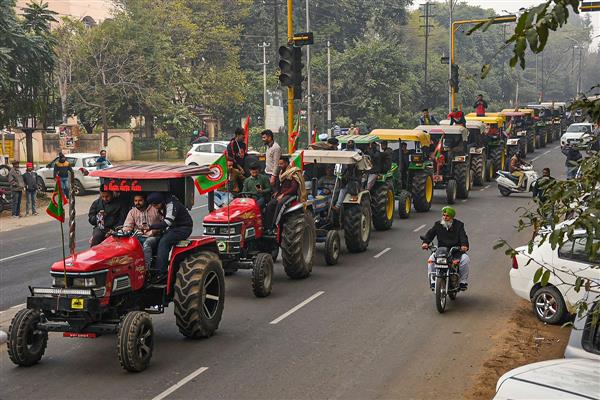
Tractors on a trailer arrive at the Singhu border for the Republic Day protest. PTI

Vibha Sharma

Tribune News Service

New Delhi, January 22

The 11th round of talks between the Centre and farmers’ unions ended in a deadlock. While the unions rejected the government’s proposal, Narendra Singh Tomar, Agriculture Minister, said suspension of agri laws for a mutually agreed period was the “best offer” he had.

Jobs for deceased farmers’ kin: Capt

CM Capt Amarinder Singh announced jobs for one member each of the state families, who lost their lives in the stir.

Plot to disrupt R-Day rally, youth nabbed: Unions

Sonepat: A youth in police uniform was nabbed by farmers near Kundli late Friday night. Farm leaders said the youth had confessed he was part of a 10-member team that had been ‘instructed by a cop’ to disrupt the tractor parade on January 26. The youth was presented at a press conference by union leaders. TNS

At the end of the over four-hour-long meeting, that saw discussions for barely 30 minutes, Tomar asked the unions to reconsider his offer and to get back by Saturday, if they decide in its favour. Thanking the unions, Tomar said: “Even though there was nothing wrong in the laws, for the benefit of farmers and respect for their agitation, the government came up with several proposals.”

He said: “You (unions) launched agitations even as you were engaged in talks with us. We didn’t object. The vision (at your end) was lacking.” Later speaking to the media, the minister claimed there were forces which did not want the talks to succeed. “The government made several proposals to end the stir, but when the purity of the movement is lost, no solution is possible,” he maintained.

Sources say Tomar is believed to have told the unions that they should not have issued a statement rejecting the proposal ahead of the talks today.

He also hinted at “differences” among the unions regarding the government’s offer. Fifteen Punjab unions are said to have voted in the favour of the Centre’s offer yesterday.

Unions, meanwhile, said they would now concentrate on the agitation and prepare for the tractor parade. Sanyukta Kisan Morcha leader Balbir Singh Rajewal said: “It will be a unique event. We have told the government and the Delhi Police that we will march peacefully on the Outer Ring Road. If any untoward incident takes place, the government will be responsible.”

While Sanyukta Kisan Morcha leader Yogendra Yadav called it a complete breakdown of talks, Dr Darshan Pal said the talks hit a deadlock as the government refused to offer more than just suspension of the laws.


Navy tableau to showcase 1971 war Labour Ministry’s tableau to display reforms

Navy tableau to showcase 1971 war

Photo for representational purpose only

New Delhi, January 22

The Indian Navy’s Republic Day tableau will showcase the naval strike at Karachi and the role of the aircraft carrier INS Vikrant on the eastern seafront during the 1971 India-Pakistan war.

The theme of the parade is “Indian Navy Combat Ready, Credible and Cohesive” and comes at time when the country is commemorating the golden jubilee of the victory in the 1971 war.

The Indian Navy proved its mettle as a credible force to reckon in the 1971 war proving its combat efficiency and hence this year’s tableau aims to showcase that. — TNS


Slow acquisition hinders defence upgrade: Army chief

Slow acquisition hinders defence upgrade: Army chief

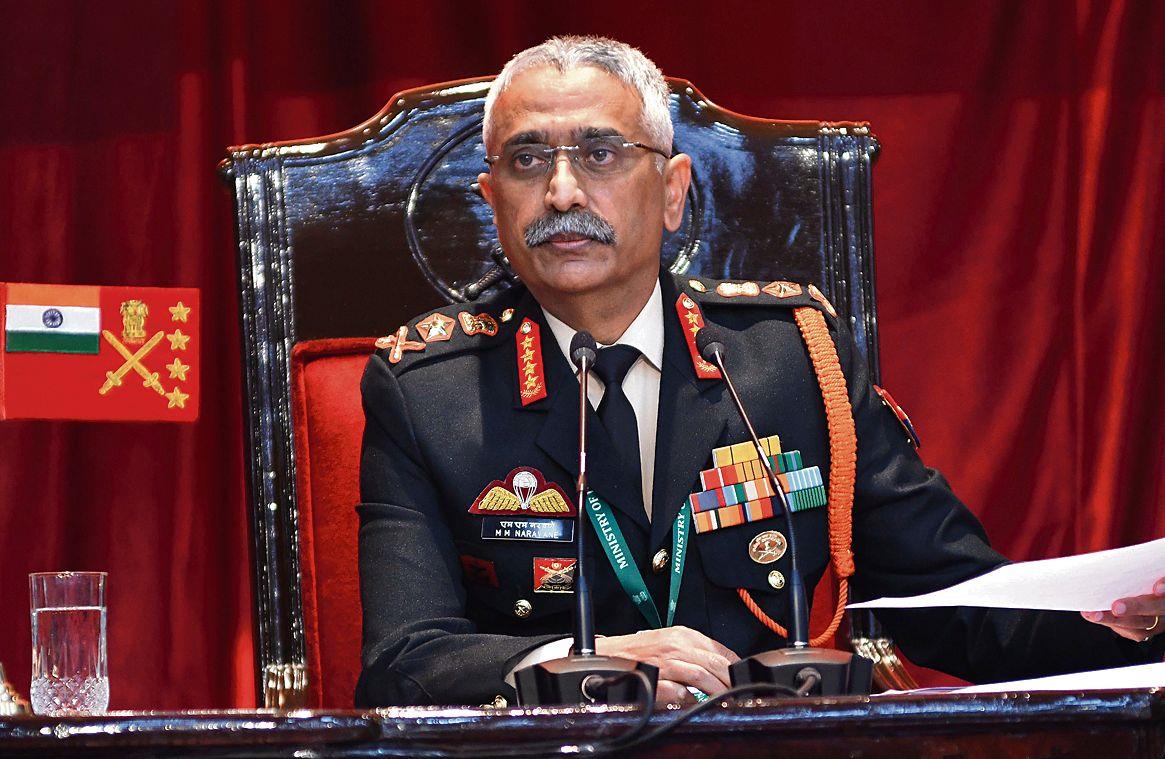
ndian Army Chief Gen MM Naravane

Tribune News Service

New Delhi, January 21

Indian Army Chief Gen MM Naravane today questioned the slow pace of acquiring new weapons and military platforms terming red-tapism as a “vicious cycle”.

Ripping apart the prevailing bureaucratic system in India acquisition processes, he said, “Self-reliant is a strategic necessity, but to achieve it a revolution is needed in bureaucratic affairs.”

Gen Naravane said this while speaking at the occasion of 25 years of Army-industry partnership at a virtual conference.

Talking about the Defence Acquisition Procedure (DAP), 2020, he said it had been aligned to empower the domestic industry.

“While all these initiatives are quite appreciable, there is a lot of work that still needs to be done,” he added.

“There are certain inherent procedural lacunae that have crept into the acquisition process which primarily arise due to the overbearing nature of our rules, regulations and guidelines in trying to ensure zero error,” Gen Naravane said, adding, “This is also aggravated by our own interpretation of rules. This results in every acquisition process being tied up in knots.”

The process and procedures, rather than product, become paramount and these were holding hostage defence modernisation, he said.


Army jawan killed in Pakistani firing along LoC in J&K’s Poonch

Army jawan killed in Pakistani firing along LoC in J&K’s Poonch

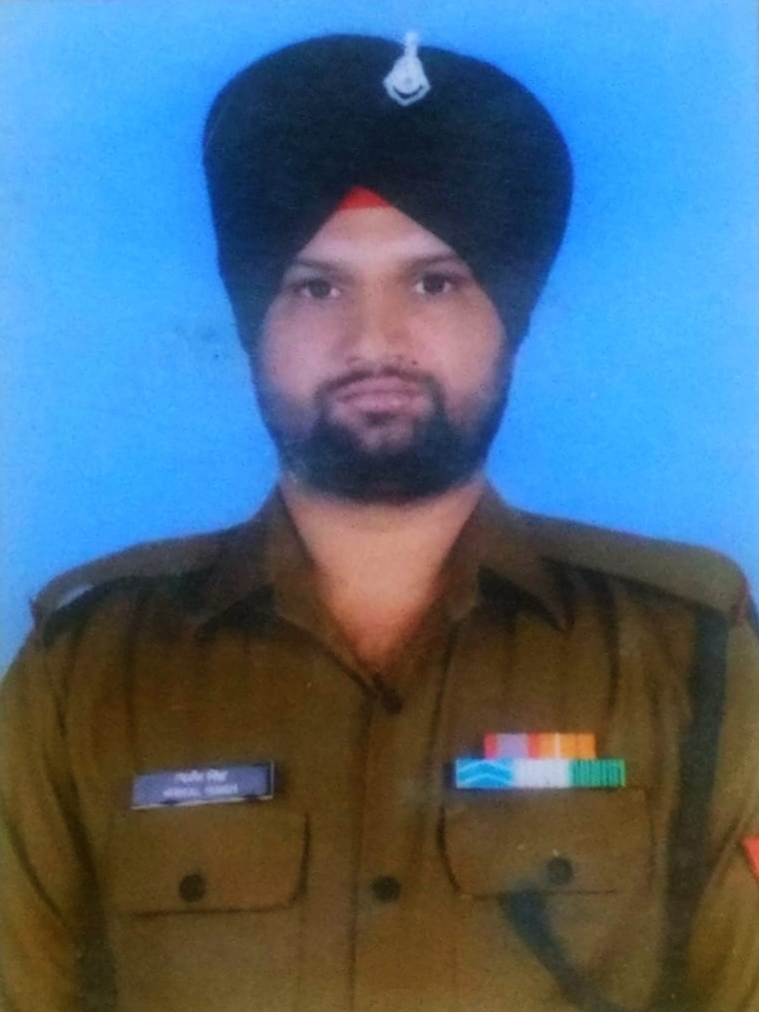
Havaldar Nirmal Singh.

Tribune News Service
New Delhi, January 21

Pakistan Army resorted to unprovoked ceasefire violation on the Line of Control (LoC) in Krishna Ghati Sector in Poonch district on Thursday.

The Indian Army troops responded strongly to the enemy fire. In the incident, Havaldar Nirmal Singh of 10 JAK RIF was critically injured and later succumbed to his injuries.

The Pakistan Army resorted to unprovoked firing along the LoC in the Krishna Ghati sector of Poonch, the officials said.

The Indian Army responded to the enemy fire in a befitting manner, they added.

Havaldar Nirmal Singh of the 10 JAK Rifles unit of the Army was critically injured in the firing and subsequently succumbed to his injuries, the officials said.

Singh was a brave, highly-motivated and sincere soldier, a defence spokesperson said, adding that the nation will always remain indebted to him for his supreme sacrifice and devotion to duty. — With PTI


India to face higher security challenges in line with rising stature, influence: Army Chief

India to face higher security challenges in line with rising stature, influence: Army Chief

Army Chief General MM Naravane. PTI file

New Delhi, January 21

Army Chief Gen MM Naravane on Thursday has said India will face increasingly higher security challenges in tune with its rising stature and it must enhance indigenous defence capabilities to maintain strategic influence and freedom of action as external dependence for weapons creates vulnerabilities in times of crisis.

In an address at a seminar on Army-industry partnership, Gen Naravane talked about twin challenges of COVID-19 pandemic and the “belligerence” on the northern borders that his force faced in 2020, and said the government’s focus on self-reliance will boost the country’s overall strategic objectives.

He also said the unresolved borders and wars in the past with “our adversaries” challenged the myth of ‘no conventional war’, adding that proxy war, ‘Left-wing extremism’ and insurgencies were likely to keep the Army occupied.

“India is now a rising regional global power in Asia, more particularly in South Asia. As we rise in our stature and influence, we will face increasingly higher security challenges,” he said at the seminar organised by the Society of Indian Defence Manufacturers (SIDM).

Referring to increasing security challenges along India’s unresolved northern borders, he said a continuous and concerted capability building of the Army through modernisation to address these security challenges was a national imperative.

Indian and Chinese troops have been locked in a tense standoff in eastern Ladakh for over eight months.

The Chief of Army Staff said India was lagging behind slightly, considering the quick pace of defence modernisation being undertaken by its adversaries, and called upon the indigenous industry to invest in research and development to boost the country’s overall military capabilities.

“The continuous and heavy dependence of the armed forces on equipment of foreign origin needs to be addressed in the right earnest through indigenous capability development and towards meeting the modern day defence requirements,” he said.

“The defence industry is a big enabler for self-reliance and capability building and it is a prerequisite to maintain our strategic influence and freedom of action,” Gen Naravane said.

He further said: “We are committed to procuring indigenous equipment and weapon systems as nothing is more motivating for any army then to fight and win its wars with indigenous technologies and weapons.”

Encouraging the private industry to take advantage of the government’s reform measures to boost domestic defence production, he said the Army was strongly committed to support them.

“Our external dependence for weapons and ammunition creates vulnerabilities during times of crisis. However, in the past few years, we have tried to reverse this trend by boosting indigenisation and focusing on dual purpose high-end technology,” he added.

“It may be noted that 75 per cent of our priority one projects in the 13th Army plan, costing over Rs 1,50,000 crore are supporting efforts towards the Make in India programme,” Gen Naravane said.

At the seminar, an MoU was signed between the Indian Army and the SIDM that will provide for further impetus to indigenisation under the ‘Atmanirbhar Bharat’ initiative. This MoU was signed on the occasion of 25 years of Army-industry partnership with the Confederation of Indian Industry (CII) officials said. PTI


The might of kisan & jawan Farmers, together with veterans, should celebrate Republic Day

The might of kisan & jawan

No lapses: Farmers will lose public support if they disrupt R-Day celebrations. Reuters

Julio Ribeiro

The protesting farmers of Punjab and Haryana have threatened to organise a tractor procession through well-trod streets of Delhi on Republic Day. This procession should not clash with the government’s Republic Day parade or other celebrations. The farmers will lose public support if they do that. In fact, they should be alert lest saboteurs try to provoke them to violence.

No political slogan should be raised that day. All sections of the populace, even those that the ruling party dubs anti-national, should be one on this day.

The best solution would be to have a celebratory parade of their own in another part of the city after prior notice to the Delhi Police and obtaining its permission to celebrate the sacred day. If they can muster the support of armed forces veterans, it would be a sort of coup! The armed forces are studded with soldiers, sailors and airmen from kisan families, who will surely be sympathetic to the cause of the farmers.

‘Jai Jawan, Jai Kisan’ is a cry that is extremely popular with the common man and that cry has reverberated through the ages. No political party can afford to belittle it. So, if service veterans are added to the parade of tractors with farmers’ families atop tractors, a memorable supporting parade can be organised in another prominent area of Delhi, distant from Rajpath.

If given due publicity, it will draw sufficient attention. There will be no antagonist feelings floating around — in truth, the atmosphere created should be deliberately fraternal. No political slogan should be raised that day. All sections of the populace, even those that the ruling party dubs anti-national, should be one on this day.

After all, the Prime Minister and Home Minister Amit Shah have both repeated often that their sole intention in introducing the three farm laws is the good of the farmers. They affirm that farm incomes will double. The farmers do not think so! They feel that the big industrial houses will fatten themselves on the farmers’ sweat and blood! Who is right? Can or will the farmers wait to find out? Or is it that they know better since it is they who till the fields and sow and harvest the crops. The politicians and experts’ knowledge, according to the farmers, is based on theories that have not been tested, though genuine research should never be brushed aside.

The Supreme Court has dared to enter the arena where wiser men had feared to tread. There was no constitutional or legal adjudication involved, and yet it rushed in with eyes wide open. By doing so, the court gave the government some breathing space. More importantly, it gave the government time that could weaken the resolve of the protesters. The latter cannot afford to neglect their fields for such prolonged periods. And that is the possible gamble that seems to be enfolding.

As of now, both sides are adamant. Our Prime Minister is a man of steel, like his role model, Sardar Vallabhbhai Patel. He refuses to budge, though he is willing for a compromise. The farmers fear that the government’s experiment will fail, like demonetisation did. They refuse to take part in an experiment that may leave them ruined permanently.

But let us leave this political debate to the politicians and the object of their supposed largesse, the farmers, and revert to the issues that propelled me to write in the first place. I was influenced by an email I received from an old friend, a committed Modi supporter and a lady paediatric cardiac surgeon, who once was a co-trustee with me in the Public Concern for Governance Trust (PCGT) in Mumbai. Dr Ratna Magotra felt that the CCG, a group of retired IAS, IFS and IPS officers who write to the PM and other constitutional authorities on things that matter, should also write to the farmers’ leaders not to disturb the Republic Day celebrations, in particular, and not to defy the PM and his government in the manner they were now doing.

Since I agree with her view that Republic Day should be treated as sacred by every Indian, I had made my stand clear in one of my previous articles which had escaped her attention. I cannot in any conscience agree with her that no one should disagree with the PM, for that would mean that I agree that he is the repository of all knowledge. For instance, his calculations about demonetisation were proved wrong. I believe that a dose of humility in every human bosom will make the world a much better place to live in.

I understand my friend’s frustration when she finds that her hero is being baulked on his way to achieving stardom and a place in history. But even normal mortals face obstacles to success. In the case of world leaders, like Modiji, the tests will be infinitely more difficult. That is to be expected. The felicity and ease with which he tackles these difficulties will determine his place in history.

I do not pretend to know who is right in this debate between the government and the farmers. Will the three new farm laws double the income of the farmers? The government is certain they will. The farmers think just the opposite. If they were just playing a political game, they would have given up their protest long before. The government will require to think out of the box to cut this Gordian knot.

Staunch followers of Modiji should find a way to advise their idol to convince intended beneficiaries in advance that laws they intend to ram through Parliament, without much debate, are truly for the good of the beneficiaries, and not for the benefactor’s financiers.


Victory for farmers Centre’s seen reason, protesters should return triumphant

Victory for farmers

Finally , the Union government has seen reason and agreed to keep the contentious farm laws on hold for a year and a half. This is a moment of triumph for the farmers, who braved one of the worst winters in recent times to sit in the cold amidst a raging pandemic to demand what they believed was just. One of the negotiators from the government’s side — minister Som Parkash — reportedly agreed to the suspension of the laws for two years, but Agriculture Minister Narendra Singh Tomar announced a moratorium for six months less. The farmers can seek a longer period of suspension and engage with the government in an effective dialogue through their own committee to put forth their fears and conditions; but, meanwhile, this is a victory as definitive as it comes and the farmers should savour it in the winter sun on their farms.

The government had taken a maximalist position when it rammed the farm Bills through the Rajya Sabha without a proper division as propriety demanded. Parliamentary democracy has built-in mechanisms to evolve consensus through committees; and laws that impinge on the livelihoods of millions of farmers ought to have been discussed thoroughly in those consultative and standing committees before being rolled out like bulldozers on standing crops. The protests that ensued have taken a huge toll on the people of Punjab, Haryana, Chandigarh and Himachal Pradesh in terms of over 60 lives lost, six farmers committing suicide, disruption of traffic and livelihood; yet, the farmers were remarkably restrained, not letting emotions override the philosophy of non-violence.

The whole nation should salute these farmers for their fortitude, discipline, tenacity and endurance. They taught a few lessons in community living, langar and sewa to the rest of the nation, making this protest unique. Now, they should not repeat the government’s mistake by taking an extreme position. They should return triumphant to their villages. The planned tractor rally should now be a joyous victory parade celebrating the Republic and the farmer-citizens, who send their children to fight and die for the Republic.


Centre targeting Punjab over farm stir, says FM Rural fund withheld; to cause Rs800-cr loss

Centre targeting Punjab over farm stir, says FM

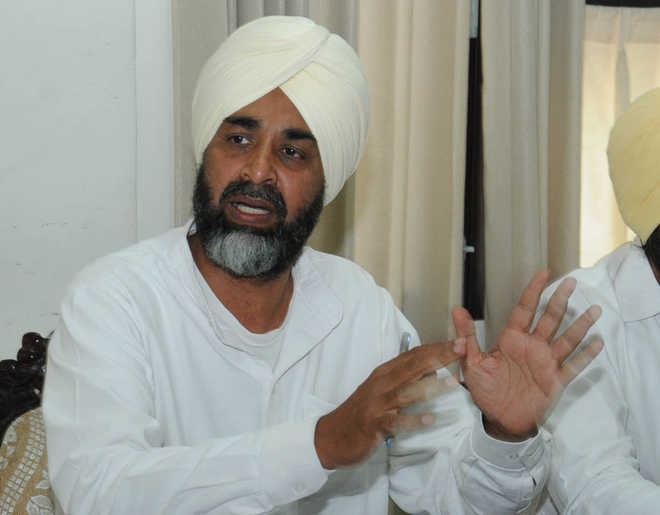
Manpreet Singh Badal, Finance minister

Tribune News Service
Chandigarh, January 21

Punjab is being asked to pay the price for the farmers’ agitation, which itself was necessitated by the enactment of three farm laws that were against the interests of farmers, says Punjab Finance Minister Manpreet Singh Badal.

The withholding of the Rural Development Fund (RDF) by the Centre was directly linked to the ongoing agitation against the farm laws, said Badal. “We are being collectively targeted by the Government of India,” he told The Tribune on the sidelines of the State Credit Seminar organised by NABARD here today.

On January 19, the Union Ministry of Consumer Affairs, Food and Public Distribution had written to the state government saying they would pay just one per cent RDF against the three per cent usually paid to the state. This would lead to a loss of Rs 800 crore to the state, thereby adversely affecting development works

“Withholding of a major portion of the RDF on paddy purchase in 2020 is one such step. The Centre is also not conceding to the demand of hundreds of farmers to acquire their land beyond the border fencing. They graze the land by enduring hardship to help the armed forces keep better vigil. We have written to the Niti Aayog on this issue, but to no avail,” he said.

Badal told The Tribune the funds that the Centre was withholding were being given to the state the past six decades. “Asking Punjab to respond on how we have utilised the RDF is akin to citizens asking the government on how they utilise the income tax paid by them to the government.

“However, we responded to their letter, alleging misuse of the RDF, giving them details of fund utilisation over the past 10 years. They have still gone ahead and withheld the RDF. The government should have a bigger heart and not make the people of Punjab suffer by withholding money due to them,” he said.