Sanjha Morcha

Army chief visits Ladakh after border skirmish at LAC

The visit came a day after India rejected China’s allegation that Indian troops initiated tensions and crossed LAC in Ladakh and Sikkim sectors and accused the Chinese army of hindering patrols on the Indian side.

India and China have deployed additional troops, especially in Ladakh’s Galwan Valley, after a face-off near Pangong Tso on May 5-6.

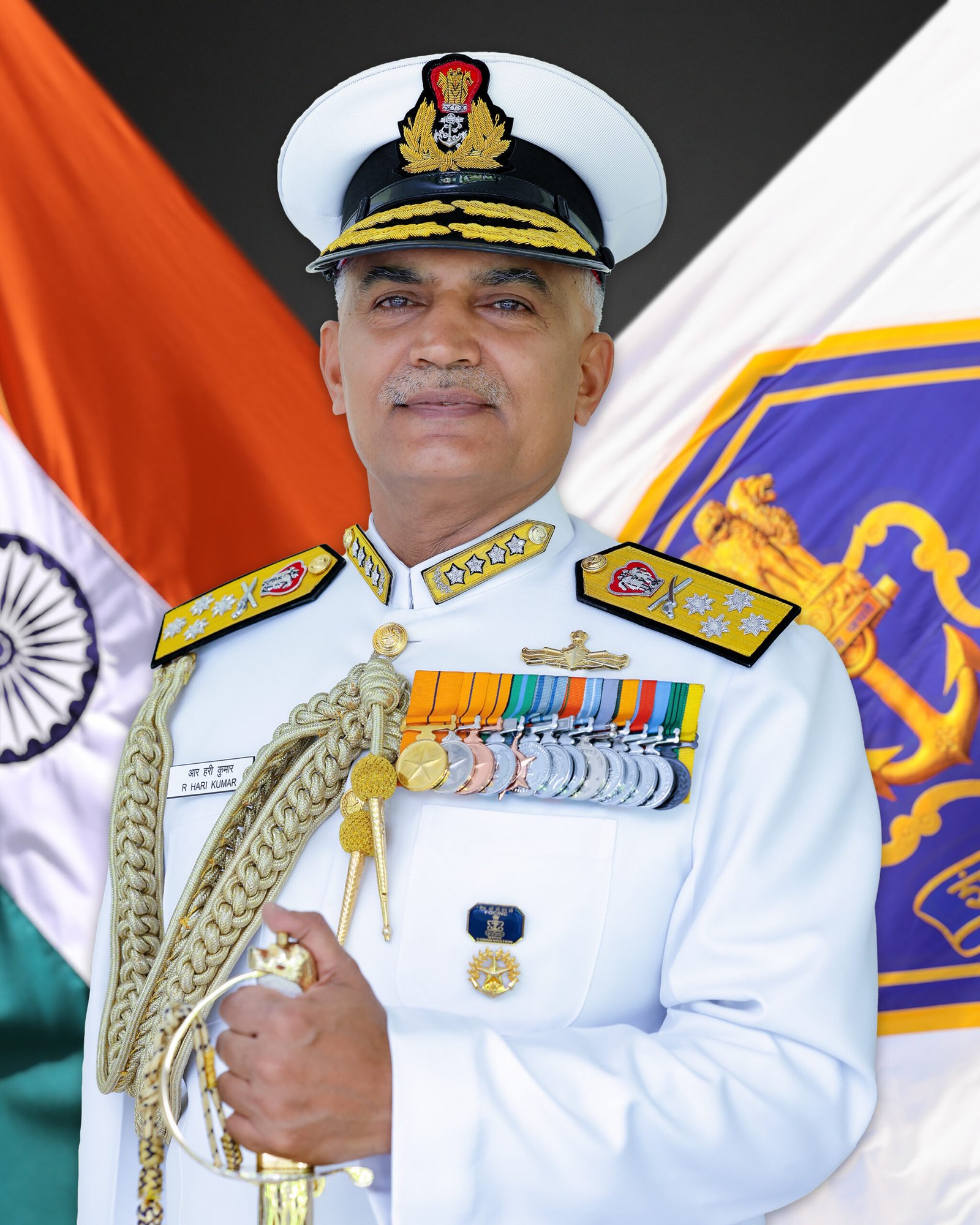
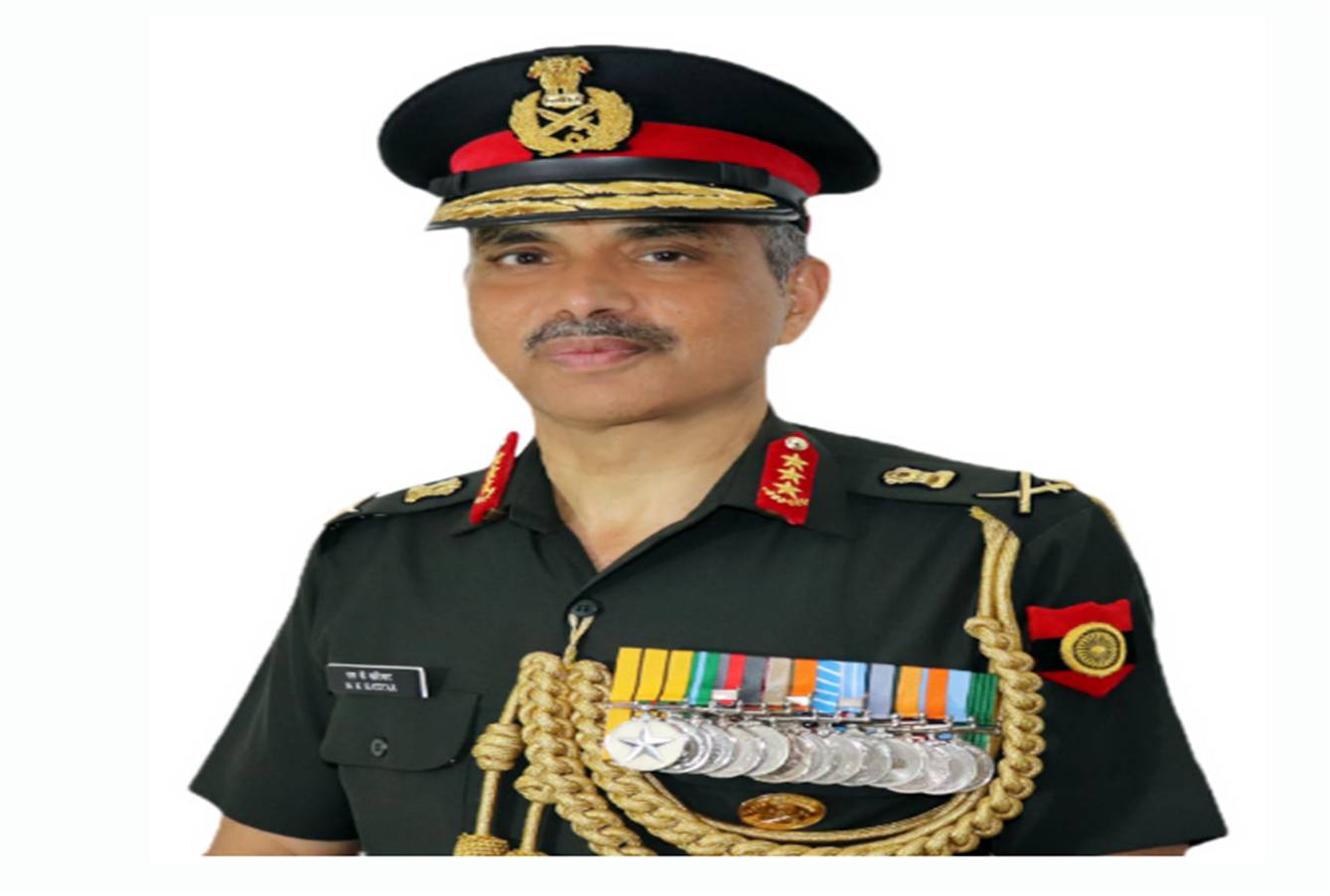
Army chief General Manoj Mukund Naravane on Friday visited Leh, the headquarters of 14 Corps in Ladakh, for a security review of the sensitive sector amid tensions between India and China along the disputed Line of Actual Control (LAC), two officials said on the condition of anonymity. He returned to Delhi later in the day.

The visit came a day after India rejected China’s allegation that Indian troops initiated tensions and crossed LAC in Ladakh and Sikkim sectors and accused the Chinese army of hindering patrols on the Indian side.

Soldiers on both sides are showing restraint and efforts were underway to de-escalate, said one of the officials cited above.

India and China have deployed additional troops, especially in Ladakh’s Galwan Valley, after a face-off near Pangong Tso on May 5-6. India bolstered its troop levels after the Chinese side brought in reinforcements and also reportedly pitched tents and erected temporary positions in the Galwan Valley as part of its efforts to establish a presence there.

China’s foreign ministry first accused Indian troops of trespassing across LAC on Tuesday, saying Beijing had to take “necessary countermeasures” after the Indian army allegedly obstructed normal patrols by Chinese troops.

A government spokesperson on Thursday said, “Any suggestion that Indian troops had undertaken activity across LAC in the western [Ladakh] sector or the Sikkim sector is not accurate.”

HT was the first to report on May 10 about tensions flaring up between India and China in north Sikkim, where 150 soldiers were involved in a standoff a day earlier. Four Indian and seven Chinese soldiers were injured during the confrontation.

Scores of soldiers from the two countries clashed near Pangong Tso on the night of May 5-6 and a few were injured in the scuffle that involved around 250 men. While a flare-up was avoided as both armies stuck to protocols to resolve the situation, tensions spread to other parts of eastern Ladakh, including the Galwan Valley.

Talks between local commanders have failed to ease tensions and diplomatic channels are at work to end the standoff, officials said. The current situation along LAC marks the first major flare-up since the 73-day standoff between India and China at Doklam near the Sikkim border in 2017.


Western Command chief visits Ambala headquarters, reviews preparedness of Kharga Corps

Western Command chief visits Ambala headquarters, reviews preparedness of Kharga Corps

GOC-in-C, Western Command, Lt Gen RP Singh during his visit to the Kharga Corps Headquarters in Ambala on Friday.

Tribune News Service

Chandigarh, May 22

General Officer Commanding-in-Chief, Western Command, Lt Gen RP Singh, visited the Kharga Corps Headquarters at Ambala on Friday.

He was briefed by the Corps Commander, Lt Gen SS Mahal, on the operational and logistics preparedness of the army’s most potent strike formation, as well as measures instituted to combat the COVID-19 pandemic.

He interacted with the troops and commended the ongoing efforts in ensuring force protection and at the same time maintaining a high level of operational readiness.

He exhorted all ranks to remain focused on defeating this global pandemic.


Northern Command chief meets Murmu

Northern Command chief meets  Murmu

Tribune News Service

JAMMU, MAY 20

Lieutenant General YK Joshi, General Officer Commanding-in-Chief (GOC-in-C), Northern Command, met Lieutenant-Governor Girish Chandra Murmu at the Raj Bhavan here on Wednesday.

The L-G discussed with Lt Gen Joshi several issues relating to security management and other aspects to meet the security challenges in J&K.

Lt Gen Joshi briefed Murmu about the overall security situation along the LoC and the successful anti-terrorist operations being conducted by the Army in co-ordination with Jammu and Kashmir Police and Central Armed Police Forces (CAPF) in the hinterland.

The Lt-Governor lauded the role being played by the Army in safeguarding the territorial integrity and the internal security of the UT.


Chinese bring more boats to lake in Ladakh, Indians a road

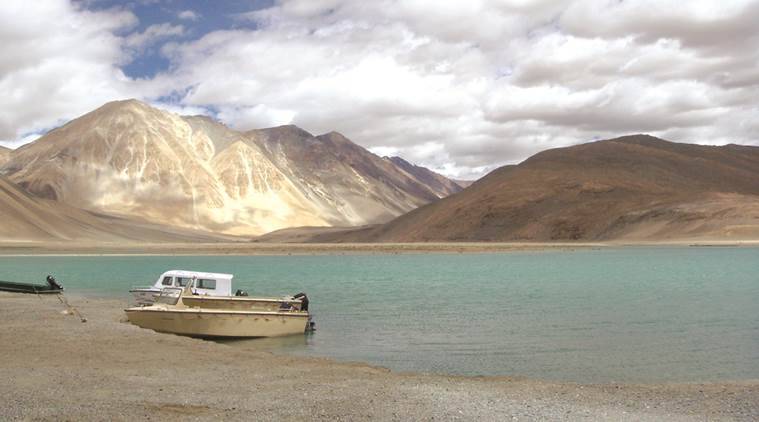
The number of Chinese patrol boats, sources told The Indian Express, have gone up three times — they had earlier been using only three boats. The Indian Army also has a similar number of boats to dominate the 45-km long western portion of the lake which is under Indian control.

While there have been tensions about the limits of patrolling by the two sides on the northern banks of Pangong Tso, sources said the Chinese “forcefully insisted a couple of days back that the Indian patrols stop at Finger 2”. (Express archive photo)

Two weeks after Indian and Chinese troops came to blows near Pangong Tso, a lake in eastern Ladakh, the Chinese have stepped up patrols and deployed more boats on the lake. They are also objecting to Indian construction of a vehicle track, and patrols beyond a certain point.

The tensions in Ladakh, officials said, can worsen the situation elsewhere along the Line of Actual Control.

The number of Chinese patrol boats, sources told The Indian Express, have gone up three times — they had earlier been using only three boats. The Indian Army also has a similar number of boats to dominate the 45-km long western portion of the lake which is under Indian control.

“Nearly one-third of Chinese transgressions in the western sector (of the LAC) happen in Pangong Tso. Not only have they substantially increased the number of boats on the lake, their patrolling behaviour is increasingly more aggressive. It is not a healthy thing when you consider what has been going on in the Finger Area since late April,” sources said.

The mountains on the lake’s northern bank jut forward in major spurs, which the Army calls Fingers. India claims the LAC is co-terminus with Finger 8, while the Chinese claim that the LAC passes through Finger 2. The area between the two differing perceptions is the territory which both armies try to dominate through regular patrolling.

Explained: The new Indian road to Lipu Lekh, Nepal’s protests, and the area’s strategic importance

While there have been tensions about the limits of patrolling by the two sides on the northern banks of Pangong Tso, sources said the Chinese “forcefully insisted a couple of days back that the Indian patrols stop at Finger 2”.

Since the Indians physically control the area up to Finger 4, this was a “provocative move” by the Chinese following the “disengagement” after a physical altercation between troops of both sides near Finger 5 on the night of May 5-6.

The Chinese, sources said, have been objecting to construction of a vehicle track by Indians in the same area.

While Chinese soldiers patrol the area in light vehicles on a motorable road built in 1999 when India was busy evicting Pakistanis from the Kargil heights, Indian soldiers patrol on foot till their perception of the LAC.

Read| India building facilities in Aksai Chin: China daily

“Yes, tensions have been high. We are doing construction in our area. Also, the Chinese road is rather narrow and has very few turning points. So, when our patrols challenge their patrols and ask them to go back from our area, they physically cannot turn their vehicles and it leads to more acrimony,” sources said.

“There is a situation on the LAC in the Hot Springs sector, which is an ITBP sector. An Army company had moved closer to PP14 and PP15 in 2015 after a minor incident, but this has always been a settled area between us and the Chinese. It is worth considering if the Chinese posture there is linked to incidents at Pangong Tso, just as Depsang was linked to Chumar in 2013,” sources said.

ALSO READ | Will reclaim at any cost: Nepal PM Oli on contested land

In New Delhi, Army officers, however, maintained that the incidents in Pangong Tso are “typical LAC activity witnessed during summer months” when “some new units have been inducted” and “operational familiarisation and occupation of winter-vacated posts” take place. They called these incidents “localised” in nature due to “different perception of the LAC by the two sides”.


Army’s oldest gunner officer passes away

Army’s oldest gunner officer passes away

Chandigarh, May 22

The Army’s oldest surviving artillery officer, Major Gurdial Singh Jallanwalia (103), has marched into oblivion. A veteran of the World War IIand two wars against Pakistan, he had settled in Ludhiana.

Major Jallanwalia and 13 of his family members served in the defence forces and have the distinction of participating in all wars fought by the Army since the World War I.

Born on August 21, 1917, Maj Jallanwalia passed out from the Royal Indian Military School, Jalandhar, and joined the Mountain Artillery Training Center in June 1935.

He hung up his boots in 1967. — TNS


India isn’t prepared to meet its defence needs Recent reforms have potential. India must decide how to acquire effective military capabilities in a post-Covid world

The Handwara terror attack points to the abiding tenacity of the low-intensity war that has been simmering in Kashmir

Last week, finance minister Nirmala Sitharaman unveiled some major structural reforms in India’s moribund defence sector, as part of a coronavirus disease (Covid-19)-related macroeconomic stimulus, and the increase in foreign direct investment in defence manufacturing to 74% is radical. However, these are all policy changes that have “potential” and need to be implemented effectively before their outcome can be objectively assessed.

In the interim, India’s military security challenges, both current and long-term, came into unintended focus in this month even as the nation is grappling with the pandemic and its tragic impact on millions of citizens.

In early May, the Handwara terror attack saw the Indian Army losing a colonel and other personnel, pointing to the abiding tenacity of the low-intensity-conflict (LIC) that has been simmering in Kashmir. This is a complex proxy war where the external Pakistani stimulus has permeated the internal security strand with all its corrosive communal elements. It is unlikely to end soon.

Currently, India is managing an anomalous territorial challenge exigency, albeit of a low order. The eastern Ladakh sector saw a stand-off between Indian and Chinese soldiers in the Pangong Tso sector. While it is well below Doklam, media reports indicate that stones were used and it is encouraging that no ordnance was exchanged, as has been the pattern for well over three decades. But the long-festering territorial dispute with China, remains alive on the national security radar.

The more intriguing element is that Nepal summoned the Indian ambassador on May 11 to lodge a protest against the construction of a road by India in an area (Lipu Lekh pass to Dharchula in Uttarakhand) that Kathmandu claims lies within its territory.

To add to the spectrum of challenges, reports have emerged of China enhancing its Indian Ocean (IO) footprint in an island proximate to Male in the Maldives. Thus the possibility of a Hambantota kind of facility/access for the PLA navy in the IO cannot be ignored by Indian security planners.

And to cap this opaque security challenge, May also symbolises India’s complex nuclear-missile anxiety. The regional strategic environment became rough for India when China acquired nuclear weapons in October 1964; the subsequent Sino-Pakistan weapons of mass destruction (WMD) covert cooperation presented Delhi with a sui generis security conundrum. The Pakistani nuclear weapon that Beijing had enabled was being used to help terrorism stoked by religious fervour — what one had described as the nuclear weapon-enabled terrorism (NWET) dilemma.

India sought to assuage its latent WMD anxiety in May 1998 through the Shakti nuclear tests under Atal Bihari Vajpayee’s watch on May 11. Two decades later, the regional WMD-terror nexus has become muddier and the techno-strategic permutations are bewildering.

Does India have the wherewithal to deal effectively with this complex spectrum of national security challenges — one part of which is further aggravated by the current domestic political-ideological orientation? The answer is no — and for years experts have been pointing out that the annual defence allocation cannot sustain the kind of human, material and inventory profile that India needs. The last defence budget (excluding pensions) was Rs 3,37,000 crore. The amount available for modernisation of equipment and new acquisitions was shrinking to about 32% from the optimum of 40% of the budget.

In the backdrop of Covid-19, India’s macroeconomic challenge will worsen. The fiscal deficit is set to breach the recommended 3.5% limit; the only question is how high it would go. On May 8, the government pegged central borrowing for 2020-21 at Rs 12,00,000 crore — a significant increase from the budget estimate of Rs 7,80,000 crore. This fiscal stress will have a bearing on sectors earlier referred to as “non-plan” in the budgetary allocation, of which defence is a visible component. Thus, it is unlikely that the armed forces will receive anything close to Rs 3,50,000 crore (approx $46 billion). There are also unconfirmed reports of a budget slash in defence allocation due to Covid-19, ranging from Rs 40,000 to Rs 80,000 crore.

Given that the Covid-19 challenge and its accumulating debris of economic devastation and human destitution will be the higher national priority for some years, India will have to embark on a radical review of its security challenges and the road map to deal with this complex spectrum. Many nations are facing a similar predicament, but some abiding elements in the Indian context must be noted. Strategic geography and its attendant security exigencies will not change due to the pandemic. The low-intensity conflict stoked by Pakistan and the internal security fabric will be turbulent and the political apex will seek to assuage national sentiment in this regard.

What kind of military capability India needs, its technological contour, and how this can be both nurtured and sustained in an affordable manner in a post-Covid-19 world needs careful and objective assessment. Against this backdrop, some of the sweeping remarks attributed to the Chief of Defence Staff General Bipin Rawat, justifying lower defence spend and suggesting that the military may have been misrepresenting its requirements are perplexing, to put it mildly. One hopes this is not the distilled wisdom of Modi 2.0 in the security domain.

C Uday Bhaskar is director, Society for Policy Studies, New Delhi
The views expressed are personal

Import ban not on niche tech: Army Vice Chief

Import ban not on niche tech: Army Vice Chief

Tribune News Service

New Delhi, May 22

The Vice Chief of Indian Army, Lt Gen SK Saini, on Friday said the proposed ‘import ban’ list of military hardware will not restrict the forces to procure niche technologies from abroad.

Addressing a webinar organised by the Society for Indian Defence Manufacturers, he said a large number of indigenous industry and micro small and medium enterprises would be given opportunity to fulfil the defence needs of the Army.

The General said there was a perceptible shift of dependence of the Army from OFBs to private entities in terms of non-core activities and certain type of critical ammunition. He expressed hope that other ammunition varieties, including those that were being imported currently, based on the response of the defence industry, would also be added to the list of items to be manufactured indigenously.

He said 80 per cent of the Army’s capability development and more than 92 per cent of its sustenance budget was based on indigenous products and services.


ACM Idris Hassan Latif — WWII veteran who chose India over Pakistan and went on to head IAF

Air Chief Marshal Idris Hassan Latif

New Delhi: The Indian Air Force (IAF) Thursday observed the second death anniversary of Air Chief Marshal (ACM) Idris Hassan Latif, the man who chose India over Pakistan and went on to become the 10th chief of the IAF.

Latif led the first fly-past over New Delhi after India became a republic in 1950. He was instrumental in procuring Jaguar, MiG-23 & MiG-25 aircraft for the IAF.

A highly-respected officer in the military circles, Latif was the pilot who led India’s first fly-past over New Delhi after India turned republic on 26 January 1950.

A World War II veteran, he also went on to become the governor of a state and a diplomat after retirement.

He even played a key role in the procurement of the Jaguar strike aircraft, still in use with the IAF, and the fleet of the now-retired MiG-23 and MiG-25.

‘He was very clear that his future lay with India’

Born on 9 June 1923 in Hyderabad in the erstwhile Deccan, Latif joined the Royal Indian Air Force in 1941 at the age of 18 and was commissioned in 1942.

During 1943-44, the officer was one of the few Indian pilots to be seconded to the Royal Air Force in the United Kingdom where he underwent training with modern aircraft like the Hurricane and Spitfire.

On his return to India in 1944, the young officer took part in the Burma campaign, flying the Hawker Hurricane for Number 3 Squadron.

Though later posted to Madras, Latif joined the Number 9 Squadron in Burma, again flying the Hawker Hurricane.

He was good friends with his Commanding Officer Squadron Leader Asghar Khan and another flamboyant pilot, Flight Lieutenant Noor Khan.

Both the Khans later went on to become chiefs of the Pakistan Air Force.

“When Partition bought with it the division of the armed forces, Latif as a Muslim officer was faced with the choice of joining both India or Pakistan, but there was no making up of minds for him,” the IAF wrote in his official profile.

“He was very clear that his future lay with India. Even though both Asghar as well as Noor Khan called him up to persuade Latif to join them in the fledgling Pakistan Air Force, Latif made it clear that for him, religion and country were not interlinked. It was no surprise that Latif made his way to become the first Muslim chief of Air Staff of the Indian Air Force,” it added.


Also read: Indian Air Force cancels Services Selection Board interviews amid coronavirus outbreak


Awarded Param Vishisht Seva Medal in 1971

In 1961, Latif was sent as the Air Attache to the United States and he returned in 1965 just before the India-Pakistan war broke out.

Latif eventually moved to the Air headquarters as the Assistant Chief of Air Staff (Plans), a newly created post, in the rank of Air Vice Marshal in-charge of modernisation plans.

He was awarded with the Param Vishisht Seva Medal (PVSM) in 1971 for his work as the ACAS (Plans).

During the 1971 war, Latif was still the ACAS (Plans) and was involved with the monitoring of the air assets and their best utilisation.

He later became the vice chief of Air Staff, a post he held until 1978, when he took over as chief of Air Staff.

“As the first Muslim chief of Air Staff of the IAF, Latif was involved fully in the re-equipment and modernisation plans of the air force. He convinced the government to approve the procurement of the Jaguar strike aircraft, a proposal which was lying dormant for over 8 years,” according to Latif’s official profile.

As the IAF chief, he also held negotiations with the Russians, and inducted MiG-23 and later, the MiG-25 aircraft into the IAF.

After his retirement in 1981, Latif held posts of the governor of Maharashtra and Indian ambassador to France.


Military Digest: 61st Cavalry rides into the sunset

Military Digest, Military Digest Indian Express, Military Digest on music, Operation Samudra Setu, INS Jalashwa, Jalashwa, India news, Indian Express

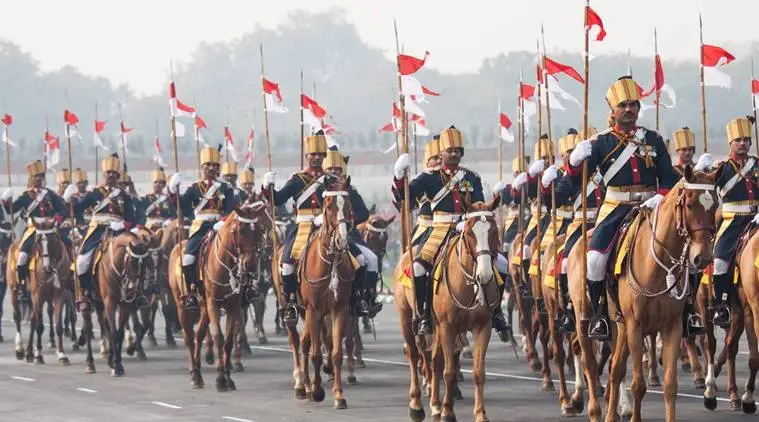
It was prime minister Nehru’s vision that led to the raising of 61st Cavalry. He had sound reasons to favour pomp, pageantry and ceremonials. Their value in instilling national pride and fostering elan and panache in the public was fully appreciated by him. The plan was to raise no less than three regiments of horsed cavalry to perform ceremonial roles and promote equestrianism.

However, there were problems in achieving such a goal. The Wilcox Committee which planned the organisation of the Army after World War Two had recommended that two regiments, Poona Horse and 19th Lancers be retained as horsed cavalry. But there was a need to have more and more tank units to man the two armoured divisions required as a reserve in case of a German thrust through the Caucasus and consequent threat to the Middle East oilfields. In addition, the planned reconquest of Burma required four tank brigades. Therefore, these two regiments found themselves getting mechanised too. The Governor-General’s Bodyguard (later PBG) was heavily committed to its own dedicated duties. The horsed bodyguard units of the Governors of the three Presidency provinces (Madras, Bengal and Bombay) had been disbanded at Independence, being considered anachronisms.

There were however a number of horsed cavalry regiments still in existence, the reorganised remnants of the States Forces maintained by the erstwhile princely rulers. A number of them were amalgamated to form 61st Cavalry in 1953. These were the Gwalior Lancers, Jodhpur/Kachhawa Horse, Mysore Lancers and ‘B’ Squadron, 2nd Patiala Lancers.it was on the legacy of these distinguished regiments that the new unit sought to make its mark. Rajputs from Jodhpur Lancers, Kaimkhanis (Muslim Rajputs from Rajasthan)  from Kachhawa Horse and Marathas from Gwalior Lancers formed a sabre squadron each.The Mysore Lancers and Jodhpur Lancers had fought together as part of the 15th Imperial Service Cavalry Brigade in Egypt, Sinai and Palestine during the First World War.

On 23rd September 1918 the two regiments joined forces through a brilliant manoeuvre to capture the strategic port of Haifa after a great charge on Turkish positions in the face of withering artillery and machine-gun fire. This was a rare instance of cavalry taking a fortified town at the gallop. The credit for the audacious victory went to the cavalrymen’s bold, courageous actions backed up by experience and professional excellence.

The main role of 61 Cavalry was mounted ceremonials and promotion of equestrian sports and polo. In addition, to justify their existence they were allotted an operational task as scouts in the desert. Its organisation was modelled on that of cavalry regiments from between the two world wars – more mounted infantry rather than the traditional horse-borne troops. Consequently, they were stationed at Jaipur. The regiment got down to both its roles with gusto. Its polo team was the country’s best; so were its competitive riders. In 1965 the regiment was deployed to cover approaches to Ganganagar under a distinguished Commandant, Lieutenant Colonel Thakur Govind Singh. The area of responsibility was nearly a hundred kilometres of semi-desert terrain. While armed police detachments manned border outposts to mark sovereignty, 61st Cavalry carried out intensive night patrolling on horseback. No enemy infiltration or penetration was reported. The taste of active service was exhilarating.
Military Digest, Military Digest Indian Express, Military Digest on music, Operation Samudra Setu, INS Jalashwa, Jalashwa, India news, Indian Express

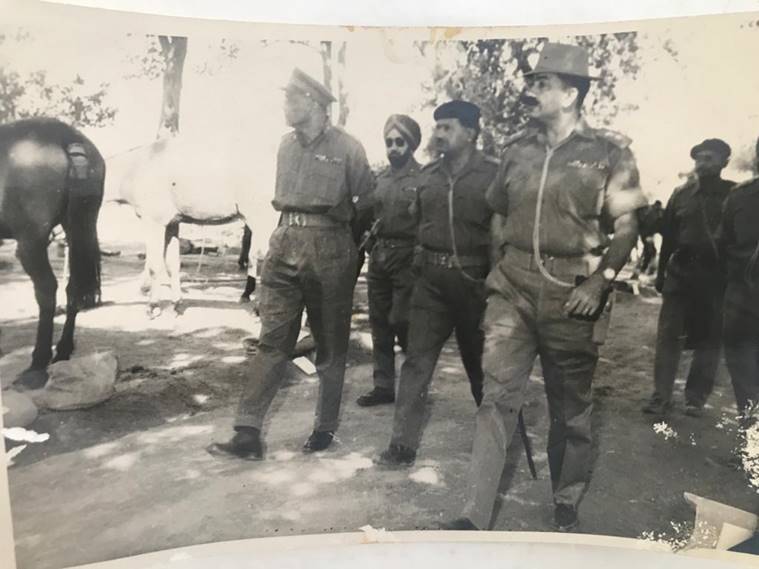
 Lt Gen PP Kumaramanglam, then Vice Chief of Army Staff inspecting the horse lines of 61 Cavalry in their concentration area in Ganganagar sector after the 1965 war. (Credit: Thakur Indra Vijay Singh Khatipura)

In 1970, Lieutenant General MS Wadalia, the regiment’s long-standing Colonel retired. It was suggested that the unit’s future depended on having a strong, energetic successor. In a strategic move it was decided to invite the then Army Chief, General Sam Maneckshaw to be the next Colonel of the Regiment. Maneckshaw was a visionary commander with a proven track record of building and nurturing institutions. In an era when camel pack artillery was wound up because it was realised that tracked vehicles could go anywhere that camels could, he realised that 61 Cavalry needed a change in role otherwise the military and civilian bureaucracy would demand it shed its horses. For horsed cavalry to operate even in a reconnaissance role on a bullet-swept battlefield facing all the modern implements of war – artillery, mines, machine guns, barbed wire etc was unthinkable. In the prelude to the 1971 war Maneckshaw moved the regiment to Delhi to take on the tasks of the Rashtrapati Bhawan guard battalion – guarding the presidential residence, the internal defence of Luttyen’s Delhi and dismounted ceremonials. To their credit the cavalrymen adapted well to their new duties. They had the honour of presenting the first guard of honour to Sheikh Mujibur Rehman on his release from Pakistani prison in January 1972. Their versatility was commendable.

The regiment suffered a big blow, nevertheless in 1974. The Krishna Rao Committee in its report on the Army’s reorganisation recommended a drawdown in its strength. Consequently, a whole sabre squadron was disbanded along with specialist troops for mortars, medium machine-guns, light machine-guns and signals communication. One sabre squadron was permanently stationed at Delhi for performing ceremonial duties. 61st Cavalry took the setback in its stride and continued its quest for excellence on the polo field, the equestrian arena and mounted drill.

Small detachments were sent for deployment in an infantry role in Sri Lanka as part of the Indian Peace-Keeping Force giving the cavalrymen some combat experience. In 1990 after another review of operational roles the regiment took over the protection of Vital Areas/Vital Points in areas along the Western front. To give them some added punch, discarded Soviet BTR-60 armoured personnel carriers (APCs) were given to them. These were however too old, very prone to mechanical breakdowns, lacked spare parts and consequently unreliable. The descendants of the Mysore and Jodhpur Lancers preferred their trusty steeds for patrolling. The regiment took part in exercises, operational alerts and was deployed during Operation Parakram. During the latter stand-off it provided security to the field maintenance area (FMA) at Jaisalmer with its mobile patrols protecting the lines of communication between that place and Jodhpur against enemy special forces and non-state actors.

How has the regiment fared in its main role – ceremonials and promotion of polo and equestrian sports? I’d say exceedingly well. 61 Cavalry has produced eleven Arjuna Awardees and a Padma Shri with the tally of their medals and trophies too numerous to enumerate. They dominate the polo field and equestrian arena. Hard work put in to rehearse and train mounted drills has paid off in the quality of their ceremonial presentations very visible to the public.

It is generally not known but the directive style of command practiced in the regiment has paid dividends. The regiment provides equitation instructors for the National Defence Academy, Indian Military Academy and Officers Training Academy and the Armoured Corps Centre and School. The armed forces view horse riding as a risk exercise and therefore character building in nature. It helps in the blossoming of young men into soldiers and leaders.
Military Digest, Military Digest Indian Express, Military Digest on music, Operation Samudra Setu, INS Jalashwa, Jalashwa, India news, Indian Express


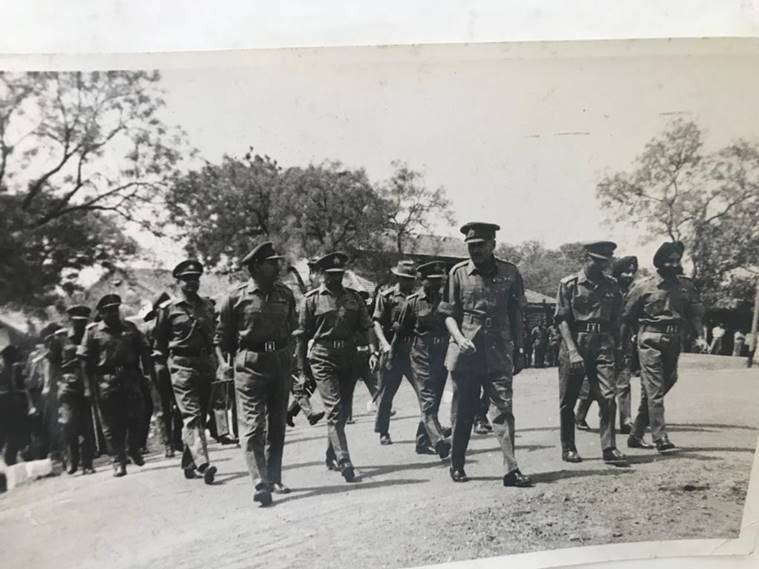
 Army Chief General JN Chaudhri visiting 61 Cavalry in peace time at Jaipur, 1965. (Credit: Thakur Indra Vijay Singh Khatipura)

While 61 Cavalry has been under a Damocles’ Sword for the last three decades the latest proposal on the regiment’s future is gaining currency. It has been recommended that the regimental headquarters and combat service support elements take under command three independent armoured squadrons currently affiliated to 7th Cavalry, Central India Horse and 63 Cavalry to convert to a new armoured regiment. The two sabre squadrons of horsed cavalry are to move to Delhi to come under the Directorate General of Mechanised Forces carrying on with their current jobs. There will be a wholesale posting out of cavalry-trained officers from the regiment replacing them with tankmen. The new armoured regiment will in effect inherit only the shell of 61 Cavalry, the cap-badge (the double-headed Mysore eagle) and the legacy of Haifa.

Coherent, compelling arguments couched in the language of modern warfare have been advanced, mainly on social media for innovation and augmentation of combat power. They bear all the hallmarks of an orchestrated campaign in favour of a particular school of thought. It seems that certain vested interests are hell bent upon an exercise in empire-building. Green eyes seem to abound!

In an army with upwards of seven hundred combat units, not to mention more than four hundred combat support units is it inconceivable to have two regiments (the other one being the President’s Bodyguard) devoted to ceremonials? 61st Cavalry has set the gold standard in mounted drill and ceremonials as it has in equestrian sports. These standards are sure to drop if the cavalrymen are deprived of the supervision, planning and command structure provided by a regimental headquarters. Animal management is no kid’s game. It involves hard work, constant administration and 24/7 dedication and can only be learnt through specialised training and hands-on experience. The costs involved in keeping the status quo and the new proposals are around the same. In Delhi with so much pressure on land and accommodation where are the facilities to cater for additional horses and men to be created? I need hardly remind the readers that training horses and riders and providing equestrian resources requires a lot of space. Space and utilities which have been in place for more than half a century in Jaipur.

The three independent armoured squadrons are affiliated to three distinguished regiments. Combined together they need to evolve a new tradition and regimental cohesion. Saddling them with the legacy of a fourth unit, a traditional cavalry regiment is unfair and sure to deprive them of the good start that they richly deserve.

Will the Sowars of 61st Cavalry now have to dismount their steeds to the traditional cavalry command of ‘Shabash Ghora!’ (pat and stroke your horses) never to mount again? Could New Delhi’s Teen Murti Memorial become the only remembrance of a gallant, efficient regiment? Let us hope not.

Operation Samudra Setu

Under the Vande Bharat Mission, two naval vessels have been deployed to evacuate Indian citizens stranded abroad because of the pandemic. Codenamed Operation Samudra Setu, during its first phase INS Jalashwa and INS Magar transported 698 and 202 citizens respectively from the Maldives. The operation started on 7th May.

INS Jalashwa returned to Male on 14th May, sailing the next day with 700 passengers aboard including 100 women and children and bound for Kochi.
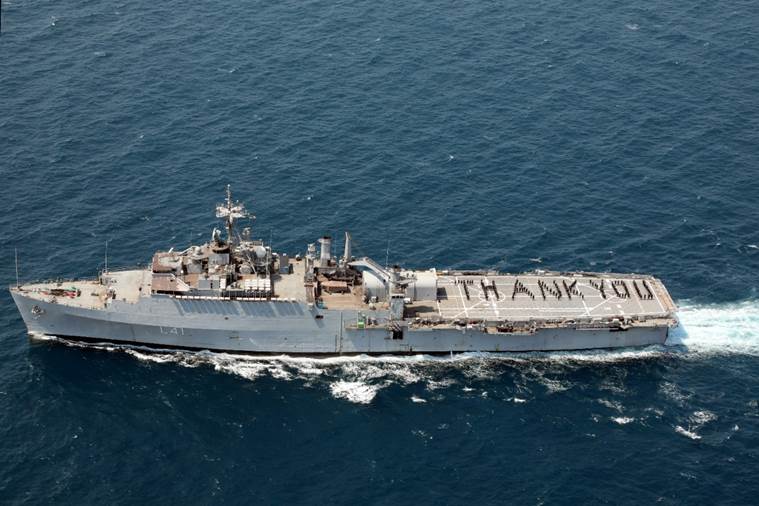
Military Digest, Military Digest Indian Express, Military Digest on music, Operation Samudra Setu, INS Jalashwa, Jalashwa, India news, Indian Express INS Jalashwa during Operation Samudra Setu

In the second phase INS Jalashwa will sail from Colombo port, Sri Lanka carrying around 700 Indian nationals to Tuticorin on 1st June. Both ships have a capacity to carry a thousand persons at a time but are currently restricted to 750 passengers keeping in view social distancing norms.

INS Jalashwa is the former USS Trenton, an Austin-class Landing Platform Dock (LPD). She was built by the Lockheed Shipbuilding and Construction Company at Seattle in Washington State and commissioned into the US Navy in 1971. The Indian Nav acquired it in 2007 after an analysis of the response to the 2004 tsunami revealed an acute shortcoming in wherewithal to react to the need for humanitarian assistance and disaster relief (HADR). This was a stopgap purchase pending the construction of four indigenous LPDs.

INS Magar is the lead ship in the Magar-class of amphibious warfare vessels. Built by Garden Reach Shipbuilders and Engineers, Kolkata she was commissioned in 1987 immediately taking part in Operation Pawan (the intervention in Sri Lanka).

The Navy’s experience in Non-combatant Evacuation Operations (NEO) is most heartening and underlines its adaptability and competence.


IAF chief contradicts CDS Rawat, says plan is to buy 114 foreign fighters besides LCA Tejas

CDS Gen. Bipin Rawat had said IAF was planning to buy the indigenous LCA Tejas instead of 114 ‘Make in India’ foreign jets.

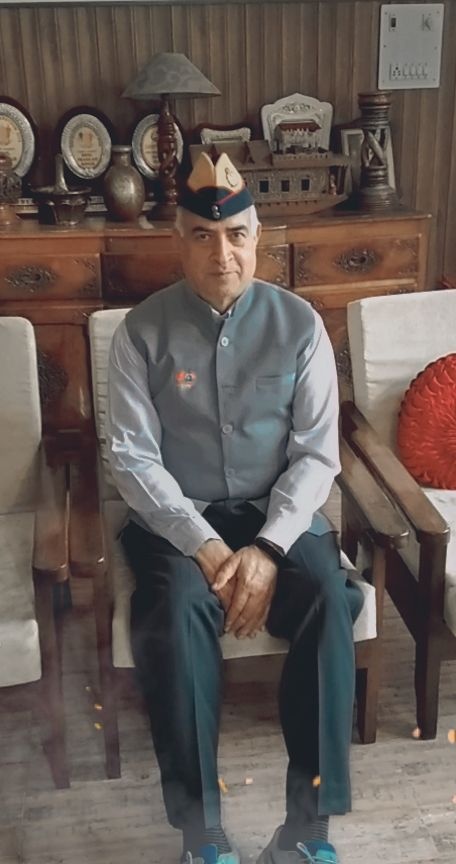
Air Chief Marshal R.K.S. Bhadauria, head of the Indian Air Force | Photo: ANI

Air Chief Marshal R.K.S. Bhadauria, head of the Indian Air Force | Photo: ANI
New Delhi: Four days after Chief of Defence Staff Gen. Bipin Rawat said the Indian Air Force was planning to switch over to the Light Combat Aircraft (LCA) ‘Tejas’ rather than pursue a global tender for 114 new fighter jets, Air Chief Marshal R.K.S. Bhadauria has contradicted him.

Bhadauria said Monday that the list of aircraft planned to be inducted by the IAF includes 36 Rafales, 114 multirole fighter aircraft, 100 advanced medium combat aircraft (AMCA) and over 200 LCAs in different variants.

Rawat had told news agency Bloomberg last week that the IAF “is switching to the LCA” when asked about the global tender for jets.

“The IAF is saying, I would rather take the indigenous fighter, it is good,” he was quoted as saying.

The CDS’ words came as a setback for the likes of Boeing, Lockheed Martin and Saab, who were in the race for the contract for 114 aircraft, which would be worth at least 15 billion dollars and would also entail technology transfer under ‘Make in India’.

However, IAF chief Bhadauria told news agency ANI Monday: “This project (114 jets) is in the middle-weight and is in the Rafale class, in this issue, we will deal with it in the Make in India region, with an increase in FDI, with support to the private sector. I think in future this will bring in technology which is required to support the aviation sector. I think it is important to have another generation of aircraft in terms of capability, technology as we go along (sic).”


Also read: Dassault, Boeing and Saab — the front-runners for IAF’s 114 fighter jet contract


Separate programmes

When the CDS had made his comments last week, they had come as a surprise to the Air Force and industry. Sources had explained to ThePrint that the 114 jets cannot be replaced by the 83 LCA as the two fighters are of different classes.

“The IAF projections take into account the 83 LCA Mk 1A, Rafale, the 114 foreign fighters under Make in India, and even the AMCA,” a source had said.

Another source, who was involved in the negotiations for 83 LCAs, said it was wrong to mix up two separate programmes.

Air Chief Marshal Bhadauria also said his force is planning to acquire 450 fighter aircraft for deployment on the northern and western frontiers of the country over the next 35 years.

Regardless, the IAF will not reach its sanctioned strength of 42 squadrons by 2042, its projections have revealed.

The best-case scenario is if the force inducts the Tejas Mark 2, the AMCA and 114 fighter aircraft, for which a request for proposal is still awaited.