Sanjha Morcha

Pakistan hockey players mourn death of Balbir Singh Sr

Pakistan hockey players mourn death of Balbir Singh Sr

Karachi, May 26

Balbir Singh Sr’s death evoked emotional tributes from Pakistan’s hockey community, which described the legendary centre-forward’s demise as a big loss to the sport in general and the subcontinent in particular.

The 96-year-old three-time Olympic gold medallist, died on Monday in Mohali.

“He had amazing flexibility, speed and litheness in his game. His sprints were a treat to watch,” former Pakistan captain Samiullah said. — PTI

Balbir Singh Sr cremated with state honours

Punjab to name Mohali hockey stadium after him, seeks Bharat Ratna for the legend

http://

Hockey legend and three-time Olympics gold medallist Balbir Singh Sr was cremated with full state honours by the Punjab Police at the tor 25 electric crematorium here today

The cremation was attended by Punjab Sports Minister Rana Gurmit Singh Sodhi, former hockey Olympian Pargat Singh, former Punjab minister Parminder Singh Dhindsa, Chandigarh Sports Secretary KK Yadav, UT Director (Sports) Tejdeep Singh Saini, Hockey Chandigarh President Chander Shekhar and Secretary Anil Vohra among others.

‘Was Punjab’s pride, nation’s treasure’

Punjab Sports Minister Rana Gurmit Singh Sodhi announced that the state government would forward Balbir’s name for the Bharat Ratna and name the Mohali hockey stadium after the legendary figure. “On behalf of the state government, the Punjab Sports Department will name our Mohali-based international hockey stadium after Balbir Singh Sr. Our government will also recommend his name for the Bharat Ratna. He was not only Punjab’s pride but also a great treasure of the nation. The countrymen will remember him always for his immense contribution to hockey,” said Sodhi.

The 96-year-old had been battling several age-related problems for over two weeks and breathed his last at a private hospital in Mohali. He was on ventilator support since May 12 and had tested negative for Covid-19.

The hockey legend being
given a gun salute.
Photos: Pradeep Tewari

Balbir Sr, largely considered as the second best in the sport only after Dhyan Chand, was living with his daughter Sushbir Bhomia and grandson Kabir Singh Bhomia at his Sector 36 residence in Chandigarh. The centre forward was the only Indian among 16 legends chosen by the International Olympic Committee across modern Olympics history. His record for scoring the most goals by an individual in the men’s hockey final of the Olympics stands unbeaten till date — Balbir Sr had scored five of India’s goals in the 6-1 victory over the Netherlands in the gold medal match of the 1952 Helsinki Games. He was conferred with the Padma Shri in 1957 and had managed India’s World Cup-winning team in 1975. — TNS

Balbir Singh Sr’s daughter Sushbir
Bhomia (extreme right) being
consoled at the cremation ground
on Monday.

http://


China cites Covid for evacuating its citizens from India

China cites Covid for evacuating its citizens from India

he Chinese Government has asked its citizens staying in India and willing to return, to register by Wednesday.

New Delhi, May 26

China has said it is organising evacuation for its citizens from India in view of the rising Covid cases in the country. In a notice on the Embassy website, the Chinese Government has asked its citizens staying in India and willing to return, to register by Wednesday.

Brazil and Russia have three times more cases than India, but China has so far issued no such advisory linking evacuation of its nationals in those countries to a rise in Covid cases. Embassy sources had earlier denied any link with tension on the Sino-Indian border.

“In consideration of the development of the epidemic situation in India, the Chinese side is planning to dispatch temporary flights to India to bring back students, tourists and business inspectors who are facing difficulties,” said Chinese Embassy spokesperson Ji Rong. — TNS


India, China working on backdoor parleys

India, China working  on backdoor parleys

Sandeep Dikshit
Tribune News Service
New Delhi, May 26

The reason for the stand-off between troops of India and China on the Line of Actual Control (LAC) in eastern Ladakh remains a subject of conjecture among foreign policy experts in the absence of any authoritative commentary from both governments.

At a regular press conference on Tuesday, Chinese Foreign Ministry spokesperson received no queries on the LAC stand-off, an indication that both sides would work out the issue away from public glare and commentary.

Quiet diplomacy

The reticence of External Affairs Minister S Jaishankar and Chinese Foreign Office comments on global issues but the LAC suggest quiet diplomacy is being given a chance

The Chinese side has generally withheld comments on the issue except for some observations by “The Global Times”. A regular commentator on India, Long Xingchun, wrote that most face-offs were resolved without the media getting to know about them. He, however, saw the face-off at the Galwan valley as having been planned by India in advance and cautioned that it could snowball into a confrontation worse than Doklam. The MEA has commented on the stand-off twice, on May 14 and May 21, and its Chinese Foreign Office once, that too briefly.

Chinese Foreign Minister Wang Yi did not touch on India at all during his 90-minute especially convened press conference on Sunday while External Affairs Minister S Jaishankar has also adopted a low profile on the issue.

Former Foreign Secretary Shyam Saran as well as former Ambassadors to China Ashok Kantha and Gautam Bambawale are united in asserting that Chinese aggressiveness on the border is part of its pattern of pushing its advantage on territorial claims while the adversaries are engaged in Covid. This is also an observation made by top US diplomat for the region Alice Wells, who said the LAC stand-off was a reminder that Chinese aggression was not just rhetorical.

However with no word coming from the actual policy-making circles except for a few accounts of the stand-off, strategic experts too have been unable to foresee the end game.


Prime Minister meets military brass on LAC crisis India to carry on with infrastructure development in key areas of Ladakh

Prime Minister meets military brass on LAC crisis

Tribune News Service

New Delhi, May 26

Prime Minister Narendra Modi held a review meeting on Tuesday with National Security Adviser Ajit Doval and Chief of Defence Staff (CDS) Gen Bipin Rawat besides other senior officials on a day the stand-off between Indian and Chinese troops continued in the Galwan valley of eastern Ladakh. Lieutenant Governor of Ladakh RK Mathur, who was in Delhi, also called on the Prime Minister, said official sources.

Face-offs this month

May 5-6, Eastern Ladakh

  • 50 Chinese, Indian soldiers engaged in violent face-off on May 5 evening north of Pangong Tso. The violence spilled over to the next day too.

May 9, Sikkim

  • 150 Indian, Chinese military personnel engaged in face-off near Naku La. 10 soldiers from both sides injured.

Defence Minister Rajnath Singh was also briefed by the CDS and three service chiefs on Tuesday as he reviewed the ground situation in Ladakh.

Singh is learnt to have heard them out, discussing troop numbers and risk to infrastructure. Earlier, the Indian Army and China’s People’s Liberation Army held several meetings to resolve the LAC situation in eastern Ladakh.

Defence sources said India, for now, had decided that road construction along the Line of Actual Control (LAC) in Ladakh must continue and Indian fortifications and troop deployment must match those of the Chinese. The Indian Army has been asked to hold ground while talks to defuse the situation would continue.

Meanwhile, reports said China continued to add to its military strength across eastern Ladakh as tensions festered in the Galwan valley and north of the Pangong Tso, a 135-km glacial lake.

Some 8,000-10,000 troops along a stretch of 826 km and armoured personal carriers and artillery guns have already been deployed on both sides. Troop build-up on both sides is concentrated at three spots —- one at Galwan and two around Pangong Tso. The cause of the flare-up is apparently the 255-km Darbuk-Shyok-Daulat Baig Oldie road.

Opposite the road or eastwards of it is the Aksai Chin plateau, illegally occupied by China.

China and India have a string of air bases close to the LAC which can be used to launch an offensive. A senior official explained that fully functional Chinese airfields at Kashgar, Korla, Yarkand, Hotan, Ngari Gunsa and Gardzong virtually form a ‘ring’ around Ladakh.

On Friday, General Manoj Mukund Naravane had visited Leh, the headquarters of 14 Corps, and reviewed security deployment of forces along the LAC.


India denies trespassing

Refutes China’s contention that tension triggered due to trespassing by its forces; says Chinese troops hindering patrolling

China irked by infra

  • China has been peeved about India laying a key road in finger area of Pangong Tso region and another road connecting the Darbuk-Shayok-Daulat Baig Oldie road along Galwan valley.

Increased patrolling

  • Since the face-offs, China increased its strength in Pangong Tso, Galwan valley, Demchok and Daulat Baig Oldie.
  • India Army too carrying out patrolling in region.

Scale up battle preparedness: Xi

Beijing: Chinese President Xi Jinping on Tuesday ordered the military to scale up the battle preparedness. He was speaking at a plenary meeting of the delegation of the People’s Liberation Army during the parliament session. His comments came in the backdrop of the LAC stand-off. PTI

Doklam stand-off lasted 73 days

  • India, China were engaged in 73-day stand-off in Doklam in 2017, triggering fears of a war
  • The LAC covers 3,488 kms. China claims Arunachal as part of southern Tibet, India contests it.

Watch IAF chief RKS Bhaduria fly Tejas fighter as Air Force inducts 2nd LCA squadron

This will be the first major event for the IAF since the outbreak of COVID-19

http://

Coimbatore, May 27

Chief of Air Staff Air Chief Marshal R K S Bhadauria flew a Tejas single-seater light combat aircraft at the Sulur air force station on Wednesday.

Officials said Air Chief Marshal Bhadauria, who worked with the team that developed the Tejas jet, flew the aircraft which is part of the IAF’s 45 Squadron.

The Chief of Air Staff was in Sulur to operationalise the IAF’s 18 Squadron, which is codenamed as ‘Flying Bullets’. It will be the second squadron in the Indian Air Force to fly the Tejas aircraft.

The Tejas has been developed by the Aeronautical Development Agency and the HAL. The lifespan of the jet would be a minimum of 30 years just like any other front-line combat aircraft.

The combat jets are classified under various generations depending on their avionics, capability and weapons systems. The current fleet of fighter jets with the IAF range from three-and-half generation to the fourth generation.

The Indian Air Force has already placed an order for 40 Tejas and is likely to seal a contract “very soon” with HAL for another 83 aircraft at a cost of around Rs 38,000 crore.

A naval version of the Tejas light combat aircraft is in the development stage. PTI


Top Army commanders begin deliberations on security challenges facing India

The commanders are also expected to delve into the overall situation in Jammu and Kashmir

Top Army commanders begin deliberations on security challenges facing India

New Delhi, May 27

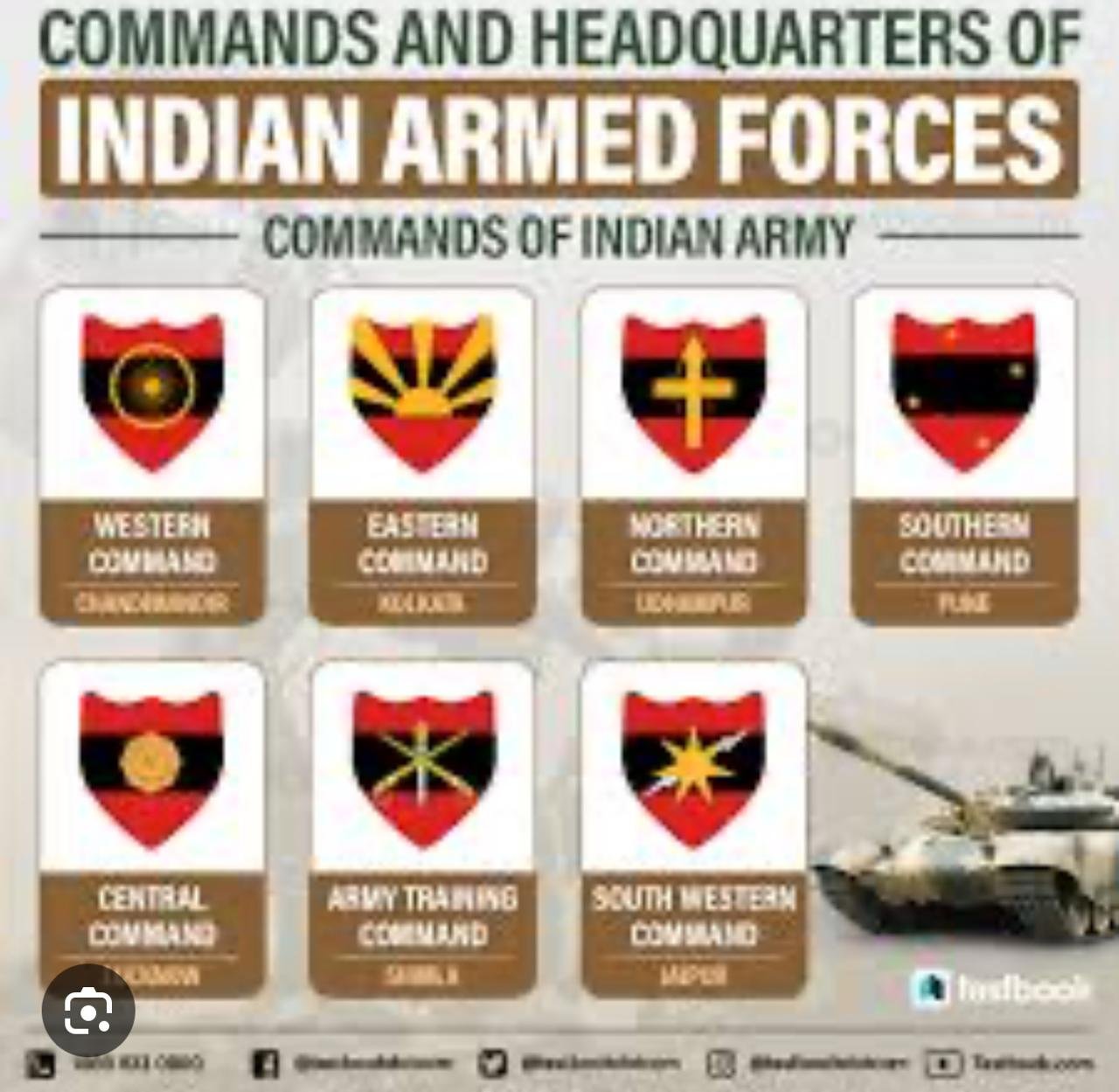
Top commanders of the Indian Army on Wednesday began deliberations on key security challenges facing India, including the tense standoff between Indian and Chinese troops in several areas of eastern Ladakh.

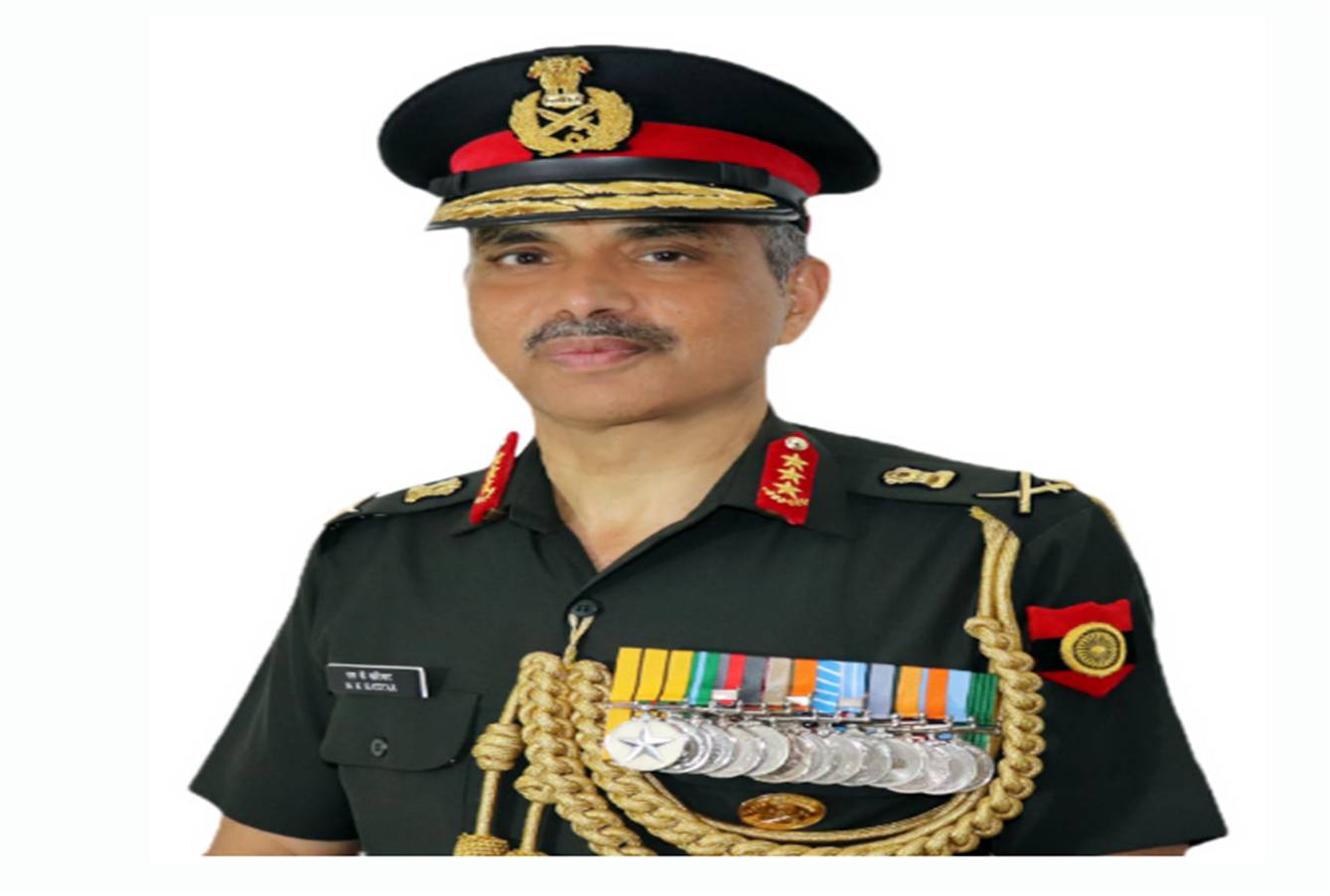
The three-day conference is being presided over by Chief of Army Staff Gen M M Naravane.

The commanders are also expected to delve into the overall situation in Jammu and Kashmir.

However, the main focus will be on the situation in eastern Ladakh where Indian and Chinese troops are locked in an eyeball-to-eyeball face-off in sensitive areas like Pangong Tso, Galwan Valley, Demchok and Daulat Beg Oldie, government sources said.

“All aspects of India’s security challenges, including along borders with Pakistan and China, will be discussed at length by the commanders,” said a senior military official on condition of anonymity.

Both India and China have significantly increased their presence in all sensitive areas in the region, in an indication that neither side is ready to back off.

The situation in eastern Ladakh deteriorated after around 250 Chinese and Indian soldiers were engaged in a violent face-off on the evening of May 5 which spilt over to the next day before the two sides agreed to “disengage” following a meeting at the level of local commanders.

Over 100 Indian and Chinese soldiers were injured in the violence.

The incident in Pangong Tso was followed by a similar incident in North Sikkim on May 9.

The commanders’ conference was originally scheduled to be held from April 13-18, but it was postponed due to the coronavirus pandemic.

The second phase of the conference will take place in the last week of June.

On the face-off in eastern Ladakh, India last week said that it has always taken a very responsible approach towards border management but the Chinese military was hindering normal patrolling by its troops.

It is learnt that both India and China are looking at a solution to the issue through talks.

On May 5, the Indian and the Chinese army personnel clashed with iron rods, sticks, and even resorted to stone-pelting in the Pangong Tso lake area in which soldiers on both sides sustained injuries.

In a separate incident, nearly 150 Indian and Chinese military personnel were engaged in a face-off near Naku La Pass in the Sikkim sector on May 9. At least 10 soldiers from both sides sustained injuries.

The troops of India and China were engaged in a 73-day stand-off in Doklam tri-junction in 2017 which even triggered fears of a war between the two nuclear-armed neighbours.

The India-China border dispute covers the 3,488-km-long LAC. China claims Arunachal Pradesh as part of southern Tibet while India contests it.

Both sides have been asserting that pending the final resolution of the boundary issue, it is necessary to maintain peace and tranquillity in the border areas. PTI 


China says situation at India border ‘overall stable and controllable’

The comments by the Foreign Ministry spokesman come in the backdrop of the continuing standoff between the militaries of India and China at the LAC

China says situation at India border 'overall stable and controllable'

Beijing, May 27

China on Wednesday said the situation at the border with India is “overall stable and controllable”, and both the countries have proper mechanisms and communication channels to resolve the issues through a dialogue and consultation.

The comments by the Foreign Ministry spokesman came in the backdrop of the continuing standoff between the militaries of India and China at the Line of Actual Control (LAC).

Foreign Ministry spokesman Zhao Lijian, during a media briefing here, said that China’s position on the border-related issues is clear and consistent.

“We have been following the important consensus reached by the two leaders and strictly observing the agreements between the two countries,” he said, apparently referring to the directions of Chinese President Xi Jinping and Prime Minister Narendra Modi after their two informal summits, asking the militaries of the two countries to take more confidence-building measures to maintain peace and tranquillity along the borders.

The foreign ministry’s remarks came a day after President Xi ordered the military to scale up the battle preparedness, visualising the worst-case scenarios and asked it to resolutely defend the country’s sovereignty.

Zhao said: “We are committed to safeguarding our territorial sovereignty and security, and safeguarding peace and stability in the border areas. Now the China-India border area situation is overall stable and controllable.”

“Between the two countries, we have good border-related mechanism and communication channels. We are capable of resolving the issues properly though dialogue and consultation,” he said, confirming reports that the diplomatic efforts were on to ease the border tensions.

Asked where the talks are taking place, Zhao said the two countries had established border-related mechanisms and diplomatic channels.

“This includes the communication between border troops and between our diplomatic missions,” he added.

The nearly 3,500-km-long LAC is the de-facto border between the two countries.

Several areas along the LAC in Ladakh and North Sikkim have witnessed major military build-up by both the Indian and Chinese armies recently, in a clear signal of escalating tension and hardening of respective positions by the two sides even two weeks after they were engaged in two separate face-offs.

India has said the Chinese military was hindering normal patrolling by its troops along the LAC in Ladakh and Sikkim and strongly refuted Beijing’s contention that the escalating tension between the two armies was triggered by trespassing of Indian forces across the Chinese side.

The Ministry of External Affairs said all Indian activities were carried out on its side of the border, asserting that India had always taken a very responsible approach towards border management. At the same time, it said, India was deeply committed to protecting its sovereignty and security.

“Any suggestion that Indian troops had undertaken activity across the LAC in the Western sector or the Sikkim sector is not accurate. Indian troops are fully familiar with the alignment of the Line of Actual Control in the India-China border areas and abide by it scrupulously,” MEA Spokesperson Anurag Srivastava said at an online media briefing last week. PTI


China initiates process of sharing hydrological data for Sutlej, 10 days before scheduled date

According to an agreement signed between the two countries, China shares hydrological data of the Brahmaputra and Sutlej rivers with India from May 15 and June 1, respectively, until the end of October.

The development comes amid the recent face-offs between the armies of the two countries at the eastern and northern borders of India.

Nearly 10 days before its scheduled date, China has initiated the process of sharing hydrological data for the Sutlej river with India, an annual practice during the monsoon which is crucial for generating information on floods in north India, officials said on Friday.

According to an agreement signed between the two countries, China shares hydrological data of the Brahmaputra and Sutlej rivers with India from May 15 and June 1, respectively, until the end of October.

For the Sutlej river, known as Langqen Zangbod in China, data is shared from a station at Tsada, the officials said.

The river, a major tributary of the Indus, originates in Tibet and enters India through Himachal Pradesh.

This year, China initiated the process on May 18-19, nearly 10 days before the scheduled date, the officials added.

The development comes amid the recent face-offs between the armies of the two countries at the eastern and northern borders of India.

On Thursday, India had said that the Chinese military was hindering normal patrolling by its troops along the Line of Actual Control in Ladakh and Sikkim. It also strongly refuted China’s contention that the escalating tension between the two armies was triggered by trespassing of Indian forces across the Chinese side.

Around 250 Indian and Chinese army personnel clashed with iron rods, sticks, and even resorted to stone-pelting in Pangong Tso area in Eastern Ladakh on May 5. Four days later, there was a similar face-off near Naku La Pass in North Sikkim.

The data is crucial for India for generating flood-related information in north and northeast India, the officials said.

Prior to the sharing of data, both sides check whether the existing data sharing systems are working fine. Accordingly, China sends a test mail with data that has to be acknowledged by India, signifying that the communication line is working fine.

But this usually happens two to three days before the actual data sharing begins, the officials said.

Data sharing for the Brahmaputra river started from May 15.

In 2017, China had stopped sharing the data citing that the hydrological data gathering sites were washed away due to floods. It also coincided with the 73-day Doklam stand-off between the two neighbours that took place during the peak monsoon period.

It resumed sharing data from 2018.


Militaries of India and China on high alert as border tensions escalate

Border incidents are at their highest since 2015, senior Indian security officials said. The two sides held talks on Tuesday aimed at lowering the temperature between the nuclear-armed neighbors, however neither army was willing to compromise, the officials said, asking not to be identified citing rules on speaking to the media.

According to data from Indian security officials, the India-China border has been unusually active since last year with a 64% rise in incidents since 2018.

Talks between the Indian and Chinese military to end escalating tensions along their disputed border have ended in a deadlock as the fragile peace shows signs of breaking down.

Border incidents are at their highest since 2015, senior Indian security officials said. The two sides held talks on Tuesday aimed at lowering the temperature between the nuclear-armed neighbors, however neither army was willing to compromise, the officials said, asking not to be identified citing rules on speaking to the media.

The armies are currently on a high-alert at two locations along the Line of Actual Control — the 3,488 kilometer (2,167 mile) unmarked boundary between India and China. Additional troops have been rushed to the border by both sides, the officials said. They are facing each other at the Galwan River, which was one of the early triggers of the 1962 India-China war, and at the disputed Pangong Tso — a glacial lake at 14,000 feet in the Tibetan plateau, portions of which are claimed by both.

The inconclusive talks came as the US issued a tough statement on China. In Washington, senior diplomat Alice Wells said the clashes were a “reminder that Chinese aggression is not always just rhetorical.”

“Whether it’s in the South China Sea or whether it’s along the border with India, we continue to see provocations and disturbing behaviour by China that raises questions about how China seeks to use its growing power,” Wells, acting assistant secretary for South and Central Asia, said on a briefing call to reporters on May 20.

China’s Ministry of Foreign Affairs was not immediately availabe for comment, however spokesman Zhao Lijian told reporters at a regular briefing in Beijing on May 13: “We urge the Indian side to work with China, refrain from taking any complicating moves so as to create enabling conditions for the development of our bilateral relations and peace and stability in border areas.”

“Any suggestion that Indian troops had undertaken activity across the LAC in the Western Sector or the Sikkim sector is not accurate,” Anurag Srivastava, the spokesman for India’s Ministry of External Affairs said in a statement on Thursday. “All Indian activities are entirely on the Indian side of the LAC. In fact, it is Chinese side that has recently undertaken activity hindering India’s normal patrolling patterns.”

Contentious Road

According to data from Indian security officials, the India-China border has been unusually active since last year with a 64% rise in incidents since 2018. Along the sensitive “Eastern Sector” — from Bhutan, stretching east along the Indian state of Arunachal Pradesh — incidents doubled last year in comparison to 2018. China claims a 2,000-sq km stretch of land in this sector, which is defended by at least 20,000 Indian soldiers along with paramilitary forces.

Border incidents in the “Western Sector” — stretching from northwestern Tibet, along the Indian state of Uttarakhand and the Union Territory of Ladakh, stretching to the critical Karakorum Pass — have witnessed a 75% rise in 2019.

The Indian officials say China is objecting to a road it’s building at the Pangong Tso that connects to disputed border. On May 5 and 6, troops clashed on the banks of the lake, leaving scores of soldiers on both sides injured. On May 9, several soldiers were injured when the two armies clashed near a three-way junction between Bhutan, China and India, close to the site of the Doklam standoff.

The Indian Army would not comment on the tensions, with spokesman Aman Anand on Thursday referring Bloomberg to a statement issued on May 12 that acknowledged incidents of aggressive behavior along the border.

”I take the current border situation very seriously,” said Ashok K. Kantha, director of the New Delhi-based Institute of Chinese Studies and a former Indian ambassador to Beijing, adding that he didn’t “see these as isolated incidents but in conjunction China’s aggressive behavior in the South China Sea. There is a larger pattern to border incidents.”

Informal Summits

There had been a significant dip in tensions in 2018 that followed an informal summit between India’s Prime Minister Narendra Modi and President Xi Jinping in the Chinese city of Wuhan. The meeting between the leaders — held after stand off of more than 70 days between the two armies on the Doklam peninsula in 2017 — was followed up with a second summit in Mamallapuram near the southern Indian city of Chennai in October last year.

At that meeting, Xi and Modi agreed to give “strategic guidance” to their respective armies. That included less aggressive patrols on the border, informing the other side of incoming patrols and more contact between local military commanders to reduce friction.

In a recent interview with Bloomberg, India’s Chief of Defense Staff Bipin Rawat said the strategic guidance was working, but noted a hot-line connecting the top leaders of the two armies that was proposed as far back as 2013 would help reduce tensions. “I think the hot-line between the two armies is required,” Rawat said. Even though the two countries are in touch through diplomatic channels, he added “we would like a military level communication as well.”




Managing the border with China| HT Editorial The two countries need a better framework to deal with issues

The problem in Sino-Indian relations is that whether such incidents are motivated by the geological or the geopolitical is often unclear to either side

Soldiers engaged in hostilities on three border points would be ominous in almost any context except where India and China are concerned. Along the Line of Actual Control, it could mean an escalating confrontation that could spread into diplomatic and economic spheres. Or it could mean that another border incident has got a bit out of control. The reasons for escalation could be the ever-changing border infrastructure or a rush of blood by an individual soldier. If the latter, one can expect the status quo to be restored, but after much muscle-flexing.

The problem in Sino-Indian relations is that whether such incidents are motivated by the geological or the geopolitical is often unclear to either side. Much of the discussion at officer-level flag meetings or between diplomats in the twin capitals is about trying to determine at which level the wheels are turning. That, in turn, goes to a much deeper issue of distrust between India and China and opacity on the part of both governments, but with Beijing being the blacker box. The two countries now have four border management agreements, with a fifth in the works. But with new roads being built, better vehicles being deployed, and the strategic landscape forever changing along the border, each agreement starts becoming outdated as soon as the ink dries.


India and Chinese troops are face-to-face in Galwan Valley, Finger 4 and Naku La. China’s “all weather friend”, Pakistan, has turned up the temperature along the Kashmir border. But, at the same time, the People’s Bank of China’s licence to invest in India has just been renewed. Beijing has ensured emergency medical supplies are being sent, albeit with some quality control issues. In contrast to the rhetorical aggression that Beijing has shown to the West or Southeast Asia, the noises from China regarding India have been benign. This is all part of a long-standing dichotomy in the Sino-Indian relations, much competitiveness with many elements of cooperation. However, with the international strategic environment changing, this rough-and-ready way of handling bilateral relations needs to be replaced. The goal should be a framework where lines of communication, strategic red lines and dotted lines along maps are all better delineated. This is a task of a generation, but one that is essential if India and China are to ensure border flare-ups do not become something much larger and more dangerous.