Sanjha Morcha

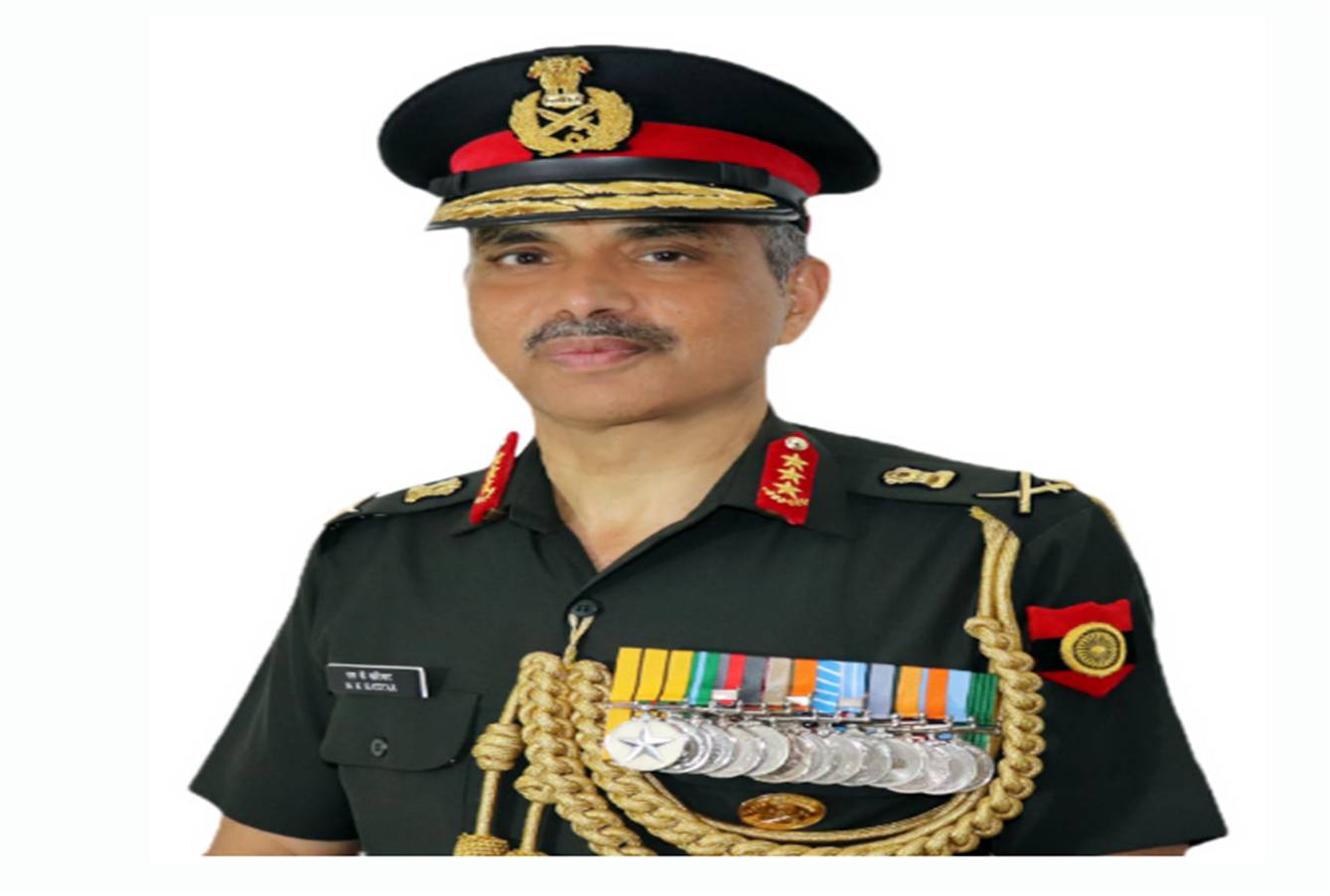
Army Chief Naravane visits forward posts in Siachen

Army Chief Naravane visits forward posts in Siachen

General MM Naravane met and interacted with troops deployed at the forward posts in the Siachen Sector. Tribune photo

Srinagar, January 9

On his maiden visit after assuming office, Army Chief Gen MM Naravane on Thursday visited forward posts in Siachen Sector under the crucial Northern Command.

He was accompanied by Lieutenant General YK Joshi, Chief of Staff, Headquarters Northern Command, and Lieutenant General Harinder Singh, General Officer Commanding, ‘Fire & Fury’ Corps, an official spokesperson said.

Gen Naravane was briefed on the operational readiness being maintained in the sector by Commander, Siachen Brigade, he said.

The army chief also met and interacted with troops deployed at the forward posts in the Siachen Sector, complimenting them for their tenacity and high morale despite the extreme challenges posed by inclement weather, difficult terrain and super high altitude conditions, the spokesperson said.

Gen Naravane said the entire nation is proud of the soldiers deployed in Siachen, defending the territorial integrity of India.

He exhorted them to continue to discharge their duties with the same enthusiasm and zeal, and also assured them the full support of the country as well as the Army in carrying out their duties, the spokesperson said.

At the Siachen Base Camp, Gen Naravane laid a wreath at the iconic Siachen War Memorial in honour of all the brave Siachen warriors who have made the supreme sacrifice in the country’s defence, the official added.

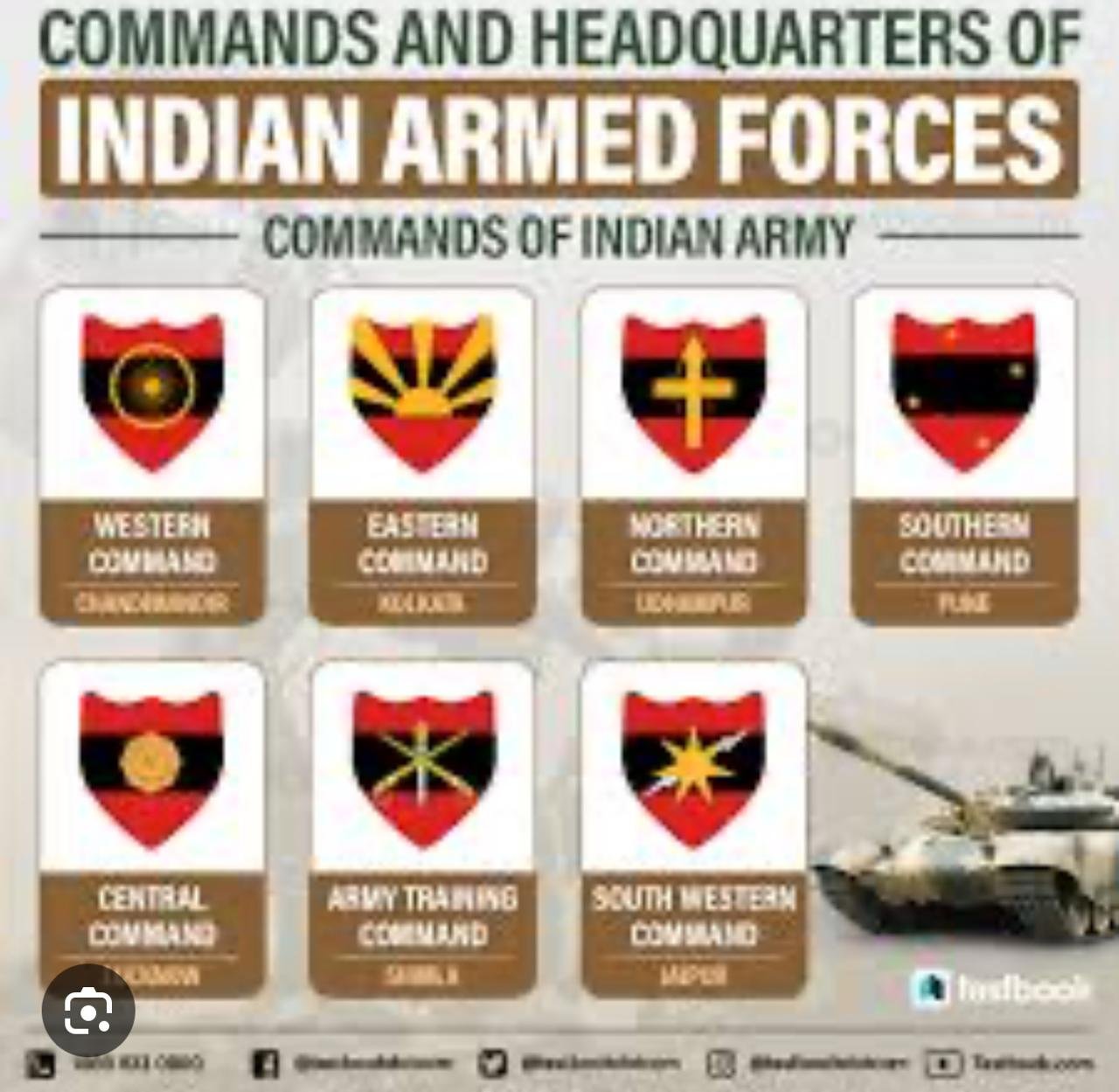
The Northern Command of the Indian Army is entrusted with manning the country’s borders with Pakistan and China.

Gen Naravane took charge as the army chief from Gen Bipin Rawat on December 31. — PTI


Now, Army app to control mobile use

Now, Army app to control mobile use

Vijay Mohan

Tribune News Service

Chandigarh, January 8

With information security becoming a cause for concern due to the proliferation of smart phones, the Army is developing a proactive security application for installation on mobiles that will be able to monitor and control voice and data communication as well as track the location and movement of the device.

How it will work

  • Handset will be configured with app and linked to a central server over Internet for providing a public key infra cover
  • A GPS-based virtual boundary or a ‘geo fence’ will be identified for each device on a real-time location

At present there is no effective system of securing the use of smart phones other than rudimentary measures such as restricting their presence in sensitive military establishments or carrying out passive surveillance by monitoring agencies. Mobile phone communication not only remains highly susceptible to interception, but is also prone to installation of malwares and other snooping applications.

Under the plan, each mobile handset will be configured with the application through which voice and data exchange will be requested and linked to a central server over the Internet for providing a Public Key Infrastructure (PKI) cover and initiate a secure communication.

A GPS-based virtual boundary or a ‘geo fence’ will also be identified for each device on a real-time location so that the movement of the device can be tracked and its entry or exit to and from specified zones is recorded. The project is expected to take 12-15 months for development and carrying out user trials. The Directorate General of Information Technology at Army Headquarters and the Army Software Development Centre are the agencies responsible for executing the project, which may also see the involvement of domain experts from the public or private sector.


On 5-day China visit, Gen Ranbir holds talks with PLA general

On 5-day China visit, Gen Ranbir holds talks with PLA general

Ranjit Thakur

Jammu, January 8

Close on the heels of joint military exercise between Indian and Chinese troops in Meghalaya, Northern Army Commander Lieutenant General Ranbir Singh today began his five-day China visit to exchange views with his counterpart on furthering peace and cooperation in the region.

The Army Commander is leading a high-level military delegation that would hold talks with top generals of the People’s Liberation Army as well as visit vital military and civil establishments in Beijing, Chengdu, Urumqi and Shanghai to exchange views on measures for furthering peace and tranquillity.

Lt Gen Singh met Chinese counterpart Gen Hanwei Gou, Commander (Ground Forces), PLA, in a free, congenial and cordial environment and discussed areas of mutual interest. The two discussed issues having strategic ramifications, including measures to enhance peace along the border.


The saga of K Menon and the ArmyIf Nehru and Krishna Menon had listened to Thimayya, India would not have lost the 1962 war

Menon became Nehru’s kindred soul from the 1930s ht Archive

Shekhar Gupta

Much folklore has grown around VK Krishna Menon, India’s second most powerful politician in the 1950-60 decade. He is a reviled and demonised figure, especially in the Bharatiya Janata Party-Rashtriya Swayamsevak Sangh worldview as the “villain of 1962”. It’s wonderful, therefore, that we now have a brilliantly-researched biography of Menon by Congress leader Jairam Ramesh.

Was he an angel or a demon? Neither, as Ramesh’s research in his aptly named 725-page tome A Chequered Brilliance shows. Menon could be brilliant, as in the United Nations over Kashmir, eminently skilful, as in persuading Chou En Lai in 1955 to return American Air Force prisoners of the Korean War, and also display the “pettiest and meanest” mind in his dealings with the generals as India’s most controversial defence minister ever yet.

That Krishna Menon, a mix of extreme vanity and arrogance, and insecurity laced with self-pity at the same time, became Jawaharlal Nehru’s kindred soul from the 1930s on is well known. It is also amazing how much they confided in each other. In 1939, for example, Nehru wrote a long, distraught letter to Menon complaining about his failing physical health. He added however that his constitution was strong and he may ride it out. But what worried him much more was the state of his mental health. Ramesh guesses that this must have been around time Indira would have told him she wanted to marry Feroze Gandhi.

For us children of the 1960s, the most fascinating, and for today’s generation the newsiest section, however is the five years Menon served as defence minister, and, second most powerful man in Nehru’s Cabinet (1957-62).

Ramesh’s use of the description “meanest and pettiest” specifically refers to how Menon put up the second senior-most Army officer, Lieutenant-General PN Thapar into making allegations against his own chief KM Thimayya (13 charges including leaking classified information, loose talk about the prime minister, and hobnobbing with arms dealers) to another five-point “charge-sheet” on Lt-Gen SPP Thorat, widely seen as Thimayya’s preferred choice as his successor.

In his letters to them, one his boss and the other his equal, Thapar mentioned that he was doing this with the PM’s knowledge and he would greatly appreciate to hear their side of the story too. Ramesh concludes, and I think quite rightly, that Menon, who detested Thimayya, had put Thapar up to it, and also taken Nehru into confidence. Wheels of fratricidal conspiracies were moving fast. Knowing Menon would veto his choice, Thorat, Thimayya wrote his recommendation directly to President Rajendra Prasad as Supreme Commander. The president promptly approved it too. The Republic was still settling down and nobody quite understood the Rashtrapati’s powers. Not even Prasad himself. Nehru and Menon closed ranks to reject it.

If you think this wasn’t already a divided Army in the run-up to a war, more conspiracies emerged. First, Thimayya wrote a letter complaining he had information of some “smell” about another Lt-Gen, SD Verma. And after the latter had been moved out punitively, came to Menon to say that he had erred. The only “smell” about Verma was that he wasn’t too popular. Menon recorded this in his notes to Nehru. Next was against another top officer, Sam Manekshaw, then commanding the Defence Services Staff College in Wellington. It was again the charge of “loose talk”, and of being Anglophile to the extent that he had “hanged portraits of Warren Hastings and Robert Clive” in his office. His career was nearly ruined too, as Menon sidelined him and ordered an inquiry. It cleared him subsequently. Or the history of 1971 may have been different.

Ramesh’s documents throw up three surprises on one of the biggest stories of that period, which has morphed into much folklore as a Thimayya versus Nehru, Army versus politician saga over the decades, and which Narendra Modi referred to in his last Karnataka campaign as Nehru’s humiliation of local hero Thimayya. One, that The Statesman scooped the story of his resignation in 1959. It was under another byline. Ramesh, however, establishes that Gen JN Chaudhri (who later became Chief of Army Staff), had moonlighted anonymously as The Statesman (then British-owned) military correspondent for more than a decade. He was on the inside track of this resignation but could not have written the story himself and passed it on. Think of a serving top general working as a leading paper’s military correspondent incognito.

Second, there are stunning notes from the personal archives of the then British High Commissioner Malcolm Macdonald detailing how Thimayya was sharing all his problems with Menon, Nehru, the resignation plans and much classified information with him — like how Thimayya thought Menon deliberately painted Pakistan as India’s main enemy and threat, and played down China. All of which Macdonald was dutifully reporting back to London.

And third, that true to what’s come to be believed later, India would not have lost that war in 1962 if Nehru and Menon had listened to Thimayya. But not because he was so brilliant he would have won. But because he was prescient and insisted — even writing five months after his retirement — that there was no way the Army could protect India from the Chinese. And that this had to be done by politicians and diplomats.

All the stories of a bumbling Nehru led by a paranoid and compulsive conspiracy-theorist Menon are true. The notion that, left to the generals, India would have done much better in that war is shown up as an awful myth. The generals of that period were too busy and too good at fighting each other, to have no time left for the Chinese. And we haven’t even mentioned a Lt-Gen BM Kaul yet.

By special arrangement with ThePrint


Over 500 Sikhs face eviction from scheduled tribal block in MP

Ranjan

ranjan.srivastava@hindustantimes.com

Sheopur : When Prime Minister Indira Gandhi’s assassination in New Delhi by her Sikh bodyguards in 1984 triggered anti-Sikh violence, the impact was felt as far away as Karahal in Madhya Pradesh’s Sheopur district. Around a dozen Sikh families were uprooted from Karahal in 1984 in the face of the violence. They returned a decade later to pick up the pieces and rebuild their lives. Many of them bought land.

Now, two-and-half decades later, 11 Sikh families in Karahal are back where they started, after authorities demolished their farmhouses and levelled their crops to the ground from December 21 to December 31, 2019) as part of an anti-encroachment drive. The families are accused of buying tribal land on the basis of forged papers and also encroaching upon forest and government land.

Government officials said tribal land in Karahal cannot be transferred to non-tribals according to the Madhya Pradesh Land Revenue Code. Even transfer of land between non-tribals in such areas is disallowed without permission. Officials said no outsider is allowed to buy land there to protect the tribal ecosystem.

The officials said the issue became a bone of contention only in the recent past when the tribals started demanding return of their land taken by Sikhs. During the Congress government came to power in December 2018, it started the process to check validity of the land documents, after which the demolition process started, said district collector Pratibha Pal.

Authorities accused of bias

The Sikh residents of Karahal have accused the authorities of bias. “The SDM [sub-divisional magistrate Rupesh Upadhya] and tehsildar [PN Parmar] called us rioters and militants and said ‘You [Sikhs] were driven out in 1984 but you returned’,” said Gurmeet Singh, a local resident.

He said eight to 10 Sikh families left Karahal and returned to their villages in Punjab and Haryana in 1984. They returned a decade later with more Sikh families, who also bought land.

Kehar Singh, 73, another resident, said they were served no notices. “They did not give us any time to even remove our belongings.”

He said he came to Karahal from Sirsa in Haryana in 1996 and built a farmhouse.

His neighbour, Surendra Singh, said that he, along with his wife and three daughters, were forced to spend a cold night under the open sky when their house was demolished. “The administration did not show any mercy to even my little daughters, who pleaded with them to stop the demolition.”

Pal said Karahal is a notified scheduled tribe area, where non-tribals are not allowed to own land. “They do not have any legal document to prove their rights over the land in their possession. We adopted a legal procedure to take action against encroachment…”

Pal denied allegations that the Sikhs were singled out. “Action was taken against 23 persons belonging to several castes. Over 326 acres of government land was freed from encroachers. The possession of the land was returned to 34 people belonging to the Scheduled Caste and Scheduled Tribe communities. In 12 villages, over 657 acres of land was identified to have been occupied with the help of fake papers.”

Harendra Singh Rajawat, a local businessman, said some Sikh families also had revenue, forest and tribal land under their possession. “In this, both [Sikhs and tribals] benefited,” he said. He added that the Sikhs gave tribals annual rent of up to Rs 6,000 per acre and also employed them in their farms for wages of about Rs 150 daily.

‘Sikhs made barren land cultivable’

Rajawat said the problem started about a decade ago when the Sikhs made barren land cultivable. “On the land on which only maize and barley would grow, they started producing wheat, paddy and mustard. It is then that some local elements provoked tribals to try getting back their land which is as good as gold now.”

Karahal sarpanch Nandkishore, a tribal, said the Sikhs say they taught the tribals farming and raised their living standard. “But they made fortunes while cultivating our land and we continue to be poor.”

Tribal leader Mukesh Malhotra, who was arrested for raising slogans like “Sardar bhagao Karahal bachao [throw out Sikhs, save Karahal)”, accused the Sikhs of occupying tribal land. Delegations of Sikh organisations including the Shiromani Gurdwara Prabandhak Committee, Delhi Sikh Gurdwara Management Committee (DSGMC) and SAD have visited the area.

DSGMC head Manjinder Singh Sirsa, who is a member of the Delhi assembly, accused the state Congress government of trying to throw Sikhs out of Madhya Pradesh. Akal Takht acting head, Giani Harpreet Singh, on Monday referred to Sikh eviction from Madhya Pradesh and said the community was unsafe in Pakistan as well as India.


106 ex-bureaucrats write against new law on citizenship1

06 ex-bureaucrats write against new law on citizenship106 ex-bureaucrats write against new law on citizenship

Neeraj Chauhan

neeraj.chauhan@hindustantimes.com

New Delhi : A group of around 100 retired civil servants released an open letter on Thursday, asking people to insist that the government withdraw recent amendments to the Citizenship Act and scrap the plan to build an all-India National Register of Citizens.

The retired civil servants, who have come together under the aegis of the Constitutional Conduct Group, also countered the government’s latest effort to delink the Citizenship (Amendment) Act, the ongoing National Population Register (NPR) and the National Register of Indian Citizens (NRIC).

“The three issues are linked,” it said in the open letter designed to “acquaint people with the facts” and “emphasise why these measures need to be resolutely opposed”.

The open letter has the names of 106 retired civil servants, including around 25 former secretaries to the central government. The list of signatories includes three former foreign secretaries, Shyam Saran, Shiv Shankar Menon and Sujatha Singh; former Indian ambassador to the UK Shiv Shankar Mukherjee, former telecom regulator Rahul Khullar, former chief of Bureau of Police Research and Development (BPRD) Meeran C Borwankar; former Asian Development Bank executive director PK Lahiri; former cabinet secretary KM Chandrasekhar; former chief economic adviser Nitin Desai; former central information commissioner (CIC) Wajahat Habibullah; former Delhi Lt Governor Najeeb Jung; and retired Indian Administrative Service (IAS) officer Harsh Mander.


Envoys from 15 nations begin two-day J&K tour

rEnvoys from 15 nations begin two-day J&K tour15 foreign envoys begin 2-day J&K tour to assess situationFIRST-HAND EXPERIENCE US ambassador Kenneth Juster part of delegationFIRST-HAND EXPERIENCE Similar visit by EU ambassadors likely in future: External affairs ministry
The delegation of foreign envoys at the banks of the Dal Lake in Srinagar on Thursday. The group is on a two-day visit to Jammu & Kashmir to assess the ground situation. ANI

Mir Ehsan and Rezaul H Laskar

letters@hindustantimes.com

Srinagar/New Delhi : A group of 15 envoys and diplomats on Thursday interacted with security officials, politicians and civil society representatives in Srinagar as part of the first such visit organised by the government since Jammu & Kashmir’s special status was revoked on August 5, 2019, restrictions on movement and communication imposed, and many political leaders detained.

The group, which is making a two-day visit to Jammu & Kashmir to assess the ground situation, includes US ambassador Kenneth Juster, South Korean envoy Shin Bong-kil and Norwegian envoy Hans Jacob Frydenlund. The diplomats had “frank interactions” during their meetings, ministry of external affairs (MEA) spokesperson Raveesh Kumar said in New Delhi.

Soon after their arrival, the diplomats went to 15 Corps headquarters, where security officials and army commanders briefed them on the situation in Kashmir after Article 370 of the Constitution was nullified last August, and the challenges in maintaining security, including the threat of terrorism and the situation along the Line of Control (LoC).

The external affairs ministry spokesperson said the objective of the visit was for the envoys to see first hand the government’s efforts to normalise the situation and “and how normalcy has been restored to a large extent”, but members of the Opposition, such as leaders in the Congress, said that similar opportunity to visit the region should also be given to Indian politicians.

The diplomats had a luncheon meeting with former legislators and ministers led by Altaf Bukhari, former Peoples Democratic Party (PDP) minister. There were also interactions with civil society representatives from all over Kashmir and the local media.

“We discussed issues related to Kashmir with the diplomats,” said Bukhari. Another former minister, Ghulam Hassan Mir, who heads the Democratic Political Party, said the envoys wanted to learn about the situation.

“We told them after the state was degraded into a Union Territory, the Centre promised development here but there are still no signs of development. We told them about [the need for] internet restoration and release of political prisoners, including three former chief ministers, whose detention is not required now,” Mir said. While many of the restrictions imposed on August 5 have since been eased, a significant number of political leaders continue to remain in detention

Congress leader and former legislator Shoaib Lone, who said he met the diplomats in a personal capacity, added that the political leaders had asked the envoys to “play a positive role for ending hostilities between India and Pakistan”.

Budgam municipal council chairman Hakeem Rohullah said the diplomats posed several questions about communications, the economy and the situation in the Valley. “It was a very fruitful discussion,” he said.

After their arrival, the diplomats travelled in bulletproof SUVs to reach Lalit Hotel near the Dal Lake.

Roads leading to the hotel were closed to traffic. The convoy passed through some main markets of Srinagar, where shops were open and transport was plying normally.


Arrangements reviewed for Army recruitment rally

Arrangements reviewed for Army recruitment rally

Civil and Army authorities review the arrangements for the Open Army Recruitment rally to be held at Indira Gandhi Stadium, Una, from January 9. Photo: Rajesh Sharma

Our Correspondent

UNA, JANUARY 8

The Una district administration and Army authorities have made elaborate arrangements for the Army recruitment rally at the Indira Gandhi Sports Complex here. The arrangements for the rally were reviewed today by Additional Deputy Commissioner Arindam Chaudhary and Army Recruiting Officer Col N Satish Kumar.

The recruitment rally will be held from January 9 to 20 for the youth belonging to Una, Hamirpur and Bilaspur districts. The ADC informed that 35 additional police personnel have been deployed to ensure law and order and for traffic duties near the venue.

The authorities dispelled social media rumours regarding cancellation of the rally in view of the inclement weather. Col Kumar called upon the aspirants not to miss the opportunity. He also cautioned them to be wary of touts promising to get the tests cleared in exchange for money. He said 30 CCTV cameras have been installed at the venue to ensure transparency.

In view of the cold weather, some social organizations of the district have pooled their resources to provide free food and shelter to the aspirants. Social activists have advertised contact numbers 9816052394, 9364700000, 7018873859, 9418033806 where the aspirants can contact for boarding and lodging.

Free ‘langar’ service for morning tea, lunch and dinner has been arranged at the adjoining ground of Government College, Una, while stay arrangements have been made at various places like Baba Bal Ashram, Gurdwara Shaheed Singh, old bus stand, Town Hall, Mahadev temple, Kotla Kalan and Gurdwara Dharamsala Mahantan in Una city, said an activist.


Navy’s R-Day tableau to showcase warships, jets Will feature aircraft carrier Vikrant

Navy’s R-Day tableau to showcase warships, jets

The tableau of the Indian Navy, to be showcased at the Republic Day Parade on January 26 at Rajpath, was unveiled here today. – File photo

New Delhi, January 8

The Indian Navy will showcase its might at sea through models of state-of-the-art assets like Boeing P8I maritime patrol aircraft with harpoon missiles, Kolkata class stealth destroyer displaying a BrahMos launch and Kalvari class submarine launching the Exocet missile.

On the trailer, the tableau showcases indigenous aircraft carrier Vikrant under construction at Cochin Shipyard Limited, along with its complement of MiG 29K fighter aircraft. This not only depicts the strength of the Navy but is representative of its total commitment to the ‘Make in India’ initiative of the government.

The tableau of the Indian Navy, to be showcased at the Republic Day Parade on January 26 at Rajpath, was unveiled here today. The tableau is in pursuance of the Navy Week theme ‘Indian Navy — Silent, Strong, and Swift’. The forward part of the tableau showcases the might and fire power of Navy in all three dimensions — surface, sub-surface and air.

Navy’s role in safeguarding offshore economic assets as well as rendering humanitarian assistance is portrayed through the murals on the sides. These include flood relief operation on Mahalaxmi Express (Op Varsha Rahat) in July 2019, escort operations in Persian Gulf (Op Sankalp) and defence of platforms by Fast Attack Craft. — TNS


Bangladeshis attack Indian border outpost; BSF jawan injured

Bangladeshis attack Indian border outpost; BSF jawan injured

The incident took place on Wednesday night. File photo

Shillong, January 9

Suspected Bangladeshi nationals attacked a border outpost in Meghalaya, assaulting two BSF jawans and snatching their weapons, resulting in injuries to one of them, police said.

Another group from the neighbouring country barged into the house of a Meghalaya resident and looted money, mobile phones and a gun, besides injuring the head of the family, a senior officer said.

The incidents took place at around midnight on Wednesday at Amdoh and Rongtila, which are about 5 km from the India-Bangladesh border, West Jaintia Hills SP Lakador Syiem said.

“A group of 10-15 Bangladeshi nationals allegedly surrounded two BSF personnel near the Rongtila border outpost (BOP), assaulted them and snatched their weapons, causing injuries to one of them,” he said.

The weapons snatched from the BSF personnel were later recovered from a nearby forest, Syiem said.

Prior to the incident, another Bangladeshi group had barged into the house of Pratap Bareh at Amdoh village near the Rongtila BOP and looted money, mobile phones and a gun, he said.

Bareh had fired a round at the intruders in self-defence before his gun was snatched and he was assaulted, Syiem said.

Both Bareh and the injured BSF jawan were taken to Dawki Primary Health Centre.

The deputy inspector general of police (Eastern Range) met the injured persons and visited the places of occurrence along with the district deputy commissioner and senior officers of the BSF and police.

After the incidents, the BSF lodged a protest against the intrusion of cross-border criminals from Bangladesh during a flag meeting with its counterpart, the Border Guards Bangladesh (BGB).

The BGB has promised to intensify patrolling to ensure that no Bangladeshi national crossed over the international border with India, a senior BSF official said.

The incident comes a week after another group of persons, also suspected to be from Bangladesh, attacked a car at an area 10 km inside India and decamped with money and mobile phones after injuring the occupants.

Meghalaya Education Minister Lahkmen Rymbui, also the local MLA, condemned the incidents.

“I condemn the dastardly and daring attacks on the BSF and villagers living close to the India-Bangladesh border and urge the authorities concerned to step up vigil and thwart attempts to create fear among the border residents,” he said. PTI