Sanjha Morcha

India to acquire 200 fighter jets for Air Force: Defence secy

India to acquire 200 fighter jets for Air Force: Defence secy

IAF’s Tejas Light Combat Aircraft flies-past during the Air Force Day Parade at Air Force Station, Hindon in Ghaziabad. PTI file photo

Kolkata, January 12

The government is in the process of acquiring around 200 aircraft to cope with the depleting aerial inventories of the Indian Air Force, defence secretary Ajay Kumar said here on Sunday.

The contract for HAL-manufactured 83 LCA Tejas Mark 1 A advanced fighter jets are in the final stages, he said.

Apart from these, Expression of Interest (EOI) has been floated for another 110 aircraft, based on which Request for Proposal (RFP) will be floated, Kumar said.

The Air Force has Sukhoi 30 MKIs, Mirage 2000s, MiG 29s and the ageing Jaguars and MiG 21 Bisons in its inventory of fighter jets at present

“Roughly (for) 200 aircrafts, the acquisition is in process,” he said.

“We are in the process of finalising the contract for 83 Light Combat Aircraft (LCA) Mark 1 A, which are advanced fighters to meet the urgent needs of India,” the defence secretary told reporters on the sidelines of commissioning Indian Coast Guard vessels here.

Kumar said the contract for the LCAs will be signed “definitely this year”.

“We want to do it as soon as possible,” the defence secretary said when asked whether a time frame has been finalised by which the new aircraft are to be acquired.

Kumar said with the design having been finalised, state-run aerospace behemoth Hindustan Aeronautics Limited (HAL) will be ramping up production of the LCA Mark 1 A jets from 8 to 16 per year.

“If required, through outsourcing, we can further enhance it,” he said.

The Air Force has Sukhoi 30 MKIs, Mirage 2000s, MiG 29s and the ageing Jaguars and MiG 21 Bisons in its inventory of fighter jets at present.

The last fleet of seven swing-wing MiG-27 fighters, which played an important role during the 1999 Kargil war, was decommissioned on December 27. — PTI


Naval version of Tejas successfully takes off from aircraft carrier in major feat

Naval version of Tejas successfully takes off from aircraft carrier in major feat

The naval version of India’s indigenous Light Combat Aircraft takes off from INS Vikramaditya on Sunday.

New Delhi, January 12

The naval version of the indigenously-built Tejas light combat aircraft on Sunday successfully took off from the “ski-jump” deck of the aircraft carrier INS Vikramaditya in a big leap in overall development of the jet.

The ski-jump is the upwardly curved ramp on the deck of aircraft carriers designed to provide sufficient take-off lift for fighter jets.

“The naval version of Tejas achieved another important milestone today by successfully undertaking the maiden ski-jump take-off from INS Vikramaditya,” a Navy Spokesperson said.

On Saturday, the aircraft made its first landing on the deck of INS Vikramaditya which was also a major milestone.

Both the landing and take off by the aircraft put India among a select group of nations having the capability to design such a jet which can operate from an aircraft carrier.

The Defence Research and Development Organisation (DRDO) is involved in development of the naval variant of Tejas along with Aeronautical Development Agency (ADA), Aircraft Research and Design Centre of Hindustan Aeronautics Ltd, Centre for Military Airworthiness and Certification (CEMILAC) and CSIR among others.

“This landmark event demonstrates professional commitment and synergy between various agencies ADA, HAL, CEMILAC and Indian Navy in harnessing the potential of our scientists, engineers and naval flight testing community towards meeting the expectations of the nation,” the Indian Navy tweeted.

After Saturday’s successful landing of the aircraft on INS Vikramaditya, Defence Minister Rajnath Singh called it a “great event” in the history of Indian fighter aircraft development programme.

The naval version of Tejas light combat aircraft is in development stage.

The Indian Air Force has already inducted a batch of Tejas aircraft.

Initially, the IAF had placed an order with the Hindustan Aeronautics Limited (HAL) for 40 Tejas aircraft.

In 2018, the IAF issued the request for proposal (RFP) to HAL for the procurement of another batch of 83 Tejas at a cost of over Rs 50,000 crore. — PTI


US says foreign envoys’ visit to J-K ‘important step’; expresses concern over detentions

US says foreign envoys' visit to J-K 'important step'; expresses concern over detentions

US envoy to India Kenneth I Juster and other diplomats meets with civil society members during their visit to Kashmir, in Srinagar. — PTI

Washington, January 12

The US State Department has described the recent visit of envoys of 15 countries to Jammu and Kashmir as an “important step” but expressed concern over the continued detention of political leaders and restrictions on internet in the region.

The restrictions were imposed on August 5 last when India abrogated the Article 370 that gave special powers to Jammu and Kashmir, and bifurcated the state into two Union Territories.

In the first such trip by foreign diplomats post August 5, envoys of 15 countries, including the US, last week visited Jammu and Kashmir where they interacted with select political representatives, civil society members as well as top military brass with the Indian government rejecting criticism that it was a “guided tour”.

Principal Deputy Assistant Secretary of State for South and Central Asian Affairs Alice Wells, who will be travelling to South Asia this week, on Saturday expressed hope that the region will return to normalcy.

“Closely following @USAmbIndia & other foreign diplomats’ recent trip to Jammu & Kashmir. Important step. We remain concerned by detention of political leaders and residents, and Internet restrictions. We look forward to a return to normalcy,” she said in a tweet.

Wells will travel to New Delhi from January 15-18 to attend the Raisina Dialogue. She will also meet with senior government officials to advance the US-India strategic global partnership following the success of the 2019 US-India 2+2 Ministerial Dialogue, and will discuss topics of mutual interest with members of the business community and civil society.

From New Delhi, Wells will fly to Islamabad where she will meet with Pakistan’s top officials and members of civil society to discuss issues of bilateral and regional concern.

Pakistan has been unsuccessfully trying to drum up international support against India for withdrawing Jammu and Kashmir’s special status.

Reacting sharply to India’s decision, Pakistan downgraded diplomatic ties with New Delhi and expelled the Indian high commissioner.

India has categorically told the international community that the scrapping of Article 370 was its internal matter. It also advised Pakistan to accept the reality and stop all anti-India propaganda. — PTI


Rockets hit Iraq airbase hosting US troops; 4 injured

Rockets hit Iraq airbase hosting US troops; 4 injured

A US F-16 fighter jet is seen on the tarmac if a military base in Balad, Iraq. Reuters file

Samarra (Iraq), January 12

A volley of rockets slammed into an Iraqi airbase north of Baghdad where US forces have been based, wounding four local troops, the Iraqi military said on Sunday.

Its statement said eight Katyusha-type rockets landed on Al-Balad airbase, wounding two Iraqi officers and two airmen.

Al-Balad is the main airbase for Iraq’s F-16s, which it bought from the US to upgrade its air capacities.

The base had held a small US Air Force contingent as well as American contractors, but a majority had been evacuated following tensions between the US and Iran over the past two weeks, military sources told AFP.

“About 90 per cent of the US advisers, and employees of Sallyport and Lockheed Martin who are specialised in aircraft maintenance, have withdrawn to Taji and Erbil after threats,” one of the sources said.

“There are no more than 15 US soldiers and a single plane at al-Balad,” the source added.

Military bases hosting US troops have been subject to volleys of rocket and mortar attacks in recent months that have mostly wounded Iraqi forces, but also killed one American contractor last month.

That death set off a series of dramatic developments, with the US carrying out strikes against a pro-Iran paramilitary group in Iraq as well as a convoy carrying top Iranian and Iraqi commanders outside Baghdad airport.

Pro-Iran factions in Iraq have vowed revenge for those raids, even as Iran said it had already responded in “proportion” by striking another western airbase where US soldiers are located.

Rocket attacks against Baghdad’s high-security Green Zone, where the US and other embassies are based alongside international troops, are still taking place. — AFP


Brigadier who led the bloodied IPKF push at Jaffna, and never regretted it

The name of the town of Jaffna has resonated for long in the Indian Army, particularly among the units that fought to capture it from the Liberation Tigers of Tamil Eelam (LTTE) in October 1987 as part of the Indian Peace Keeping Force (IPKF).

India news, punjab news, chandigarh news, Brigadier Manjit Singh, IPKF, LTTE, indian express news

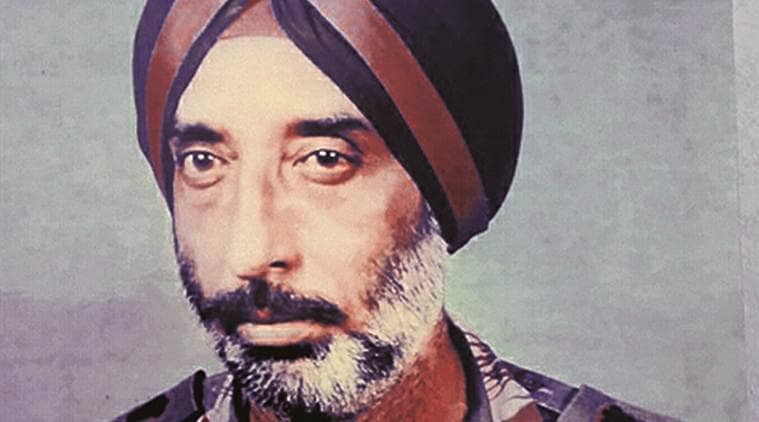
Brig Manjit Singh, decorated with the nation’s second highest gallantry award, Mahavir Chakra, for his personal bravery during the dash to link up with Jaffna during Operation Pawan in Sri Lanka, passed away after a brief illness. He was 78.

The name of the town of Jaffna has resonated for long in the Indian Army, particularly among the units that fought to capture it from the Liberation Tigers of Tamil Eelam (LTTE) in October 1987 as part of the Indian Peace Keeping Force (IPKF). A stronghold of the LTTE, the battle to wrest Jaffna exacted a high toll on the units of 41 Infantry Brigade, which was commanded by Brig Singh.

Brig Singh’s push towards Jaffna later came in for criticism from his former subordinates as well former divisional commander who did not appreciate the hard handed methods employed by him in command of his brigade. He ended up sacking his Deputy Commander, Brigade Major, OC Brigade Signal Company and two battalion commanding officers.

However, he never regretted his decisions and had scathing comments to make about performance of several officers under his command. An outspoken officer, Brig Singh’s brusque manner tolerated few mistakes.

An alumnus of Khalsa College, Amritsar, Brig Singh had originally been commissioned in the Mahar Regiment. However, years later he was shifted to Jammu and Kashmir Light Infantry (JAK LI), an order which he bitterly resented at the time. True to his nature he had had a ‘run in’ with the then Colonel of the Mahar Regiment, Lt Gen KV Krishna Rao, who was at the time GOC-in-C Western Command and later the Army Chief.

The citation for his award of MVC details in brief the courage shown by him in battle for Jaffna.

It reads, “Brigadier Manjit Singh while commanding an Infantry Brigade as part of the Indian Peace Keeping Force, was tasked to establish a link-up with Jaffna Fort, along Western Pincer in the face of all-out efforts by the militants to thwart their advance. Brigadier Manjit Singh himself assumed charge of the leading elements. He broke through the desperate cordon of the militants and successfully established a link-up with PARA Commandos operating from Jaffna Fort. His leadership and demonstration of personal valour motivated his command to push back the enemy. Throughout the operation, Brigadier Manjit Singh displayed conspicuous courage and valiant leadership”.

Brig BK Unnikrishnan of the Corps of Signals, who was commanding a sub unit in Jaffna fort during the battle, has described the moment when Brig Singh reached the fort fighting through LTTE strongpoints. The account below gives an idea of how pitched the battle was:

“The Brigade had faced very stiff opposition on its way; it was stalled at many places initially and had to stop the advance mid-way due to ambushes and heavy fire. It suffered heavy casualties. However Manjit took a bold decision to move forward with a small group comprising his GSO 3 and two infantry companies. It was a daring move and despite interference from the LTTE, Manjit managed to reach the Fort at night with a few dead bodies and several injured soldiers. Lt Col TPS Brar, CO, 1 MLI received him and took him to the Ops Room. I was present there along with Maj Shankar Murthy, my 2IC. Manjit and I had known each other very well but I found him dazed and unable to respond to my words. His combat dress was full of blood and he was in a terrible state of mind”.

In a statement to LA Times, who’s correspondent visited Jaffna after its capture, Brig Singh said of LTTE, “They were stopping us at every place. Every time they checked us, we lost a lot of men. When we tried to move our vehicles, we were hit with land mines.”

In several accounts written by veterans of IPKF, Brig Singh has been criticised for his style of command. It was said that he was close to the then Chief of Army Staff, Gen K Sundarji, who was also originally from the Mahar Regiment and that he had managed to get the command of 41 Brigade due to this proximity.

Brig Singh, on other hand, had told this correspondent some years ago that he had been personally chosen by the Chief because he wanted results on ground. He said he did not regret any action of his and that he did what was the need of the hour.

After being passed over for promotion to the rank of Major General, the mercurial tempered Brig Singh did not stay on in the Army and took premature retirement. After spending many years in USA, he finally settled to his farm in Rahon, near Nawahshahar, where he gradually faded away.

Brig Manjit has presented his Mahavir Chakra to the JAK LI battalion that he commanded.


New Army Chief says Constitution prime, ‘can’t err if led by Preamble’

The Army Chief also mentioned fundamental rights “guaranteed to all our citizens”, and said if the Army was guided by them, “we will not go wrong in the discharge of our duties”.
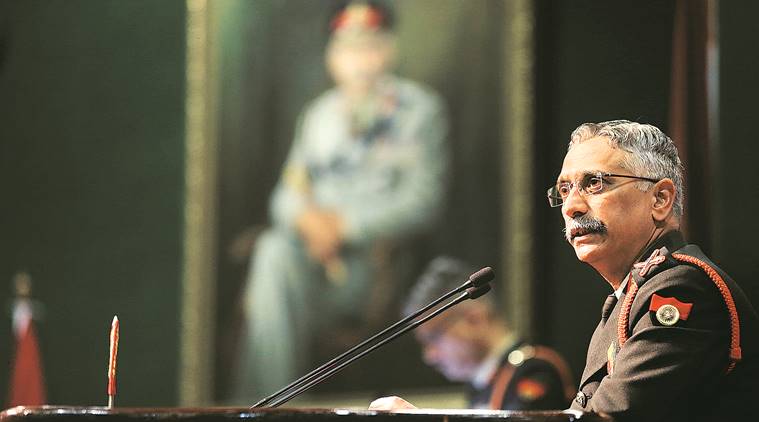
Army Chief General Manoj Mukund Naravane, Manoj Mukund Naravane, Manoj Mukund Naravane press conference, army chief on cds, cds, chief defence staff, indian army news

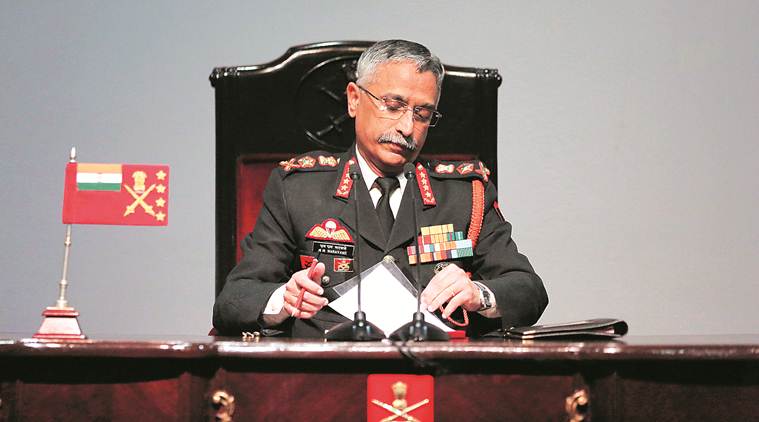
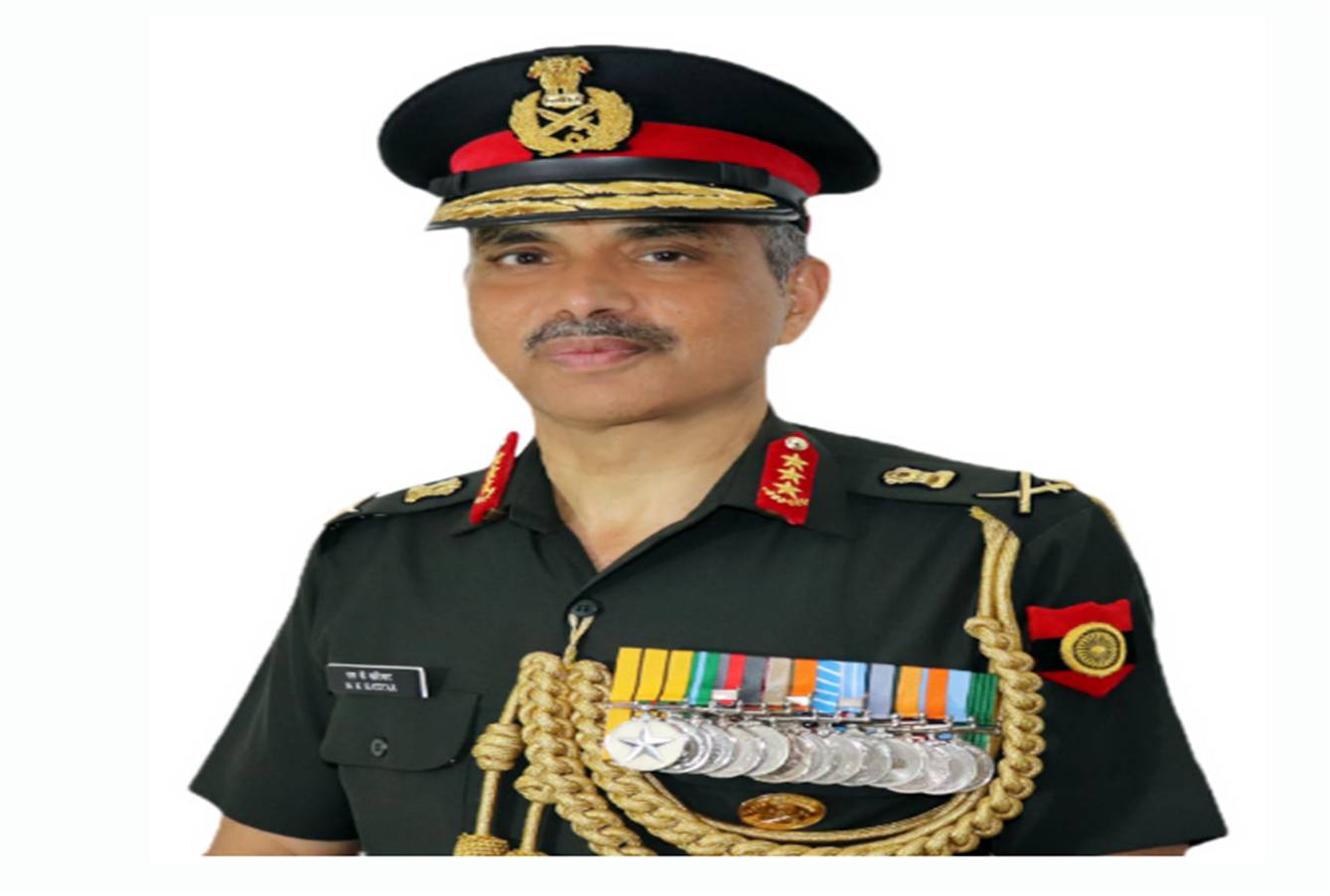
General M M Naravane in New Delhi, Saturday. (Express Photo: Tashi Tobgyal)

On the eve of his first Army Day as Chief of the Army Staff, General M M Naravane swore “allegiance to the Constitution” on Saturday, saying the Army is of the people and for the people. The force fights for the values of justice, liberty, equality, and fraternity, and respects the rights of the people, he said.

In his opening remarks at a press conference before Army Day, celebrated on January 15, Naravane said, “be it a jawan and an officer, we take an oath” to follow the Constitution, “and that is what should guide us in all our actions and at all times”. “What it translates into is also the core values which are enshrined in the Preamble to the Constitution, that is justice, liberty, equality and fraternity, and that is what we are fighting for when we are deployed on the borders.”

The Army Chief also mentioned fundamental rights “guaranteed to all our citizens”, and said if the Army was guided by them, “we will not go wrong in the discharge of our duties”. “We are an Army of the people, for the people, and whatever we do, will be for them,” the General said.

The Army Chief’s comments come against the backdrop of accusations of politicisation of the force by his predecessor, General Bipin Rawat, now the Chief of Defence Staff (CDS). A week before his retirement, Rawat, asked about the protests on the Citizenship (Amendment) Act and National Register of Citizens, said it was not leadership that was being seen in universities and colleges, “the way they are leading masses and crowds to carry out arson and violence”.

Army chief Manoj Mukund Naravane: An officer who is known to deliver

Praising the creation of the CDS post and the Department of Military Affairs as “a game changer”, Naravane said they were looking into all aspects of how these would evolve. “There is no doubt that integration is the key, and that is mentioned in the charter of the CDS… When we go in for joint or integrated theatre commands, we will do so keeping our own requirements and operational realities in mind, and will not blindly copy any existing system or any other army of the world,” he said.

Asked about comments by some ministers that Pakistan Occupied Kashmir would be a part of India, Naravane said if any such orders are received from Parliament, the Army would act on them, noting that there was a parliamentary resolution saying the entire erstwhile state of Jammu and Kashmir was a part of India. “If Parliament wants that the territory be one day ours and if there are orders in this regard, we will definitely act on them,” he said.

Also Read | India reserves right to ‘preemptively strike’ at sources of terror: Army Chief warns Pakistan

Repeating his remarks from the day he took over as Army Chief, Naravane said that earlier there was a view that the threat was more towards the western front (read Pakistan) than the northern front (China). “Now we think both borders are equally important… It is in that context that the rebalancing is taking place.”

Regarding China, the Army Chief said that after the Wuhan and Chennai meetings between Prime Minister Narendra Modi and Premier Xi Jinping, “certain strategic guidelines” are a given. He said most differences at the border are now settled at the lowest levels and not allowed to escalate, which had led to peace on the northern border. “We have had a number of rounds of talks… Maintaining peace and tranquillity on the border only helps… No talks can be successful if bullets are flying.”

Naravane said there would soon be a direct line between the Director General of Military Operations in India and the Western Theatre Command in China, which looks after the India-facing front.

The General, who returned only on Friday from a visit to Siachen, said the glacier was strategically important as it faces both Pakistan and China. “We should not lose sight that it’s one place where collusivity can happen (between China and Pakistan).”

On the threat of a two-front war, Naravane said that in that case, “there will always be a primary front and a secondary front”. He said that there are also Dual Task Formations which can move between the two fronts.

Though the Army is involved in counter-insurgency and counter-terrorism operations, Naravane said this was short-term and the Army was prepared for its long-term role of conventional warfare.

He said that of the four studies started by General Rawat to reorganise the Army, two had been completed and are being implemented, and that they expected clearance from the government on Integrated Battle Groups soon. “In this process of integration, we will take everyone along, nobody will be left behind.”

Apart from allegiance to the Constitution, the Army Chief said belief in self and consolidation, along with taking care of the aspirations of its personnel and putting quality over quantity were some other principles by which the Army functions.

In a report from Islamabad, PTI quoted the Pakistan army as saying it was fully prepared to respond to any act of Indian aggression, in response to remarks by General Naravane. “Statements by Indian Chief Of Army Staff… to undertake military action across LOC are routine rhetoric for domestic audiences to get out of ongoing internal turmoil,” Pakistan Army spokesman Major General Asif Ghafoor tweeted.


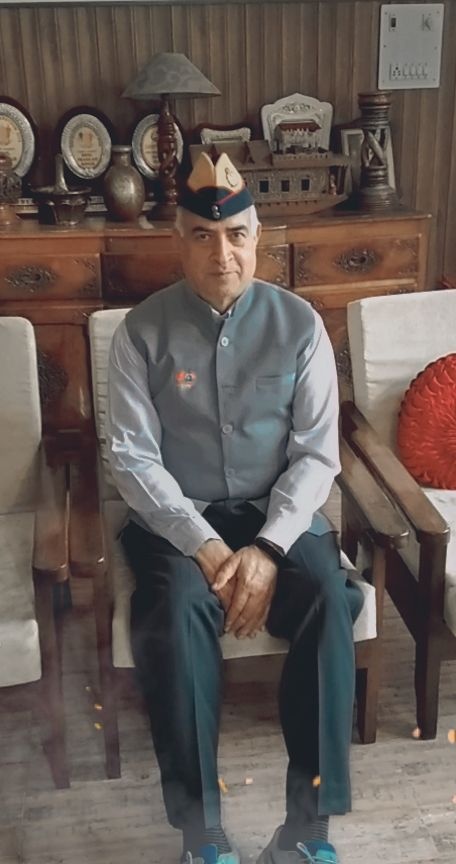
Retd colonel training slum children in golf at Rahon

Gagandeep Jassowal

gagandeep@htlive.com

RAHON (SBS NAGAR) : Children of slum areas in Rahon, a small and historic town in Shaheed Bhagat Singh Nagar, could never have imagined that they will get a chance to learn and play one of the most expensive sports — golf. But Colonel Harcharan Singh Bajwa (retd) has made it happen and taken initiative to train these kids in this sport, otherwise considered a game for the elite.

Col Bajwa has chosen 12 slum children who are being trained for three hours daily in a rooftop net over a computer centre owned by him. Besides, they have evening practice sessions at the local Dussehra ground.

Col Bajwa has hired two persons — Harinder Singh as manager and Om Parkash Patel as trainer — for grooming these children of labourers as golf players. Having started their practice around two months ago, some of these children performed well in the 2nd Junior Open Golf Tournament at Delhi Public School in Khanna on December 22.

The children, who study in a government school, rush for the training after coming from school without even changing their uniform.

Sham Kumar, a Class-6 student, and Krishan Kumar, Class-5 student, said they earlier used to play cricket in the ground before “Bajwa uncle” invited them to play golf. Krishan, who won a medal at the Khanna tournament, said, “Now, we love playing golf.”

“Golf is quite an expensive game and only the rich can afford to play this game. That’s why I thought of providing an opportunity to slum children to train in this game,” said Col Bajwa while talking to HT over phone from Canada where he is currently gone to visit his family. He lives alone in Rahon while his family is settled in Vancouver.

Col Bajwa has spent over Rs 2 lakh for creating infrastructure for training the children and plans to spend up to Rs 10 lakh in the current year to develop a training facility at the Dussehra ground.

Trainer Patel said, “These kids are picking up things quickly while we train them about swing, hitting, chipping and putting golf.”

Manager Harinder said, “After cage practice, we take them to the Dussehra ground where we have installed flags for them to practice alignment.” Meanwhile, Col Bajwa has been getting support of his former army colleagues to promote golf among slum children. Members of a WhatsApp group of Chandigarh-based golfers, including retired army personnel, ‘TRICITY B2B’ have donated their old and spare golf kits, balls and other equipment for the initiative. Col Bajwa, who plans to develop his agricultural land in Rahon into a golf course, said, “I want to groom these children as professional golf players.”


DMA to soon have a structure Both civilian, military personnel likely to work under new dept

DMA to soon have a structure

Tribune News Service

New Delhi, January 10

The newly created Department of Military Affairs, which is headed by Chief of Defence Staff (CDS) General Bipin Rawat, will soon have structure to run its affairs.

Since the CDS will also be Secretary of the Department of Military Affairs, it will have structure to include civilian bureaucracy also.

The plan is to have just two joint secretaries to begin with. Meaning cutting down decision-making process as the two would report to General Rawat. The two joint secretaries would be helped by a dozen deputy secretaries and more than 20 under secretaries.

A formal notification is expected soon and it will lay down the structures of reporting channels of the officers. The DMA can have both civilian and military personnel working under it.

Since the task of the DMA is laid down clearly, the idea is to keep a smaller unit that is more responsive.

President Ram Nath Kovind had on January 30 notified the new rules of business dividing responsibility between the newly created Department of Military Affairs, and laying down what all the Defence Secretary would be doing.

The department will look after the work of the Armed Forces of the Union — Army, Navy and Air Force. The Territorial Army and works relating to Army, Navy and Air Force, will be under the same department. He will also handle procurement exclusive to the services except capital acquisitions.

The CDS will promote jointness in procurement, training and staffing for the services through joint planning and integration of their requirements. He has been tasked with the facilitation of restructuring of military commands for optimal utilisation of resources by bringing about jointness in operations, including through establishment of joint/ theatre commands. He will also promote use of indigenous equipment by the Services.

Formal notification expected soon

  • The Department of Military Affairs (DMA) will have a structure to include civilian bureaucracy as well
  • The Chief of Defence Staff will be the Secretary and the plan is to have just two joint secretaries to begin with
  • The two joint secretaries will be helped by a dozen deputy secretaries and more than 20 under secretaries

Stressing Constitution and Preamble, new Army Chief signals course correction

Gen Naravane not only repeated the bit about constitutional values but added fundamental rights, when a question was put to him about statements made by his predecessor and the Eastern Army Commander in support of the CAA.

Army Chief, Army Chief General Naravane, Army Chief General MM Naravane, MM Naravane, General MM Naravane, General Naravane, India news, Indian Express

Gen M M Naravane in New Delhi on Saturday. (Express Photo by Tashi Tobgyal)

When General M M Naravane took the stage in the auditorium of the Mankeshaw Centre for his first annual press conference as Army Chief, not many expected him to set the tone for his 28-month tenure so firmly with his opening statement. It came swiftly and in an understated manner, unprompted, but the intention and the thought underlying it was hard to miss: a course-correction, to pull the Army away from political controversy back into its professional domain.

Pre-empting the criticism that the armed forces had become politicised under the current government, the new Army Chief started with the A-B-C of his priorities. The ‘A’ stood for allegiance — where he stressed that the allegiance that every Army personnel owed was to the Constitution, and the values enshrined in its preamble. Never in public memory has an Army Chief said so categorically that the Army is deployed on the borders to defend the core values in the preamble to the Constitution — justice, liberty, equality, and fraternity — for every Indian.

The ongoing countrywide protests by students against the new citizenship law and the proposed National Register of Citizens (NRC) have been marked by public readings of the preamble. But Gen Naravane was not wading into that territory: he was trying to arrive at a formulation where any political party or ideology, including those in the government, did not figure in any manner. Historically, from Gen K M Cariappa’s time, the formulation of the cause served by the Army has been slightly different: it has always been said that the Army serves the government of the day, and not any political party or ideology.

Gen Naravane not only repeated the bit about constitutional values but added fundamental rights, when a question was put to him about statements made by his predecessor and the Eastern Army Commander in support of the CAA.

Asked directly about violence against students in JNU, including police action, he avoided the topic, and limited himself to certain homilies about the National Defence Academy, which is affiliated to JNU. There couldn’t have been a stronger way to send a message to his senior commanders who seem to have strayed from the apolitical path in recent years.

The stress on constitutional values and fundamental rights was not the only indicator of the shift Gen Naravane wants the Army to make. In response to a couple of leading questions about capturing Pakistan Occupied Kashmir, as stated by Ministers last year, he referred to the 1994 Parliamentary resolution on J&K, and said that the Army will do whatever is asked of it by the government.

Asked if he would continue to speak strongly on issues, like his predecessor, to project the forces, Gen Naravane said, “Indian Army believes in doing its job and we are not seeking any publicity. We will continue in the same way of serving the nation to the best of our ability.”

Gen Naravane’s predecessor, Gen Bipin Rawat, the current Chief of Defence Staff, was often criticised for overstepping his boundaries to comment on policy and political issues outside the domain of the Army.


Indian Army suspects Pak BAT beheaded porter killed at LoC

Press Trust of India

letters@hindustantimes.com

Jammu : Pakistan’s Border Action Team is suspected to have decapitated a porter, who was among two civilians killed along the Line of Control (LoC) in Poonch district on Friday, officials said.

This is the first time that any civilian has been beheaded by BAT, which comprises Pakistani army regulars and terrorists, though similar incidents involving security personnel have taken place in the past, they said.

The body of Mohammad Aslam (28) was badly mutilated and his head was missing, a senior police officer said.

Asked about the killings by Pakistan, Army chief Gen MM Naravane said on Saturday that professional armies never resort to “barbaric” acts and they “will deal appropriately with such situations in a military manner”.

A defence spokesman had earlier said Aslam and Altaf Hussain (23), both residents of Kassalian village of Gulpur sector, were killed and three others injured after being hit by a mortar shell when Pakistani Army targeted a group of Army porters carrying logistics for troops in a forward area close the LoC on Friday.

However, officials said on Saturday that the head of one of the porters was missing and was believed to have been taken away by the BAT.

“The body of Aslam was headless when handed over to police for completion of legal formalities. The bodies of both porters were handed over to their families and their last rites were conducted in their villages on Friday evening,” the police officer said on condition of anonymity.

He said the injured porters —Mohamamd Saleem (24), Mohammad Showkat (28) and Nawaz Ahmad (35) — were undergoing treatment in the hospital and their condition was “stable”.

“We will deal appropriately with such situations in a military manner,” Gen Naravane said when asked about the incident during a press conference in the Capital ahead of the Army Day.

He said the Indian Army conducts itself in the most professional and ethical manner including on the LoC. “Professional armies never resort to barbaric acts,” he said.

Opposition Congress strongly condemned the killings and questioned why Prime Minister Narendra Modi and defence minister Rajnath Singh were “silent” on the “barbarism” by Pakistan.

“Is the news of martyrdom run taking into account the government in power?” Congress’ chief spokesperson Randeep Surjewala said.

“When will Pakistan’s cowardly acts be given a befitting reply? 10 heads for 1 when? Surjewala said on Twitter.