Sanjha Morcha

Village has changed, and all in it by Lt Gen RS Sujlana (retd)

Village has changed, and all in it

Lt Gen RS Sujlana (retd)

Visits to the village were rejuvenating, one always returned fascinated with the natural surroundings. A recent trip to the village brought back memories. The early morning ritual of rushing to the chabara (rooftop) to breathe the serenity of green fields, across which lay a thick grove of trees, a trip there was a must. Within was the Persian wheel operated by a pair of buffaloes, their eyes blinkered, robotic-like circumambulated the same path. The wheel creaked and squeaked, the troughs poured out water and disappeared into the well. It was hypnotic. To reach the grove, one walked along the fringes of the chhappad (pond) where buffaloes lay submerged, enjoying their bath; the egrets on their backs pecked insects to their fill, while the cowherds tried their luck to catch fish. One returned home balancing on the vattan along the periphery of the fields — a slip and it was a puddle of water. The walk ended at the tubewell, the gushing waterspout filled the cemented chubuchha (trough). A dip in that mini swimming pool was pure manna! Hunger pangs rushed us back home to sumptuous paranthas with fresh butter, omelette, pickle, all unforgettable.

On the last visit, by habit, I went to the rooftop, only to face cemented walls all around. Disappointed, I quietly came down and stepped into the gali, thinking that a walk to the outskirts of the village would give me what I was looking for. But alas, instead of the huge expanse of green fields, I saw scraggy patches of greenery, no sign of the village pond or the grove. Saddened, I headed back, only to see a bare corner which housed an earthen furnace, operated by an elderly lady (bai) who meticulously kept the fire going by twigs and branches to keep the cauldron sand at the right temperature. Here, one would carry raw grains from home, and returned with the popped corn, roasted gram, chickpeas or ground nuts to relish. Her cut was just a handful of grain that added to her daily earnings.

Another corner revived more memories of the local tandoor, which was heated up in rotation by women. Turn by turn, each household woman baked fresh tandoori rotis, which were fluffy and thick, punctured with small depressions (kujje) to be filled with clarified butter. And my God, what a taste! Sadly, tandoori rotis now came from a dhaba, typically thin and dry like any urban food outlet.

The drive back was rather depressing. Modernisation had had a telling negative effect. Environmental degradation was absolute. There was no sign of the rain harvester pond, every nook and corner was laden with garbage and plastics, the treasure troves that were etched in memory were nowhere. The village had really disappeared!


They, too, bear the weight

They, too, bear the weight

Raj Bhalla

I was brought up in a sea-faring family, my father being a marine engineer. I got married to an Air Force officer, having little knowledge about the life in the armed forces. After the expiry of his leave, we moved to Halwara, where my husband was posted. Buying curtains and a kerosene stove for the house were the first priorities for setting up the new unit. Being the newlywed, I got preferential treatment. Then came the disturbing news of our posting to Bagdogra in 1969. The stress of moving with bag and baggage to a new place was perturbing. A colleague from Bagdogra informed us about the availability of a basha which would provide us some shelter on our arrival.

After landing at Bagdogra, I realised what a basha was. In an area of 25×15 ft, we had a small living room, a kitchen, a western-style washroom, and a small bedroom. During the rainy season, umbrellas protected us from the rainwater dripping from the thatched roof. We took life in our stride.

In November 1971, after sunset, we would hear the sound of firing across the border which gradually intensified. This was followed by a blackout in the camp, creating a feeling of uneasiness. One evening, we were told to vacate the accommodation and move to a safer place as war was imminent. I along with my son flew to Kolkata, my home for 20 years, to join my parents. Then came the address by PM Indira Gandhi declaring war with Pakistan.

In Kolkata, too, the blackout was a common feature. Any news on the casualties would upset us. Those were the days of poor connectivity, no Internet, no mobile phones, it was difficult to get through to Bagdogra to talk to my husband. All the time, I was busy scanning newspapers or listening to the radio to know about the war scenario. When we heard about the surrender of the Pakistan army in East Pakistan, we were happy that the war was coming to an end. I flew back to Bagdogra after the declaration of ceasefire. The few weeks I spent at Kolkata were filled with tension and anxiety.

In 1977, we moved from Jodhpur to the Air Force Station at Hindon. Then started my struggle for school admission of my only child. I visited a number of public schools and waited for hours outside the office of the principal. When I met one, he showed little concern about the ordeal of defence personnel. I got only a few words of compassion and not a seat for my son. I realised the so-called public schools were not meant for public. We spent many sleepless nights fearing my son would lose one year because of mid-session posting.

Though men in uniform fight the war, their families are not isolated from the sufferings which they share with the men. Living in separated married accommodation, frequent postings, schooling for children etc., are a nightmare which many of us have faced in life.


30 yrs later, housewife kit put to use

30 yrs later, housewife kit put to use

Rahul Yadav

I found the nail clipper being used in the house a bit difficult to operate, and to my utter dismay, I was made to understand that as nails are rough, one should clip them just after taking a bath. But still, it did not perform to my satisfaction, and I was on the lookout for a perfect nail clipper. The search took me 30 years back.

Once a candidate is selected for training at any defence training academy, anywhere in the country, a variety of items form part of the personal kit. One of them is the housewife kit. As the name suggests, it is to make a person totally independent in carrying out minor repairs on his uniform. It consisted of a few buttons — black, white, olive green, navy blue and khaki, a pack of needles, hooks, safety pins, thread rolls matching the colours of the buttons, small portable scissors, nail clipper, etc. Since this kit could be checked during the surprise inspection of cadet barracks, endeavour was not to use it lest you end up getting punished for the shortfall of items. Repair, if any, was carried out by a tailor at the shopping centre.

After completion of training, and on being commissioned as officers, the extra luggage that had outlived its utility would be dumped at the parents’ house, but it was always ensured that the kit formed part of the items in the box when you moved to your new unit/regiment. The same drill was repeated in the units as any minor repair was done by the unit tailor, as being a bachelor entailed you to this liberty, and the kit was not opened during bachelor days. After marriage, the better half would always carry out emergency in-situ repairs, and again the kit would be left untouched in one corner of the box, only to be rearranged when the officer proceeded on transfer to a new duty station. If the transfer was to a non-family station, again, the services of the unit tailor would be utilised. Slowly and surely, the kit was totally forgotten over a period of time.

The other day I was going through my late father’s suitcase to revive old memories, as it contained old black-and-white photographs of my parents, us as toddlers, grandparents’ photos, cards sent to him and letters that we wrote, besides his medical documents. Tucked in the corner — to my utter surprise — I found my 30-year-old housewife kit, which was assembled by my father for me, since he himself was a second-generation Army officer. It looked brand-new, and being a veteran now, the buttons were of no use to me. I took out the scissors and the nail clipper. I proudly announced to my family that I will now use my old clipper, which was as good as new, as it had never been used before.

The clipper cut the nails as a knife slides through butter. I finally found a clipper that suited my needs.


Balakot to Baghdad, striking parallels

There is now an unmistakable ploy adopted by leaders of democratically elected governments to get the agenda through by the sheer force of majority. It is becoming increasingly difficult to differentiate between the brutal suppression by China of the student-led Umbrella Movement of Hong Kong and the recent excesses against certain universities in India.

Balakot to Baghdad, striking parallels

Blatant: Muscular use of military assets to project a tough image.

Maj Gen Amrit Pal Singh (Retd)
Military commentator

The US airstrikes that eliminated the Iranian Revolutionary Guard Corps (IRGC) commander, Gen Qassem Soleimani, as his convoy emerged from the Baghdad airport has rocked the world by the dramatic upping of the ante. Much like India’s airstrike in Balakot after the Pulwama terror attack, the US action against Soleimani was a strong message that the country and its leadership were prepared to take action against what were earlier considered ‘untouchable entities’. In fairness, it must be brought out that the escalation was exacerbated by Iran’s storming of the US embassy in Baghdad, which itself was a result of spiralling events towards the last days of 2019.

There are visible similarities between the US and Indian governments in the blatant and muscular use of the military assets to project a nationalistic and tough image. This is even so more pronounced as both have used the military in election circumstances to garner political gains from kinetic and spectacular displays of military capabilities.

The creation of the IRGC during the rise of the present supreme leader of Iran, Ayatollah Ali Khamenei, is a saga of how a parallel centre of power was created by the formation and consolidation of the IRGC under Soleimani. Soleimani’s rise, by his effective conduct of operations of the Quds force and his flamboyance, stemmed from the unstinted support he had of the supreme leader.

The US President is facing impeachment proceedings led by the Democrats and though the trial stage is to begin, there is a large White-dominated section of the US population that staunchly supports President Donald Trump as it firmly believes in his slogan of ‘Making America great again’. Such supporters’ dominant belief that the Whites have been underdone in their own country is what swept him to power and now gives him confidence against being tried.

As President Trump prepares and the US military braces for an expected retaliation-cum-escalation across the spectrum, the opposition Democrats are in the process of firming up a motion to vote to limit Trump’s war-making powers, thereby restricting free and unilateral actions to deal with the looming crisis. This resonates with the collective questioning by the Opposition in India when it challenged the motives and the results of the Balakot airstrikes. In both cases, two facets emerge: the leadership is being put under pressure by what is perceived to be an opportunistic political opposition; but where the population in general is enthused by the nationalistic pitch that such military actions evoke and stoke patriotic passions.

Be it the CAA-NRC imbroglio, abrogation of Article 370 in J&K or the belligerent nationalistic stance in the elections by the NDA government, the emphasis is on a religious agenda. There is an unmistakable familiarity that links the authoritarian streak in both countries.

In the use of the law and order machinery, there are dangerous parallels that are unfolding too. The passive role, amounting to complacency, of the police force in the recent events at JNU is as culpable as the role displayed by the same police force during the anti-Sikh riots in Delhi and other places in 1984. The control of the police was in both instances — then and now — with the Central government and indicative of the use of force to suppress dissent by the party in power.

The use of the military for political advantage and of goons to suppress dissenting groups is becoming almost synonymous. Both are serving no national interest if they are wielded to garner electoral and other petty agendas. The fact that it’s happening all over the world is no justification or stamp of legitimacy.

These are dangerous portents and indicative of an unmistakable ploy adopted by leaders of democratically elected governments to get the agenda through by the sheer brute force of majority. It is becoming increasingly difficult to differentiate between the brutal suppression by China of the student-led Umbrella Movement of Hong Kong and the recent excesses against certain universities in India. These trends of various hues, like the arrogance of majority, religious intolerance, politics of nationalism and hyper-nationalism are being witnessed with unfailing regularity in different corners of the country and are disconcerting to the average citizen.

The role of Facebook-Cambridge Analytica (a political consulting firm that used data mining towards opinion modification) during the US presidential elections which is alleged to have used the data of voters to selectively target them to influence their voting is revealing as to the technological capabilities that exist today and the extent that political parties can manipulate voters and public opinion. The Indian news and social media space is similarly flooded by technologically supported opinion-forming and planted news stories to sway or distract the population from issues. The mantra to govern seems to be that the best public is an uninformed public or, better still, a misinformed public.

As the count of dangerous parallels increases, so does the disturbing volatility, leaving the average citizens wondering of the direction in which efforts are being made to lead them. A discerning look at various analysts and commentators does, at times, provide some clarity on the trends and the ‘why’ behind the goings-on. However, fact-finding in the maze of information is the key. It does not help that most of the news channels are either so cluttered with shouting matches arranged between virulent speakers or are so tilted to one side.

The existing tinderboxes across the globe and closer home have in many ways confused the masses. This is probably the stuff that political parties want: to keep on the boil to distract, deflect and distort sane thinking. It’s probably wise in these times to fall back on common logic and chose what needs to be believed and decide what affects us the most. There are many shades of grey betwixt the black and white.


300 part of Tri-Services Veterans’ Day

300 part of Tri-Services Veterans’ Day

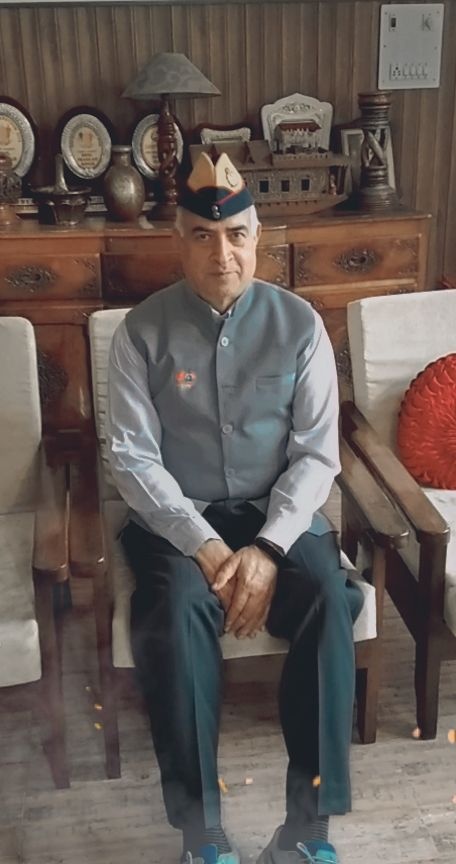
The focus of the event held at the Chandimandir Military Station was to address the grievances of veterans. Tribune photo

Chandigarh, January 14

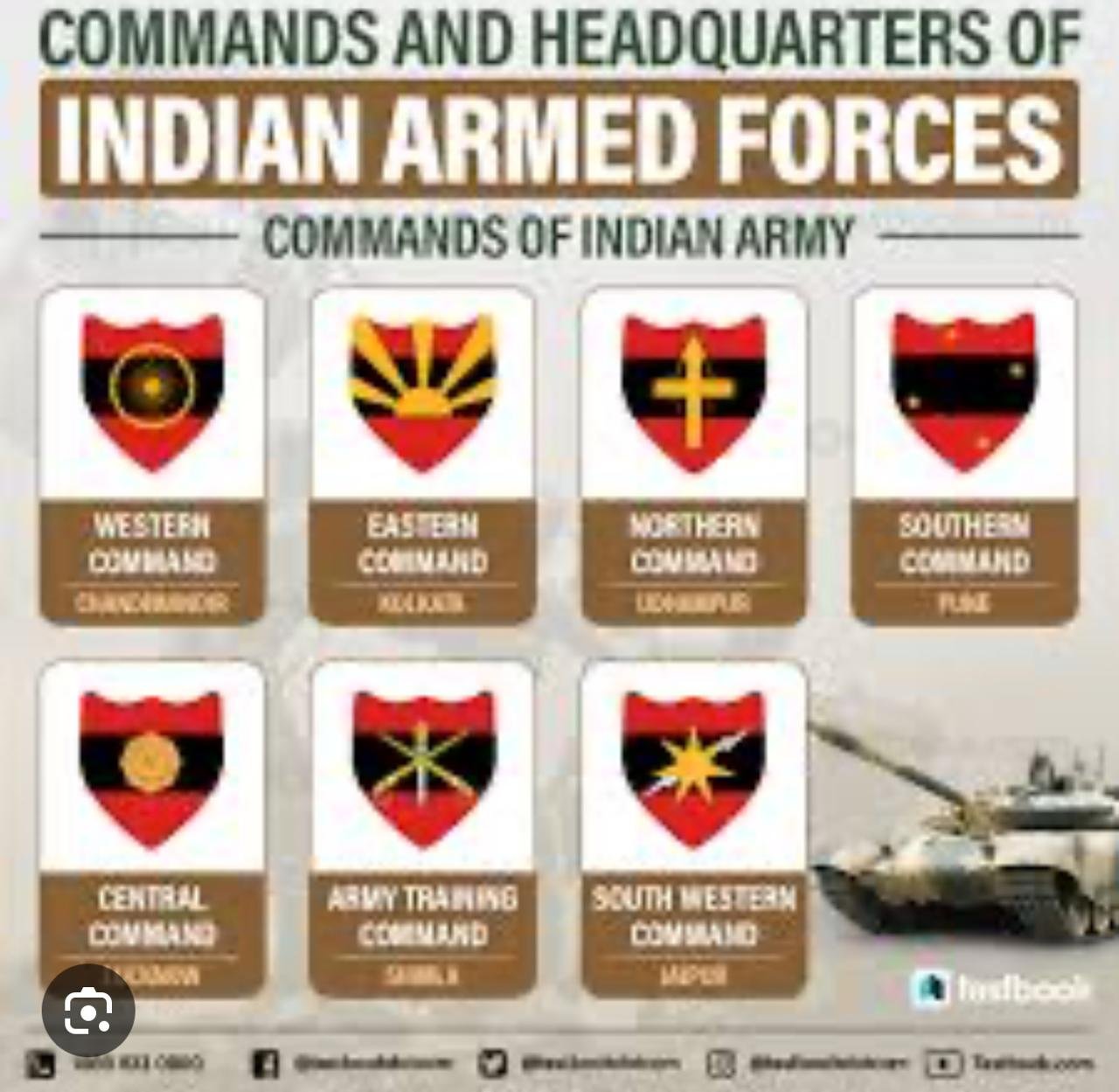
Tri-Services Veterans’ Day was commemorated under the aegis of Western Command at Chandimandir Military Station here today. The event was for reaching out to ex-servicemen and alleviate the challenges faced by them and their dependants.

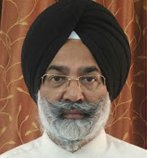
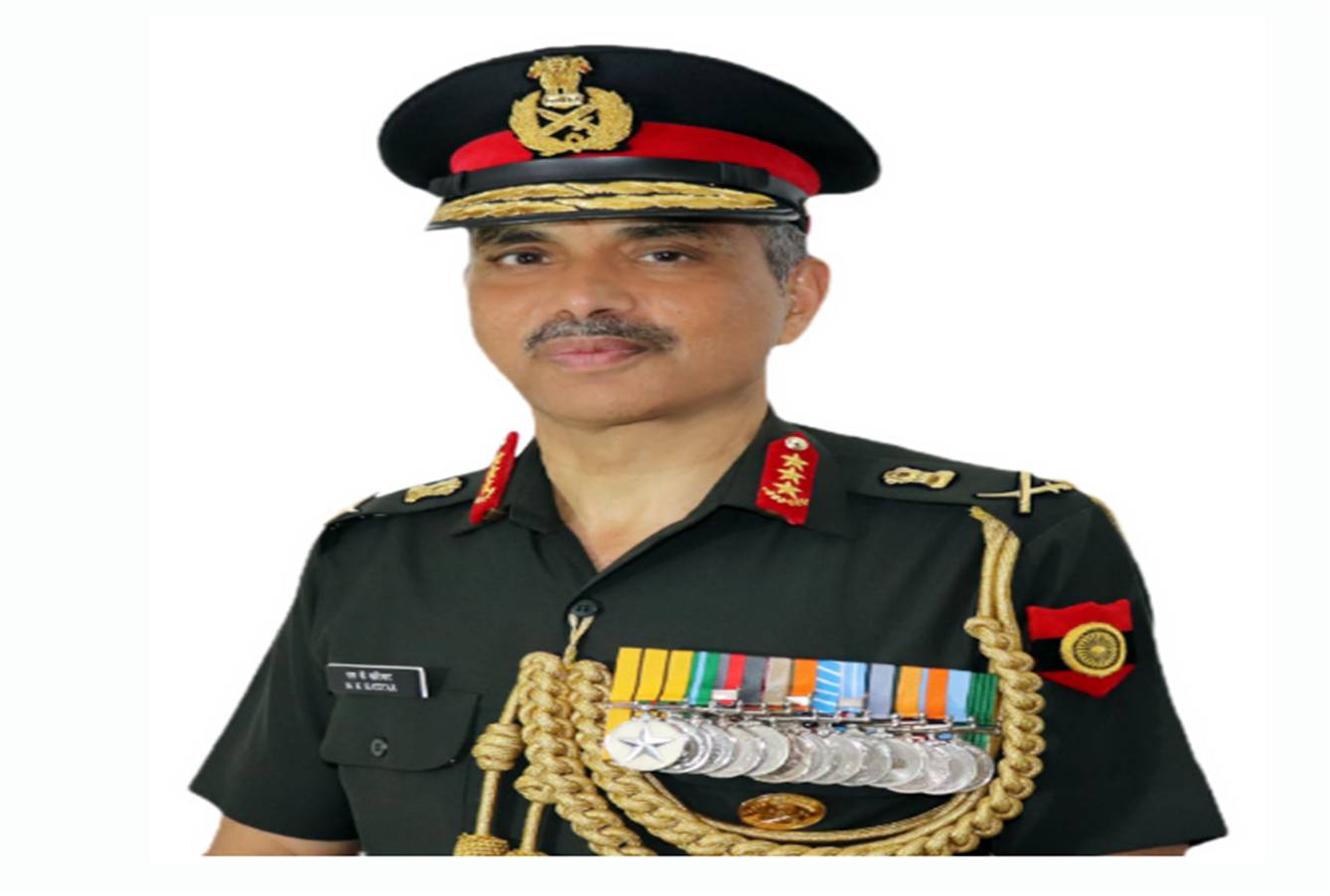
Around 300 veterans, war widows and their kin attended the event. Details of all veterans were registered and arrangements were made to assist them in resolving their pension matters, healthcare issues and other grievances. Lieutenant General GS Sangha, Chief of Staff, Western Command, interacted with the veterans and enquired about their welfare.
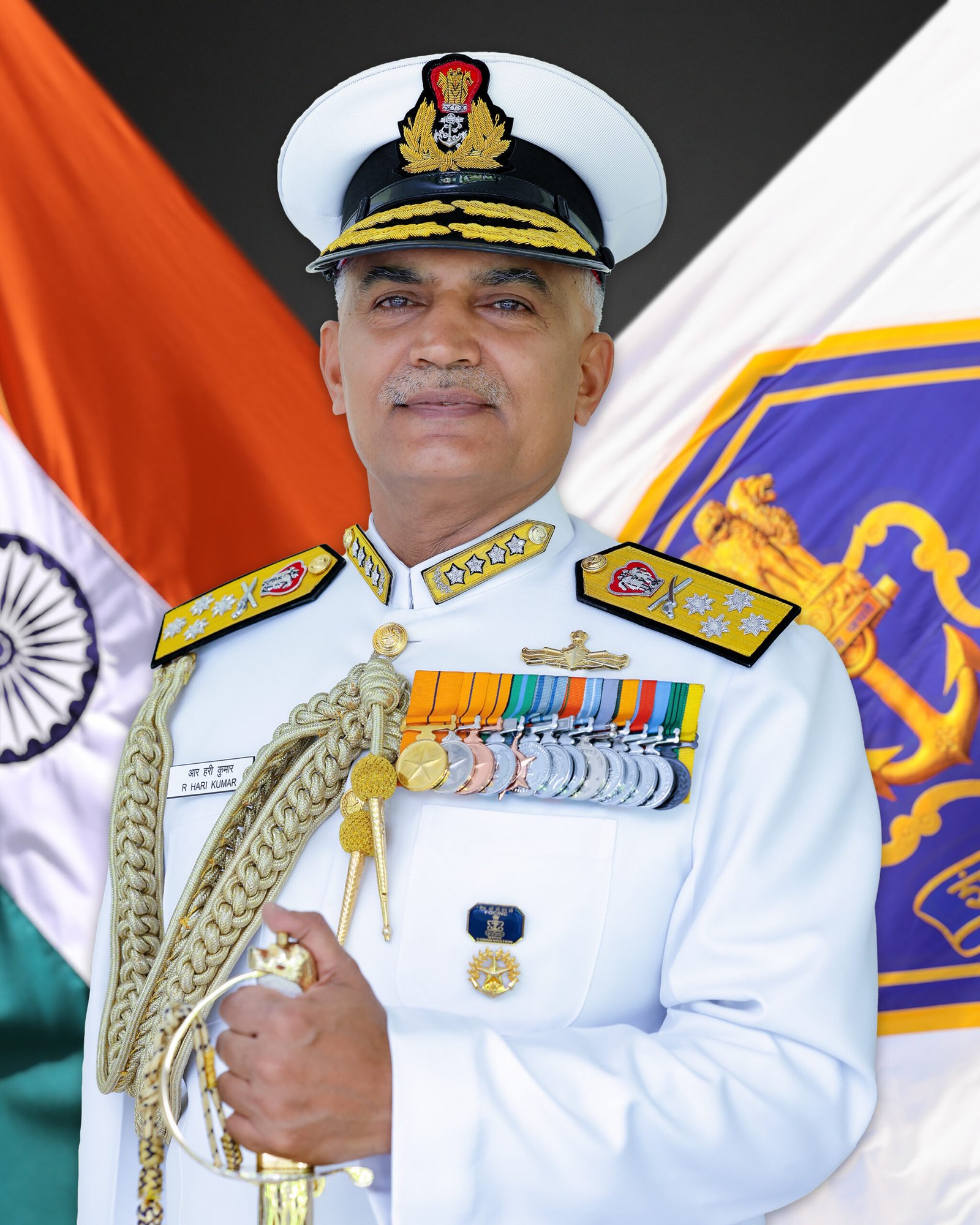
The event commenced with the veterans paying homage at the Veer Smriti war memorial. The focus of the event was to address veterans’ grievances and to raise awareness regarding benefits entitled to them. — TNS


Sepoy cremated with full honours

Sepoy cremated with full honours

Our Correspondent

Nurpur, January 14

Mortal remains of Sepoy Deepak Sharma (38) were consigned to flames at his native Sthana village in Fatehpur sub-division this afternoon. The deceased was getting training under Naib Subedar of Army wing 19, Punjab unit, at Mamoon army cantonment.

As per information, on Monday morning, he suddenly fell unconscious while on duty. Later, he was rushed to Army hospital where he was declared dead.

He is survived by his two sons, wife and mother. He had visited his home last week and returned to duty two days back.

Mother Raj Kumari and wife Seema Devi were inconsolable when the mortal remains draped in Tricolor arrived at their home. The body was cremated with full honours. Fatehpur Naib Tehsildar laid a wreath on behalf of the state government. The soldier was accorded full military honours and his cousin lit the pyre.


Situation in Kashmir violates human rights: US Congresswoman

Situation in Kashmir violates human rights: US Congresswoman

The resolution No 745 that was introduced in the House of Representatives last year by Indian-American Congresswoman Pramila Jayapal now has 36 cosponsors, of whom two are Republicans and 34 from the opposition Democratic Party. File photo

Washington, January 14

The situation in Kashmir violates human rights, a US Congresswoman has said, as she joined as cosponsors to a resolution urging India to end restrictions on communications and mass detentions in the newly-created Union Territory.

The resolution No 745 that was introduced in the House of Representatives last year by Indian-American Congresswoman Pramila Jayapal now has 36 cosponsors, of whom two are Republicans and 34 from the opposition Democratic Party.

“The situation in Kashmir violates human rights. Thousands have been detained unjustly & millions are without access to the internet & telephones,” Congresswoman Debbie Dingell said in a tweet on Monday night.

“That’s why I signed onto House Resolution 745 so the US can let the world know we will not stand by while these violations happen,” she said.

Dingell represents 12th Congressional District of Michigan.

The Congressional resolution is currently before the House Foreign Affairs Committee for necessary action.

Congressman Brad Sherman said he looked forward to getting US Ambassador to India Kenneth Juster’s report on his recent visit to Jammu and Kashmir.

“I expect the report to indicate what restrictions the Ambassador faced, in particularly, whether or not the Ambassador was able to visit detainees. The visit and report are valuable only to the extent of the access given,” Sherman wrote on Twitter.

A group of 15 envoys, including Juster, visited Jammu and Kashmir last week where they interacted with select political representatives, civil society members as well as the military top brass.

Internet services, landline and mobile phones were snapped across Jammu and Kashmir on August 4, a day before the Centre’s announcement to scrap the special status of Jammu and Kashmir and divide it into two union territories.

Though most services, except mobile internet, were restored in Jammu within a week, Kashmir saw landlines and post-paid services being restored in phases.

However, the Internet continues to remain barred in the entire Valley except for some government offices, hospitals and business establishments. Pre-paid mobile services, too, are yet to be restored in Kashmir.

Mobile internet services were restored in Kargil district of Ladakh after remaining suspended for 145 days.

The visit by the envoys of 15 nations was the second one of a foreign delegation to Jammu and Kashmir since the abrogation of Article 370 provisions. PTI


Army organises Debate

Army organises Debate

With the aim to engage with schoolchildren, the Army organised a debate competition on the topic “Impact of social media on students” at Government Higher Secondary School, Jhullas. A total of eight students participated in the competition who displayed excellent understanding and knowledge of the topic and brought out important issues. Later, the winners were also awarded.

JKBOSE fixes date for fee submission

The Jammu and Kashmir Board of School Education (JKBOSE) has fixed the date for the private high/higher secondary schools to deposit fee after getting an affiliation for the next five years. The school education board has fixed March 31, for private institutes to deposit the fee at its concerned head/sub branch offices. It has also been made clear by BOSE that if the institutes fail to deposit the fee by March 31, they will be responsible for the consequences.

IIT-Jammu holds workshop

The Indian Institute of Technology (IIT), Jammu, hosted an Academic writing workshop “Work-in-progress: Removing roadblocks from research writing” on its campus at Jagti Nagrota. The workshop was organised by the department of humanities and social sciences, which consisted of hands-on writing and reviewing sessions conducted by Dr Anannya Dasgupta and Sameer Thomas from the Centre for Writing and Pedagogy, Krea University, Andhra Pradesh.Resource persons introduced concepts like claims, evidence and annotated bibliography, along with the structure of writing. Different genres of research writing focusing on long-form journalism and academic articles were discussed in detail.


Armed forces celebrate Veterans Day

Our Correspondent

Jammu, January 14

The Tiger Division on Tuesday commemorated the Fourth Tri-Services “Veterans Day” by paying homage to martyrs at Balidan Stambh, Jammu.

The veterans were honoured at Balidhan Stambh, Jammu, which commenced with the wreath-laying by the chief guest, Farooq Khan, Adviser to the Lt-Governor.

Farooq Khan appreciated the spirit of national unity, dedication and sacrifice exhibited by veterans. He insisted that there was requirement by citizens and NGOs to keep in touch with veterans and families of martyrs and draw lessons from their rich experience.

Students will get motivation listening to their stories of valour and sacrifice. He said the administration would give priority and support to resolve problems being faced by the families of martyrs.

The Sabre Brigade of Rising Star Corps organised Veterans Day at Ratnuchak Military Station, wherein, a large numbers of veterans and widows were in attendance. The event was organised as part of the Army’s efforts to assist its veterans in all spheres of post-retirement life. The Army also celebrates Veterans Day at Reasi and Rajouri and during this event, copies of guidelines on various welfare initiatives by the government, were disseminated to all the ex-servicemen.


Held for arms theft, Army deserter flees; 5 booked

Held for arms theft, Army deserter flees; 5 booked

Our Correspondent
Hoshiarpur, January 14

Arrested for stealing two INSAS rifles and cartridges from the Army Training Centre, Pachmarhi, Madhya Pradesh, on December 10 last year, Army deserter Harpreet Singh escaped from the Civil Hospital, Hoshiarpur, this morning by dodging cops.

Harpreet Singh was lodged in the Central Jail, Hoshiarpur. He was admitted to the Civil Hospital after his health deteriorated. At around 4 am today morning, he went to bathroom accompanied by a home guard jawan, but Harpreet pushed him aside and fled. Two police personnel on duty tried to chase him, but to no avail.

Last month, Harpreet, along with his partner Jagtar Singh Jagga, was arrested by the Tanda police. Two INSAS rifles, three magazines and 20 live cartridges were recovered from the two.

Harpreet Singh was recruited into the Army two years ago. He took training from the Army Training Centre in Pachmarhi.

Vikram Singh, in charge of the Model Town police station, said Harpreet’s father Harbans Singh, a resident of Miani village, and five police personnel — sub-inspectors Jagtar Singh, Hardeep Singh, Baldev Dutt, Bansi Lal and head constable Davinder Kumar had been booked under Sections 223, 224 and 120-B of the IPC.

DSP, City, Jagdish Raj Attri said, “Out of the five police personnel on duty, only two were present at the time of the incident and the three were absent.

A case has been registered against the all five. Departmental action will be initiated against those absent. Raids are being conducted to nab the accused.”